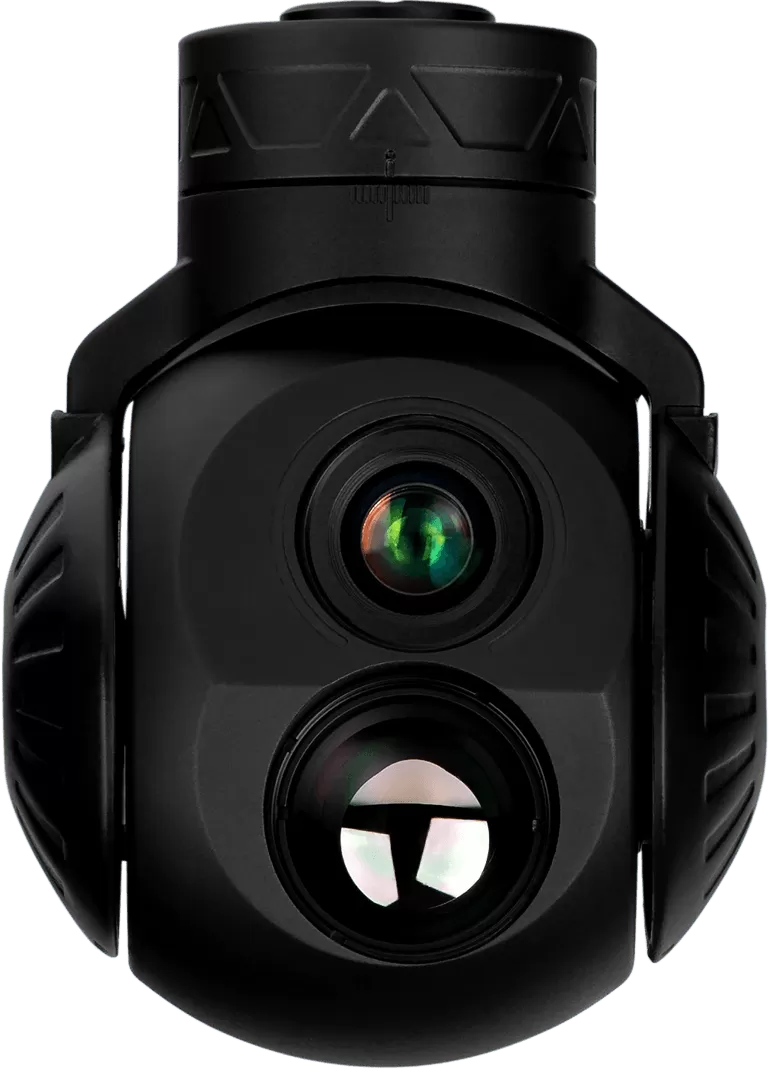
2-axis · EO + IR
HQ-64DA UAV Camera Gimbal OEM
The lightest dual-sensor head in the range — 2K daylight plus thermal on 260 g.
- Visible
- 2688 × 1520, 8.5 mm fixed
- Thermal
- 640 × 512, 19 mm fixed
- Laser
- —
- Weight
- ≤260 g

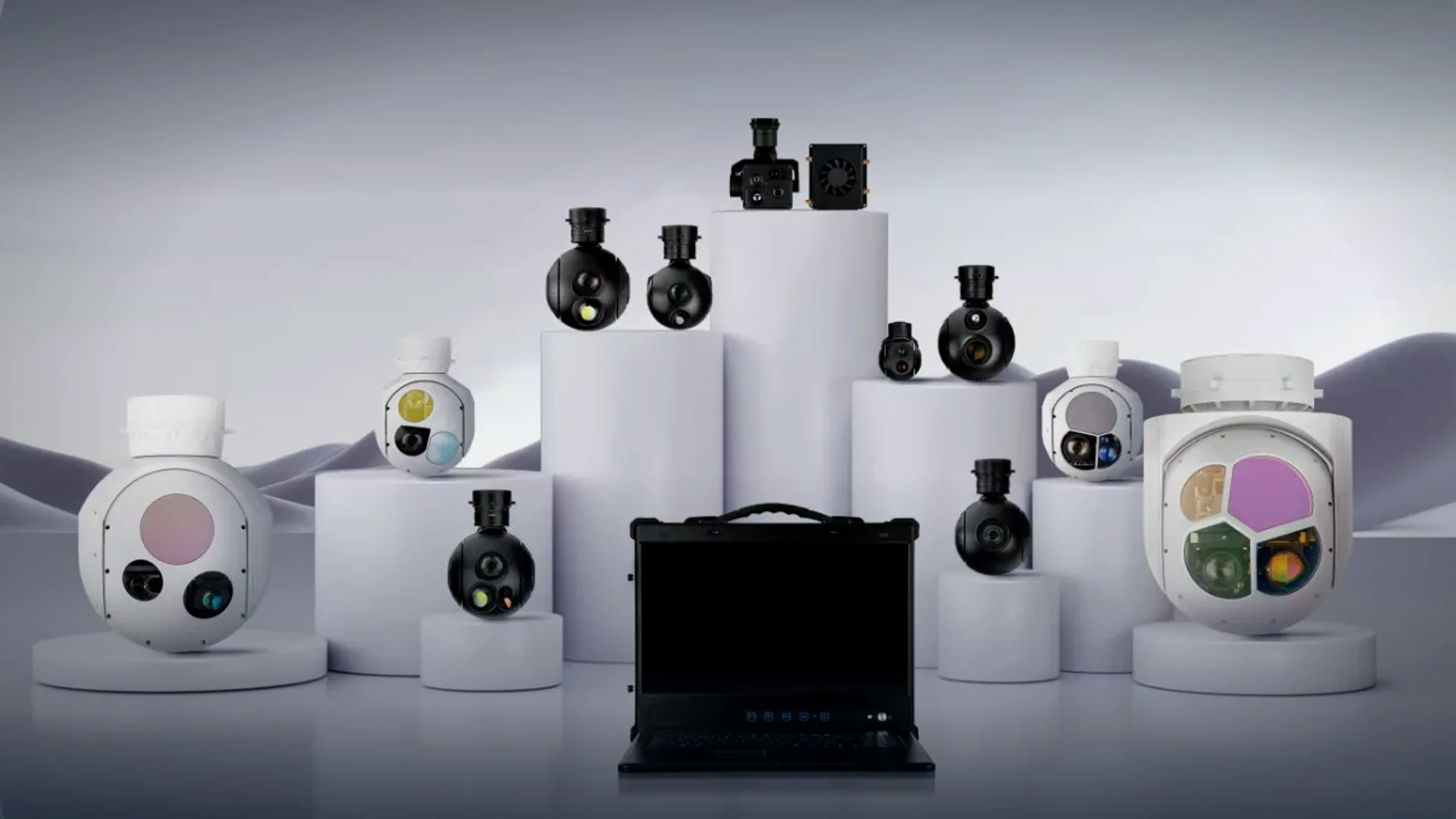
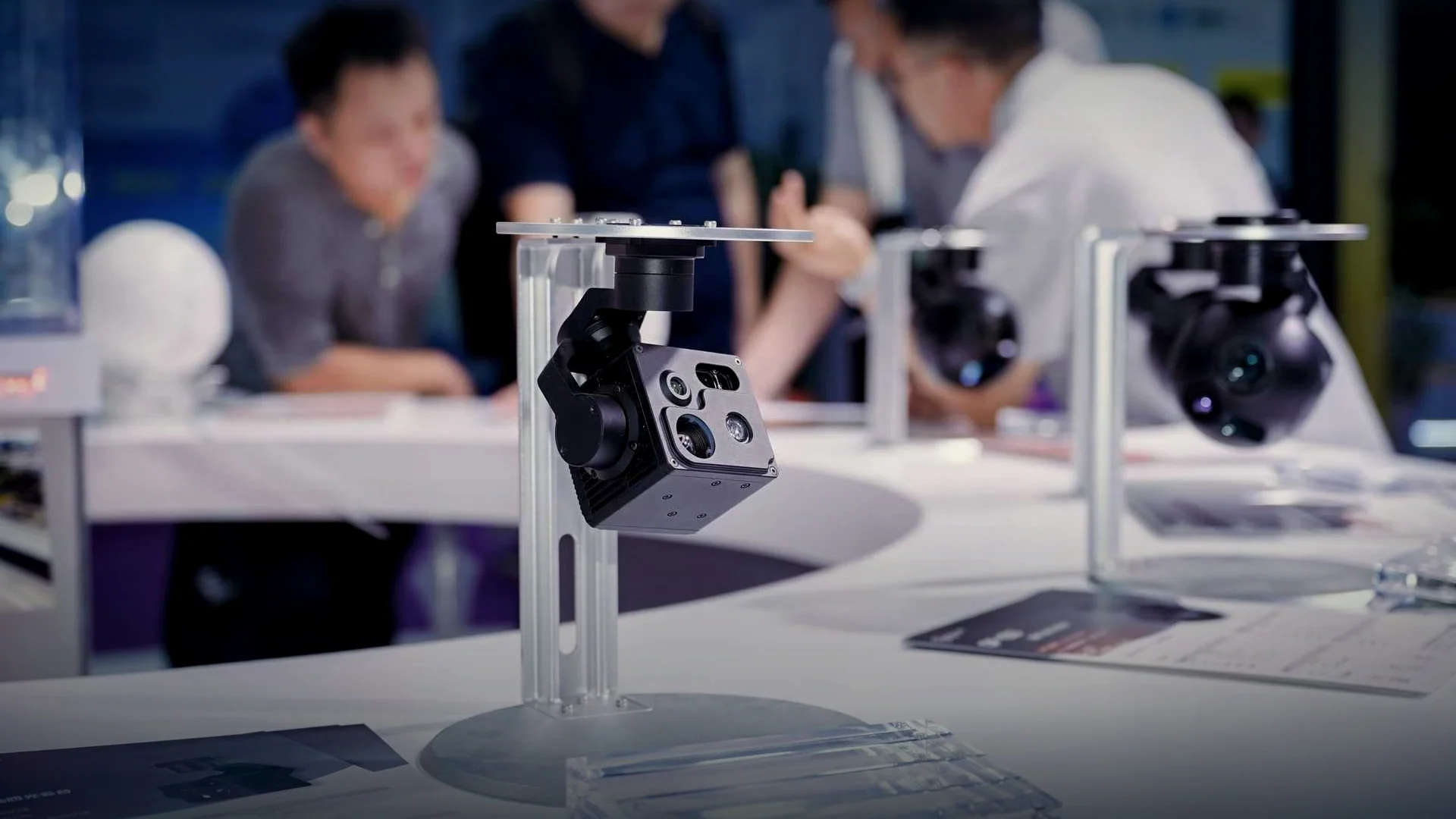
3 series · 27 models · 240 g to 22 kg
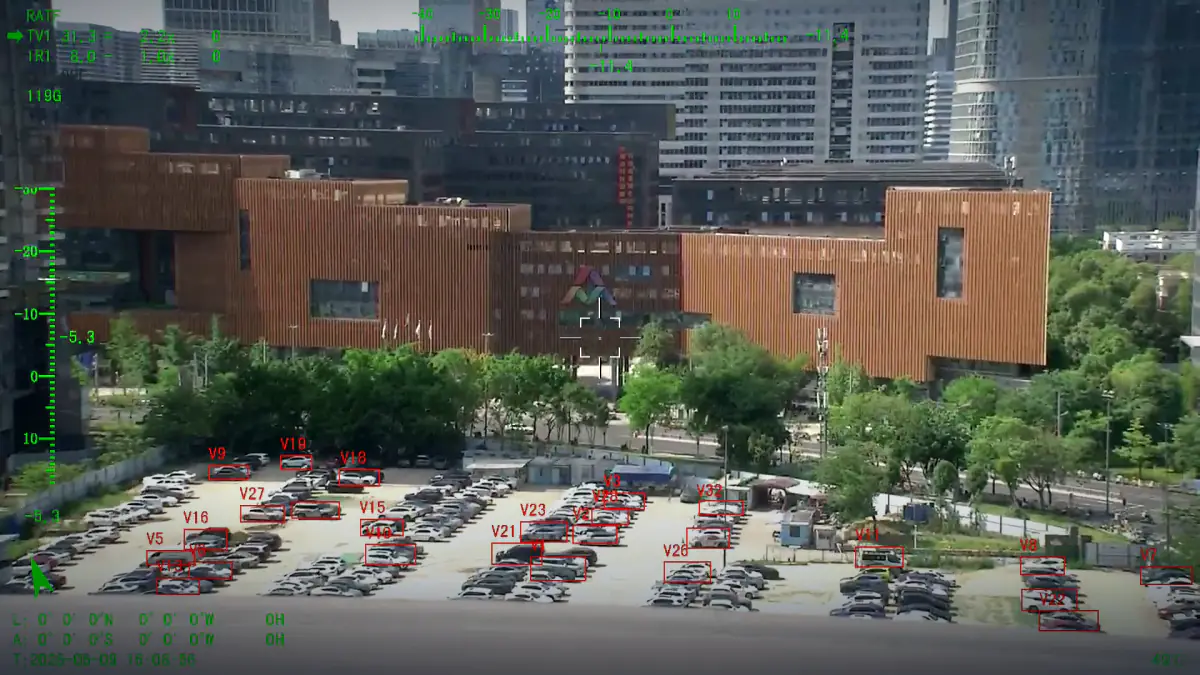
HITS designs and manufactures stabilised imaging payloads for UAVs (unmanned aerial vehicles) and helicopters. The range is organised into three hardware series and four selection guides, and every model shares the same control protocol, video pipeline and AI (artificial intelligence) tracking module.
Three hardware families, from 240 g gimbal cameras for small multirotors to 22 kg targeting pods for helicopters and large fixed-wing aircraft.
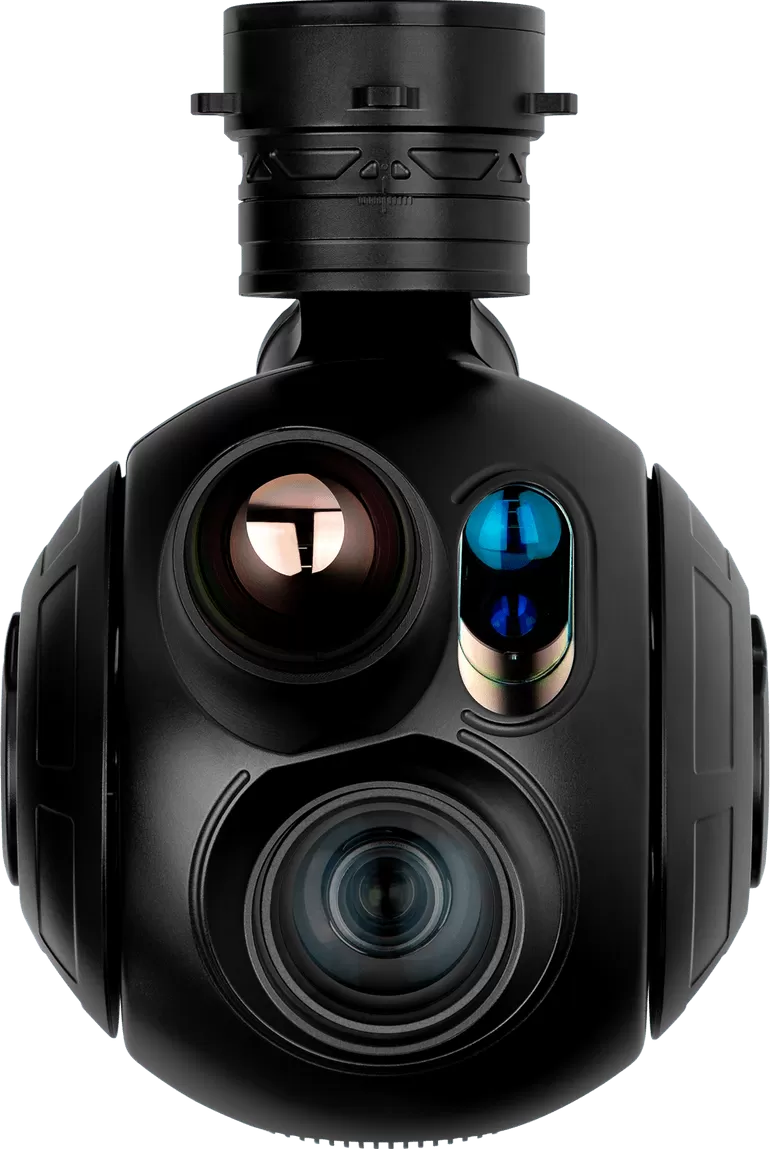
15 models · 240 g – 1.5 kg
Two- and three-axis gyro-stabilised camera heads for multirotors, fixed-wing aircraft and helicopters.
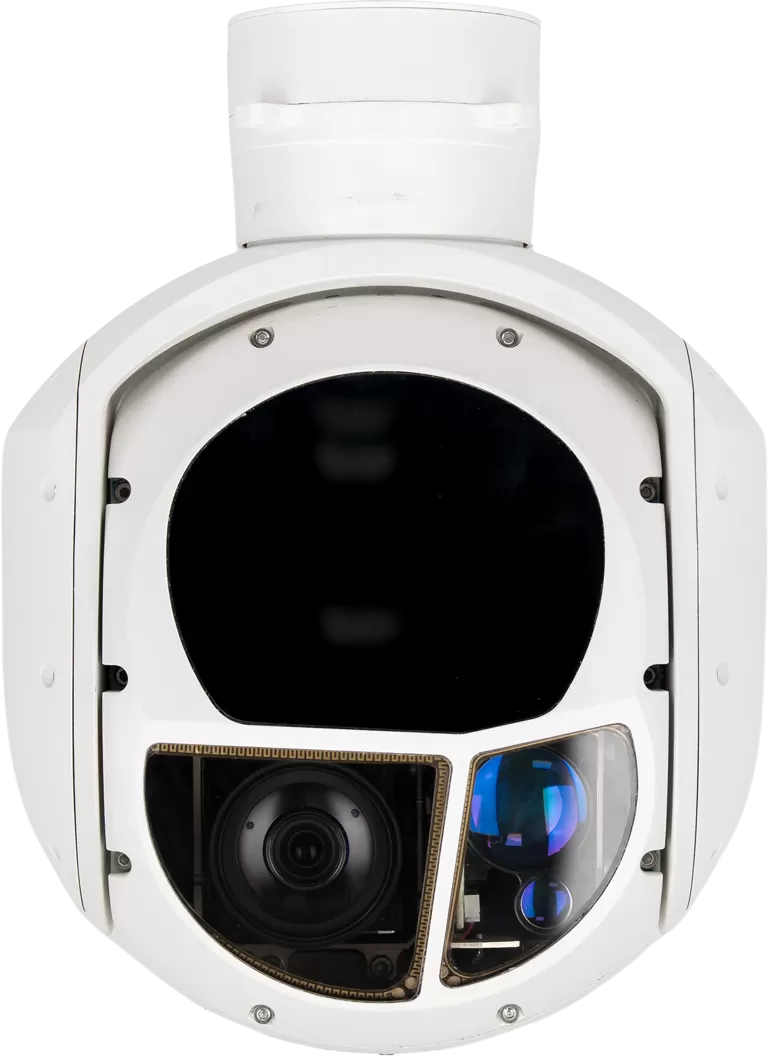
8 models · 1.6 – 10 kg
Larger two-axis multi-sensor pods with 30x to 55x zoom, thermal imaging and laser ranging to 15 km.
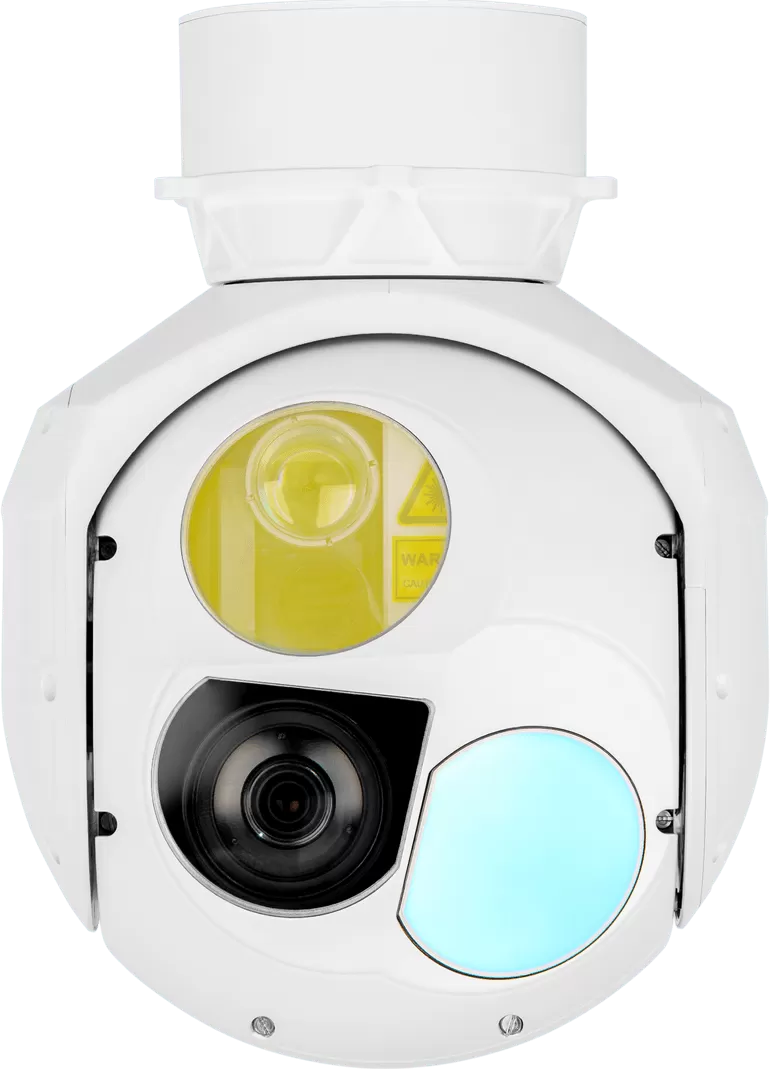
4 models · 2.5 – 22 kg
Targeting pods that add 1064 nm laser designation to the same imaging and stabilisation architecture.
Twenty-seven stabilised heads and pods across the three series, from 240 g two-axis gimbals to 22 kg laser designator pods. Every model shares the same control protocol, video pipeline and AI tracking module, so moving up or down a series does not change the aircraft-side integration.
2-axis · EO + IR
The lightest dual-sensor head in the range — 2K daylight plus thermal on 260 g.
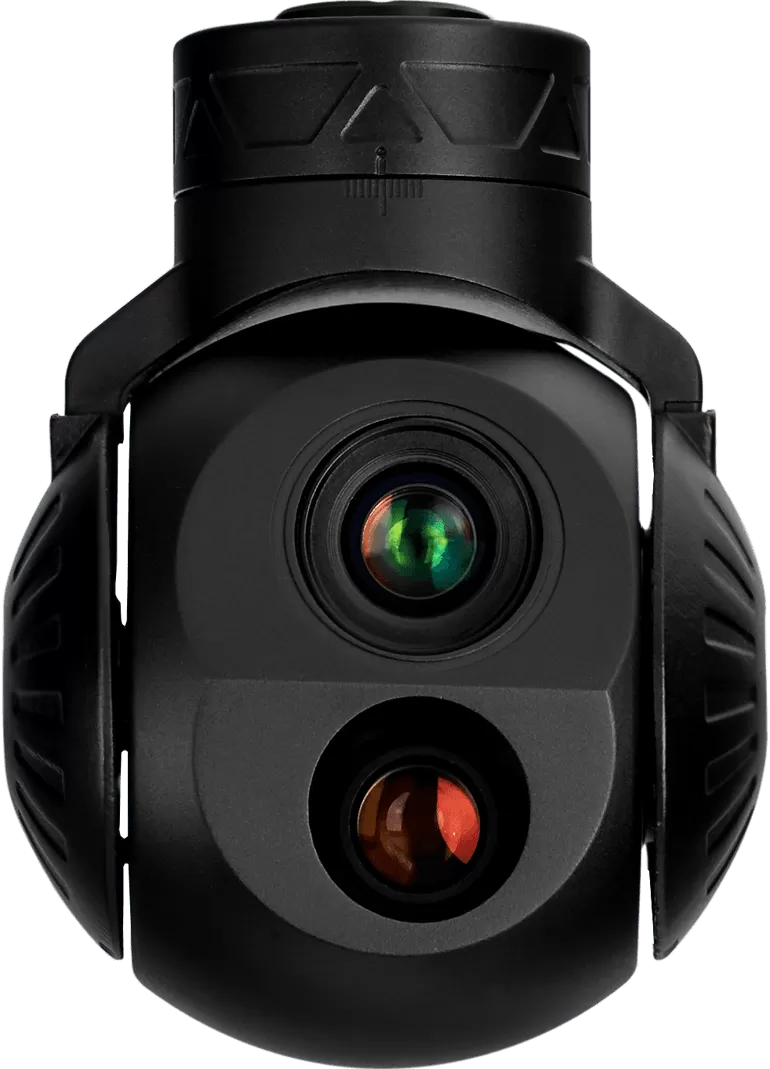
2-axis · EO
Two fixed visible cameras — a wide and a narrow channel — at the lowest weight in the series.
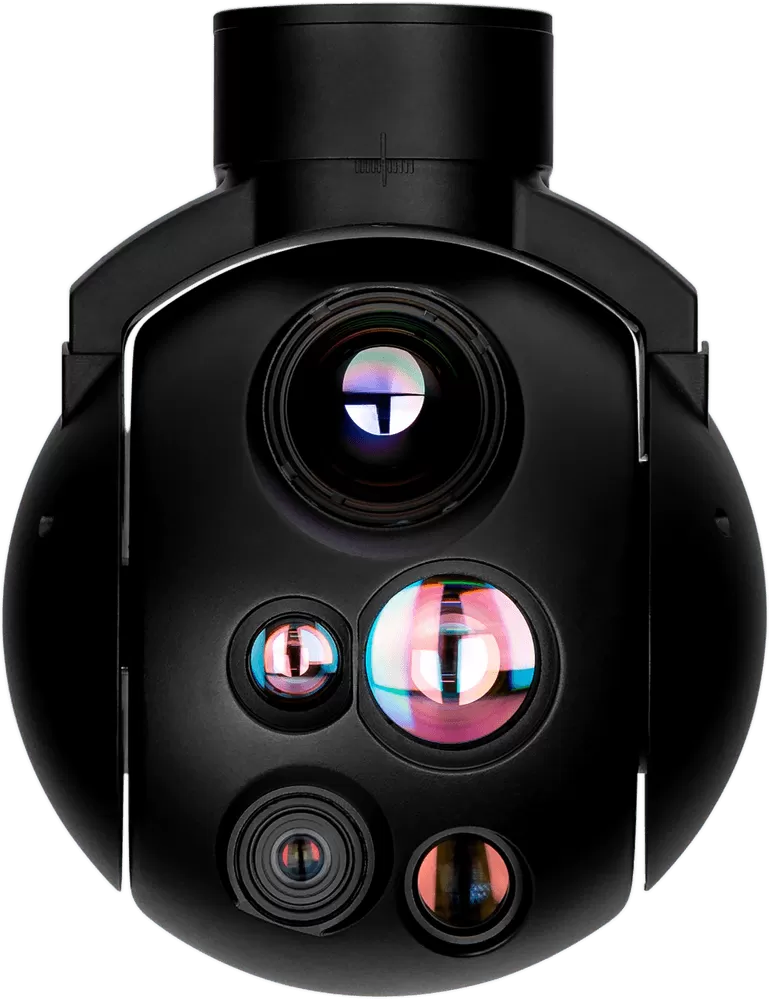
2-axis · EO + IR + LRF
Adds 3 km laser ranging to a two-axis platform for crews that need coordinates, not just imagery.
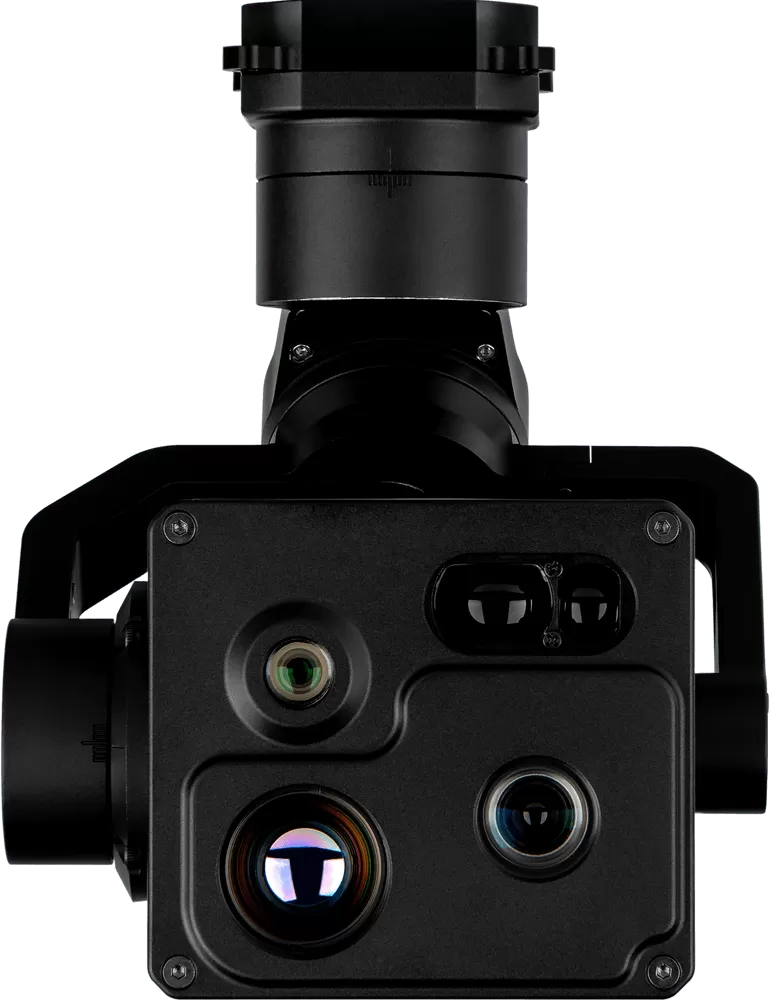
3-axis · EO + IR + LRF
Four optical channels and a quick-release mount on the lightest three-axis head we build.
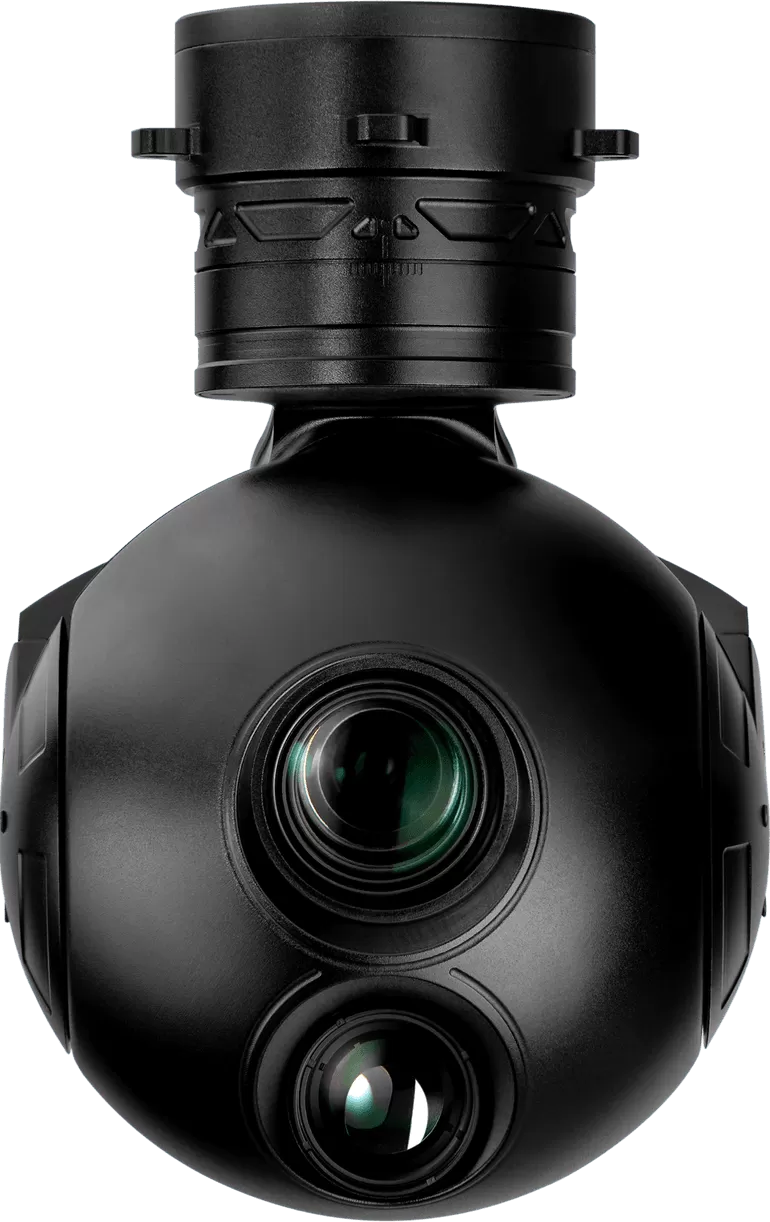
3-axis · EO + IR
The entry point to full roll-stabilised zoom and thermal imaging under a kilogram.
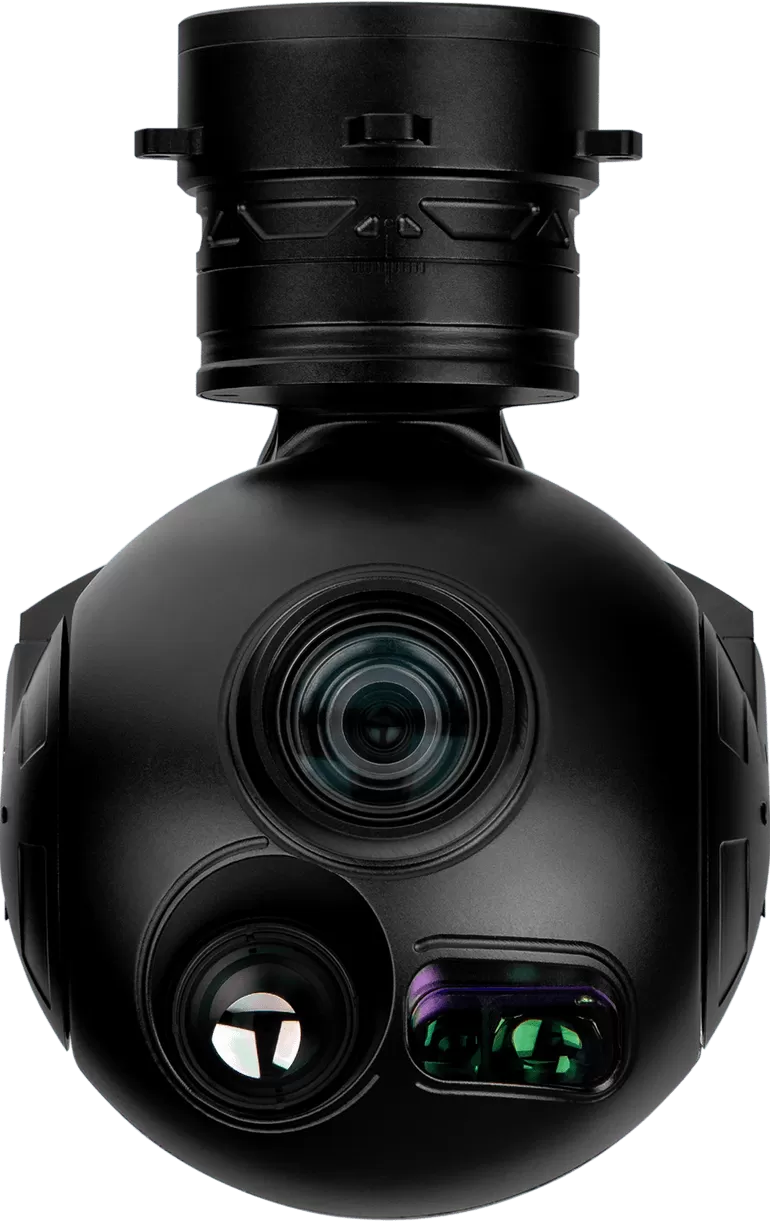
3-axis · EO + IR + LRF
The same 800 g three-axis head as the 100D, with a 1.5 km laser rangefinder added.
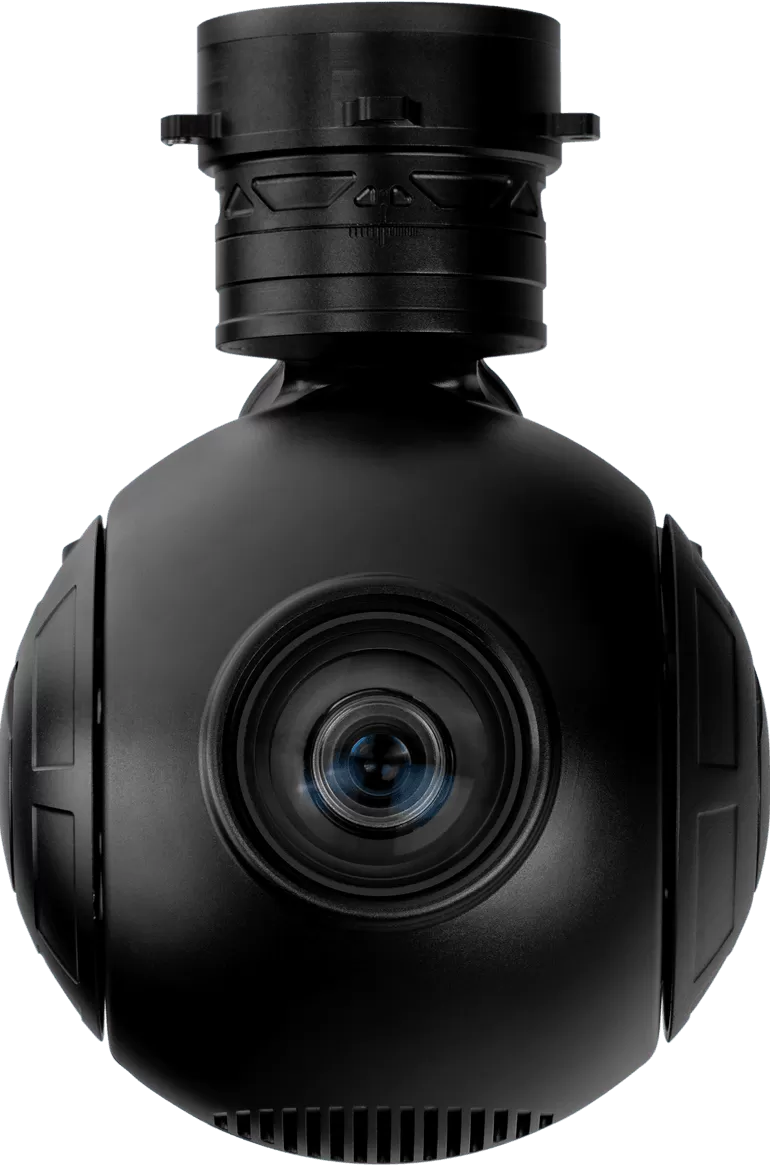
3-axis · EO
A 40x daylight optic alone, for daylight-only surveillance where the weight budget rules out a thermal channel.
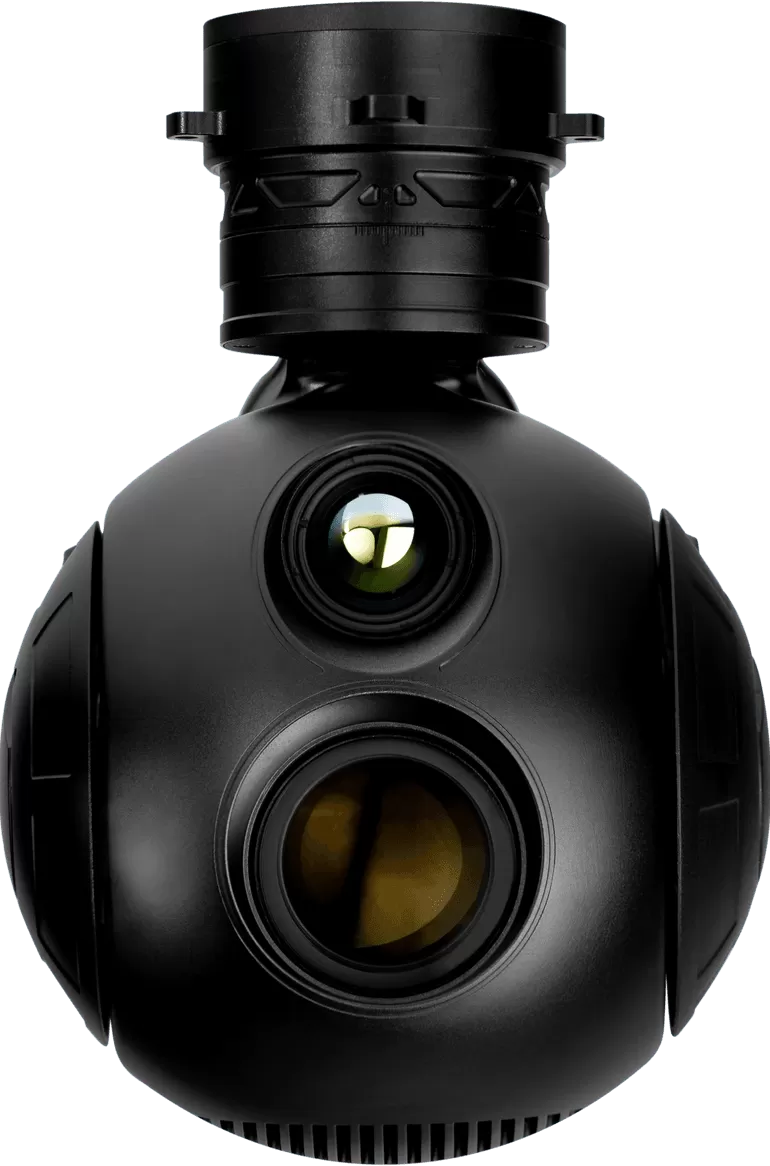
3-axis · EO + IR
30x zoom and thermal imaging on a one-kilogram head with no ranging requirement.
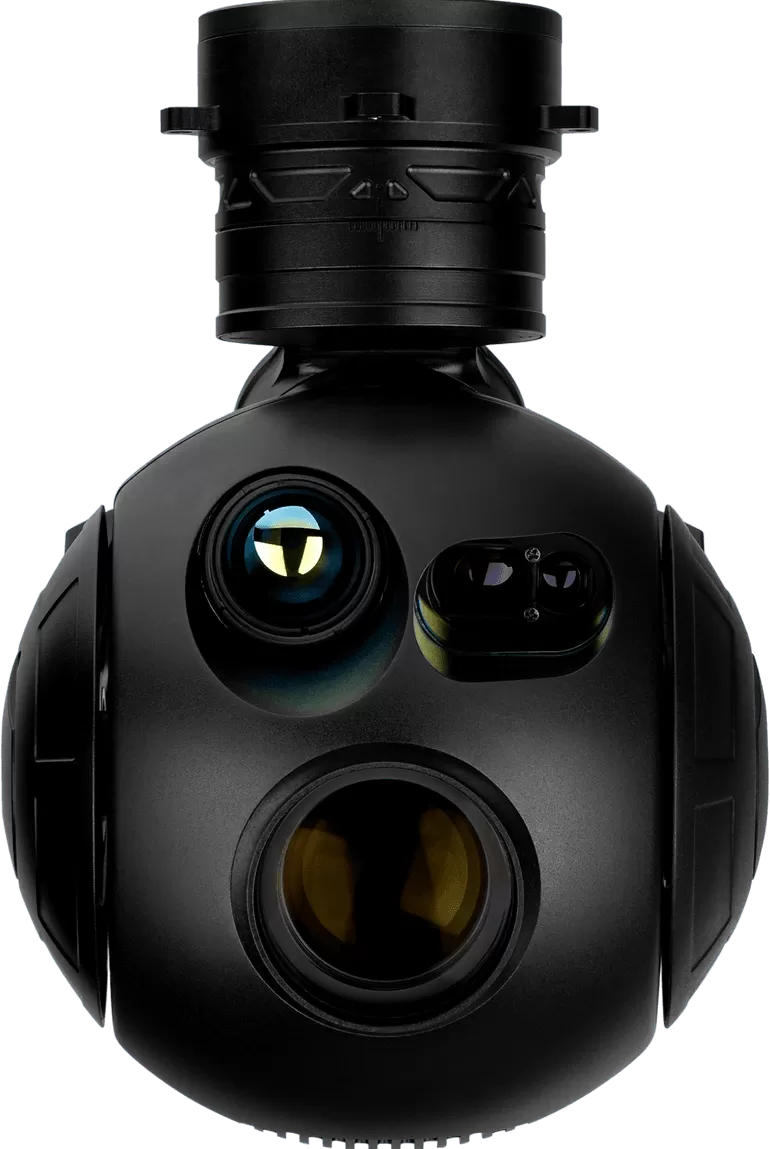
3-axis · EO + IR + LRF
The one-kilogram workhorse: 30x zoom, thermal imaging and a 1.5 km rangefinder.
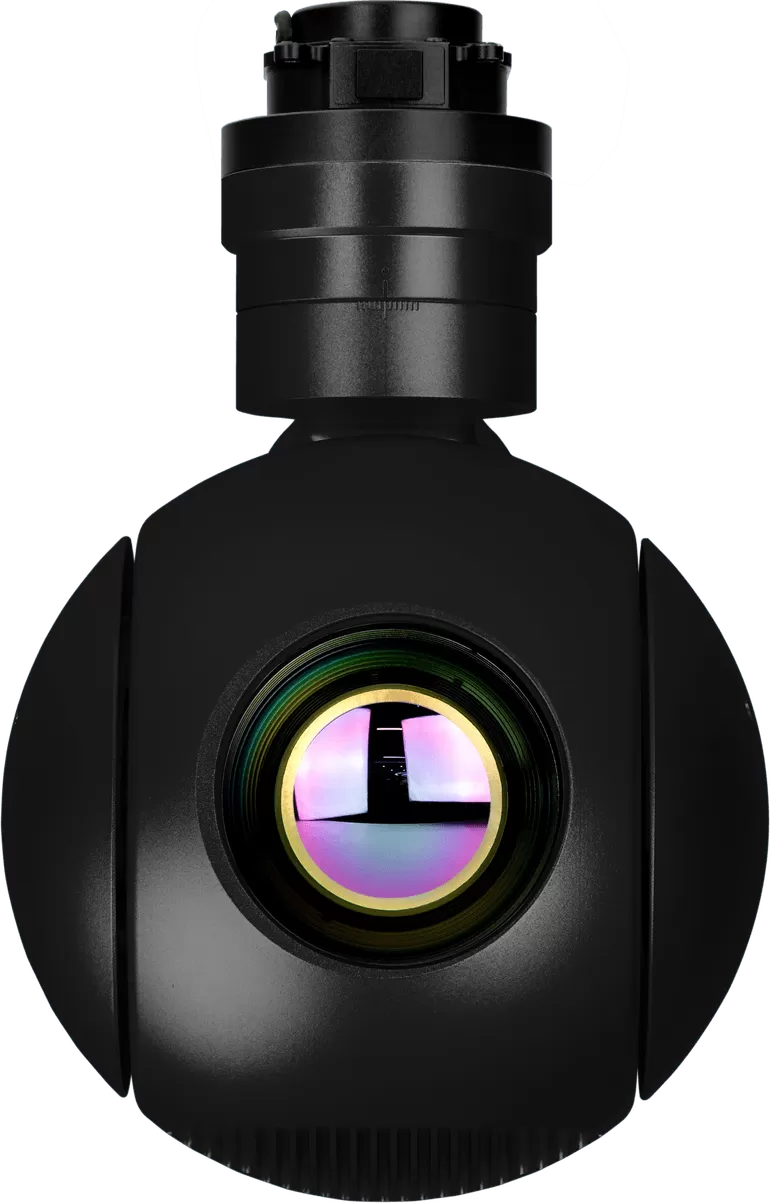
3-axis · IR
A thermal-only head with a 1280 × 1024 sensor — the highest thermal resolution in the series.
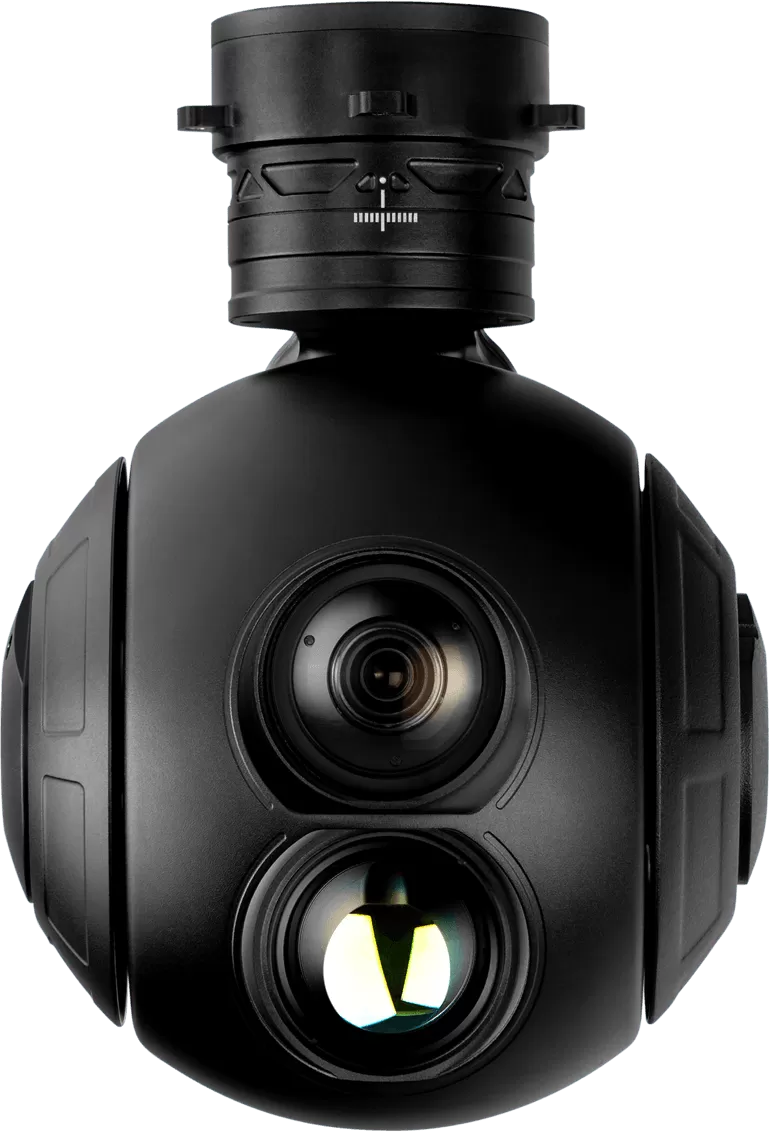
3-axis · EO + IR
The longer 35 mm thermal lens paired with 30x zoom, without the rangefinder.
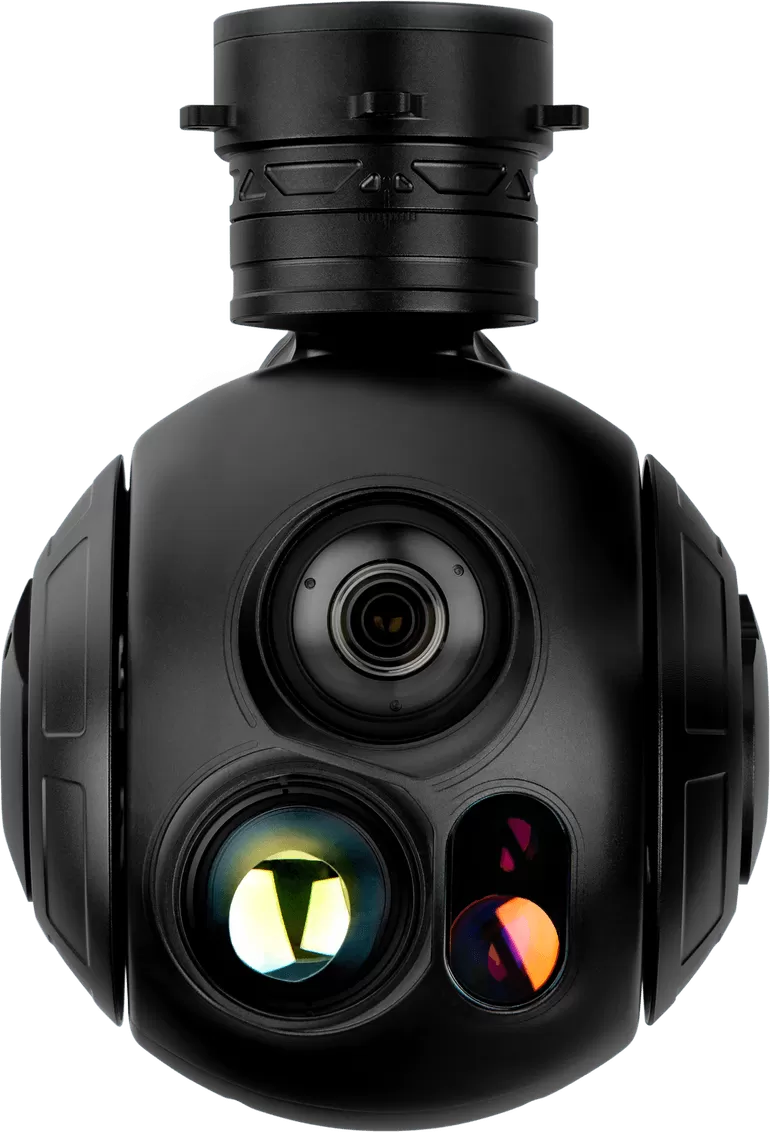
3-axis · EO + IR + LRF
Balanced mid-range turret: 30x zoom, a long thermal lens and 3 km ranging.
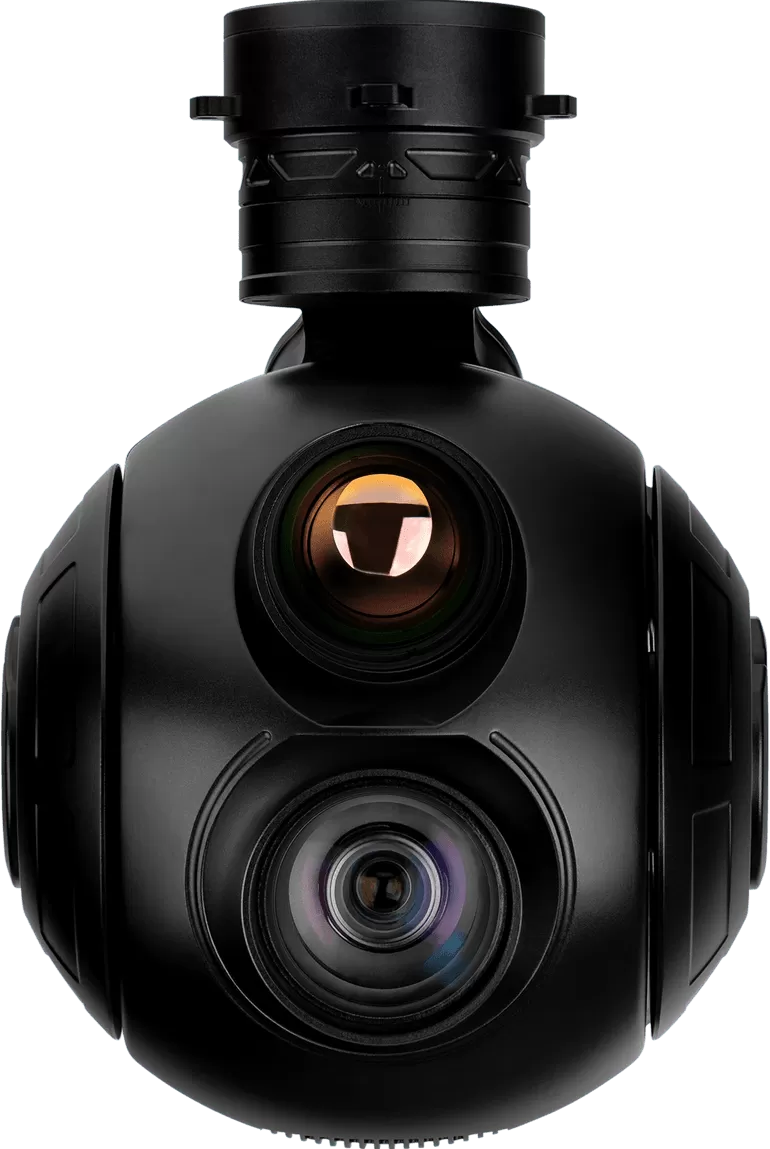
3-axis · EO + IR
The 40x optic with thermal imaging, for daylight and night identification at long range.
3-axis · EO + IR + LRF
The flagship of the compact range: 40x zoom, thermal imaging and 3 km ranging on one stabilised cage.
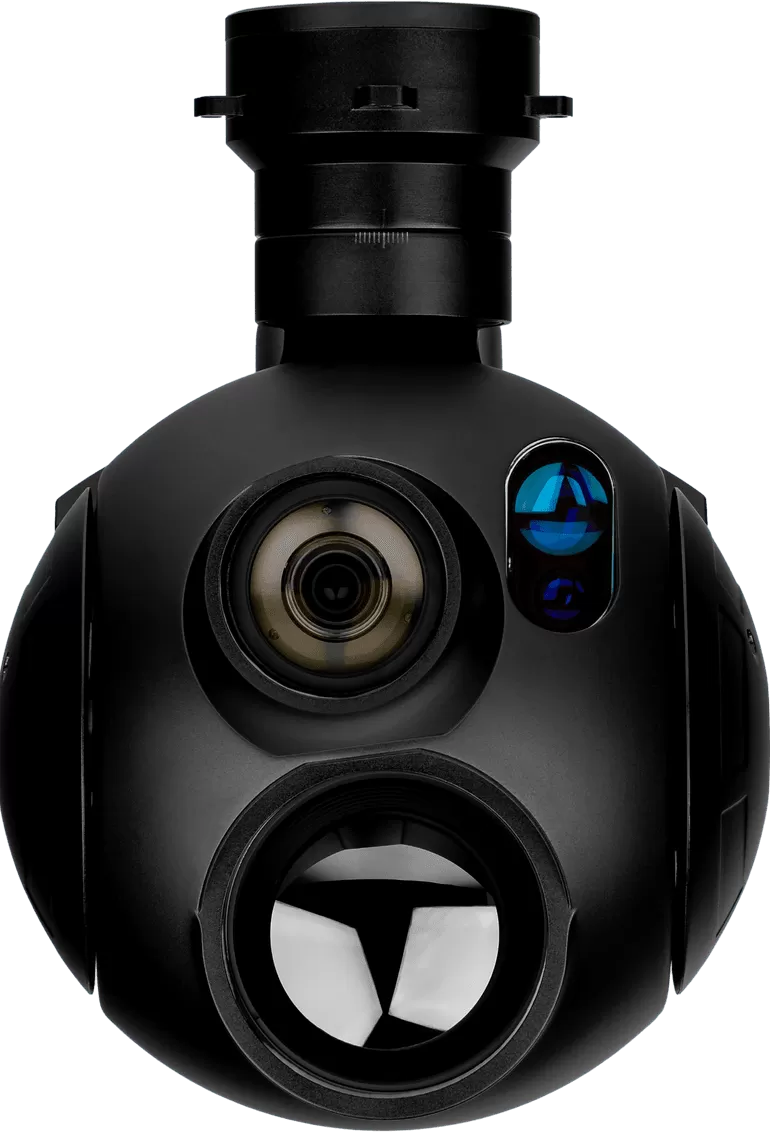
3-axis · EO + IR + LRF
A 50 mm thermal lens gives the longest thermal reach in the compact range.
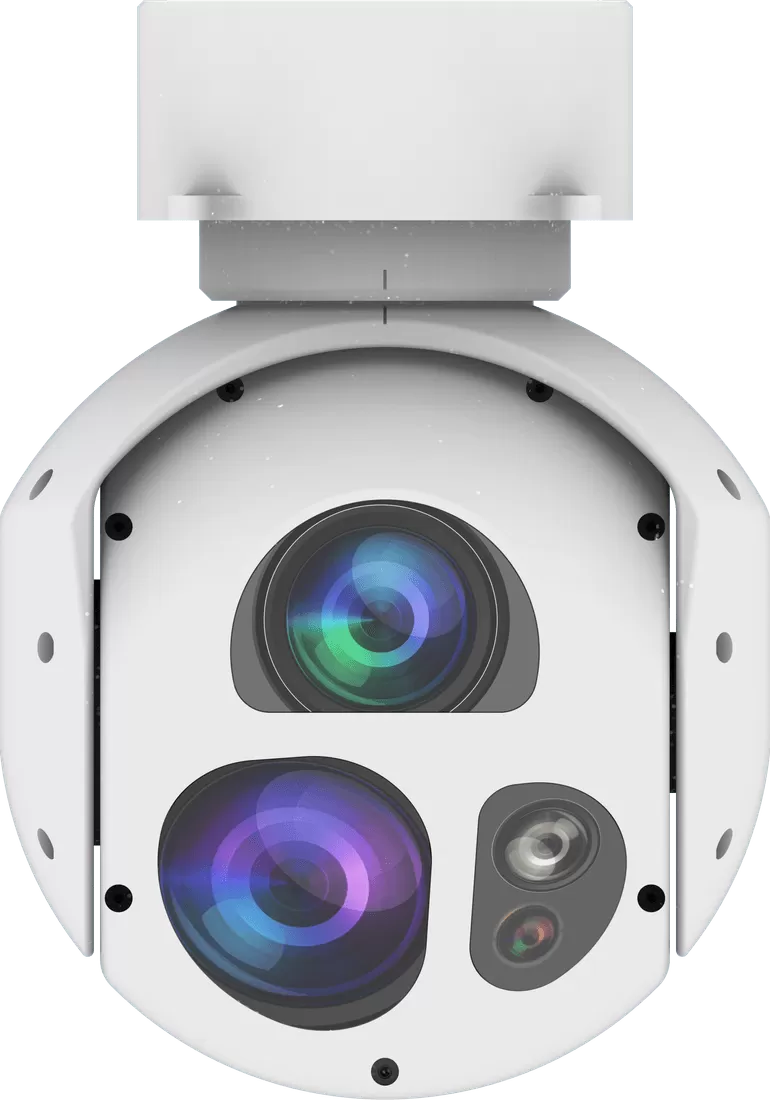
2-axis · EO + IR + LRF
The smallest pod in the XQ range: 30x zoom, a 35 mm thermal channel and 3 km ranging at 1.6 kg.
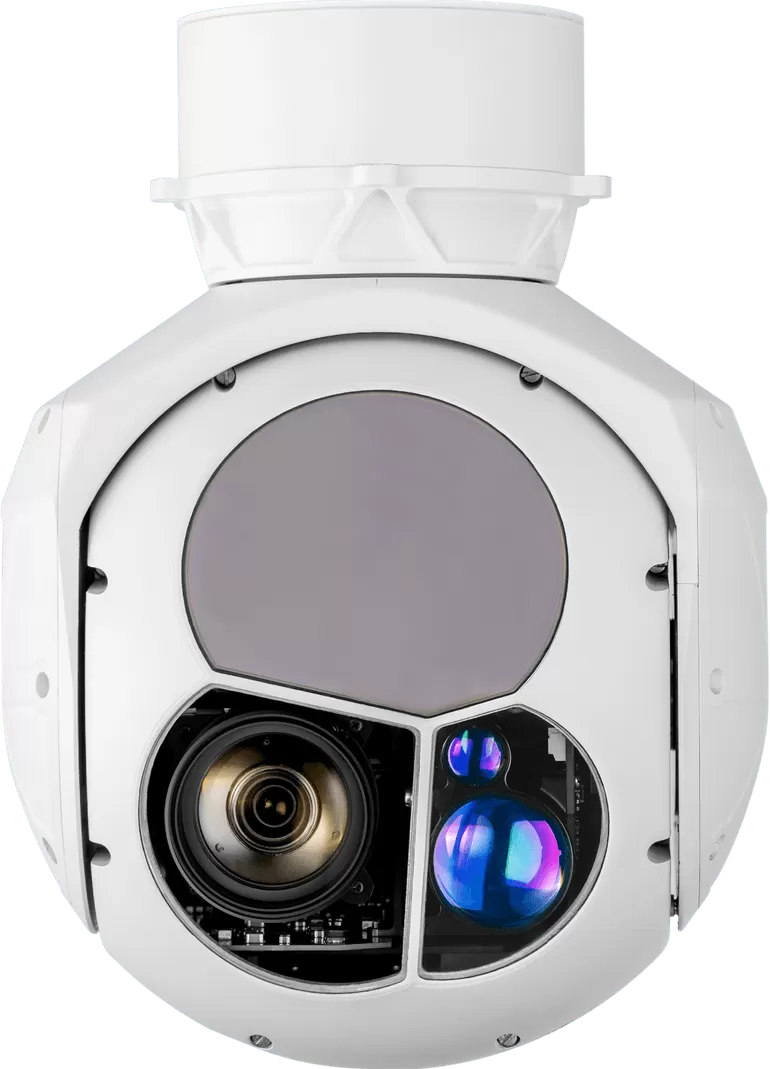
2-axis · EO + IR + LRF
A 55 mm thermal lens and 5 km ranging for platforms that can carry 2.2 kg on the hardpoint.
2-axis · EO + IR + LRF
1280 × 1024 thermal on a 75 mm lens — the long-range imaging workhorse of the pod range.
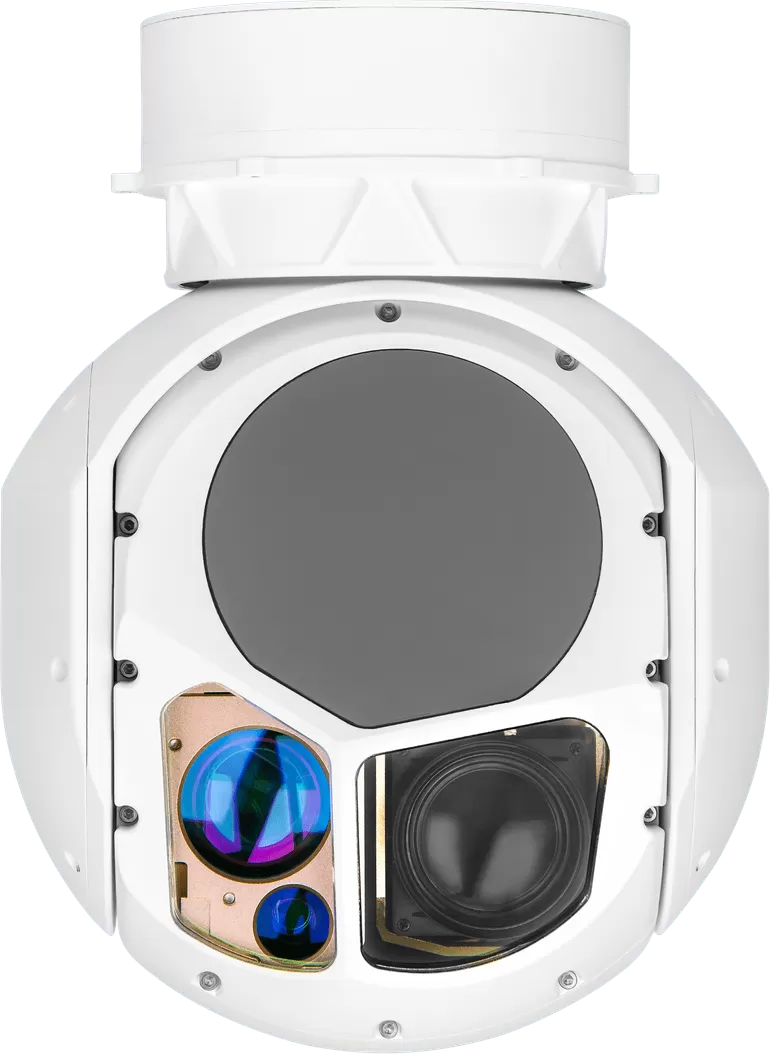
2-axis · EO + IR + LRF
4K daylight imaging at 3840 × 2160 with 17.5x zoom and 6 km ranging.
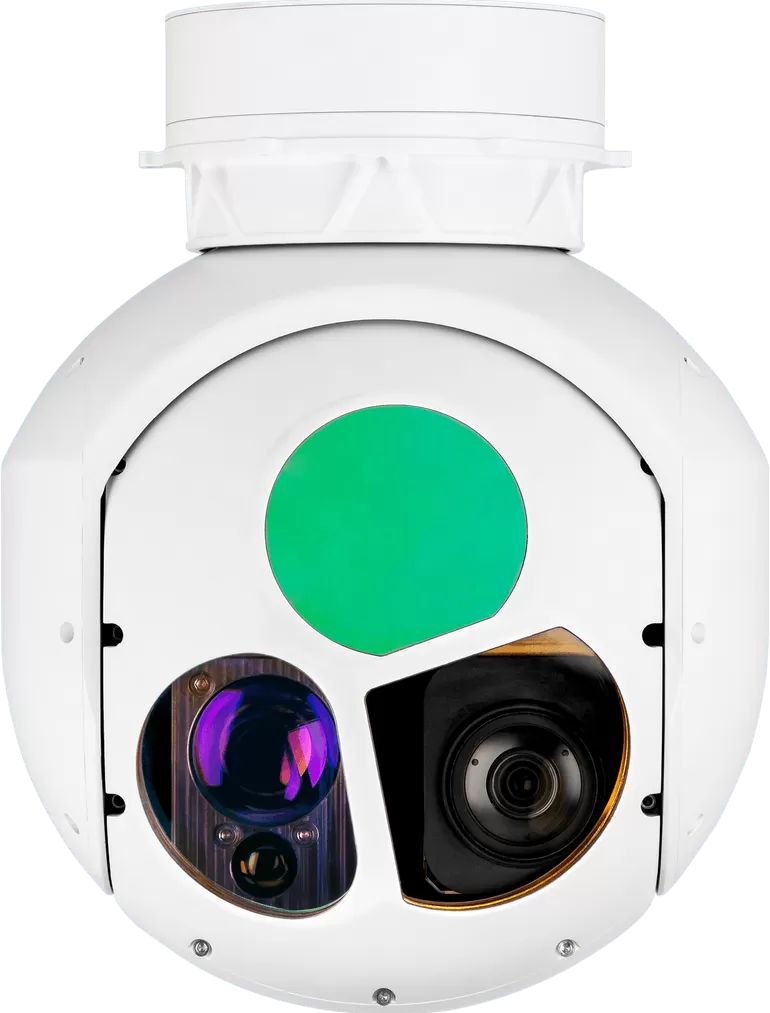
2-axis · EO + IR + LRF
A continuous-zoom thermal channel from 40 mm to 220 mm plus 9.5 km ranging on a 5 kg pod.
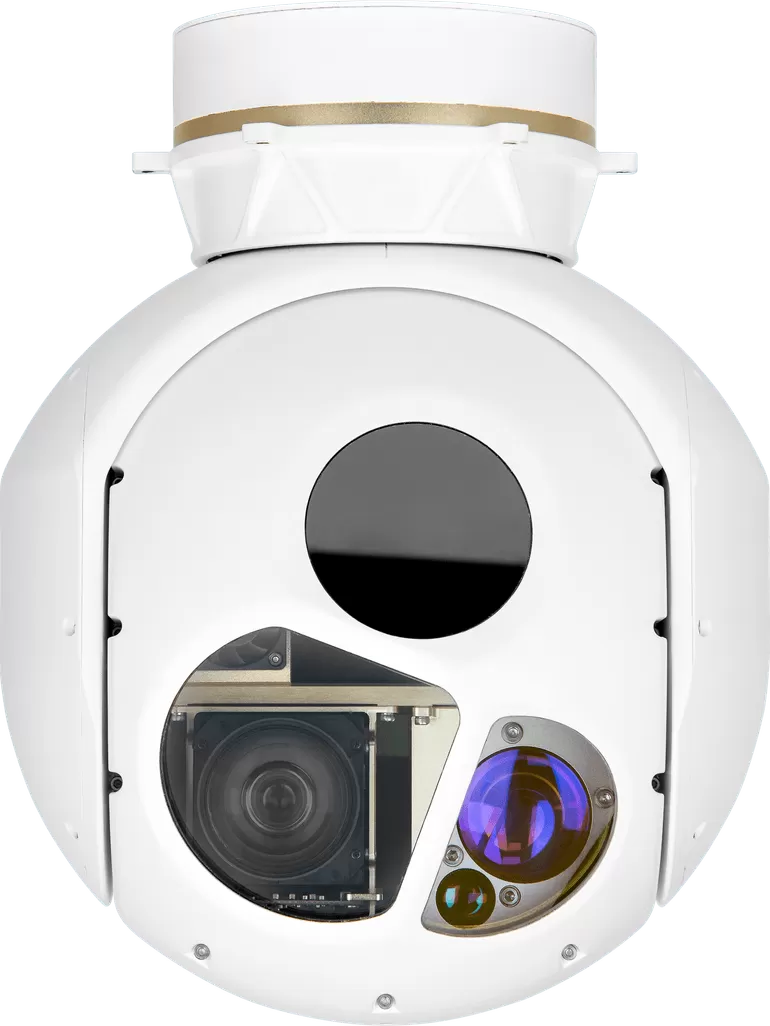
2-axis · EO + IR + LRF
55x daylight zoom and a 275 mm thermal reach for identification at the edge of the envelope.
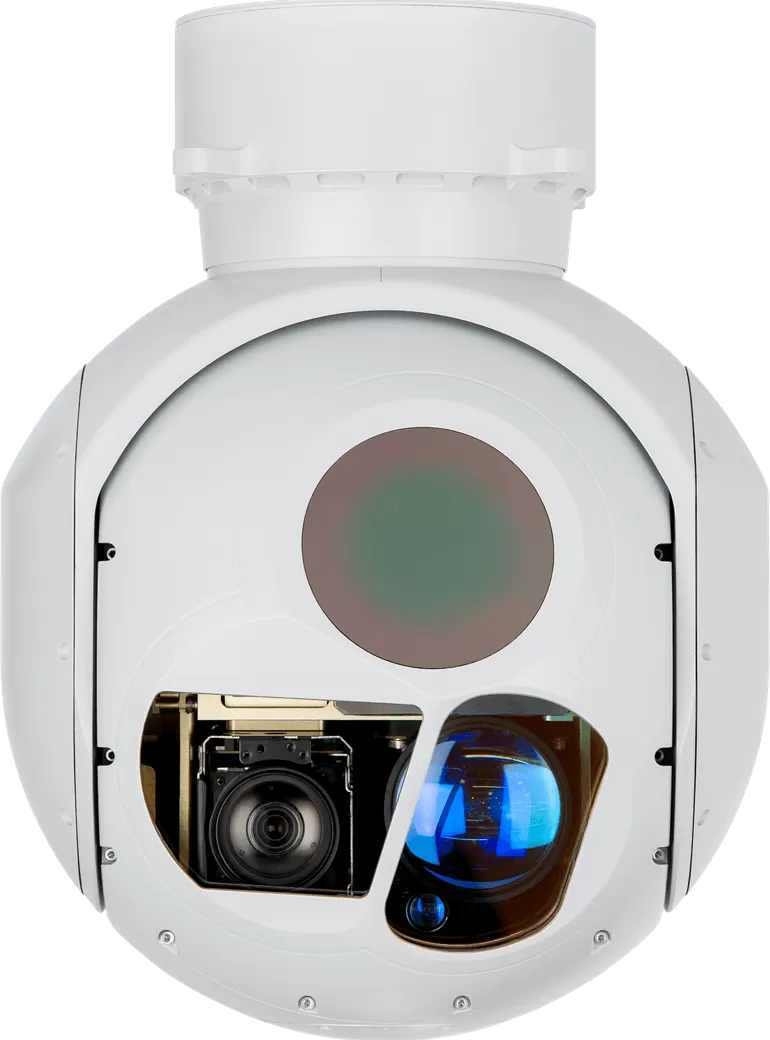
2-axis · EO + IR + LRF
The long-range pod: 15 km ranging and a 254 mm turret for maritime and border patrol aircraft.
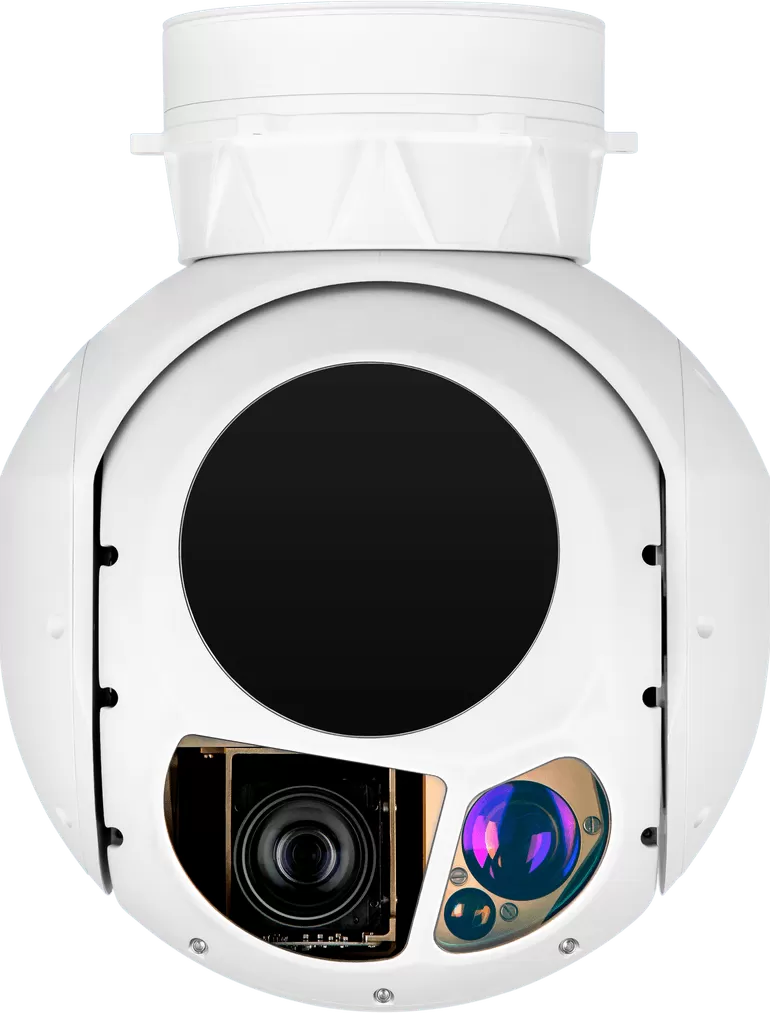
2-axis · EO + IR + LRF
55x daylight zoom with dual continuous-zoom optics for the largest airframes in the range.
2-axis · EO + IR + LRF + designator
A 2.5 kg targeting pod with 1064 nm designation and ranging from 120 m to 5 km.
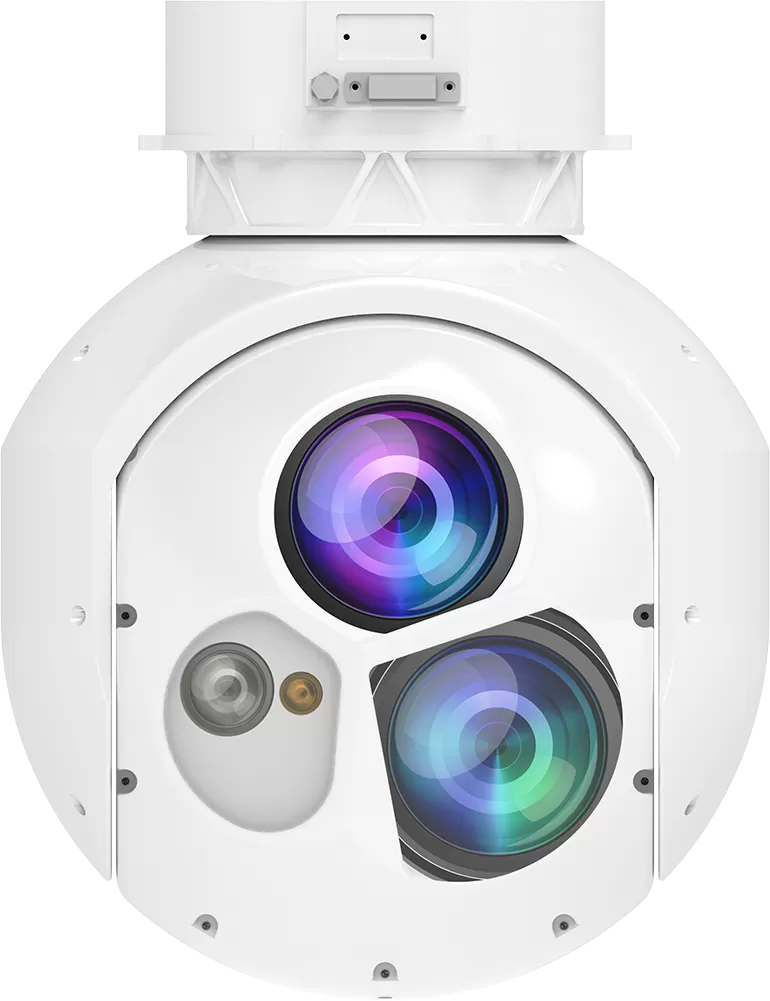
2-axis · EO + IR + LRF + designator
Laser designation plus 8 km ranging on a 5.5 kg two-axis pod.
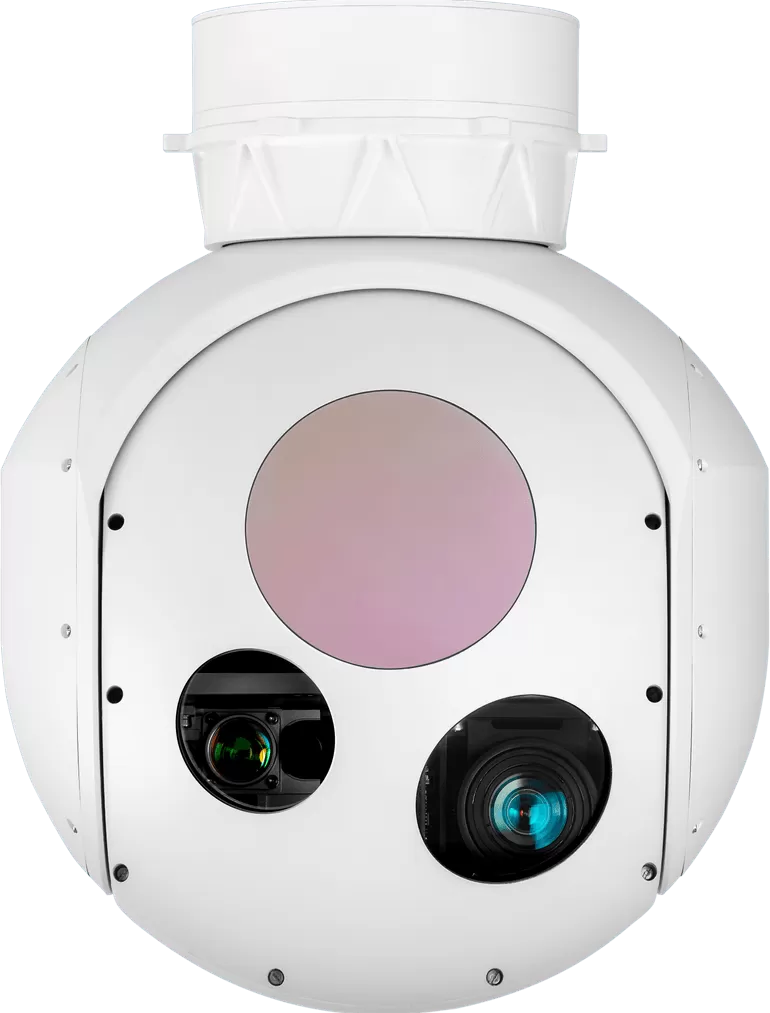
2-axis · EO + IR + LRF + designator
The long-range designator: 10 km ranging, a 300 mm thermal zoom and a 290 mm turret.
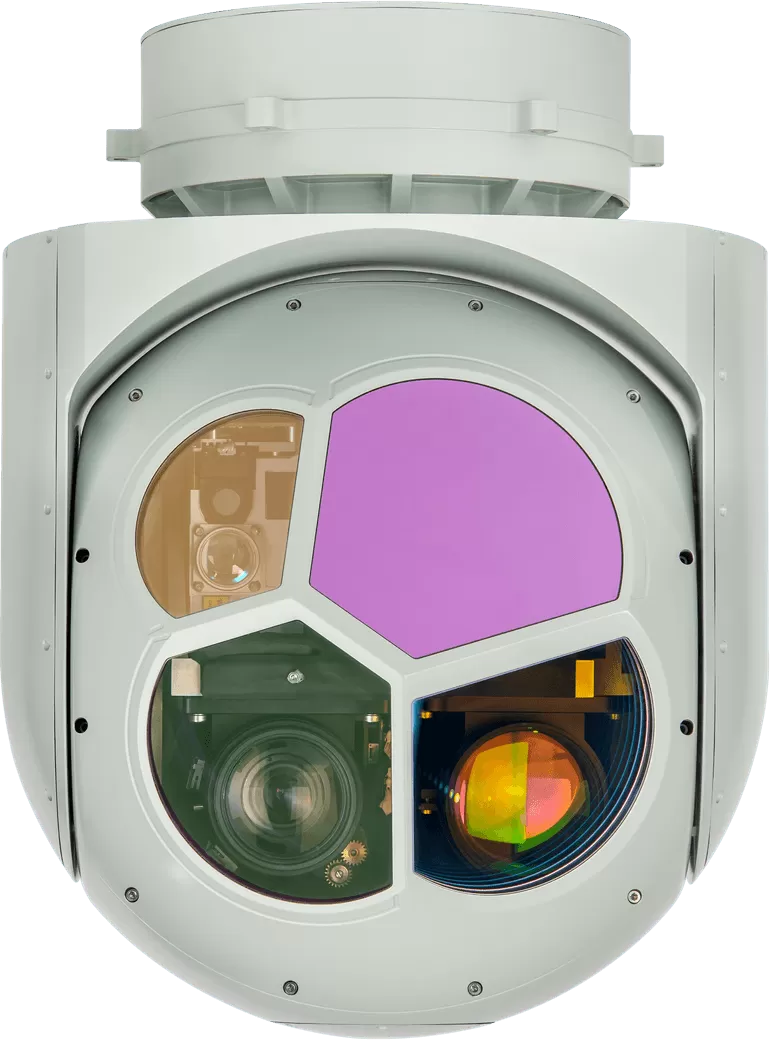
2-axis · EO + IR + LRF + designator
The largest pod we build — a 330 mm turret and 22 kg of payload capacity for heavy platforms.
If you are starting from the sensing channel rather than the platform, these four guides cut across all three series.
Uncooled long-wave infrared from 640 × 512 to 1280 × 1024, boresighted to the visible channel.
Detector and lens selection for the infrared channel, from a 19 mm wide field to a 50 mm reach.
Visible-light channels from a fixed 2K sensor up to 48 MP hybrid zoom on stabilised mounts.
Visible and thermal on one boresighted cage, with optional laser rangefinding.
Long-form articles for the commercial and engineering sides of the same decision.
What each channel sees, where each one stops, and which configuration suits which mission.
Mission first, then payload family, then weight, power, mounts and interfaces.
Mounting, power, MAVLink (Micro Air Vehicle Link), video and the bench-to-flight test sequence.
Factory checks, documents, quotations and what to test before a production order.
Which axes each head holds, what the third axis buys you, and how to pick a design for your airframe.
What the element count buys you, and why the lens decides more than the detector.
Why a 40x ratio is not a reach, and what actually decides the detail you get at distance.
What to specify, how detection and tracking are tested separately, and what to ask a supplier.
A high resolution UAV camera only earns its place if it integrates cleanly with the airframe, the ground station and the operator’s workflow. HITS builds three series on one architecture, so the control protocol, video pipeline and AI tracking module do not change when the payload does.
Every model below is a high resolution drone camera system with published optics, sensor and interface data, which means a UAV camera integration can be planned from the specification sheet rather than from a trial flight.
Optics, servo hardware, stabilisation firmware and the AI tracking module are developed by our own engineering team rather than licensed in from outside.
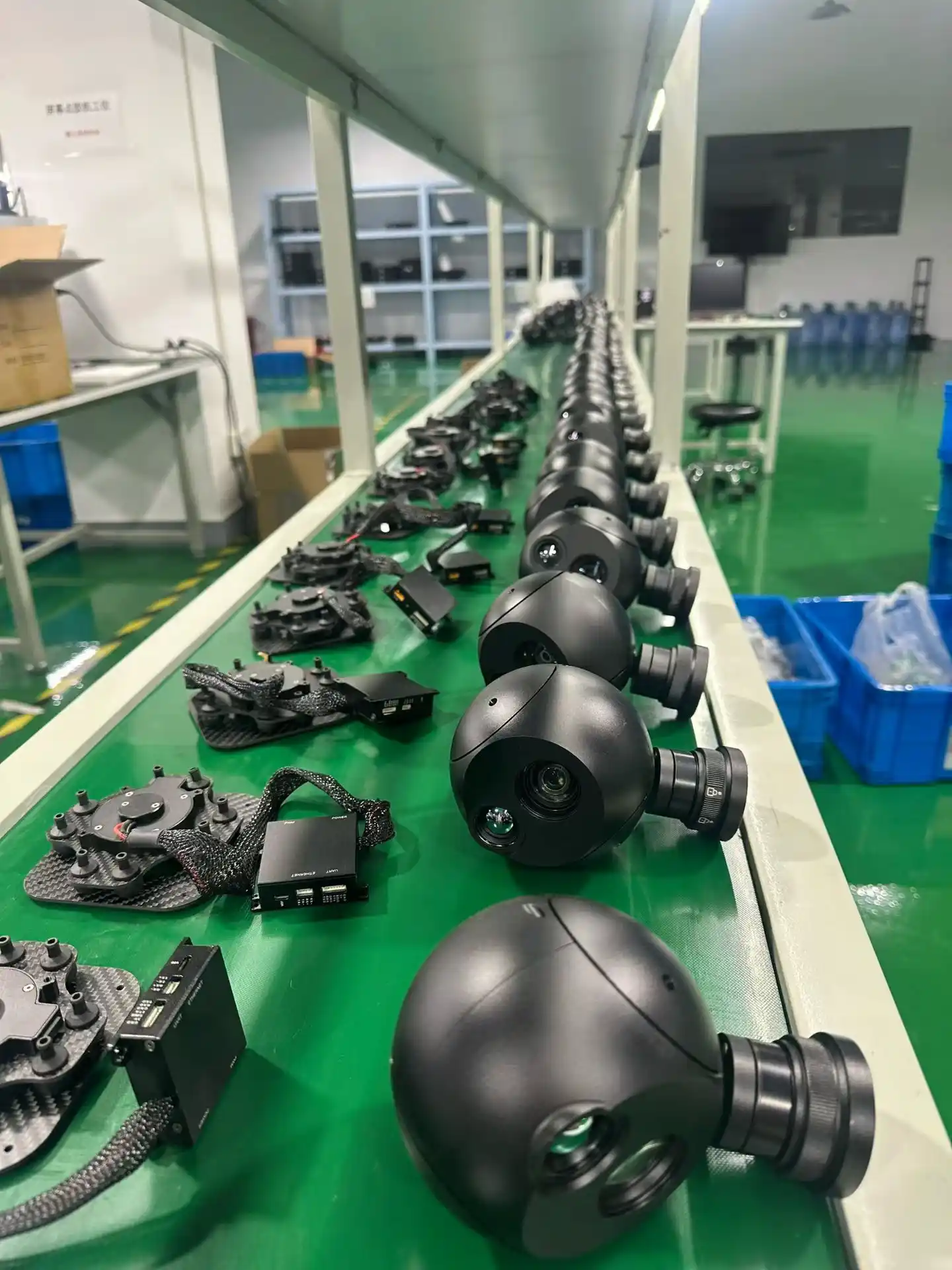
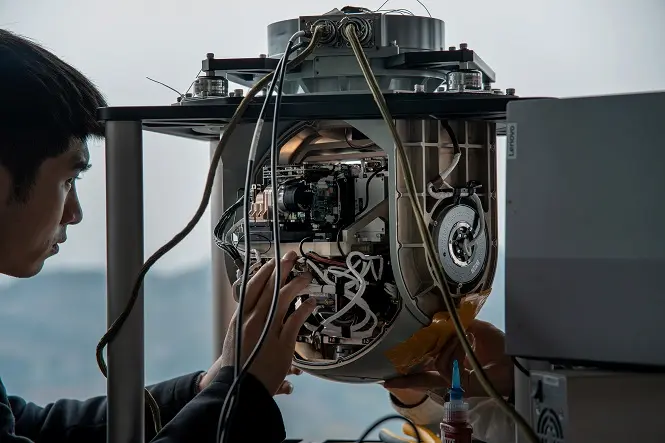
Assembly, optical alignment, calibration and burn-in run under one roof, which is why a 260 g head and a 1.5 kg turret share the same build process.
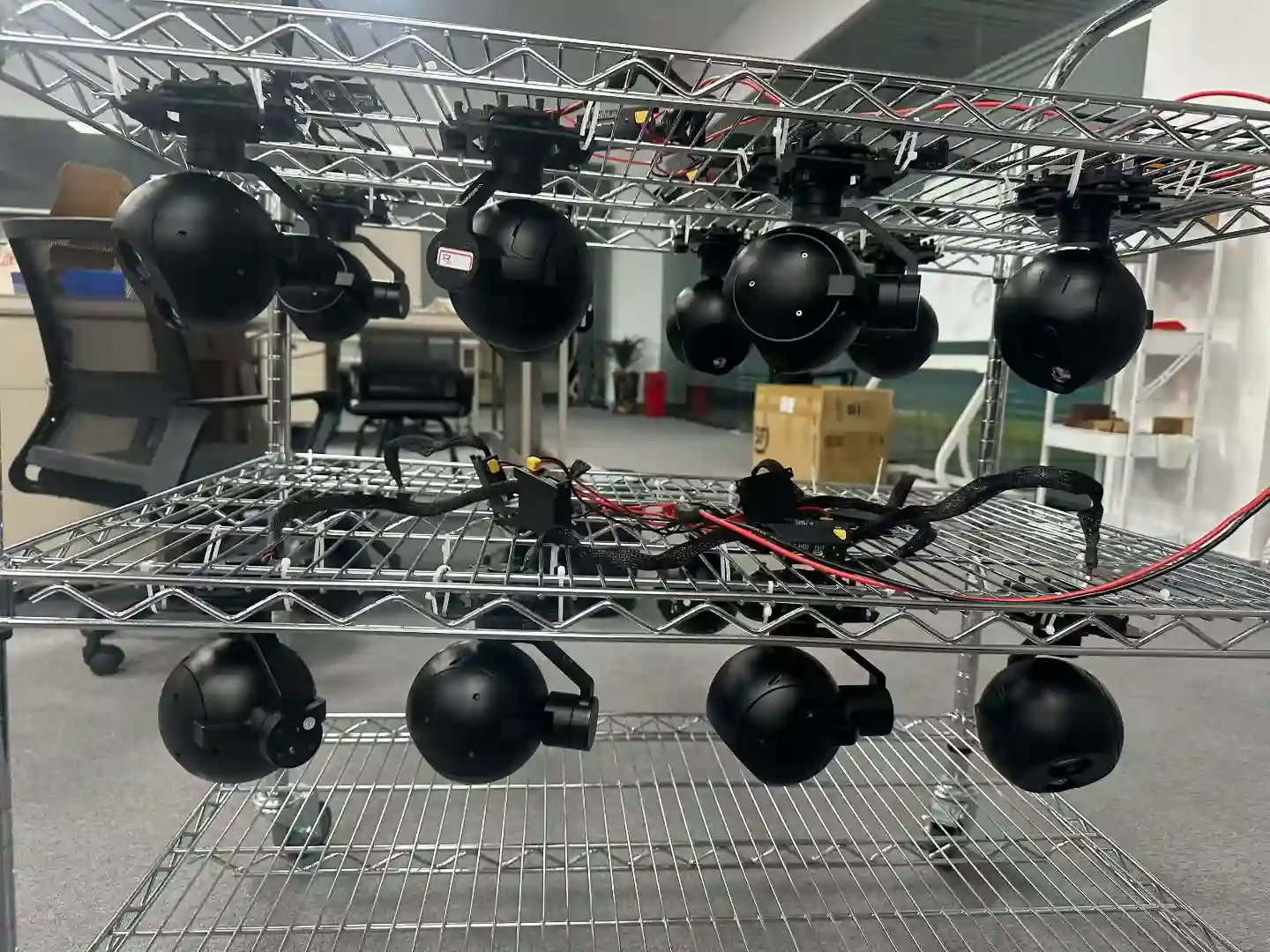
Each unit is temperature-cycled across the full -20 C to +60 C operating range and vibration-tested on our own fixtures before packing.
We publish the control protocol and video pipeline, and support MAVLink, SBUS, RS-422 / RS-232 and Ethernet integration directly from the engineering team.
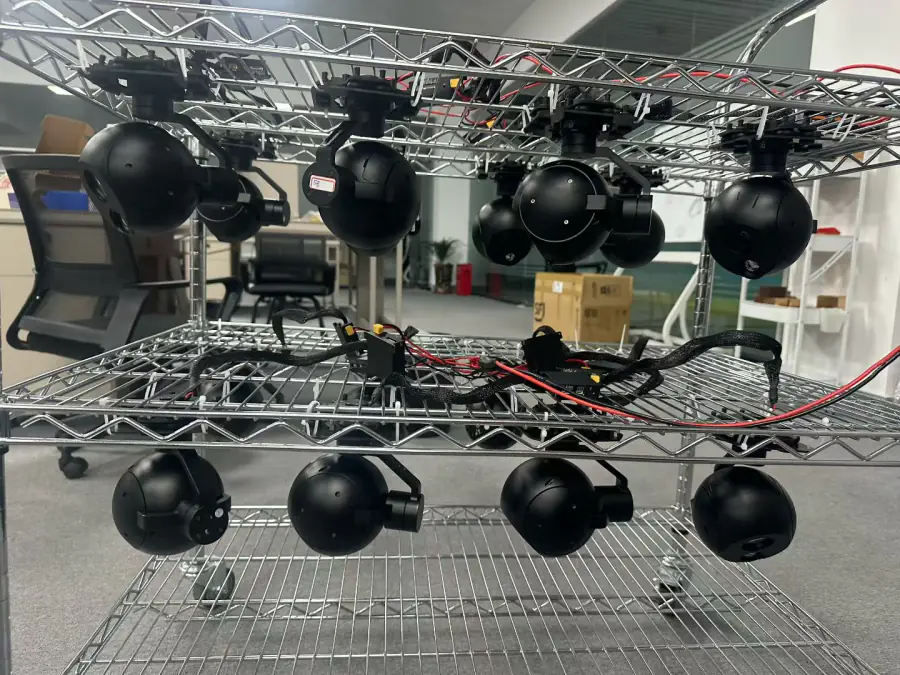
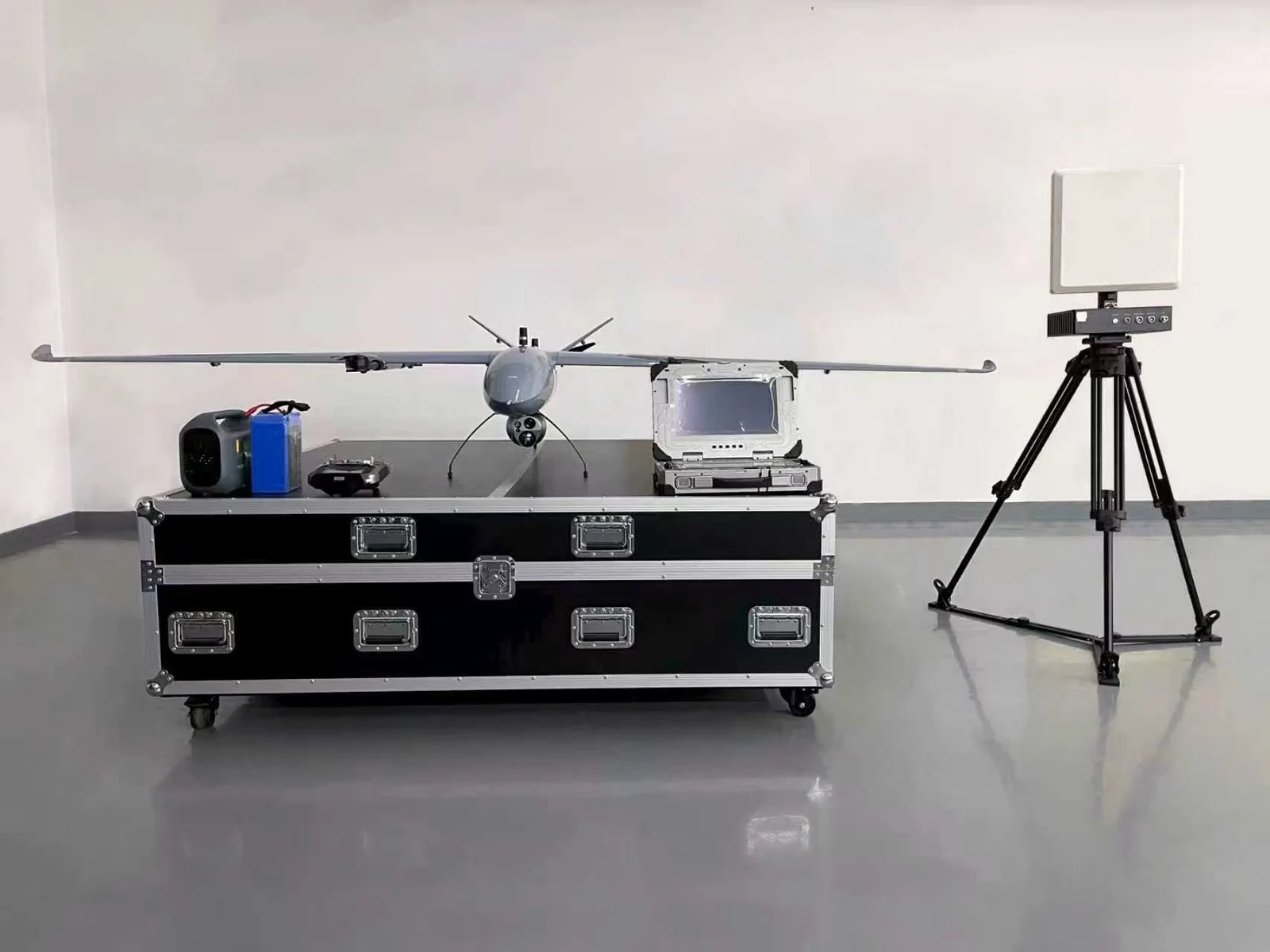
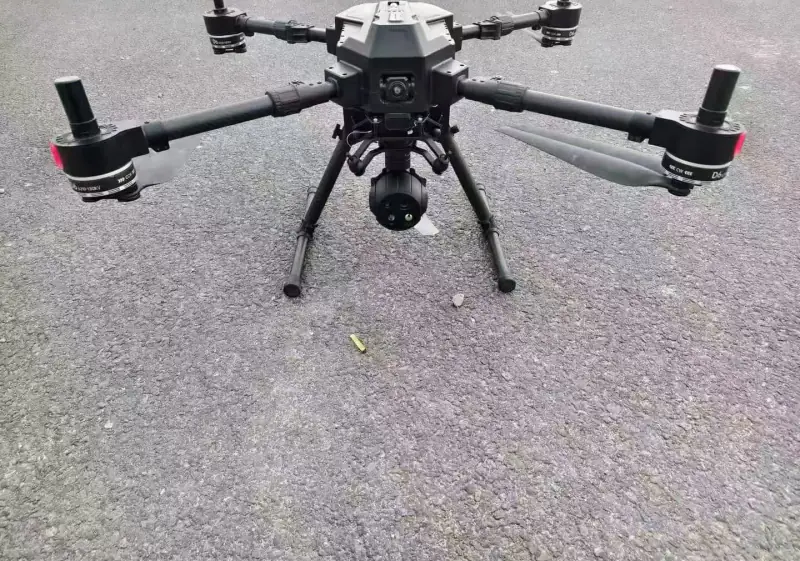
Gimbal cameras, EO/IR (electro-optical/infrared) pods and laser designator pods are not separate product lines bolted together. They share servo firmware, the video pipeline and the AI tracking module, so changing payload does not mean changing the integration.
Optics, motor drives, stabilisation firmware and the AI module are developed by our own team. Assembly, optical alignment, calibration and environmental test happen on our own line, so supply does not depend on a third-party integrator.
Every series is built from the same three building blocks: a stabilised head, a boresighted sensor set and an onboard tracking module. What changes between a small gimbal camera and a targeting pod is the size of the optics, the number of channels and the payload capacity of the airframe it hangs from.
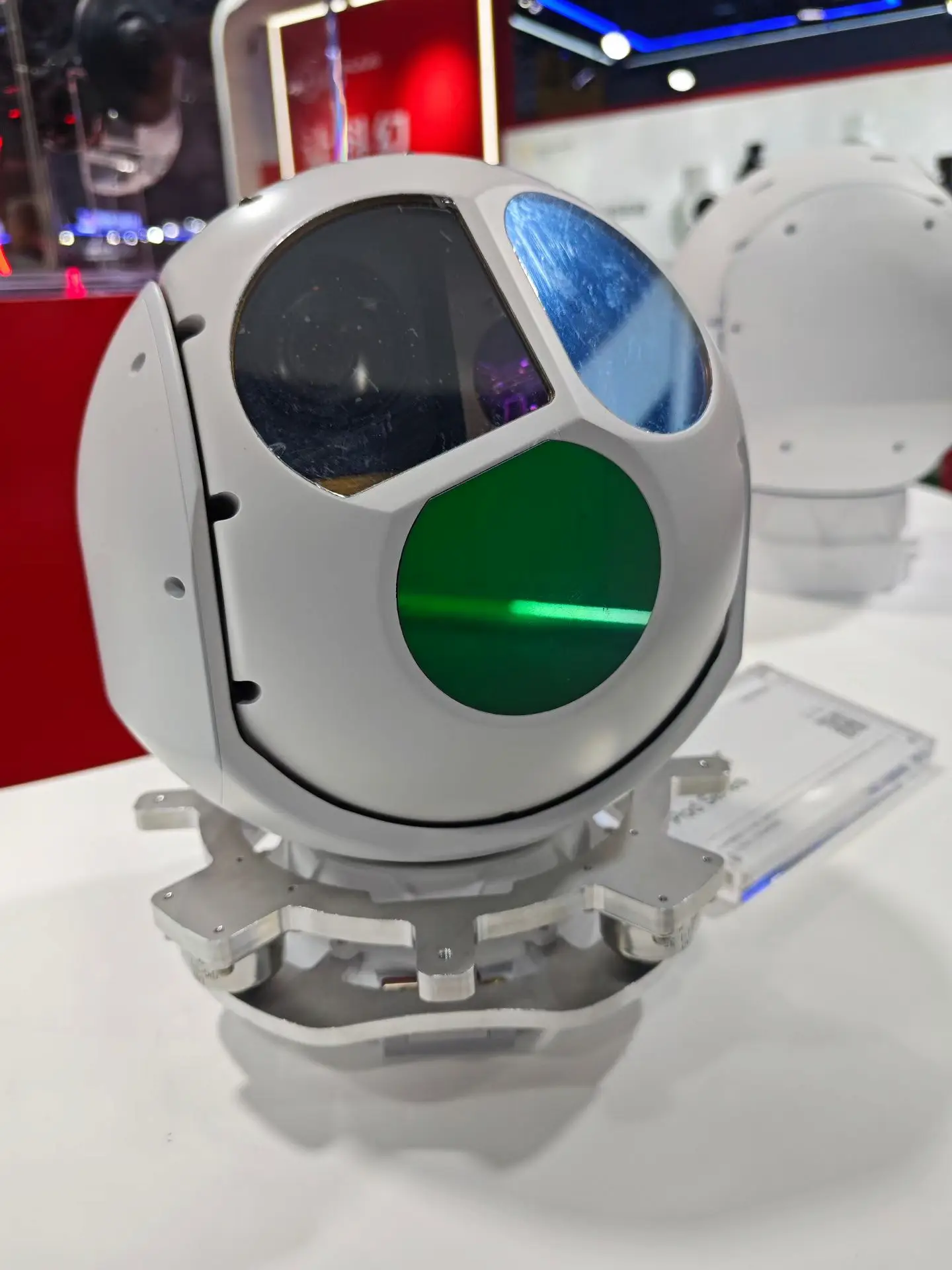
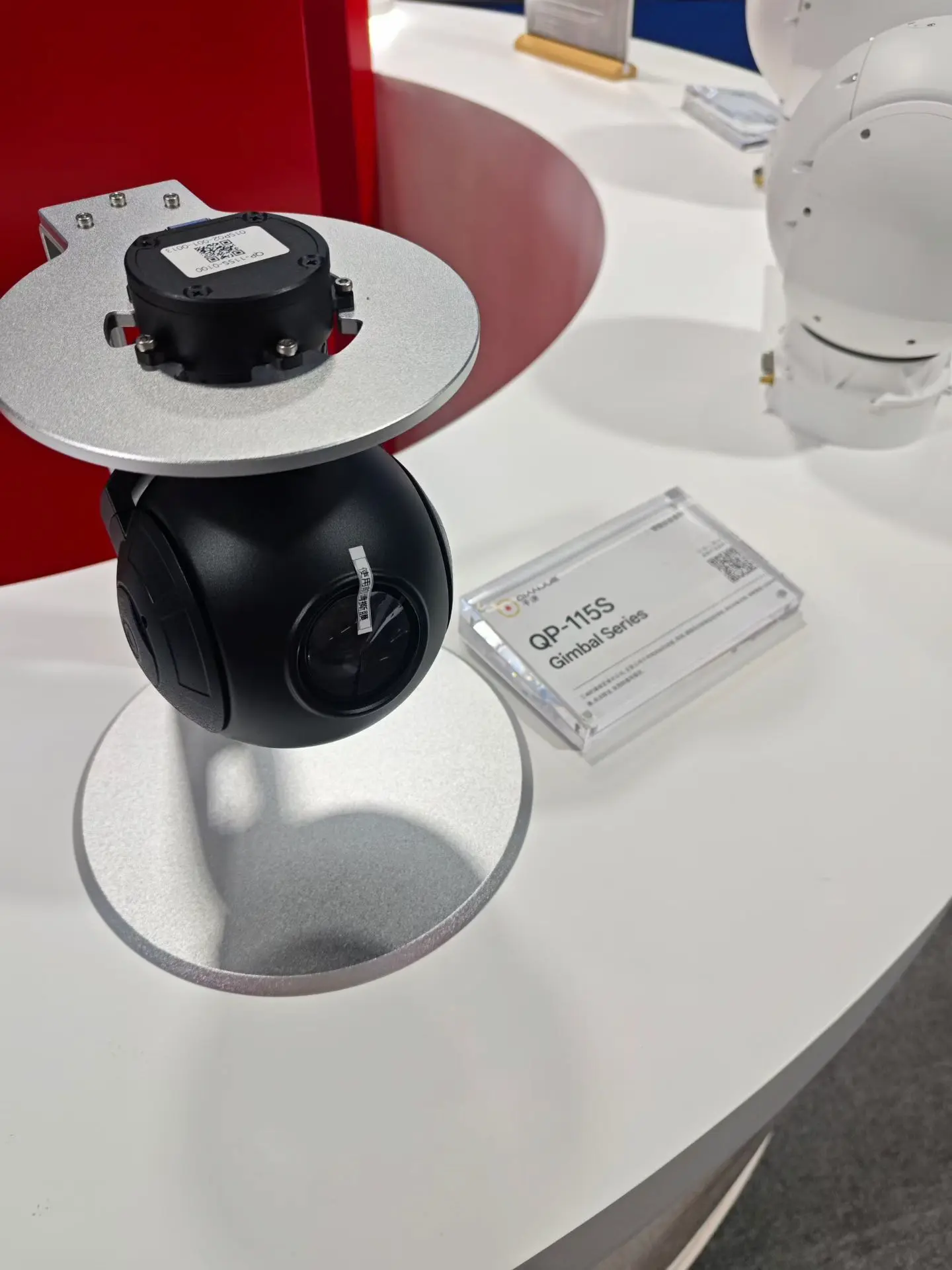
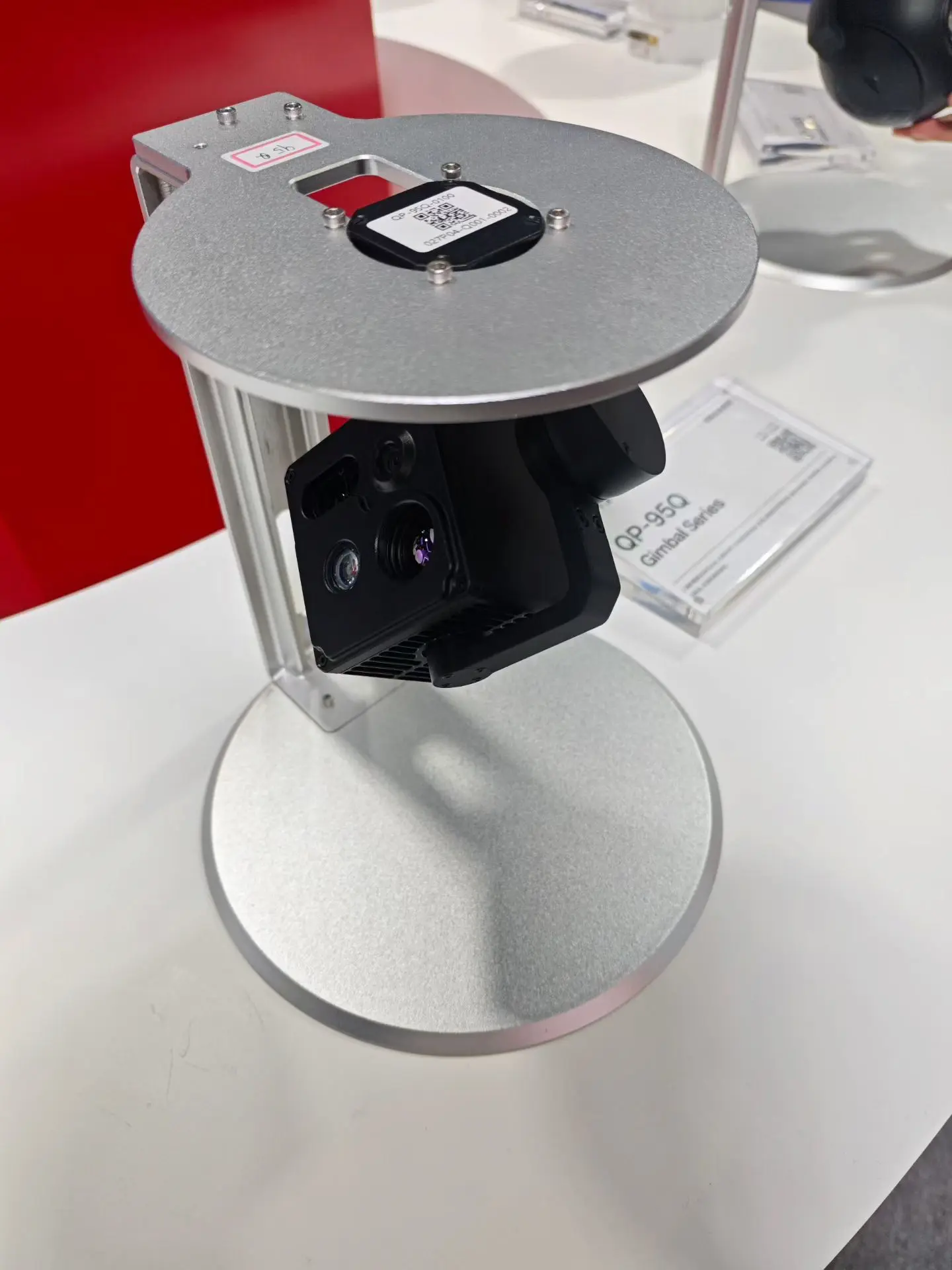
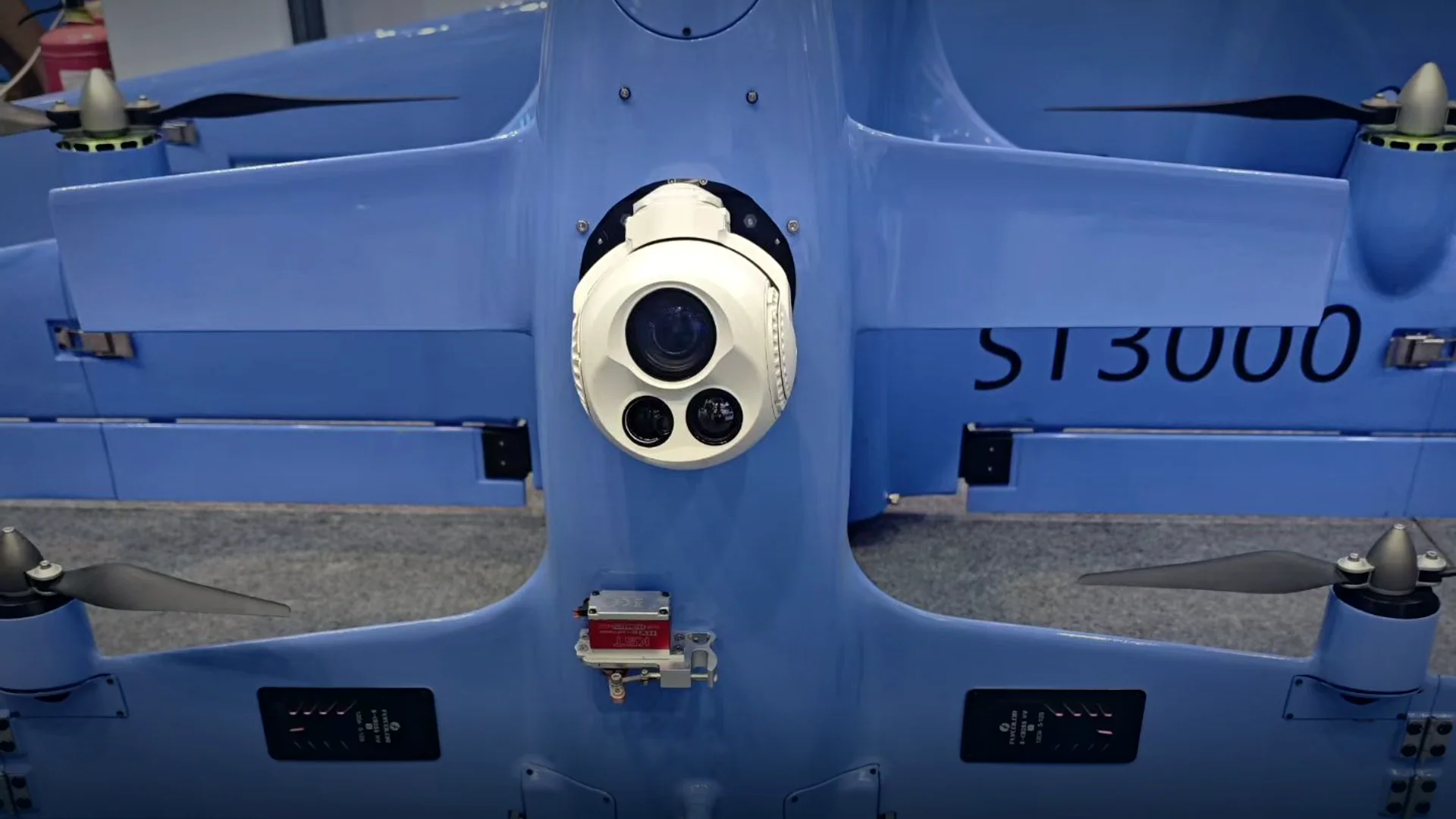
Every model in the range is built around the same two-axis or three-axis gimbal base. These three views are of the same spherical head: the sensor face with its daylight, thermal and laser windows, the mount and connector ring, and the sealed rear cover that the customer never opens.
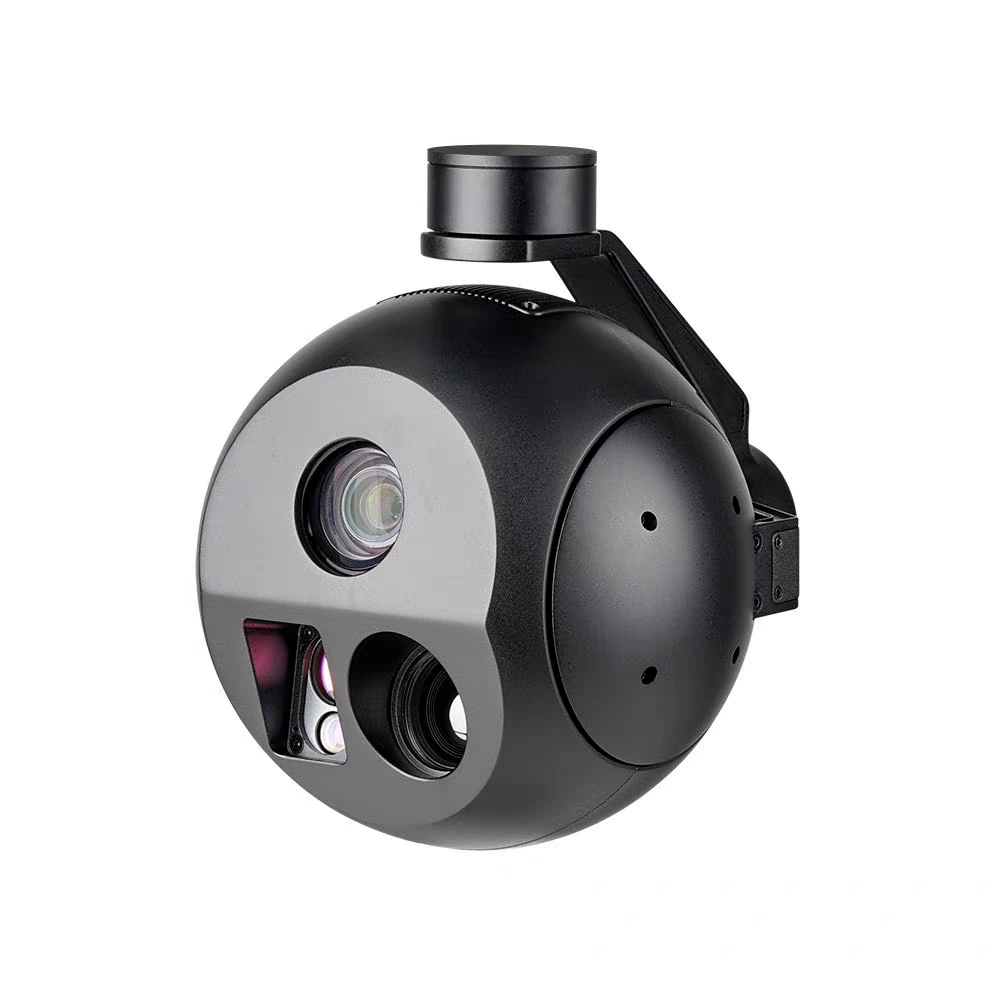
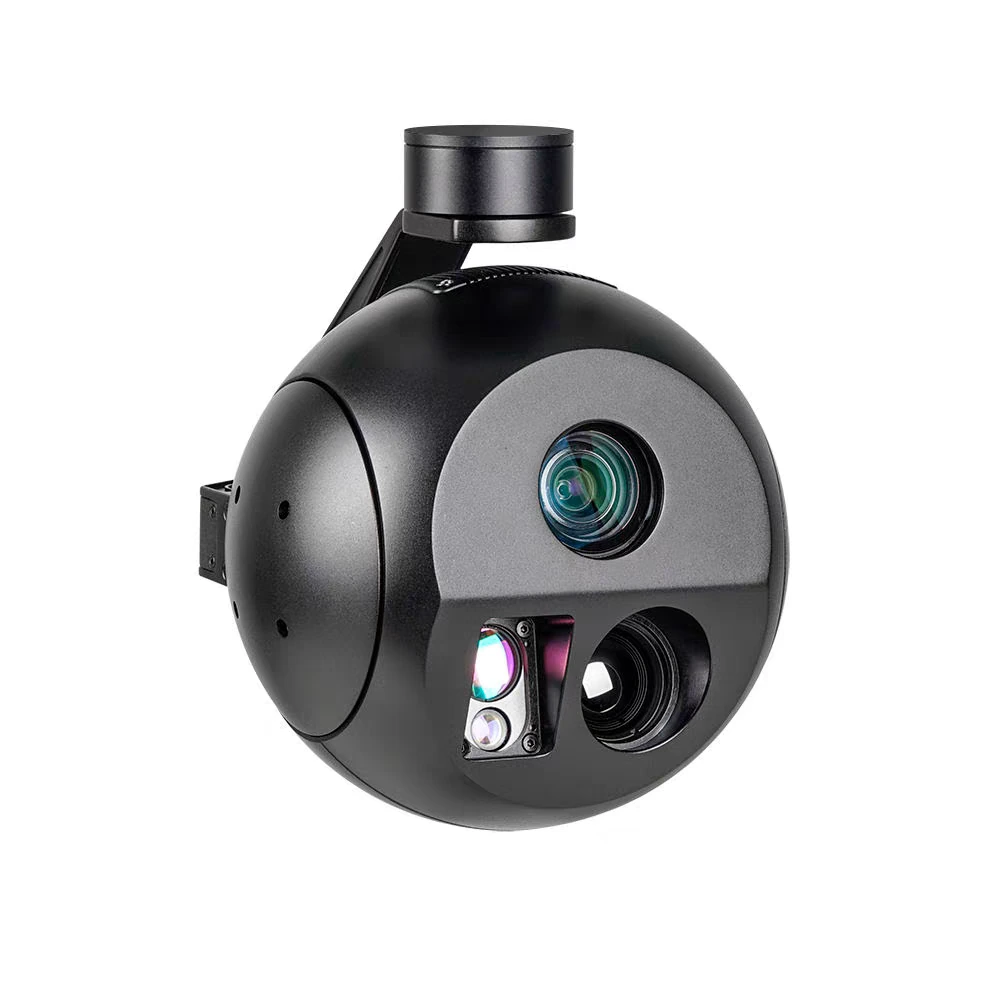
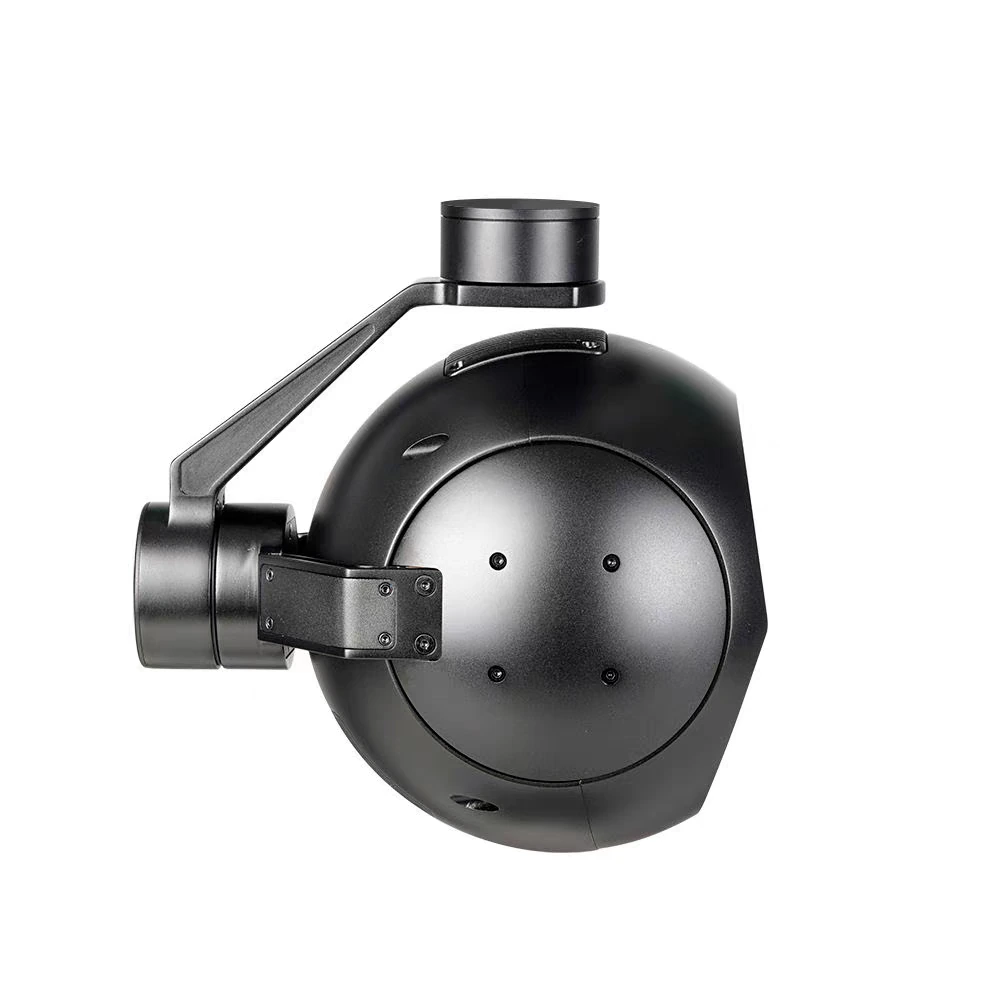
Renders show the mechanical layout only. Finishes, connector pinouts and laser-class marking are set by the configuration you order, and the outline drawing for your head is released with the datasheet.
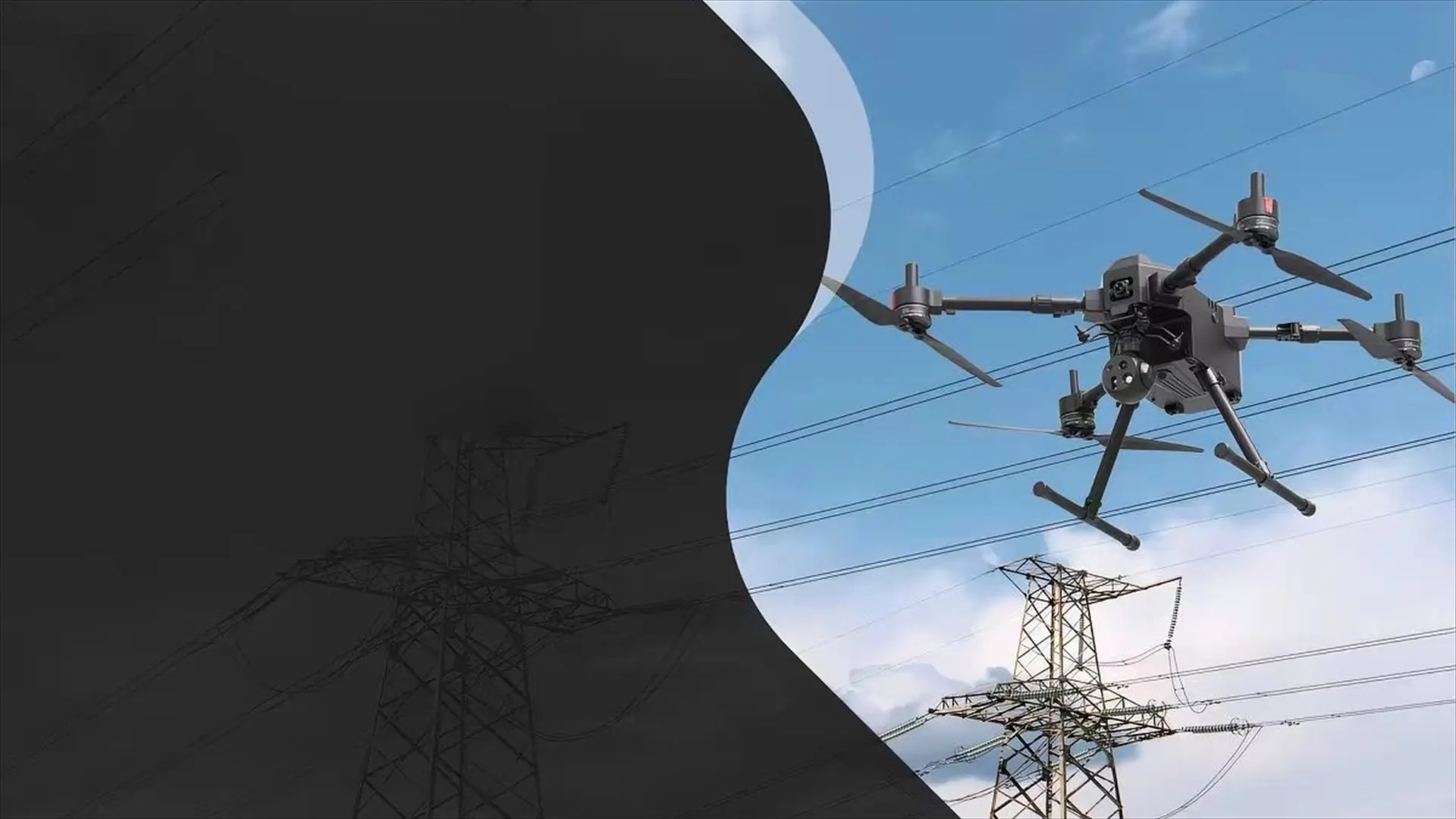
Three hardware families fit everything from a 240 g camera head on a small multirotor to a 22 kg targeting pod on a helicopter. What changes is the mounting adapter, the power budget and how many channels the airframe can carry.
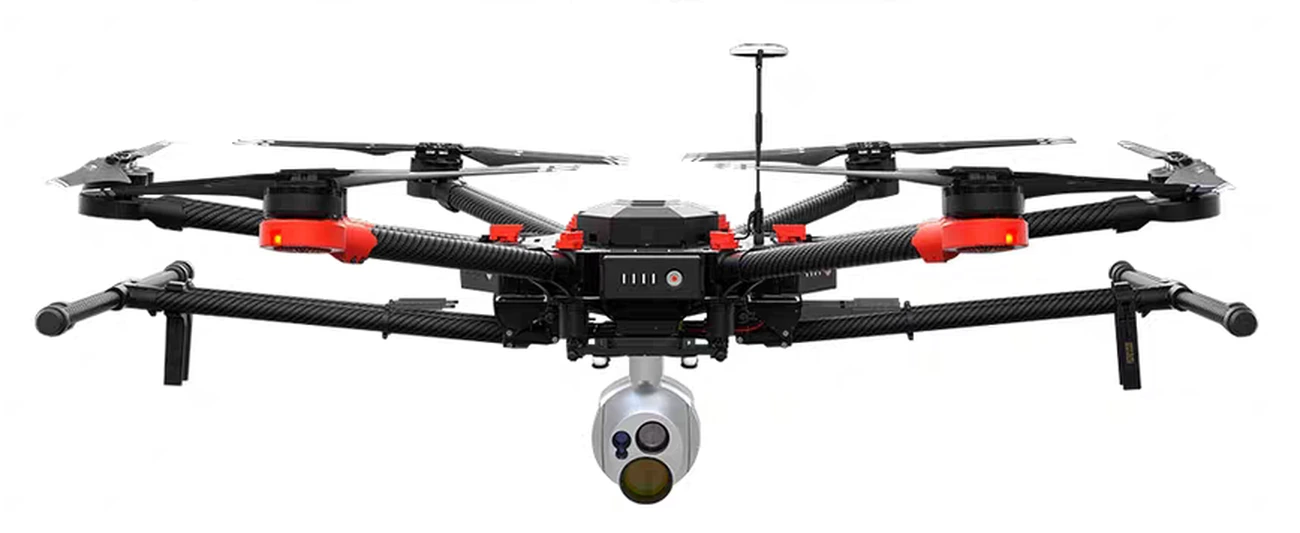
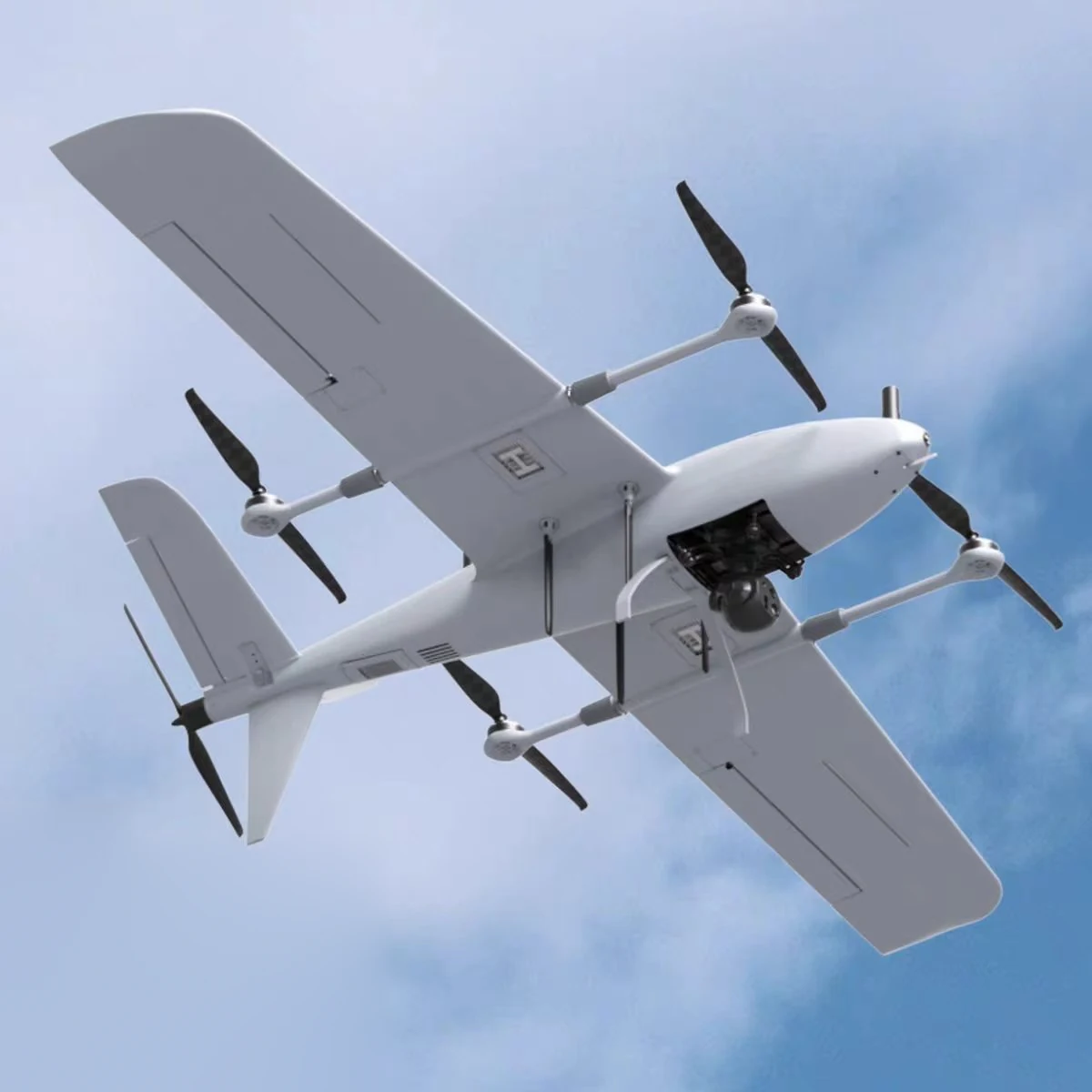
| Platform | Payload class | Mounting | What to check first |
|---|---|---|---|
| Multirotor | 240 g – 5 kg | Belly mount, quick-release interface | Available endurance once the pod is fitted |
| VTOL and fixed wing | 1 – 10 kg | Hardpoint or internal bay, adapter plates for OEM airframes | Centre of gravity and structural hardpoint rating |
| Helicopter, manned and unmanned | 2 – 22 kg | Hardpoint, 28 VDC supply | Vibration tolerance and two-axis turret sizing |
| Ground robots and UGVs | 240 g – 2 kg | Mast or roof mount | Same control protocol and video pipeline as the airborne heads |
| Vessels, manned and unmanned | 2 – 10 kg | Mast mount, sealed housing | Salt-air sealing and continuous thermal zoom |
Mounting adapters are made to drawing, so send the hardpoint dimensions and we will confirm the interface before you commit to a prototype. The same control protocol and video pipeline run across all five platform types.
Optics, servo hardware, stabilisation firmware and the AI tracking module are developed in house, and every unit is assembled, calibrated and environmentally tested on our own line before it ships.
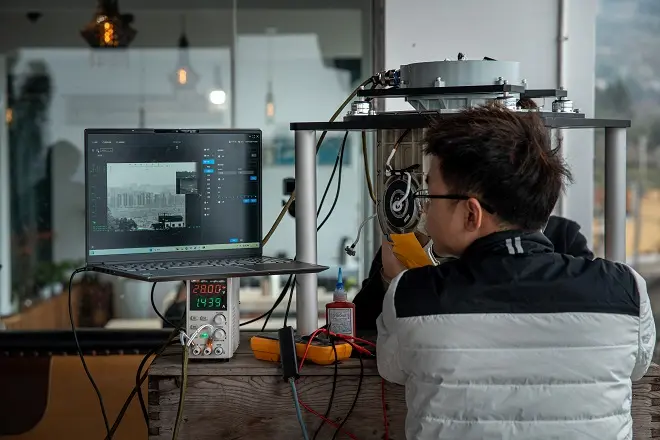
Tell us the airframe, the mission and the range you need to cover and we will point you at the right series. Compare Supported Configurations with your requirements.