





Drone Thermal Camera: Uncooled LWIR Payloads for UAVs
13 thermal models · 640 × 512 to 1280 × 1024
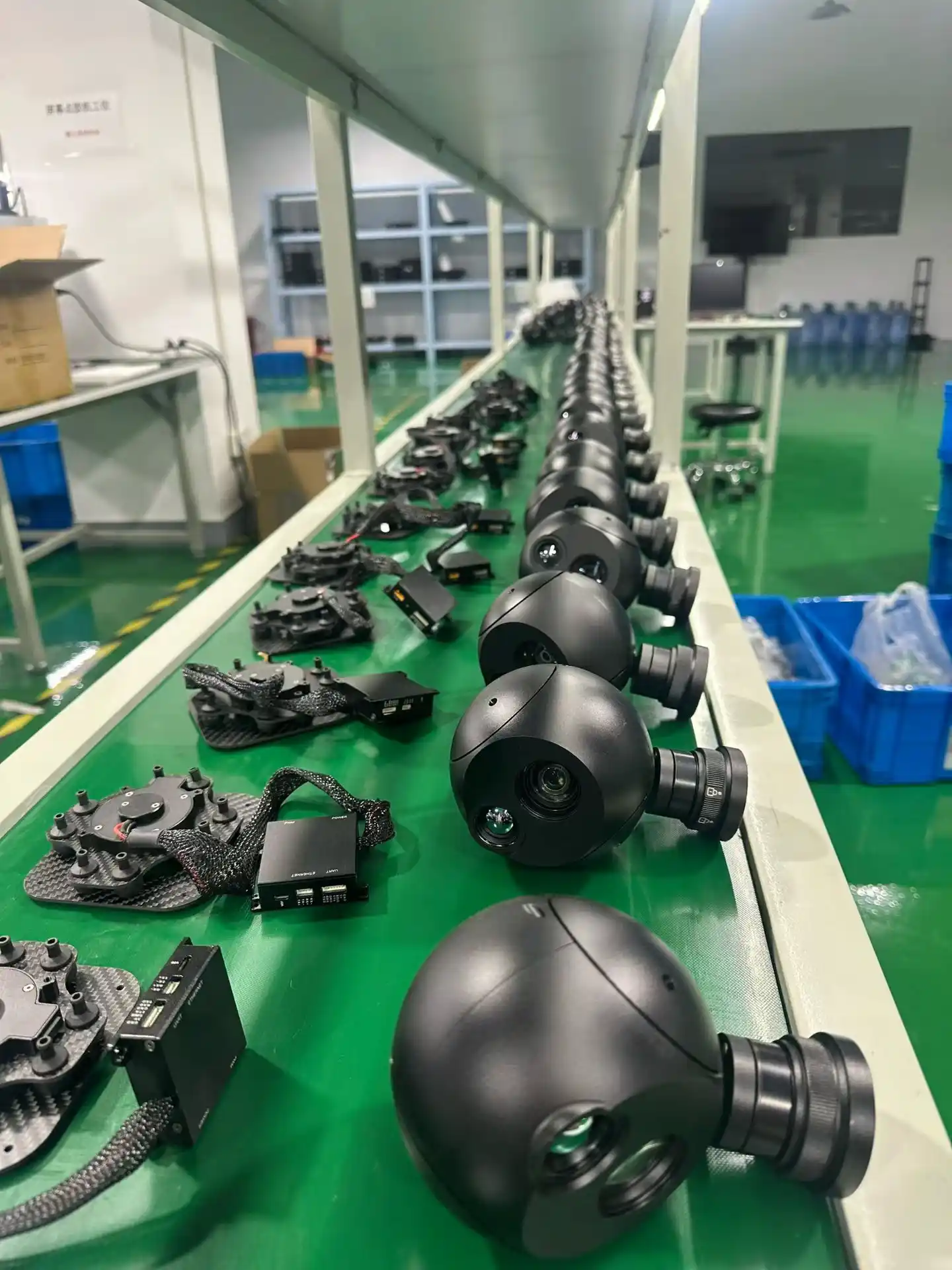
A thermal camera turns a night flight into usable imagery. HITS builds uncooled long-wave infrared channels with NETD of 40 mK or better, boresighted to the visible camera on the same stabilised cage, so an operator can switch between daylight detail and heat signature without moving the aircraft.
- 640 × 512 LWIR
- NETD ≤ 40 mK
- Up to 1280 × 1024
- 19–50 mm lenses
A thermal camera turns a night flight into usable imagery. The thermal channel in this range is an uncooled long-wave infrared detector, 640 × 512 up to 1280 × 1024, with sensitivity of 40 mK or better, mounted on the same stabilised cage as a visible camera so the operator can switch between daylight detail and heat signature without moving the aircraft.
Three numbers decide whether a thermal payload can do a job. Detector resolution sets how much detail exists in the frame. Lens focal length sets how far away that detail can still be resolved. NETD sets how small a temperature difference still shows up as contrast — 40 mK is what separates a warm vehicle from the road under it on a cold night.
What the thermal channel gives you
This page is about the infrared channel itself: what the detector sees, how sensitive it is, and which lens puts that detail at the distance you need.
- Uncooled long-wave infrared
640 × 512 up to 1280 × 1024 in the 8–14 μm band, with no cryocooler to service and no cool-down time before take-off.
- NETD ≤ 40 mK
Small enough a temperature difference that a warm object still separates from a background only a few degrees cooler.
- Boresighted to the visible channel
Both sensors sit on one calibrated cage, so switching from daylight to thermal does not move the aim point.
- Six display palettes
White hot, black hot, iron, rainbow and further maps, so the same detector can be read against whichever background a report is written around.
- Fixed thermal lenses from 19 mm to 50 mm
Wide fields of view for survey work through to 50 mm optics that put a person-sized target beyond a kilometre.
- 1280 × 1024 option
The HQ-125S carries the highest-resolution infrared detector in the series, for targets that occupy only a few pixels on a 640 × 512 frame.
Six palettes, one infrared core
The thermal channel delivers the same measurement in whichever colour map makes the target clearest. These six frames are one pass over a rooftop solar array — the same detector, six palettes. What changes is only how the temperature scale is drawn.
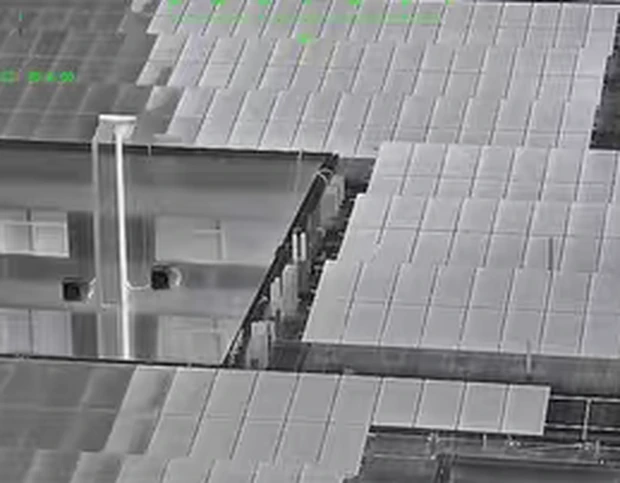
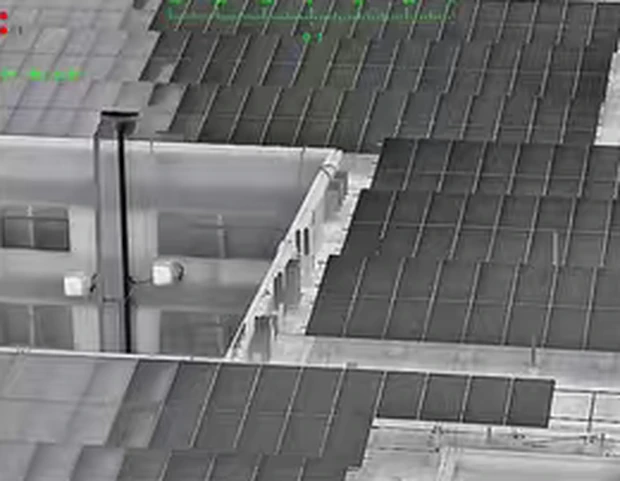
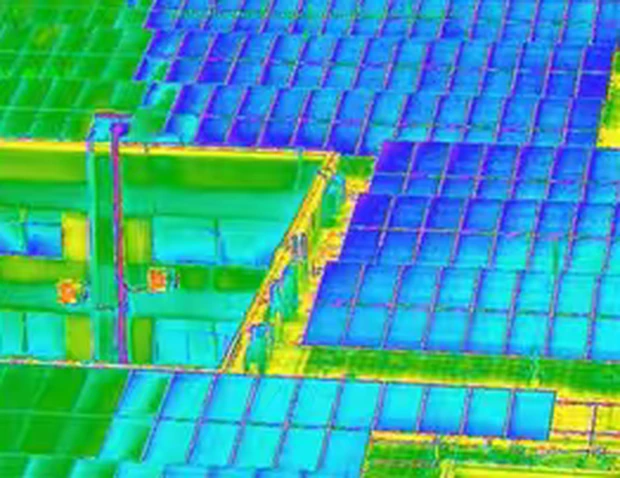
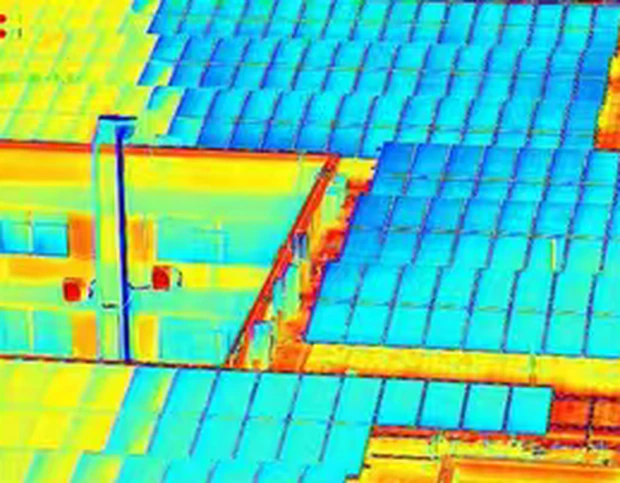
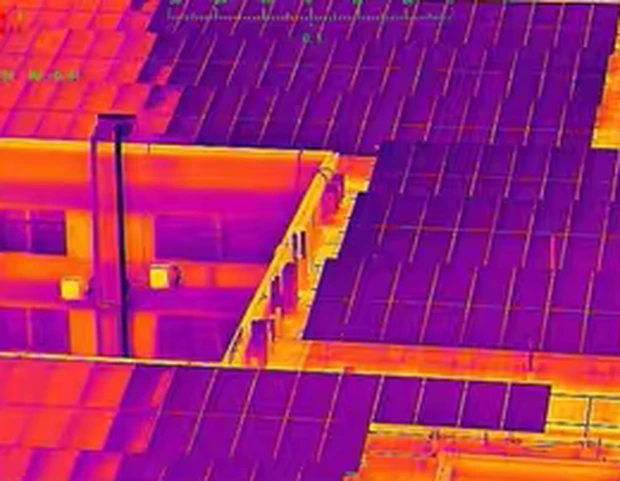
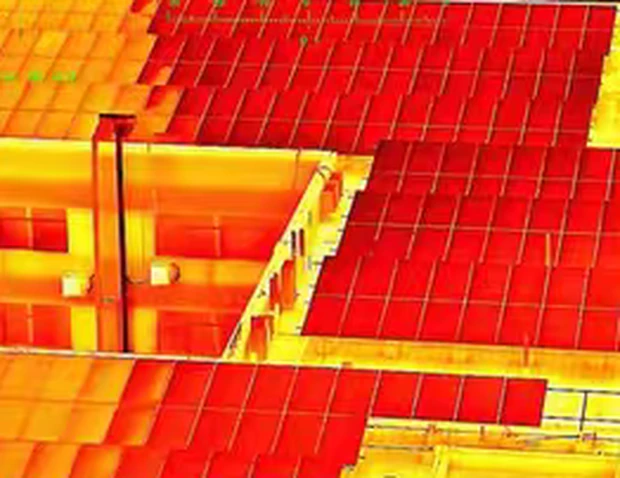
Palette is a firmware setting, so the head ships with the set that suits the working environment and the default you ask for. Tell the engineering team what you are looking for and we will configure it before dispatch.
13 thermal models in the HQ series
Thirteen thermal configurations, ordered below from the widest thermal field of view (19 mm) to the longest reach (50 mm).
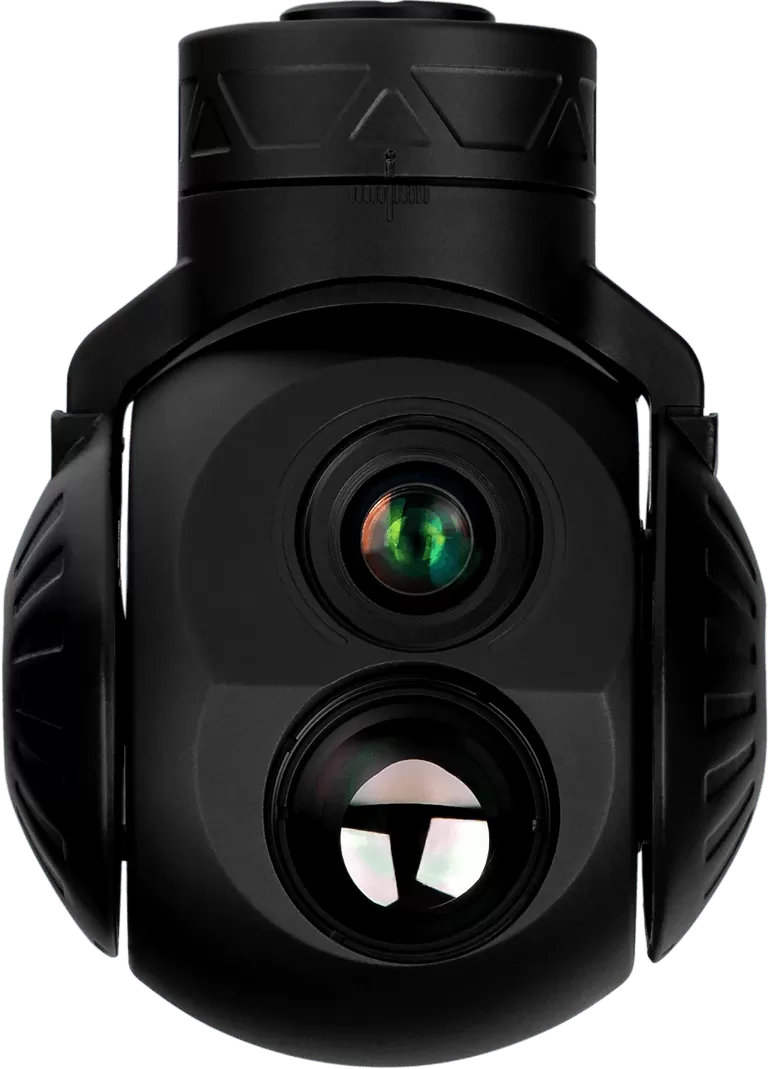
2-axis · EO + IR
HQ-64DA UAV Camera Gimbal OEM
The lightest dual-sensor head in the range — 2K daylight plus thermal on 260 g.
- Visible
- 2688 × 1520, 8.5 mm fixed
- Thermal
- 640 × 512, 19 mm fixed
- Laser
- —
- Weight
- ≤260 g
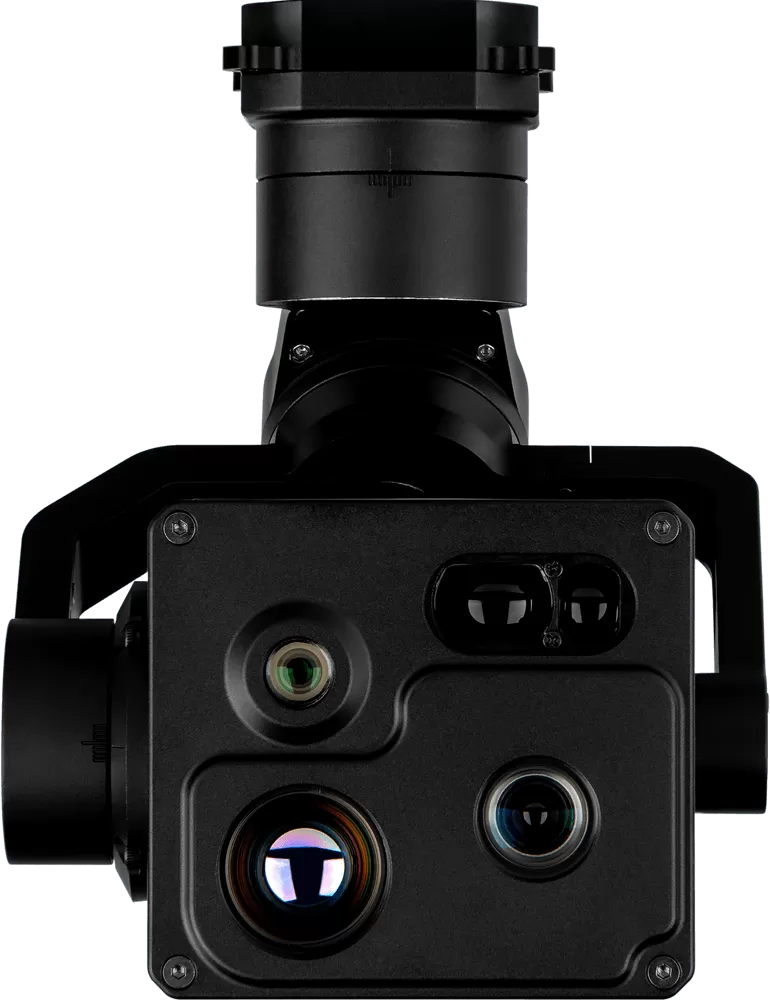
3-axis · EO + IR + LRF
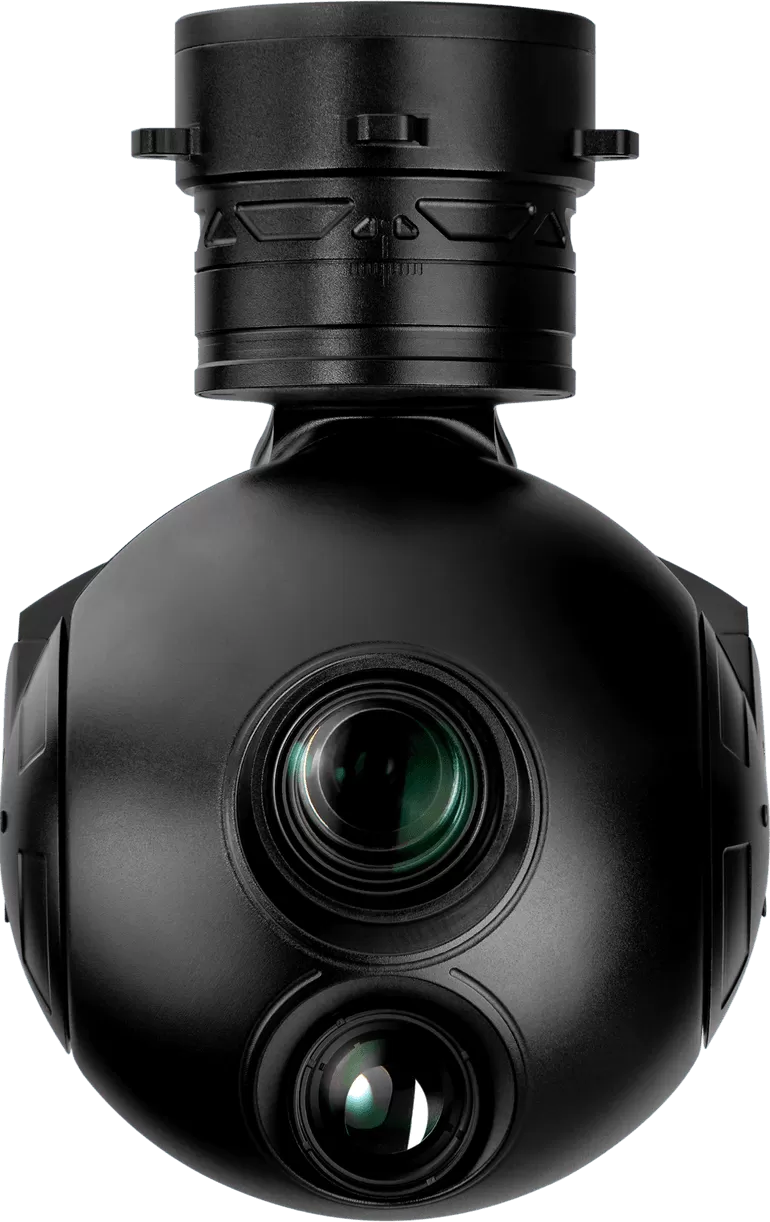
HQ-95Q customized UAV Camera Gimbal
Four optical channels and a quick-release mount on the lightest three-axis head we build.
- Visible
- Dual 8000 × 6000, 9.5 mm + continuous zoom 15.3 – 49.7 mm
- Thermal
- 640 × 512, 19 mm fixed
- Laser
- 5 m – 1.5 km (± 1 m)
- Weight
- ≤400 g
3-axis · EO + IR
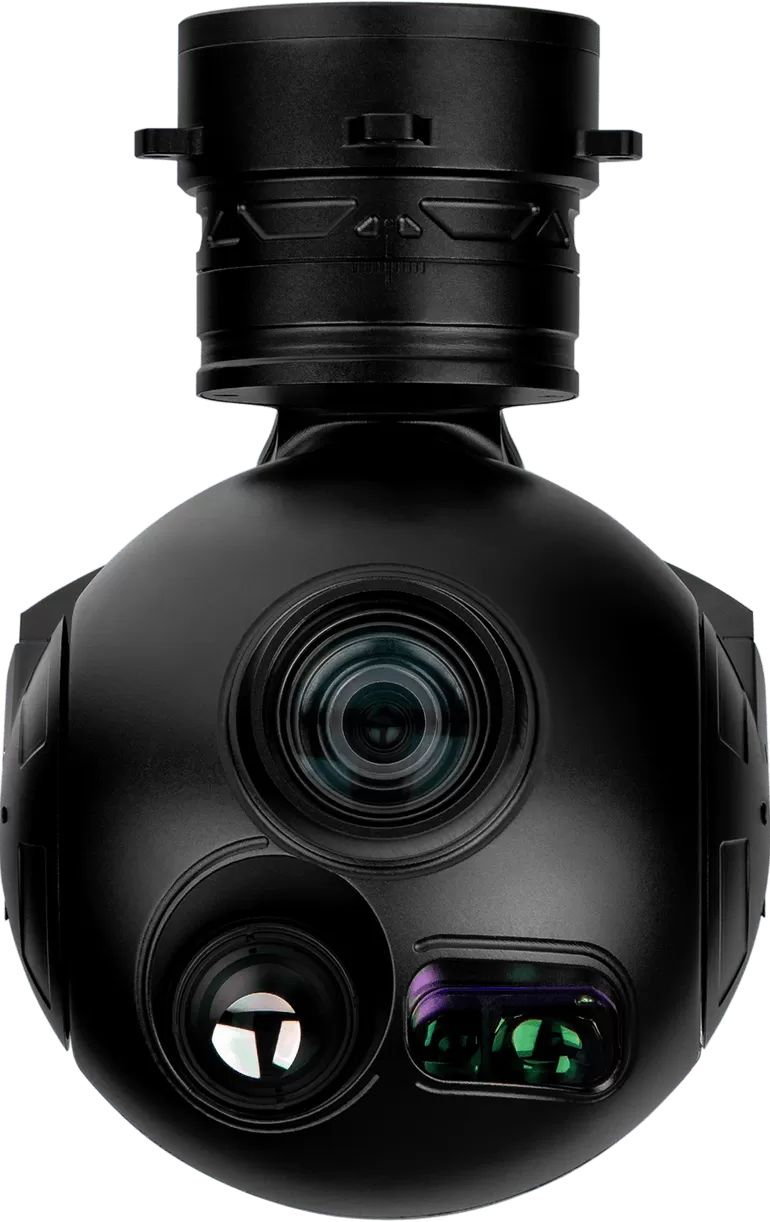
HQ-100D Gimbal Camera OEM
The entry point to full roll-stabilised zoom and thermal imaging under a kilogram.
- Visible
- 1920 × 1080, 10x zoom 4.7 – 47 mm
- Thermal
- 640 × 512, 19 mm fixed
- Laser
- —
- Weight
- ≤800 g
3-axis · EO + IR + LRF
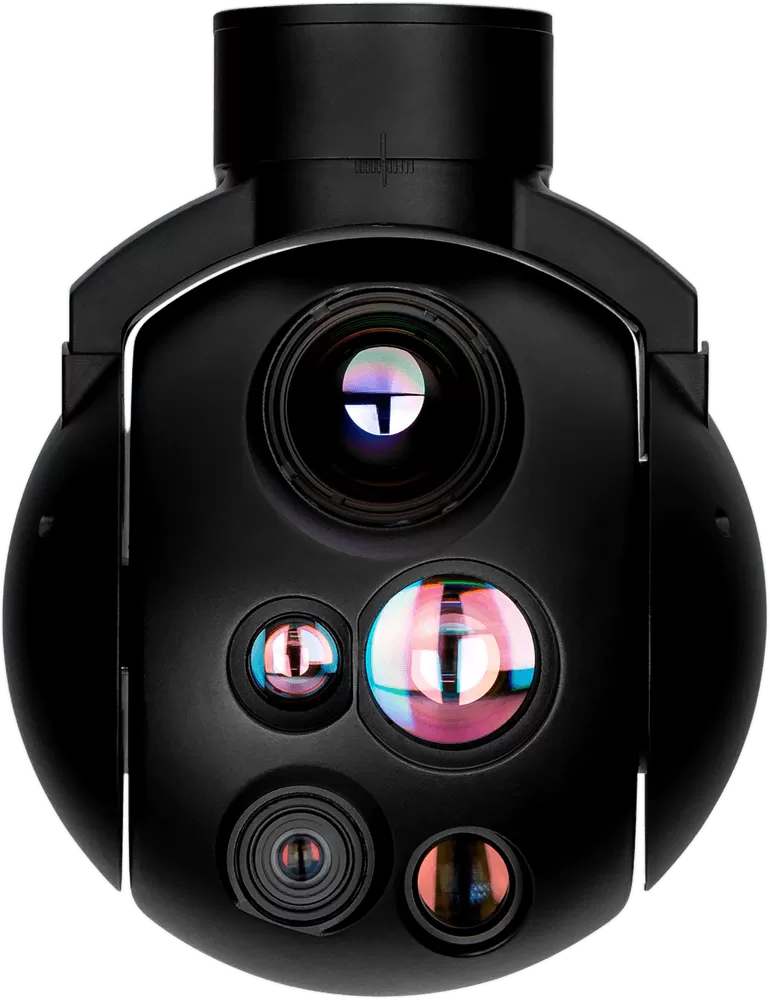
HQ-100T Gimbal Camera Manufacturer
The same 800 g three-axis head as the 100D, with a 1.5 km laser rangefinder added.
- Visible
- 1920 × 1080, 10x zoom 4.7 – 47 mm
- Thermal
- 640 × 512, 19 mm fixed
- Laser
- 5 m – 1.5 km (± 1 m)
- Weight
- ≤800 g
2-axis · EO + IR + LRF
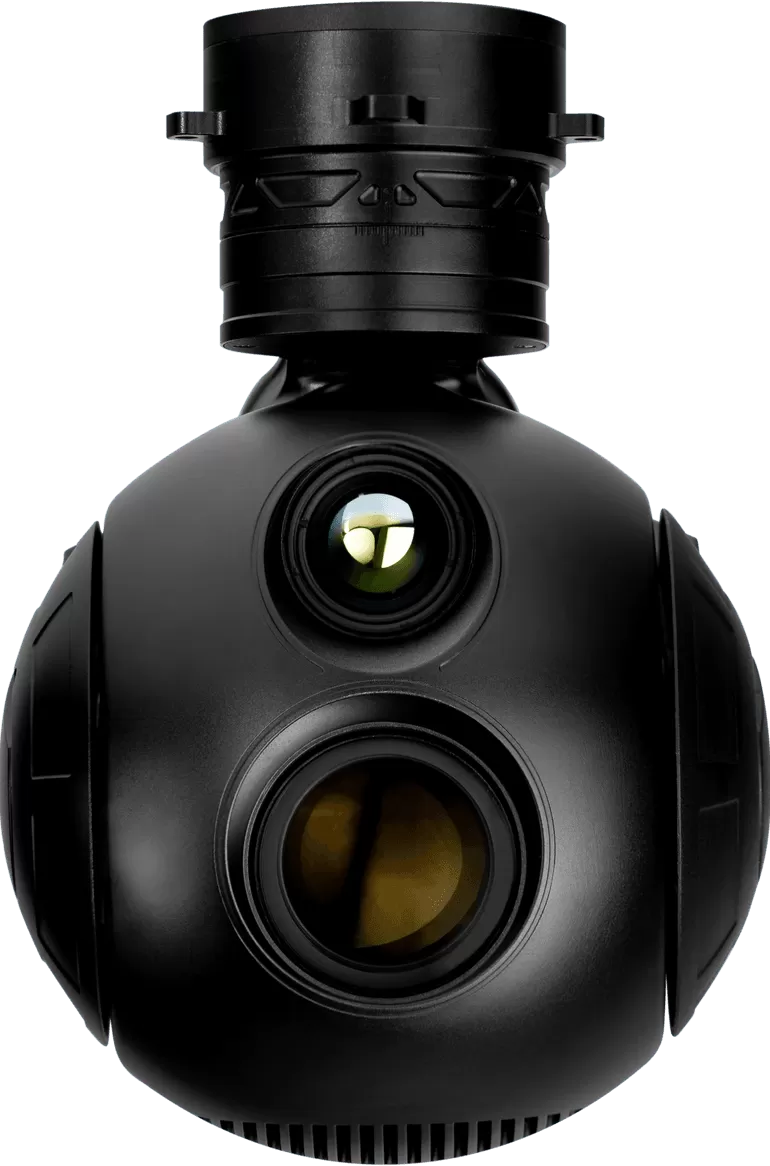
HQ-85Q Stabilised Camera Payload ODM
Adds 3 km laser ranging to a two-axis platform for crews that need coordinates, not just imagery.
- Visible
- Dual 1920 × 1080, 8 mm + 25 mm
- Thermal
- 640 × 512, 25 mm fixed
- Laser
- 15 m – 3 km (± 1 m)
- Weight
- ≤500 g
3-axis · EO + IR
HQ-115D UAV Gimbal Camera OEM
30x zoom and thermal imaging on a one-kilogram head with no ranging requirement.
- Visible
- 1920 × 1080, 30x zoom 4.3 – 129 mm
- Thermal
- 640 × 512, 25 mm fixed
- Laser
- —
- Weight
- ≤1 kg
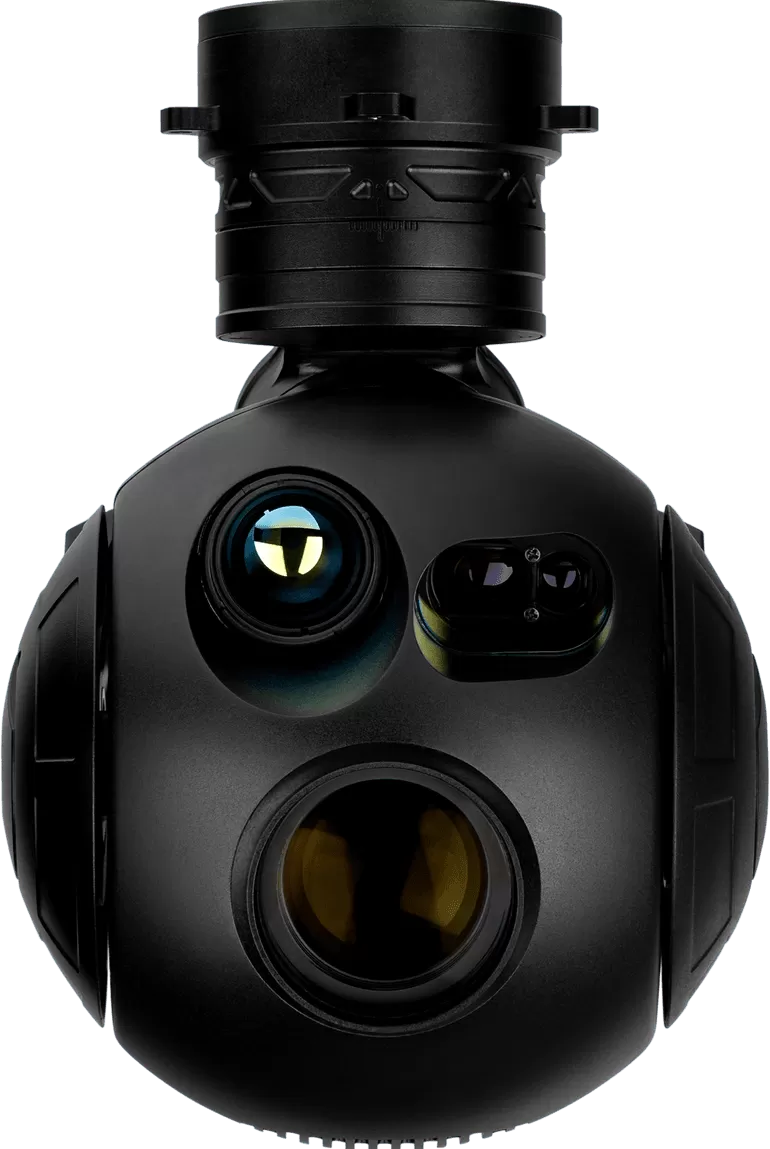
3-axis · EO + IR + LRF
HQ-115T Gimbal Camera Manufacturer
The one-kilogram workhorse: 30x zoom, thermal imaging and a 1.5 km rangefinder.
- Visible
- 1920 × 1080, 30x zoom 4.3 – 129 mm
- Thermal
- 640 × 512, 25 mm fixed
- Laser
- 5 m – 1.5 km (± 1 m)
- Weight
- ≤1 kg
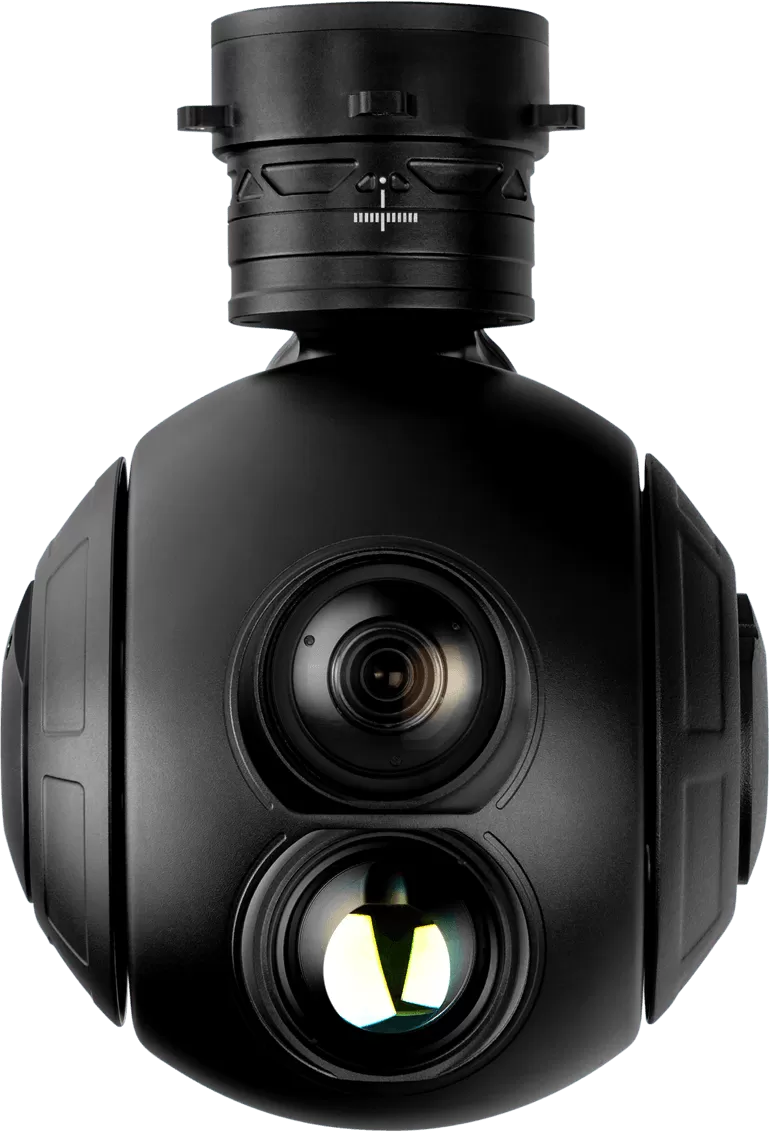
3-axis · EO + IR
HQ-125DB UAV Camera Gimbal ODM
The longer 35 mm thermal lens paired with 30x zoom, without the rangefinder.
- Visible
- 1920 × 1080, 30x zoom 4.3 – 129 mm
- Thermal
- 640 × 512, 35 mm fixed
- Laser
- —
- Weight
- ≤1.1 kg
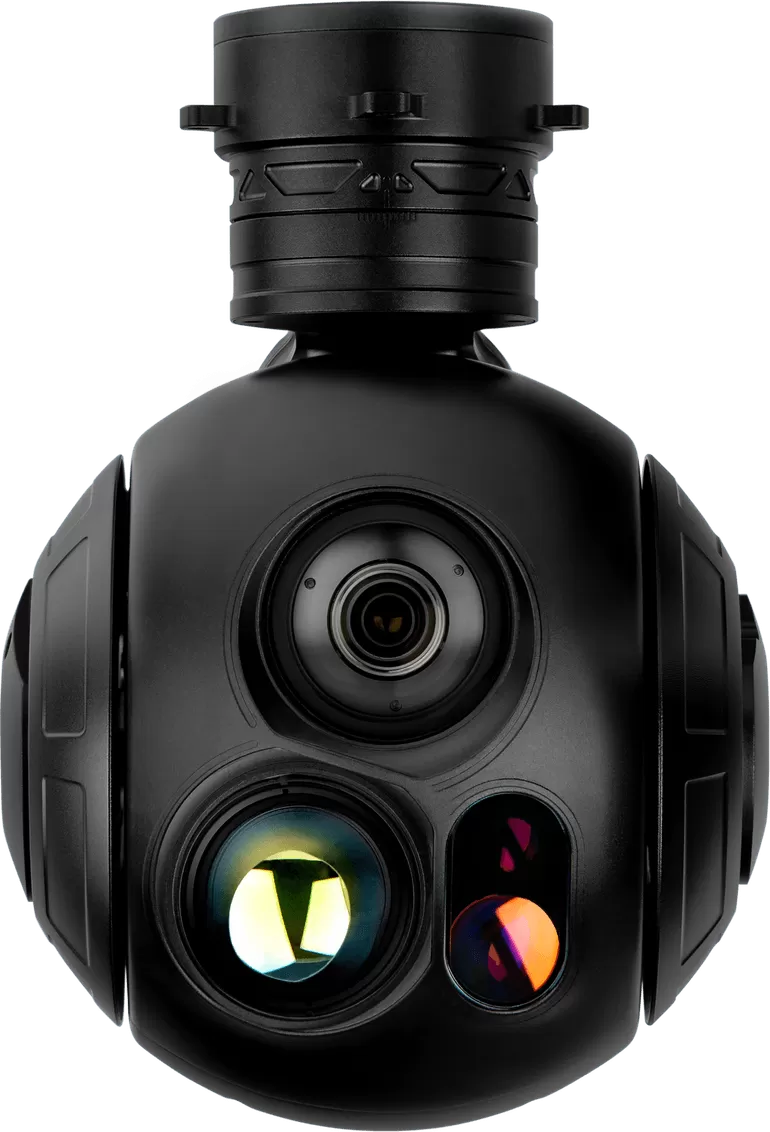
3-axis · EO + IR + LRF
HQ-125TB Gimbal Camera Supplier
Balanced mid-range turret: 30x zoom, a long thermal lens and 3 km ranging.
- Visible
- 1920 × 1080, 30x zoom 4.3 – 129 mm
- Thermal
- 640 × 512, 35 mm fixed
- Laser
- 15 m – 3 km (± 1 m)
- Weight
- ≤1.2 kg
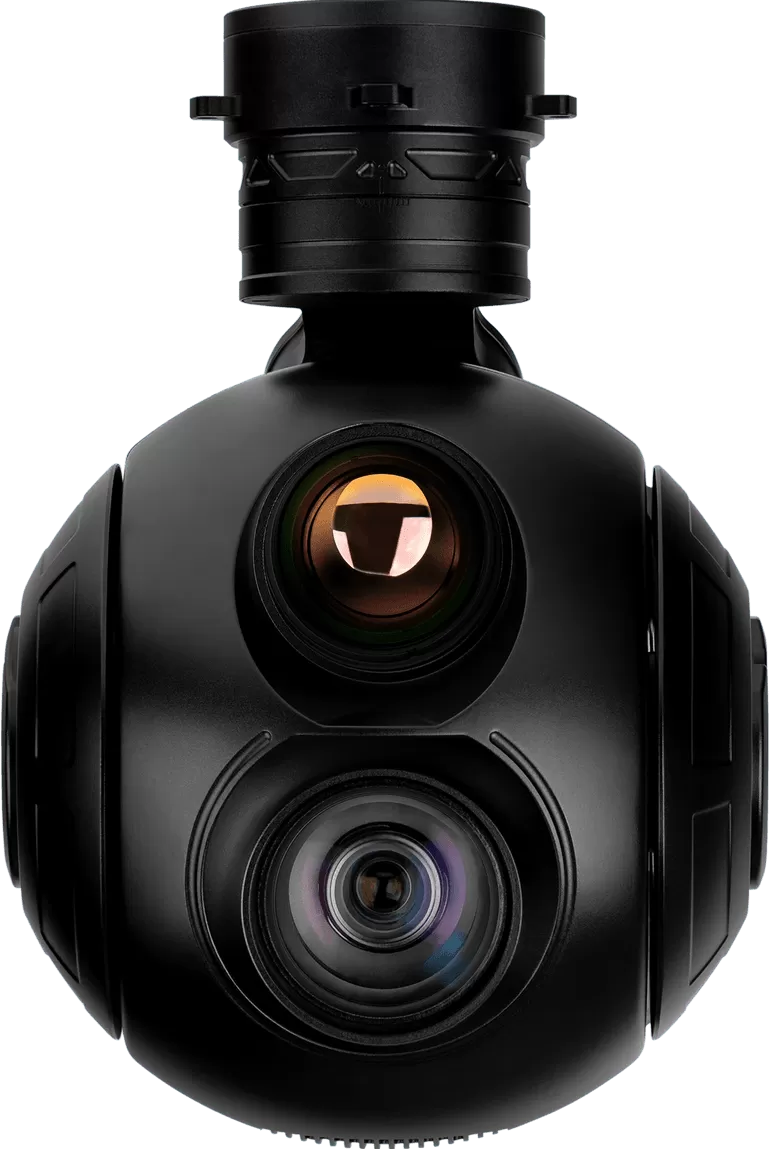
3-axis · EO + IR
HQ-135D customized Drone Camera Payload
The 40x optic with thermal imaging, for daylight and night identification at long range.
- Visible
- 1920 × 1080, 40x zoom 4.25 – 170 mm
- Thermal
- 640 × 512, 35 mm fixed
- Laser
- —
- Weight
- ≤1.4 kg
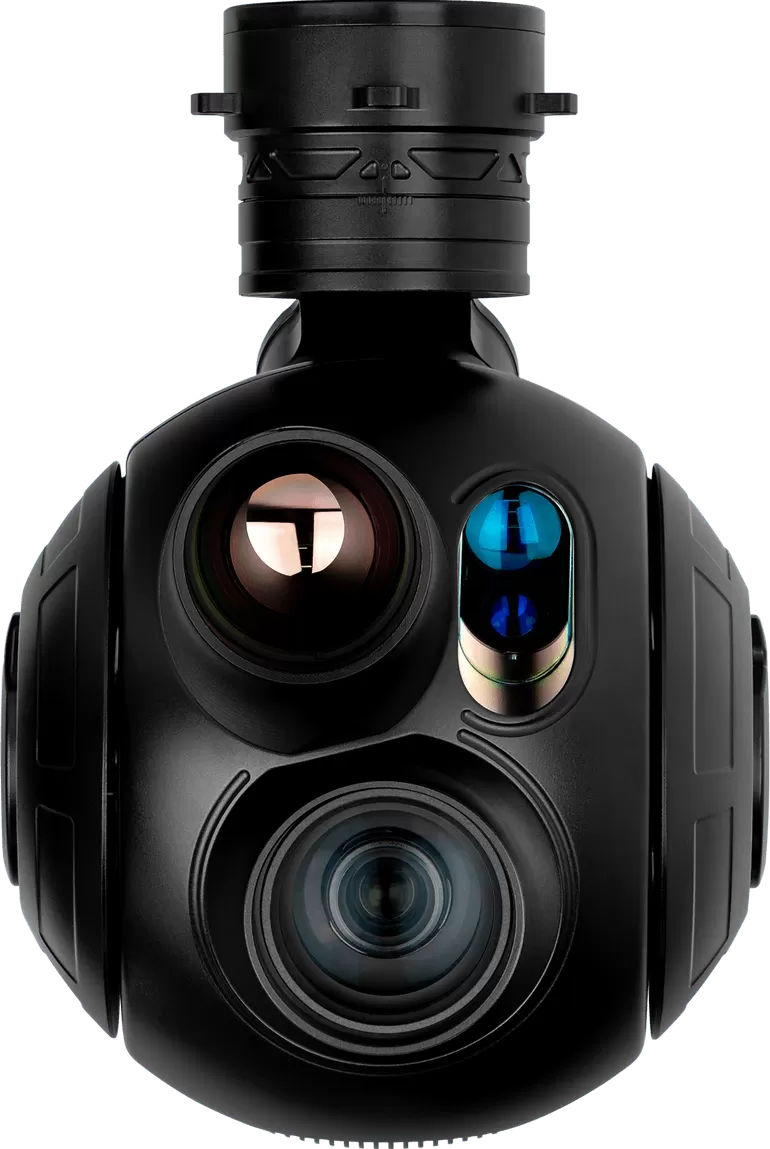
3-axis · EO + IR + LRF
HQ-135T UAV Gimbal Camera OEM
The flagship of the compact range: 40x zoom, thermal imaging and 3 km ranging on one stabilised cage.
- Visible
- 1920 × 1080, 40x zoom 4.25 – 170 mm
- Thermal
- 640 × 512, 35 mm fixed
- Laser
- 15 m – 3 km (± 1 m)
- Weight
- ≤1.4 kg
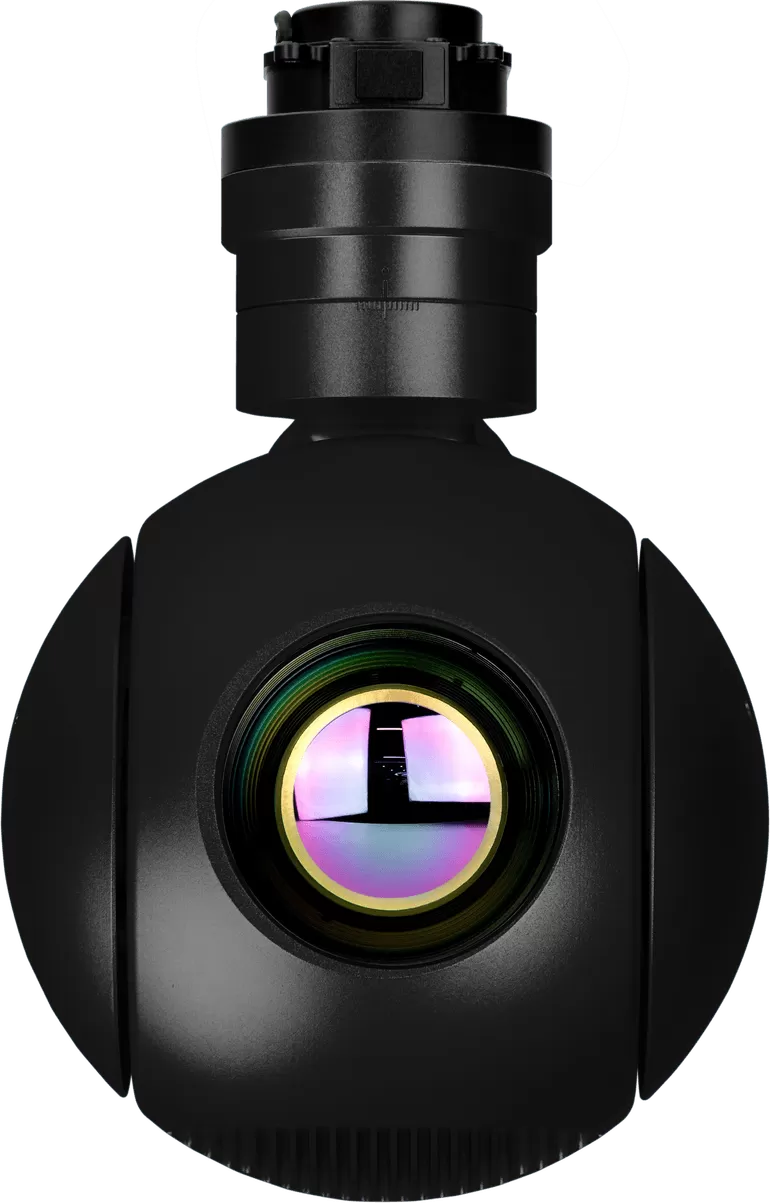
3-axis · IR
HQ-125S Thermal Gimbal Camera OEM
A thermal-only head with a 1280 × 1024 sensor — the highest thermal resolution in the series.
- Visible
- —
- Thermal
- 1280 × 1024, 50 mm fixed
- Laser
- —
- Weight
- ≤1 kg
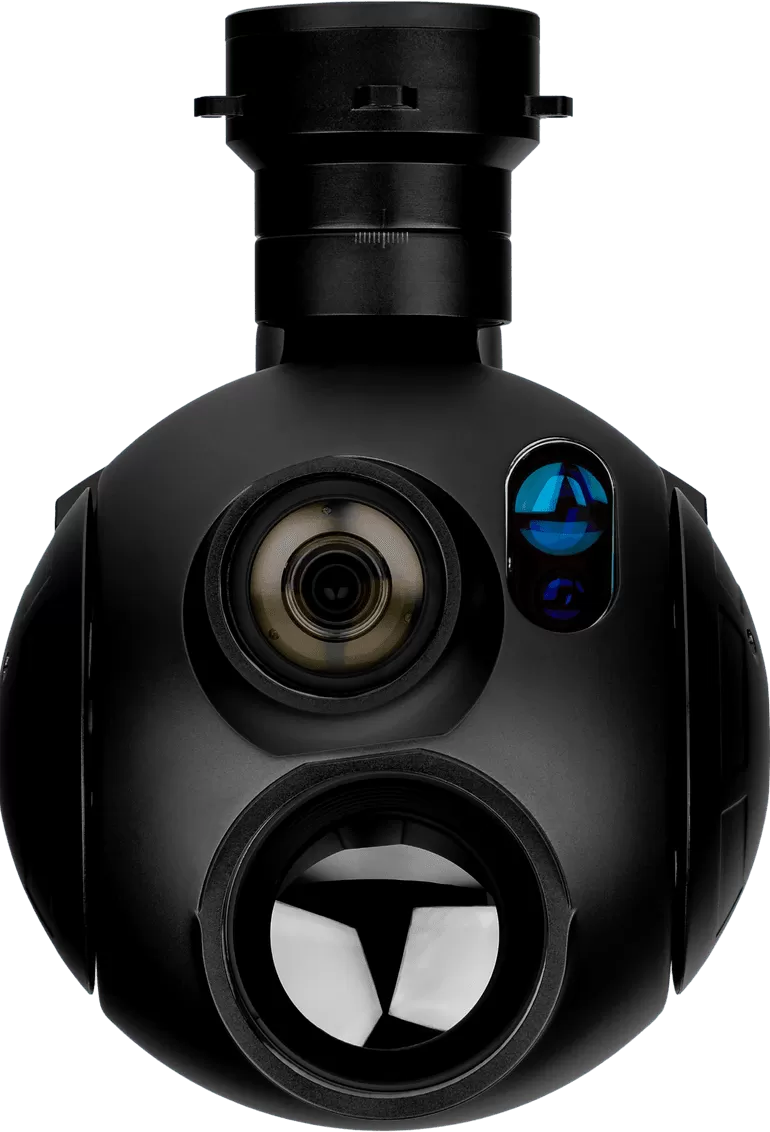
3-axis · EO + IR + LRF
HQ-135TA Stabilised UAV Camera Manufacturer
A 50 mm thermal lens gives the longest thermal reach in the compact range.
- Visible
- 1920 × 1080, 30x zoom 4.3 – 129 mm
- Thermal
- 640 × 512, 50 mm fixed
- Laser
- 15 m – 3 km (± 1 m)
- Weight
- ≤1.5 kg
Matching the thermal lens to the job
Field of view and detection distance move in opposite directions: a wider lens covers more ground, a longer one reaches further. The thermal lenses in the HQ series are fixed, so this choice is made once, at specification.
- 19 mm — widest field of viewHQ-64DA, HQ-95Q, HQ-100D, HQ-100T. The most ground per frame, for survey and patrol where the operator is looking for an anomaly rather than a specific object.See the HQ-95Q →
- 25 mm — general surveillanceHQ-85Q, HQ-115D, HQ-115T. The middle setting: enough field of view to hold a road or a site, enough reach to pick a person-sized target out of the scene.See the HQ-115T →
- 35 mm — long range on 640 × 512HQ-125DB, HQ-125TB, HQ-135D, HQ-135T. The longest 640 × 512 thermal reach in the compact range, paired with 30x to 40x daylight zoom.See the HQ-135T →
- 50 mm — longest reachHQ-125S and HQ-135TA. The 125S is the thermal-only head; the 135TA pairs the 50 mm thermal lens with a daylight zoom and a 3 km laser rangefinder.See the HQ-125S →
Compare the range
| Model | Axes | Configuration | Visible camera | Thermal imager | Laser rangefinder | Weight |
|---|---|---|---|---|---|---|
| HQ-64DA | 2-axis | EO + IR | 2688 × 1520, 8.5 mm fixed | 640 × 512, 19 mm fixed | — | ≤260 g |
| HQ-85Q | 2-axis | EO + IR + LRF | Dual 1920 × 1080, 8 mm + 25 mm | 640 × 512, 25 mm fixed | 15 m – 3 km (± 1 m) | ≤500 g |
| HQ-95Q | 3-axis | EO + IR + LRF | Dual 8000 × 6000, 9.5 mm + continuous zoom 15.3 – 49.7 mm | 640 × 512, 19 mm fixed | 5 m – 1.5 km (± 1 m) | ≤400 g |
| HQ-100D | 3-axis | EO + IR | 1920 × 1080, 10x zoom 4.7 – 47 mm | 640 × 512, 19 mm fixed | — | ≤800 g |
| HQ-100T | 3-axis | EO + IR + LRF | 1920 × 1080, 10x zoom 4.7 – 47 mm | 640 × 512, 19 mm fixed | 5 m – 1.5 km (± 1 m) | ≤800 g |
| HQ-115D | 3-axis | EO + IR | 1920 × 1080, 30x zoom 4.3 – 129 mm | 640 × 512, 25 mm fixed | — | ≤1 kg |
| HQ-115T | 3-axis | EO + IR + LRF | 1920 × 1080, 30x zoom 4.3 – 129 mm | 640 × 512, 25 mm fixed | 5 m – 1.5 km (± 1 m) | ≤1 kg |
| HQ-125S | 3-axis | IR | — | 1280 × 1024, 50 mm fixed | — | ≤1 kg |
| HQ-125DB | 3-axis | EO + IR | 1920 × 1080, 30x zoom 4.3 – 129 mm | 640 × 512, 35 mm fixed | — | ≤1.1 kg |
| HQ-125TB | 3-axis | EO + IR + LRF | 1920 × 1080, 30x zoom 4.3 – 129 mm | 640 × 512, 35 mm fixed | 15 m – 3 km (± 1 m) | ≤1.2 kg |
| HQ-135D | 3-axis | EO + IR | 1920 × 1080, 40x zoom 4.25 – 170 mm | 640 × 512, 35 mm fixed | — | ≤1.4 kg |
| HQ-135T | 3-axis | EO + IR + LRF | 1920 × 1080, 40x zoom 4.25 – 170 mm | 640 × 512, 35 mm fixed | 15 m – 3 km (± 1 m) | ≤1.4 kg |
| HQ-135TA | 3-axis | EO + IR + LRF | 1920 × 1080, 30x zoom 4.3 – 129 mm | 640 × 512, 50 mm fixed | 15 m – 3 km (± 1 m) | ≤1.5 kg |
When the platform can carry more
Above 1.5 kg the pod series takes over, with longer thermal lenses, continuous-zoom infrared optics and ranging out to 15 km.
- XQ EO/IR Pod SeriesEight two-axis pods from 1.6 kg to 10 kg with 1280 × 1024 thermal channels and continuous-zoom infrared optics.View the range →
- SQ Laser Designator PodsFour targeting pods that add a 1064 nm designator to the same thermal and daylight channels.View the range →
Why the thermal channel is specified the way it is
What the long-wave band sees
Hotspots on electrical equipment, leaking flanges, body heat in a search area and vehicles under camouflage all read clearly in the 8–14 μm band, at night and through light smoke. Thermal draws contrast from temperature rather than from reflected light, which is why it keeps working when the visible channel has nothing left to work with.
Why the two channels share one cage
A thermal channel is only useful if the operator can switch to daylight detail and back without losing the target. Both sensors are mounted on one cage and aligned to the same line of sight at the factory, and the pair is calibrated as an assembly rather than as two modules that happen to sit next to each other.
Designed and manufactured by HITS
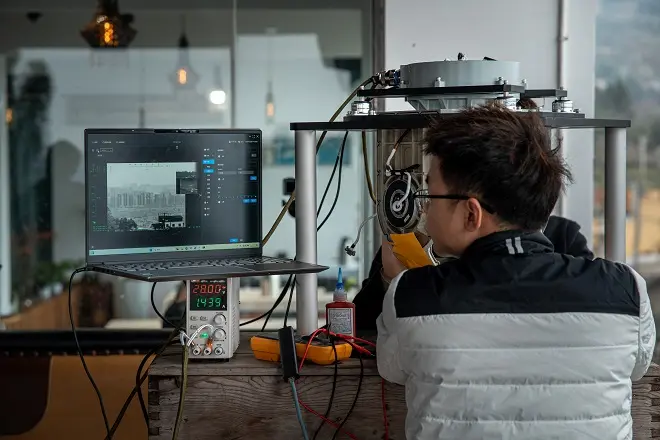
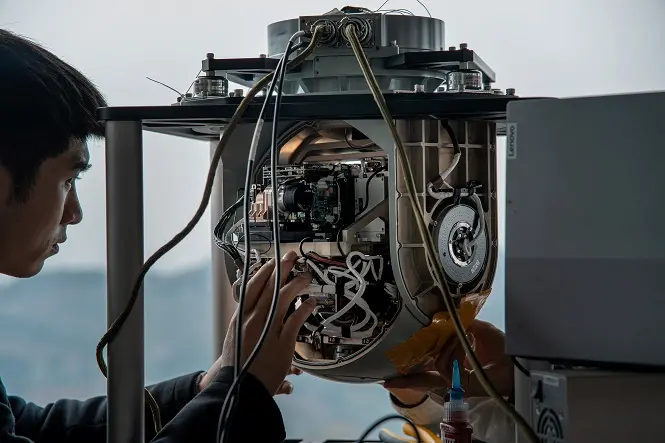
The thermal channels are aligned and verified in house. Optics, detector mounting, servo hardware, stabilisation firmware and the AI tracking module are developed by the same team, and every head is boresighted and environmentally tested on our own line before it ships.

Related reading
Adjacent pages, so you can compare the channel you need against the wider range.
- Infrared payload integration
The same detectors, specified from the airframe side: power, video path, control protocol and sealing.
- Dual-sensor EO/IR heads
How a boresighted daylight and thermal pair is aligned, recorded and switched in flight.
- Daylight EO cameras
Resolution, focal length and zoom for the visible channel that pairs with the thermal one.
- Laser designator pods
Thermal and daylight channels with a 1064 nm designator added for target marking.
Frequently asked questions
640 × 512 or 1280 × 1024 — which detector do I need?
640 × 512 is the workhorse and covers most survey, inspection and patrol work. 1280 × 1024 doubles linear resolution, which matters when the target occupies only a few pixels in frame or when the operator has to classify rather than simply detect. If your recognition distance is already met by a 640 × 512 detector on the right lens, extra pixels buy field of view rather than reach.
Does a thermal channel need a cryocooler?
No. Every infrared channel here is uncooled, so there is no cool-down time before take-off and no consumable to replace. Sensitivity is quoted as NETD — the noise-equivalent temperature difference — and 40 mK or better is the figure across the thermal heads in this range.
Is there a thermal-only head?
Yes. The HQ-125S is infrared only, with a 1280 × 1024 detector on a 50 mm lens. Everything else in the range pairs the infrared detector with a daylight camera, because most operators end up using both channels on the same mission.
Choosing between a 640 x 512 and a 1280 x 1024 detector
The two resolutions in this range behave differently, and the difference is not simply “more pixels is better”. This guide works through the sampling, the lens arithmetic at distance, and the one question that catches people out – whether the camera can measure temperature at all.
- 640 x 512 vs 1280 x 1024: which resolution you needWhat the element count buys you, why the lens decides more than the detector, how NETD and pixel pitch change the picture, and when the extra sampling earns its price.Read the resolution guide →
- EO vs IR vs EO/IR: which sensor configurationWhat visible, thermal and dual-sensor channels each see, where each one stops, and which configuration suits which mission.Read the sensor guide →
Request information or a quotation
Tell us what you need to see and at what distance, and we will match the thermal lens and the detector. Contact us with your requirements.