Field notes from the HITS engineering team: mission write-ups, technology explainers and payload selection guides for UAV imaging.
Read the newest material first, or use the topic cards below to move to a different part of the knowledge hub.
Knowledge hub
Payload selection, sensor choice and integration, written for UAV manufacturers, integrators and procurement teams.
This blog is written for UAV (unmanned aerial vehicle) manufacturers, OEMs (original equipment manufacturers), system integrators and procurement teams evaluating EO/IR (electro-optical/infrared) payloads. Each article starts with a real integration or selection problem, then explains the sensor, optics, stabilisation and interface decisions that affect the result.
Use the category that matches your current task. If you are still defining the mission, start with Applications. If you are comparing sensor types, start with Technology Explained. If you already have a shortlist and need to qualify a supplier, start with Buying & Integration Guides.
UAV means unmanned aerial vehicle. In this blog, the term covers multirotor, fixed-wing and VTOL (vertical take-off and landing) aircraft used for commercial and industrial missions.
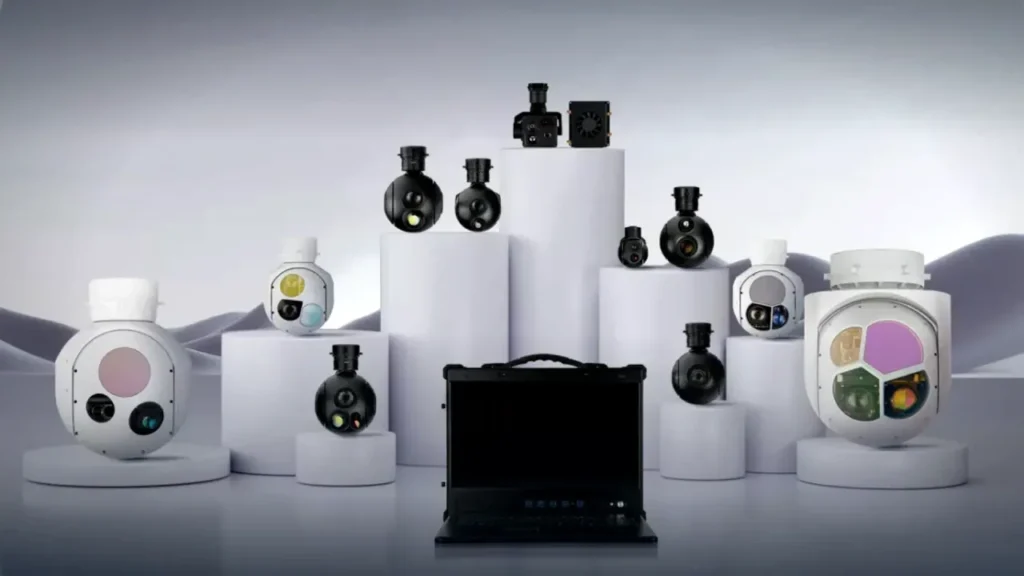
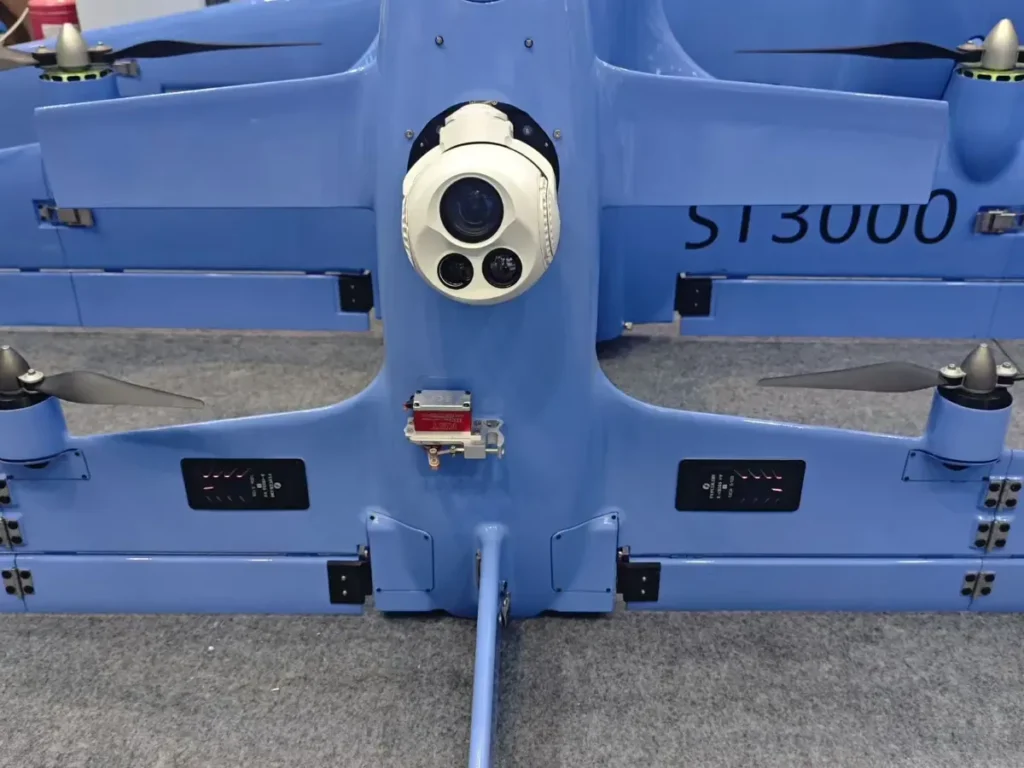
EO/IR means electro-optical/infrared. An EO channel captures visible light and colour detail; an IR channel captures thermal radiation and can reveal people, vehicles or equipment in low light or haze. A dual-sensor EO/IR payload combines both channels.
Gimbal refers to the stabilised mount that holds the camera and isolates it from aircraft vibration and movement. A two-axis gimbal usually provides pitch and yaw; a three-axis gimbal adds roll stabilisation.
FOV means field of view. A wide FOV supports search and situational awareness; a narrow FOV supports identification at longer range. LRF means laser rangefinder, which measures distance to a target.
AI means artificial intelligence. In this context, AI tracking helps an operator hold a moving target, but it should be treated as an aid rather than a replacement for a clear image and a reliable control link.
OEM means original equipment manufacturer. OEM integration usually involves mechanical fitting, power, video output, control protocol and firmware coordination.
Most articles follow the same practical sequence: define the target and range, choose the sensor and optics, check stabilisation and image latency, confirm the interface with the flight controller or ground station, then plan a bench test and a representative flight test. This structure makes it easier to compare payloads on the criteria that affect the mission, not just the headline specification.
Where a claim depends on test conditions, the article states the conditions. Detection, recognition and identification are treated as separate levels of performance. A camera that detects a person at 900 m may not identify clothing or equipment at the same distance; a zoom figure alone does not describe image quality.
EO (electro-optical) cameras use visible light and provide colour and fine detail in daylight. IR (infrared) cameras detect thermal radiation and can work in darkness, smoke or light haze. An EO/IR payload lets the operator cross-check both channels.
It depends on the aircraft and the mission. A two-axis gimbal is often lighter and simpler; a three-axis gimbal adds roll stabilisation and can hold a steadier image during turns or in turbulent air. Check the aircraft's payload capacity, mounting point and typical flight profile before deciding.
Integration depends on the mechanical interface, power, video output, control protocol and firmware. Share the aircraft type, mounting space, available power and control interface with our team, and we can confirm the relevant options before a sample or integration discussion.
For a shortlist, browse industrial UAV cameras or send the mission details to our team.
Payload decisions touch mission design, optics, airframe integration and procurement. Choose the topic that matches the decision in front of you, or follow the category links into the technical detail.
 Applications1 article
Applications
Mission profiles, operating environments and payload trade-offs for inspection, patrol, search and survey work.
Explore topic → Technology5 articles
Technology Explained
Sensors, optics, stabilisation, video links and onboard AI explained for UAV engineering teams.
Explore topic → Guides5 articles
Buying & Integration Guides
Procurement, supplier evaluation, integration and flight-test checklists for UAV programmes.
Explore topic → News2 articles
News & Projects
Manufacturing, product development and field updates from across HITS.
Explore topic →Share the platform, mission and constraints. HITS can compare EO, thermal and EO/IR options, then confirm the integration details that shape the shortlist.
WhatsApp us