





IR Camera for Drones: Detector, Lens and Integration
13 infrared configurations · 19 mm to 50 mm lenses
An infrared channel is only worth having once it is talking to the aircraft. These are the numbers an integrator has to match: detector, lens, power, video path and control protocol.
- 11–28 VDC
- Ethernet H.264 / H.265
- RS-422 · MAVLink
- IP54, −20 to +60 °C
An infrared channel is only worth having once it is talking to the aircraft. This page looks at the uncooled long-wave infrared payloads in the range from the integrator’s side: what the detector delivers, how the video reaches the ground station, and what the airframe has to supply in return.
Detector resolution, lens focal length and NETD decide the imagery. Weight, power draw and interface decide whether that imagery leaves the aircraft at all. Both sets of numbers are specified for every configuration here, because a payload that cannot join your network or speak your control protocol costs more to integrate than it saves.
What the airframe has to supply
Before the detector is chosen, five interfaces have to match. These are the numbers every infrared head in this range is specified against.
- 11–28 VDC, 15 W typical
A single supply rail shared with the rest of the payload bay; peak draw is 30 W while the axes are accelerating.
- Ethernet video, H.264 / H.265
A standard IP stream that a ground station, a datalink or an onboard computer can take directly, with no re-encoding at the airframe.
- RS-422 / RS-232 / TTL control
The payload follows the serial protocol your flight controller or operator box already speaks.
- SBUS and MAVLink
Direct commands from a common flight controller, without a translator box in between.
- 128 GB onboard recording
Imagery is written on the payload itself, so a dropped link does not mean lost footage.
- −20 °C to +60 °C, IP54
Sealed against wind, dust and rotor wash, and rated across the band the aircraft actually flies in.
13 infrared configurations
Thirteen infrared configurations, ordered below by detector and lens, longest reach first.
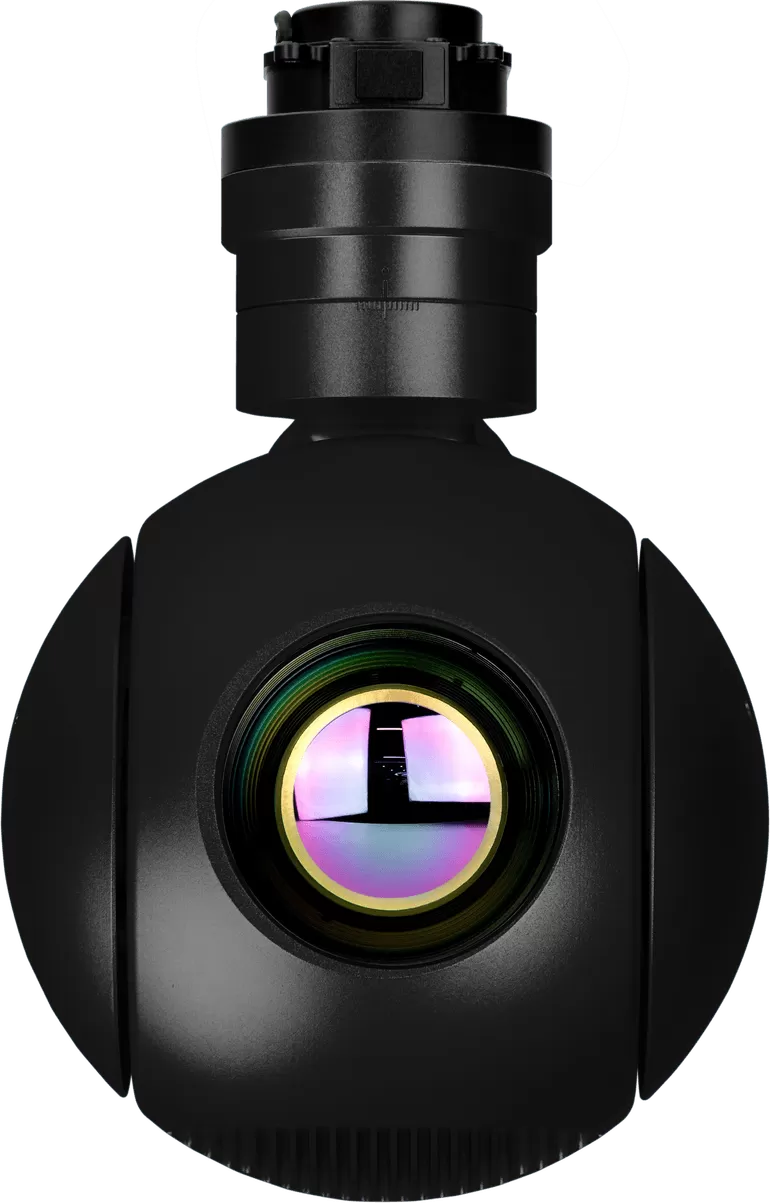
3-axis · IR
HQ-125S Thermal Gimbal Camera OEM
A thermal-only head with a 1280 × 1024 sensor — the highest thermal resolution in the series.
- Visible
- —
- Thermal
- 1280 × 1024, 50 mm fixed
- Laser
- —
- Weight
- ≤1 kg
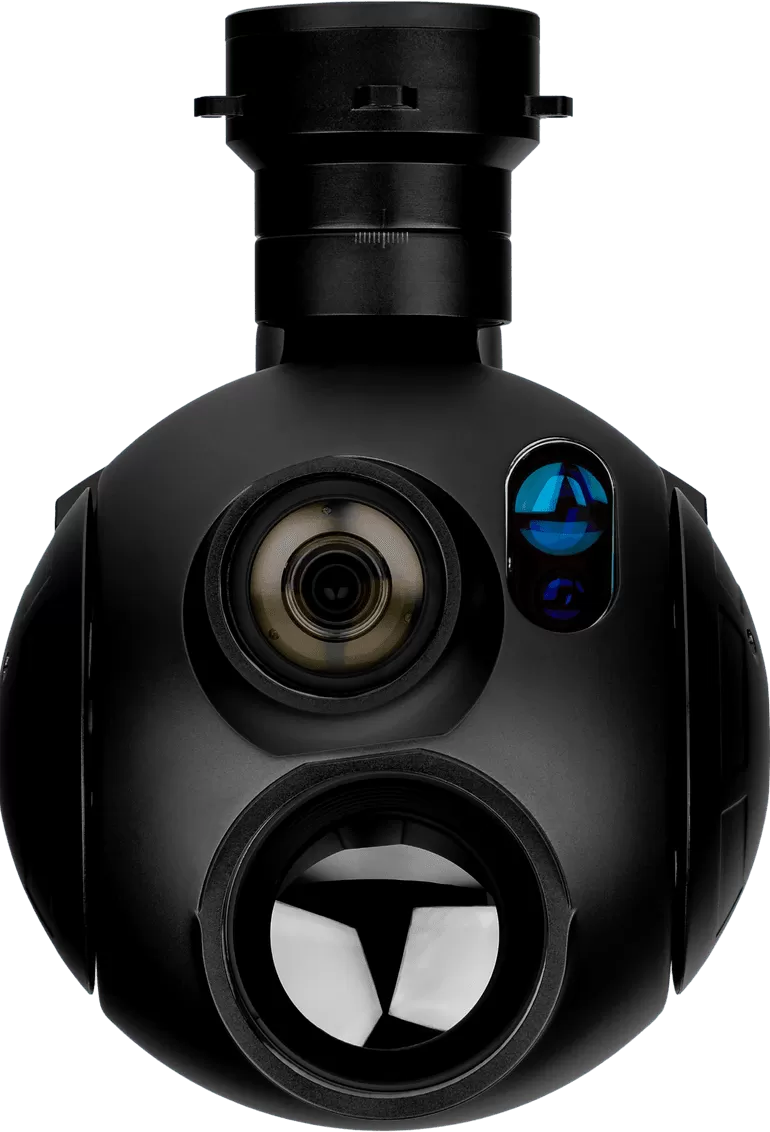
3-axis · EO + IR + LRF
HQ-135TA Stabilised UAV Camera Manufacturer
A 50 mm thermal lens gives the longest thermal reach in the compact range.
- Visible
- 1920 × 1080, 30x zoom 4.3 – 129 mm
- Thermal
- 640 × 512, 50 mm fixed
- Laser
- 15 m – 3 km (± 1 m)
- Weight
- ≤1.5 kg
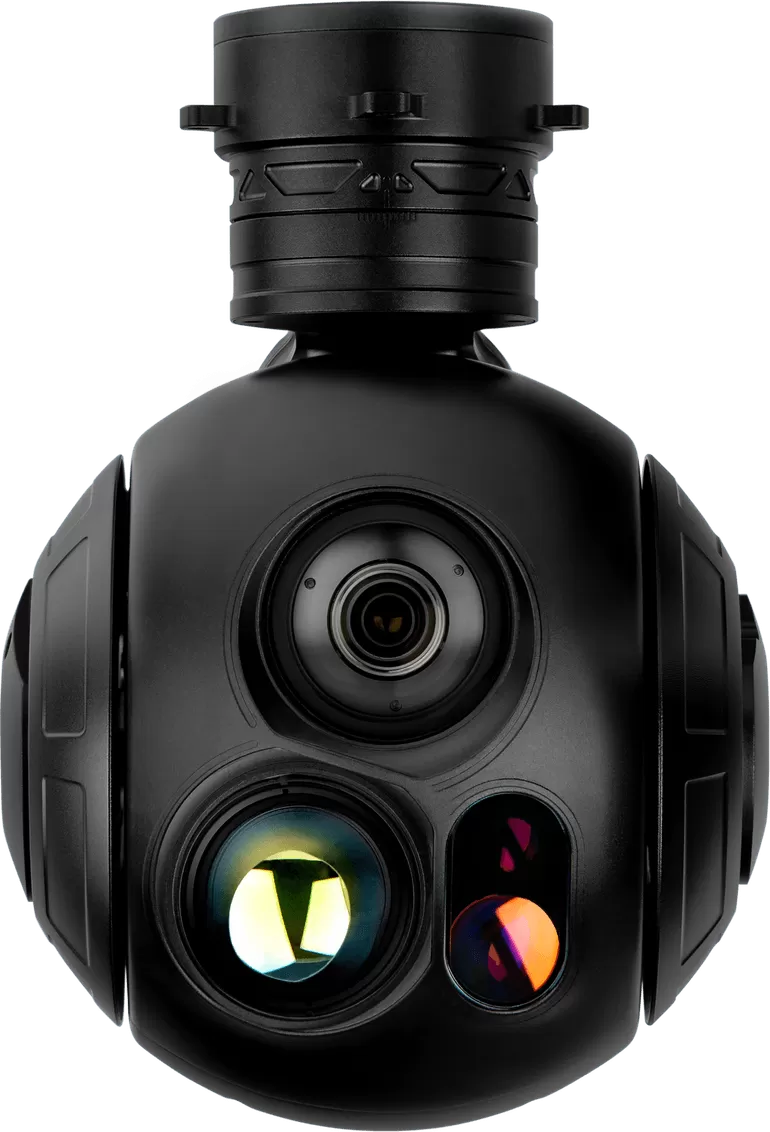
3-axis · EO + IR + LRF
HQ-125TB Gimbal Camera Supplier
Balanced mid-range turret: 30x zoom, a long thermal lens and 3 km ranging.
- Visible
- 1920 × 1080, 30x zoom 4.3 – 129 mm
- Thermal
- 640 × 512, 35 mm fixed
- Laser
- 15 m – 3 km (± 1 m)
- Weight
- ≤1.2 kg
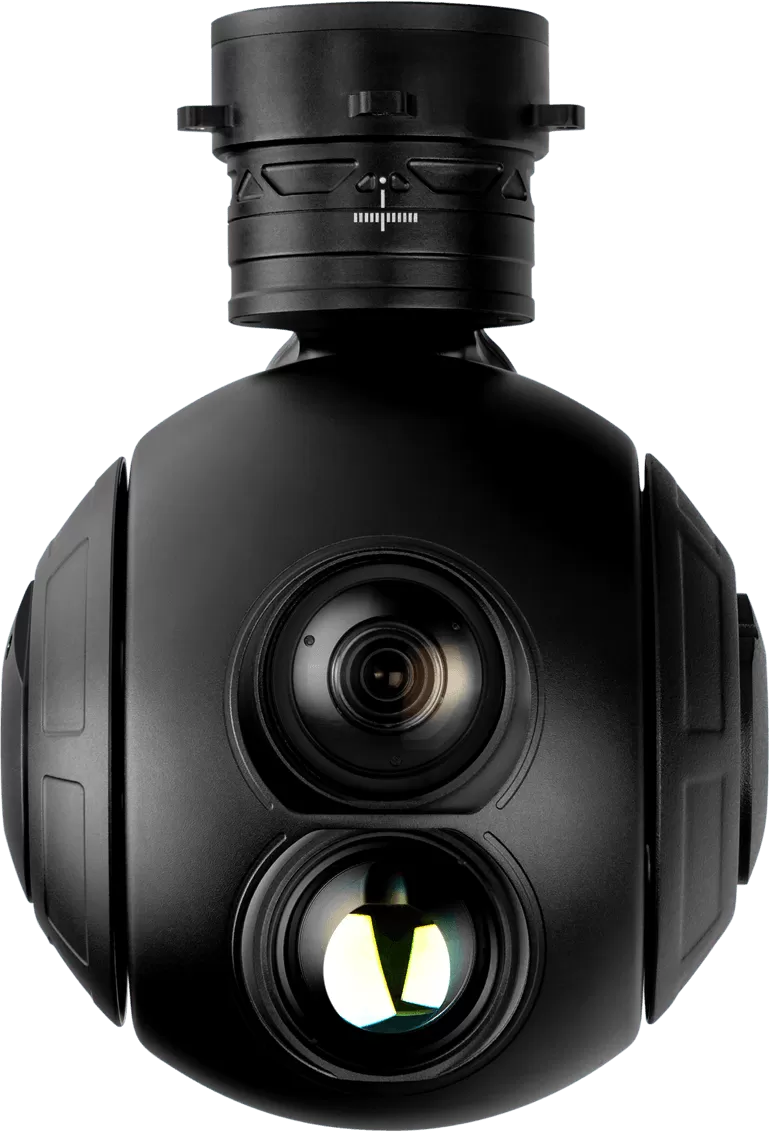
3-axis · EO + IR
HQ-125DB UAV Camera Gimbal ODM
The longer 35 mm thermal lens paired with 30x zoom, without the rangefinder.
- Visible
- 1920 × 1080, 30x zoom 4.3 – 129 mm
- Thermal
- 640 × 512, 35 mm fixed
- Laser
- —
- Weight
- ≤1.1 kg
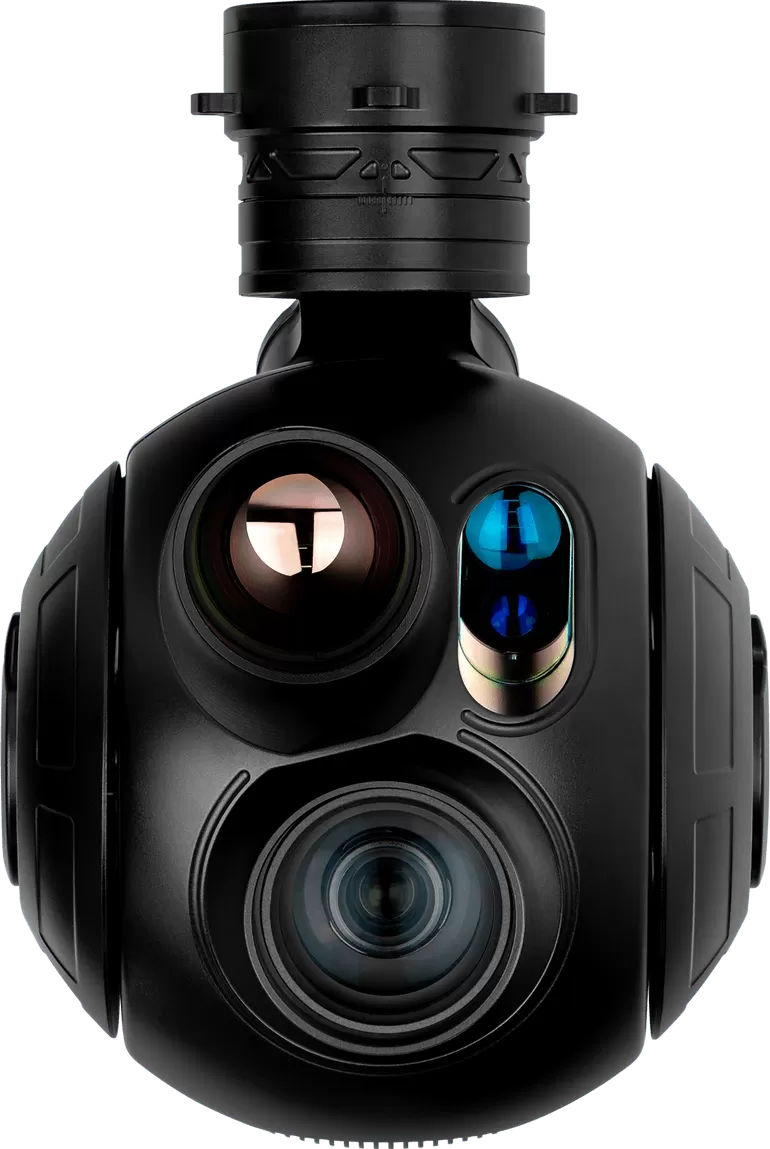
3-axis · EO + IR + LRF
HQ-135T UAV Gimbal Camera OEM
The flagship of the compact range: 40x zoom, thermal imaging and 3 km ranging on one stabilised cage.
- Visible
- 1920 × 1080, 40x zoom 4.25 – 170 mm
- Thermal
- 640 × 512, 35 mm fixed
- Laser
- 15 m – 3 km (± 1 m)
- Weight
- ≤1.4 kg
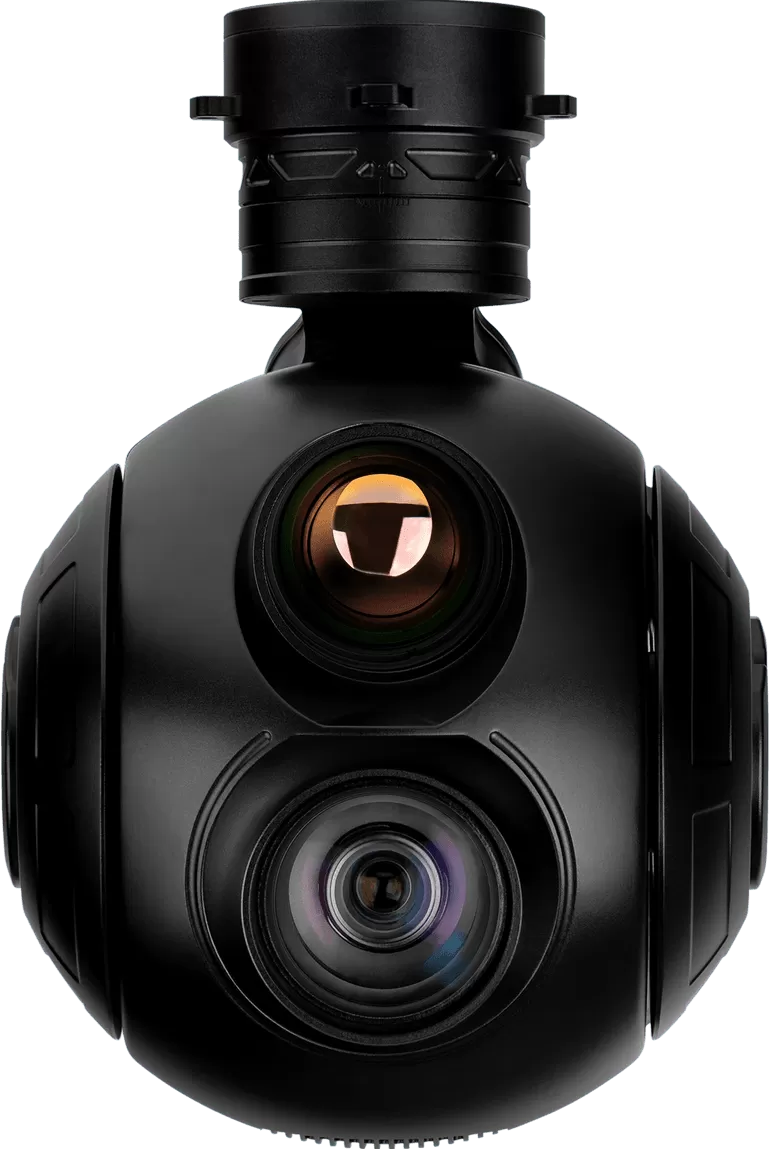
3-axis · EO + IR
HQ-135D customized Drone Camera Payload
The 40x optic with thermal imaging, for daylight and night identification at long range.
- Visible
- 1920 × 1080, 40x zoom 4.25 – 170 mm
- Thermal
- 640 × 512, 35 mm fixed
- Laser
- —
- Weight
- ≤1.4 kg
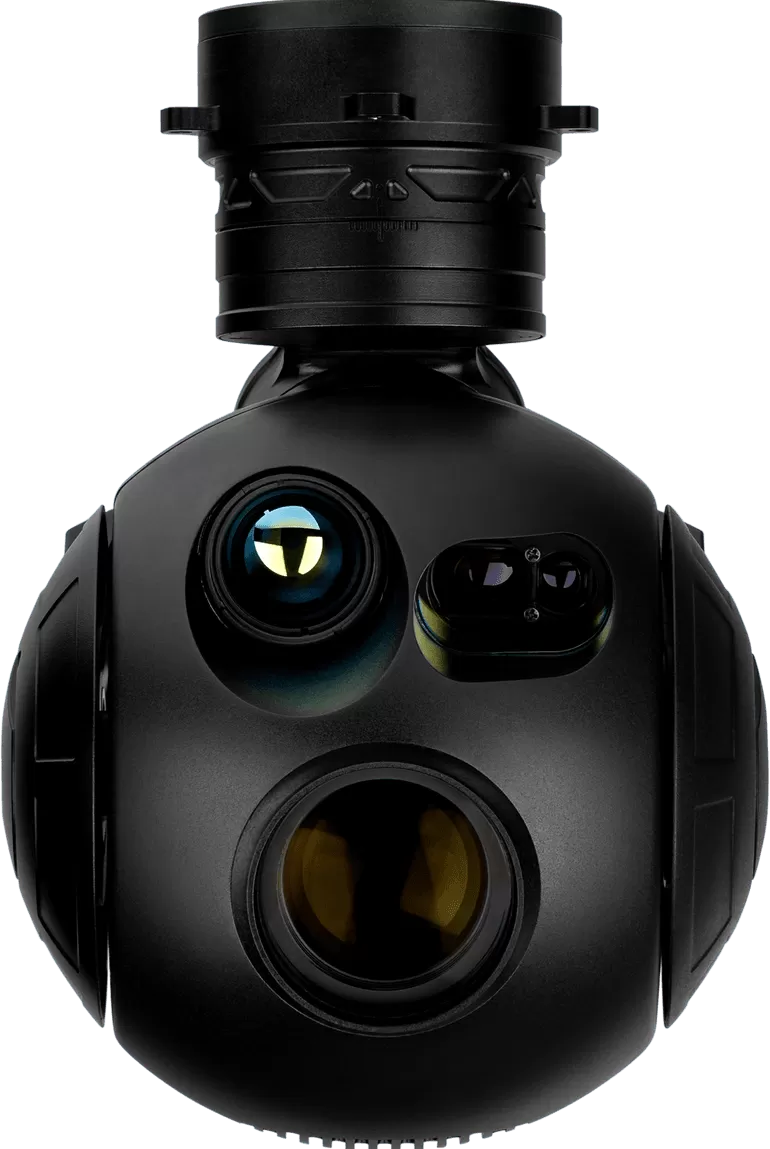
3-axis · EO + IR + LRF
HQ-115T Gimbal Camera Manufacturer
The one-kilogram workhorse: 30x zoom, thermal imaging and a 1.5 km rangefinder.
- Visible
- 1920 × 1080, 30x zoom 4.3 – 129 mm
- Thermal
- 640 × 512, 25 mm fixed
- Laser
- 5 m – 1.5 km (± 1 m)
- Weight
- ≤1 kg
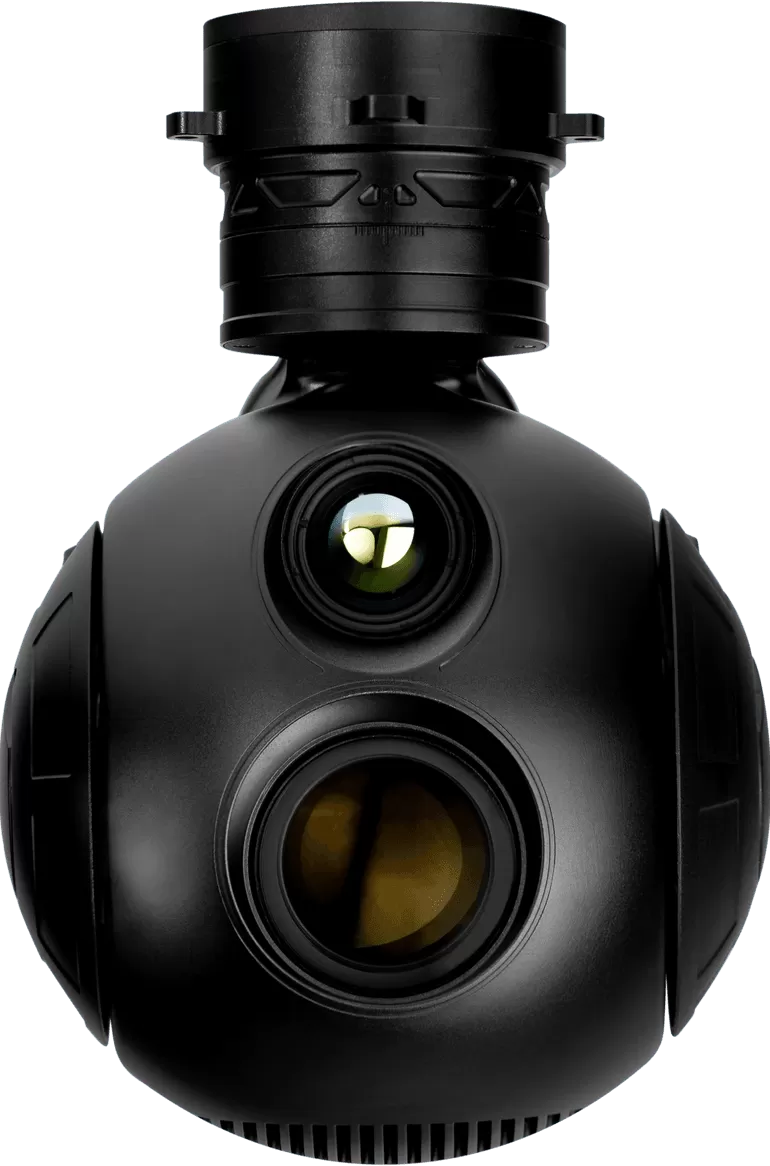
3-axis · EO + IR
HQ-115D UAV Gimbal Camera OEM
30x zoom and thermal imaging on a one-kilogram head with no ranging requirement.
- Visible
- 1920 × 1080, 30x zoom 4.3 – 129 mm
- Thermal
- 640 × 512, 25 mm fixed
- Laser
- —
- Weight
- ≤1 kg
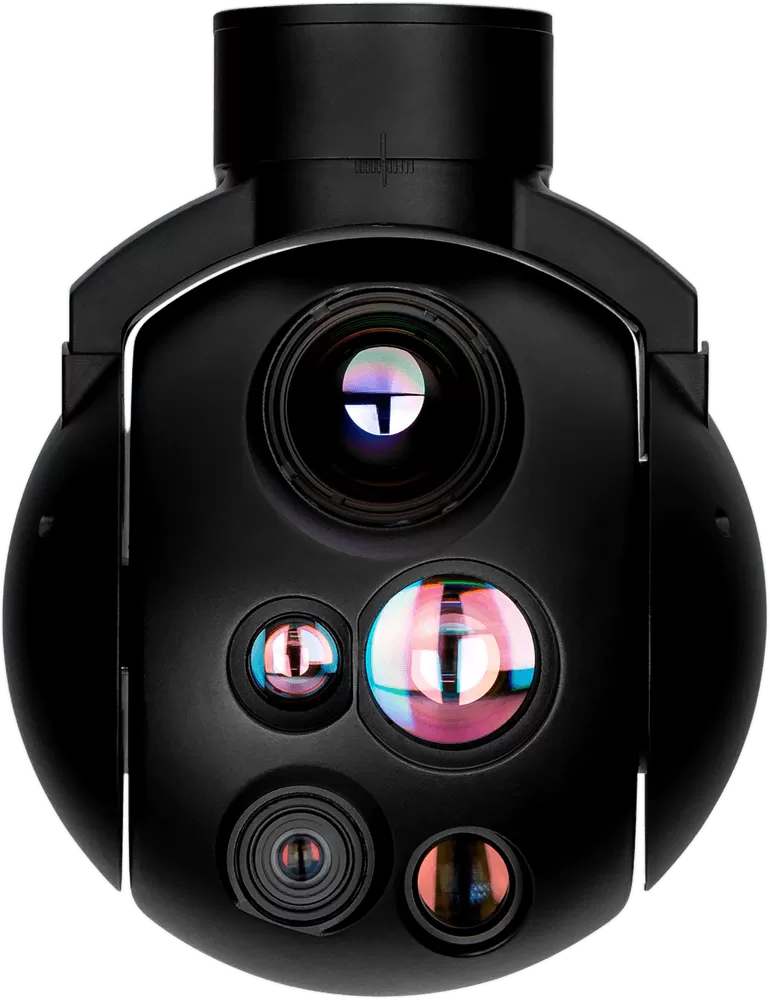
2-axis · EO + IR + LRF
HQ-85Q Stabilised Camera Payload ODM
Adds 3 km laser ranging to a two-axis platform for crews that need coordinates, not just imagery.
- Visible
- Dual 1920 × 1080, 8 mm + 25 mm
- Thermal
- 640 × 512, 25 mm fixed
- Laser
- 15 m – 3 km (± 1 m)
- Weight
- ≤500 g
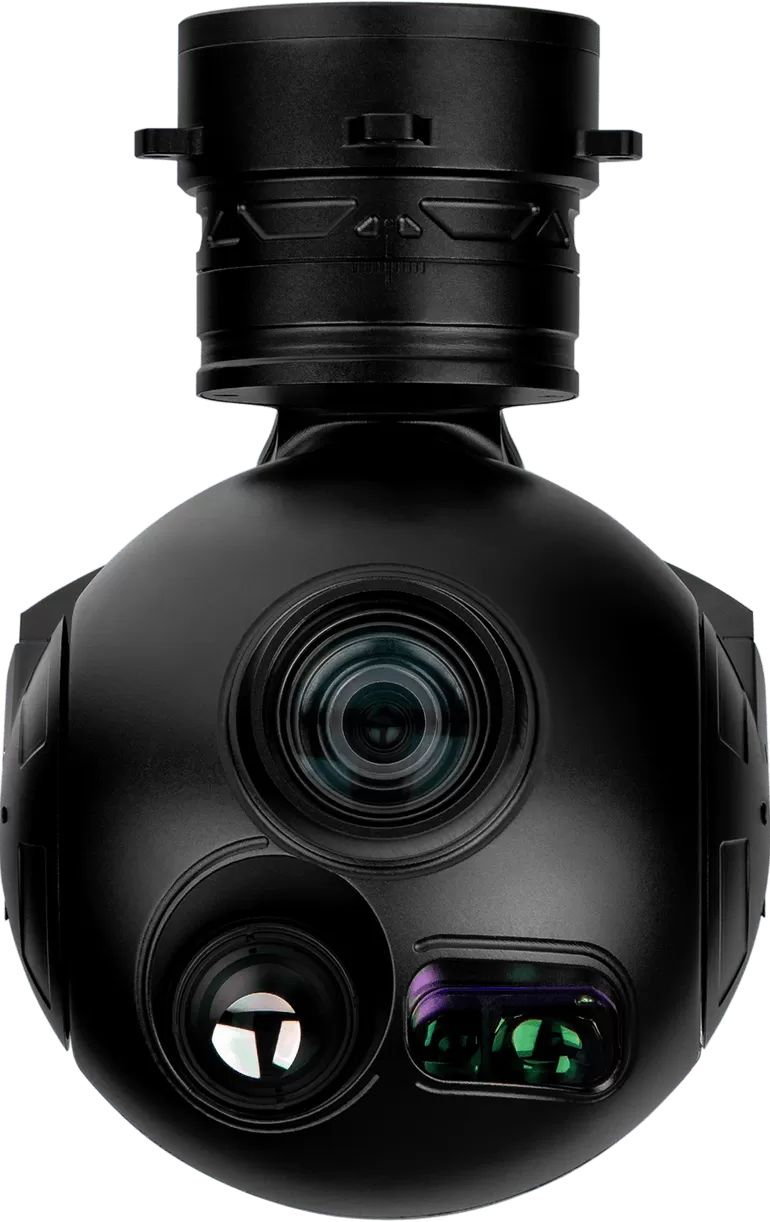
3-axis · EO + IR + LRF
HQ-100T Gimbal Camera Manufacturer
The same 800 g three-axis head as the 100D, with a 1.5 km laser rangefinder added.
- Visible
- 1920 × 1080, 10x zoom 4.7 – 47 mm
- Thermal
- 640 × 512, 19 mm fixed
- Laser
- 5 m – 1.5 km (± 1 m)
- Weight
- ≤800 g
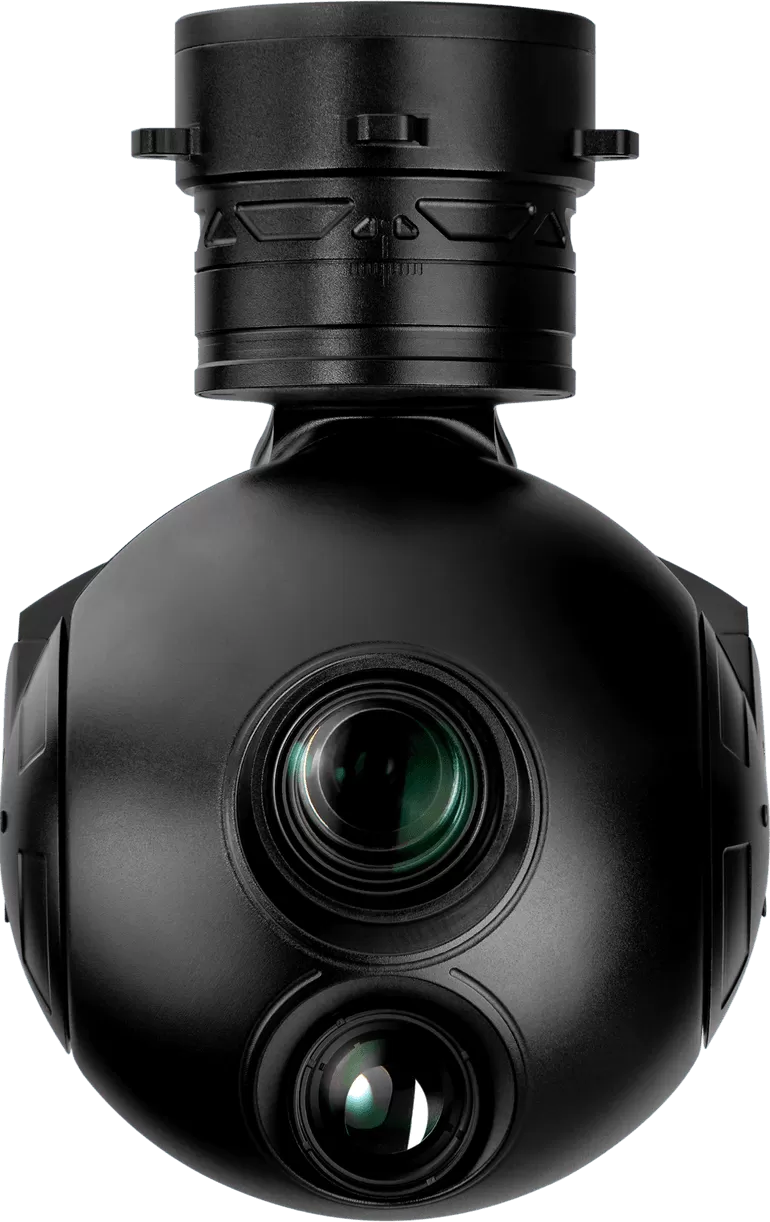
3-axis · EO + IR
HQ-100D Gimbal Camera OEM
The entry point to full roll-stabilised zoom and thermal imaging under a kilogram.
- Visible
- 1920 × 1080, 10x zoom 4.7 – 47 mm
- Thermal
- 640 × 512, 19 mm fixed
- Laser
- —
- Weight
- ≤800 g
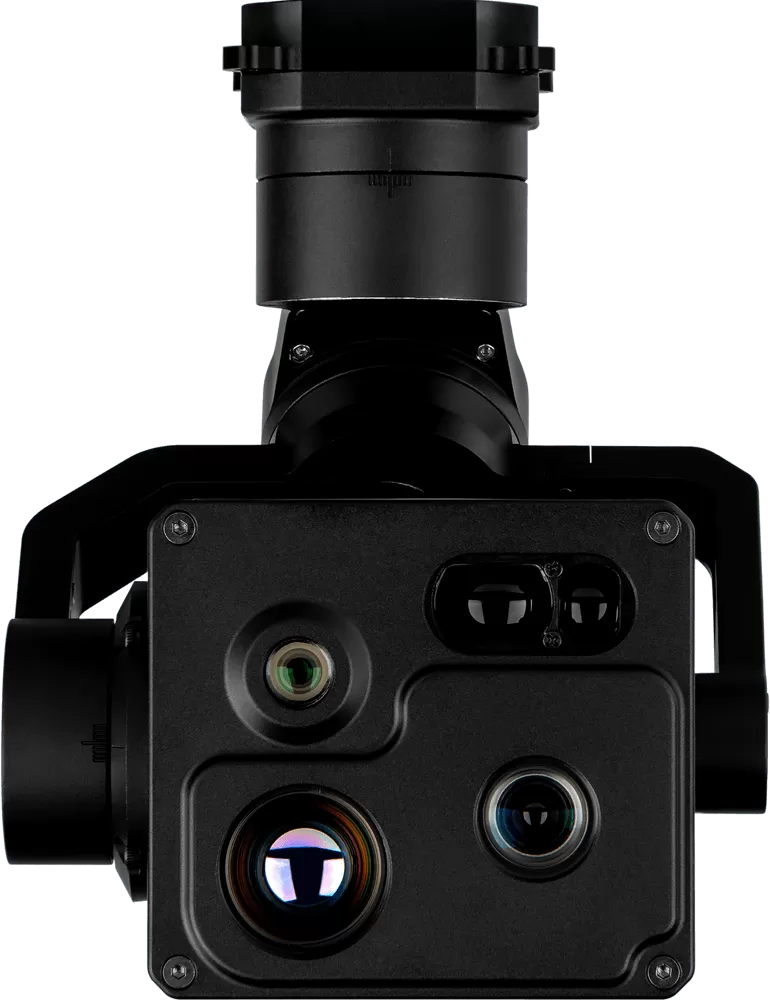
3-axis · EO + IR + LRF
HQ-95Q customized UAV Camera Gimbal
Four optical channels and a quick-release mount on the lightest three-axis head we build.
- Visible
- Dual 8000 × 6000, 9.5 mm + continuous zoom 15.3 – 49.7 mm
- Thermal
- 640 × 512, 19 mm fixed
- Laser
- 5 m – 1.5 km (± 1 m)
- Weight
- ≤400 g
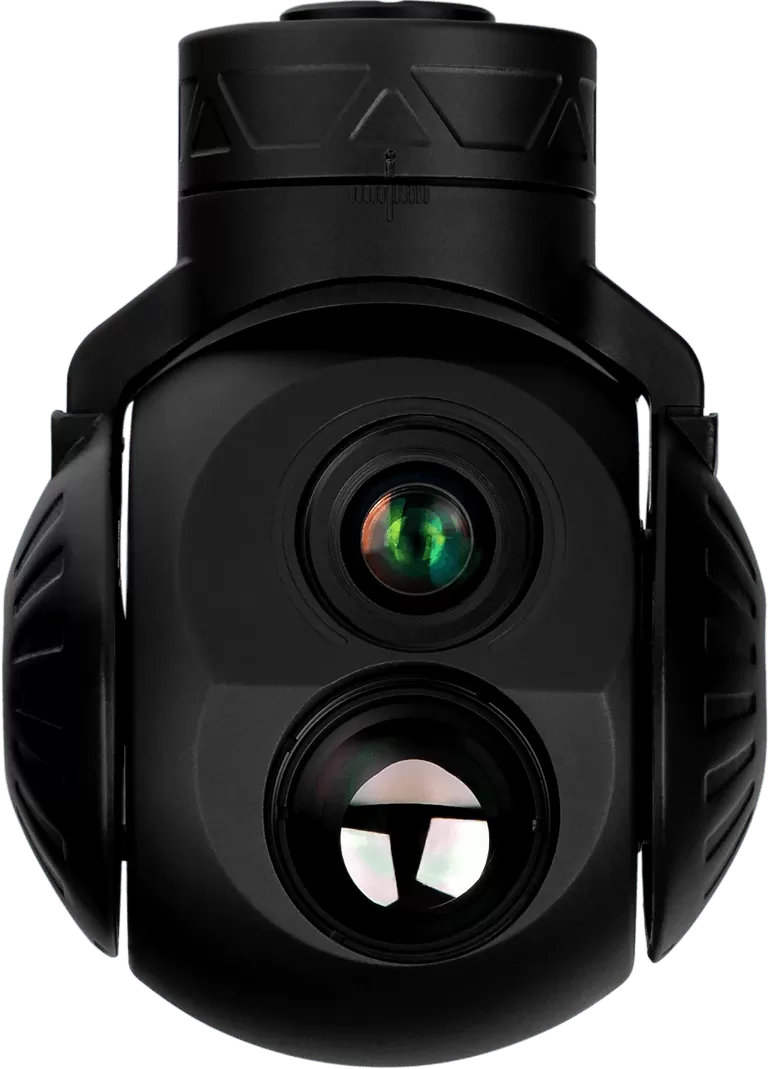
2-axis · EO + IR
HQ-64DA UAV Camera Gimbal OEM
The lightest dual-sensor head in the range — 2K daylight plus thermal on 260 g.
- Visible
- 2688 × 1520, 8.5 mm fixed
- Thermal
- 640 × 512, 19 mm fixed
- Laser
- —
- Weight
- ≤260 g
Fitting an infrared payload to an aircraft
Six things are checked before an infrared head is specified, and the detector is only one of them.
- Weight and mount
The head has to fit the payload budget with its gimbal, not on its own. A 640 × 512 channel on a wide lens starts at 260 g; the same detector on a 35 mm lens with 40x daylight zoom reaches 1.4 kg.
- Power and thermal load
11–28 VDC at 15 W typical. The bay also has to move that heat away, because an uncooled detector still needs its housing held close to ambient.
- Video path
H.264 or H.265 over Ethernet, so the stream can be recorded, downlinked or processed without another encoder in the chain.
- Control path
RS-422, RS-232, TTL, SBUS or MAVLink. Matching the protocol is the difference between a payload commanded from the existing ground station and one that needs a second box.
- Vibration and environment
Rotor wash and continuous vibration are why the infrared core rides on the stabilised cage rather than being hard-mounted, and why the head is sealed to IP54.
- Recording and dual channel
128 GB on board, with simultaneous capture where a daylight camera is fitted alongside the infrared channel.
Compare the range
| Model | Axes | Configuration | Visible camera | Thermal imager | Laser rangefinder | Weight |
|---|---|---|---|---|---|---|
| HQ-64DA | 2-axis | EO + IR | 2688 × 1520, 8.5 mm fixed | 640 × 512, 19 mm fixed | — | ≤260 g |
| HQ-85Q | 2-axis | EO + IR + LRF | Dual 1920 × 1080, 8 mm + 25 mm | 640 × 512, 25 mm fixed | 15 m – 3 km (± 1 m) | ≤500 g |
| HQ-95Q | 3-axis | EO + IR + LRF | Dual 8000 × 6000, 9.5 mm + continuous zoom 15.3 – 49.7 mm | 640 × 512, 19 mm fixed | 5 m – 1.5 km (± 1 m) | ≤400 g |
| HQ-100D | 3-axis | EO + IR | 1920 × 1080, 10x zoom 4.7 – 47 mm | 640 × 512, 19 mm fixed | — | ≤800 g |
| HQ-100T | 3-axis | EO + IR + LRF | 1920 × 1080, 10x zoom 4.7 – 47 mm | 640 × 512, 19 mm fixed | 5 m – 1.5 km (± 1 m) | ≤800 g |
| HQ-115D | 3-axis | EO + IR | 1920 × 1080, 30x zoom 4.3 – 129 mm | 640 × 512, 25 mm fixed | — | ≤1 kg |
| HQ-115T | 3-axis | EO + IR + LRF | 1920 × 1080, 30x zoom 4.3 – 129 mm | 640 × 512, 25 mm fixed | 5 m – 1.5 km (± 1 m) | ≤1 kg |
| HQ-125S | 3-axis | IR | — | 1280 × 1024, 50 mm fixed | — | ≤1 kg |
| HQ-125DB | 3-axis | EO + IR | 1920 × 1080, 30x zoom 4.3 – 129 mm | 640 × 512, 35 mm fixed | — | ≤1.1 kg |
| HQ-125TB | 3-axis | EO + IR + LRF | 1920 × 1080, 30x zoom 4.3 – 129 mm | 640 × 512, 35 mm fixed | 15 m – 3 km (± 1 m) | ≤1.2 kg |
| HQ-135D | 3-axis | EO + IR | 1920 × 1080, 40x zoom 4.25 – 170 mm | 640 × 512, 35 mm fixed | — | ≤1.4 kg |
| HQ-135T | 3-axis | EO + IR + LRF | 1920 × 1080, 40x zoom 4.25 – 170 mm | 640 × 512, 35 mm fixed | 15 m – 3 km (± 1 m) | ≤1.4 kg |
| HQ-135TA | 3-axis | EO + IR + LRF | 1920 × 1080, 30x zoom 4.3 – 129 mm | 640 × 512, 50 mm fixed | 15 m – 3 km (± 1 m) | ≤1.5 kg |
Infrared channels above the compact range
The pod series uses the same uncooled detector technology with longer lenses and continuous-zoom infrared optics, for platforms with a larger payload budget.
- XQ EO/IR Pod Series35 mm to 75 mm fixed lenses and 15 mm to 300 mm continuous-zoom thermal channels, with ranging to 15 km.View the range →
- SQ Laser Designator PodsThe same infrared channels with a 1064 nm laser designator for target illumination.View the range →
How the payload and the aircraft fit together
Resolution is not the number that decides
A 640 × 512 detector is the workhorse for surveillance and inspection, and the 1280 × 1024 channel on the 125S doubles linear resolution for small targets at long range. But detection distance follows the lens first: the same detector on a 50 mm lens resolves further than on a 19 mm lens, which is why buyers who compare megapixels alone usually specify the wrong head.
Video output and what the operator sees
The infrared channel is delivered as an IP video stream alongside the daylight channel. Both can be recorded at once, and the operator can run either full-screen or overlay thermal on the daylight image. Because recording happens on the payload, the ground station can drop the link without costing the imagery.
Designed and manufactured by HITS
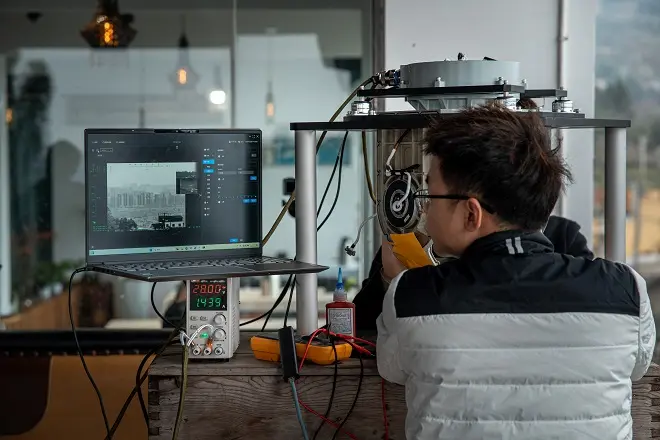
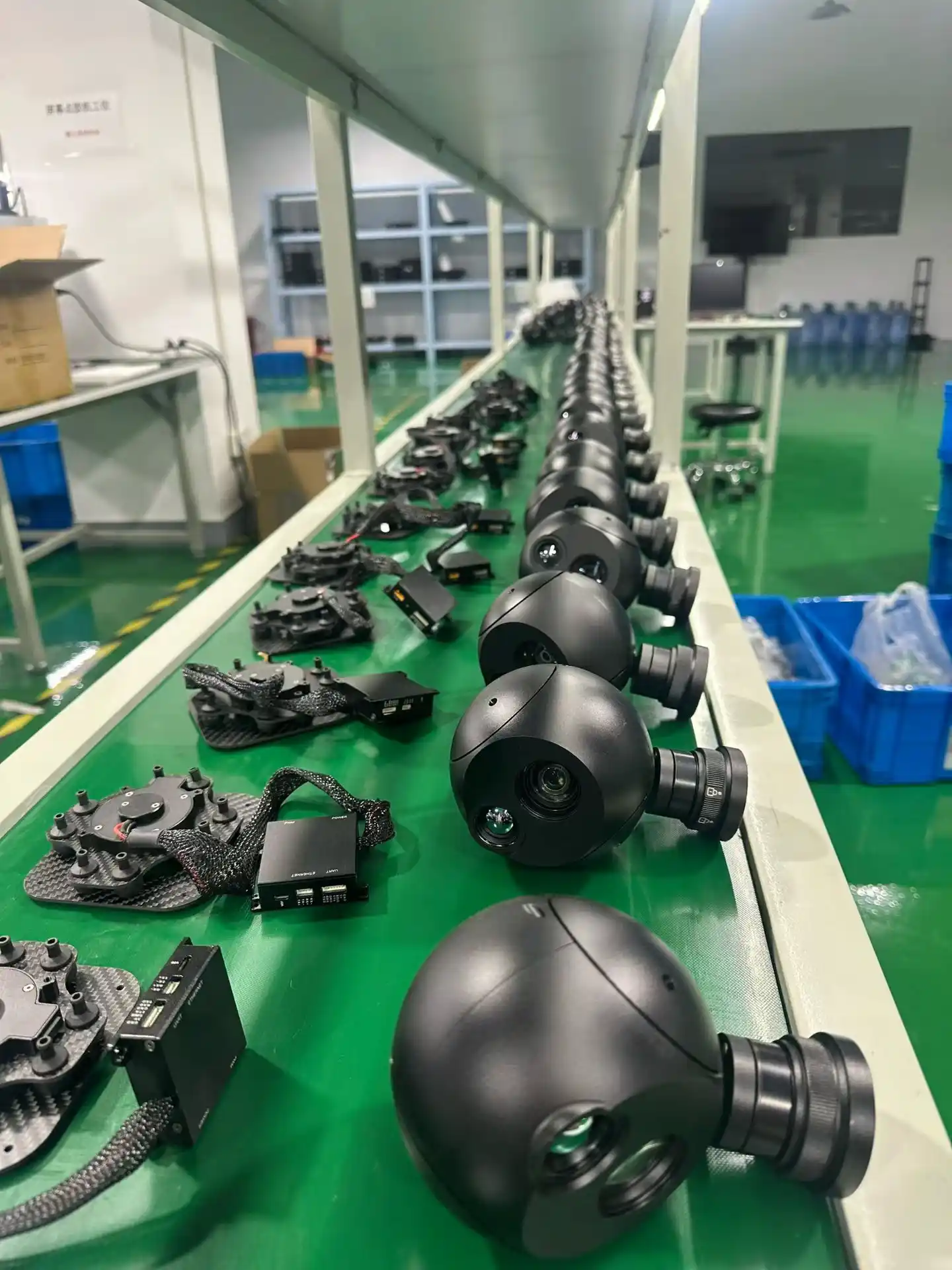
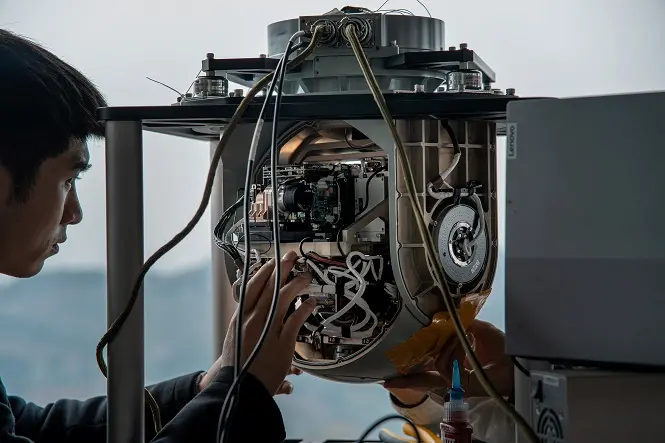
Infrared cores, optics, servo hardware and firmware are developed by the same team, and every head is assembled, calibrated and environmentally tested on our own line before dispatch — including the vibration and temperature cycling that decides whether an infrared channel survives rotor wash.

Related reading
Adjacent pages, so you can compare the channel you need against the wider range.
- Thermal imaging payloads
The infrared channel from the sensor side: detector resolution, NETD and which lens reaches how far.
- Dual-sensor EO/IR heads
Adding a boresighted daylight channel to the infrared one, with simultaneous recording.
- Daylight EO cameras
The visible channel specified on its own: resolution, focal length and zoom range.
- Export compliance
Dual-use licensing and customs documentation for imaging payloads, handled in house.
Frequently asked questions
What interfaces does the infrared payload use?
Ethernet for video, H.264 or H.265, and RS-422, RS-232 or TTL for control, with SBUS and MAVLink available for direct flight-controller commands. Power is 11–28 VDC at 15 W typical and 30 W peak. If the aircraft already carries an IP video link and a serial control bus, there is nothing new to design.
Will an infrared payload survive rotor wash and continuous vibration?
The infrared core and its optics are mounted on the stabilised cage rather than hard-mounted to the airframe, the head is sealed to IP54, and it is rated from −20 °C to +60 °C. Stabilisation accuracy is held to 100 μrad or better across that envelope.
Can the payload record instead of downlinking?
Yes. Every head carries 128 GB of onboard storage, and where a daylight camera is fitted alongside the infrared channel, both are recorded at the same time. The ground station can lose the link without losing the footage.
Which infrared resolution, and which lens
Detector choice and lens choice are one decision, not two – and it is the one that decides how many detector elements actually land on the target at your working distance. The guide below runs the numbers.
- 640 x 512 vs 1280 x 1024: which resolution you needWhat the element count buys you, why the lens decides more than the detector, how NETD and pixel pitch change the picture, and when the extra sampling earns its price.Read the resolution guide →
- How to choose an industrial UAV gimbal cameraMission first, then payload family and specifications: field of view, weight and power budgets, interfaces, and a checklist to run before you request a quotation.Read the selection guide →
Request information or a quotation
Send the airframe, the payload budget and the interface you already use, and we will specify the detector, the lens and the configuration. Contact us with your requirements.