





EO IR Camera Systems: Dual-Sensor UAV Payloads
12 dual-sensor configurations · 240 g – 1.5 kg
An EO/IR camera puts a visible and a thermal channel on one stabilised cage, boresighted so both share an aim point — and stays on that aim point across temperature and manoeuvre.
- Dual-sensor
- Boresight held
- Dual-channel recording
- 240 g – 1.5 kg
A dual-sensor head puts a visible and a thermal channel on one stabilised cage, boresighted so both share an aim point. The operator confirms a fault in daylight and again by heat signature without slewing the aircraft or losing the target.
What separates one dual-sensor head from another is not resolution but alignment: how well the two channels stay on the same line of sight as the housing warms up and the aircraft manoeuvres, and how the two streams are recorded. Every configuration below is specified with its daylight and infrared channels, with or without a laser rangefinder.
What a dual-sensor head has to deliver
Two sensors on one mount is easy to build and hard to keep aligned. These are the six things a dual-sensor head is judged on.
- Two channels, one line of sight
A visible and an uncooled long-wave infrared detector on one cage, aligned to the same aim point at the factory.
- Boresight held through the envelope
Both sensors are calibrated as one assembly, so the aim point does not drift when the housing warms up or the aircraft manoeuvres.
- Simultaneous dual-channel recording
Both streams are written to the payload’s 128 GB of onboard storage at the same time, so changing what the operator watches does not cost the other recording.
- Fusion and picture-in-picture
Either channel full-screen, or thermal overlaid on the daylight image with the daylight detail still visible underneath.
- Day/night continuity
The mission does not restart at dusk: the same head, the same aim point and the same target track run from daylight into darkness.
- With or without a laser rangefinder
Twelve configurations, from a 260 g dual-sensor head to a 1.5 kg turret with a 3 km eye-safe laser.
12 dual-sensor models
Twelve dual-sensor configurations, ordered below by weight. Every one of them carries a daylight and a thermal channel on the same boresighted cage.
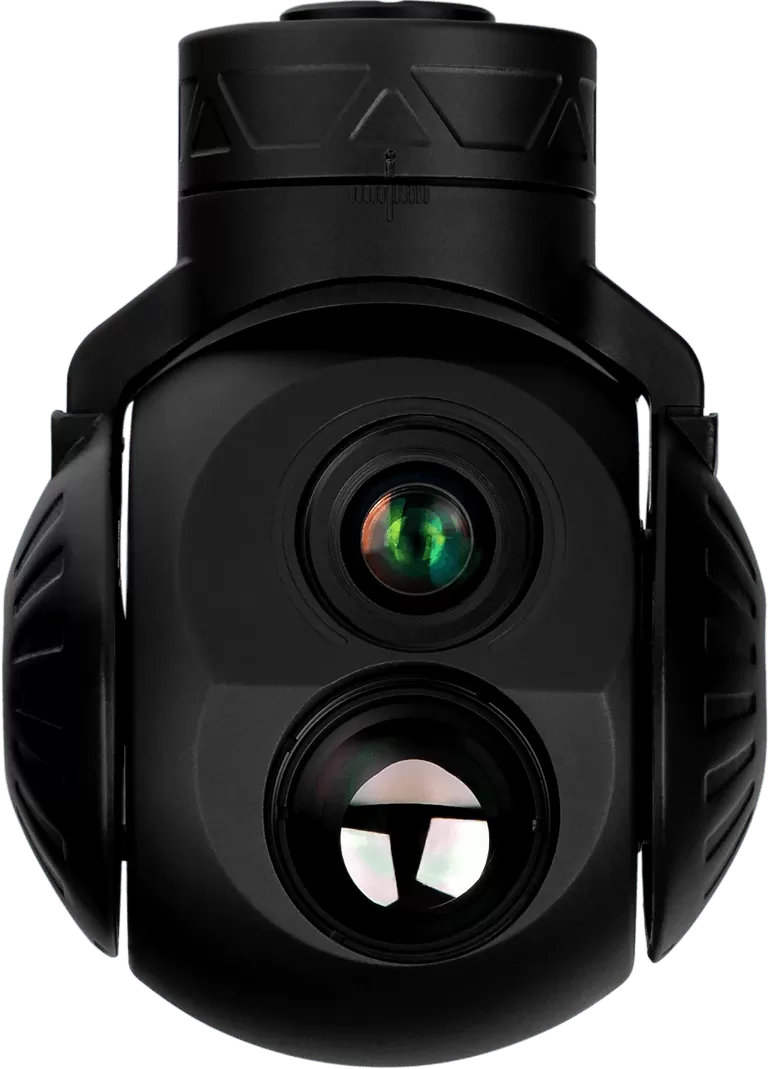
2-axis · EO + IR
HQ-64DA UAV Camera Gimbal OEM
The lightest dual-sensor head in the range — 2K daylight plus thermal on 260 g.
- Visible
- 2688 × 1520, 8.5 mm fixed
- Thermal
- 640 × 512, 19 mm fixed
- Laser
- —
- Weight
- ≤260 g
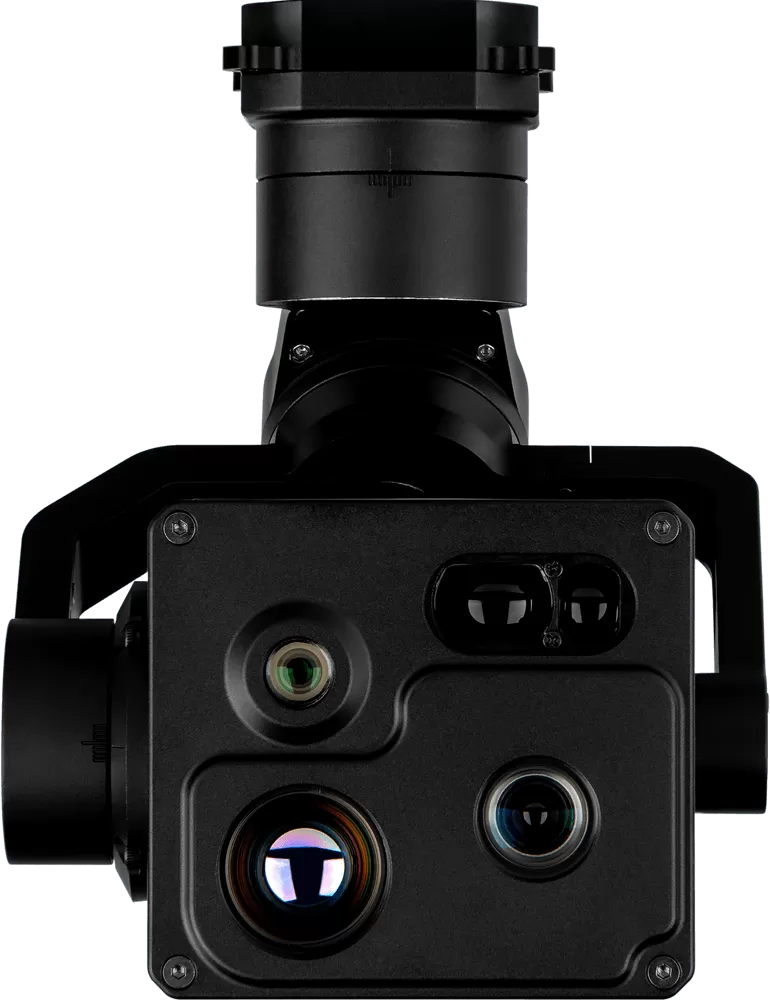
3-axis · EO + IR + LRF
HQ-95Q customized UAV Camera Gimbal
Four optical channels and a quick-release mount on the lightest three-axis head we build.
- Visible
- Dual 8000 × 6000, 9.5 mm + continuous zoom 15.3 – 49.7 mm
- Thermal
- 640 × 512, 19 mm fixed
- Laser
- 5 m – 1.5 km (± 1 m)
- Weight
- ≤400 g
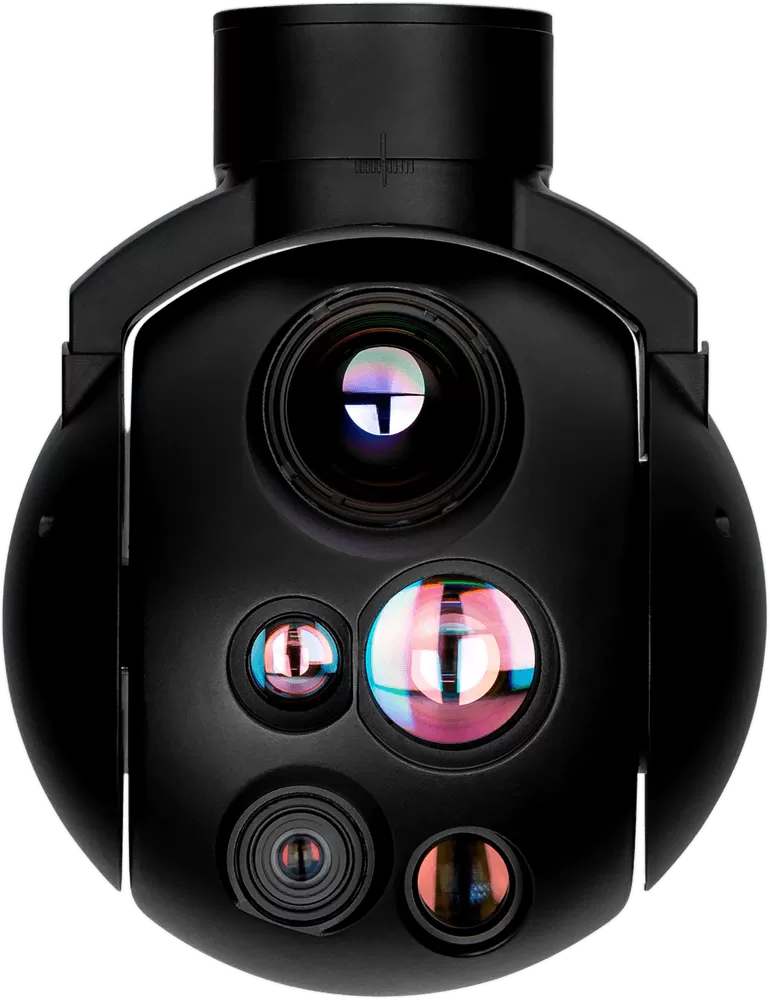
2-axis · EO + IR + LRF
HQ-85Q Stabilised Camera Payload ODM
Adds 3 km laser ranging to a two-axis platform for crews that need coordinates, not just imagery.
- Visible
- Dual 1920 × 1080, 8 mm + 25 mm
- Thermal
- 640 × 512, 25 mm fixed
- Laser
- 15 m – 3 km (± 1 m)
- Weight
- ≤500 g
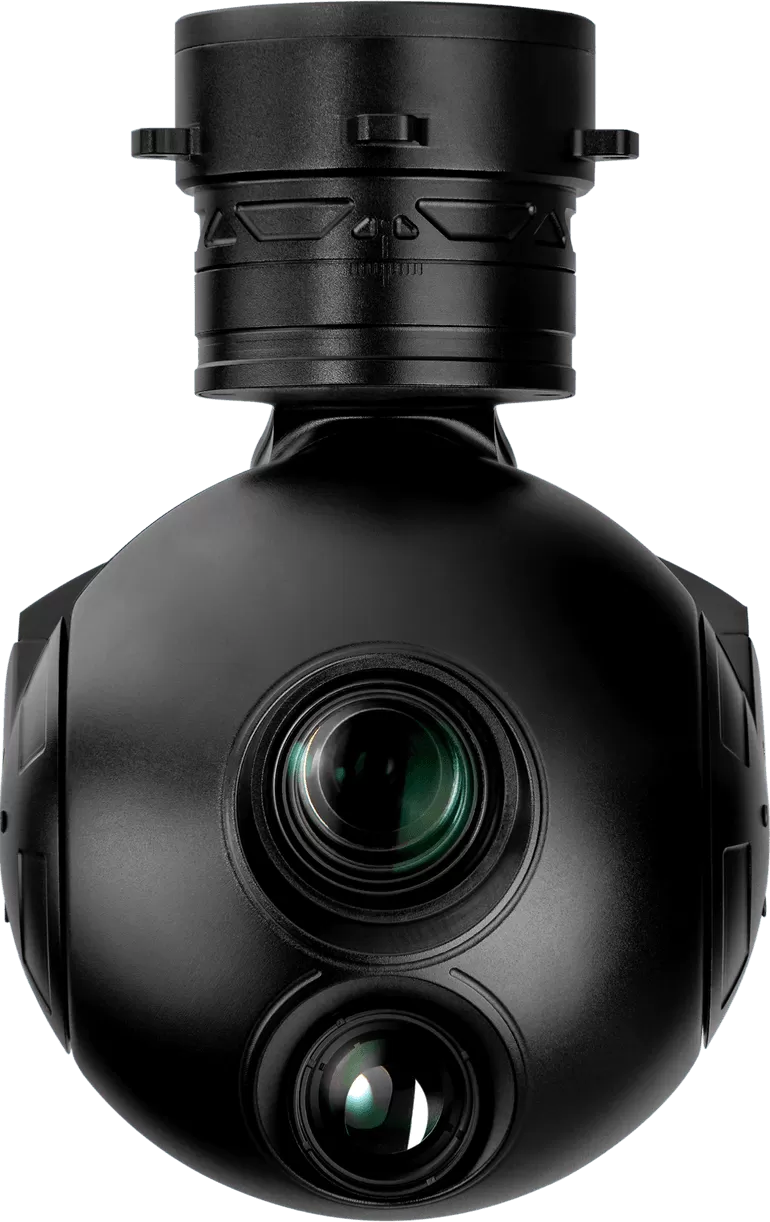
3-axis · EO + IR
HQ-100D Gimbal Camera OEM
The entry point to full roll-stabilised zoom and thermal imaging under a kilogram.
- Visible
- 1920 × 1080, 10x zoom 4.7 – 47 mm
- Thermal
- 640 × 512, 19 mm fixed
- Laser
- —
- Weight
- ≤800 g
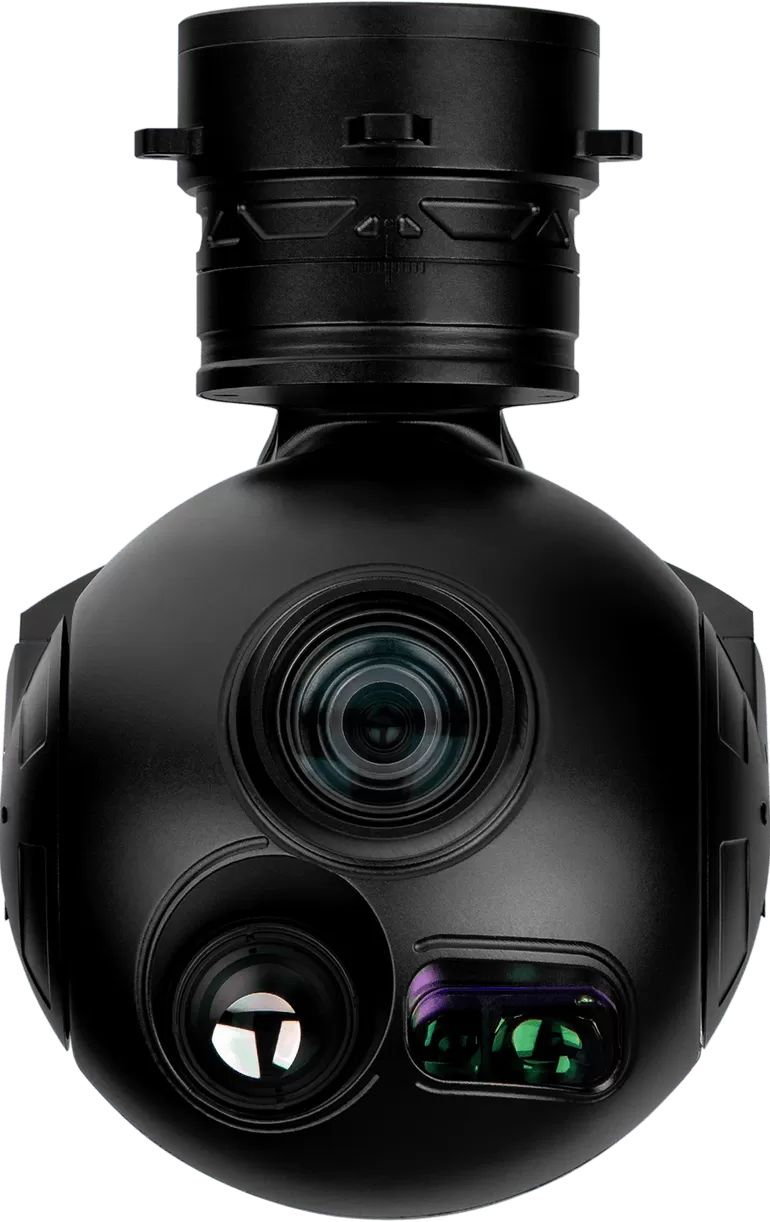
3-axis · EO + IR + LRF
HQ-100T Gimbal Camera Manufacturer
The same 800 g three-axis head as the 100D, with a 1.5 km laser rangefinder added.
- Visible
- 1920 × 1080, 10x zoom 4.7 – 47 mm
- Thermal
- 640 × 512, 19 mm fixed
- Laser
- 5 m – 1.5 km (± 1 m)
- Weight
- ≤800 g
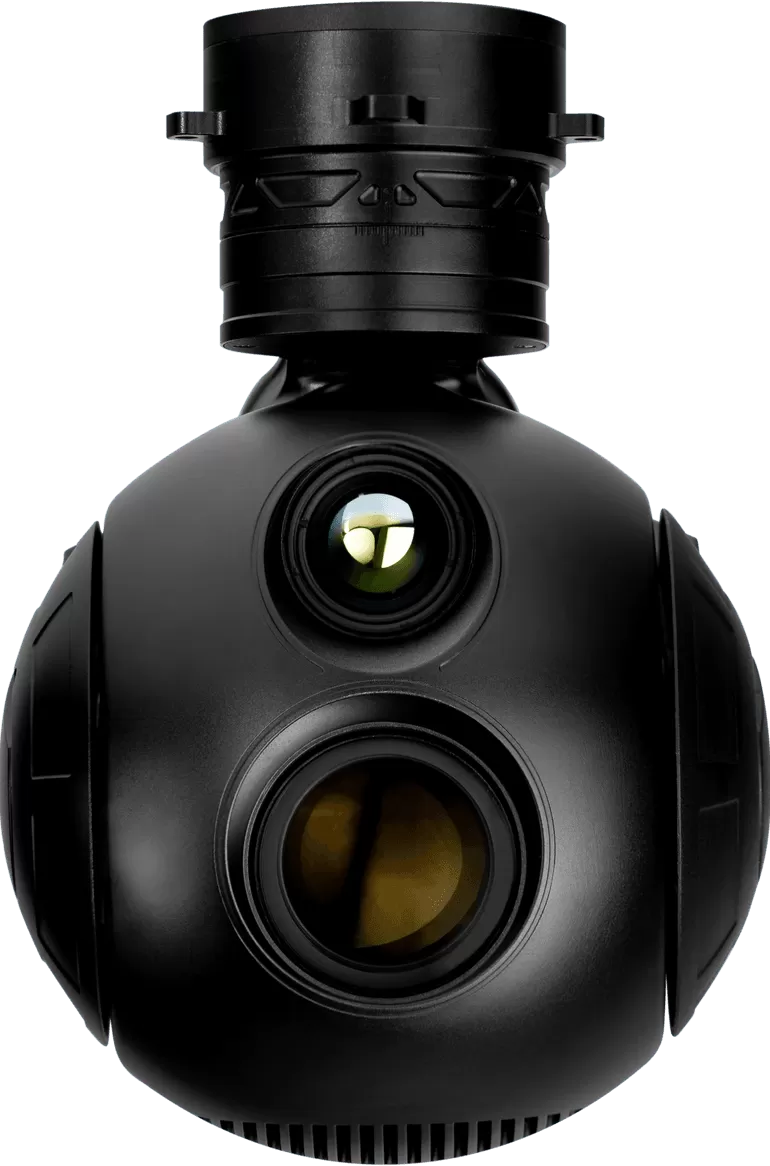
3-axis · EO + IR
HQ-115D UAV Gimbal Camera OEM
30x zoom and thermal imaging on a one-kilogram head with no ranging requirement.
- Visible
- 1920 × 1080, 30x zoom 4.3 – 129 mm
- Thermal
- 640 × 512, 25 mm fixed
- Laser
- —
- Weight
- ≤1 kg
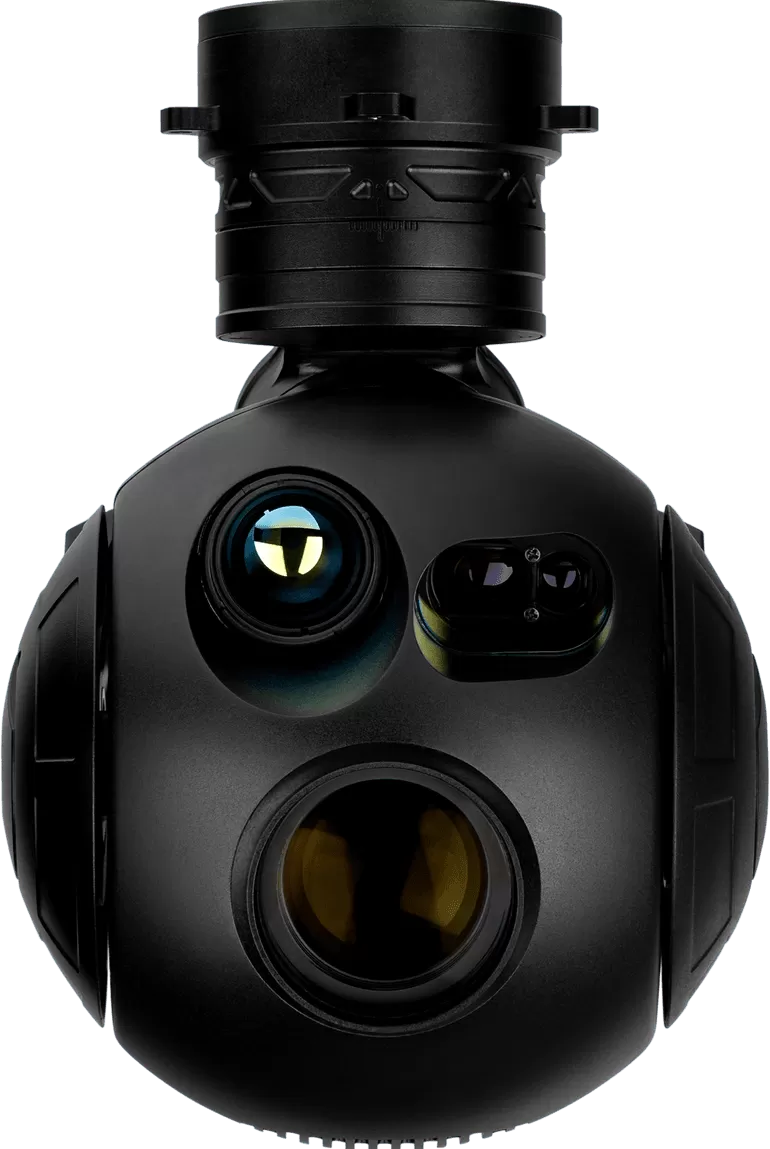
3-axis · EO + IR + LRF
HQ-115T Gimbal Camera Manufacturer
The one-kilogram workhorse: 30x zoom, thermal imaging and a 1.5 km rangefinder.
- Visible
- 1920 × 1080, 30x zoom 4.3 – 129 mm
- Thermal
- 640 × 512, 25 mm fixed
- Laser
- 5 m – 1.5 km (± 1 m)
- Weight
- ≤1 kg
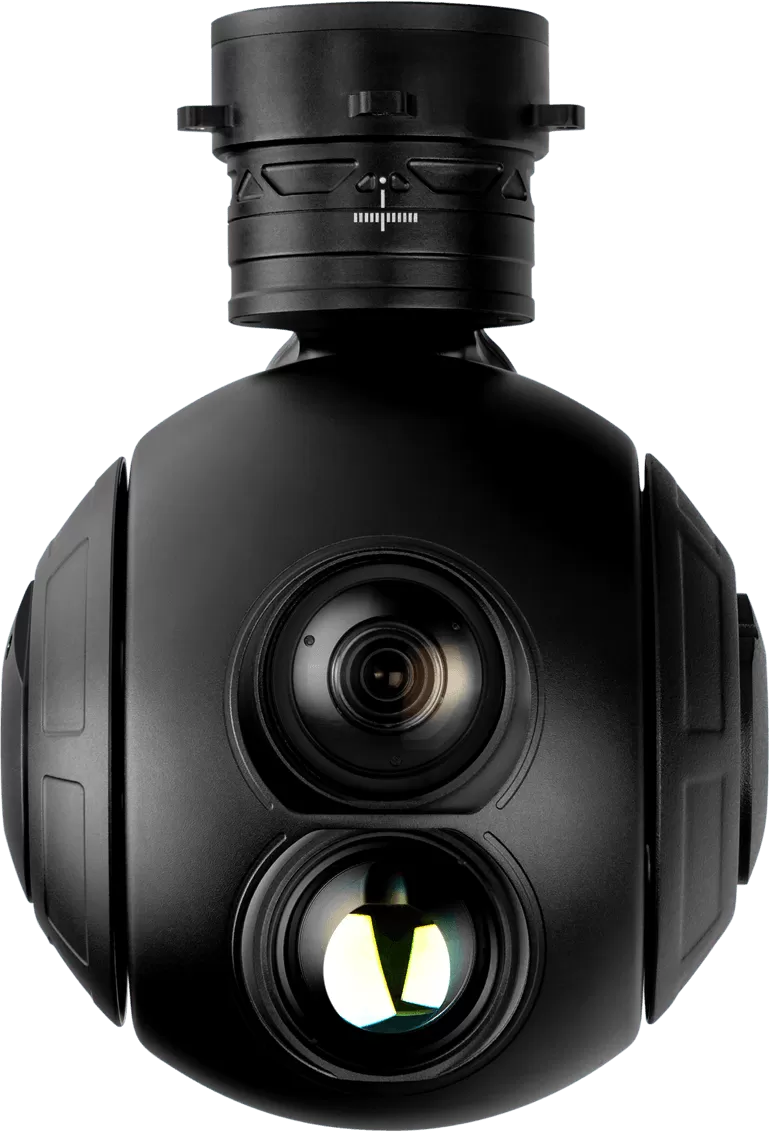
3-axis · EO + IR
HQ-125DB UAV Camera Gimbal ODM
The longer 35 mm thermal lens paired with 30x zoom, without the rangefinder.
- Visible
- 1920 × 1080, 30x zoom 4.3 – 129 mm
- Thermal
- 640 × 512, 35 mm fixed
- Laser
- —
- Weight
- ≤1.1 kg
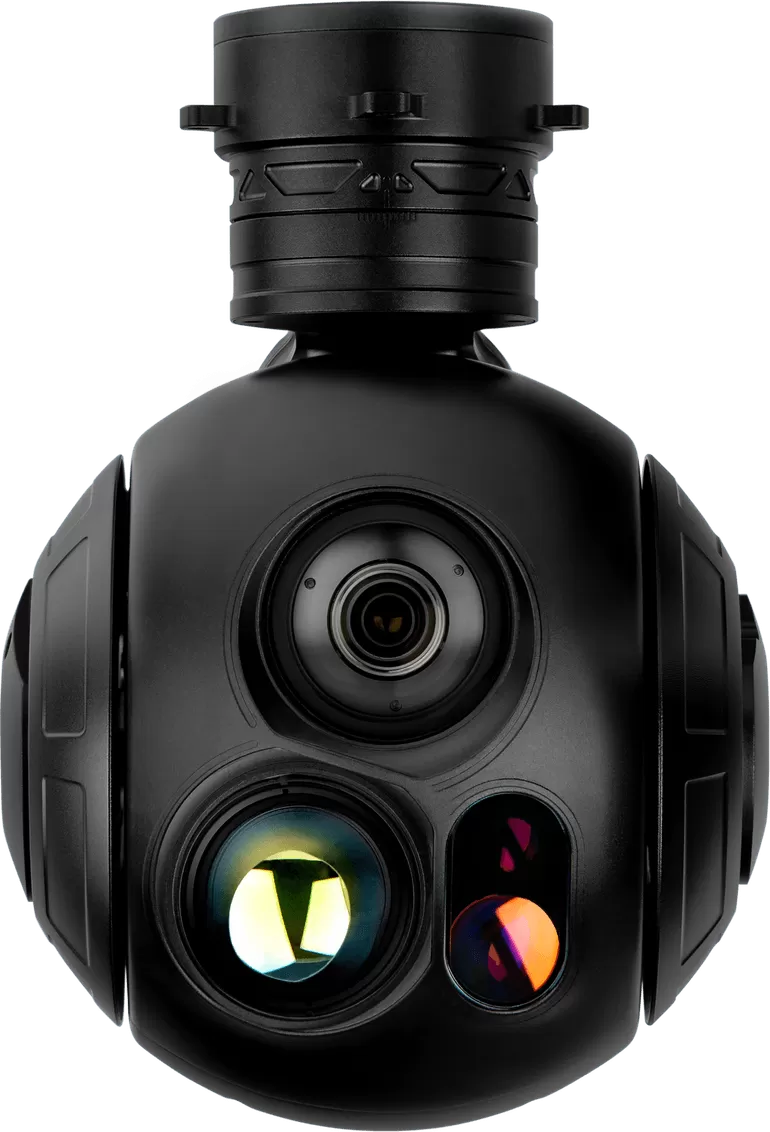
3-axis · EO + IR + LRF
HQ-125TB Gimbal Camera Supplier
Balanced mid-range turret: 30x zoom, a long thermal lens and 3 km ranging.
- Visible
- 1920 × 1080, 30x zoom 4.3 – 129 mm
- Thermal
- 640 × 512, 35 mm fixed
- Laser
- 15 m – 3 km (± 1 m)
- Weight
- ≤1.2 kg
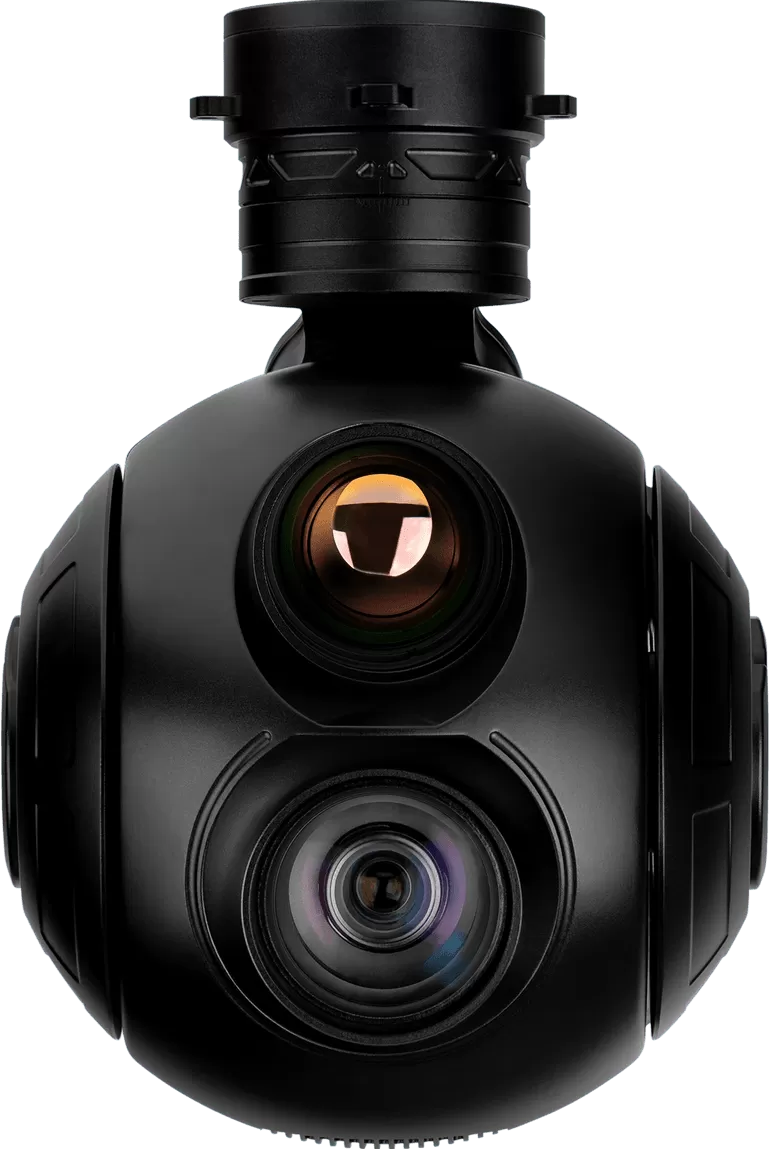
3-axis · EO + IR
HQ-135D customized Drone Camera Payload
The 40x optic with thermal imaging, for daylight and night identification at long range.
- Visible
- 1920 × 1080, 40x zoom 4.25 – 170 mm
- Thermal
- 640 × 512, 35 mm fixed
- Laser
- —
- Weight
- ≤1.4 kg
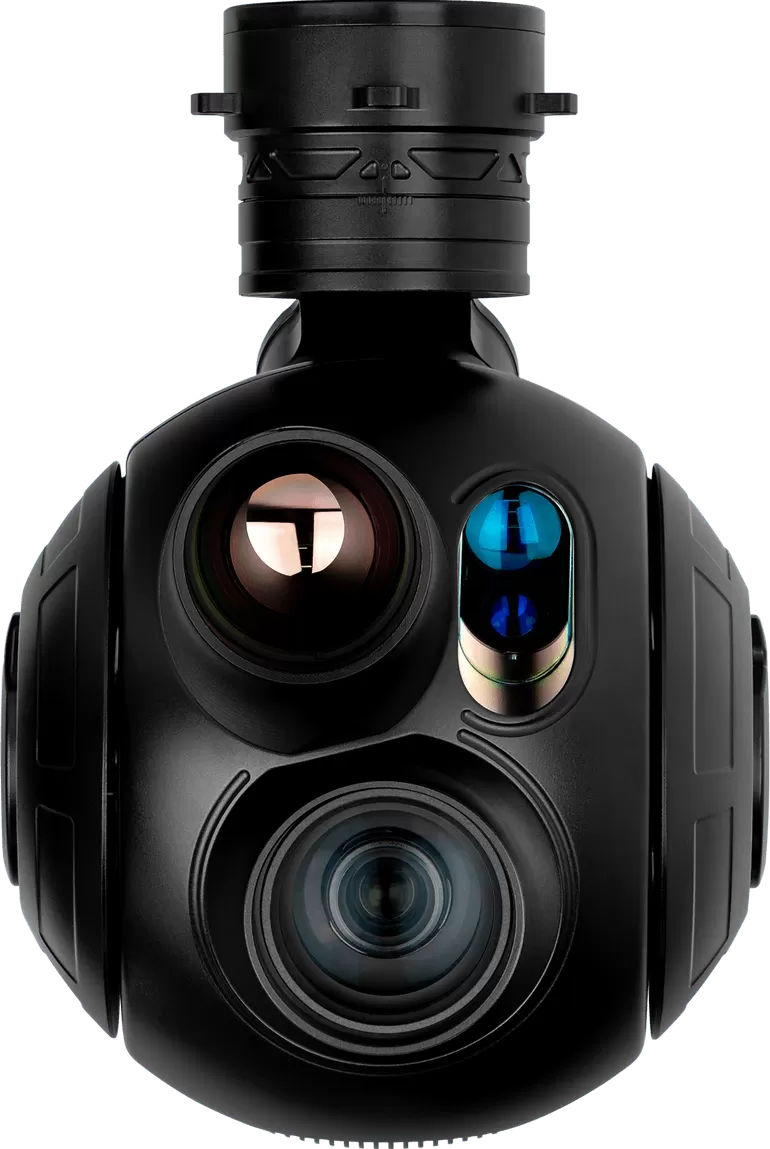
3-axis · EO + IR + LRF
HQ-135T UAV Gimbal Camera OEM
The flagship of the compact range: 40x zoom, thermal imaging and 3 km ranging on one stabilised cage.
- Visible
- 1920 × 1080, 40x zoom 4.25 – 170 mm
- Thermal
- 640 × 512, 35 mm fixed
- Laser
- 15 m – 3 km (± 1 m)
- Weight
- ≤1.4 kg
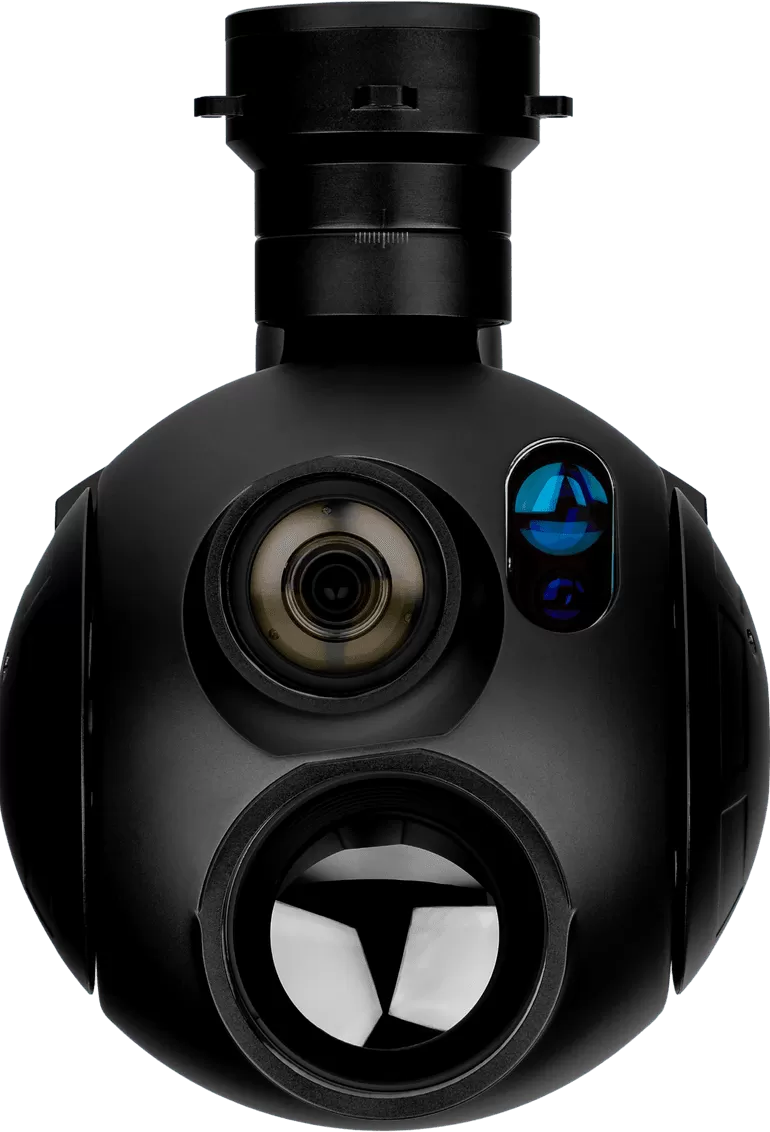
3-axis · EO + IR + LRF
HQ-135TA Stabilised UAV Camera Manufacturer
A 50 mm thermal lens gives the longest thermal reach in the compact range.
- Visible
- 1920 × 1080, 30x zoom 4.3 – 129 mm
- Thermal
- 640 × 512, 50 mm fixed
- Laser
- 15 m – 3 km (± 1 m)
- Weight
- ≤1.5 kg
Daylight, infrared or both
The three sensor layouts in the HQ series answer three different mission profiles. Twelve of the fifteen heads carry both channels.
- Daylight onlyHQ-64DB and HQ-115S. Fixed dual 2K sensors in the 64DB, a 40x zoom channel in the 115S. Visible detail at the lowest weight and the simplest integration, for mapping and daytime inspection.Daylight EO cameras →
- Infrared onlyHQ-125S. A 1280 × 1024 uncooled detector on a 50 mm lens, for platforms whose mission is thermal and whose payload budget will not stretch to a second channel.Thermal imaging payloads →
- Dual-sensor EO/IRTwelve models from the 260 g HQ-64DA to the 1.5 kg HQ-135TA. An eye-safe laser rangefinder is standard on the 85Q, 95Q, 100T, 115T, 125TB, 135T and 135TA.All fifteen HQ heads →
Compare the range
| Model | Axes | Configuration | Visible camera | Thermal imager | Laser rangefinder | Weight |
|---|---|---|---|---|---|---|
| HQ-64DA | 2-axis | EO + IR | 2688 × 1520, 8.5 mm fixed | 640 × 512, 19 mm fixed | — | ≤260 g |
| HQ-85Q | 2-axis | EO + IR + LRF | Dual 1920 × 1080, 8 mm + 25 mm | 640 × 512, 25 mm fixed | 15 m – 3 km (± 1 m) | ≤500 g |
| HQ-95Q | 3-axis | EO + IR + LRF | Dual 8000 × 6000, 9.5 mm + continuous zoom 15.3 – 49.7 mm | 640 × 512, 19 mm fixed | 5 m – 1.5 km (± 1 m) | ≤400 g |
| HQ-100D | 3-axis | EO + IR | 1920 × 1080, 10x zoom 4.7 – 47 mm | 640 × 512, 19 mm fixed | — | ≤800 g |
| HQ-100T | 3-axis | EO + IR + LRF | 1920 × 1080, 10x zoom 4.7 – 47 mm | 640 × 512, 19 mm fixed | 5 m – 1.5 km (± 1 m) | ≤800 g |
| HQ-115D | 3-axis | EO + IR | 1920 × 1080, 30x zoom 4.3 – 129 mm | 640 × 512, 25 mm fixed | — | ≤1 kg |
| HQ-115T | 3-axis | EO + IR + LRF | 1920 × 1080, 30x zoom 4.3 – 129 mm | 640 × 512, 25 mm fixed | 5 m – 1.5 km (± 1 m) | ≤1 kg |
| HQ-125DB | 3-axis | EO + IR | 1920 × 1080, 30x zoom 4.3 – 129 mm | 640 × 512, 35 mm fixed | — | ≤1.1 kg |
| HQ-125TB | 3-axis | EO + IR + LRF | 1920 × 1080, 30x zoom 4.3 – 129 mm | 640 × 512, 35 mm fixed | 15 m – 3 km (± 1 m) | ≤1.2 kg |
| HQ-135D | 3-axis | EO + IR | 1920 × 1080, 40x zoom 4.25 – 170 mm | 640 × 512, 35 mm fixed | — | ≤1.4 kg |
| HQ-135T | 3-axis | EO + IR + LRF | 1920 × 1080, 40x zoom 4.25 – 170 mm | 640 × 512, 35 mm fixed | 15 m – 3 km (± 1 m) | ≤1.4 kg |
| HQ-135TA | 3-axis | EO + IR + LRF | 1920 × 1080, 30x zoom 4.3 – 129 mm | 640 × 512, 50 mm fixed | 15 m – 3 km (± 1 m) | ≤1.5 kg |
Dual-sensor pods
The pod series puts the same dual-sensor concept on larger, longer-range turrets, for platforms with a larger payload budget.
- XQ EO/IR Pod SeriesEight dual-sensor pods from 1.6 kg to 10 kg with ranging to 15 km.View the range →
- SQ Laser Designator PodsDual-sensor pods that add a 1064 nm designator for target illumination.View the range →
How a dual-sensor head stays aligned
Why boresighting is the specification that matters
If the two channels are not aligned, every switch from daylight to thermal costs the operator the target. Both sensors are mounted on one cage and aligned to the same line of sight at the factory, and the pair is calibrated as an assembly so that alignment survives the thermal cycle between a cold morning launch and a warm afternoon at altitude.
Two streams, one recording
Operators can run either channel full-screen, record both simultaneously, or overlay thermal on the daylight image. Because the payload records both streams itself, the choice of what to watch on the ground does not change what is available for the debrief.
Designed and manufactured by HITS
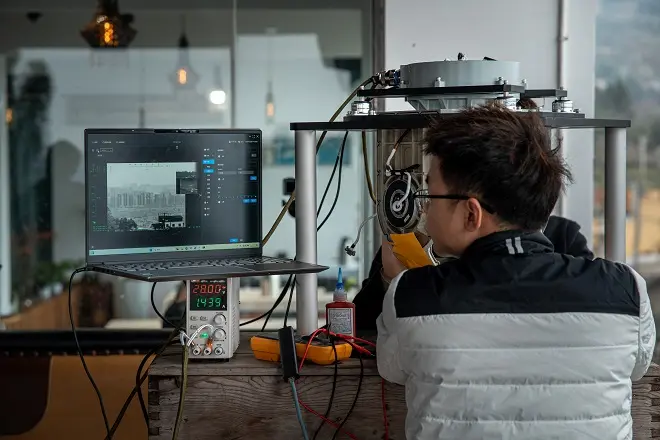
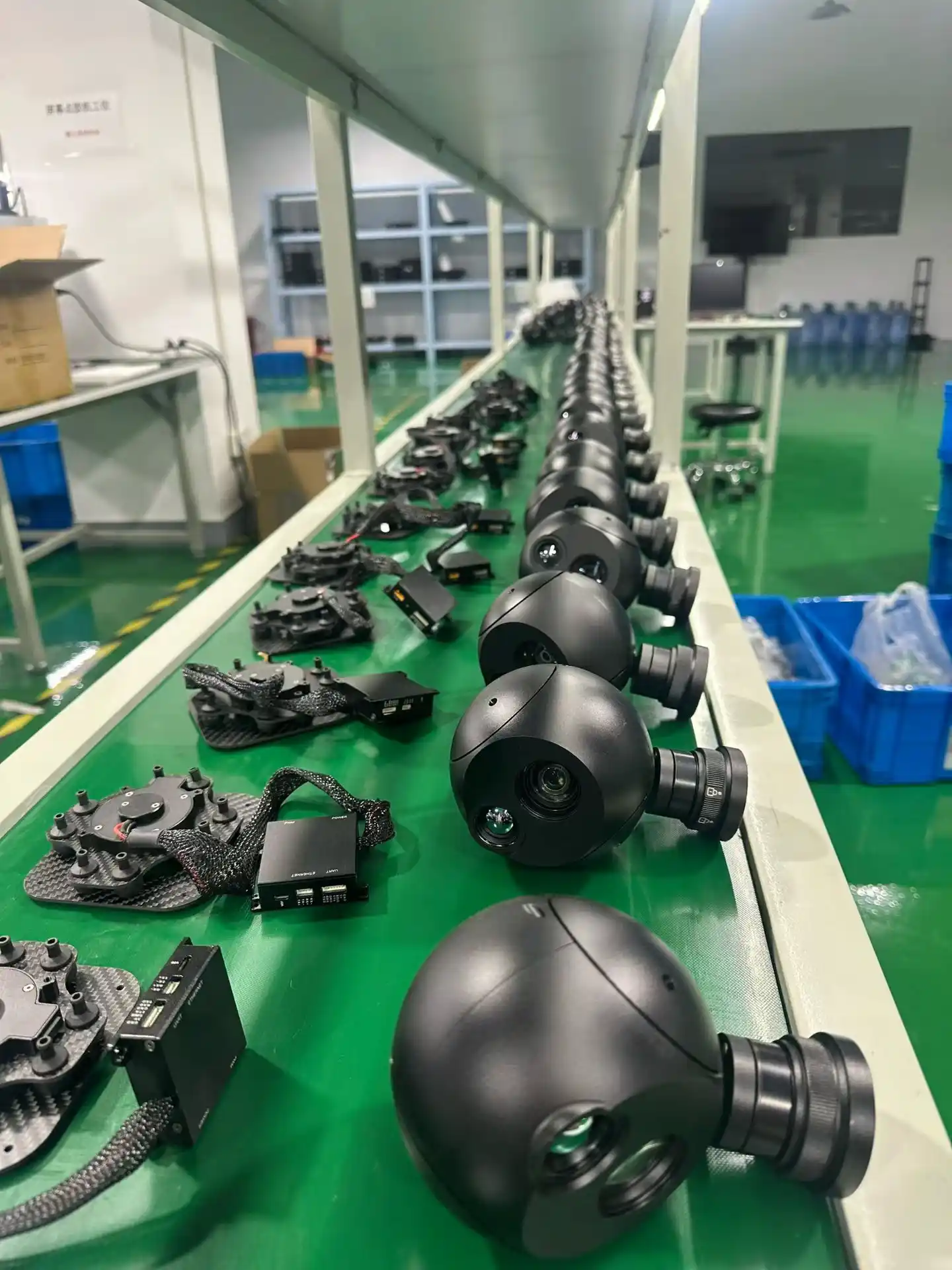
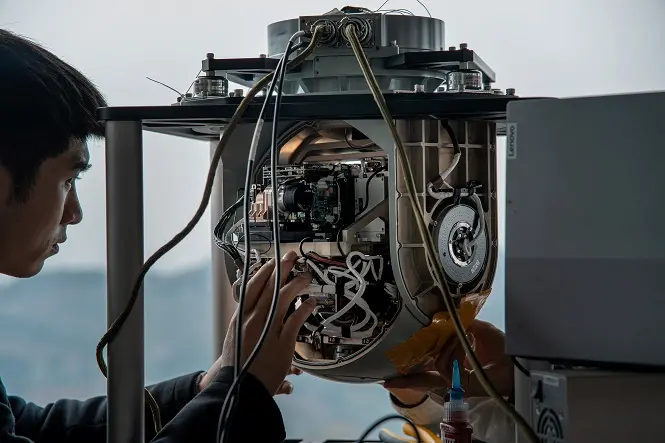
Boresight alignment is done in house, channel by channel. Optics, detector mounting, servo hardware, stabilisation firmware and the AI tracking module are developed by the same team, and each dual-sensor head is aligned and environmentally tested on our own line before it ships.

Related reading
Adjacent pages, so you can compare the channel you need against the wider range.
- Thermal imaging payloads
The infrared channel on its own: detector resolution, NETD and how far each thermal lens reaches.
- Daylight EO cameras
The visible channel on its own: resolution, focal length and zoom range.
- Infrared payload integration
Power, video path, control protocol and sealing, specified from the airframe side.
- Onboard AI tracking
Person and vehicle detection with lock and follow, running on the payload without a data link.
Frequently asked questions
What does boresighting mean in practice?
It means the visible and infrared channels point at the same place. In a head that is not boresighted, switching from daylight to thermal moves the image off the target and the operator has to re-acquire it. Both channels here are mounted on one cage, aligned on the same line of sight at the factory and calibrated as an assembly.
Can I record both channels at once?
Yes. Both streams are recorded simultaneously to the payload’s 128 GB of onboard storage. The operator can run either channel full-screen, or overlay thermal on the daylight image as picture-in-picture, without losing either recording.
Do I need a laser rangefinder as well?
It depends on whether the mission needs target coordinates rather than imagery alone. Seven models in the range fit an eye-safe 1535 nm rangefinder as standard, with maximum range between 1.5 km and 3 km depending on the model. If the aircraft already carries a rangefinder elsewhere, a dual-sensor head without one is lighter.
Request information or a quotation
Tell us the sensing combination the mission needs and we will confirm the configuration and the weight. Contact us with your requirements.