





Helicopter Drone Camera: Shared Payload Architecture
One payload architecture for unmanned and manned rotary aircraft
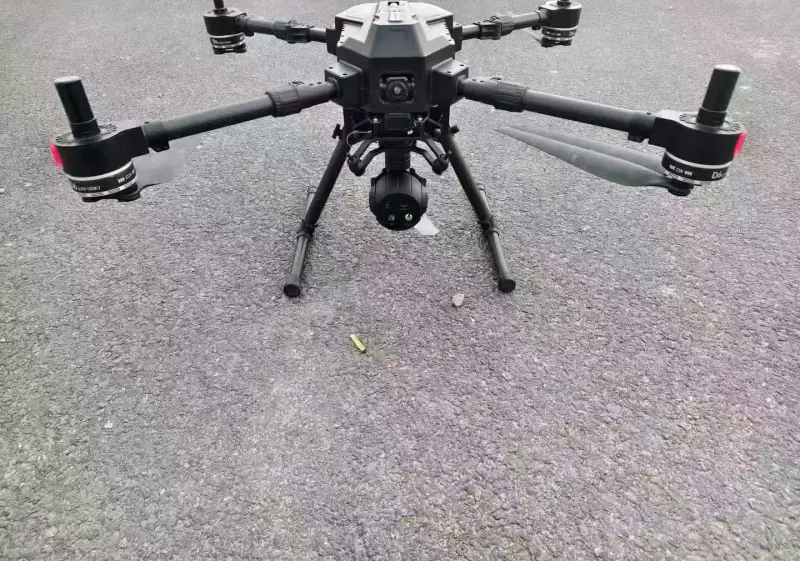
Unmanned helicopters combine the endurance of a rotary aircraft with the logistics of a UAV: no pilot, longer sorties than a multirotor, and a payload bay that can carry more than a quadcopter.
- 1.6 – 10 kg
- 28 VDC
- Same control protocol
- Same video pipeline
A drone helicopter camera is specified in much the same way as a manned installation: vibration environment, available payload mass, power bus and what the imagery has to show. The difference is that an unmanned rotary aircraft usually has less payload margin, so the choice tends to land at the lighter end of the pod class, between 1.6 kg and 5 kg.
For integrators, the useful property of a helicopter drone camera class that shares an architecture is reuse: the control protocol, the video pipeline and the tracking module are identical across the range, so a payload selected for trials can be replaced by a heavier one for service without rewriting the ground station or retraining the operator.
Why a shared architecture matters
- One integration, several payloads
Ethernet video and RS-422, RS-232, TTL, SBUS or MAVLink control are common to the whole range, so a change of payload is a change of hardware rather than a change of system.
- Payload classes from 1.6 kg
The XQ series starts at a 1.6 kg two-axis turret and runs to 10 kg, which covers the payload margin of most unmanned rotary aircraft.
- Vibration tolerance
Direct-drive brushless axes with high-resolution encoding hold the line of sight without gear backlash, which matters more on a rotary aircraft than on a fixed-wing one.
- Thermal and visible together
Boresighted EO and IR channels mean the same turret covers day and night without a second flight or a second aircraft.
- Ranging for reporting
Rangefinders from 3 km to 15 km turn the tracked object into a coordinate, which is what an unmanned sortie has to deliver when nobody is looking out of a window.
- Onboard recording
An unmanned aircraft has no crew to notice a degraded link. Onboard recording preserves the sortie record regardless.
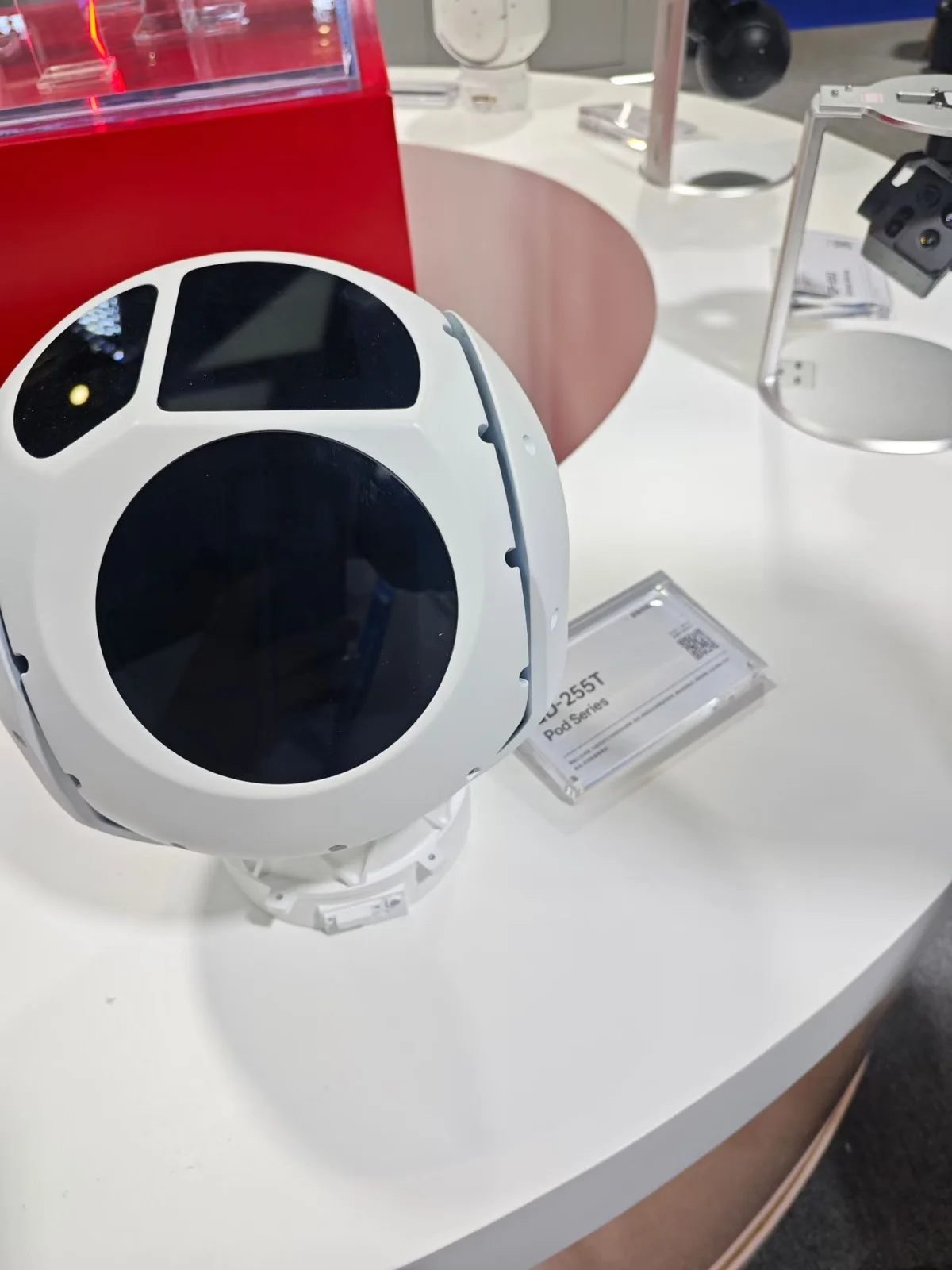
Payloads for unmanned rotary aircraft
Two-axis turrets matched to the payload margin of a rotary UAV.
| Model | Visible | Thermal | Ranging | Weight | Typical airframe |
|---|---|---|---|---|---|
| XQ-125T | 1920 x 1080, 30x zoom | 640 x 512, 35 mm | 3 km | ≤ 1.6 kg | Small rotary UAV, VTOL hybrid |
| XQ-155T | 1920 x 1080, 30x zoom | 640 x 512, 55 mm | 5 km | ≤ 2.2 kg | Rotary UAV, light manned helicopter |
| XQ-170TC | 1920 x 1080, 30x zoom | 1280 x 1024, 75 mm | 5 km | ≤ 2.8 kg | Rotary UAV with thermal priority |
| XQ-180T | 3840 x 2160, 17.5x zoom | 1280 x 1024, 75 mm | 6 km | ≤ 4.1 kg | Larger rotary UAV, imaging priority |
| XQ-200T | 1920 x 1080, 30x zoom | 640 x 512, 40 – 220 mm | 9.5 km | ≤ 5 kg | Long-endurance rotary UAV |
| HQ-135T | 1920 x 1080, 40x zoom | 640 x 512, 35 mm | 3 km | ≤ 1.4 kg | Small rotary UAV with a 40x lens |
Four unmanned rotary payloads
From a 1.6 kg turret to a 4.1 kg unit with 4K visible imaging and a 1280 x 1024 thermal channel.
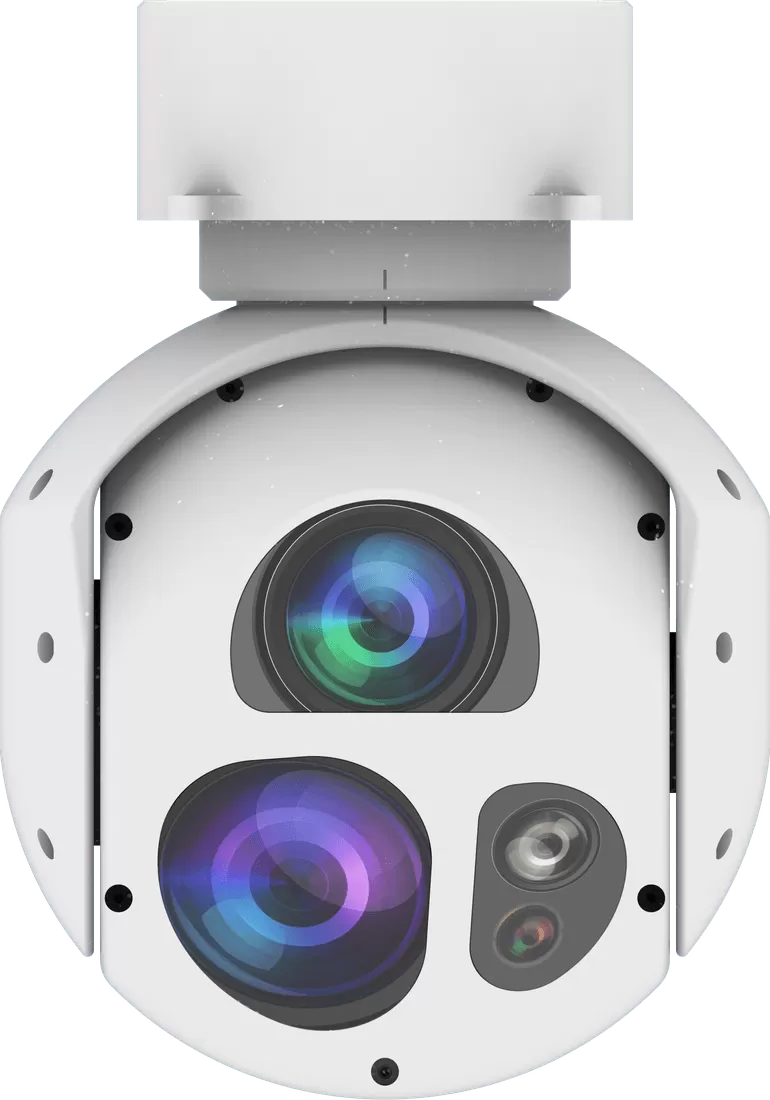
XQ · 2-axis · EO + IR + LRF
XQ-125T
The smallest pod in the XQ range: 30x zoom, a 35 mm thermal channel and 3 km ranging at 1.6 kg.
- Visible
- 1920 × 1080, 30x zoom 4.3 – 129 mm
- Thermal
- 640 × 512, 35 mm fixed
- Laser
- 30 m – 3 km (± 1 m)
- Weight
- ≤1.6 kg
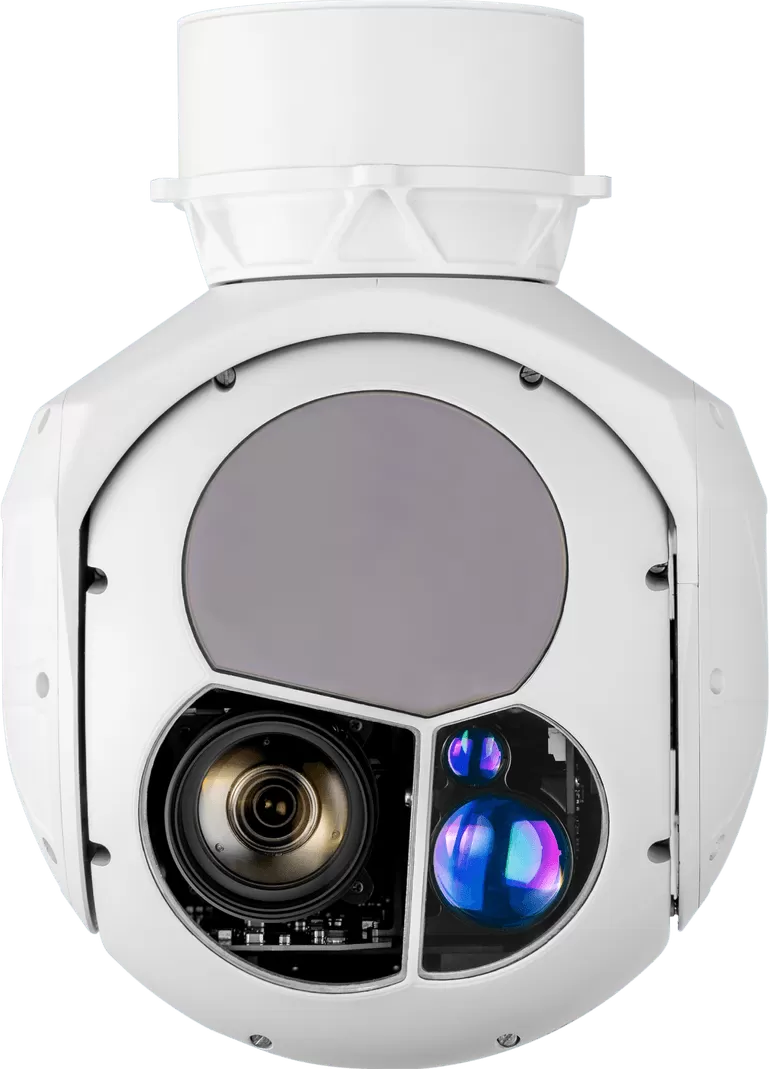
XQ · 2-axis · EO + IR + LRF
XQ-155T
A 55 mm thermal lens and 5 km ranging for platforms that can carry 2.2 kg on the hardpoint.
- Visible
- 1920 × 1080, 30x zoom 4.3 – 129 mm
- Thermal
- 640 × 512, 55 mm fixed
- Laser
- 50 m – 5 km (± 1 m)
- Weight
- ≤2.2 kg
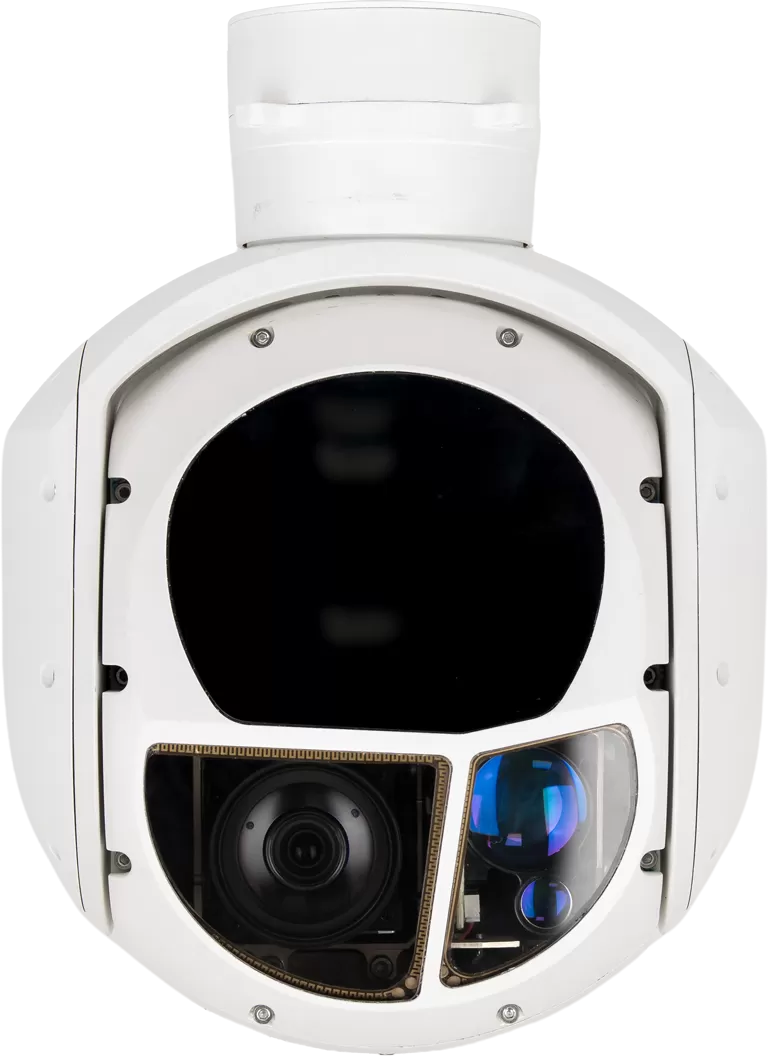
XQ · 2-axis · EO + IR + LRF
XQ-170TC
1280 × 1024 thermal on a 75 mm lens — the long-range imaging workhorse of the pod range.
- Visible
- 1920 × 1080, 30x zoom 4.3 – 129 mm
- Thermal
- 1280 × 1024, 75 mm fixed
- Laser
- 50 m – 5 km (± 1 m)
- Weight
- ≤2.8 kg
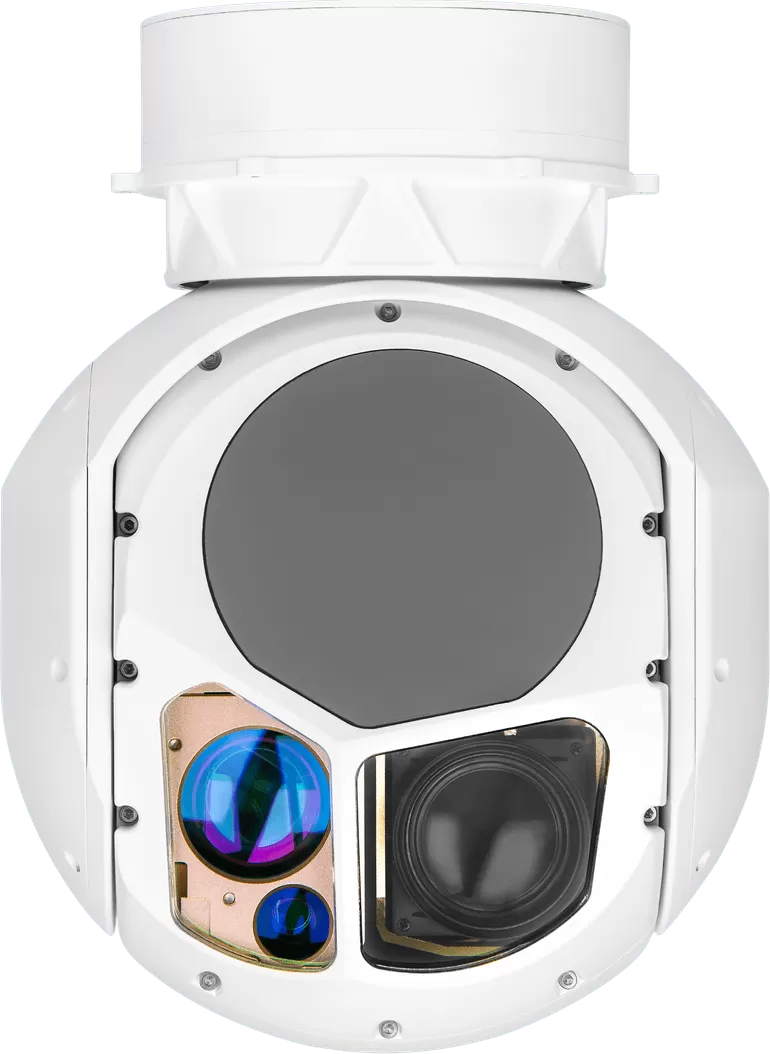
XQ · 2-axis · EO + IR + LRF
XQ-180T
4K daylight imaging at 3840 × 2160 with 17.5x zoom and 6 km ranging.
- Visible
- 3840 × 2160, 17.5x zoom 6.8 – 120 mm
- Thermal
- 1280 × 1024, 75 mm fixed
- Laser
- 50 m – 6 km (± 1 m)
- Weight
- ≤4.1 kg
Compare the range
| Model | Series | Axes | Configuration | Visible camera | Thermal imager | Laser rangefinder | Weight |
|---|---|---|---|---|---|---|---|
| XQ-125T | XQ series | 2-axis | EO + IR + LRF | 1920 × 1080, 30x zoom 4.3 – 129 mm | 640 × 512, 35 mm fixed | 30 m – 3 km (± 1 m) | ≤1.6 kg |
| XQ-155T | XQ series | 2-axis | EO + IR + LRF | 1920 × 1080, 30x zoom 4.3 – 129 mm | 640 × 512, 55 mm fixed | 50 m – 5 km (± 1 m) | ≤2.2 kg |
| XQ-170TC | XQ series | 2-axis | EO + IR + LRF | 1920 × 1080, 30x zoom 4.3 – 129 mm | 1280 × 1024, 75 mm fixed | 50 m – 5 km (± 1 m) | ≤2.8 kg |
| XQ-180T | XQ series | 2-axis | EO + IR + LRF | 3840 × 2160, 17.5x zoom 6.8 – 120 mm | 1280 × 1024, 75 mm fixed | 50 m – 6 km (± 1 m) | ≤4.1 kg |
Choosing between the light and pod classes
Payload margin decides more than optics
An unmanned helicopter with a 3 kg payload allowance cannot carry a 5 kg turret, however good the specification looks on paper. Start with the margin, then choose the longest lens and the largest detector that fits inside it.
What changes when nobody is aboard
- Recording has to be automatic, because no crew will notice a dropped stream.
- Tracking has to survive link loss and resume the same lock when the link returns.
- The control interface has to be driven by the ground station rather than by an operator looking out of a window.
- Presets and automated scan patterns do more of the work than they do on a manned aircraft.
Moving between aircraft
The same turret can be moved between an unmanned rotary aircraft and a light manned helicopter and will behave identically, because the mount, the control protocol and the video pipeline are the same.
Related pages
Unmanned rotary payloads sit between the UAV and helicopter classes.
- Helicopter camerasThe manned rotary side of the same architecture.Read more →
- UAV surveillanceThe mission the endurance is bought for.Read more →
- EO/IR pod systemsThe full XQ series from 1.6 kg to 10 kg.Read more →
- Night visionThermal and low-light channels explained.Read more →
Engineering detail
Why rotary UAVs use two-axis turrets
A rotary aircraft rarely needs the third axis that a fixed-wing or multirotor uses to hold a horizon through a bank. Two-axis turrets trade that axis for aperture and reach, which is why the pod class is two-axis and why it can carry a 220 mm thermal zoom at 5 kg.
Endurance is the reason to choose rotary
A multirotor gives twenty to forty minutes; a rotary UAV gives hours. For surveillance, maritime and pipeline work that difference matters more than the ability to hover in a confined space, and it is why the payloads on this page are the ones with continuous thermal zoom and long rangefinders.
Integration without a rebuild
Because the protocol is shared, an integrator can trial a 1.6 kg turret on a small aircraft and then fit a 5 kg unit for service, keeping the ground station, the operator workflow and the recording chain unchanged.
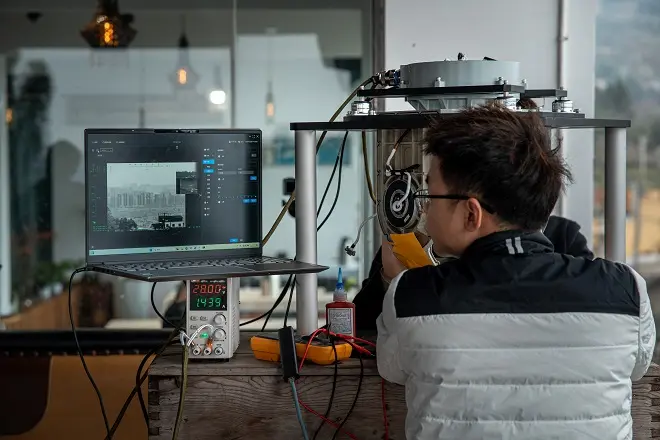
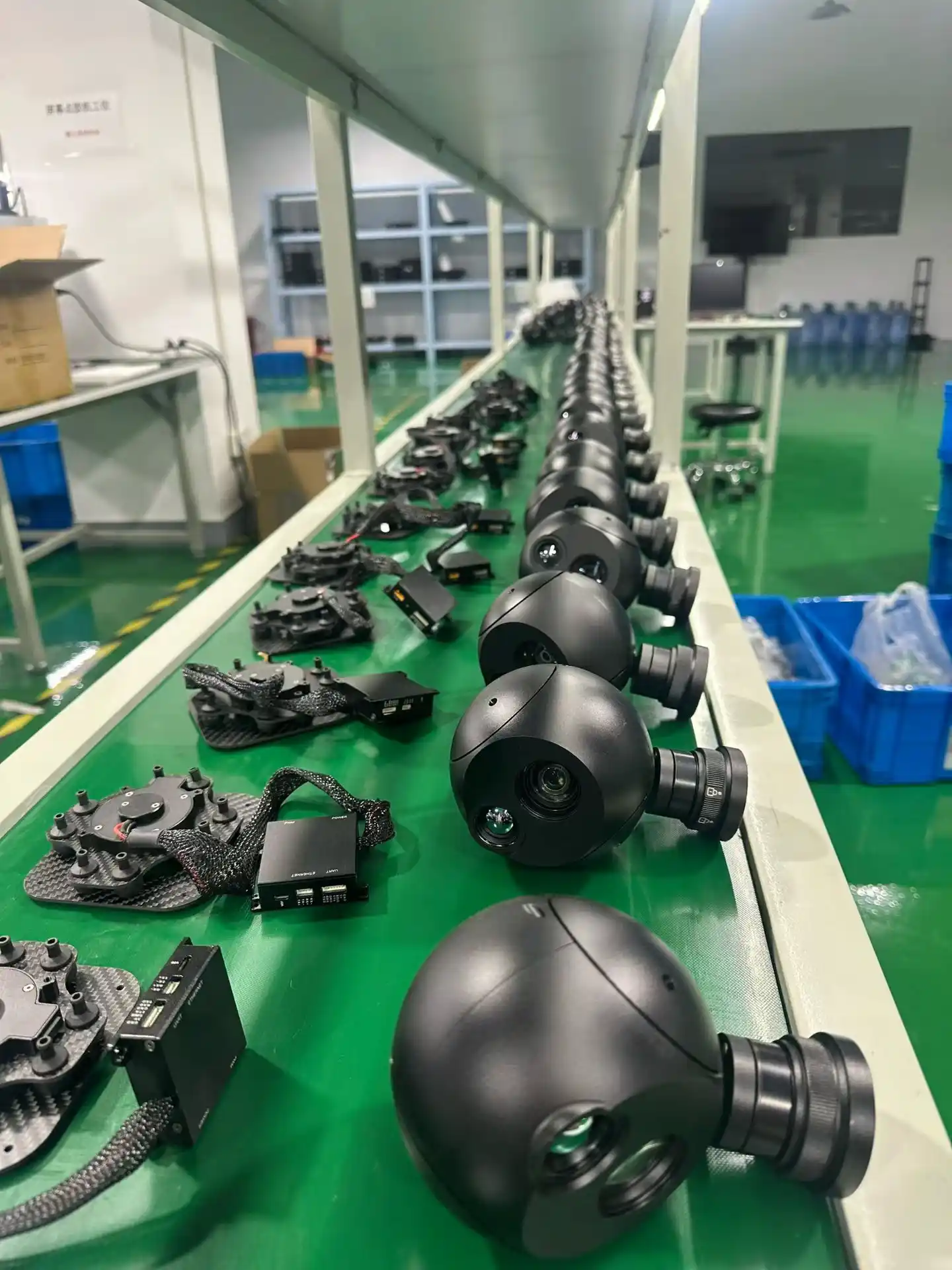
Designed and manufactured by HITS
Optics, servo hardware, stabilisation firmware and the AI tracking module are developed in house, and every unit is assembled, calibrated and environmentally tested on our own line before it ships.

Request information or a quotation
Tell us the aircraft, the payload margin and the mission and we will shortlist the turrets that fit. Contact us with your requirements.