





Security Drone Camera: Patrol and Perimeter Payloads
Patrol, detection and a recorded response on fixed sites
Security work is judged after the event as much as during it. The payload has to detect an intrusion at night, let the operator identify it, and leave a record with a time and a place attached.
- Thermal detection
- Low-light identification
- 10x – 40x zoom
- Target tracking
A drone security camera is usually bought for the hours a fixed camera cannot cover: the back of a site, a fence line with no lighting, a compound where an intruder chooses the approach. Thermal detection does that work without illuminating the aircraft, and a low-light visible channel then gives the operator the image that goes into the incident report.
Because a security drone camera is often launched in response rather than flown on a schedule, the specification leans towards fast setup and simple control: a light head that a small aircraft can lift, a stabilised mount that behaves in wind, and a control interface that a security operator rather than a pilot can drive. A security drone camera that needs an engineer to fly it will not be used at three in the morning.
What security missions demand
- Detection before identification
A 640 x 512 thermal channel finds the intrusion; the visible channel at 10x to 40x zoom identifies it. Both need to be on the same line of sight so the operator does not lose the position when switching.
- Low-light visible imaging
A 1920 x 1080 channel with a fast lens and electronic image stabilisation keeps colour and detail in lit areas and at dusk, which is what an incident report needs.
- Light payloads for fast aircraft
The 240 g to 1 kg band keeps a quadcopter in the air long enough to arrive, orbit and record without a larger platform.
- Tracking for a moving intruder
A person walking a fence line is a moving target. Tracking holds them in frame while the operator decides what to do.
- Recording with time and position
Onboard recording plus timestamps and coordinates turn the sortie into evidence that survives a dropped link.
- Wind tolerance
Perimeter flying is often low and close to structures, where rotor wash and gusts are worst. Direct-drive axes recover faster than geared mounts.
Security payloads by site type
The size of the site and the amount of lighting decide the class.
| Site type | Suggested model | Thermal | Visible | Weight |
|---|---|---|---|---|
| Small compound, day and night detection | HQ-64DA | 640 x 512, 19 mm | 2688 x 1520, 8.5 mm | ≤ 260 g |
| Perimeter with mixed lighting | HQ-85Q | 640 x 512, 25 mm | Dual 1920 x 1080, 8 mm + 25 mm | ≤ 500 g |
| Large site, identification at range | HQ-115T | 640 x 512, 25 mm | 1920 x 1080, 30x zoom | ≤ 1 kg |
| Extended perimeter, night patrol | HQ-135T | 640 x 512, 35 mm | 1920 x 1080, 40x zoom | ≤ 1.4 kg |
| Critical infrastructure, long boundary | XQ-155T | 640 x 512, 55 mm | 1920 x 1080, 30x zoom | ≤ 2.2 kg |
Four security payloads
From a 260 g detection head for small aircraft to a 1.4 kg unit with a 40x zoom and a 3 km rangefinder.
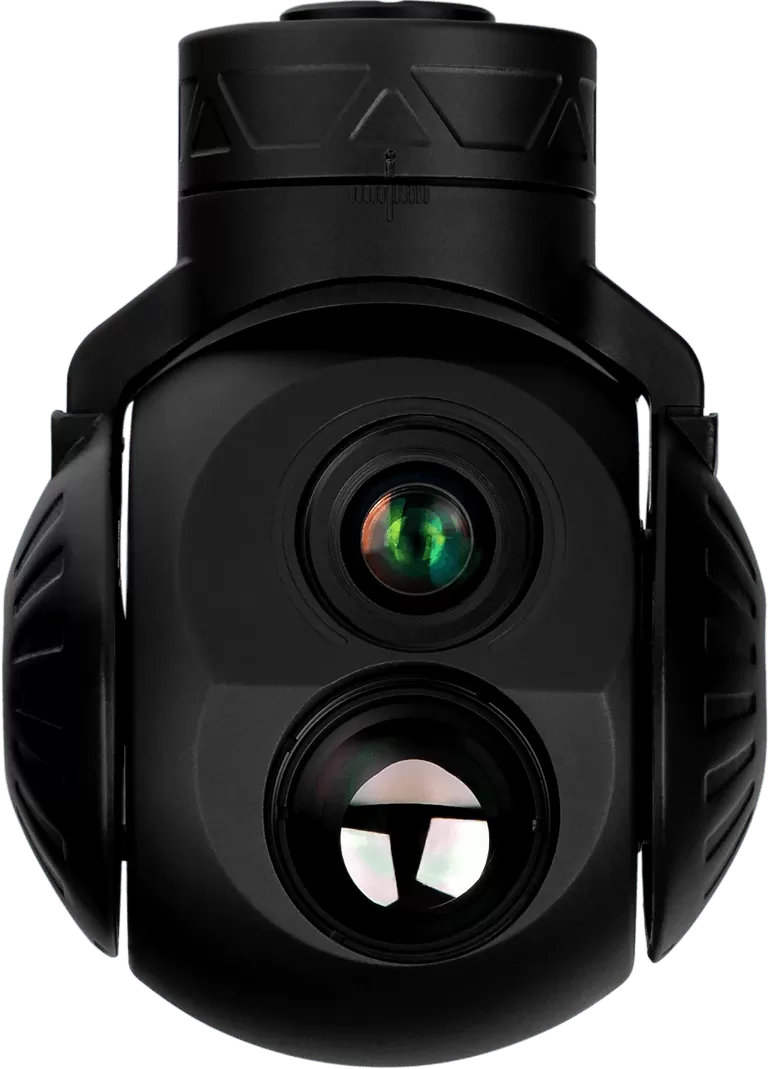
2-axis · EO + IR
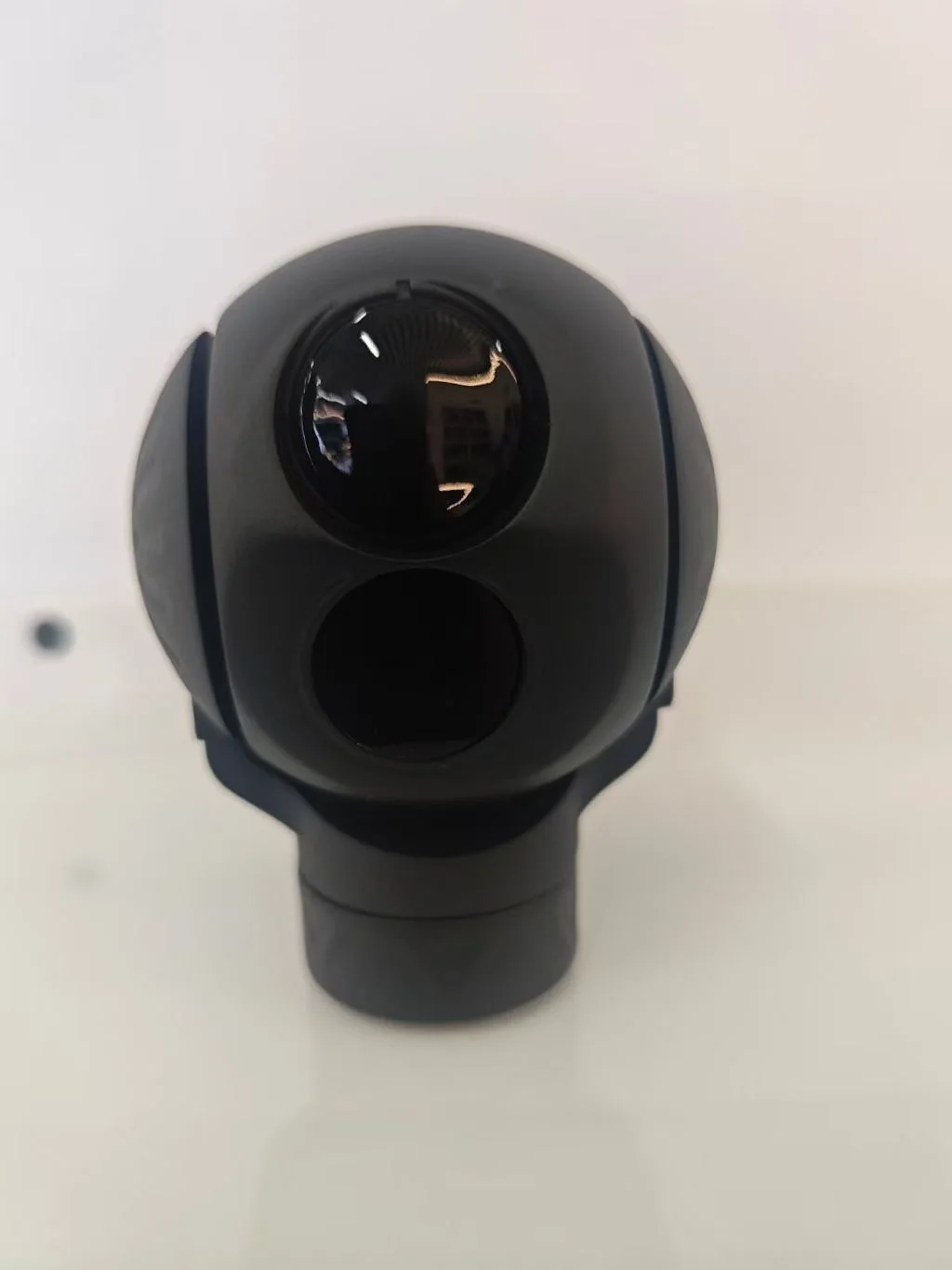
HQ-64DA
The lightest dual-sensor head in the range — 2K daylight plus thermal on 260 g.
- Visible
- 2688 × 1520, 8.5 mm fixed
- Thermal
- 640 × 512, 19 mm fixed
- Laser
- —
- Weight
- ≤260 g
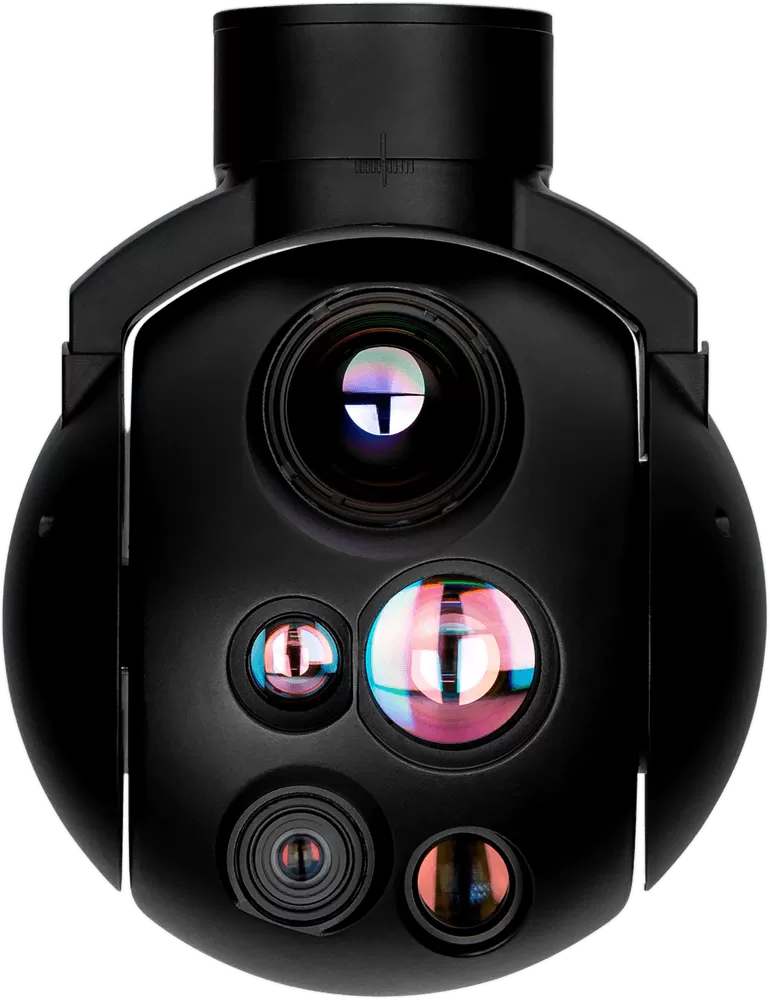
2-axis · EO + IR + LRF
HQ-85Q
Adds 3 km laser ranging to a two-axis platform for crews that need coordinates, not just imagery.
- Visible
- Dual 1920 × 1080, 8 mm + 25 mm
- Thermal
- 640 × 512, 25 mm fixed
- Laser
- 15 m – 3 km (± 1 m)
- Weight
- ≤500 g
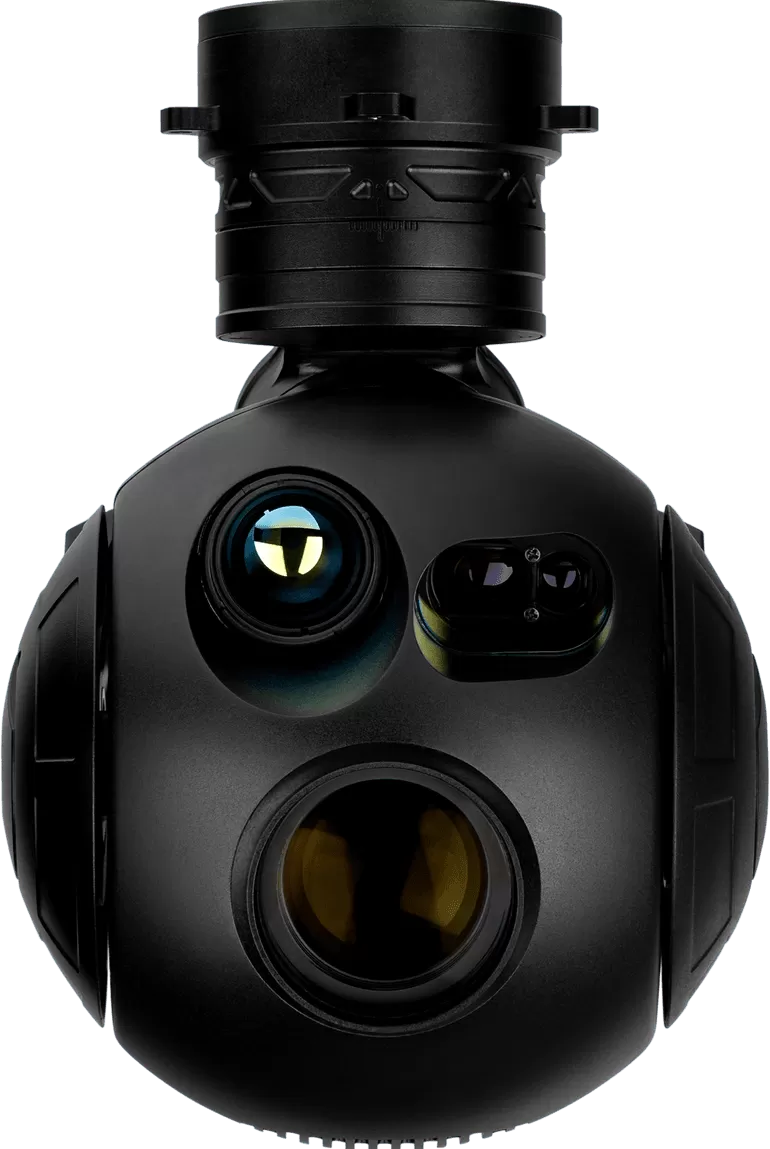
3-axis · EO + IR + LRF
HQ-115T
The one-kilogram workhorse: 30x zoom, thermal imaging and a 1.5 km rangefinder.
- Visible
- 1920 × 1080, 30x zoom 4.3 – 129 mm
- Thermal
- 640 × 512, 25 mm fixed
- Laser
- 5 m – 1.5 km (± 1 m)
- Weight
- ≤1 kg
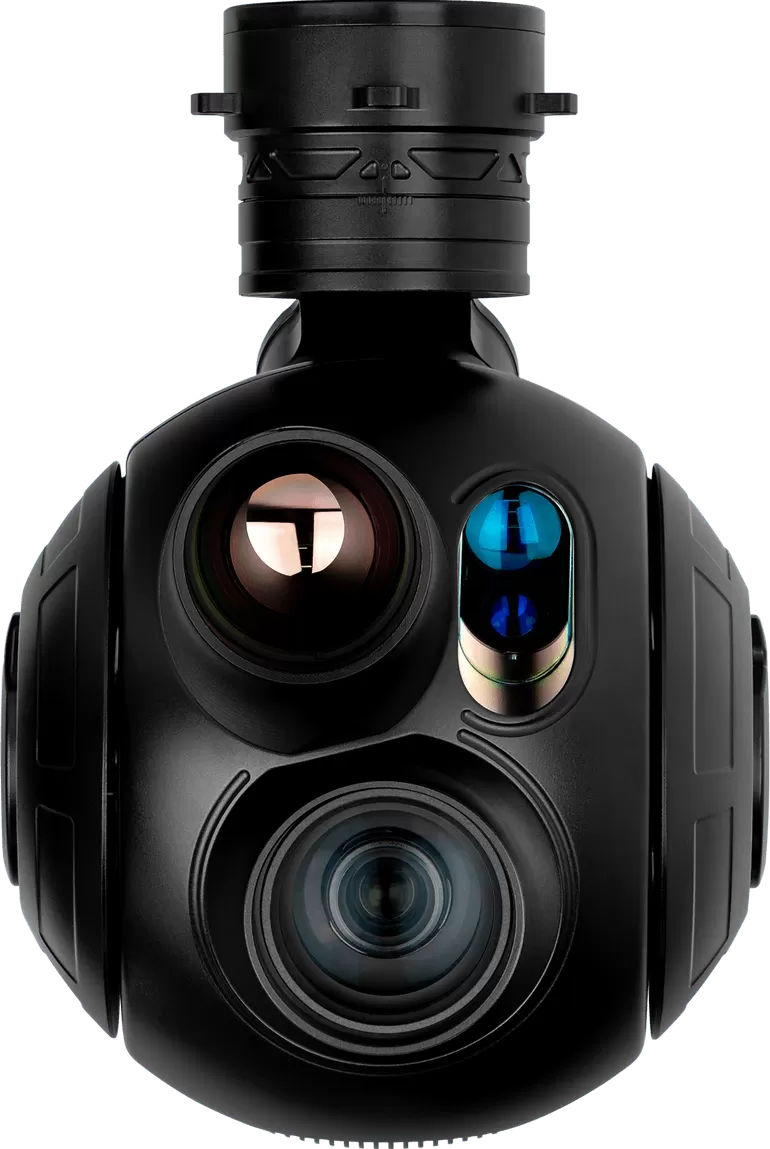
3-axis · EO + IR + LRF
HQ-135T
The flagship of the compact range: 40x zoom, thermal imaging and 3 km ranging on one stabilised cage.
- Visible
- 1920 × 1080, 40x zoom 4.25 – 170 mm
- Thermal
- 640 × 512, 35 mm fixed
- Laser
- 15 m – 3 km (± 1 m)
- Weight
- ≤1.4 kg
Compare the range
| Model | Axes | Configuration | Visible camera | Thermal imager | Laser rangefinder | Weight |
|---|---|---|---|---|---|---|
| HQ-64DA | 2-axis | EO + IR | 2688 × 1520, 8.5 mm fixed | 640 × 512, 19 mm fixed | — | ≤260 g |
| HQ-85Q | 2-axis | EO + IR + LRF | Dual 1920 × 1080, 8 mm + 25 mm | 640 × 512, 25 mm fixed | 15 m – 3 km (± 1 m) | ≤500 g |
| HQ-115T | 3-axis | EO + IR + LRF | 1920 × 1080, 30x zoom 4.3 – 129 mm | 640 × 512, 25 mm fixed | 5 m – 1.5 km (± 1 m) | ≤1 kg |
| HQ-135T | 3-axis | EO + IR + LRF | 1920 × 1080, 40x zoom 4.25 – 170 mm | 640 × 512, 35 mm fixed | 15 m – 3 km (± 1 m) | ≤1.4 kg |
Operating a security drone at night
Send a thermal picture, not an illuminator
An infrared illuminator makes the visible image usable, but it also announces the aircraft to anyone with a near-infrared viewer or a camera without an IR-cut filter. For security patrols the default should be thermal detection with the illuminator available but off.
What the record needs to carry
- A timestamp against every frame, referenced to a known clock.
- The position of the aircraft and the geolocation of the tracked object where a rangefinder is fitted.
- Both channels recorded, since the thermal frame often shows what the visible one did not.
- A file the customer can play without special software.
Integration with what is already there
Security teams rarely want a new system. The payload speaks Ethernet video and RS-422, RS-232, TTL, SBUS or MAVLink, so it can join an existing airframe and ground station rather than replacing them.
Related pages
Security payloads overlap with surveillance and inspection work.
- UAV surveillancePersistent monitoring of an area or a route.Read more →
- UAV inspectionClose-range detail on assets and structures.Read more →
- Thermal camerasThirteen thermal configurations in the range.Read more →
- Gimbal camerasHeads from 240 g to 1.5 kg, two- and three-axis.Read more →
Engineering detail
Why thermal changed security work
Before uncooled detectors became cheap and light, night patrol meant illuminators or nothing. A 640 x 512 microbolometer at 260 g now puts passive detection on a small quadcopter, which is why the light class exists in this range at all.
Keeping it simple for the operator
A security operator is not a payload engineer. Presets for thermal and visible, one-touch tracking and a fixed recording policy matter more than a deep menu tree, because the payload is used under time pressure by people who fly it a few times a week.
Evidence, not just video
Timestamps, positions and dual-channel recording are what make the sortie usable afterwards. A payload that only streams live video produces nothing a security manager can file.
Designed and manufactured by HITS
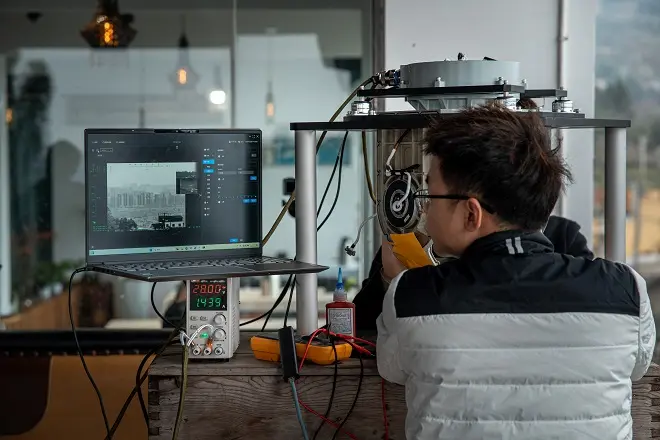
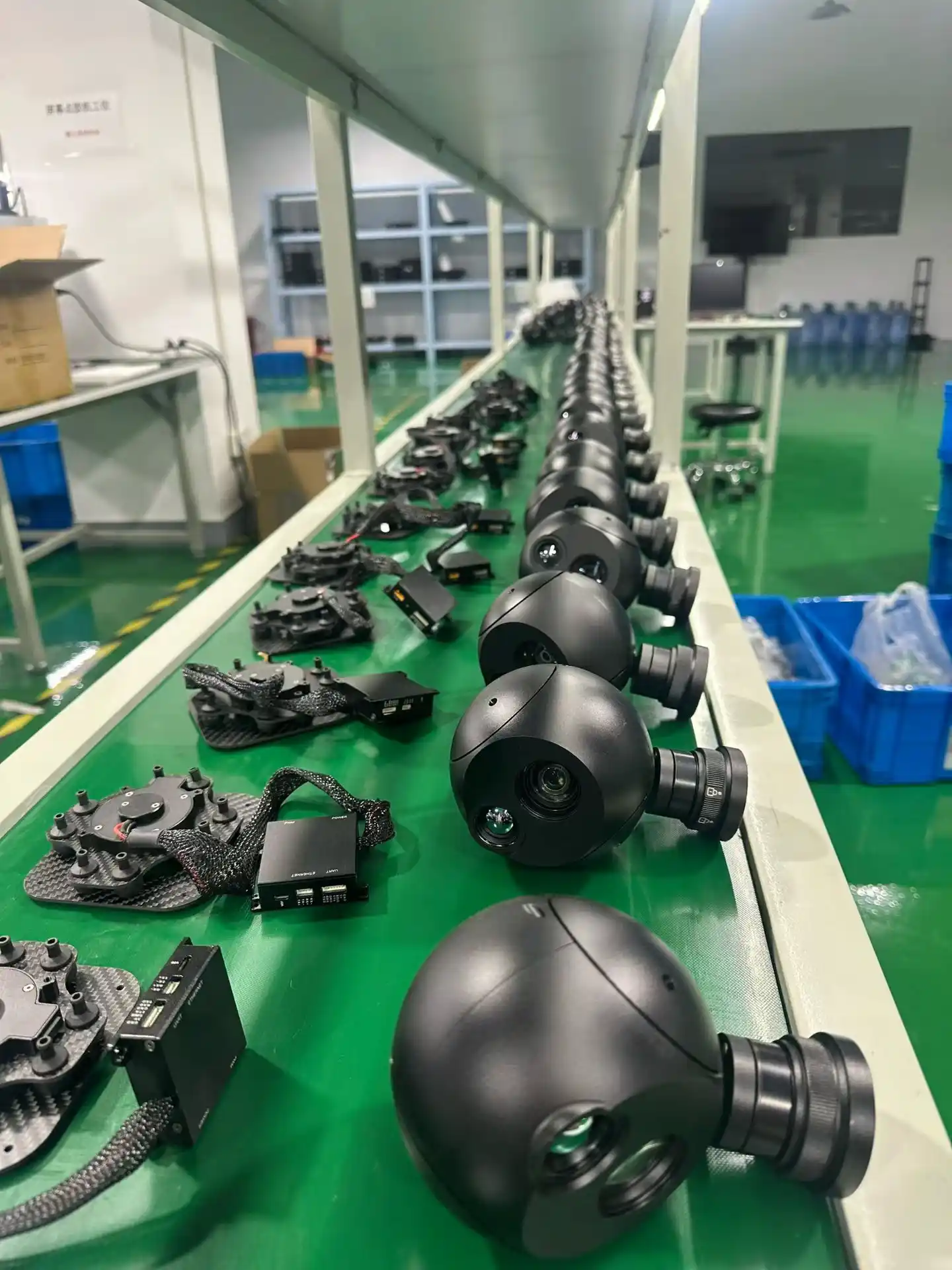
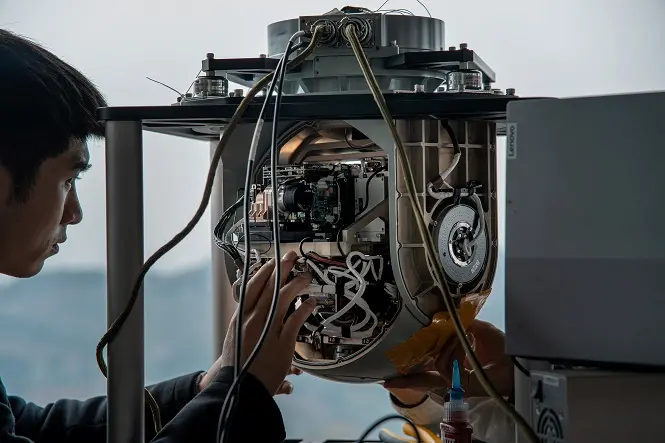
Optics, servo hardware, stabilisation firmware and the AI tracking module are developed in house, and every unit is assembled, calibrated and environmentally tested on our own line before it ships.

Request information or a quotation
Tell us the site, the lighting and the response time you need and we will shortlist the payload. Contact us with your requirements.