

Contact HITS.
Our next conversation.
Tell us what your aircraft must do and what your operator needs to see. We will discuss camera options and the requirements that matter for integration. You can contact HITS by email, telephone or WhatsApp, and a technical reply comes from the engineering team rather than a sales desk.
Let’s discuss
your payload.
For product selection, OEM (original equipment manufacturer) configurations, integration enquiries and distribution discussions.
Have drawings or a specification? Send them by email with a short description of your project.
Send your requirement
A short brief is enough to start. Our team replies within one working day, usually with the datasheet, integration notes and next steps.
One group,
several sites.
Head office and hydrogen research sit in Shanghai, payload development is in Shenzhen, and production runs across three bases. Pins show the district or city of each site rather than a street-level position.
Loading map…
Shanghai
No.50, Lane 5569, Sanlu Highway, Minhang District, Shanghai 201112, China
Shenzhen
3501, Shenzhen Bay Venture Capital Building, Nanshan District, Shenzhen, China
Hong Kong
Unit 908-909, Parklane Centre, 25 Kin Wing Street, Tuen Mun, Hong Kong
Chizhou, Anhui
C1 Building, Jiangnan Wanjiang Emerging Industry Cluster Science Park, Chizhou, Anhui, China
Zaozhuang, Shandong
Zaozhuang, Shandong, China
Zhangjiagang, Jiangsu
Zhangjiagang, Jiangsu, China
Travelling to a specific site? Ask us for the access details before you book, and we will send the exact address and the contact on site.
A focused technical conversation.
Review the mission
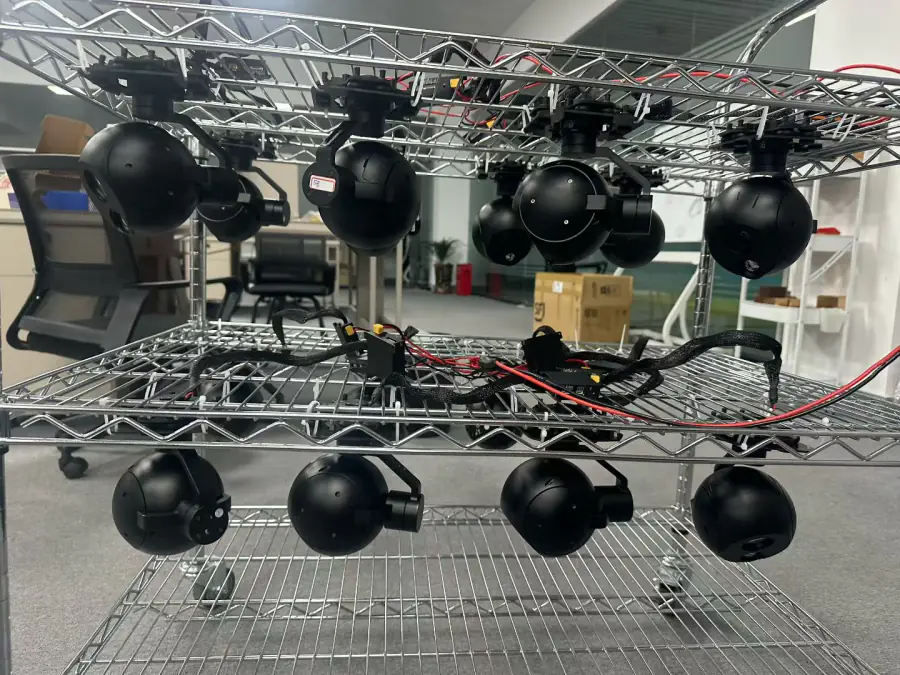
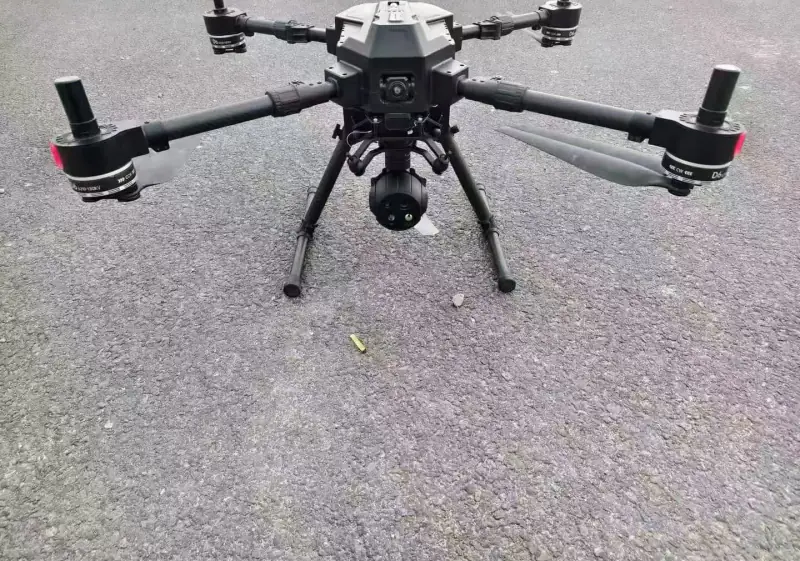
We discuss your application and identify the platform details needed for camera selection.
Compare the options
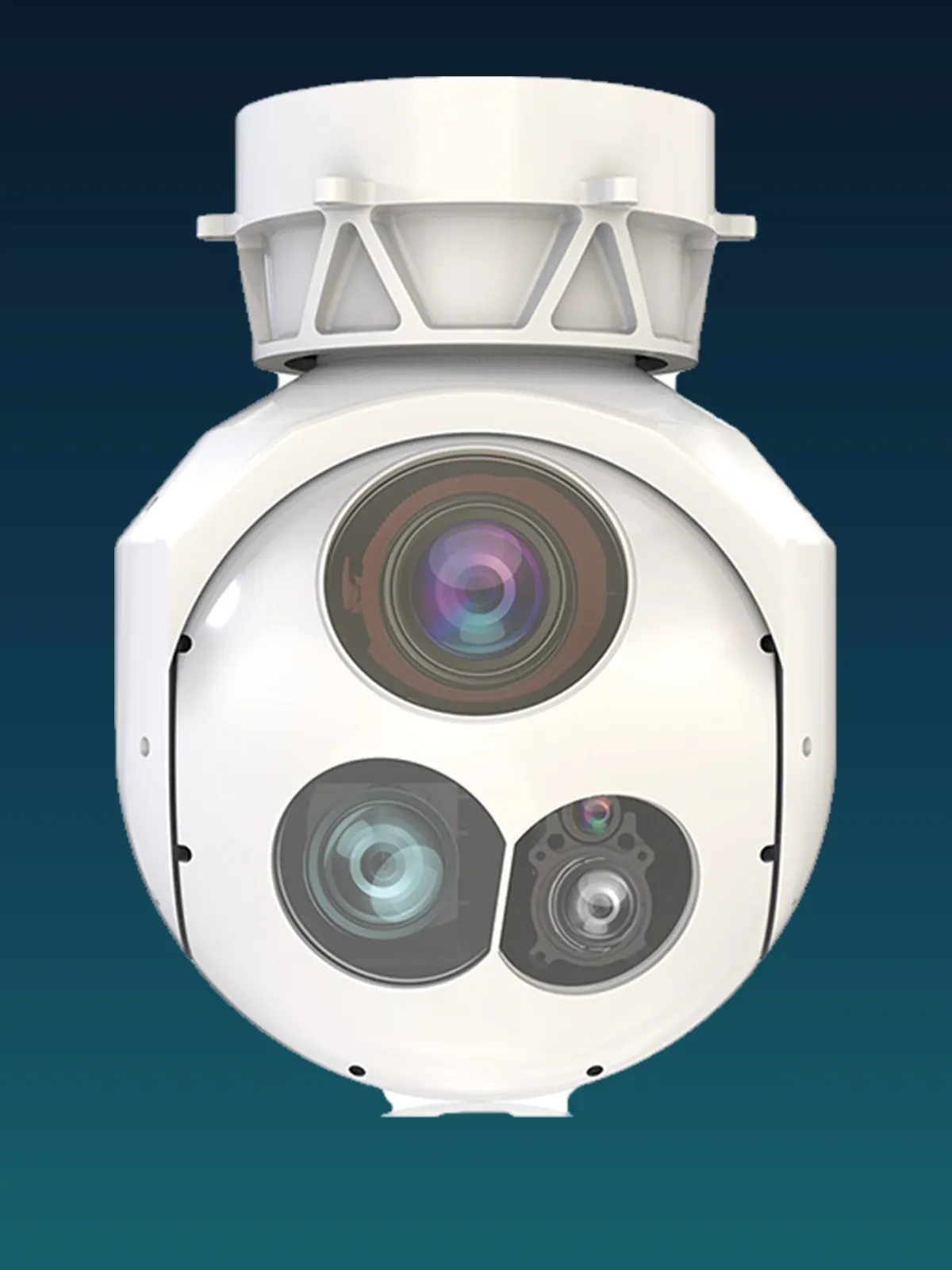
We review relevant sensor combinations, gimbal structures and available configurations.
Define the next step
We clarify evaluation requirements and discuss quotation, quantities and procurement timing.
From order to delivery.
The technical conversation ends with a configuration. What follows runs on a fixed sequence, and two of the steps only start once the order is confirmed.
Order and payment
Purchase order with the agreed configuration, and the payment schedule stated on the quotation. The production slot and the licence application are booked from this point.
Licence and production
The dual-use export licence is filed in parallel with the build, so the two finish together.
Shipment and handover
The inspection record, calibration report and destination documents travel with the unit. The forwarder and the import documents are confirmed before the goods leave.
If customs raises a question about a shipment, we answer within seven working days with the contract, invoice, transport documents, technical data and test reports. The goods stay with customs until the question is closed, usually fifteen working days, with a further fifteen where expert identification is required. We tell you as soon as a question is raised.
Six details that
shorten the selection.
You do not need a finished specification to contact us. The fastest way to a useful answer is to describe the aircraft, the task and the constraints that cannot move. These are the points our engineers usually ask for first.
Platform and mounting
Airframe type, maximum take-off weight, payload allowance, hardpoint dimensions and centre-of-gravity limits. A photo of the mounting area and the existing gimbal, if there is one, is often more useful than a drawing.
Mission and optics
What has to be seen, at what distance, in daylight or at night, and whether the operator needs wide-area coverage or a narrow field of view. Target size and the required recognition level decide the zoom and sensor format.
Interfaces and power
Input voltage, power budget, control protocol, video output and the ground station or flight controller in use. If the payload must fit an existing MAVLink (Micro Air Vehicle Link) or IP video chain, say so at the start.
Environment
Operating altitude, temperature range, salt spray, vibration and EMI conditions. These determine sealing, materials and the testing that should be requested before a unit is accepted.
Evaluation and schedule
Whether you need one unit for bench testing or a batch for a programme, the date the payload must be flying, and the export destination. Export classification can affect the timeline before a quote is issued.
Documentation
Tell us which documents your team needs: datasheet, interface control document, SDK (software development kit), test report or compliance evidence. We can confirm what is available for the shortlisted configuration.
What happens after you send the brief.
An engineer reviews the requirement before a quotation is prepared. If the information is complete, the first reply usually includes a shortlist of one or two payload classes, the weight and power figures for each, and the interface questions that still need an answer. If something is missing, we ask for it rather than guessing.
For an OEM or integrator, the next step is often a technical call with the payload and flight-control teams. For an end user, it may be a comparison of EO (electro-optical), thermal and EO/IR (electro-optical/infrared) channels against the mission. In both cases the aim is the same: confirm the configuration on paper before anyone commits to a sample or a production slot.
Standard configurations can be quoted from one unit. Custom work is reviewed against the platform, the required volume and the schedule; minimum order quantities apply to custom builds. A one-year warranty and online engineering support are included with production payloads, and the export paperwork is discussed before the order is accepted.
Common questions.
Can I contact HITS before my specification is complete?
Yes. Start with your application, aircraft and what the operator needs to see. We can discuss which requirements should be confirmed before selecting a payload for evaluation.
Do you support OEM and custom UAV camera projects?
We discuss standard products, OEM configurations and custom requirements. The available approach depends on your platform constraints, required capabilities and feasibility review.
Can you help me choose between EO, thermal and EO/IR?
Yes. Tell us about the task, lighting conditions, viewing distance and information needed. We can compare the relevant imaging options in the context of your mission.
How do I ask about samples, pricing and lead times?
Send the configuration or requirement, the intended evaluation, the expected quantity and the schedule. Stock configurations ship from one unit and are paid by T/T; custom configurations are built to order with a minimum of 100 units. Warranty is one year from delivery, with engineer support online.
Do you work with distributors and system integrators?
Yes. HITS works with UAV (unmanned aerial vehicle) manufacturers, system integrators, distributors and professional project teams. Include your company and the types of platforms or customers you support.