





Electro-Optical Cameras for UAV Payload Systems
14 daylight channels · 2K fixed to 48 MP hybrid zoom
The daylight channel carries the detail an infrared sensor cannot: a registration mark on a pylon, corrosion on a flange, a serial number on a hull. These are the optics that resolve it, from a fixed 2K sensor to a 48 MP hybrid zoom head.
- 2K to 48 MP
- 10x – 40x zoom
- 4.25 – 170 mm
- Sub-pixel EIS
A daylight camera carries the detail an infrared channel cannot: a registration mark on a pylon, corrosion on a flange, a serial number on a hull. The electro-optical channels in this range run from a fixed 2K sensor up to a 48 MP hybrid zoom head, all on gyro-stabilised mounts.
On a daylight payload the two deciding numbers are resolution and focal length. Resolution sets how much detail exists in the frame; focal length sets how far away that detail can still be read. Because both are used at long zoom, the mount matters as much as the optics — at 30x, a fraction of a degree of airframe rotation moves the image by hundreds of pixels.
What the daylight channel gives you
This page is about the visible channel itself: how much detail the sensor resolves, and the focal length that puts that detail at the distance you need.
- Fixed, zoom or hybrid optics
Fixed 2K sensors for the widest field of view, 10x to 40x continuous zoom for one aircraft that has to survey and then close in, and a 48 MP hybrid channel for the same job at higher pixel count.
- 8000 × 6000 on the hybrid channel
The HQ-95Q pairs a 9.5 mm wide lens with continuous zoom from 15.3 mm to 49.7 mm, for detail that survives cropping.
- Autofocus with sub-pixel EIS
Focus is held electronically as the zoom changes, with sub-pixel electronic stabilisation layered on top of the mechanical mount.
- 40x zoom, 4.25 – 170 mm
The longest daylight reach in the compact range, on the HQ-115S, HQ-135D and HQ-135T.
- Visible detail for inspection
Corrosion, coating defects, structural cracking and serial numbers are read from colour imagery rather than inferred from heat.
- Paired with infrared and laser
Every daylight channel in the range sits on the same cage as an infrared detector, and most models add an eye-safe laser rangefinder.
14 daylight models in the HQ series
Fourteen daylight configurations, ordered below from the widest fixed optics to the longest zoom.
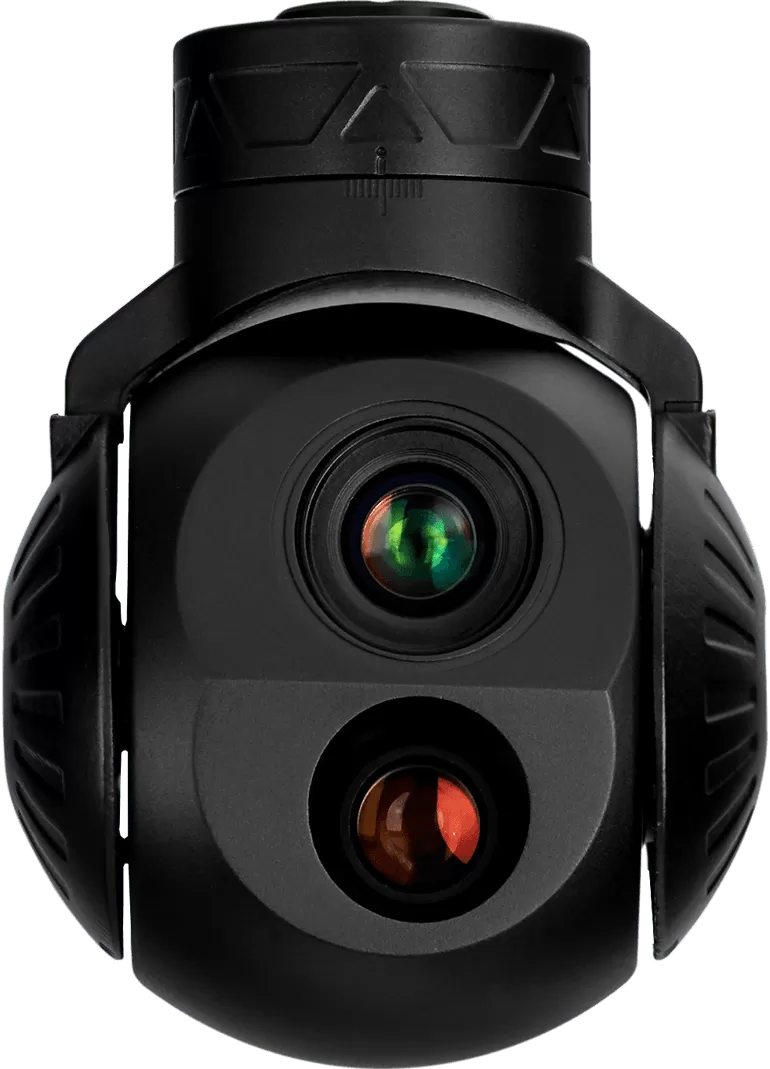
2-axis · EO
HQ-64DB Drone Camera Payload OEM
Two fixed visible cameras — a wide and a narrow channel — at the lowest weight in the series.
- Visible
- Dual 2688 × 1520, 8.5 mm + 25 mm
- Thermal
- —
- Laser
- —
- Weight
- ≤240 g
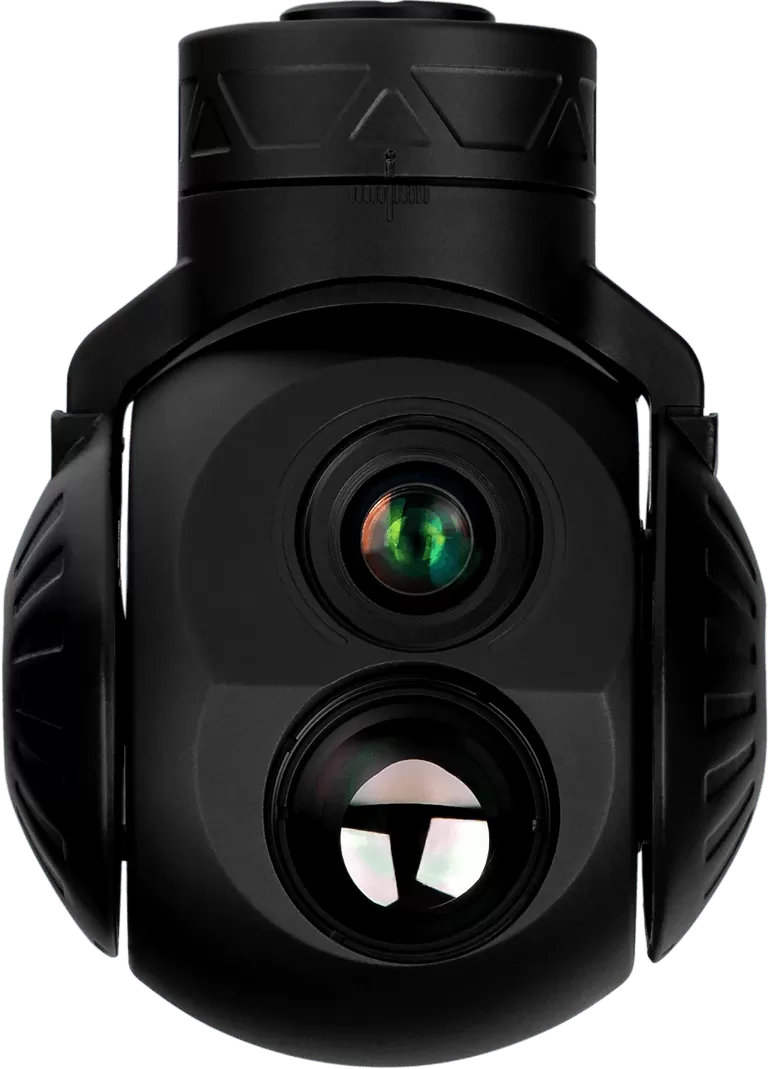
2-axis · EO + IR
HQ-64DA UAV Camera Gimbal OEM
The lightest dual-sensor head in the range — 2K daylight plus thermal on 260 g.
- Visible
- 2688 × 1520, 8.5 mm fixed
- Thermal
- 640 × 512, 19 mm fixed
- Laser
- —
- Weight
- ≤260 g
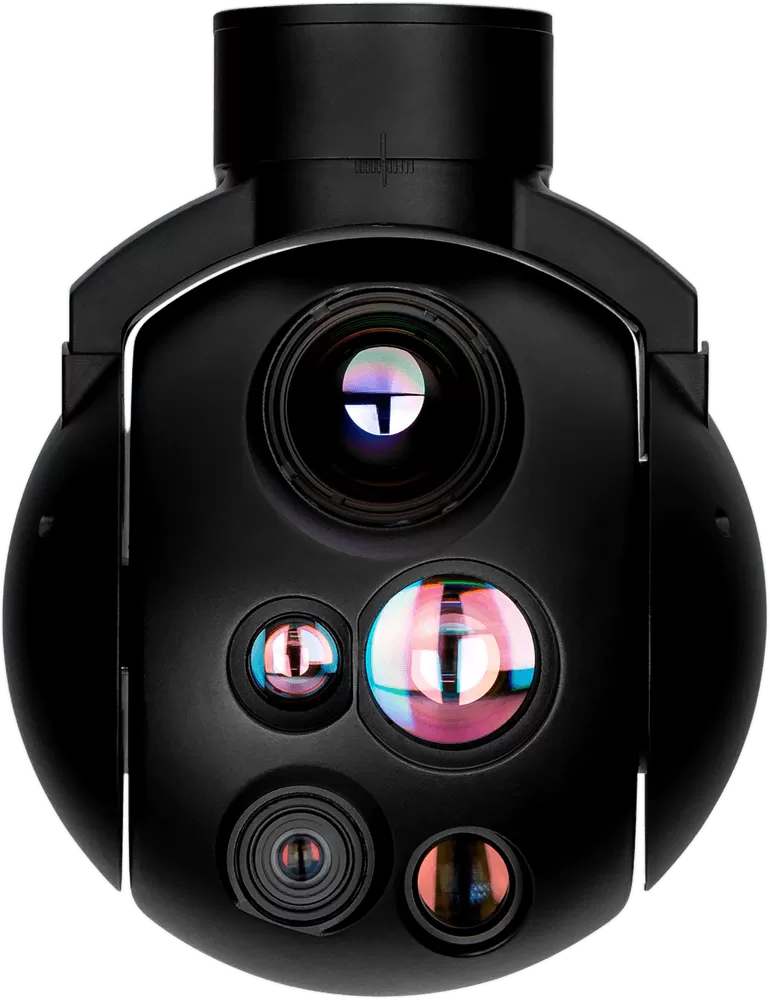
2-axis · EO + IR + LRF
HQ-85Q Stabilised Camera Payload ODM
Adds 3 km laser ranging to a two-axis platform for crews that need coordinates, not just imagery.
- Visible
- Dual 1920 × 1080, 8 mm + 25 mm
- Thermal
- 640 × 512, 25 mm fixed
- Laser
- 15 m – 3 km (± 1 m)
- Weight
- ≤500 g
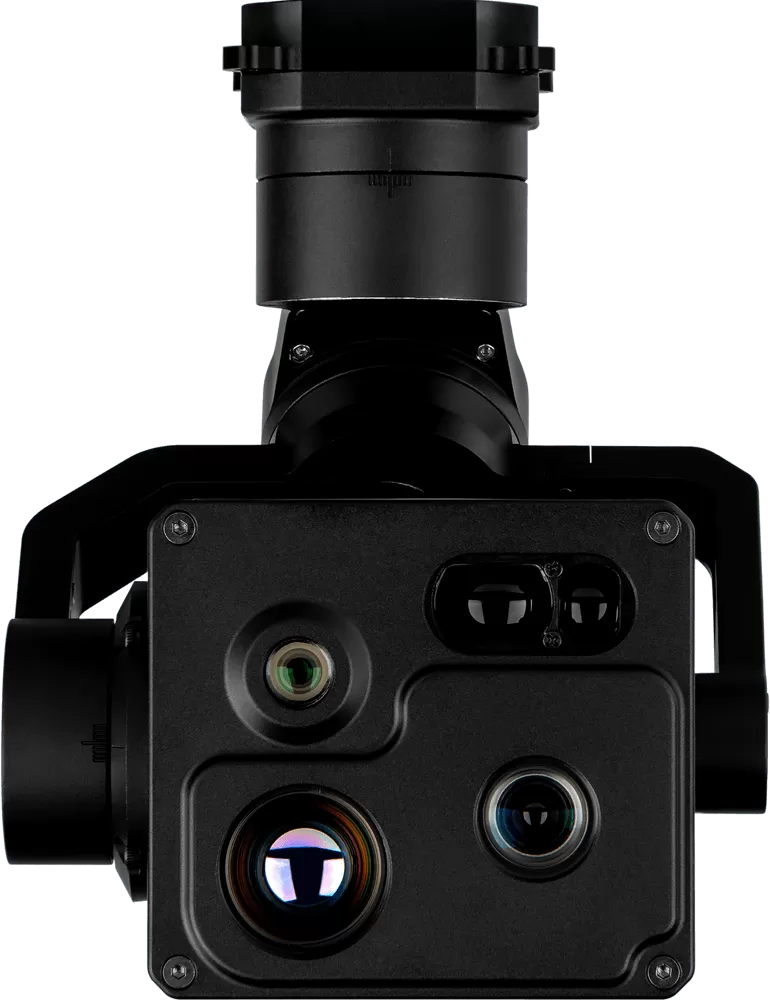
3-axis · EO + IR + LRF
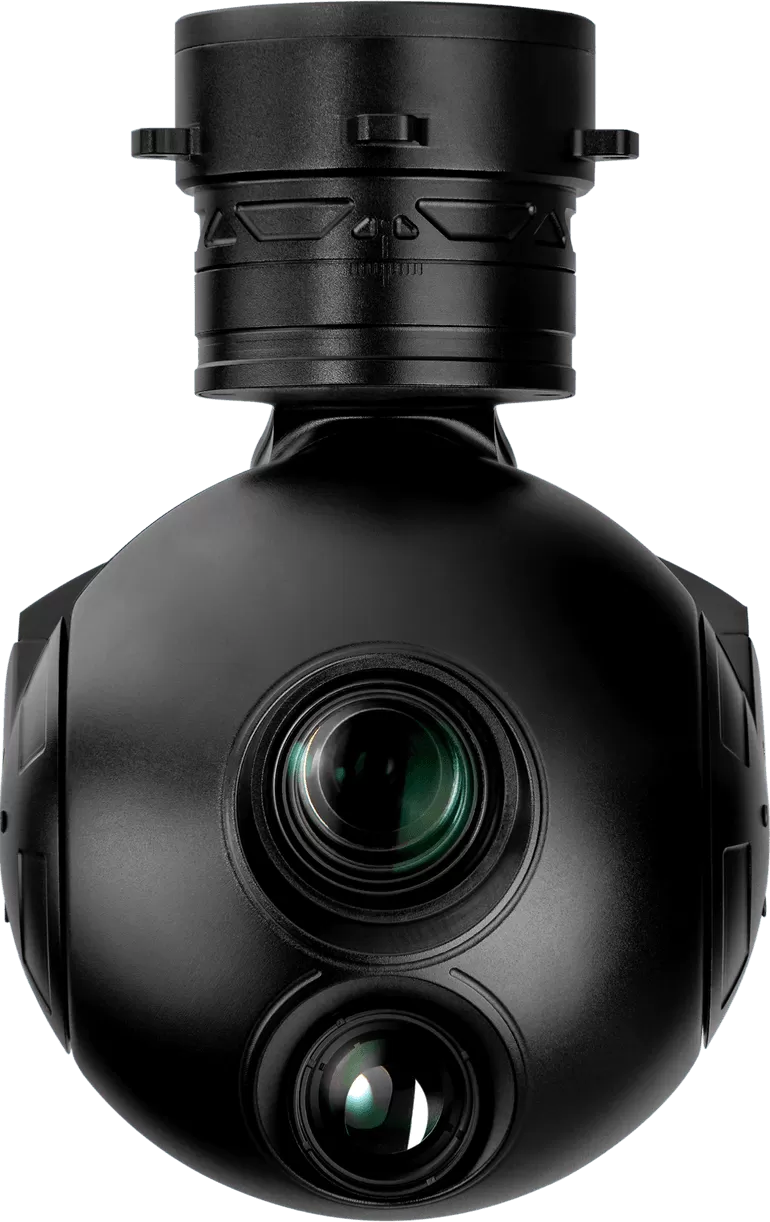
HQ-95Q customized UAV Camera Gimbal
Four optical channels and a quick-release mount on the lightest three-axis head we build.
- Visible
- Dual 8000 × 6000, 9.5 mm + continuous zoom 15.3 – 49.7 mm
- Thermal
- 640 × 512, 19 mm fixed
- Laser
- 5 m – 1.5 km (± 1 m)
- Weight
- ≤400 g
3-axis · EO + IR
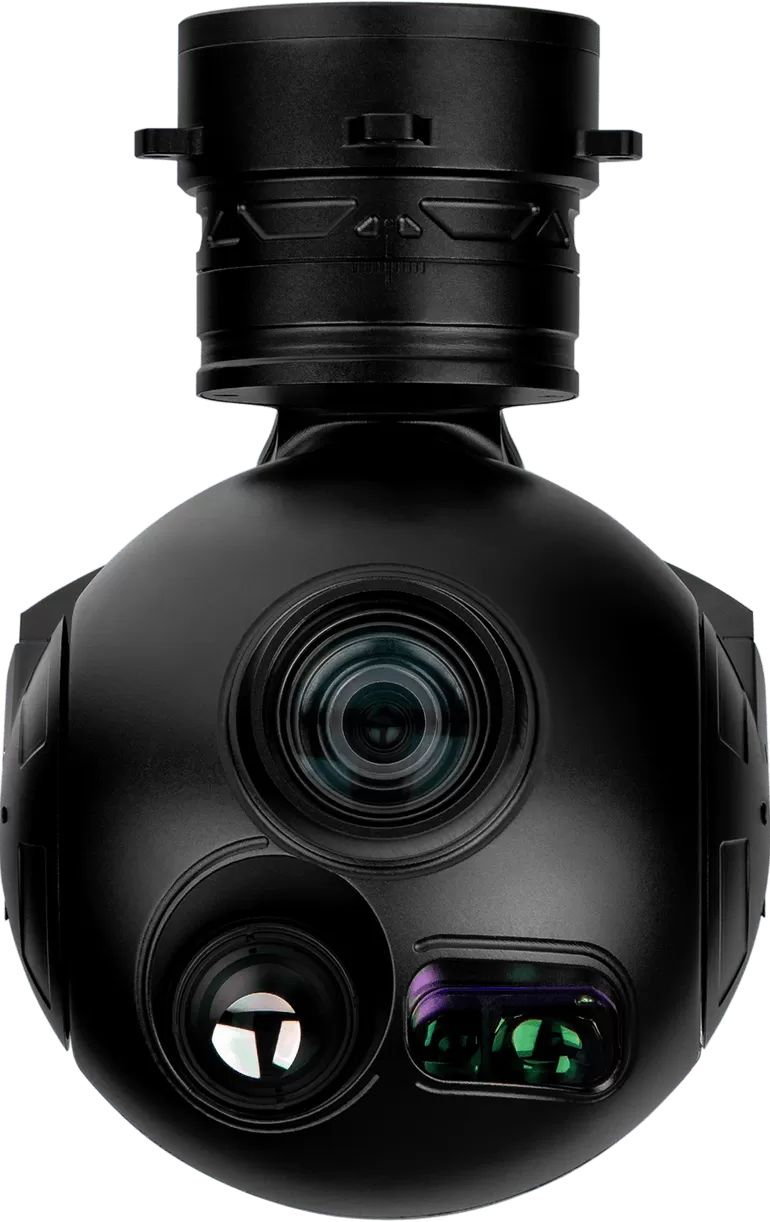
HQ-100D Gimbal Camera OEM
The entry point to full roll-stabilised zoom and thermal imaging under a kilogram.
- Visible
- 1920 × 1080, 10x zoom 4.7 – 47 mm
- Thermal
- 640 × 512, 19 mm fixed
- Laser
- —
- Weight
- ≤800 g
3-axis · EO + IR + LRF
HQ-100T Gimbal Camera Manufacturer
The same 800 g three-axis head as the 100D, with a 1.5 km laser rangefinder added.
- Visible
- 1920 × 1080, 10x zoom 4.7 – 47 mm
- Thermal
- 640 × 512, 19 mm fixed
- Laser
- 5 m – 1.5 km (± 1 m)
- Weight
- ≤800 g
3-axis · EO + IR
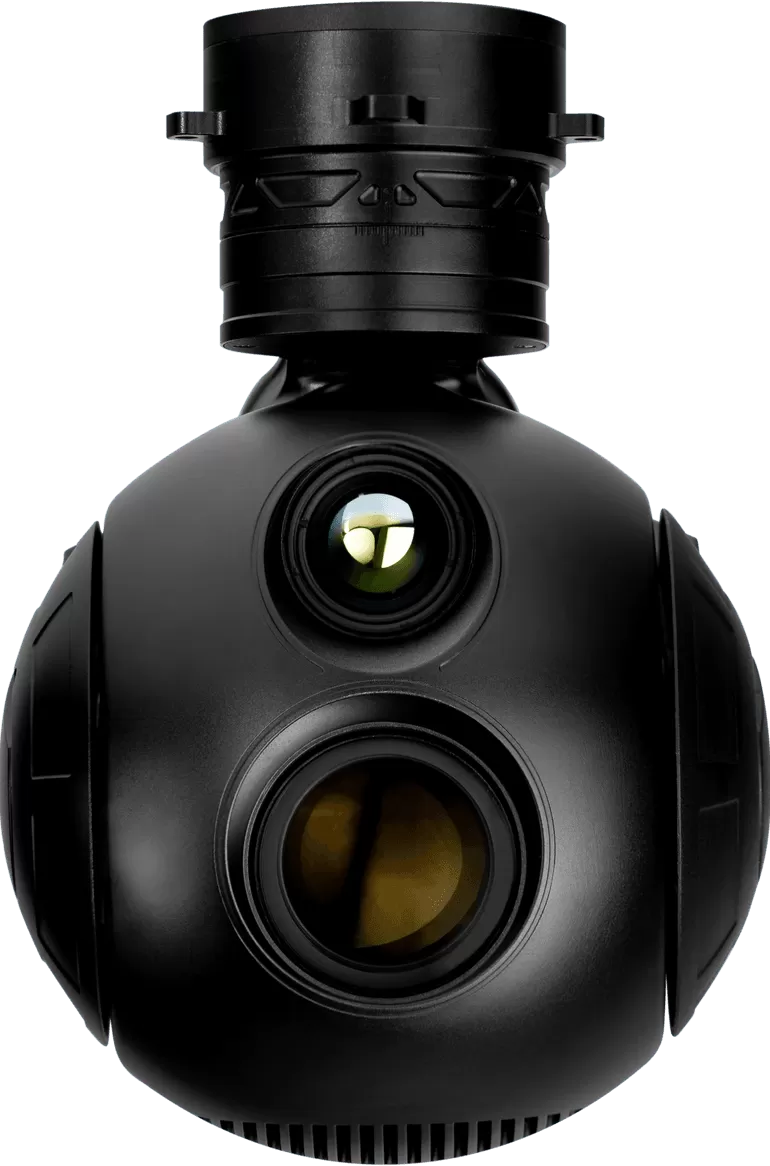
HQ-115D UAV Gimbal Camera OEM
30x zoom and thermal imaging on a one-kilogram head with no ranging requirement.
- Visible
- 1920 × 1080, 30x zoom 4.3 – 129 mm
- Thermal
- 640 × 512, 25 mm fixed
- Laser
- —
- Weight
- ≤1 kg
3-axis · EO + IR + LRF
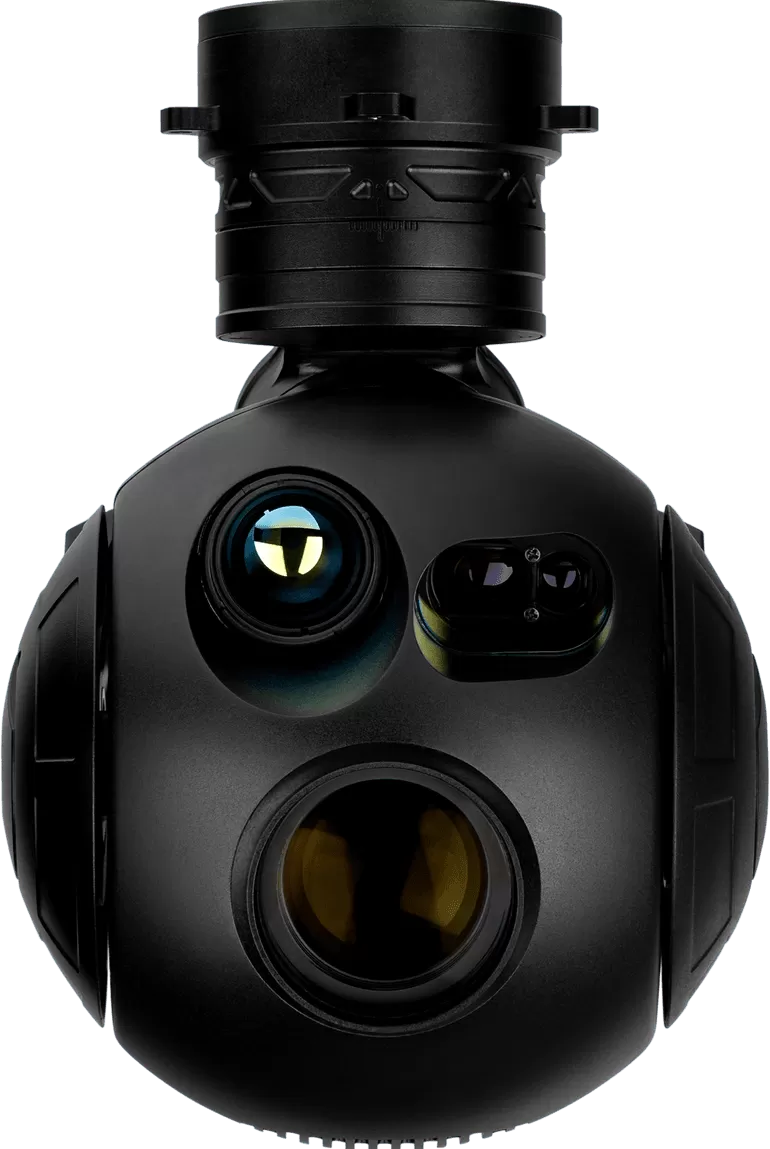
HQ-115T Gimbal Camera Manufacturer
The one-kilogram workhorse: 30x zoom, thermal imaging and a 1.5 km rangefinder.
- Visible
- 1920 × 1080, 30x zoom 4.3 – 129 mm
- Thermal
- 640 × 512, 25 mm fixed
- Laser
- 5 m – 1.5 km (± 1 m)
- Weight
- ≤1 kg
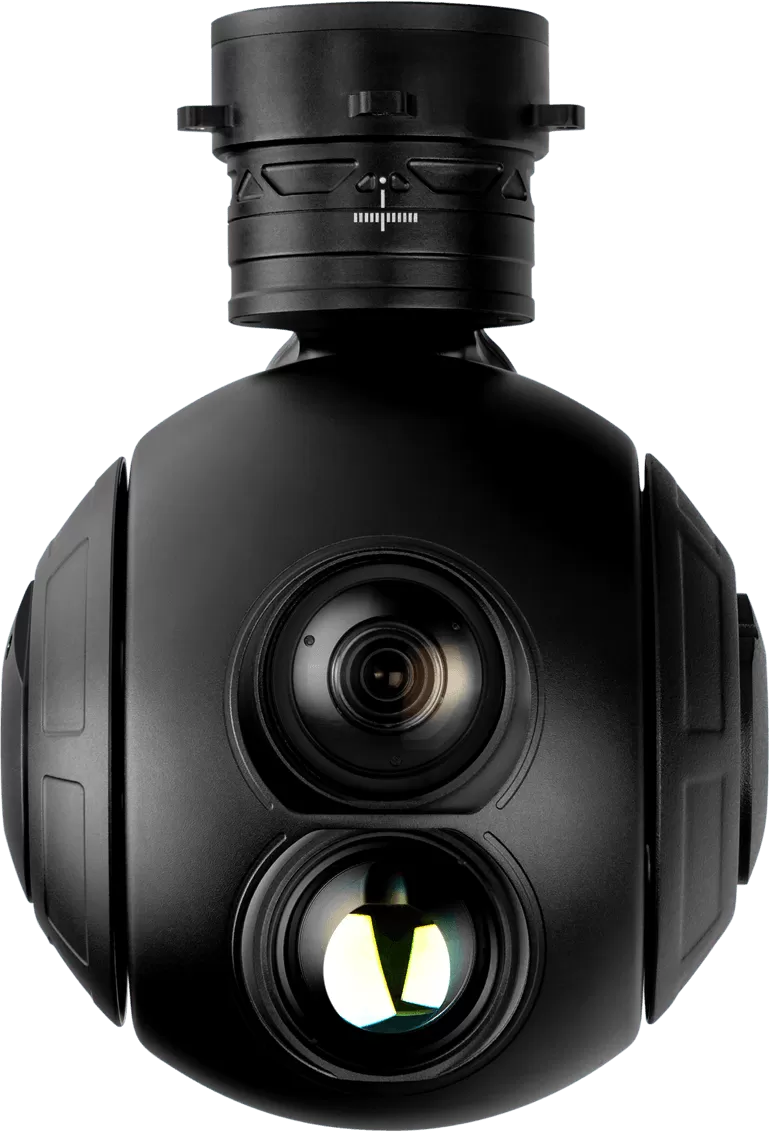
3-axis · EO + IR
HQ-125DB UAV Camera Gimbal ODM
The longer 35 mm thermal lens paired with 30x zoom, without the rangefinder.
- Visible
- 1920 × 1080, 30x zoom 4.3 – 129 mm
- Thermal
- 640 × 512, 35 mm fixed
- Laser
- —
- Weight
- ≤1.1 kg
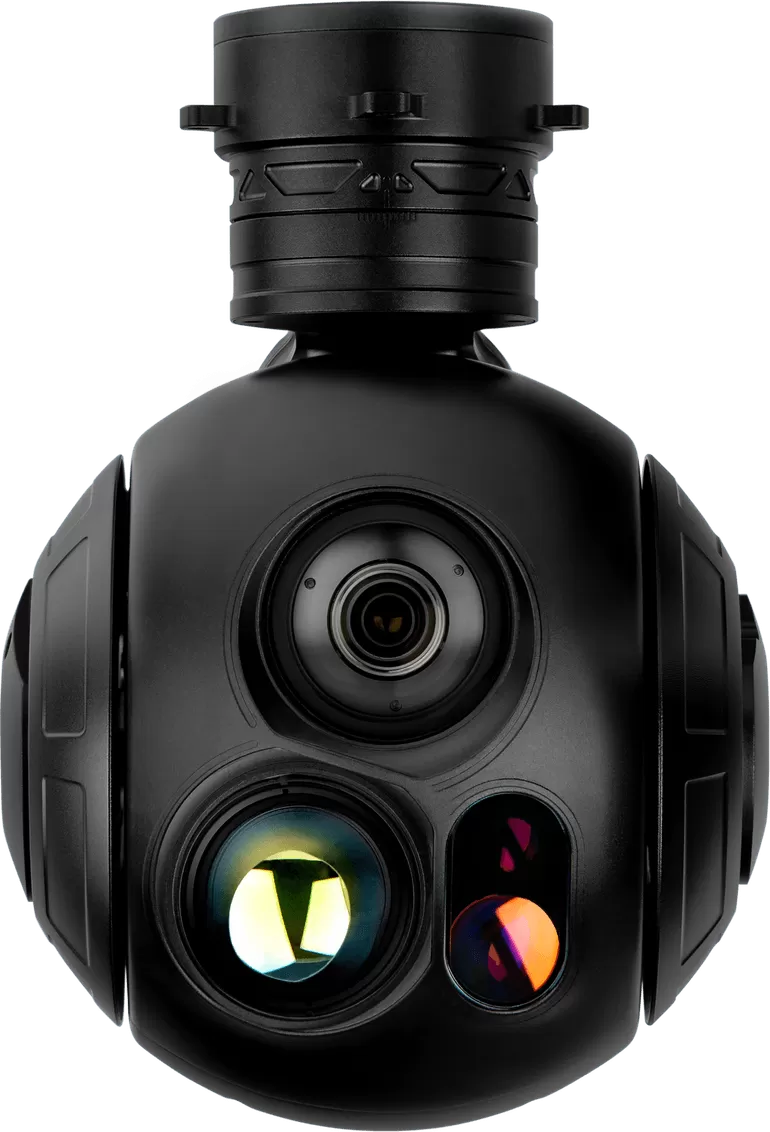
3-axis · EO + IR + LRF
HQ-125TB Gimbal Camera Supplier
Balanced mid-range turret: 30x zoom, a long thermal lens and 3 km ranging.
- Visible
- 1920 × 1080, 30x zoom 4.3 – 129 mm
- Thermal
- 640 × 512, 35 mm fixed
- Laser
- 15 m – 3 km (± 1 m)
- Weight
- ≤1.2 kg
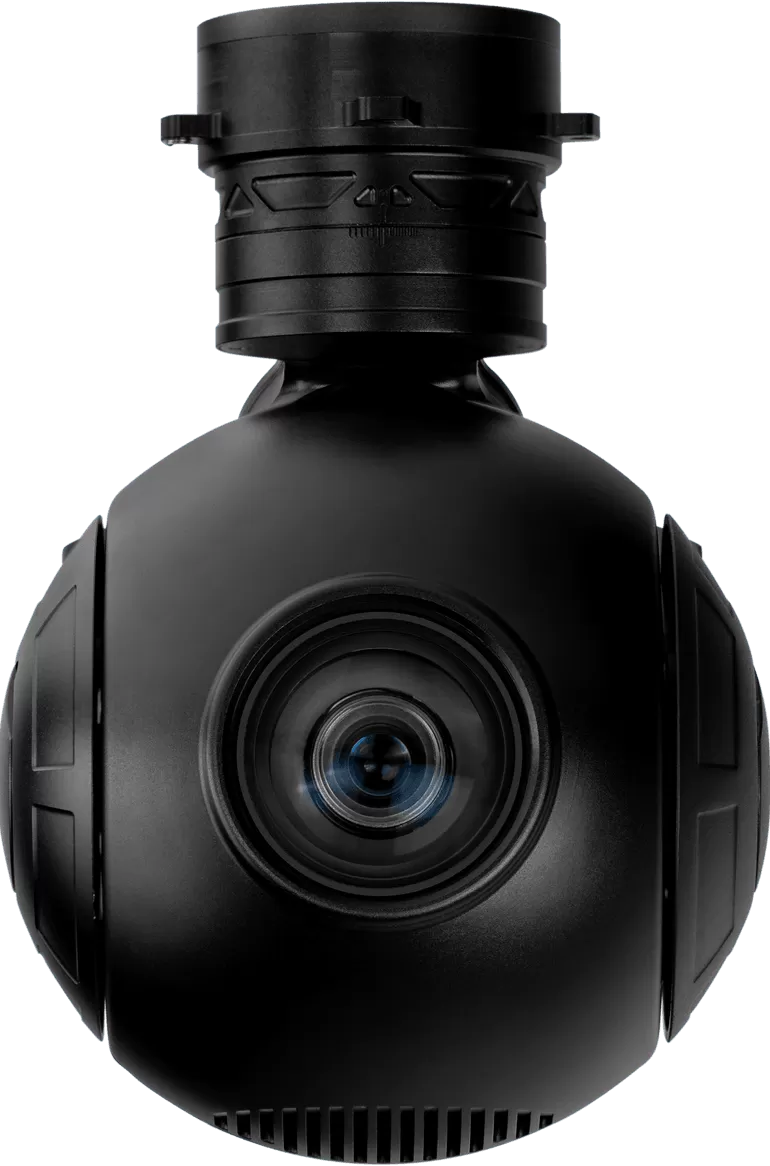
3-axis · EO
HQ-115S Drone Camera Gimbal Direct Factory
A 40x daylight optic alone, for daylight-only surveillance where the weight budget rules out a thermal channel.
- Visible
- 1920 × 1080, 40x zoom 4.25 – 170 mm
- Thermal
- —
- Laser
- —
- Weight
- ≤1 kg
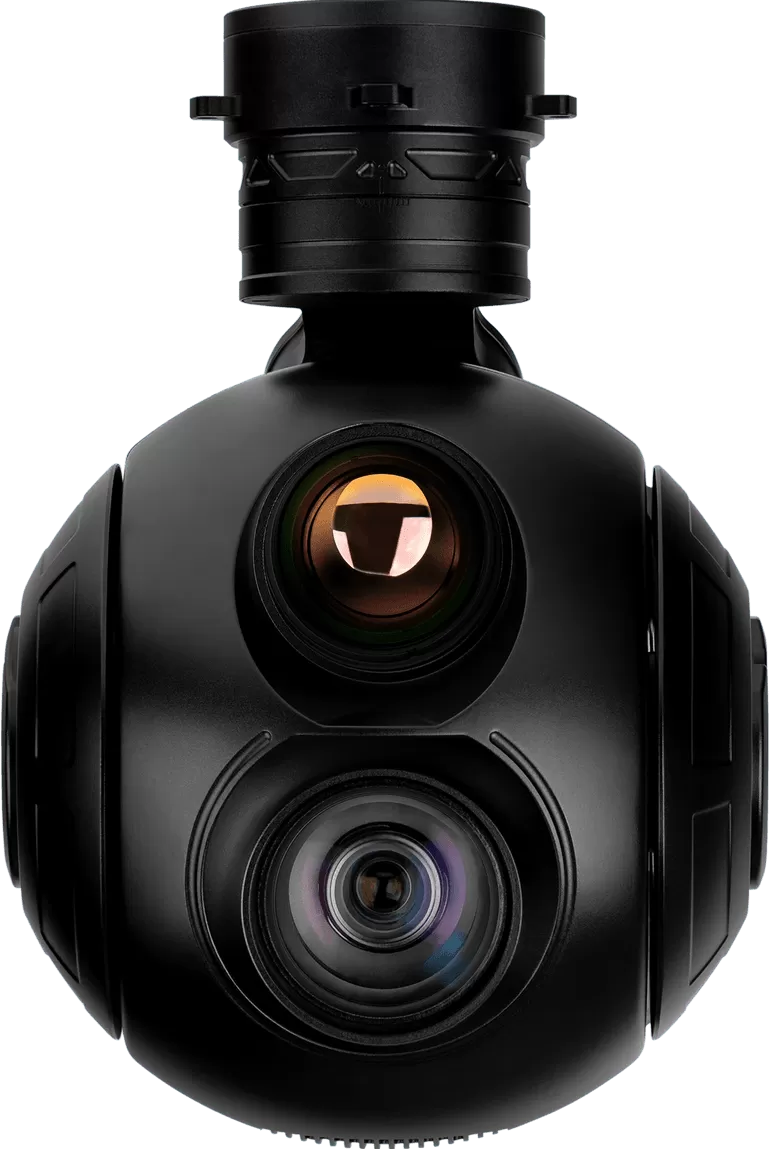
3-axis · EO + IR
HQ-135D customized Drone Camera Payload
The 40x optic with thermal imaging, for daylight and night identification at long range.
- Visible
- 1920 × 1080, 40x zoom 4.25 – 170 mm
- Thermal
- 640 × 512, 35 mm fixed
- Laser
- —
- Weight
- ≤1.4 kg
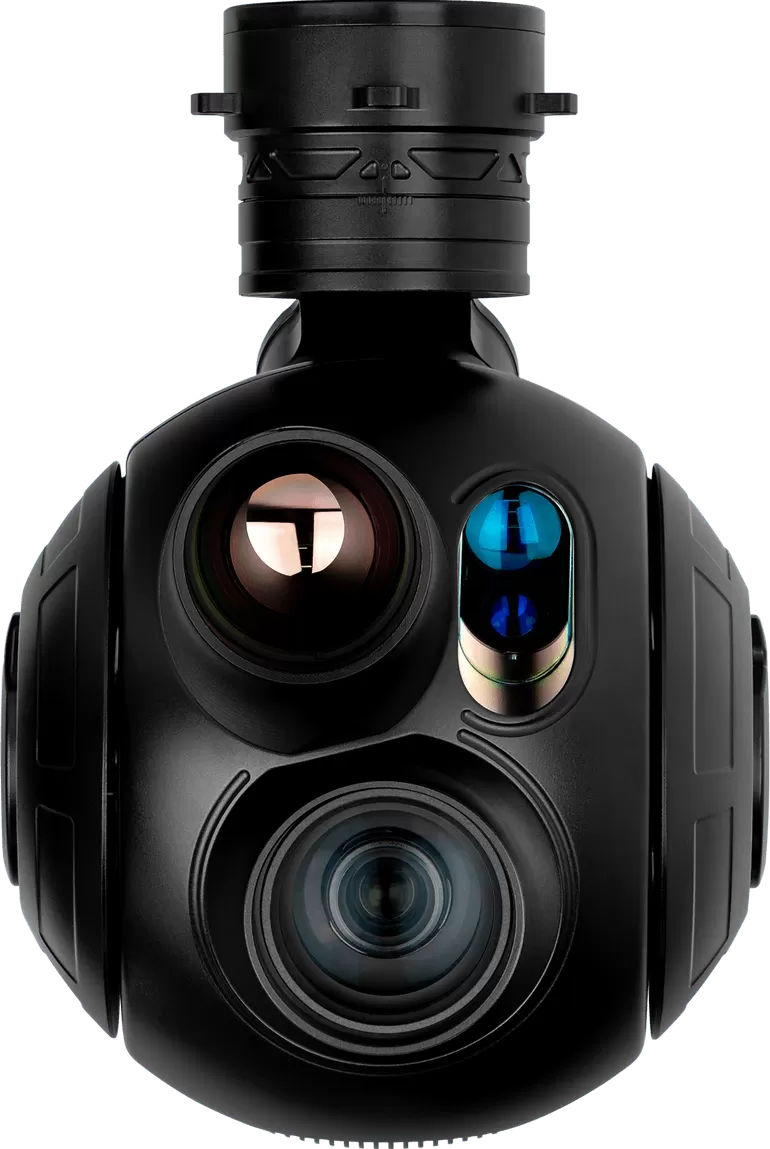
3-axis · EO + IR + LRF
HQ-135T UAV Gimbal Camera OEM
The flagship of the compact range: 40x zoom, thermal imaging and 3 km ranging on one stabilised cage.
- Visible
- 1920 × 1080, 40x zoom 4.25 – 170 mm
- Thermal
- 640 × 512, 35 mm fixed
- Laser
- 15 m – 3 km (± 1 m)
- Weight
- ≤1.4 kg
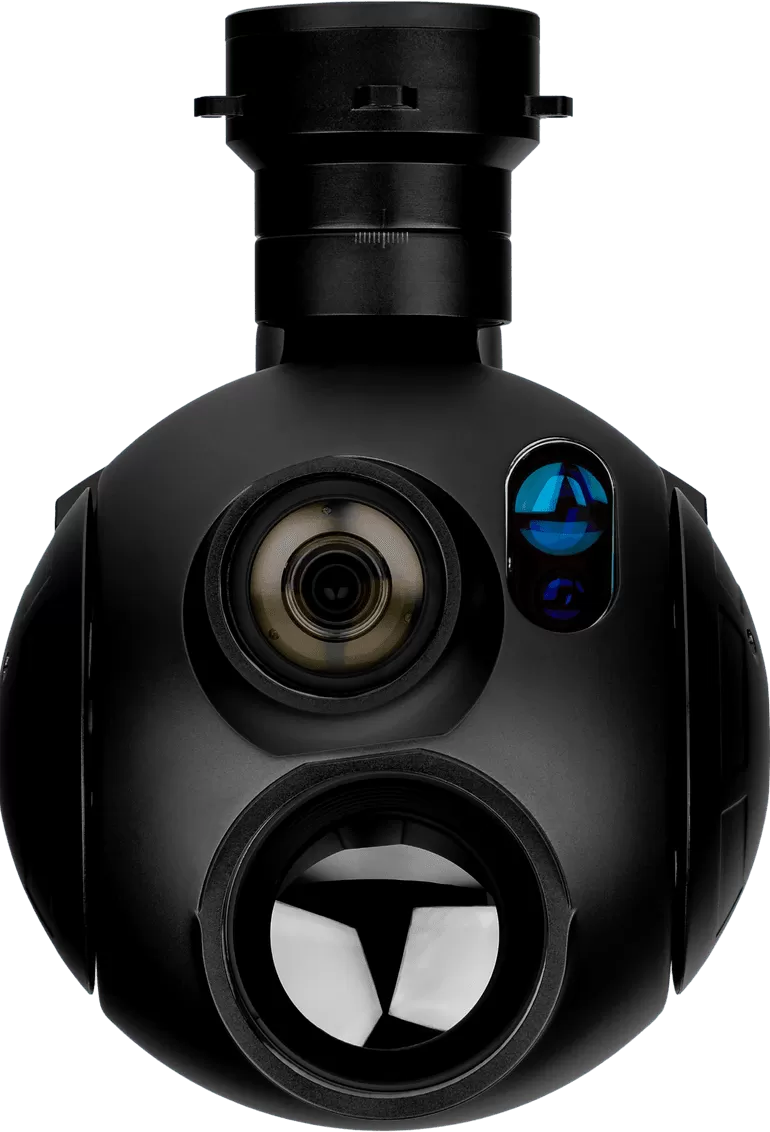
3-axis · EO + IR + LRF
HQ-135TA Stabilised UAV Camera Manufacturer
A 50 mm thermal lens gives the longest thermal reach in the compact range.
- Visible
- 1920 × 1080, 30x zoom 4.3 – 129 mm
- Thermal
- 640 × 512, 50 mm fixed
- Laser
- 15 m – 3 km (± 1 m)
- Weight
- ≤1.5 kg
Fixed, zoom or hybrid: choosing the daylight optic
Three optical approaches, three different jobs. The choice is usually made from the smallest detail the aircraft has to resolve, not from the zoom ratio.
- Fixed 2K — widest field of viewHQ-64DA and HQ-64DB. A 2688 × 1520 sensor on an 8.5 mm lens, or two fixed lenses at 8.5 mm and 25 mm on the 64DB. The simplest optical path and the most coverage per frame, for mapping, survey and situational awareness.See the HQ-64DB →
- Continuous zoom, 10x to 40xHQ-100D and HQ-100T at 10x (4.7 – 47 mm), through to HQ-115S, HQ-135D and HQ-135T at 40x (4.25 – 170 mm). One aircraft surveys an area and then closes in on a detail without changing lens.See the HQ-135T →
- Hybrid 48 MP zoomHQ-95Q. An 8000 × 6000 sensor with continuous zoom from 15.3 mm to 49.7 mm, for the highest pixel count in the compact range at the weight of a 400 g head.See the HQ-95Q →
Compare the range
| Model | Axes | Configuration | Visible camera | Thermal imager | Laser rangefinder | Weight |
|---|---|---|---|---|---|---|
| HQ-64DA | 2-axis | EO + IR | 2688 × 1520, 8.5 mm fixed | 640 × 512, 19 mm fixed | — | ≤260 g |
| HQ-64DB | 2-axis | EO | Dual 2688 × 1520, 8.5 mm + 25 mm | — | — | ≤240 g |
| HQ-85Q | 2-axis | EO + IR + LRF | Dual 1920 × 1080, 8 mm + 25 mm | 640 × 512, 25 mm fixed | 15 m – 3 km (± 1 m) | ≤500 g |
| HQ-95Q | 3-axis | EO + IR + LRF | Dual 8000 × 6000, 9.5 mm + continuous zoom 15.3 – 49.7 mm | 640 × 512, 19 mm fixed | 5 m – 1.5 km (± 1 m) | ≤400 g |
| HQ-100D | 3-axis | EO + IR | 1920 × 1080, 10x zoom 4.7 – 47 mm | 640 × 512, 19 mm fixed | — | ≤800 g |
| HQ-100T | 3-axis | EO + IR + LRF | 1920 × 1080, 10x zoom 4.7 – 47 mm | 640 × 512, 19 mm fixed | 5 m – 1.5 km (± 1 m) | ≤800 g |
| HQ-115S | 3-axis | EO | 1920 × 1080, 40x zoom 4.25 – 170 mm | — | — | ≤1 kg |
| HQ-115D | 3-axis | EO + IR | 1920 × 1080, 30x zoom 4.3 – 129 mm | 640 × 512, 25 mm fixed | — | ≤1 kg |
| HQ-115T | 3-axis | EO + IR + LRF | 1920 × 1080, 30x zoom 4.3 – 129 mm | 640 × 512, 25 mm fixed | 5 m – 1.5 km (± 1 m) | ≤1 kg |
| HQ-125DB | 3-axis | EO + IR | 1920 × 1080, 30x zoom 4.3 – 129 mm | 640 × 512, 35 mm fixed | — | ≤1.1 kg |
| HQ-125TB | 3-axis | EO + IR + LRF | 1920 × 1080, 30x zoom 4.3 – 129 mm | 640 × 512, 35 mm fixed | 15 m – 3 km (± 1 m) | ≤1.2 kg |
| HQ-135D | 3-axis | EO + IR | 1920 × 1080, 40x zoom 4.25 – 170 mm | 640 × 512, 35 mm fixed | — | ≤1.4 kg |
| HQ-135T | 3-axis | EO + IR + LRF | 1920 × 1080, 40x zoom 4.25 – 170 mm | 640 × 512, 35 mm fixed | 15 m – 3 km (± 1 m) | ≤1.4 kg |
| HQ-135TA | 3-axis | EO + IR + LRF | 1920 × 1080, 30x zoom 4.3 – 129 mm | 640 × 512, 50 mm fixed | 15 m – 3 km (± 1 m) | ≤1.5 kg |
Daylight optics above the compact range
The pod series carries the same daylight optics with longer focal lengths and larger apertures, for platforms with a larger payload budget.
- XQ EO/IR Pod Series30x to 55x zoom, including 4K 3840 × 2160 imaging on the 180T.View the range →
- SQ Laser Designator PodsThe same daylight channels on a pod that also carries a laser designator.View the range →
How the daylight optics are specified
Why the lens decides the job
A fixed lens gives the widest field of view and the simplest optical path; a continuous zoom lets one aircraft survey an area and then close in on a detail. At 30x zoom a fraction of a degree of airframe rotation moves the image by hundreds of pixels, so the optical choice and the mount are specified together rather than separately.
Resolution is a system property
An 8000 × 6000 sensor only produces 48 MP of usable detail if the lens resolves it and the mount holds it still. That is why the hybrid channel on the 95Q is specified with the same direct-drive axes and sub-pixel electronic stabilisation as the rest of the range, rather than as a sensor bolted onto a standard head.
Designed and manufactured by HITS
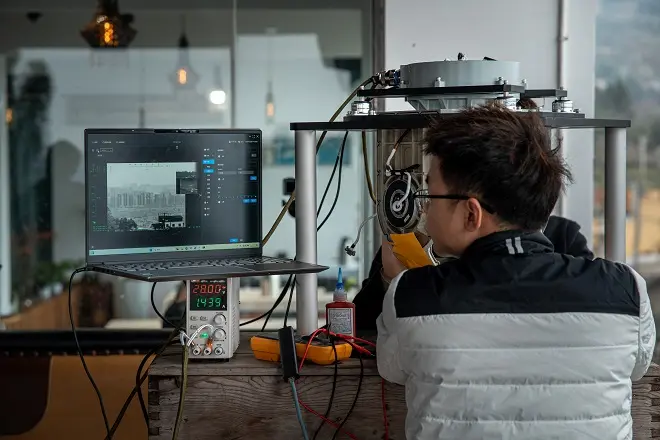
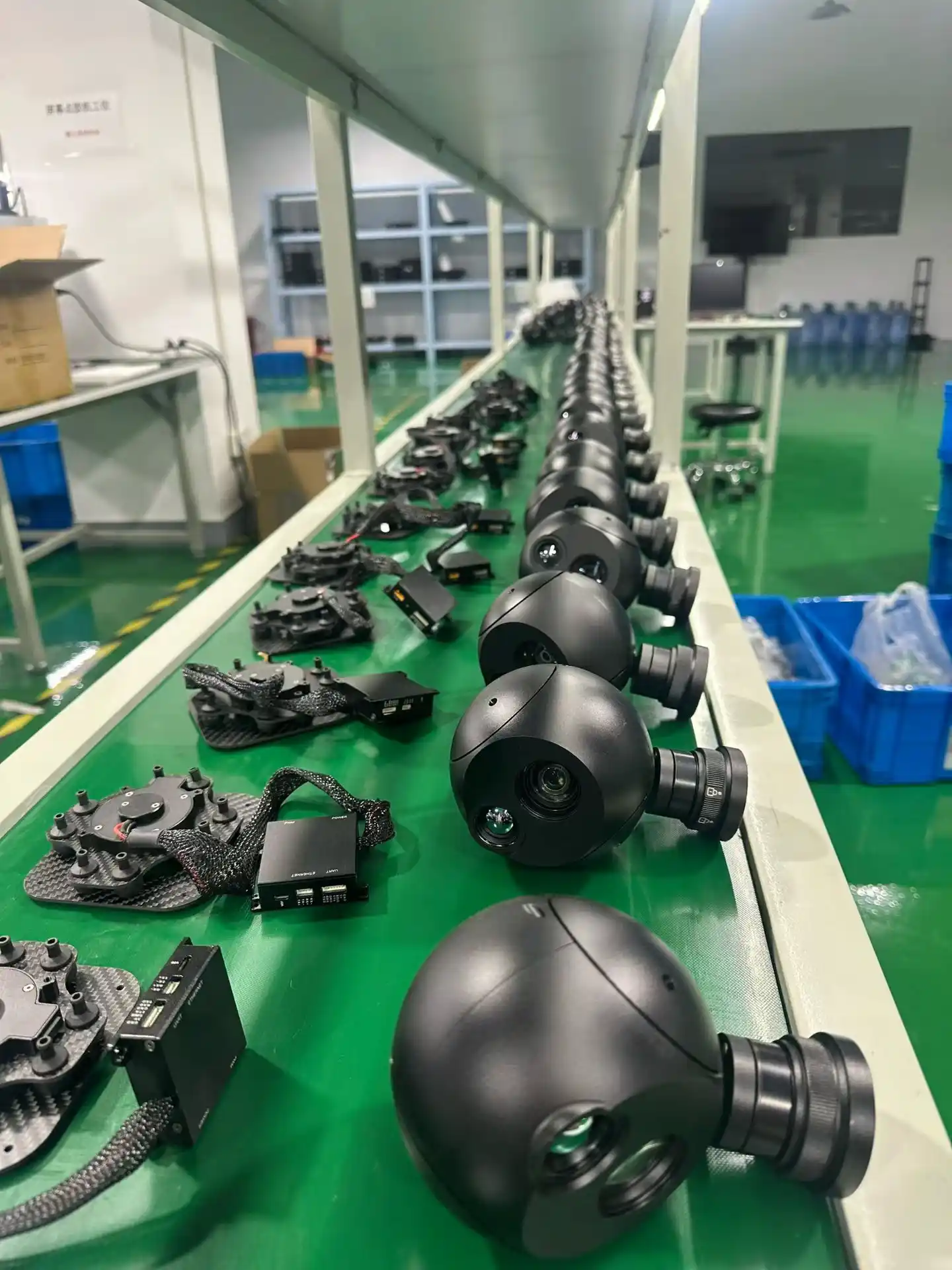
The daylight optics are ground and aligned in house. Lens elements, servo hardware, stabilisation firmware and the AI tracking module are developed by the same team, and each head is focused, boresighted and environmentally tested on our own line before it ships.

Related reading
Adjacent pages, so you can compare the channel you need against the wider range.
- Thermal imaging payloads
The infrared channel that sits alongside the daylight one, and how its lens sets night-time reach.
- Dual-sensor EO/IR heads
Boresighting, fusion and picture-in-picture when both channels fly on one cage.
- Infrared payload integration
Power, video path, control protocol and sealing, specified from the airframe side.
- Quality control
How optics, focus and boresight are verified before a payload leaves the line.
Frequently asked questions
How much zoom do I need on a daylight camera?
Work backwards from the smallest detail you have to read and the distance you have to read it from. A 10x optic (4.7 – 47 mm) covers a site; 30x to 40x (up to 170 mm) reads detail at distance. A high-resolution sensor on a shorter lens can resolve as much as a lower-resolution sensor on a longer one, which is why the 48 MP hybrid head competes across both.
What is a hybrid zoom channel?
A high-resolution sensor combined with continuous optical zoom. The HQ-95Q uses an 8000 × 6000 sensor with zoom from 15.3 mm to 49.7 mm, so the operator can crop into the frame after the flight without losing the detail that was captured.
Does a daylight camera work at night?
Not on its own — that is what the infrared channel is for. Every model carrying a daylight channel here also carries a 640 × 512 or 1280 × 1024 thermal detector on the same boresighted cage, so one head covers both conditions.
Request information or a quotation
Tell us the smallest detail you have to resolve and the distance you have to read it from, and we will specify the focal length. Contact us with your requirements.