





Long Range Drone Camera: Optics, Range and Stabilisation
Focal length, pixel density and jitter budget decide how far a payload can identify
Range is not a single number. A payload that detects movement at five kilometres will identify almost nothing at that distance, and the gap between the two is set by optics, sensor pitch, atmosphere and how still the mount holds the line of sight.
- Focal length to 234 mm
- 55x continuous zoom
- Ranging to 15 km
- 1280 x 1024 thermal
A long distance drone camera is defined by its optics, not by its sensor resolution. Field of view is focal length divided into sensor size, so the same 1920 x 1080 sensor gives a 2.4 degree field on a 129 mm lens and a 0.6 degree field on a 234 mm lens. Everything the operator can resolve at range comes out of that narrow field, and everything the aircraft does to disturb it becomes harder to hold.
That is why a long range drone camera is specified as a system: focal range, detector pitch, stabilisation accuracy and a laser rangefinder that turns the pixel under the reticle into a coordinate. A payload with a long lens and no rangefinder tells the operator what something looks like; a payload with both tells the ground station where it is.
What actually limits range
- Focal length and field of view
The pod class runs from 4.3 mm to 234 mm on the visible channel and to 275 mm on thermal, with 55x continuous zoom on the 225T and 255T. Narrower field, more pixels on target.
- Detector pitch and pixel density
A 12 micrometre thermal pitch and a 1920 x 1080 visible sensor put a different number of pixels on the same object. Instantaneous field of view, not resolution in isolation, is the number that matters.
- Atmospheric transmission
Haze, humidity and heat shimmer scale with distance and are worse in the visible band than in long-wave infrared, which is one reason a thermal channel keeps working when a visible image has washed out.
- Stabilisation and jitter
At 234 mm a 100 microradian error moves the image by more than twenty pixels. Stabilisation accuracy and angular velocity set the practical limit on how far the zoom can be pushed before the image becomes unusable.
- Laser rangefinding
The pod class measures from 50 m out to 15 km with one metre accuracy, which converts a tracked target into a latitude, longitude and altitude for the ground station.
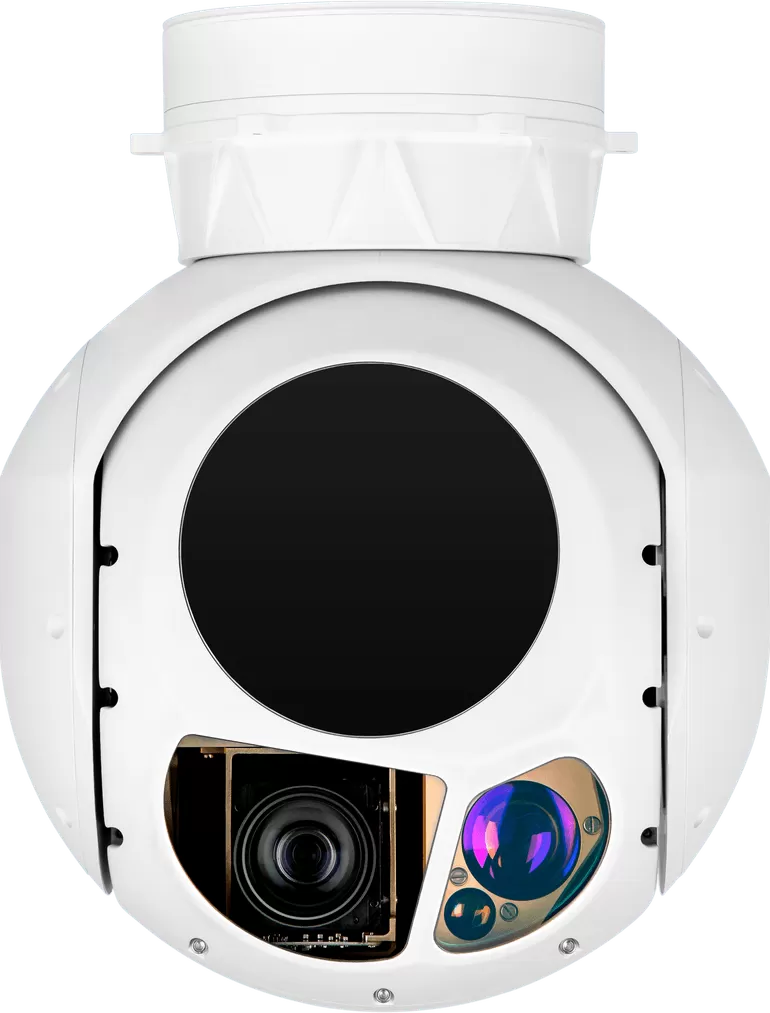
- Pod class turrets
Above roughly four kilograms the payload becomes a two-axis turret with continuous thermal zoom, larger apertures and longer baselines between channels.
Reach by model
Laser range is measured; imaging range depends on the target and the atmosphere, so the last column is a working band rather than a promise.
| Model | Visible zoom | Thermal channel | Laser range | Weight | Typical working band |
|---|---|---|---|---|---|
| HQ-135T | 4.25 – 170 mm, 40x | 640 x 512, 35 mm fixed | 15 m – 3 km | ≤ 1.4 kg | Close to 2 km |
| HQ-135TA | 4.3 – 129 mm, 30x | 640 x 512, 50 mm fixed | 15 m – 3 km | ≤ 1.5 kg | Close to 2.5 km |
| XQ-180T | 6.8 – 120 mm, 17.5x | 1280 x 1024, 75 mm fixed | 50 m – 6 km | ≤ 4.1 kg | 2 – 4 km |
| XQ-200T | 4.3 – 129 mm, 30x | 640 x 512, 40 – 220 mm zoom | 50 m – 9.5 km | ≤ 5 kg | 3 – 6 km |
| XQ-225T | 4.25 – 234 mm, 55x | 640 x 512, 20 – 275 mm zoom | 80 m – 9 km | ≤ 7 kg | 4 – 8 km |
| XQ-254T | 4.3 – 129 mm, 30x | 640 x 512, 40 – 220 mm zoom | 100 m – 15 km | ≤ 10 kg | 6 – 12 km |
| XQ-255T | 4.25 – 234 mm, 55x | 640 x 512, 20 – 120 mm zoom | 80 m – 9.5 km | ≤ 10 kg | 5 – 10 km |
| SQ-290T | 15 – 200 mm, 13x | 640 x 512, 15 – 300 mm zoom | 300 m – 10 km | ≤ 15 kg | 6 – 12 km |
| SQ-330Q | 10 – 300 mm, 30x | Dual 640 x 512, 300 mm + 15 – 330 mm | ≥ 15 km | ≤ 22 kg | 8 – 15 km |
Five pod-class payloads
Two-axis turrets from 4.1 kg to 10 kg with continuous thermal zoom and rangefinders from 6 km to 15 km.
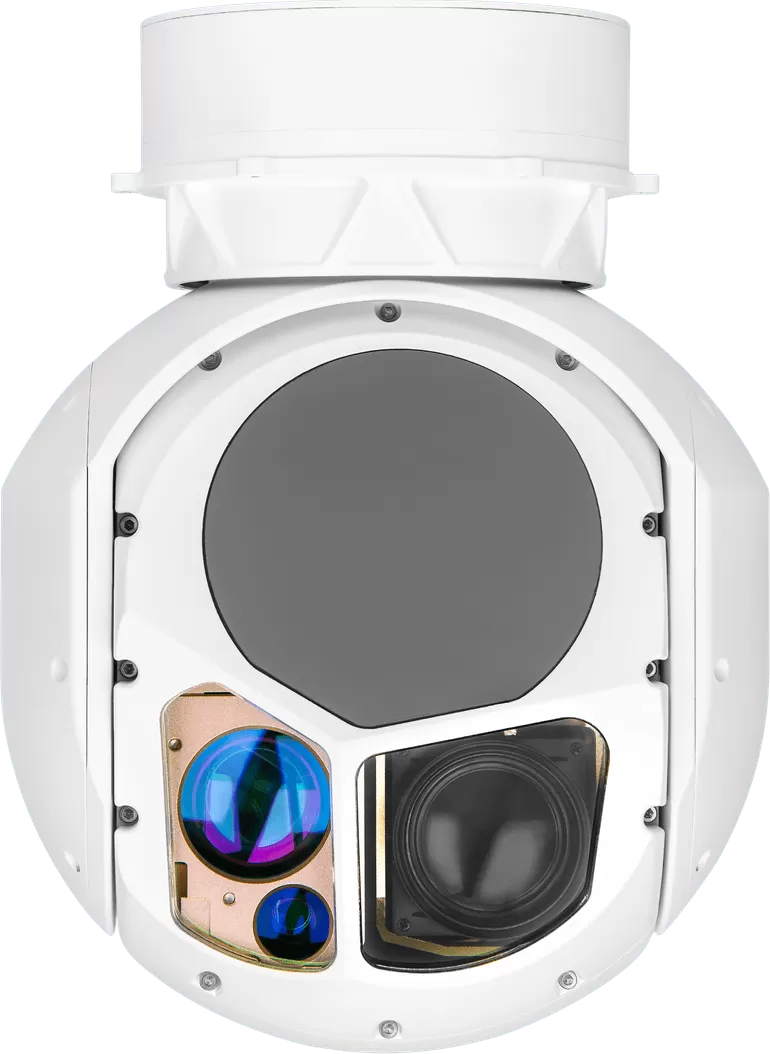
2-axis · EO + IR + LRF
XQ-180T
4K daylight imaging at 3840 × 2160 with 17.5x zoom and 6 km ranging.
- Visible
- 3840 × 2160, 17.5x zoom 6.8 – 120 mm
- Thermal
- 1280 × 1024, 75 mm fixed
- Laser
- 50 m – 6 km (± 1 m)
- Weight
- ≤4.1 kg
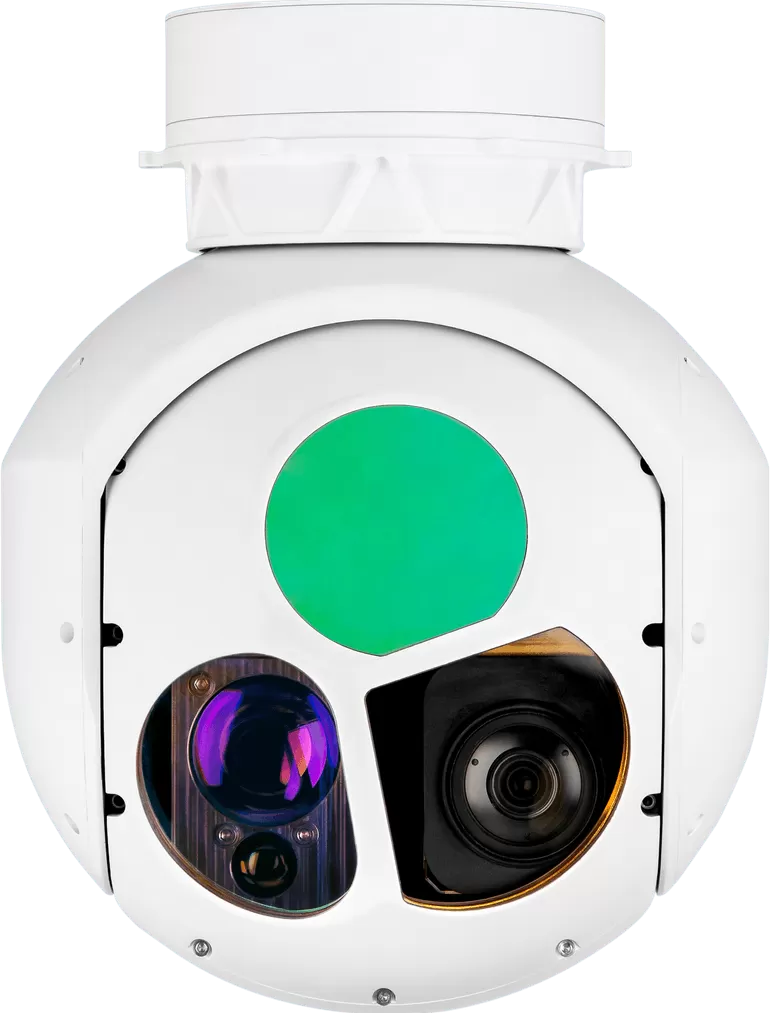
2-axis · EO + IR + LRF
XQ-200T
A continuous-zoom thermal channel from 40 mm to 220 mm plus 9.5 km ranging on a 5 kg pod.
- Visible
- 1920 × 1080, 30x zoom 4.3 – 129 mm
- Thermal
- 640 × 512, continuous zoom 40 – 220 mm
- Laser
- 50 m – 9.5 km (± 1 m)
- Weight
- ≤5 kg
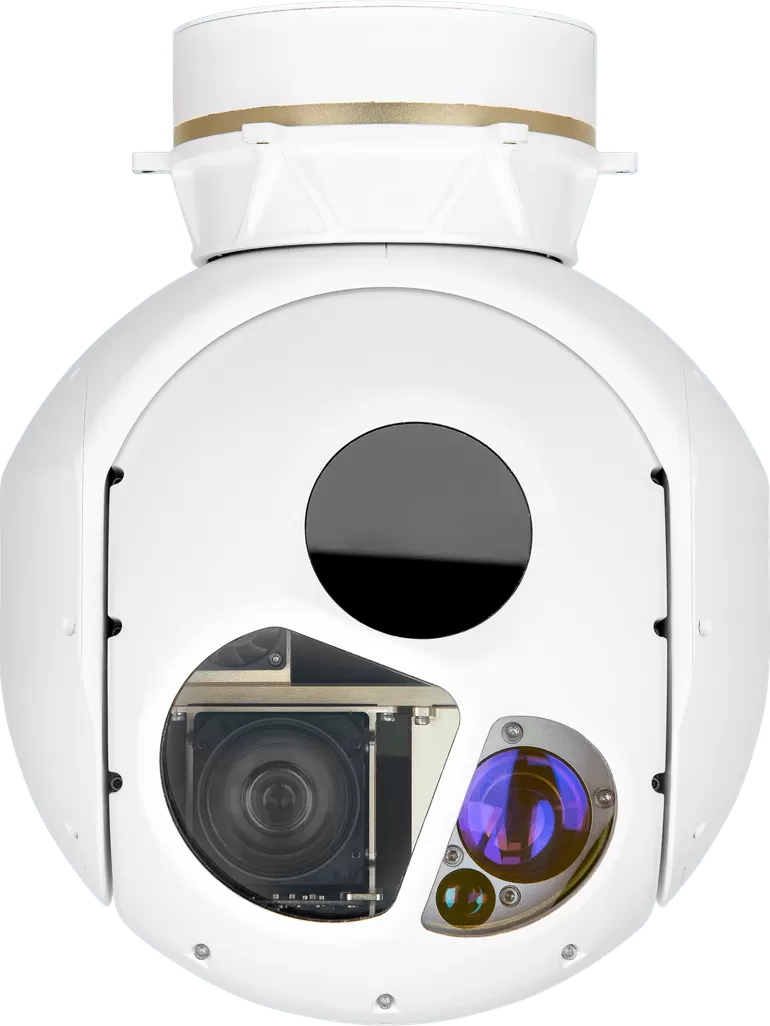
2-axis · EO + IR + LRF
XQ-225T
55x daylight zoom and a 275 mm thermal reach for identification at the edge of the envelope.
- Visible
- 1920 × 1080, 55x zoom 4.25 – 234 mm
- Thermal
- 640 × 512, continuous zoom 20 – 275 mm
- Laser
- 80 m – 9 km (± 1 m)
- Weight
- ≤7 kg
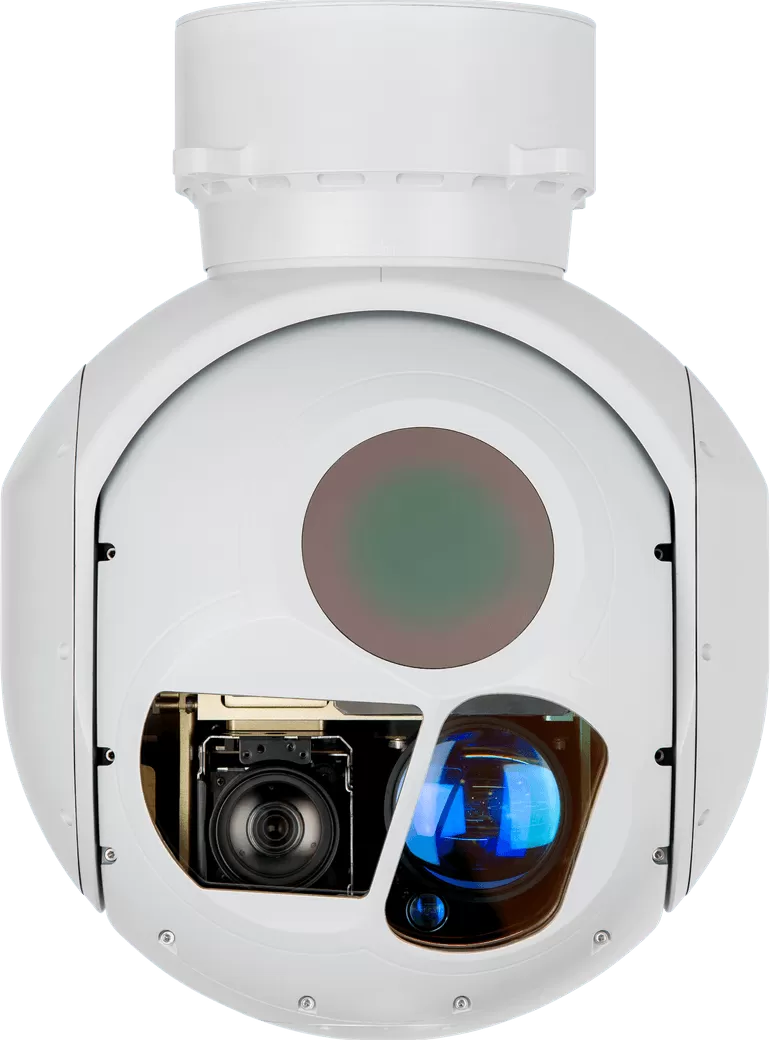
2-axis · EO + IR + LRF
XQ-254T
The long-range pod: 15 km ranging and a 254 mm turret for maritime and border patrol aircraft.
- Visible
- 1920 × 1080, 30x zoom 4.3 – 129 mm
- Thermal
- 640 × 512, continuous zoom 40 – 220 mm
- Laser
- 100 m – 15 km (± 1 m)
- Weight
- ≤10 kg
2-axis · EO + IR + LRF
XQ-255T
55x daylight zoom with dual continuous-zoom optics for the largest airframes in the range.
- Visible
- 1920 × 1080, 55x zoom 4.25 – 234 mm
- Thermal
- 640 × 512, continuous zoom 20 – 120 mm
- Laser
- 80 m – 9.5 km (± 1 m)
- Weight
- ≤10 kg
Compare the range
| Model | Axes | Configuration | Visible camera | Thermal imager | Laser rangefinder | Weight |
|---|---|---|---|---|---|---|
| XQ-180T | 2-axis | EO + IR + LRF | 3840 × 2160, 17.5x zoom 6.8 – 120 mm | 1280 × 1024, 75 mm fixed | 50 m – 6 km (± 1 m) | ≤4.1 kg |
| XQ-200T | 2-axis | EO + IR + LRF | 1920 × 1080, 30x zoom 4.3 – 129 mm | 640 × 512, continuous zoom 40 – 220 mm | 50 m – 9.5 km (± 1 m) | ≤5 kg |
| XQ-225T | 2-axis | EO + IR + LRF | 1920 × 1080, 55x zoom 4.25 – 234 mm | 640 × 512, continuous zoom 20 – 275 mm | 80 m – 9 km (± 1 m) | ≤7 kg |
| XQ-254T | 2-axis | EO + IR + LRF | 1920 × 1080, 30x zoom 4.3 – 129 mm | 640 × 512, continuous zoom 40 – 220 mm | 100 m – 15 km (± 1 m) | ≤10 kg |
| XQ-255T | 2-axis | EO + IR + LRF | 1920 × 1080, 55x zoom 4.25 – 234 mm | 640 × 512, continuous zoom 20 – 120 mm | 80 m – 9.5 km (± 1 m) | ≤10 kg |
How to read a range claim
Detection, recognition and identification are three different numbers
The same optics that tell an operator there is a vehicle at six kilometres may only identify it at one and a half. When a specification sheet gives one range figure, ask which of the three it refers to, and ask what target size it assumes, because a range quoted for a truck is not valid for a person.
Sensor and lens have to be matched
- A long lens on a low-resolution detector produces a soft image with no more information than a shorter lens.
- A high-resolution detector on a short lens wastes pixels on a field wider than the mission needs.
- Instantaneous field of view, expressed in milliradians or microradians, is the honest comparison between two payloads.
Ranging is not imaging
A 15 km rangefinder measures distance to a cooperative, reflective target in clear air. It does not promise a 15 km image, and treating the two as the same figure is the most common mistake in payload selection.
Related pages
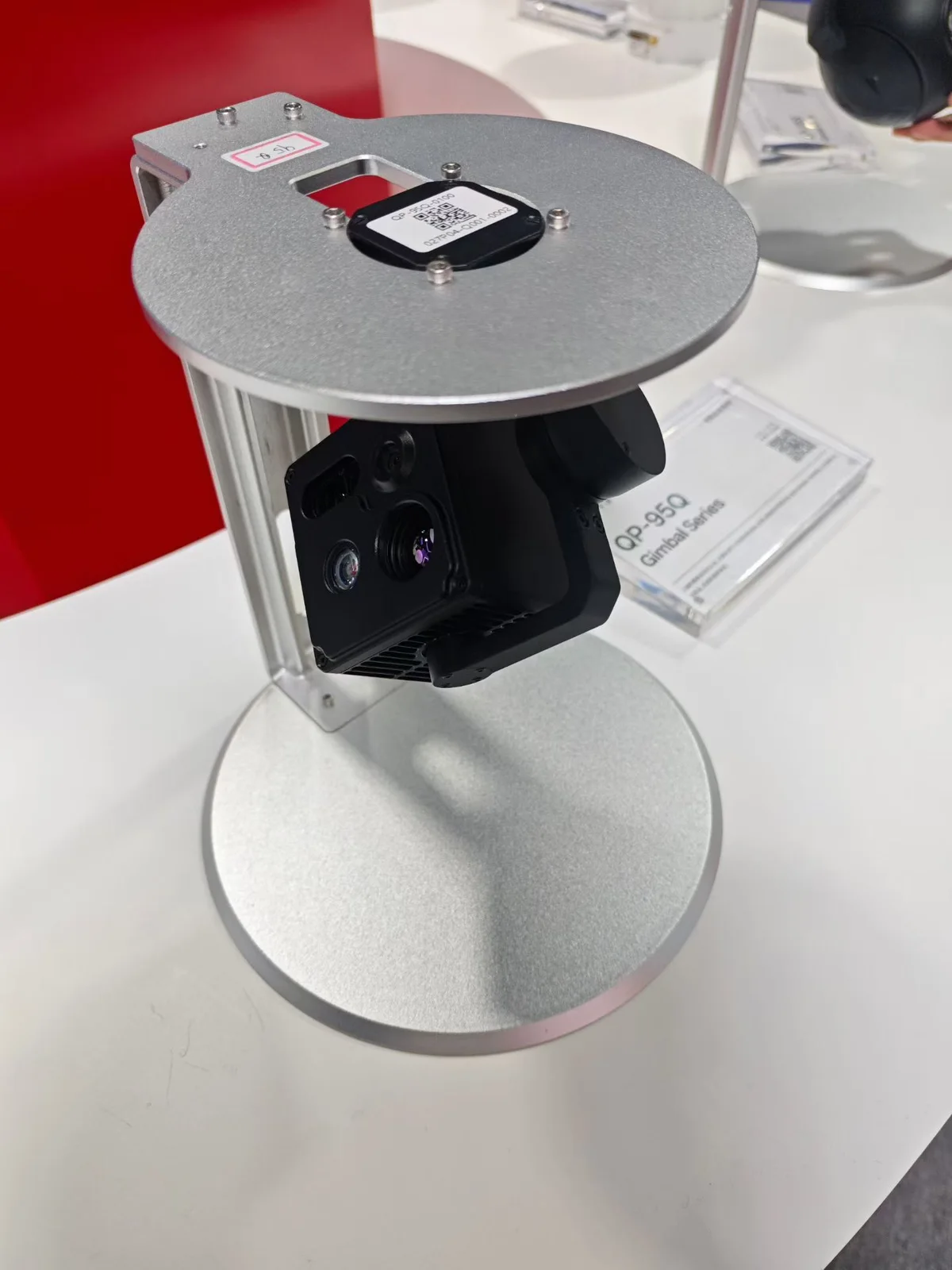
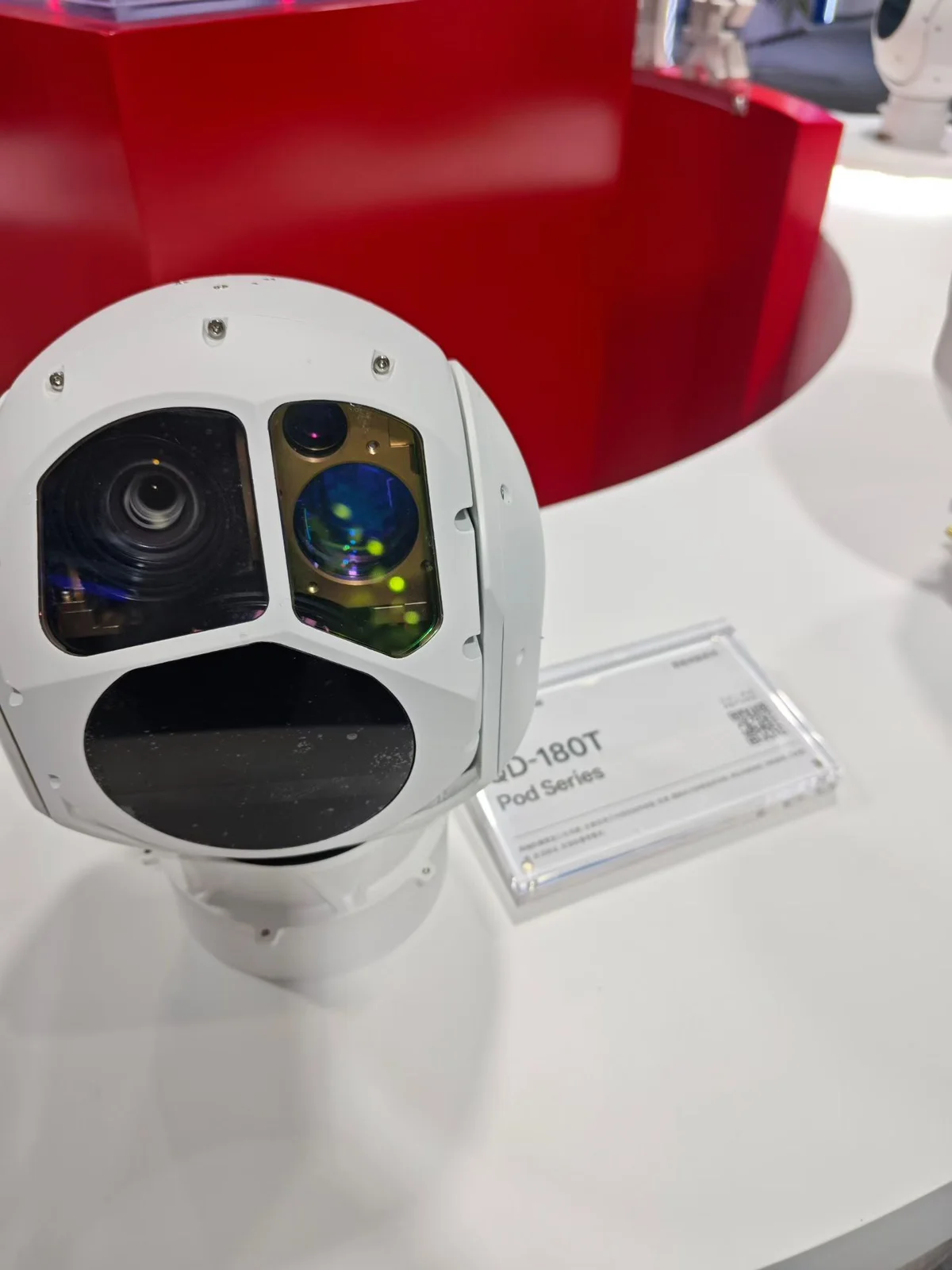
Range problems are usually solved with the pod class or with a longer thermal lens.
- EO/IR pod systemsEight turrets from 1.6 kg to 10 kg with ranging to 15 km.Read more →
- Gimbal camerasFifteen heads up to 1.5 kg with 40x zoom and 3 km ranging.Read more →
- Night visionThermal and low-light channels for after dark.Read more →
- AI trackingHolding a target once it has been found.Read more →
Engineering detail
Why the pod class exists
Above about four kilograms the payload stops being a camera head and becomes a turret: larger apertures, continuous thermal zoom rather than a fixed lens, longer rangefinder baselines and the structural stiffness to hold a 234 mm lens still. The XQ series exists because a multirotor flying a long-lens mission needs a mount that does not flex.
Where the jitter budget comes from
Airframe vibration, servo torque ripple, encoder quantisation and cable stiffness all inject error into the same loop. Publishing stabilisation accuracy next to angular velocity lets an integrator compare payloads on the terms that decide whether the image holds at full zoom.
Atmosphere is part of the system
Long-wave infrared cuts through haze and smoke better than the visible band, which is why long-range identification is usually done on the thermal channel and confirmed on the visible one once the aircraft is closer.
Designed and manufactured by HITS
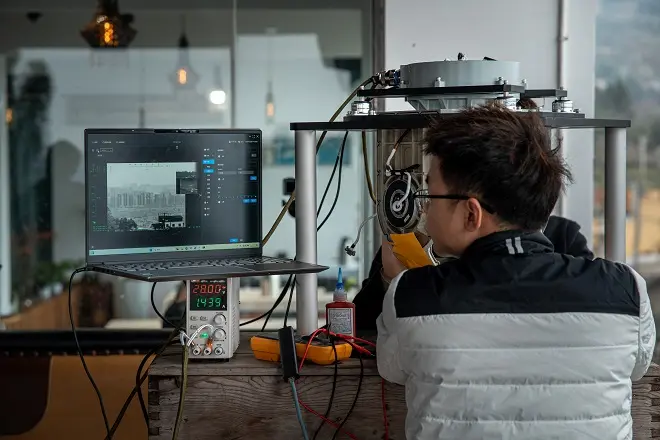
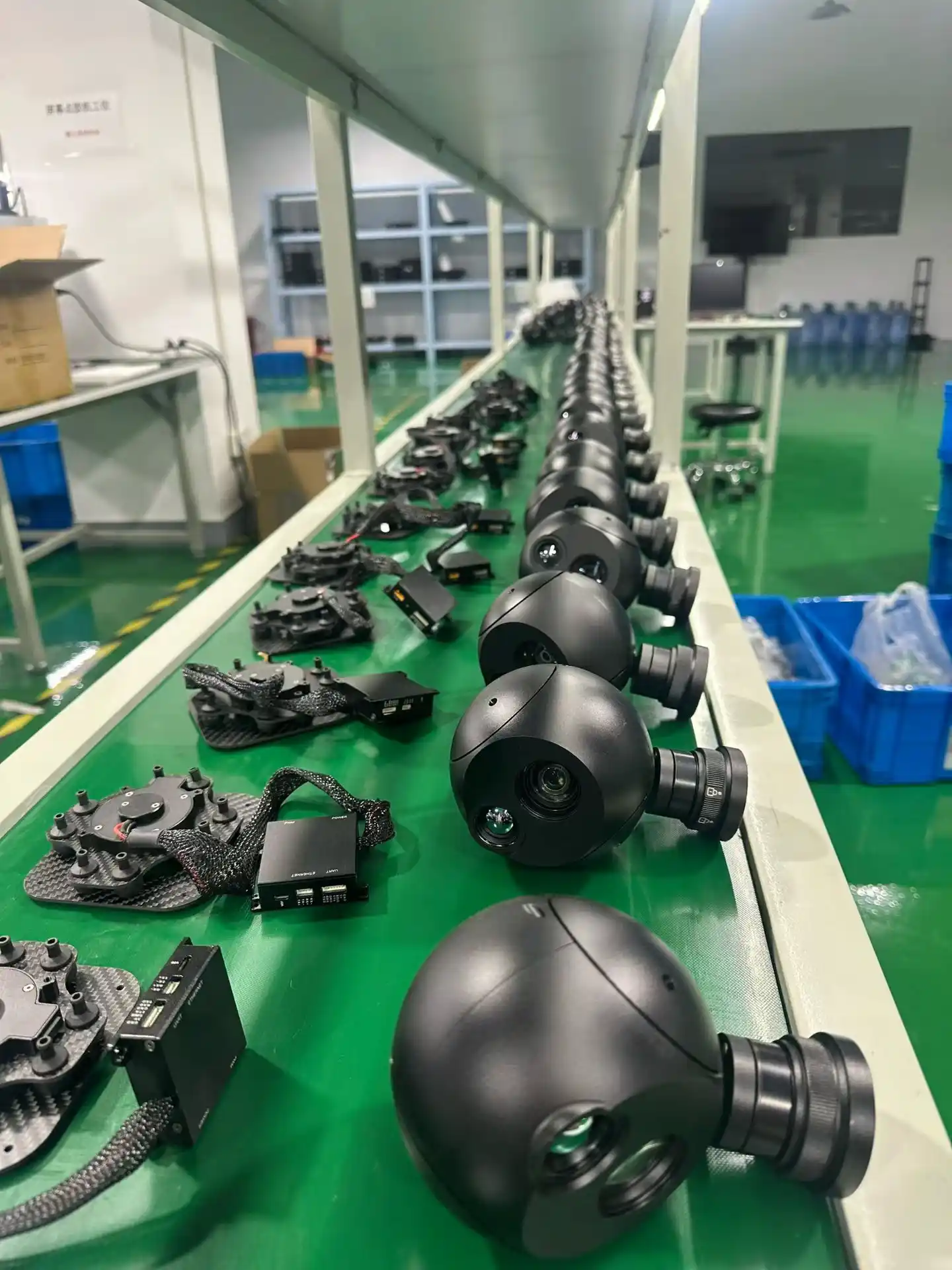
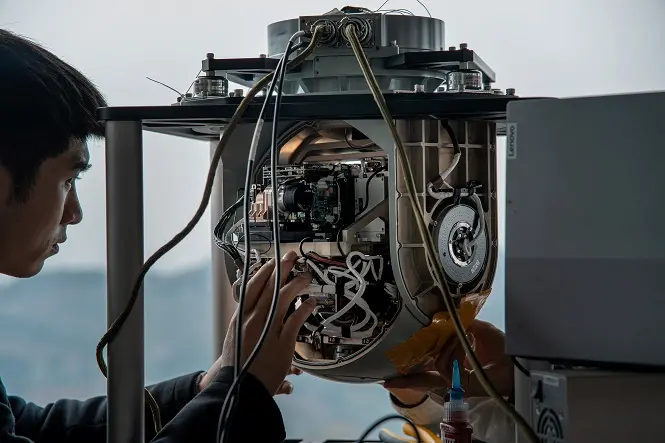
Optics, servo hardware, stabilisation firmware and the AI tracking module are developed in house, and every unit is assembled, calibrated and environmentally tested on our own line before it ships.

Request information or a quotation
Tell us the target, the stand-off distance and the platform, and we will confirm the optics. Contact us with your requirements.