





Drone Inspection Camera: Asset and Structure Surveys
Close-range detail on structures, assets and installations
Inspection is the opposite of surveillance. The aircraft is close, the object is stationary, and the question is not where something is but what condition it is in.
- Up to 48 MP stills
- 30x – 40x zoom
- Stabilised video
- Thermal for defects
A uav inspection camera is judged on detail. A 1920 x 1080 video frame at 30x zoom shows an operator what to look at; a high-resolution still of the same area is what an engineer measures from. That is why inspection work often pairs a zoom channel for finding with a high-pixel-count channel for recording, and why the mount has to hold a narrow field steady against rotor wash and gusting.
Structural, electrical and mechanical inspections add a thermal requirement: a loose connection, a blocked cooling path or a delaminated section shows up as a temperature difference long before it shows as visible damage. For a drone inspection camera working on live assets, the thermal and visible channels need to be boresighted so the same frame shows both the defect and its location.
What inspection work demands
- High-resolution stills
The 95Q carries an 8000 x 6000 visible sensor, and the wider range covers 2688 x 1520 and 4K channels, so the image an engineer measures from has enough pixels.
- Zoom to find, wide to frame
A 10x to 40x zoom channel locates the area of interest; the operator then frames it properly for the still.
- Thermal for defects
A 640 x 512 channel at 40 mK or better picks up loose connections, insulation faults and moisture behind a surface that looks intact.
- Stability close to structure
Inspection flights happen at a few metres from a wall, a blade or a pylon, where air disturbed by the structure is worst. Direct-drive axes and accurate encoding keep the frame usable.
- Geotagged imagery
Frames carry time and position so each defect can be located again, and again after the repair.
- Small, light airframes
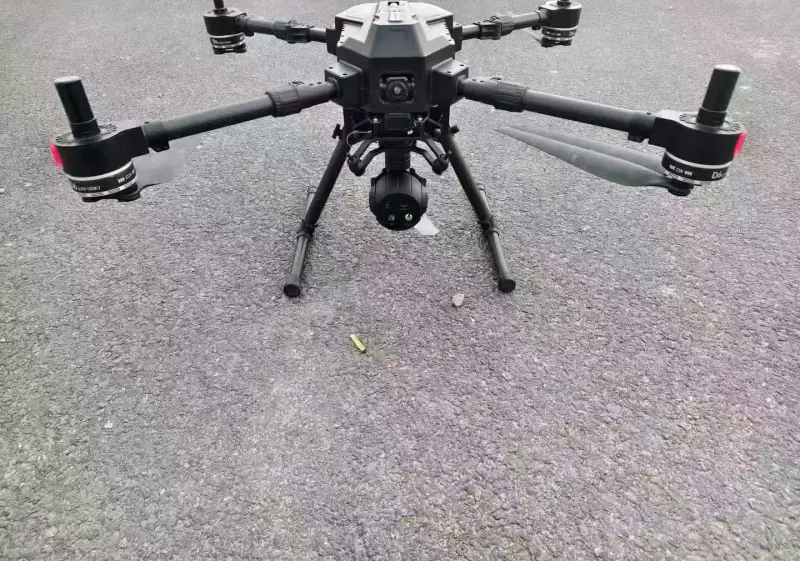
Most inspection work uses a quadcopter. The 240 g to 500 g class exists for exactly this profile, with the mid class for long-lens work. An inspection uav camera that is carried by hand between sites rarely exceeds a kilogram.
Inspection payloads by task
The task decides whether the priority is pixels, zoom or thermal sensitivity.
| Inspection task | Suggested model | Visible channel | Thermal | Weight |
|---|---|---|---|---|
| General structure survey | HQ-64DB | Dual 2688 x 1520, 8.5 mm + 25 mm | – | ≤ 240 g |
| High-resolution stills | HQ-95Q | 8000 x 6000 with 15.3 – 49.7 mm zoom | 640 x 512, 19 mm | ≤ 400 g |
| Long-range visual detail | HQ-115S | 1920 x 1080, 40x zoom | – | ≤ 1 kg |
| Electrical and thermal defects | HQ-115D | 1920 x 1080, 30x zoom | 640 x 512, 25 mm | ≤ 1 kg |
| Defect location with distance | HQ-115T | 1920 x 1080, 30x zoom | 640 x 512, 25 mm | ≤ 1 kg, plus 1.5 km ranging |
| Long thermal lens for detail | HQ-135TA | 1920 x 1080, 30x zoom | 640 x 512, 50 mm | ≤ 1.5 kg |
Five inspection payloads
All five are three-axis or two-axis heads under 1 kg, sized for the quadcopters inspection teams actually fly.
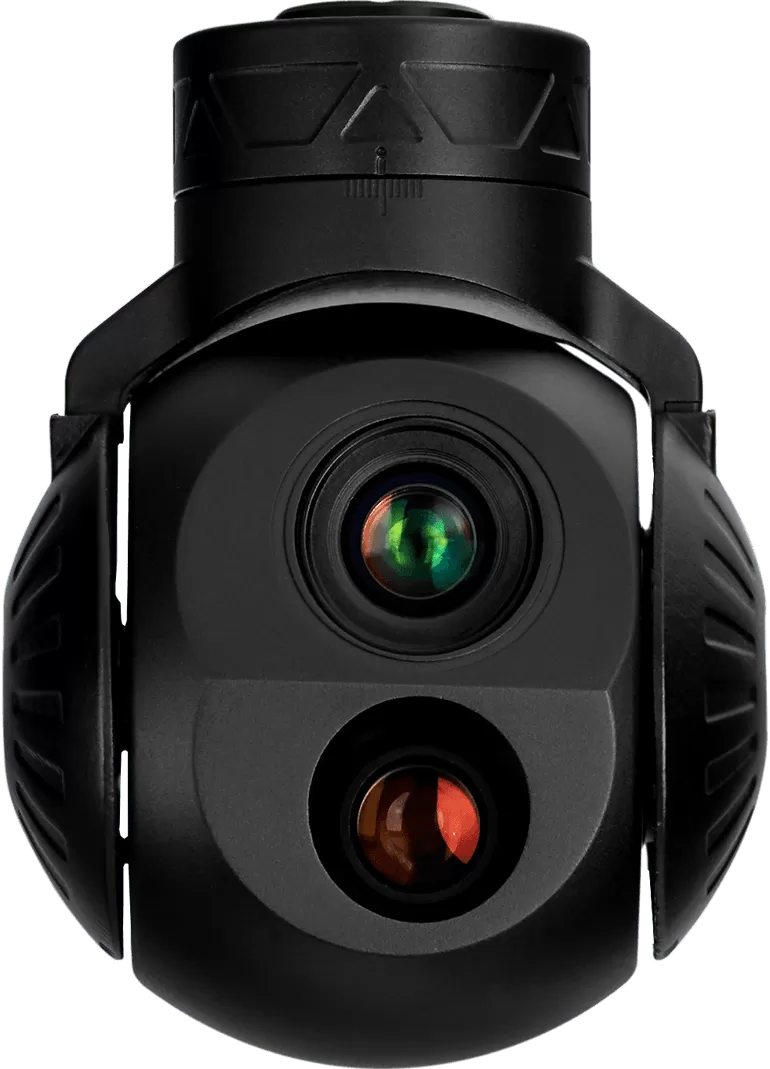
2-axis · EO
HQ-64DB
Two fixed visible cameras — a wide and a narrow channel — at the lowest weight in the series.
- Visible
- Dual 2688 × 1520, 8.5 mm + 25 mm
- Thermal
- —
- Laser
- —
- Weight
- ≤240 g
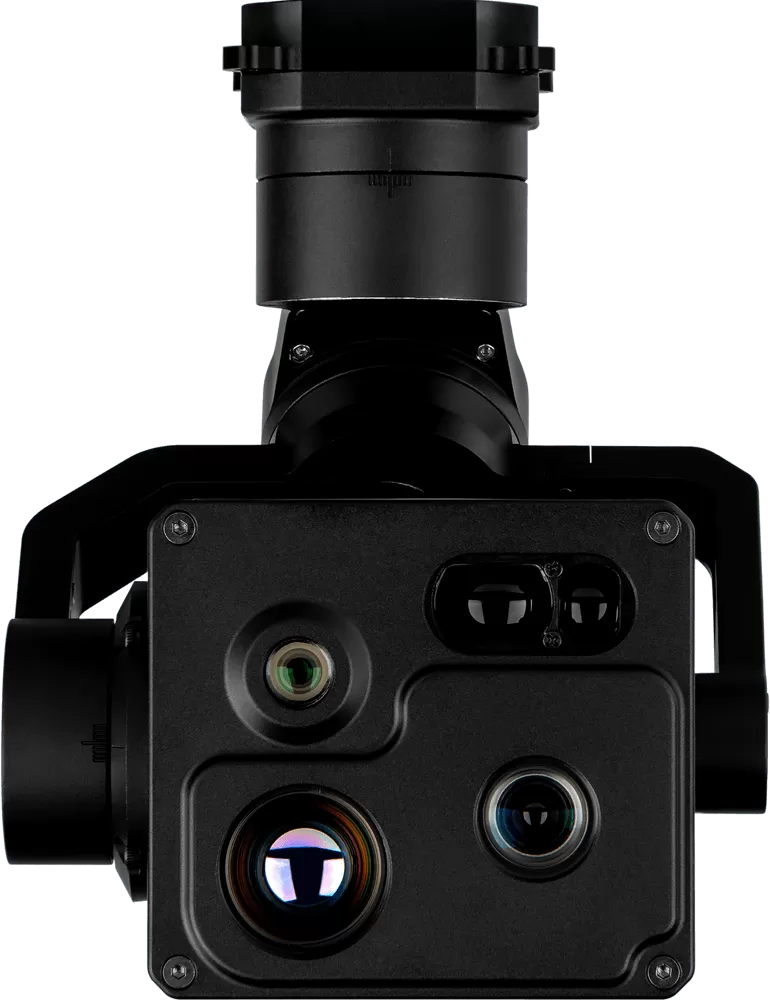
3-axis · EO + IR + LRF
HQ-95Q
Four optical channels and a quick-release mount on the lightest three-axis head we build.
- Visible
- Dual 8000 × 6000, 9.5 mm + continuous zoom 15.3 – 49.7 mm
- Thermal
- 640 × 512, 19 mm fixed
- Laser
- 5 m – 1.5 km (± 1 m)
- Weight
- ≤400 g
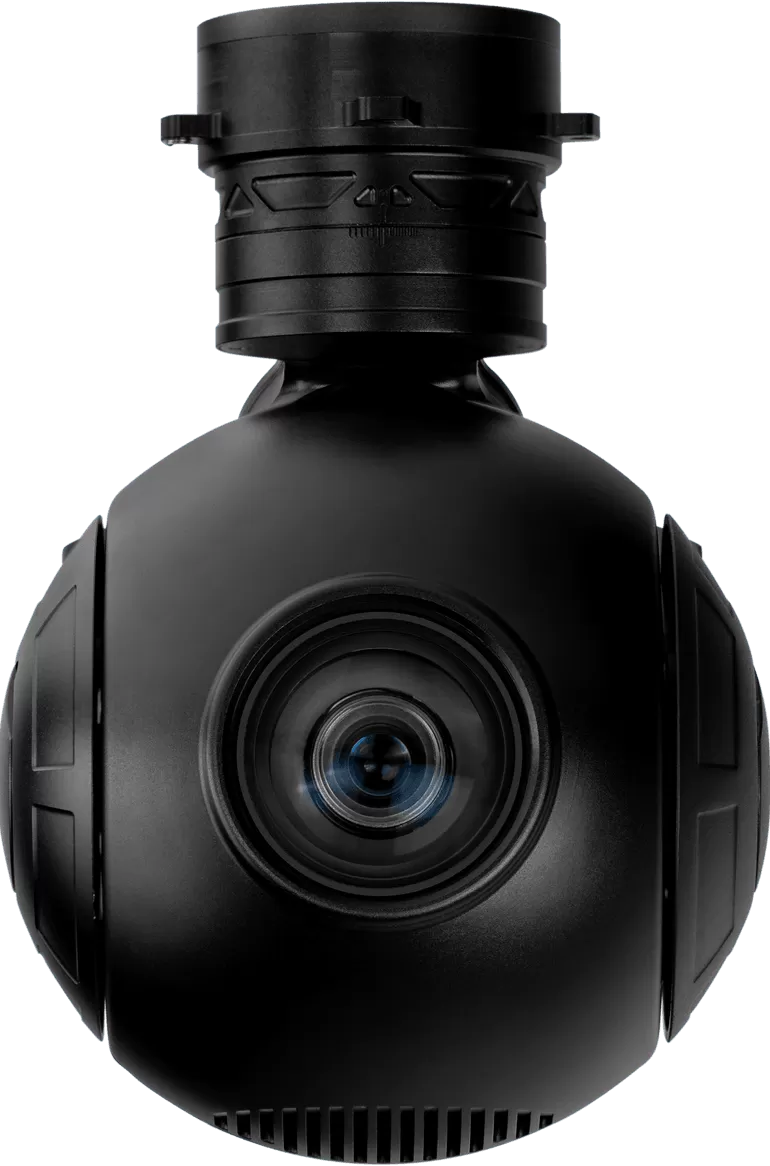
3-axis · EO
HQ-115S
A 40x daylight optic alone, for daylight-only surveillance where the weight budget rules out a thermal channel.
- Visible
- 1920 × 1080, 40x zoom 4.25 – 170 mm
- Thermal
- —
- Laser
- —
- Weight
- ≤1 kg
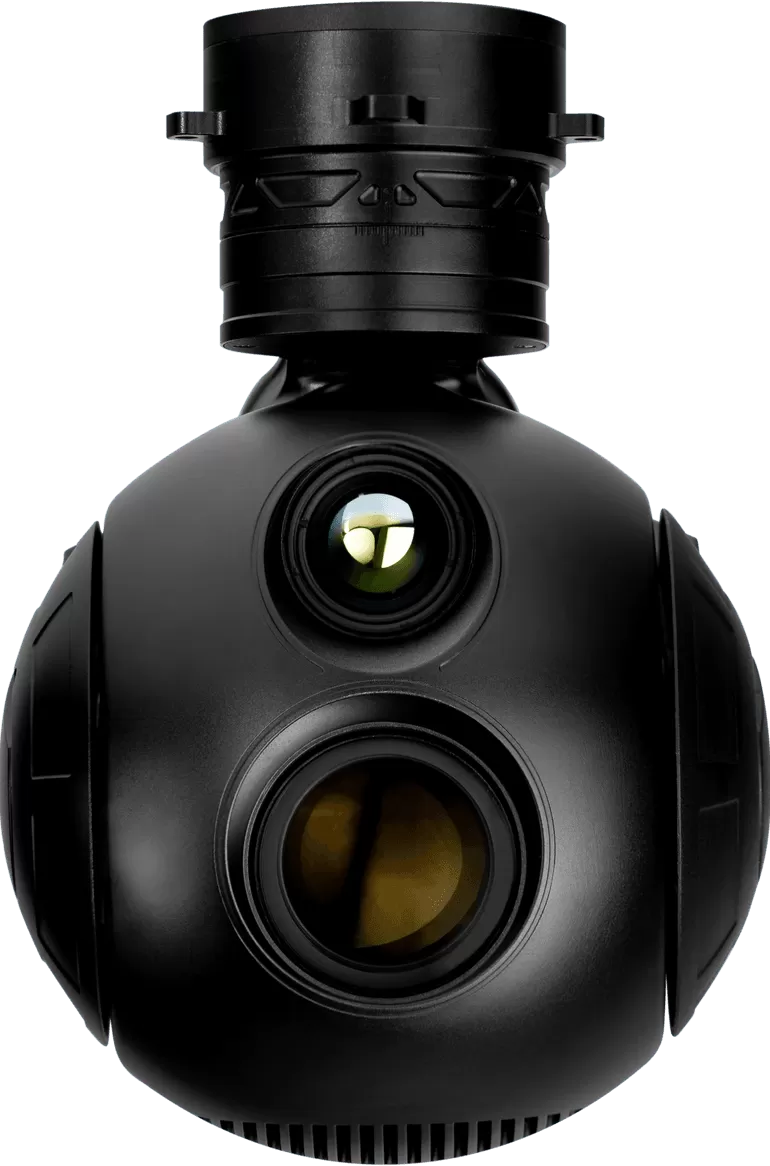
3-axis · EO + IR
HQ-115D
30x zoom and thermal imaging on a one-kilogram head with no ranging requirement.
- Visible
- 1920 × 1080, 30x zoom 4.3 – 129 mm
- Thermal
- 640 × 512, 25 mm fixed
- Laser
- —
- Weight
- ≤1 kg
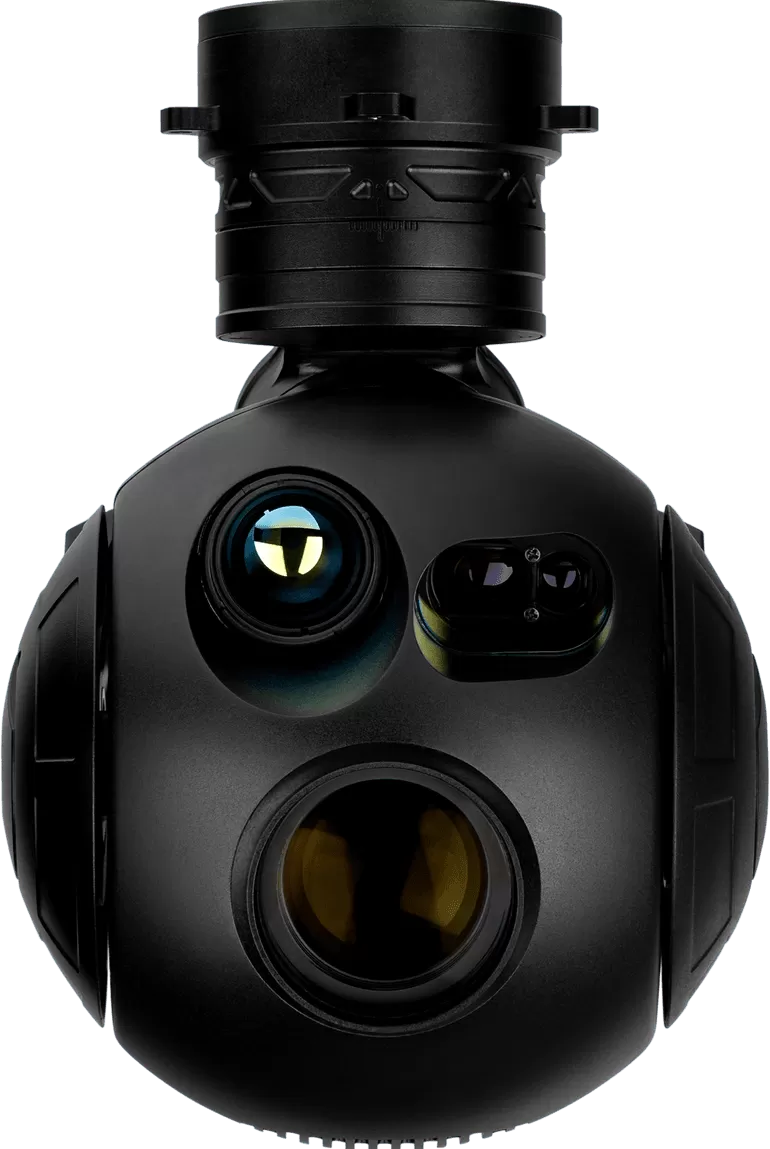
3-axis · EO + IR + LRF
HQ-115T
The one-kilogram workhorse: 30x zoom, thermal imaging and a 1.5 km rangefinder.
- Visible
- 1920 × 1080, 30x zoom 4.3 – 129 mm
- Thermal
- 640 × 512, 25 mm fixed
- Laser
- 5 m – 1.5 km (± 1 m)
- Weight
- ≤1 kg
Compare the range
| Model | Axes | Configuration | Visible camera | Thermal imager | Laser rangefinder | Weight |
|---|---|---|---|---|---|---|
| HQ-64DB | 2-axis | EO | Dual 2688 × 1520, 8.5 mm + 25 mm | — | — | ≤240 g |
| HQ-95Q | 3-axis | EO + IR + LRF | Dual 8000 × 6000, 9.5 mm + continuous zoom 15.3 – 49.7 mm | 640 × 512, 19 mm fixed | 5 m – 1.5 km (± 1 m) | ≤400 g |
| HQ-115S | 3-axis | EO | 1920 × 1080, 40x zoom 4.25 – 170 mm | — | — | ≤1 kg |
| HQ-115D | 3-axis | EO + IR | 1920 × 1080, 30x zoom 4.3 – 129 mm | 640 × 512, 25 mm fixed | — | ≤1 kg |
| HQ-115T | 3-axis | EO + IR + LRF | 1920 × 1080, 30x zoom 4.3 – 129 mm | 640 × 512, 25 mm fixed | 5 m – 1.5 km (± 1 m) | ≤1 kg |
Getting a usable inspection record
Still or video, and why both
Video is how the operator searches; stills are what the engineer measures. A payload that can capture a full-resolution still without leaving the video stream lets one pass produce both, which halves flight time on a large structure.
What makes a frame usable
- Enough resolution on the defect, which is a function of zoom, sensor and stand-off distance together.
- A stable frame: motion blur at 30x ruins a still that would otherwise be perfect.
- A reference point in the frame, so the defect can be found again on the structure.
- Time, position and, where fitted, a range measurement attached to the file.
Thermal changes the schedule
Thermal inspection of electrical assets works best with the asset under load and with a known ambient temperature, because the defect is a difference rather than an absolute reading. Planning the flight around the load cycle is usually worth more than a better detector.
Related pages
Inspection payloads sit in the light and mid classes.
- Gimbal camerasThe full HQ range from 240 g to 1.5 kg.Read more →
- EO camerasVisible-light channels from 2K to 48 MP.Read more →
- Thermal camerasThermal configurations for defect detection.Read more →
- UAV securityThe same payloads on a security mission.Read more →
Engineering detail
Why the mount matters more than the sensor
At three metres from a wall, rotor wash and gusting move the line of sight more than any deficit in the sensor. Encoder resolution and loop rate are what keep a 30x frame still enough to record, and they are the reason an inspection payload cannot simply be a camera on a servo.
Resolution is a system property
Pixels on target come from sensor resolution, focal length and stand-off distance together. A 8000 x 6000 sensor on a wide lens and a 1920 x 1080 sensor on a long lens can put the same number of pixels on a defect, and the two behave very differently in wind.
The link can stay on the ground
Inspection is close-range work, so a high-bandwidth link is easy. That makes onboard recording less critical than in surveillance work, and makes a clean, high-bitrate stream the more useful feature.
Recorded payload footage
Three clips taken from the payload video feed on offshore inspection work: a wide survey, a close inspection pass and a zoomed detail check.
Designed and manufactured by HITS
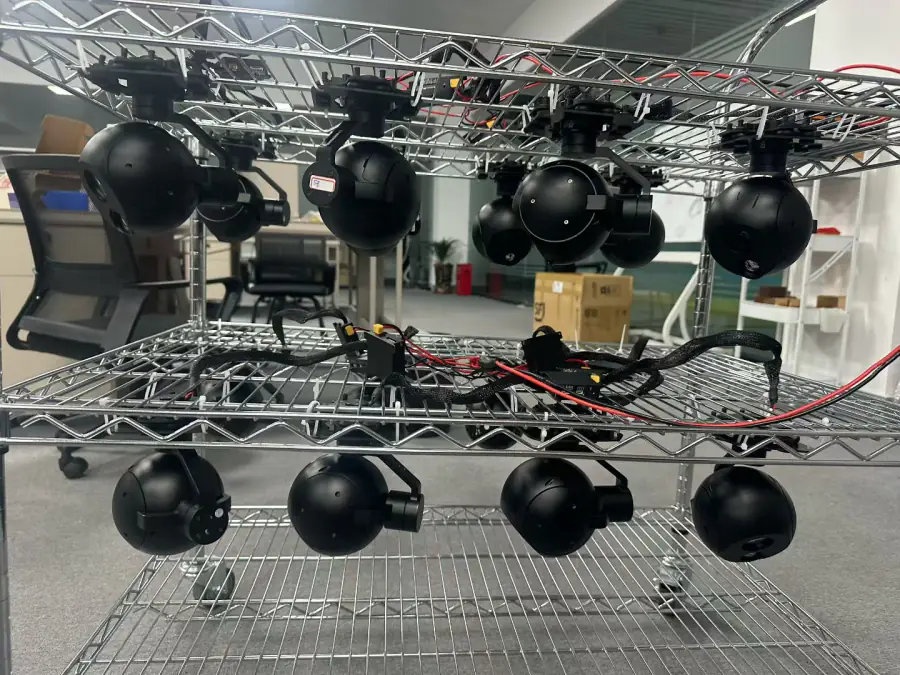
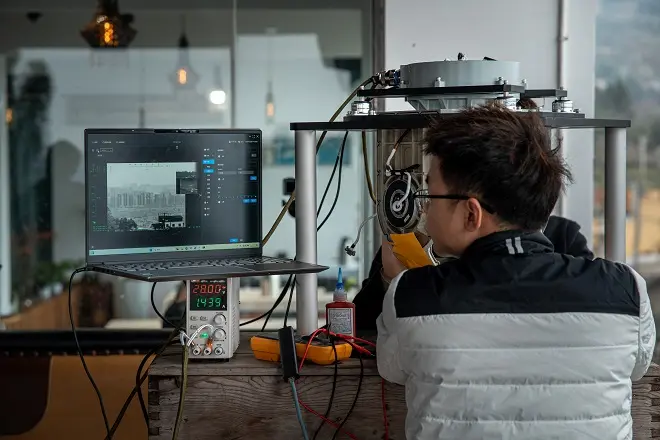
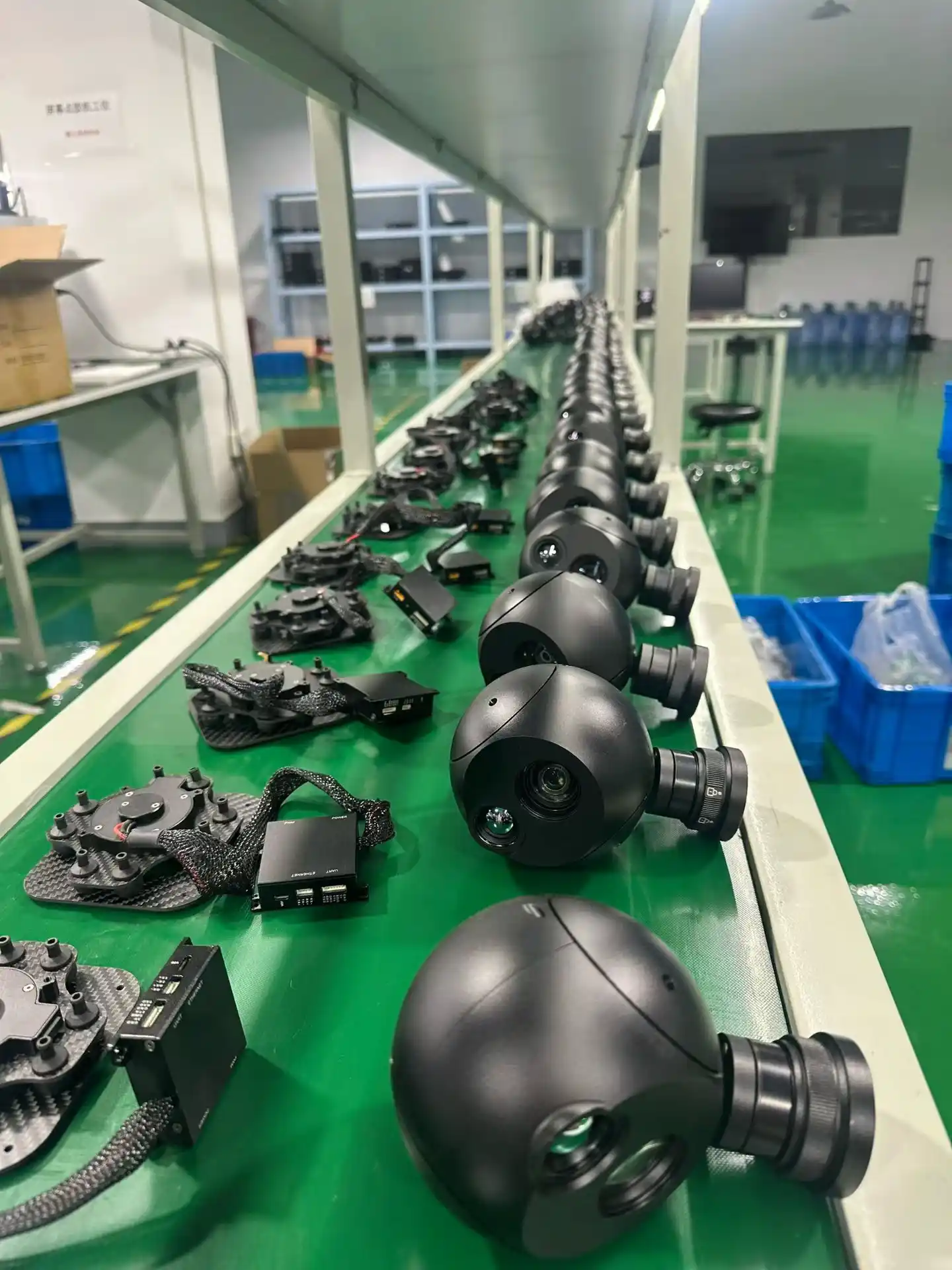
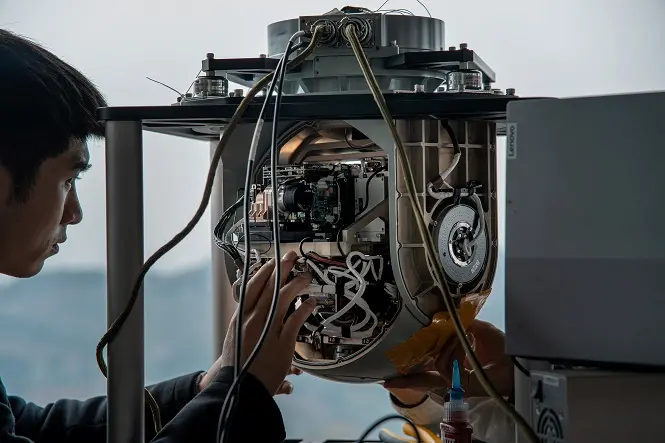
Optics, servo hardware, stabilisation firmware and the AI tracking module are developed in house, and every unit is assembled, calibrated and environmentally tested on our own line before it ships.

Request information or a quotation
Tell us what you are inspecting and at what stand-off distance and we will confirm the optics. Contact us with your requirements.