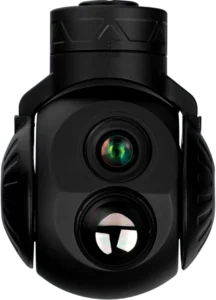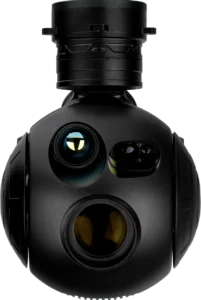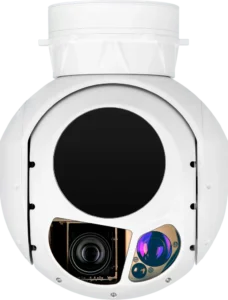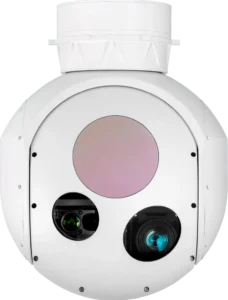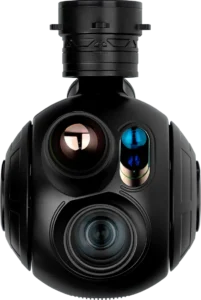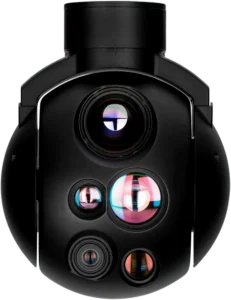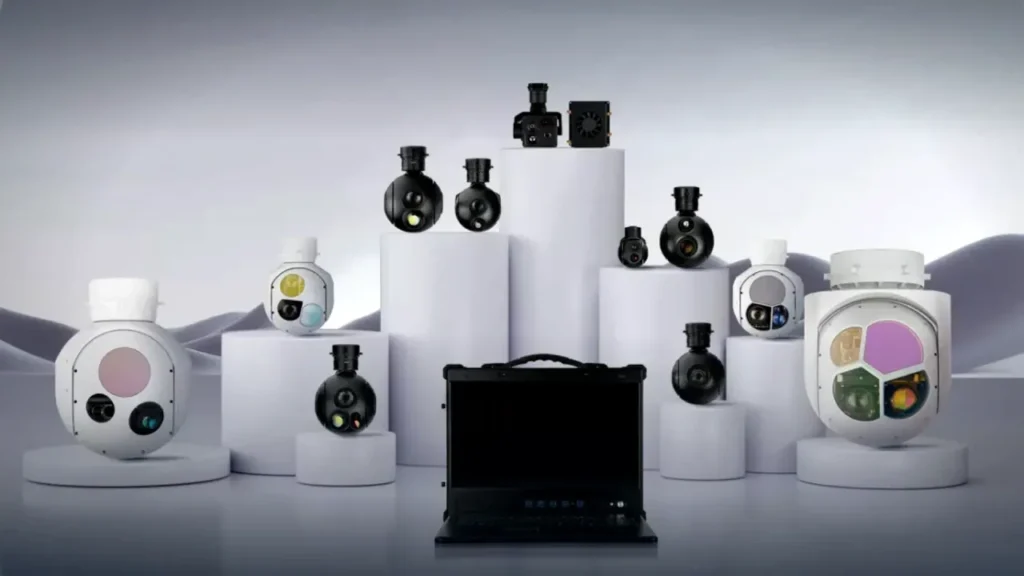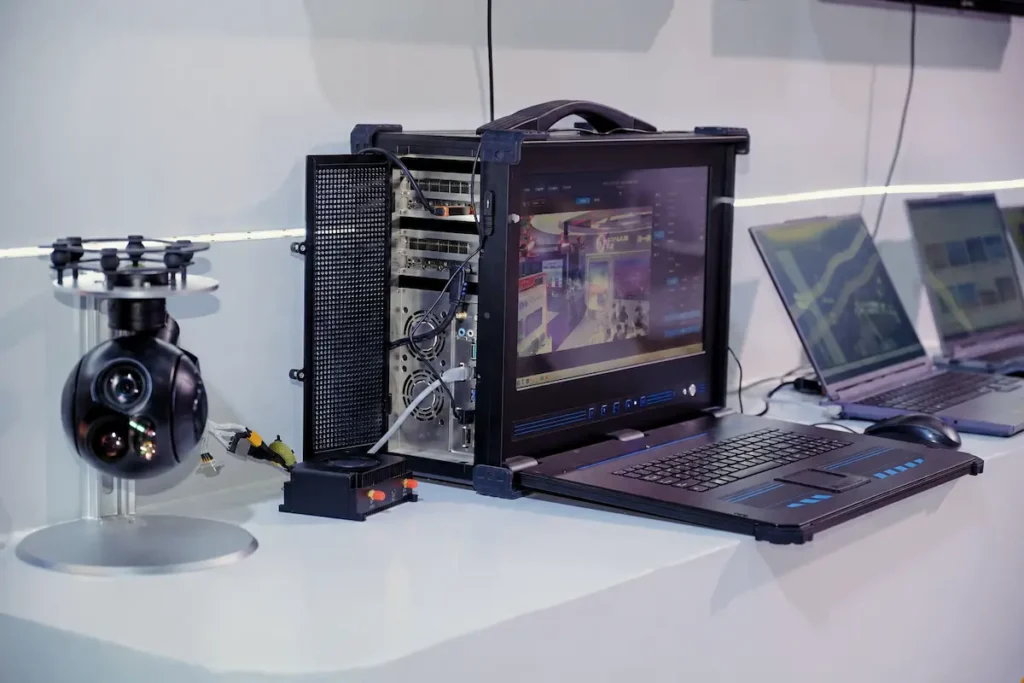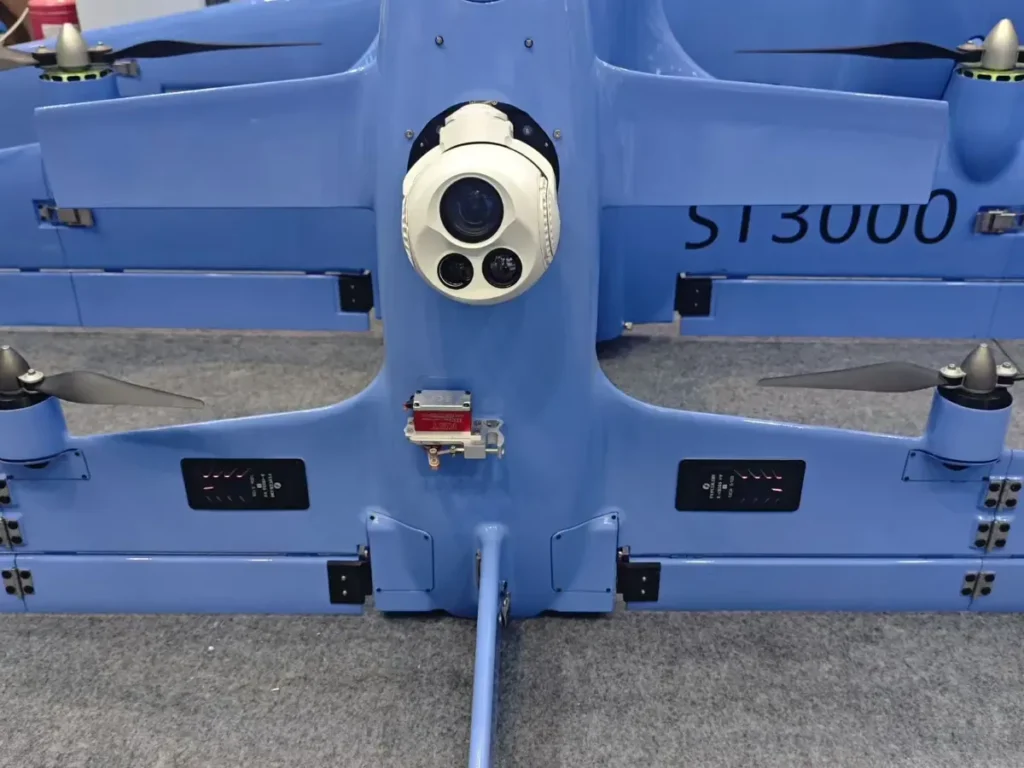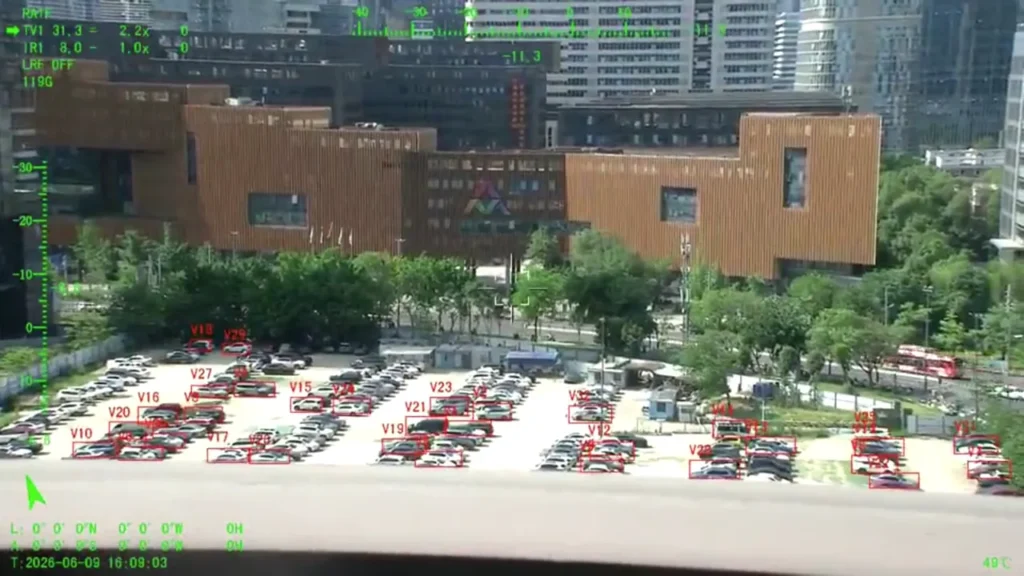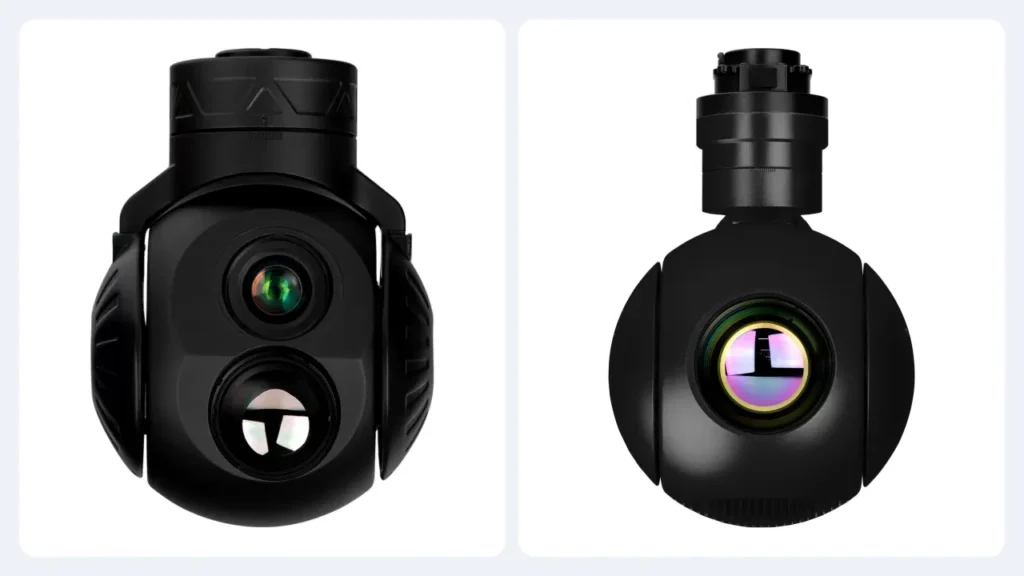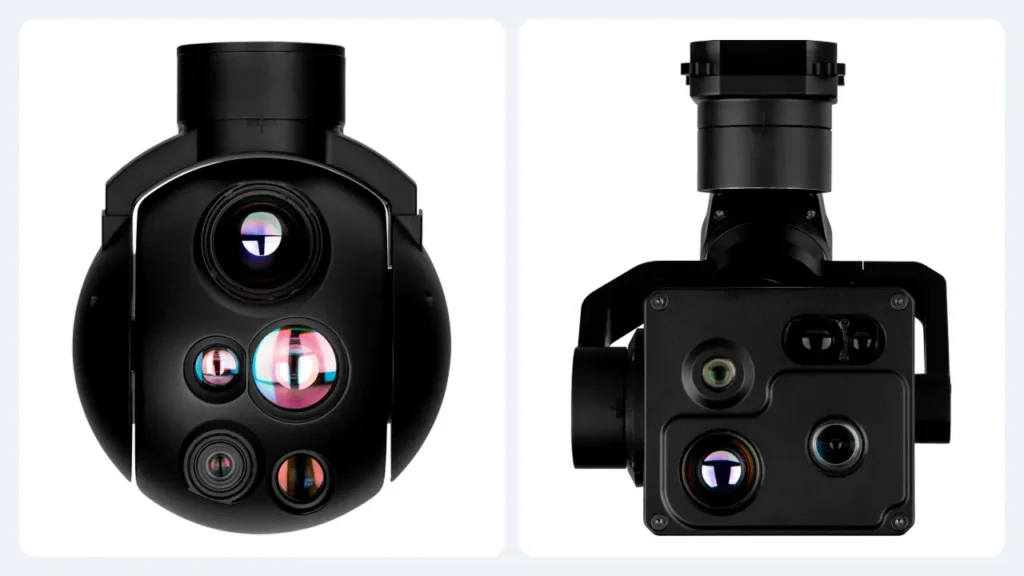
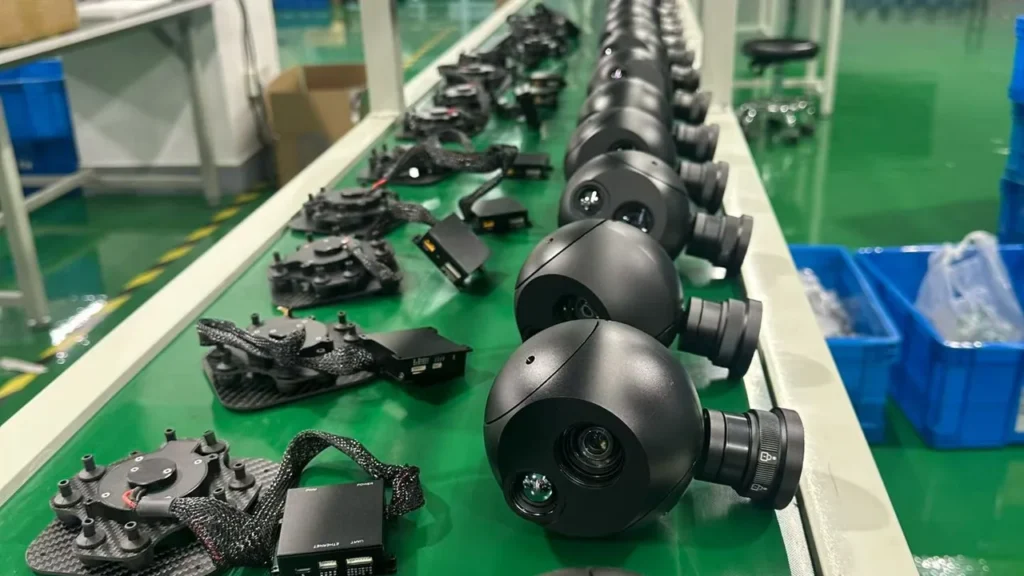
A catalogue can make two industrial UAV camera payloads look interchangeable. Their quotes rarely are. One may include a mounting kit, calibrated thermal data and interface support; another may price only the camera head. The apparent lower price can become the more expensive integration after wiring, software changes, testing and reshipment.
This gimbal camera procurement checklist turns the buying decision into a set of evidence-based gates. It is designed for UAV original equipment manufacturers (OEMs), systems integrators and specialist distributors preparing a sample order, a repeat build or a cross-border purchase. The purpose is not to rank manufacturers by marketing claims: it is to obtain comparable written requirements, comparable test evidence and a purchase order that preserves what was approved.
The checklist complements technical configuration guides rather than repeating every lens and sensor choice. When the mission has not yet been translated into hardware requirements, start with the available range of industrial UAV gimbal cameras and ask which sensor, mounting and interface combinations can be documented for the project.
1. Begin with three purchase gates before comparing prices
A written mission brief is the first gate
An effective RFQ describes what the camera must help an operator decide. For example, an electricity utility may need a visible-light record of a connector, an anomaly-screening thermal view, or a traceable temperature estimate. Those outputs demand different sensor and data workflows. State the smallest feature, standoff range, light conditions, aircraft type, minimum deliverable, and any restrictions on airframe mass and power. Avoid promising a target recognition range from optical zoom alone.
Make interface and compliance requirements pass/fail
Before price scoring, specify non-negotiable requirements: physical envelope, supply voltage, peak current, approved mounting, control interface, video destination, recording needs and applicable end-use or import/export approvals. A vendor that cannot verify a mandatory requirement should be marked not yet qualified, even if its price is attractive. Export controls, restricted end uses and local operating rules must be assessed by appropriate parties; an inquiry or sample request is not itself authorization to ship.
Treat missing evidence as an open action—not as a pass
A statement such as “supports MAVLink” is incomplete unless the exact supported messages, device role, firmware, routing and test conditions are identified. The MAVLink Gimbal Protocol v2 differentiates a gimbal manager and a gimbal device; it does not mean every serial or Ethernet port speaks the same application protocol [1]. A technical declaration should always reference the proposed SKU and revision, not only a brand-level brochure.
2. Build one RFQ data sheet for every shortlisted supplier
The fastest way to get comparable quotations is to send every supplier the same project sheet and ask them to return a filled version with evidence references. Mark each row M (mandatory), P (preferred) or I (information only). Record offered value, file name or drawing revision, deviation and owner. A blank field is not an accepted deviation.
| RFQ block | Buyer states | Supplier must return |
|---|---|---|
| Mission / image target | Asset, smallest feature, range, day/night conditions | Proposed sensor/lens configuration and representative captures |
| Platform and SWaP | Aircraft, mounting envelope, mass and available power | CAD/drawing, installed mass, nominal/startup/peak power |
| Image / measurement data | EO, thermal, radiometric need, record format | Exact output resolution, codec and proof of radiometry if needed |
| Gimbal / interfaces | Axes, stabilization objective, FC/GCS, port type | Pin map, protocol/API, firmware version, control demo |
| Accessories / documents | Cables, mount, SDK, manuals, reports | Included/not included list and document revisions |
| Commercial / compliance | Sample and repeat quantities, delivery place, end use | Quote validity, lead time, warranty, trade terms and review status |
A supplier may reasonably propose a different lens, a different gimbal axis count or a staged software integration. The change should appear in a deviation register with its engineering consequence, price implication and written approval owner. Silent substitutions defeat comparison.
For single EO, thermal-only or integrated EO/IR designs, require channel-level specifications. Explore EO/IR camera configurations only after deciding whether both modalities add value to the real mission; the highest component count should not win automatically.
3. Ask for a controlled technical evidence pack
Document the item that will actually ship
Request the exact part number, sensor configuration, revision and firmware branch. Then request a configuration-controlled bill of supplied accessories, mechanical interface drawing, connector mating references, pin assignment, power operating envelope, environmental specifications and any test reports. The serial number or batch record should allow a delivered item to be matched with this approved definition. A product-family web page is useful for discovery; it is not a substitute for the delivered-unit definition.
Separate electrical, command and video compatibility
A gimbal may have the right connector but incompatible power polarity, signal level or protocol. Camera control, gimbal orientation and compressed video can follow separate paths. Define flight controller type and version, companion computer role, ground-control software, requested MAVLink functions or other protocol commands, and a sample video file or receiving client. The UAV camera integration guide provides a starting point, but the purchaser should still witness an end-to-end demonstration using its own architecture [1,2].
Verify certificates instead of copying their logos
A supplier quality-system certificate is not proof that the proposed camera passed a specific stabilization or environmental test. ISO 9001:2026 is the current quality-management standard, and the 2026 transition period means some organizations may still hold valid earlier-edition certificates; check the certificate scope, issuer, status and transition rules rather than treating the year alone as a verdict [3]. ISO 19011:2026 offers guidance on management-system auditing, not a product-performance certificate [4].
HITS publishes a quality-control process, including unit-level inspection categories for communication, video, imaging, control and record keeping [5]. Buyers can use the HITS quality-control documentation as an example of the types of records to request, while obtaining SKU- and serial-specific evidence for the actual order.
4. Approve the sample on the final platform, not just a demonstration video
An indoor video can establish that the camera turns on. It cannot confirm interference-free mounting, safe power startup, reliable control through the selected flight controller, image stability on the airframe, or data continuity in flight. Before paying for the sample, define who provides reference equipment, firmware images, connectors, access to logs and the written acceptance method.
Use an acceptance matrix with stated conditions
| Acceptance area | Minimum evidence to record | Failure / retest rule |
|---|---|---|
| Identity & installation | SKU, serial, lens, firmware, total mass, connector and CAD fit | No unapproved substitution; rework then repeat fit check |
| Power and thermal | Start-up transients, steady/peak draw at declared supply conditions | Re-test at agreed input limits after correction |
| Control and status | MAVLink/API command list, response logs, gimbal state, operator hand-off | Failed mandatory command blocks acceptance |
| Imaging and recording | Native resolution, sample at working range, frame timing, stored output | Review raw footage and complete chain of custody |
| Stabilization / motion | Test rig method, motion inputs, reference, residual error and conditions | No generic “stable” pass; apply project thresholds |
| Environmental / service | Operating limits, warm-up, reboot/reconnect, safe replacement | Document fault and recovery with same revisions |
For quantitative thermal reporting, acceptance additionally needs radiometric data support, emissivity and reflected-temperature handling, measurement range, calibration documents and an agreed reference test. Thermal contrast, NETD and absolute temperature accuracy are different. For a video-only survey, quantitative radiometry may not be necessary; buying features that the report never uses increases cost and operational burden.
Do not set universal stabilization error, altitude, temperature accuracy or airspeed thresholds in the marketing article. Use mission-specific criteria and independent reference conditions. A test script should include at least one normal and one adverse—but safe—operating case: start-up under constrained power, switching sensor channels, operator command transfer, an interrupted video link and re-establishment after a safe restart.
5. Score qualified suppliers without hiding disqualifying risks
Only after mandatory technical and compliance gates are met should procurement use a weighted score. The example below is illustrative, not an industry standard. Give a 1–5 score based on records, and document the reason. A missing quotation, unverifiable certificate or failed control test cannot be offset by a discount. Supplier selection and sample acceptance are related, but separate decisions.
| Weighted dimension | Example weight | Evidence buyer should require |
|---|---|---|
| Platform / functional compatibility | 30% | Approved drawing, command demonstration, flight sample |
| Test evidence / repeatability | 25% | Per-unit QC, calibration where applicable, test log |
| Total landed and integrated cost | 15% | Full configuration, accessories, freight, engineering hours |
| Lead time / production continuity | 15% | Written capacity, change notification, spares availability |
| Engineering response / warranty | 15% | Named contact, RMA workflow, response and repair commitments |
For example, a supplier with 4/5 in every dimension scores 80/100. A supplier with 5/5 in price and only 2/5 in integration may score lower once the project weight is applied. Before applying arithmetic, stop if any mandatory gate fails. Use the score to illuminate trade-offs rather than to disguise procurement judgment.
Factory maturity still matters, but not as a substitute for the evidence above. The factory and manufacturing overview helps a buyer frame questions about production traceability, calibration records, change management and engineering handoff. Review the actual facility and contractual quality plan when the size or consequence of an order warrants a supplier audit.
6. Compare the total commercial package—not the price per camera
Separate quoted unit price from total implementation cost
For a single engineering sample, price the mount, cabling, interface adapter, spare connectors, license or SDK terms, special test equipment, shipping, duties and engineering effort. For repeated orders, add change control, packaging, replacement parts, expected support workload and the cost of downtime. Total cost of ownership is not equivalent to the pro forma invoice total. An RFQ should identify what is included, excluded and optional.
Put delivery terms, risk transfer and warranty in writing
A quotation should identify currency, offer validity, payment method, quantity breaks, minimum order quantity (if applicable), sample credit conditions, production lead time, manufacturing revision and named delivery place. Specify an Incoterms 2020 rule and location where it applies, because ICC rules allocate defined delivery obligations, costs and risk—not every contractual issue [6]. They do not replace a sales contract or define product acceptance and intellectual-property rights [7].
Contract clauses should cover return-material authorization (RMA), inspection period, dead-on-arrival cases, warranty exclusions, repair-versus-replace remedy, replacement shipping responsibility, spare-parts support and the procedure for resolving a specification dispute. If payment involves documentary banking, discuss transaction-specific risk and documents with the parties’ banks; payment arrangements are not a substitute for technical acceptance [8].
Document a clean handoff from sample to production
The purchase order should freeze the approved sample baseline: item code, BOM version, mechanical drawing, hardware/firmware, color or marking where relevant, cable pinout, included license files, test method and packaging. Changes to parts or firmware should trigger notice and agreed requalification. If sample-to-production continuity cannot be verified, the sample is evaluation evidence, not blanket approval for all future units.
7. Use this one-page pre-PO checklist
An internal buyer may use the list below during the final purchase review. Assign an owner and attach the evidence; a tick without a supporting file should not close the item.
- Mission and aircraft: target, minimum required image detail, operating environment and permitted standoff recorded.
- Configuration: exact EO/IR choice, optical/thermal lens, gimbal axis, accessories, drawings and firmware identified.
- Mandatory interface gate: pinout, voltage, command protocol, video path, SDK/data export and flight-controller version validated.
- Sample acceptance: signed test matrix with footage, control logs, deviations and retest closure.
- Supplier QA: unit traceability, warranty/RMA, calibration claims, certification status and manufacturing change notification reviewed.
- Commercial baseline: full unit configuration and landed/integrated cost, quantities, lead time, contract and delivery term checked.
- Compliance: customer, end use, destination and applicable permits/restrictions reviewed by the responsible parties.
- PO attachment pack: frozen specification, acceptance criteria, parts list, document revisions and dispute process incorporated.
Frequently asked questions
Is the lowest-priced industrial UAV gimbal camera always the best buy?
No. Compare the complete delivered configuration and integration effort. Missing harnesses, undocumented protocols or delayed sample acceptance can outweigh a unit-price difference. A low price can be a good decision when the same mandatory evidence and acceptance criteria are met.
Should every OEM purchase use a factory audit?
Audit effort should reflect transaction size, application risk and existing assurance. An engineering sample can begin with documentary verification and witnessed tests; a recurring supply relationship may justify broader quality-system and change-control review. ISO 19011 provides audit guidance, but audit plans remain buyer-specific [4].
Does a certification prove that a payload is compatible with PX4 or ArduPilot?
No. Quality-system certification does not replace a demonstrated firmware- and hardware-specific integration test. Buyers should request a setup drawing, version matrix, supported messages and an end-to-end test record [1,2].
Can a sample quotation be used directly for the volume purchase order?
Only after configuration, commercial terms and production-release conditions are confirmed. Sample accepted and production approved should be separately documented when the final build may differ from the evaluation unit.
Conclusion: Buy the verified system, not the brochure
A sound industrial UAV camera purchase starts with a measurable mission, turns it into a controlled RFQ, demands relevant evidence, validates a representative sample and carries that approval into the production contract. The best procurement process does not automatically favor a two-axis, three-axis, EO-only, thermal-only or multi-sensor gimbal. It selects the configuration that performs the required job with predictable integration and support.
HITS can review aircraft parameters and application requirements against the appropriate payload family. For a useful first conversation, include platform mass/power constraints, target and working range, preferred data outputs, flight controller, initial sample quantity and expected deployment schedule. Buyers can send a technical RFQ to HITS to request a model-specific review rather than a generic catalogue recommendation.
References and technical sources
[1] MAVLink — Gimbal Protocol v2 | https://mavlink.io/en/services/gimbal_v2.html
[2] MAVLink — Camera Protocol | https://mavlink.io/en/services/camera.html
[3] ISO 9001:2026 — Quality management systems — Requirements | https://www.iso.org/standard/9001
[4] ISO 19011:2026 — Guidelines for auditing management systems | https://www.iso.org/standard/19011
[5] HITS — Quality Control: UAV Camera Payload Inspection and Testing | https://hitsuav.com/quality-control/
[6] ICC — Incoterms® 2020 | https://iccwbo.org/business-solutions/incoterms-rules/incoterms-2020/
[7] ICC — Incoterms and Commercial Contracts: What Incoterms Do Not Do | https://library.iccwbo.org/clp/clp-incoterms-qa-2020.htm
[8] International Trade Administration — Documentary Collections | https://www.trade.gov/documentary-collections
[9] HITS — Gimbal Camera Procurement Checklist (existing page) | https://hitsuav.com/gimbal-camera-procurement-checklist/