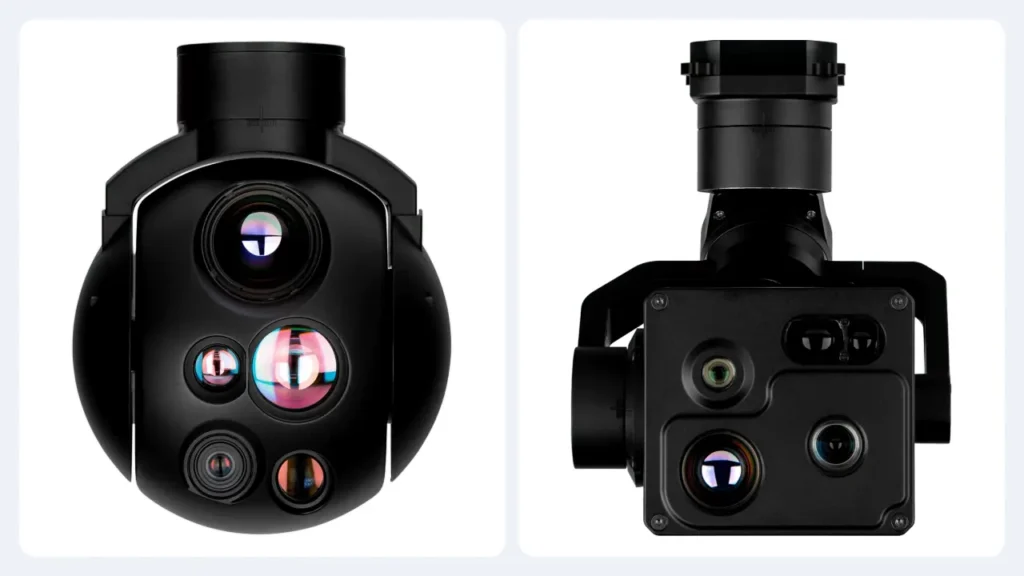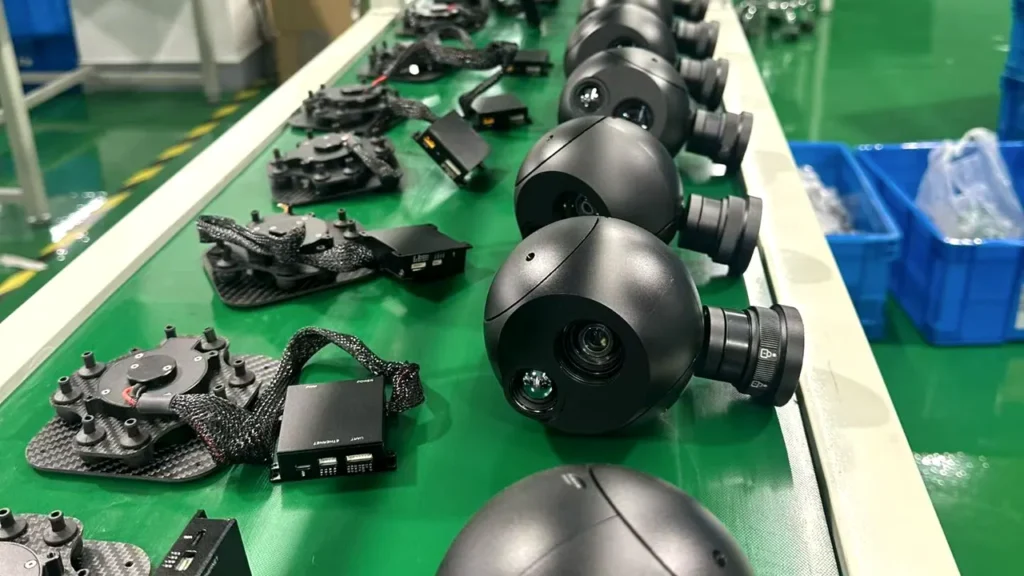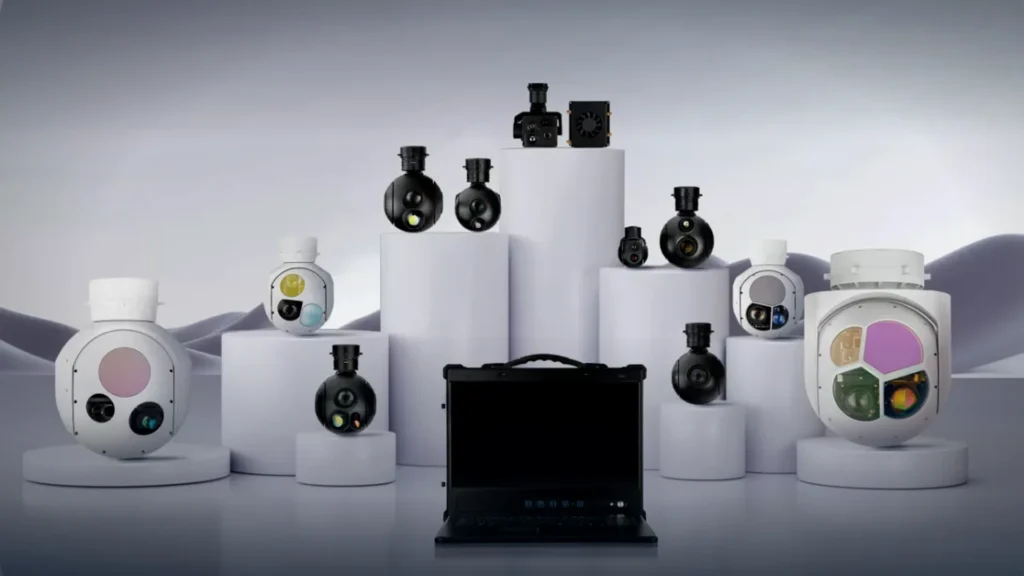
Choosing a UAV gimbal camera manufacturer in China is a long-term decision, not a purchase. The supplier you select determines which configurations you can offer, how quickly a unit reaches an integrator, and who answers the phone when a payload doesn’t behave as expected on a new airframe.
This guide is written for the people who have to defend that decision: UAV OEMs, system integrators, distributors and procurement teams comparing Chinese payload manufacturers. It covers how to separate a factory from a trading company, which technical capabilities actually matter, how quality control should be evidenced, and how to run the whole evaluation without flying to China first.

Why global B2B buyers source UAV gimbal cameras from China
China offers an unusually complete industrial supply chain for imaging payloads. Optical components, precision mechanics, motor and encoder suppliers, image-processing electronics and UAV airframes are all within reach of the same manufacturing region. That density is why so much of the world’s small and mid-size stabilised camera production sits there, and why a buyer can often get three credible quotations for the same specification.
Industrial UAV camera manufacturing capabilities
A professional Chinese payload factory is usually a combination of four disciplines under one roof: optical engineering, precision assembly, stabilisation control, and electronics. The important question isn’t whether a supplier can name those disciplines but how many of them are performed in house. A company that designs its own gimbal control loops, aligns its own optics and writes its own tracking software behaves very differently during a custom project. Now compare that with a company that assembles modules bought from other suppliers.
Product variety and configuration options
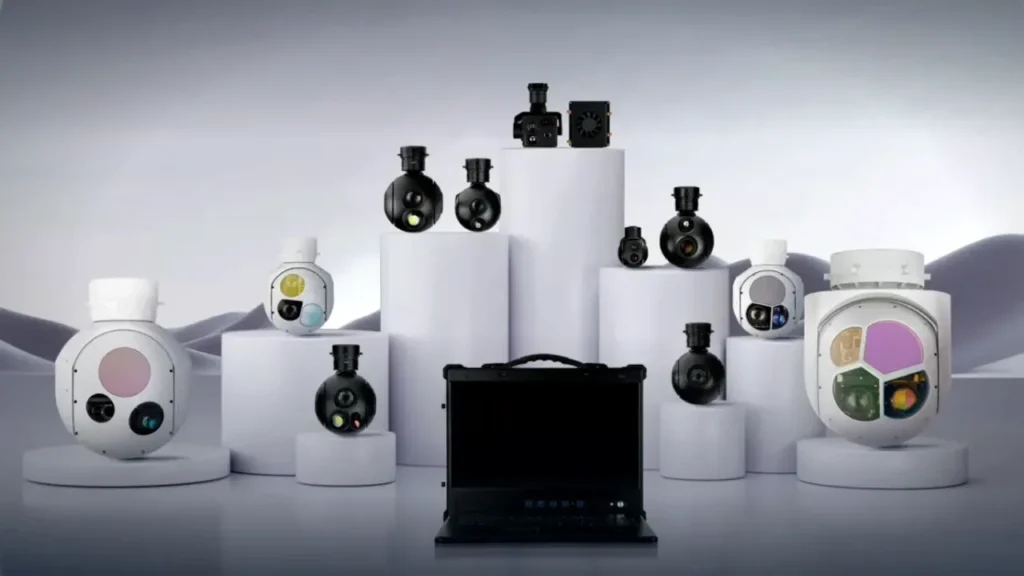
Industrial buyers rarely need a single camera. The useful questions are about the range. Can the supplier cover a small multirotor and a larger ISR platform from the same control architecture? And can the configuration change without redesigning the aircraft interface. The common axes of variation are:
- EO gimbal cameras: daylight imaging with fixed or continuous optical zoom.
- Thermal cameras: uncooled long-wave infrared for night and low-contrast conditions.
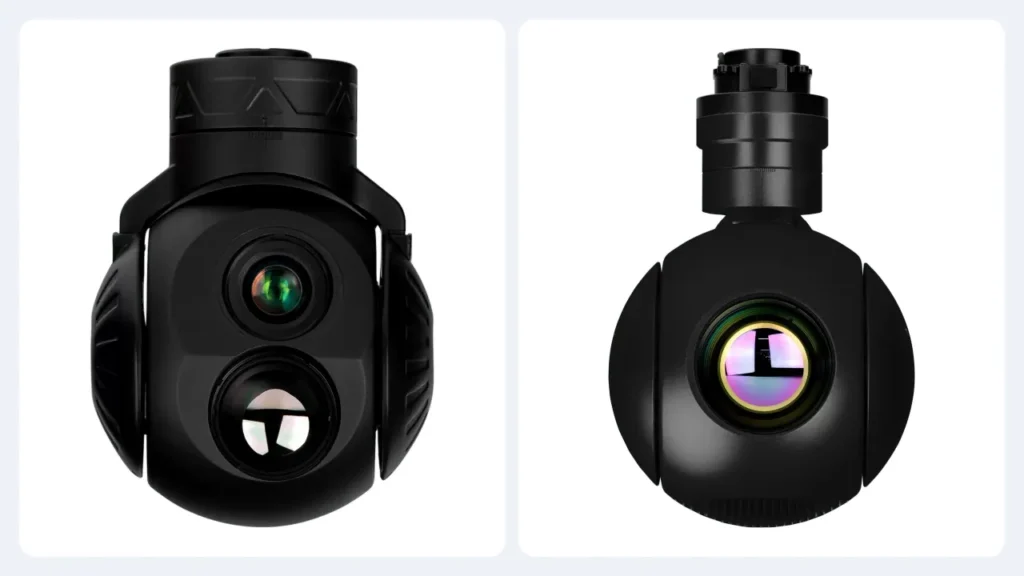
- EO/IR cameras: daylight and thermal channels boresighted to each other in one head.
- Two-axis and three-axis gimbals: different stabilisation and mechanical envelopes.
- Optional functions: onboard AI target tracking and laser rangefinding.
Our own gimbal camera range is built this way. The same stabilisation architecture, video pipeline and control protocol run across the family, from the lightest three-axis head to the larger multi-sensor turrets. For a buyer, that means a platform can start on one configuration and move to another without a new mount or a rewritten integration.
OEM and ODM cooperation opportunities
Many UAV manufacturers need more than a catalogue item: a specific bolt pattern, a different connector, a control command their ground station already speaks, or a branding arrangement for their own market. An experienced OEM payload manufacturer will discuss mounting, cable routing, vibration isolation, protocol changes and private-label packaging as normal engineering work rather than as exceptions.
Factors that influence total procurement cost
The lowest quotation is rarely the lowest cost. Integration time, re-work after an interface surprise, test and retest cycles, shipping, warranty handling and spare-part availability all sit on top of the unit price. A payload that costs slightly more but arrives with the drawings, the protocol document and a unit test record is usually the cheaper decision.
Manufacturer vs trading company: what is the difference?
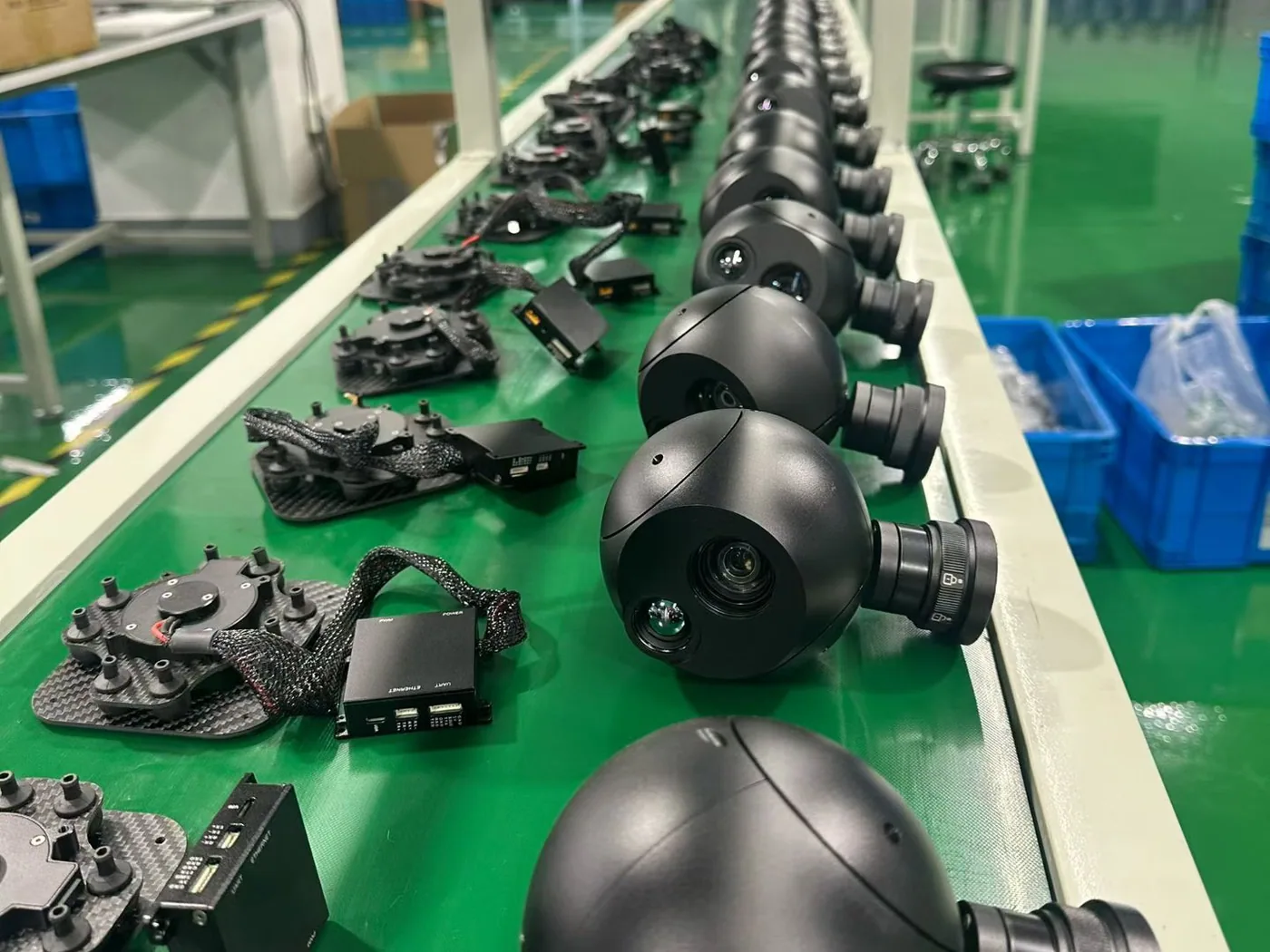
Understanding manufacturer and supplier business models
A manufacturer controls part of the product’s development, production, assembly or testing. A trading company sources finished equipment from other factories and manages the commercial relationship, distribution or logistics.
Both models can serve a buyer well. The distinction starts to matter the moment a project isn’t standard: custom mounting, a protocol change, a firmware behaviour, or a delivery date that depends on someone else’s production line.
How to verify factory capabilities
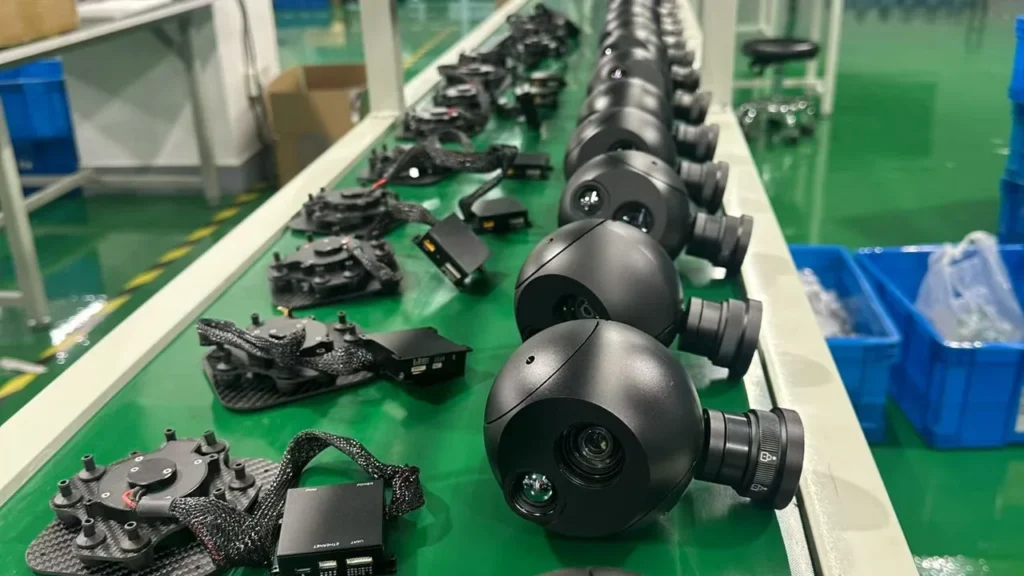
Ask for business registration details, factory photographs and video, and product documentation with the same serial-numbered unit visible in more than one document. A live video walk-through of the assembly floor, with an engineer present, is harder to stage than a picture set.
Questions about in-house R&D and production
A short set of questions separates a genuine manufacturer from a reseller with good marketing:
- Does the company develop its own gimbal control and stabilisation system?
- Are optical alignment, boresight and calibration performed in house?
- Who designs the mechanical structure, the mounting interface and the electronics?
- Can in-house engineers support a modification to an existing model?
- Which production and test steps are outsourced, and to whom?
Vague answers are informative. A manufacturer should be able to say plainly what it does itself and what it buys in.
When direct manufacturer cooperation is valuable
Direct factory cooperation pays off when an airframe needs a bespoke mount, when a ground station already speaks a particular protocol, or when the same configuration will be ordered repeatedly. It also collapses the technical conversation: the person who designed the stabilisation loop is in the same building as the person answering your integration question. Our factory page describes how that process is organised in practice.
What technical capabilities should a gimbal camera factory have?
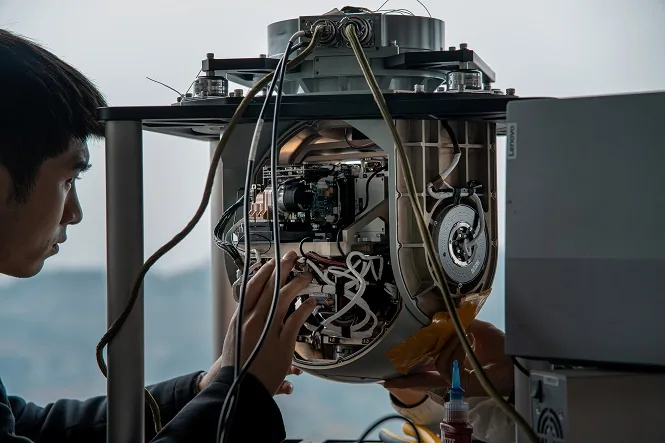
Optical and imaging system design
Sensor resolution alone doesn’t decide image quality. Lens selection, focal length, aperture, sensor format, optical alignment and image processing all contribute, and a larger pixel count on a smaller sensor can perform worse at range.
A supplier should be able to explain how a configuration matches a task: how far you need to detect, recognise and identify, and at what field of view, rather than quoting megapixels.
Mechanical design and gimbal stabilisation
Payloads operate on moving aircraft. Stability depends on the mechanical design, the motors and encoders, vibration isolation and the control algorithm. Ask for the stabilisation figure in microradians, the angular velocity the loop is specified at, and representative flight footage that was actually taken on a comparable airframe.
Embedded electronics and communication interfaces
A payload has to live inside the aircraft’s electrical and control system. The numbers to confirm on the exact model are input voltage range, power consumption, video output format, control interfaces and the protocols your autopilot already speaks. On the models we’ve confirmed, these are Ethernet video in H.264 or H.265, serial control over RS-422, RS-232 or TTL with SBUS and MAVLink on the aircraft side, and an 11-28 VDC input range. Interface and protocol support is confirmed per model, so check it against the datasheet and pinout drawing for the exact unit you’re buying.
Software and AI development capabilities
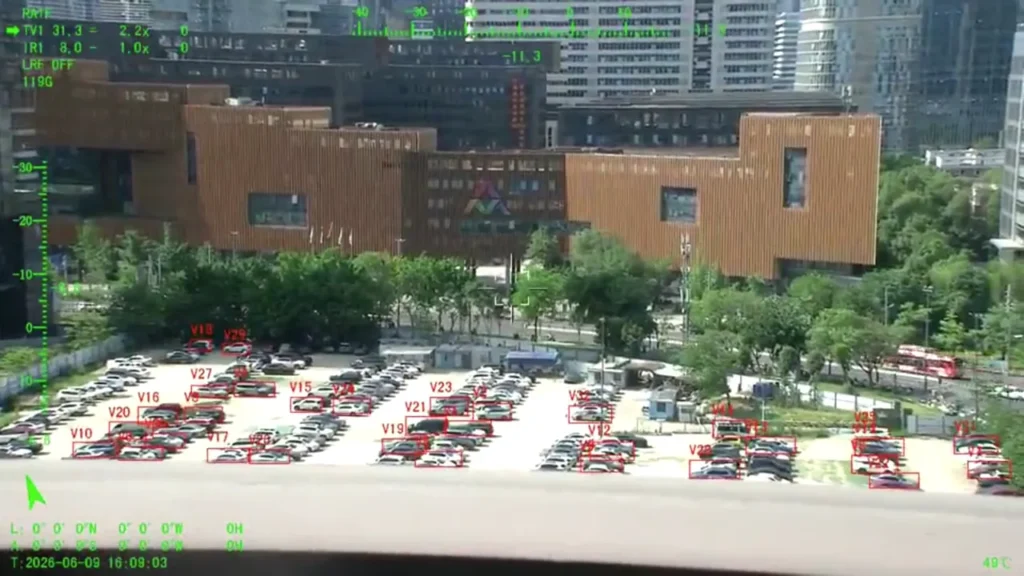
Onboard detection and tracking is now a normal requirement rather than a differentiator. The useful questions are where the inference runs, what happens when the data link degrades, how a target is re-acquired after occlusion, and how a new class or model is added. Detection that runs on the payload itself keeps the video usable when the link doesn’t, which is where most of the practical value sits.
Product integration and engineering support
Support quality shows up in the documents: mechanical drawings with the connector pinout, a control protocol description, a video pipeline note and recorded configuration. These should be released with the first unit and available earlier for evaluation.
How to evaluate manufacturing and quality control
Consistent production matters as much as the specification on the datasheet. A payload that performs in a demonstration and drifts in a batch is the failure mode that costs an integrator a project, so ask how each step is checked.
Incoming material inspection
Sensors, lenses, electronic assemblies and mechanical parts should all be checked before assembly. Incoming inspection is what keeps a bad batch of detectors from becoming a bad batch of payloads.
Assembly and optical alignment
Precision assembly decides both the mechanical feel of the gimbal and the image that reaches the operator. On a multi-sensor head, the visible and thermal channels have to be boresighted so that both point at the same target without re-alignment in flight.
Product testing and calibration
Ask what’s measured on every unit before packing, and what’s measured only on a sample.
Functional and electrical testing
Power consumption, camera functions, communication interfaces, video output and operating modes, against the numbers in the datasheet.
Stabilisation performance testing
Gimbal movement, stabilisation behaviour and control response checked against documented acceptance criteria rather than judged by eye.
Environmental and reliability testing, where applicable
Temperature range, vibration and sealing should be stated for the model you’re buying. On the heads we confirm, that’s -20 °C to +60 °C operation and a sealed housing for dust, wind and rotor wash.
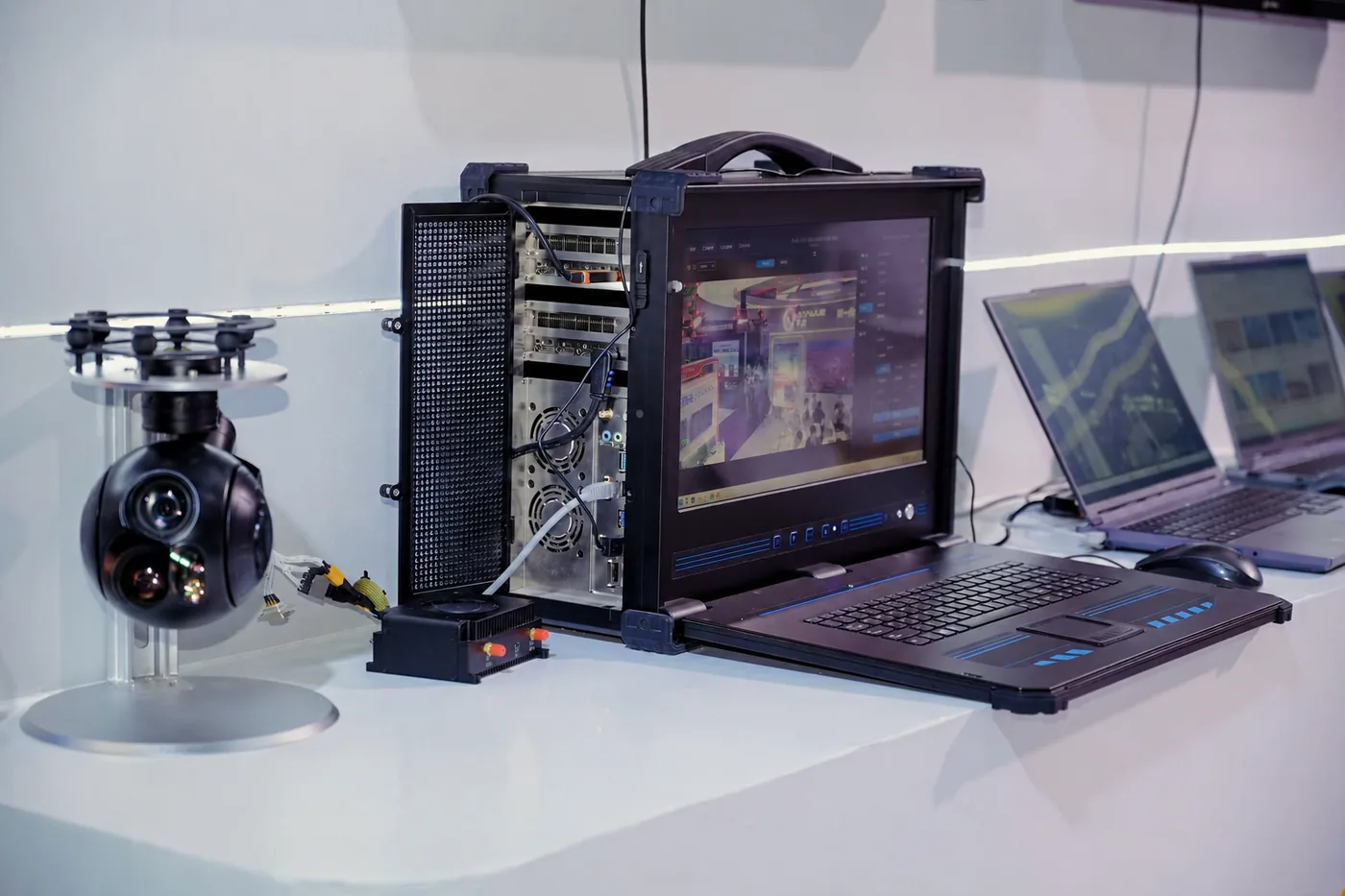
Final inspection and traceability
Serial numbers, firmware records and a final inspection report are what allow a specific unit to be identified and supported later. Without them, a warranty conversation becomes a discussion about which unit was shipped.
Which factory records should buyers request?
Useful records are a calibration report, an inspection checklist, the unit test results and any applicable compliance documents. Our own process is described on the quality control page, including stabilisation testing, three-channel boresight and the individual unit record that ships with each payload.
Understanding OEM and ODM gimbal camera services
OEM and ODM work is how a payload is adapted to a specific platform or a specific market. It’s worth being precise about which of the two you’re asking for, because the engineering effort and the commercial terms are different.
Standard products vs customised payloads
A standard head shortens evaluation and keeps spares simple. A customised payload becomes necessary when the airframe has an unusual mounting point, a power budget that rules out the standard configuration, an imaging requirement the catalogue doesn’t cover, or a control protocol that’s already fixed by the ground station.
Mechanical and electrical customisation
Typical changes are the mounting plate and bolt pattern, connectors and cable routing, housing finish, and the vibration isolation between gimbal and airframe. Every modification has to be re-checked against mass, centre of gravity, clearance and thermal budget. A bracket that adds 30 g matters on a 400 g payload.
Communication interface and software customisation
UAV systems differ in how they talk to a payload. Extra commands, a different baud rate, a channel-mapping change or a small change to the on-screen display can each be the difference between a two-week integration and a two-month one. Compatibility should be reviewed against the payload protocol document before development starts, not after the first article is built.
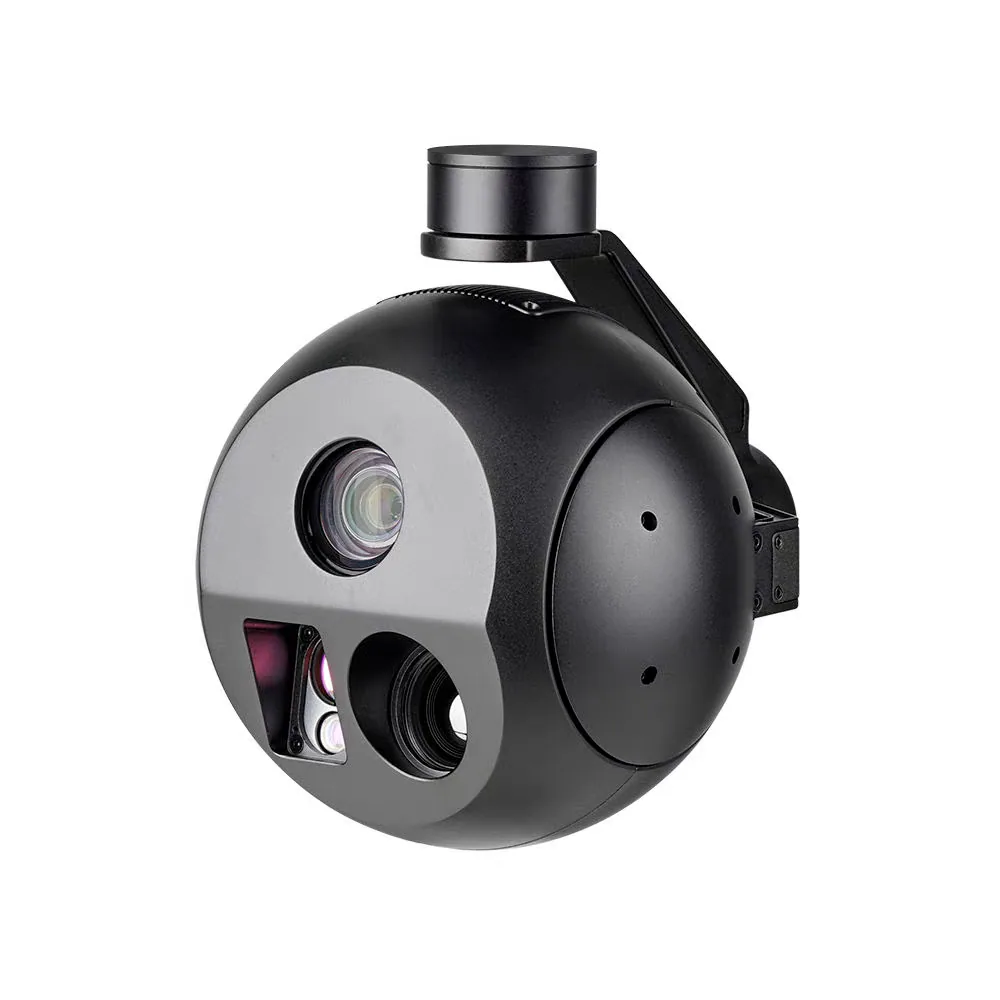
Branding and private-label requirements
Distributors often need their own labelling, packaging, and a manual under their own brand. None of that’s difficult, but it has to be agreed before the order rather than discovered at packing. It also affects warranty handling and the spare-parts record, so it belongs in the initial commercial discussion.
Engineering samples and design validation
An engineering sample lets both sides test integration before a production order: bench checks of video, control and power, followed by representative flight testing. Finding a mounting resonance or a protocol gap at this stage is cheap; finding it after a hundred units are built isn’t.
Comparing technical specifications across manufacturers
A reliable supplier should give you comparable numbers. The problem is that quotations rarely line up, so the comparison has to be built on the specification rather than the brochure.
EO and thermal sensor configurations
Compare daylight resolution and sensor format, lens focal length and zoom type, thermal resolution and lens, and whether a laser rangefinder is fitted. Continuous zoom keeps a wide search field and a tight identification field available on the same head, which is often worth more than an extra few megapixels. See our EO/IR pod systems and thermal camera range for how these configurations are usually combined.
Stabilisation accuracy and camera performance
Ask for the line-of-sight accuracy in microradians, the angular velocity the control loop is specified at, and footage that was shot on a comparable airframe. A stabilisation figure without a test method is marketing.
Weight, dimensions and power consumption
Mass drives endurance, and dimensions decide whether the head physically fits the airframe. Power consumption matters twice: once on the electrical budget and once on the thermal budget inside a sealed pod.
Interface compatibility and documentation
Confirm video format and bitrate, control protocol, input voltage range and whether the drawings and protocol documents exist at all. If a supplier can’t send a connector pinout before the order, that’s the answer.
How to verify marketing claims
Ask for original image samples rather than compressed marketing stills, ask which of them came from a flight, and ask for the acceptance criteria used in test. The table below shows what a comparable specification looks like for one of our heads, alongside the values a buyer should request from every supplier in a quotation.
| Specification | HITS HQ-95Q (example) | What to request from every supplier |
|---|---|---|
| Gimbal | Three-axis stabilised, line of sight ≤ 100 µrad (1σ) | Axis count, stabilisation figure, test method |
| Daylight channel | Dual 8000 × 6000, 9.5 mm plus continuous zoom 15.3 – 49.7 mm | Sensor format, not only pixel count; zoom range and type |
| Thermal channel | 640 × 512 LWIR, 19 mm fixed, NETD ≤ 40 mK | Resolution, lens, pixel pitch and NETD |
| Laser rangefinder | 5 m – 1.5 km, ± 1 m, eye-safe 1535 nm | Range, accuracy and eye-safety class |
| Mass and envelope | 400 g, 95 × 97 × 124.7 mm | Measured mass of the exact configuration offered |
| Power | 11-28 VDC, 15 W / 30 W | Voltage range and consumption in each mode |
| Interfaces | Ethernet video (H.264 / H.265), RS-422 / RS-232 / TTL, SBUS, MAVLink (confirmed per model) | Video format, control protocol, pinout drawing for this model |
| Onboard AI | Person, vehicle, vessel and aircraft detection with multi-target tracking on the payload | Where inference runs; behaviour when the link drops |
| Documentation | Datasheet, three-view drawing with pinout, unit inspection record | Which documents ship with the first unit, and when |
| Price | Quotation on request, configuration dependent | What’s included: cables, case, adapters, documents |
Two products can share a resolution and still be different instruments. Higher pixel counts don’t prove better image quality, and identical headings on a datasheet don’t prove identical performance. Lens quality, stabilisation, production consistency and support deserve equal weight in a comparison.
Evaluate production capacity and delivery reliability
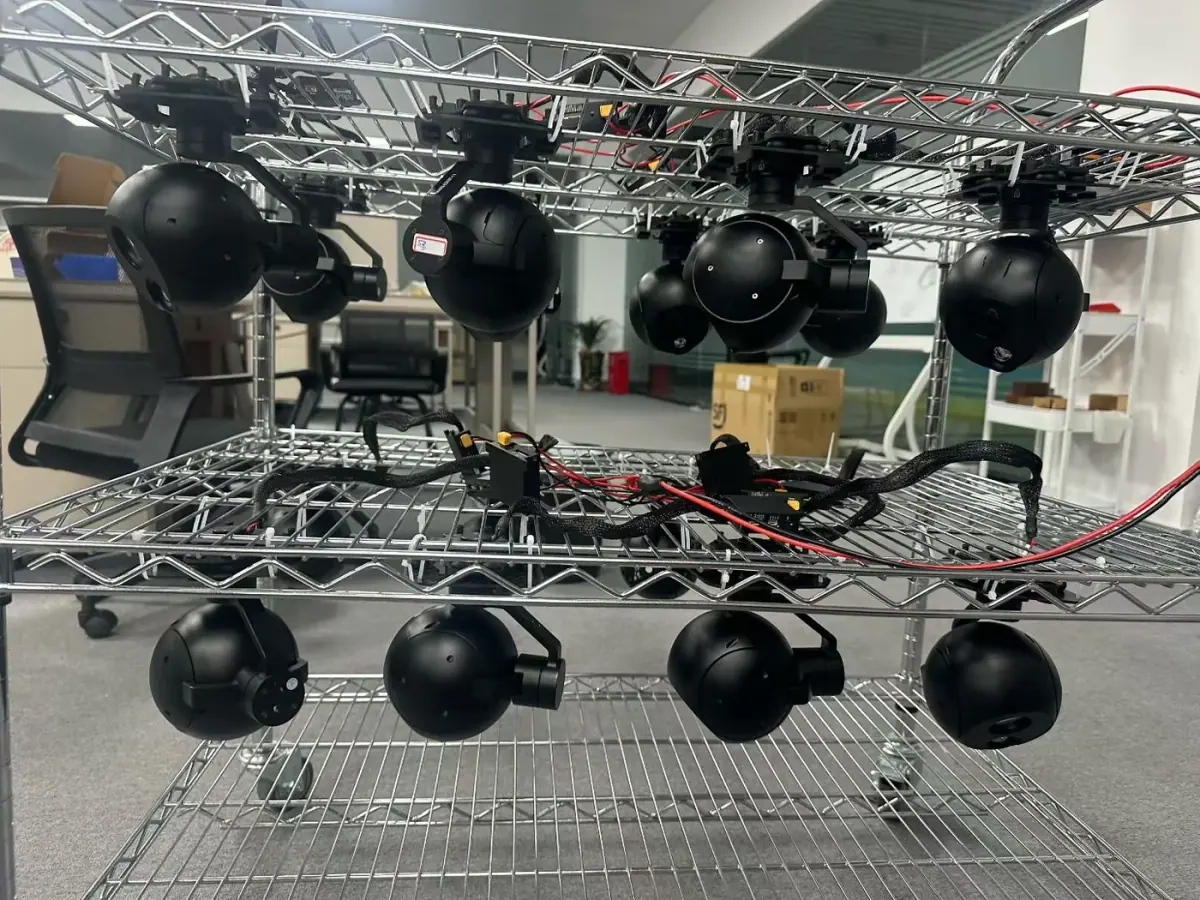
Sample availability and production lead time
Ask whether an evaluation unit is available from stock or has to be built, and what the lead time is for the exact configuration quoted. A customised head adds engineering time that a standard one doesn’t.
Batch production and quality consistency
A manufacturer should be able to describe how a batch is inspected, what happens when a component changes supplier, and how a firmware change is tracked across units already delivered.
Inventory and spare parts
Spares availability decides how long an aircraft is grounded. Ask which consumable and wear parts are held, what the replacement lead time is, and whether individual modules, such as the gimbal, camera block or rangefinder, can be replaced rather than the whole head.
Packaging, export documentation and shipping terms
International shipments need protective packaging, commercial documents and agreed Incoterms. Buyers should also confirm export and import requirements for their own destination, including any dual-use considerations for imaging payloads. Our approach is described on the export compliance page.
After-sales support and warranty conditions
Warranty scope, repair route, troubleshooting process and spare-parts policy should all be in writing before purchase. The useful question isn’t how long the warranty is but what happens on day one of a failure.
How to evaluate a Chinese gimbal camera manufacturer remotely
Most of the initial assessment can be done from a desk. Very little of it depends on being in the same country.
Review company registration and factory information
Check that the business registration, the legal entity, the manufacturing location and the bank details agree with each other and with the website. Inconsistency here’s the cheapest red flag to find.
Request product datasheets and test evidence
Detailed datasheets and representative test reports tell you more than a brochure. Ask for the numbers behind any distance claim, and for the conditions they were measured under.
Arrange a video factory tour
A live walk-through with an engineer present lets you see the assembly floor, the alignment benches and the test area in one call. You can also ask about a specific unit while it’s on the bench.
Conduct sample testing
Where practical, test an evaluation unit on the intended aircraft: image quality at range, mounting and mass, electrical compatibility, control response and tracking behaviour in the conditions the mission actually involves.
Verify commercial and payment terms
Confirm quotation validity, the contracting entity, payment details and delivery conditions before any deposit. These should match the registration check in step one.
How to compare gimbal camera supplier quotations
Product configuration and included accessories
Every quotation should state the sensors, lenses, cables, mounting adapters and documentation included. A lower price that excludes the cable set and the adapter plate isn’t a lower price.
Sample pricing vs volume pricing
Ask for engineering-sample pricing and production pricing separately, and for the quantity breaks. This also tells you which configurations the factory actually builds most often.
MOQ and lead time
Minimum order quantity and delivery schedules vary by model and by the level of customisation. Confirm both for the configuration you intend to buy, not for the catalogue.
Warranty, technical support and spare parts
Technical assistance and replacement policy belong next to the unit price, not in a separate negotiation later.
Understanding the total cost of ownership
Purchase price, integration engineering, shipping, spares, maintenance and downtime together decide the real cost. A slightly higher unit price with better documentation and support usually wins over a fleet’s lifetime.
What should you ask before choosing a supplier?
A short questionnaire makes the technical and commercial comparison much faster.
Engineering and product questions
- Is the payload compatible with the intended UAV, in mass, envelope and power?
- Which EO, IR, rangefinder and stabilisation configurations are available?
- Can the supplier provide interface, mounting and protocol documentation before the order?
Factory and quality questions
- Which manufacturing and test processes are performed in house?
- What inspections are completed on every unit before shipping?
- Are individual unit test and calibration records available?
OEM and commercial questions
- What customisation is supported, and what does it cost to develop?
- What are the sample price, MOQ and lead time for this configuration?
- Which payment, shipping and Incoterms are available?
Support and long-term cooperation questions
- Who provides engineering assistance after delivery, and in which time zone?
- How are warranty claims and repairs handled?
- Can the supplier support repeat orders and future product updates?
Frequently asked questions
How can I verify a UAV gimbal camera factory in China?
Check business registration against the legal entity and the bank details, request factory photographs and a live video tour, ask for the unit test record of a specific serial number, and test an evaluation sample on your own aircraft before committing to a production order.
Do Chinese manufacturers offer OEM and ODM services?
Many do, but the scope varies. Mechanical, electrical, protocol and branding customisation are common; the useful question is which of those the factory engineers itself and which are passed to a third party.
Can I order samples before bulk production?
Usually yes. Availability, price and lead time depend on whether the configuration is a standard model or a custom build, and should be confirmed in writing with the quotation.
What documentation should a manufacturer provide?
At minimum a datasheet, an outline drawing with the connector pinout, a control protocol description, and the inspection or calibration record for the individual unit. Compliance documents should be available for the destination market.
What should overseas distributors look for in a supplier?
A product range that covers several price and performance points, dependable supply and spare parts, documentation that can be handed to an end customer, clear warranty terms, and a commercial policy that supports repeat business without competing with the distributor’s own market.
Conclusion: build a reliable long-term manufacturing partnership
Choosing a UAV gimbal camera manufacturer in China is a comparison of engineering depth, production discipline and support, not a comparison of unit prices. The evaluation above can be run in a few weeks with documents, one video tour and one evaluation sample. It removes most of the risk from a decision that will run for years.
A trustworthy partner provides clear technical information, supports evaluation before the order, and reduces both purchasing and integration risk. HITS builds industrial UAV imaging systems, meaning EO, thermal and EO/IR stabilised gimbal cameras, so we have a commercial interest in this comparison being made carefully.
Evaluating a gimbal camera supplier for your platform?
Send us the aircraft, the operating conditions, the viewing distance and the quantity. We’ll tell you which configuration fits, and what it will take to integrate it.
Related reading: the gimbal camera product range, how the payloads are built on the factory page, the inspection criteria on the quality control page, and the company background on about HITS. For deployment examples, see projects and field deployments.