
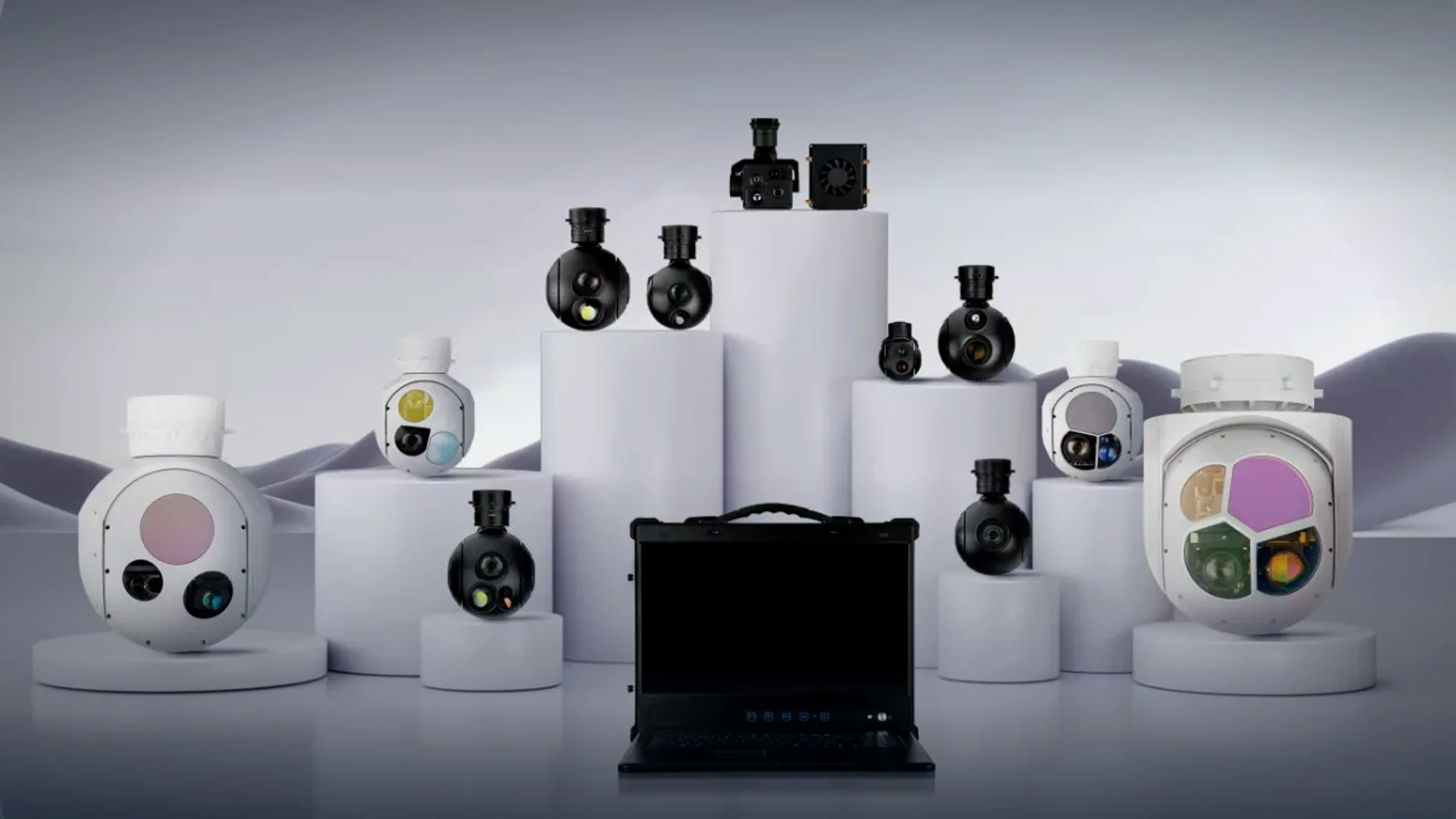
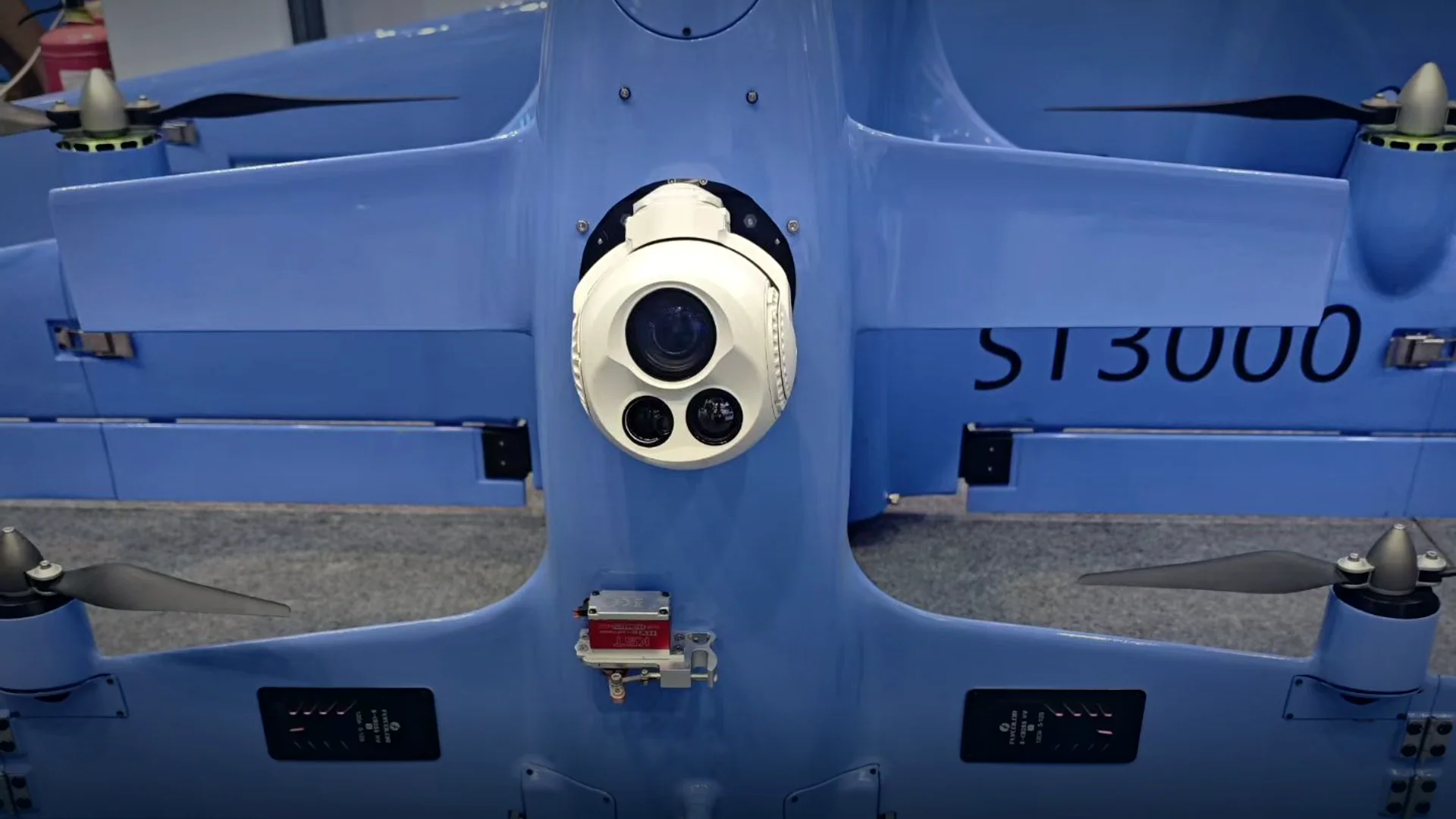
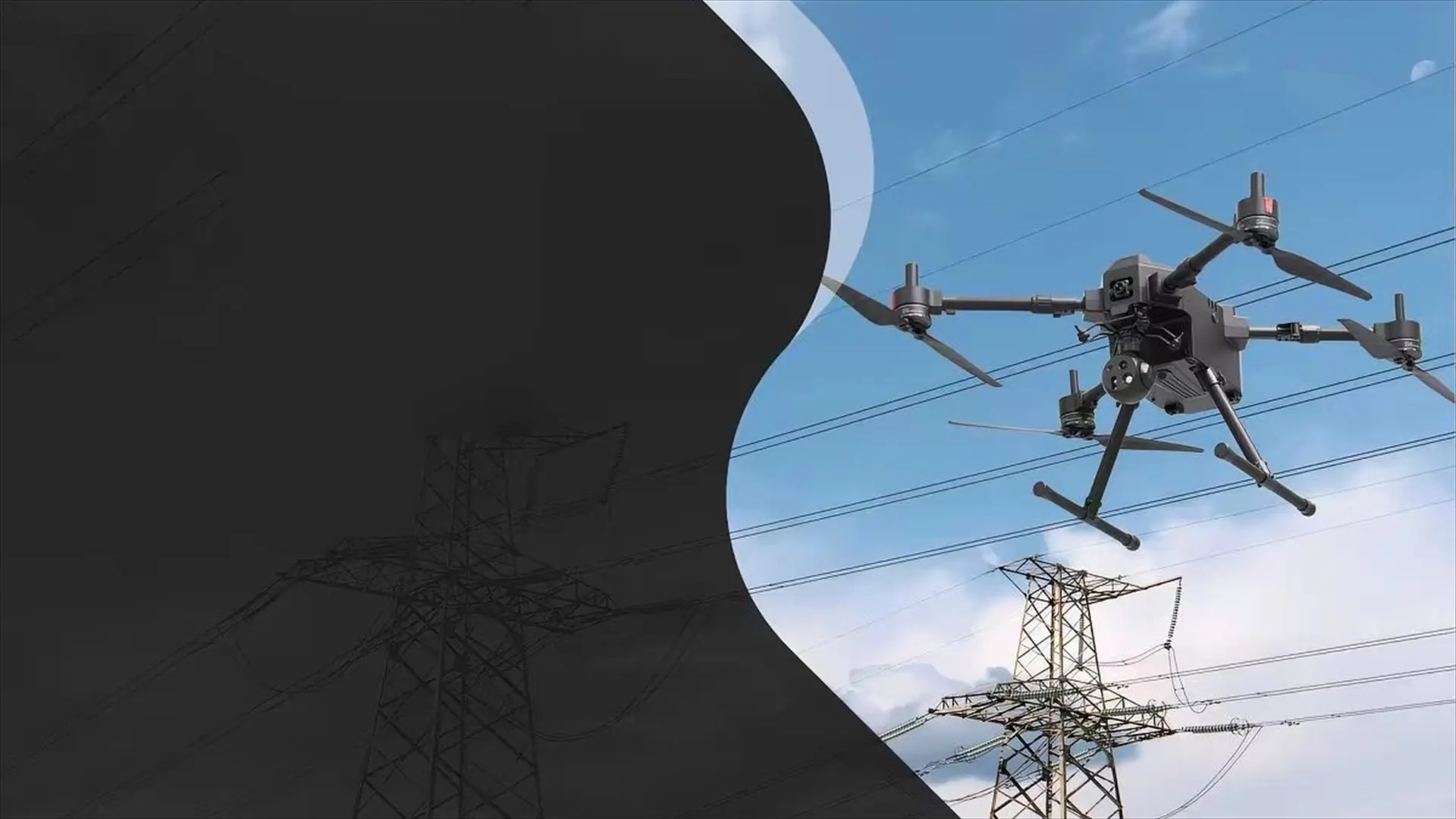
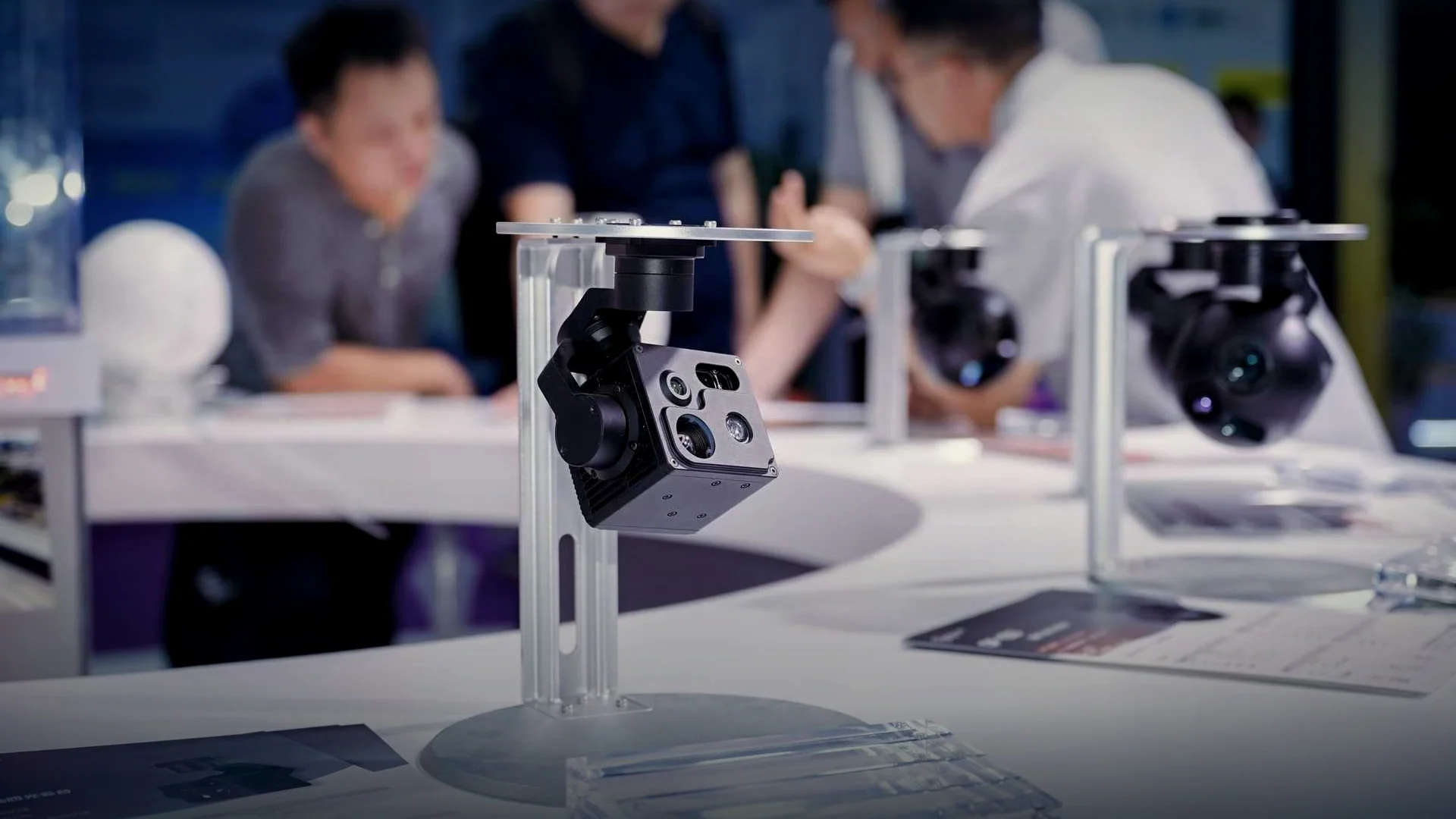
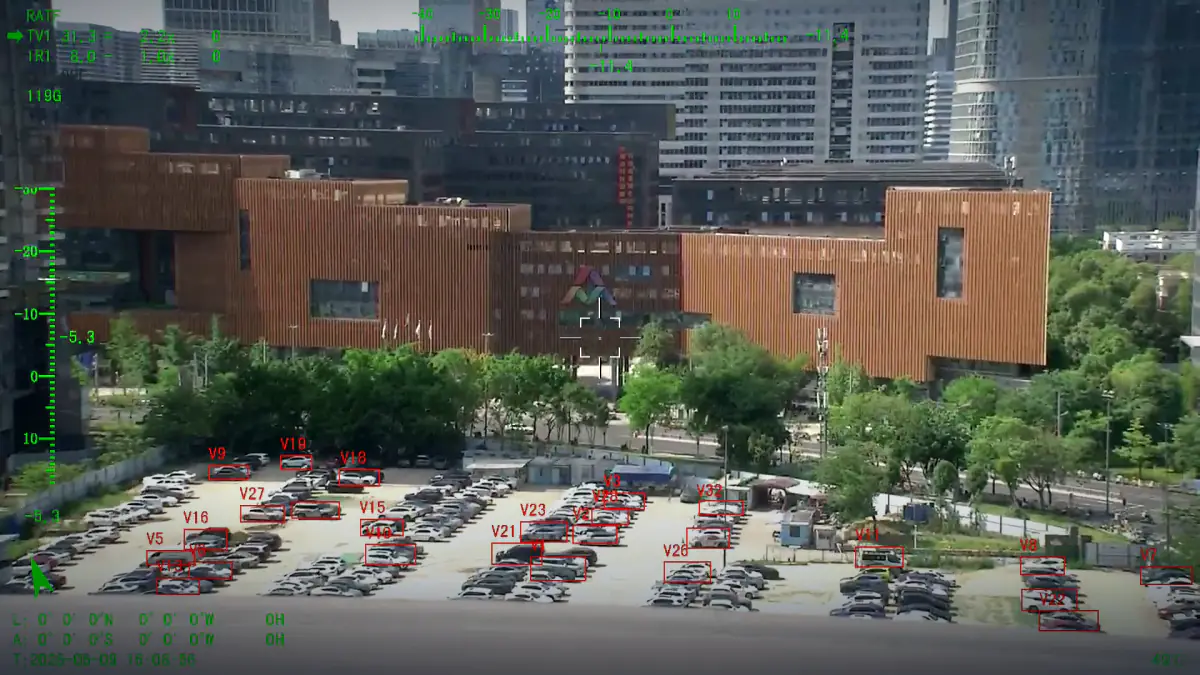
SQ-200T two-axis laser designator pod
Category: Laser Designator Pods
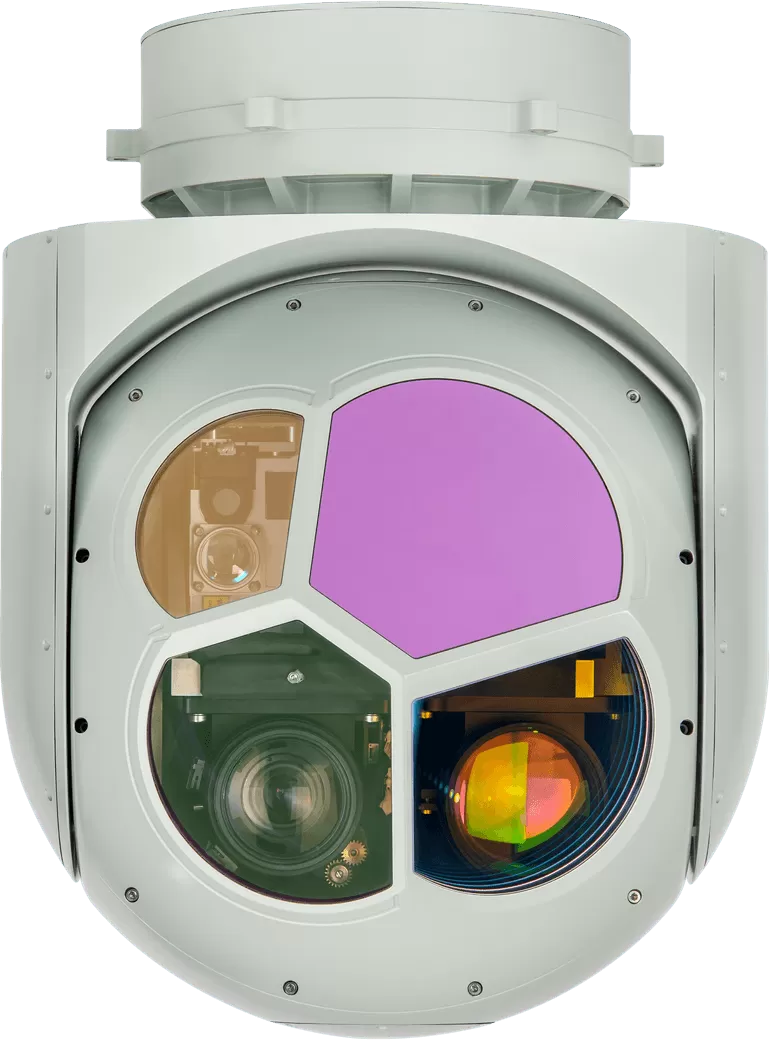
Laser designation plus 8 km ranging on a 5.5 kg two-axis pod. The complete payload weighs 5.5 kg and measures Φ200 × 260 mm, so it fits heavy fixed-wing platforms, helicopters and maritime patrol aircraft.
- Weight 5.5 kg
- Two-axis stabilised
- EO 1920 × 1080
- Thermal 640 × 512
- LRF 300 m – 8 km (± 1 m)
- AI detection & tracking
- CE / RoHS documentation available on request
- Export compliance statement available on request
- Calibration and test report supplied with every unit
What the SQ-200T is
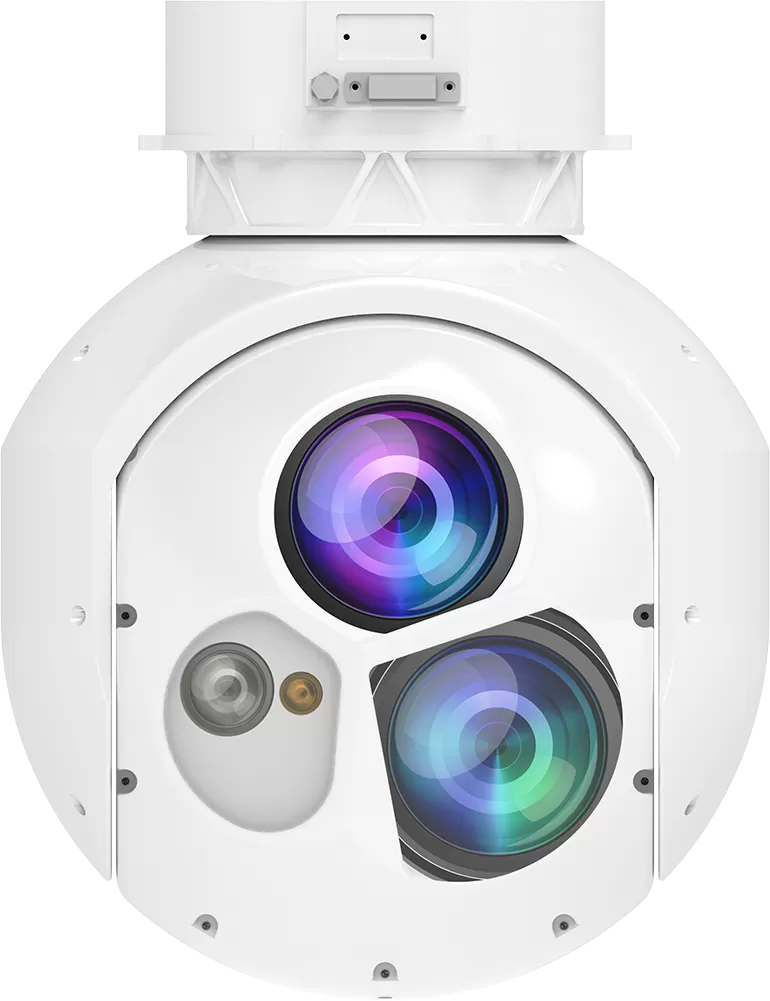
At 5.5 kg in Φ200 × 260 mm the SQ-200T is the second rung of the designator range, and the first pod in it whose thermal channel zooms. A 640 × 512 core behind a continuous 40 to 220 mm group reaches further on a vehicle than the 30x daylight optic does, 20 km against 15, while the daylight side stays ahead on a person at 6 km to 4.9 km. The laser measures 300 m to 8 km and the designator works at 1064 nm. Draw is 50 W cruising and 250 W at peak.
A thermal zoom, which changes the working method
On this pod the night channel searches and closes, rather than searching and handing over.
EO / visible
1920 × 1080, 30x zoom 4.3 – 129 mm
Opens at 4.3 mm for the wide search. Confirms colour and markings once the aircraft is close.
Thermal / IR
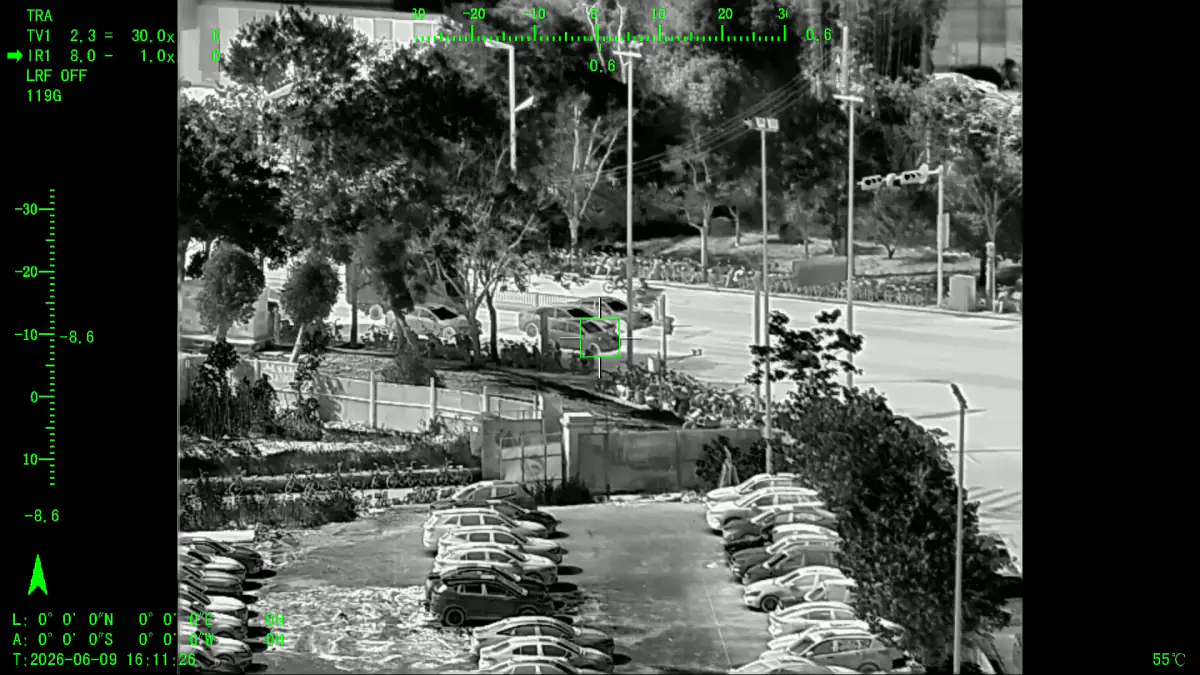
640 × 512, continuous zoom 40 – 220 mm
Person 4.9 km, vehicle 20 km. The channel that overtakes daylight on this head.
Laser rangefinder
300 m – 8 km (± 1 m)
1535 nm and eye-safe, feeding the coordinate solution.
Laser designator
1064 nm
Marks a target already confirmed on either imaging path.
The night channel goes further than the day channel
Twenty kilometres of thermal vehicle detection against fifteen on daylight is the unusual figure, and the zoom explains it: 220 mm of thermal focal length puts more pixels on a hull than 129 mm of visible does. So the crew does not search by day and confirm after dark. The core carries the search; the daylight optic does the shorter, colour-dependent job of naming the contact.
Ranging that starts at 300 m
The band is 300 m to 8 km at ± 1 m, eye-safe at 1535 nm, and the near figure reads as a decision rather than a gap. A 5.5 kg pod flies on an aircraft working at standoff, so the band opens where that aircraft sits and closes beyond the range at which most ground targets could see it. Close work belongs to a lighter head.
Find, measure and mark without leaving the orbit
All three sit on one line of sight, so the aircraft never breaks its pattern between them. The thermal zoom searches, the laser measures, the 1064 nm channel marks what both agreed on. One pass, three outputs, and no second aircraft sent to re-find a contact that has since moved.
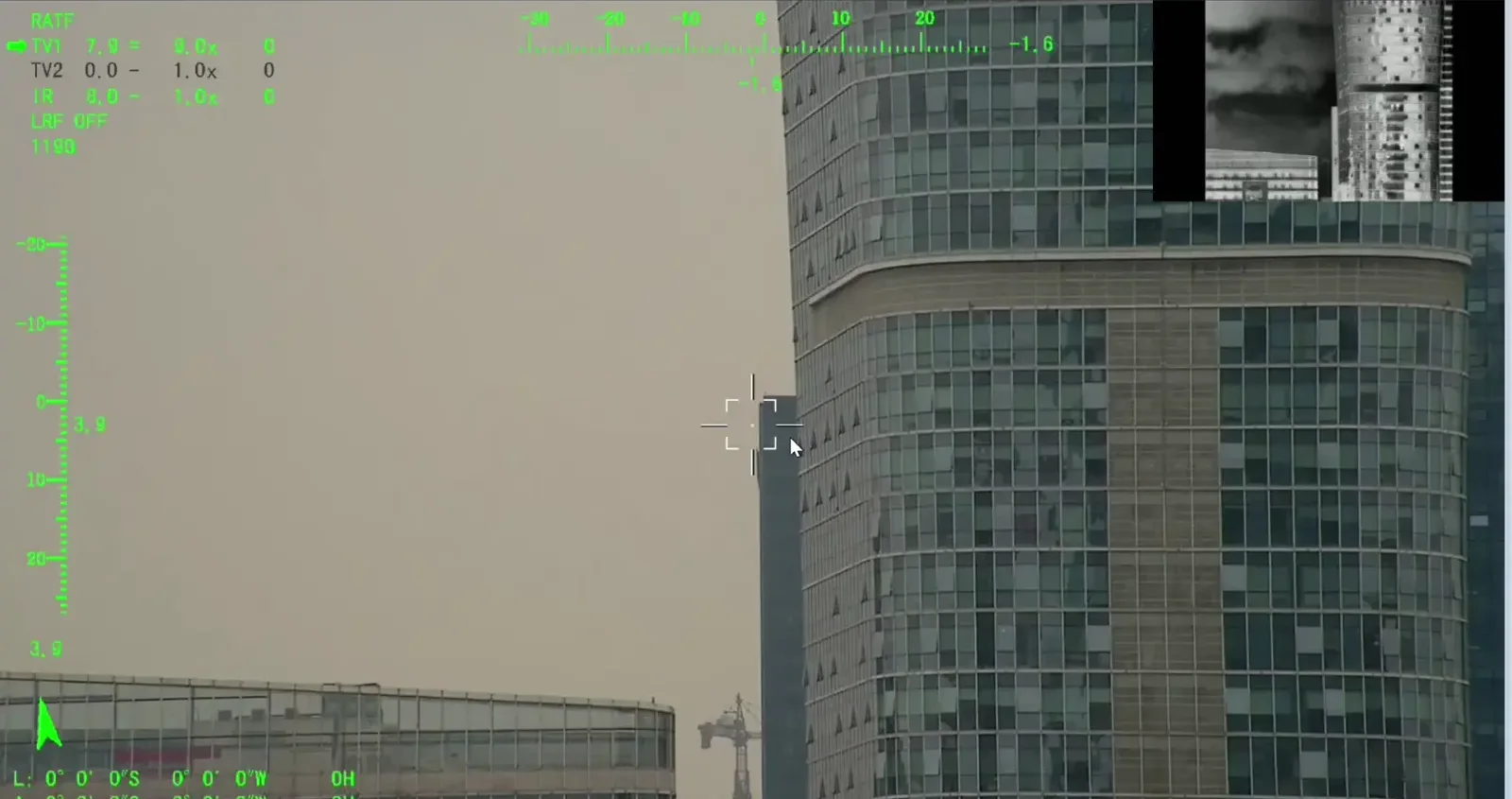
Two figures carry this model against the pod below it in weight: 220 mm of thermal zoom and 8 km of ranging. Both are named in a requirement, and neither is available lower down.
Stabilisation and mechanical design
Two axes, and a zoom group to hold inside them
A thermal zoom travelling 40 to 220 mm moves the pod’s inertia as it goes, and that is the load case these axes are drawn around. Each turns on a brushless motor fixed to its own frame, encoder feedback closing the loop, no reduction stage. Boresight is held to ≤ 100 μrad (1σ) with ≥ 60°/s of rate in hand. Roll belongs to the airframe.
5.5 kg in Φ200 × 260 mm, 250 W at peak
The pod is 5.5 kg in a Φ200 × 260 mm envelope on 11–28 VDC. Cruise is 50 W, peak 250 W, and that gap is what a designator and a long ranging laser cost a budget.
Detection and tracking at the edge
At 20 km the box is drawn on board
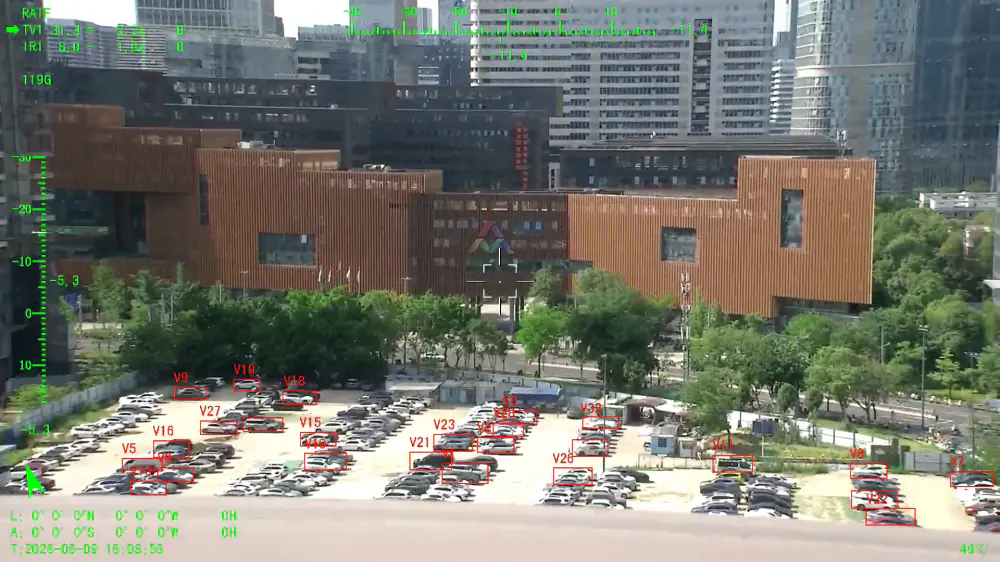
Detection of people, vehicles, vessels and aircraft runs on a module inside the pod. At that range the picture is thin and the link thinner, so computing the box before compression keeps a contact marked while the crew weighs closing on it.
A lock that survives a focal-length change
Twenty targets can run together with one actively locked. Because the thermal channel zooms, the tracker holds through a change of magnification as well as rotation and scale change, and re-acquires after occlusion. On a pod whose night channel is the primary search tool, that is the behaviour the method depends on.
Fitting the pod to an airframe
5.5 kg of mass and a 250 W peak: the two numbers that decide the platform.
Structure and mounting
Φ200 × 260 mm and 5.5 kg suit heavy fixed-wing platforms, helicopters and maritime patrol aircraft. The face releases off an isolated base, with plates to bridge a bolt pattern that is not ours. At 5.5 kg the bracket is load-bearing structure, and slack in it turns into boresight wander over 8 km of measurement.
Power, data and sealing
Voltage is not a constraint: 11 to 28 VDC covers it. Three serial standards are on offer for commands, RS-422, RS-232 and TTL, with SBUS or MAVLink available to an autopilot that wants bus-style control. The video encoder writes H.264 or H.265 to a 100 Mbps pipe and to 128 GB of memory inside the pod at once, which is why losing the downlink costs only the live view. Sealed housing, −20 °C to +60 °C working, −40 °C to +70 °C stored. The family supplies this layer rather than the model; the technology pages set it out.
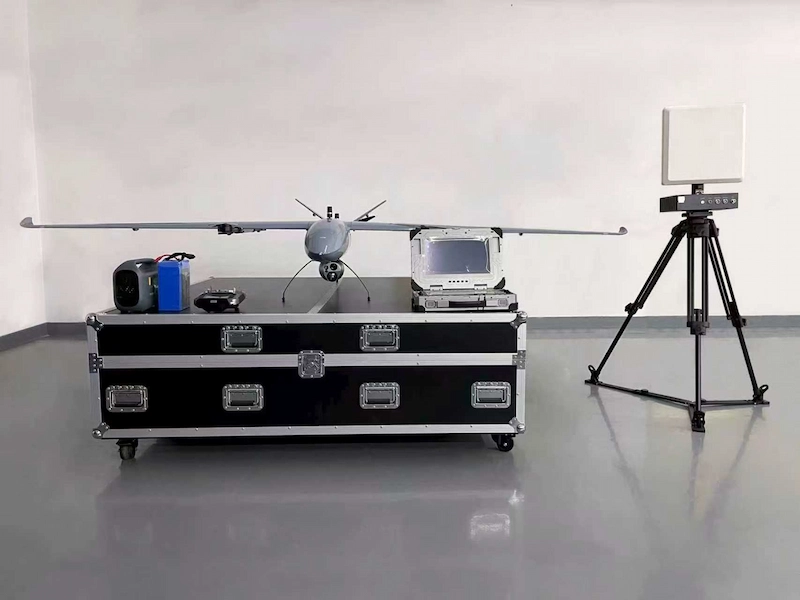
On the aircraft
One harness, one isolated mount, two axes. At 5.5 kg the bracket is drawn as structure rather than as an accessory.
Documentation released with unit one: control protocol, video pipeline note, dimensioned outline with connector pinout, the calibration record, the bench test report. All five are export-reviewed before they leave.
Where the SQ-200T is used
Three roles that want a thermal channel reaching further than the daylight one.
- Maritime patrol from a fixed-wing aircraft
Over water the air is often clearer than the sea is contrasty, and a hull stays warm against cold water long after its paint stops separating it from the swell. Twenty kilometres of thermal vehicle detection is the figure that matters on that orbit, the 8 km laser fixes a position without closing, and the designator marks a vessel an intercept is already being sent toward.
- Border watch across open ground
Open country is where a fixed daylight optic runs out of detail first. The 220 mm thermal end reads a vehicle at 20 km, so the crew searches on the night channel through the day as well, and the 30x optic takes over close in for colour and markings when the task turns from detect to identify.
- Target hand-off from a helicopter
A helicopter carries 5.5 kg with margin, and the pod’s value here is the chain rather than any single figure. A contact found on the thermal zoom is measured at 300 m to 8 km, then marked at 1064 nm for a crew already airborne that does not need a coordinate read out to it over the radio.
Full specifications
| Model | SQ-200T |
| Series | Laser Designator Pods (SQ series) |
| Stabilisation | Two-axis gyro-stabilised, ≤ 100 μrad |
| Sensor configuration | EO + IR + LRF + laser designator |
| Visible channel | 1920 × 1080, 30x zoom 4.3 – 129 mm |
| Thermal channel | 640 × 512, continuous zoom 40 – 220 mm |
| Laser rangefinder | 300 m – 8 km (± 1 m) |
| Weight | ≤5.5 kg |
| Dimensions | ≤Φ200 × 260 mm |
| Power consumption | 50 W / 250 W |
| Detection (EO) | 6 km person / 15 km vehicle |
| Detection (IR) | 4.9 km person / 20 km vehicle |
Detection distances follow the standard 1.7 m person / 2.3 m vehicle convention. Rows marked as shared are common across the SQ series.
Control software: Windows as standard. An Android version can be customised for OEM/ODM projects.
Shared across the SQ series
- Video output: Ethernet, H.264 / H.265
- Gimbal control: RS-422 / RS-232 / TTL, SBUS, MAVLink
- Input voltage: 11–28 VDC
- Operating temperature: −20 °C to +60 °C
- Sealing: Sealed housing for dust, wind and rotor wash
- Recording: On-board recording, imagery retained if the link drops
- AI module: Onboard detection, classification and multi-target tracking
- Mounting: Quick-release interface, adapters available for OEM (original equipment manufacturer) airframes
Three-view outline drawing with connector pinout, available on request.
Other laser designator pods
Designator pods from the SQ series, with the same control protocol, video path and mounting interface across the four models.
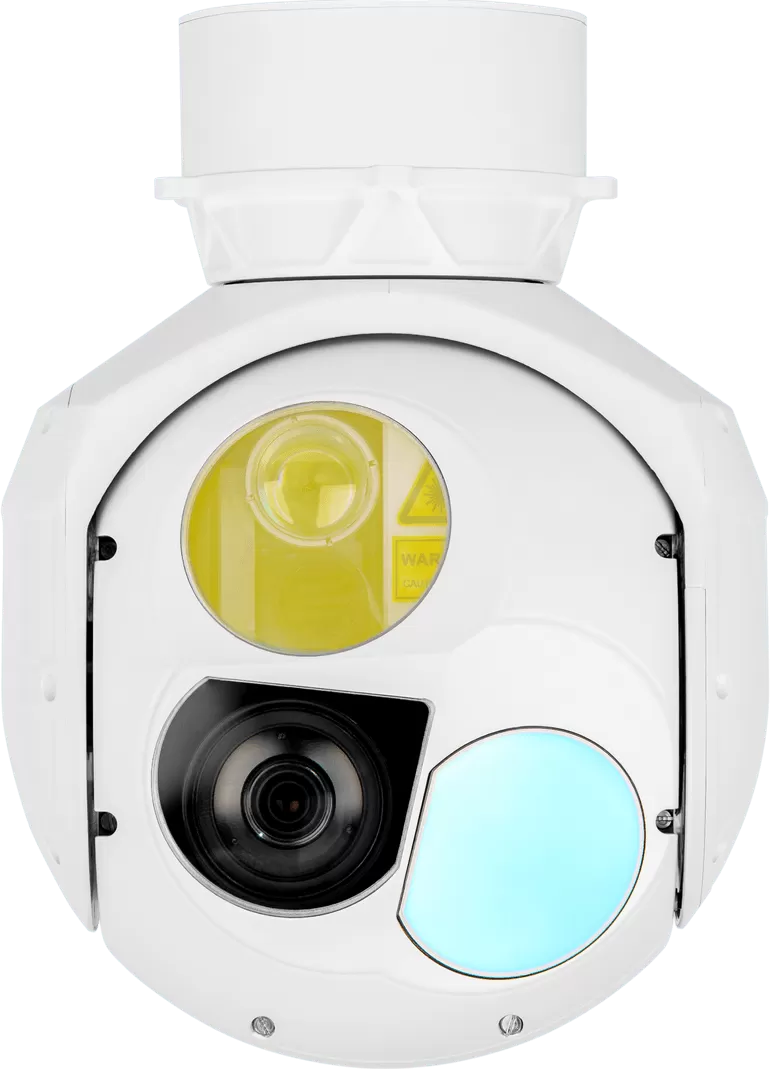
SQ series · 2-axis · EO + IR + LRF + designator
SQ-155T Laser Designator Pod OEM
A 2.5 kg targeting pod with 1064 nm designation and ranging from 120 m to 5 km.
- Weight
- ≤2.5 kg
- Visible
- 1920 × 1080, 30x zoom 4.3 – 129 mm
- Laser
- 120 m – 5 km (± 1 m)
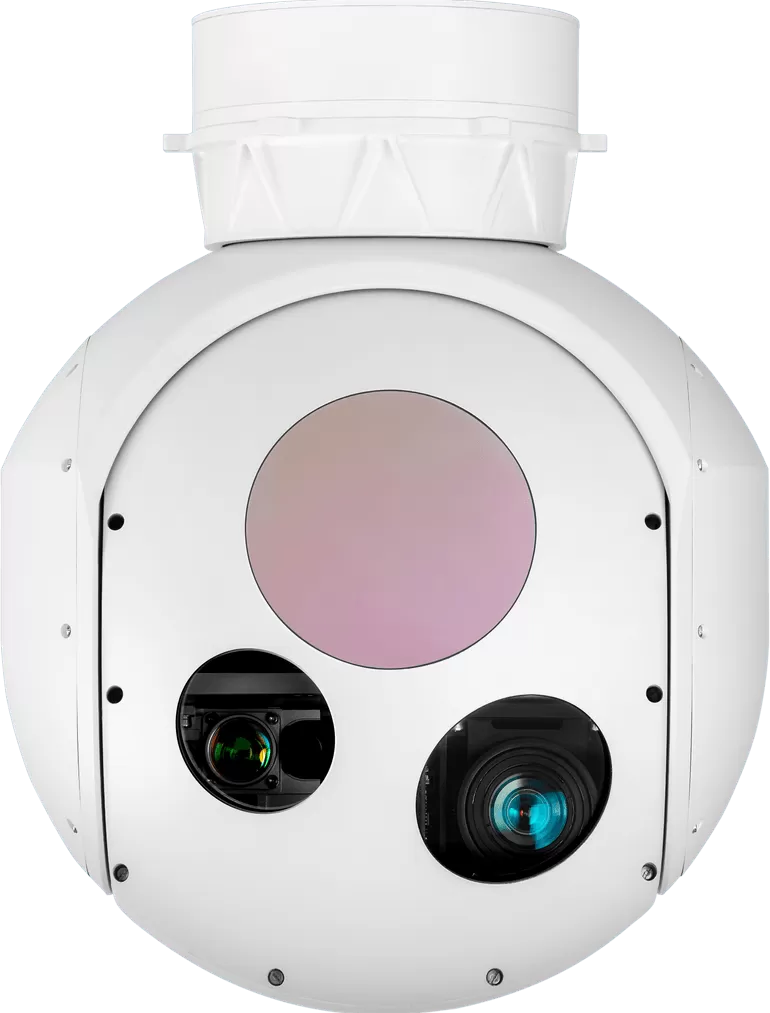
SQ series · 2-axis · EO + IR + LRF + designator
SQ-290T customized Laser Designator Pod
The long-range designator: 10 km ranging, a 300 mm thermal zoom and a 290 mm turret.
- Weight
- ≤15 kg
- Visible
- 1920 × 1080, 13x zoom 15 – 200 mm
- Laser
- 300 m – 10 km (± 1 m)
SQ series · 2-axis · EO + IR + LRF + designator
SQ-330Q Laser Designator Payload Supplier
The largest pod we build — a 330 mm turret and 22 kg of payload capacity for heavy platforms.
- Weight
- ≤22 kg
- Visible
- 1920 × 1080, 30x zoom 10 – 300 mm
- Laser
- ≥ 15 km
Questions engineers ask about the SQ-200T
How far can the SQ-200T detect a person or a vehicle?
Pick the channel: 6 km and 15 km by day, 4.9 km and 20 km by thermal, person then vehicle in both cases. Neither figure is an identification range, and both are quoted against 1.7 m and 2.3 m reference targets.
What are the order terms and the delivery time?
Buy a catalogue pod singly or a custom build from a hundred. Anything sitting in stock is shipped as built, leaving only carriage time; anything else is scheduled inside the quotation. T/T, a year of warranty.
Why does the thermal channel reach further than the daylight one?
Focal length. The thermal group zooms to 220 mm against 129 mm on the daylight side, so it puts more pixels on a hull at the same distance, and a warm vehicle against cold ground or water separates readily. On a person the advantage narrows to 4.9 km, because a body is a smaller and less contrasty target than a vehicle.
Can the thermal zoom and the designation run together?
Both channels sit on one line of sight, and the tracker holds a lock through a focal-length change, which is what a designation pass depends on. Beam parameters at 1064 nm are not on the sheet, so confirm timing and interlock behaviour with the quotation rather than assuming them.
Designed and manufactured by HITS
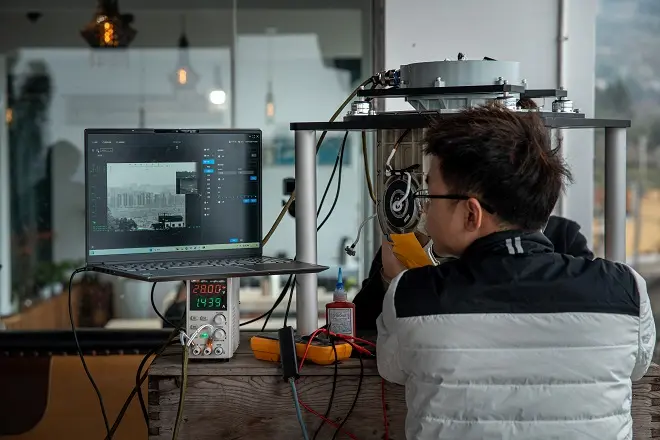
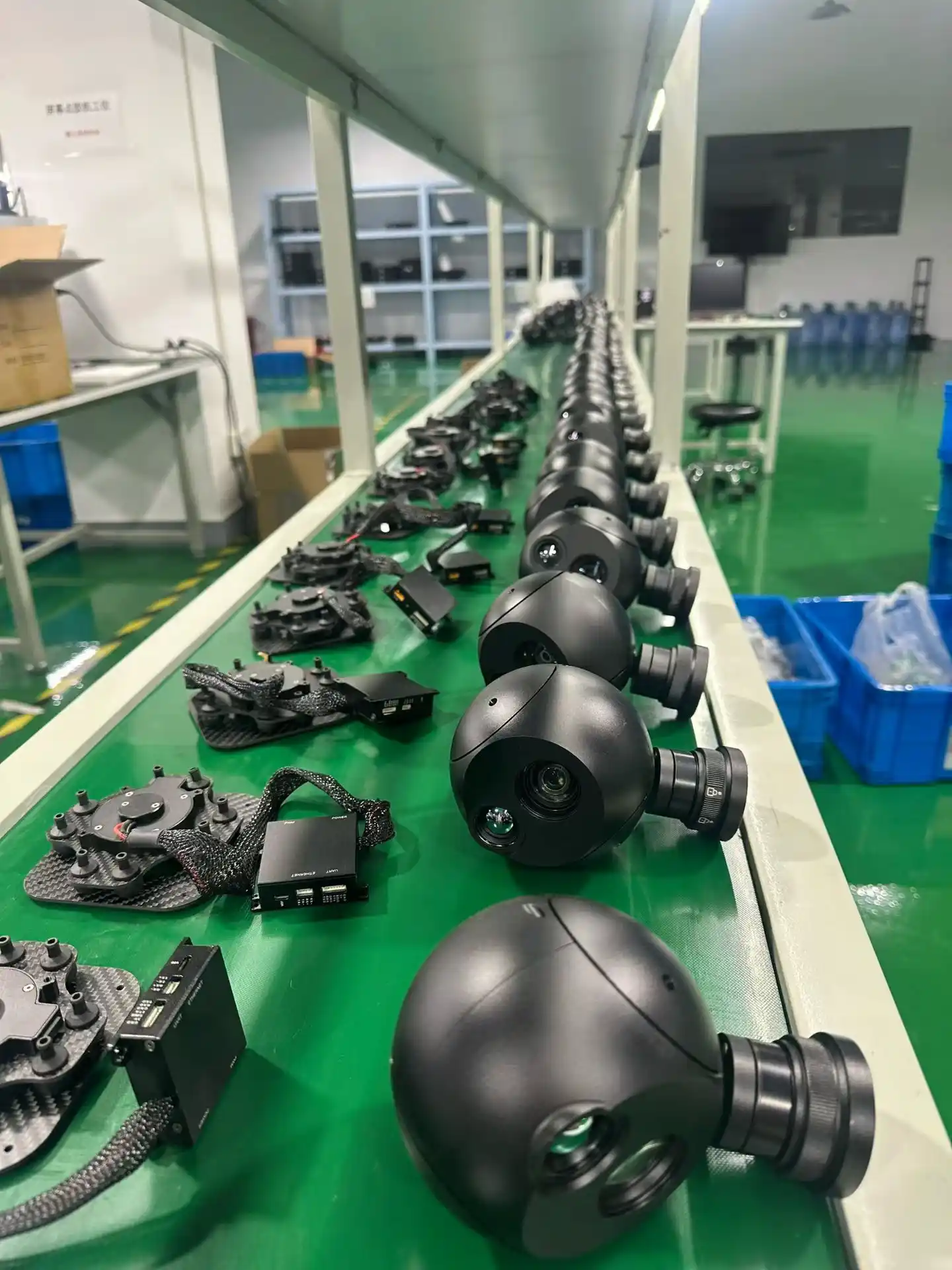
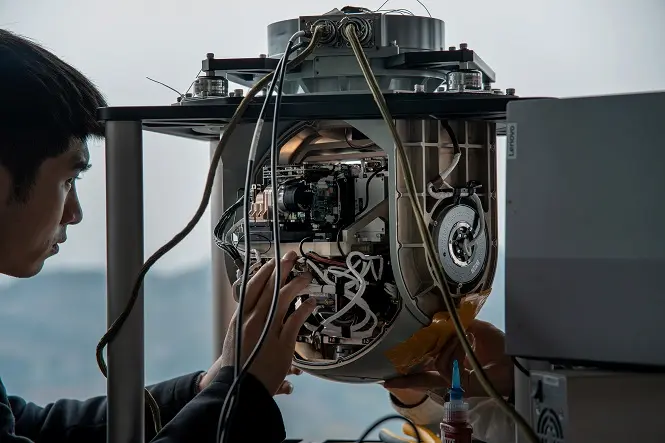
Optics, servo hardware, stabilisation firmware and the AI tracking module are developed in house, and every unit is assembled, calibrated and environmentally tested on our own line before it ships.
Request a quotation for the SQ-200T
Tell us the platform, the range you need to identify and how many units you are planning. Every configuration is quoted individually, so you get a written price against your own requirement rather than a list figure that does not fit it. We answer within one working day.
Explore all product categories
Nine routes into the range: by stabilisation, by sensor set, or by payload class. Each category page compares the models and links to the full specification.
15 models · 240 g – 5 kg
Gimbal Cameras
Two- and three-axis stabilised heads with EO, thermal and laser options.
View category →
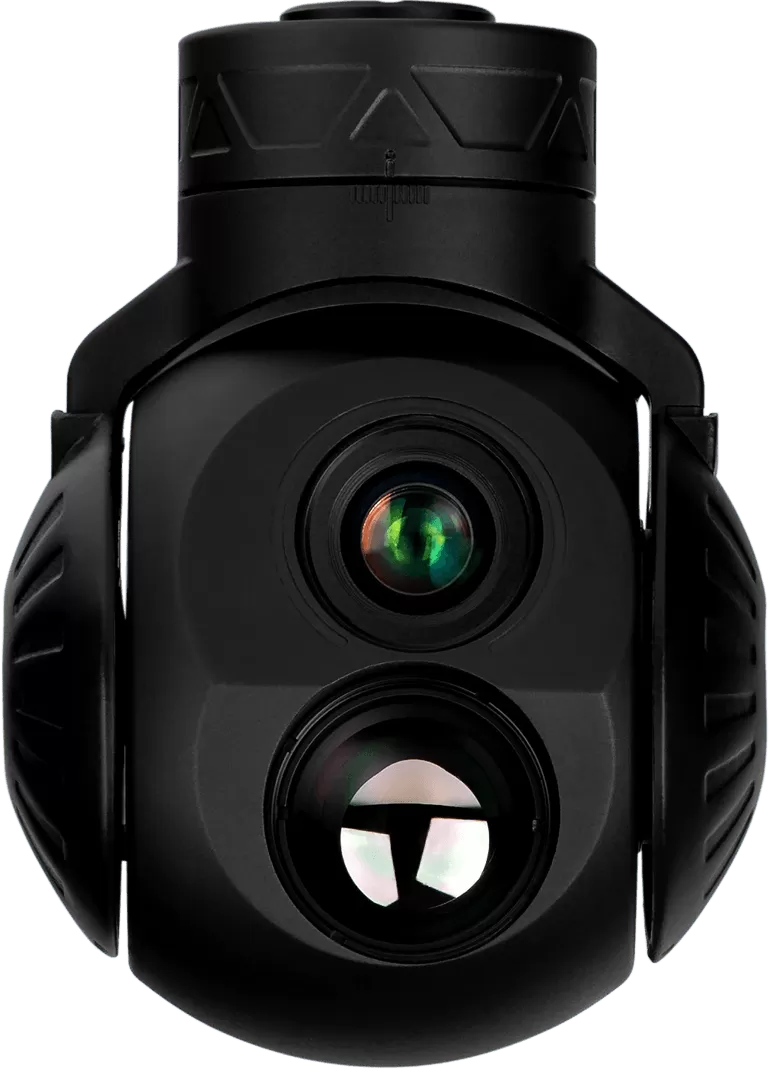
3 models · 240 – 500 g
2-Axis Gimbal Cameras
The lightest HQ heads: fixed or dual-FOV optics on a compact two-axis mount.
View category →
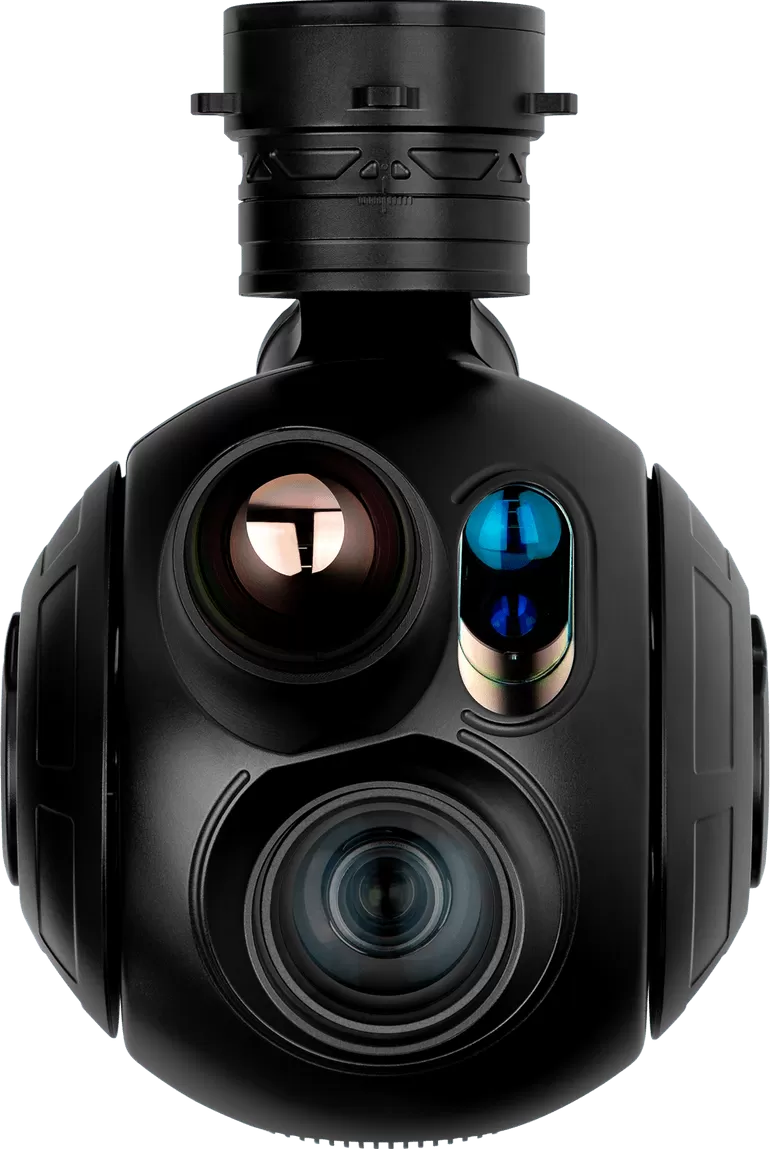
12 models · 400 g – 5 kg
3-Axis Gimbal Cameras
Roll-stabilised heads with longer zoom ranges and heavier payload capacity.
View category →
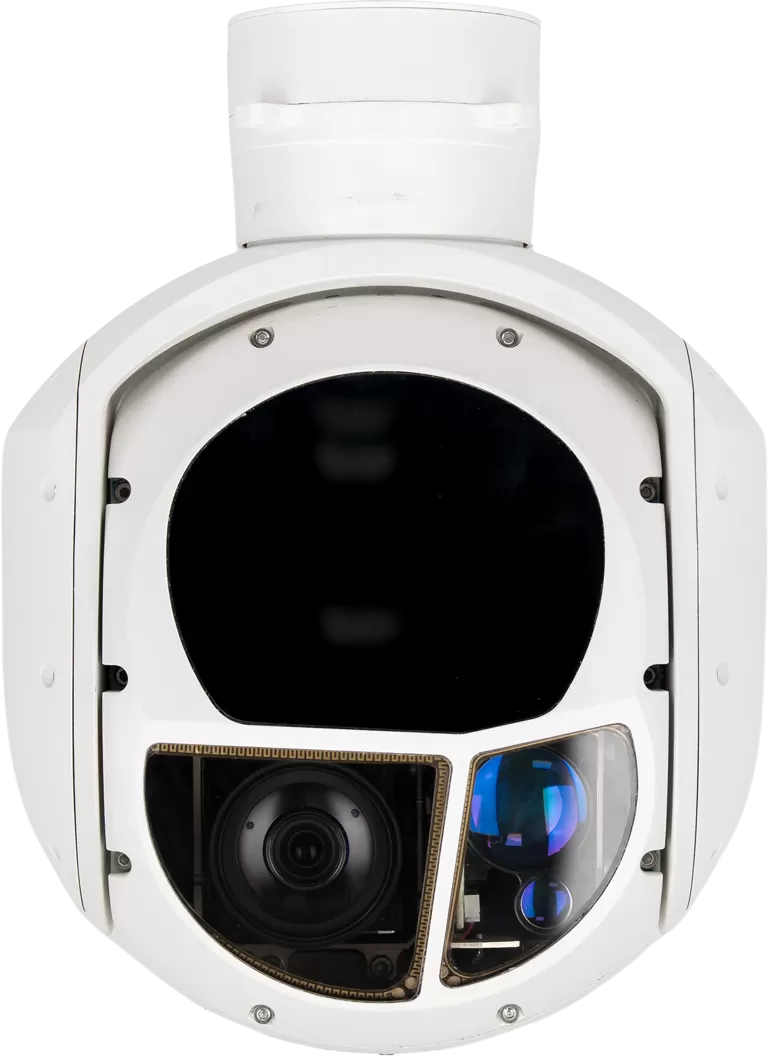
8 models · 1.6 – 10 kg
EO/IR Pod Systems
Larger multi-sensor pods with 30x–55x zoom, thermal imaging and laser ranging to 15 km.
View category →
4 models · 2.5 – 22 kg
Laser Designator Pods
Targeting pods that add 1064 nm designation to the same imaging and stabilisation architecture.
View category →
Sensor guide
Thermal Cameras
Detector, lens and range: how uncooled LWIR payloads are specified for UAVs.
View category →
Sensor guide
Infrared Cameras
How to match an IR detector, lens and interface before choosing a gimbal.
View category →
Sensor guide
EO Cameras
Visible-channel sensors, zoom lenses and the resolution needed at range.
View category →
Sensor guide
EO/IR Cameras
Boresight, sensor pairing and the trade-offs of a dual-sensor head.
View category →