
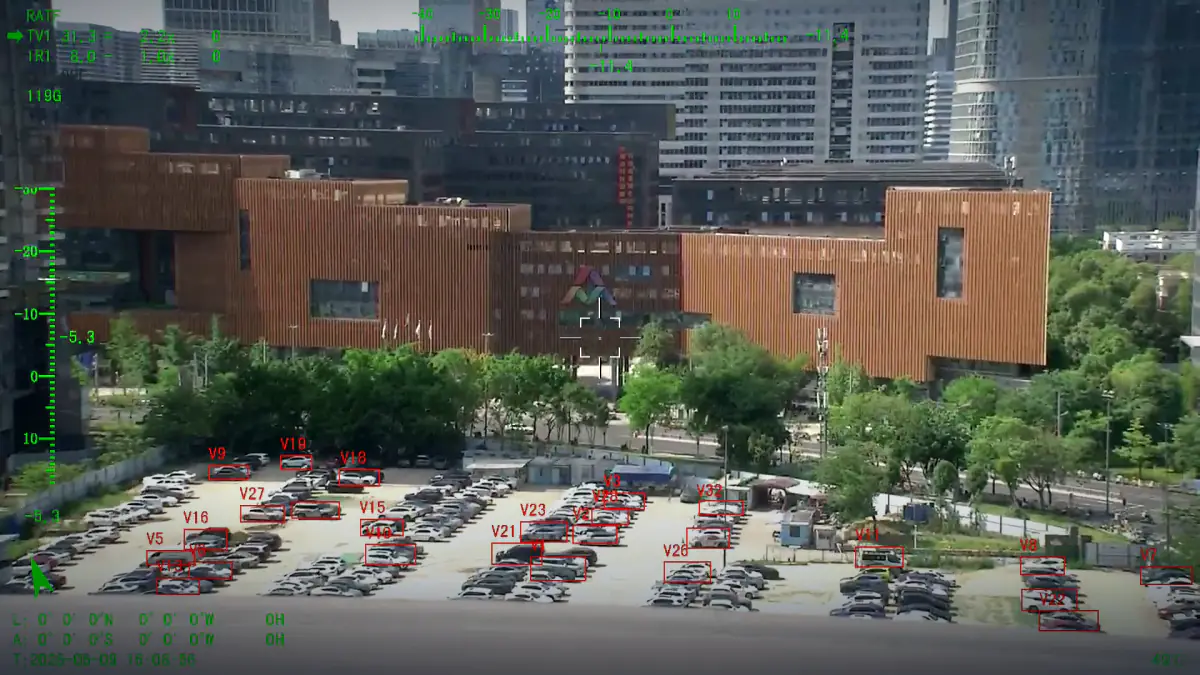
SQ-330Q two-axis laser designator pod
Category: Laser Designator Pods
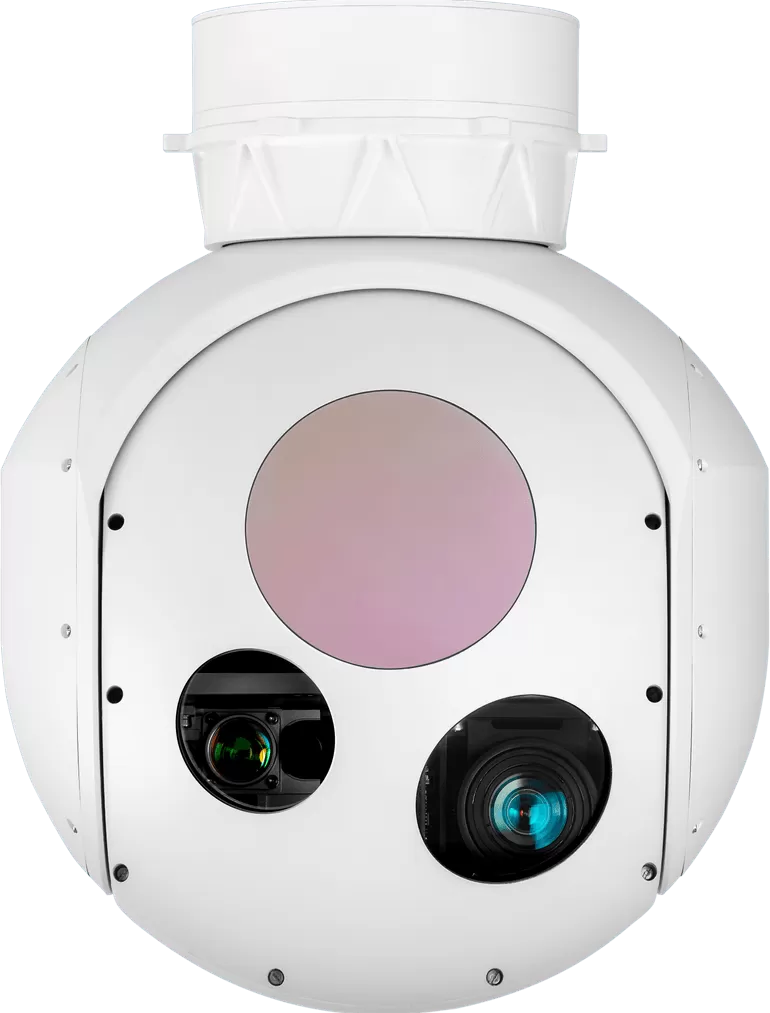
A two-axis laser designator pod that packages EO (electro-optical), IR, LRF, laser designator into a 22 kg head measuring Φ330 × 420 mm. The largest pod we build — a 330 mm turret and 22 kg of payload capacity for heavy platforms.
- Weight 22 kg
- Two-axis stabilised
- EO 1920 × 1080
- Thermal Dual 640 × 512
- LRF ≥ 15 km
- AI detection & tracking
- CE / RoHS documentation available on request
- Export compliance statement available on request
- Calibration and test report supplied with every unit
What the SQ-330Q is
The SQ-330Q is the heaviest pod in the range at 22 kg in a Φ330 × 420 mm turret, and the only one carrying two thermal channels. A fixed 300 mm core and a second zooming 15 to 330 mm both run 640 × 512, returning 6.7 km on a person and 22.7 km on a vehicle. The daylight side is a 30x group from 10 to 300 mm giving 10.6 km and 25 km, the laser is rated at 15 km or better, and designation runs at 1064 nm. Draw is 100 W cruising, 600 W at peak.
Two thermal channels, and the reason for the second
A fixed 300 mm core and a 15 to 330 mm zoom, side by side, both 640 × 512.
EO / visible
1920 × 1080, 30x zoom 10 – 300 mm
10.6 km person, 25 km vehicle.
Thermal / IR (zoom)
640 × 512, continuous zoom 15 – 330 mm
The search channel. 15 mm wide end, 330 mm long.
Thermal / IR (fixed)
640 × 512, 300 mm fixed
Held at one focal length. 6.7 km person, 22.7 km vehicle.
Laser rangefinder
≥ 15 km
1535 nm, eye-safe. A floor, not a band.
Laser designator
1064 nm
Marks a target already identified on an imaging path.
Why a pod needs two thermal cores
A single core zooming 15 to 330 mm travels a long way between search and recognition, and on a moving contact that travel costs time. Splitting the job removes it: the zoom searches, the fixed 300 mm core already sits at the long end, and the operator switches channel rather than waiting for a barrel. The cost is mass, and 22 kg is where it lands.
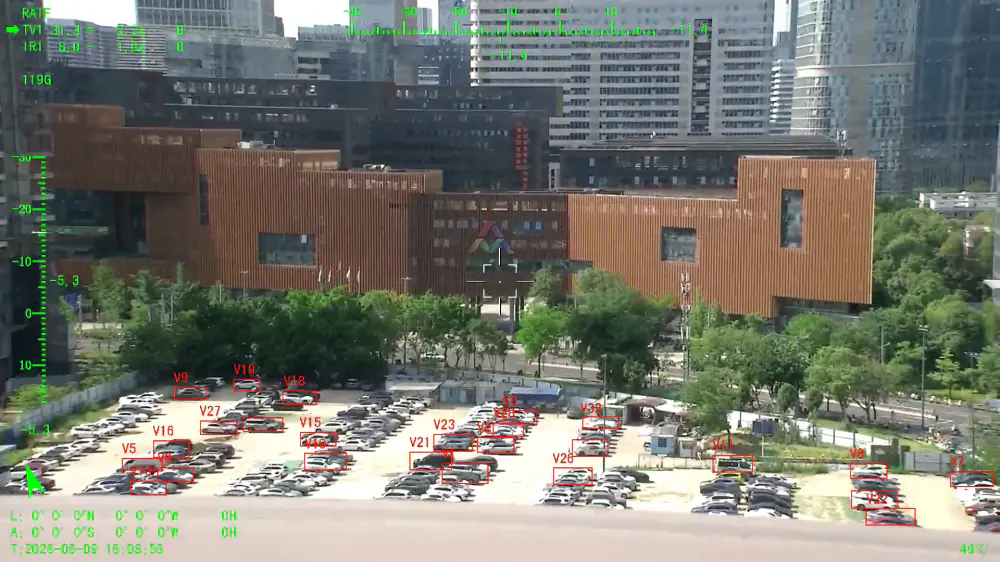
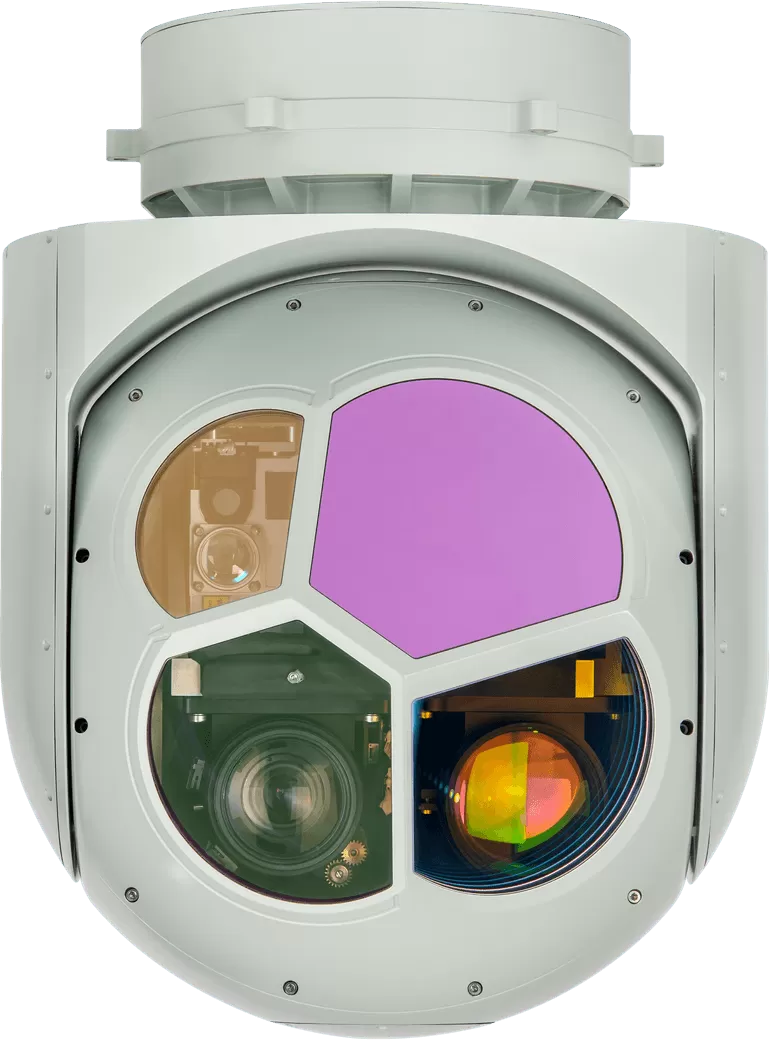
Ten to three hundred millimetres in daylight
Thirty times across 10 to 300 mm: 10 mm frames a valley or a harbour approach, 300 mm reads a vehicle at 25 km. The zoom travels continuously, so the operator picks a frame rather than changing lenses, and 10.6 km is what the optic returns on a body instead of a hull.
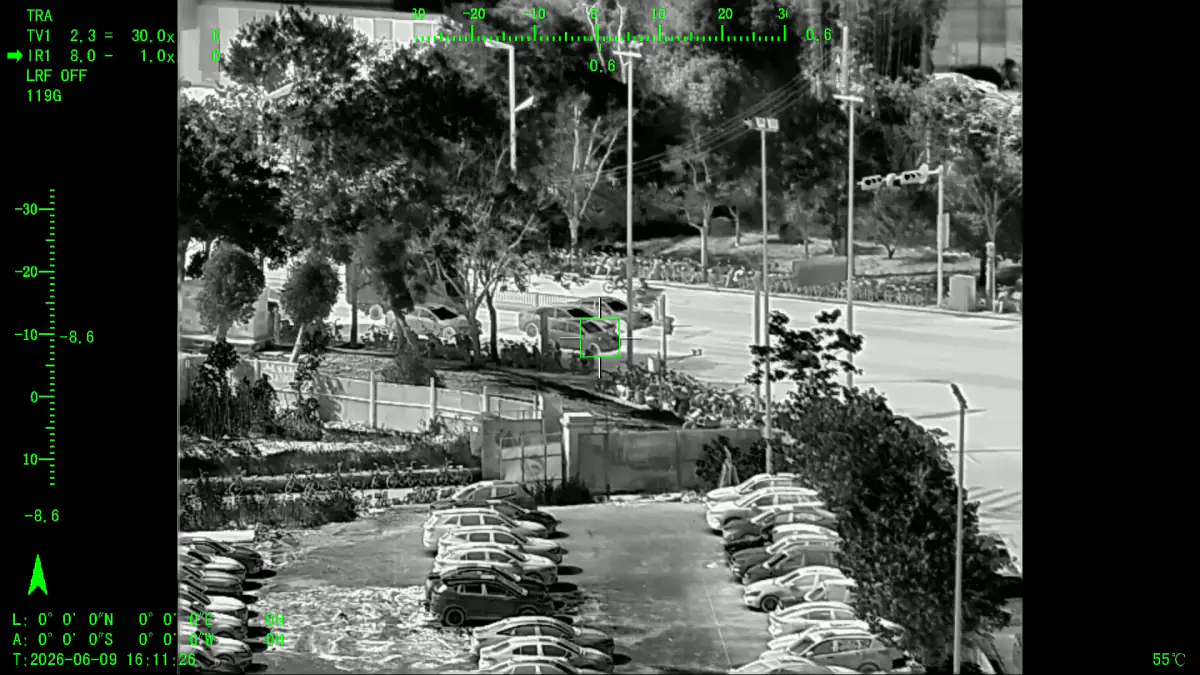
A 15 km laser, stated as a floor
The sheet gives ≥ 15 km rather than a band, which reads literally: a guaranteed minimum, not a ceiling. It is also the only figure here stated that way, and the lowest number on the sheet, behind 22.7 km of thermal and 25 km of daylight detection. A contact at the edge of the imaging envelope therefore sits outside the ranging envelope until the aircraft closes.
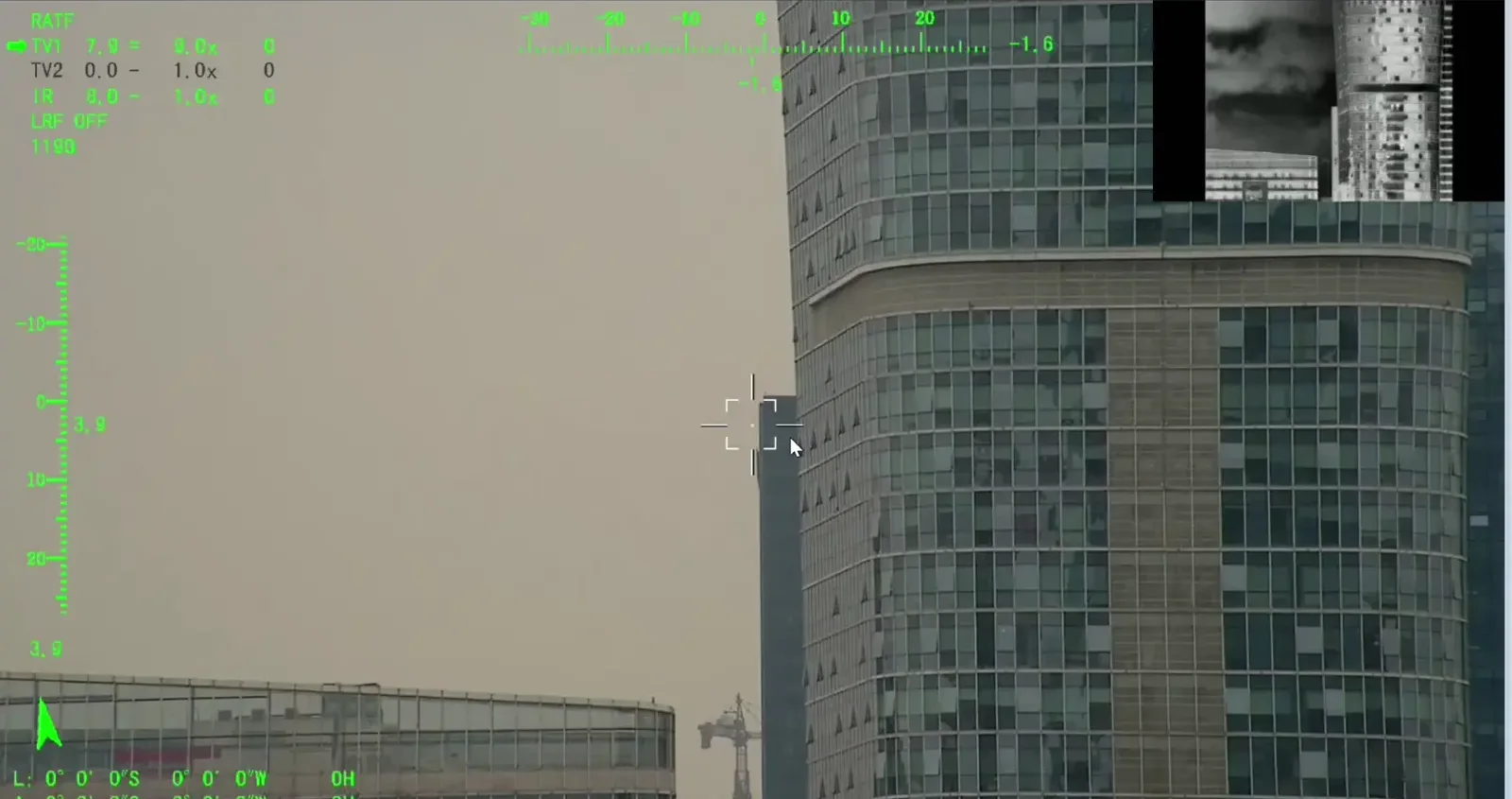
The one gap in the chain is the laser: 15 km of measurement behind 25 km of daylight detection.
Stabilisation and mechanical design
Twenty-two kilograms is the design case
Yaw and pitch are the stabilised axes, and the rest of the mount follows from the mass they arrest. Two thermal cores, a 300 mm daylight barrel and the laser bench sit in one 22 kg housing, and that inertia is what the loops are drawn against. Feedback runs at the joint, the drive is direct, and line-of-sight error stays inside ≤ 100 μrad (1σ) with ≥ 60°/s available.
Φ330 × 420 mm, and 600 W to find
The turret measures Φ330 × 420 mm and takes 11–28 VDC. Cruise is 100 W; peak is 600 W, arriving when the designator, the ranging laser and both cores work at once. On a platform this size the electrical design is the longer conversation, and 600 W is where it starts.
Detection and tracking at the edge
One classifier behind five apertures
Whichever channel is live, the same on-board module separates people, vehicles, vessels and aircraft. Nothing goes to a ground processor, which matters at the outer edge of this envelope: the further the aircraft works, the less the downlink can be trusted, and a box decided before compression arrives regardless.
Moving the lock between apertures
Twenty targets can be held with one under active lock, and the tracker carries that lock through a channel change as well as rotation, scale change and occlusion. That is the working reason for the second core: a contact on the zoom can be handed to the fixed 300 mm view without dropping the lock and finding it again.
Installing a twenty-two kilogram turret
22 kg and 600 W. Neither is a payload swap, and both are airframe decisions.
Hard point and structure
At 22 kg the airframe is drawn around the pod rather than adapted to it. An isolated base takes the quick-release face and adapter plates cover a foreign bolt circle, but the bracket is primary structure at this mass. Elasticity anywhere in that path becomes boresight wander at the far end of a 15 km measurement.
Supply, data and sealing
Eleven to 28 VDC in, with 600 W to provide at peak. Commands travel over RS-422, RS-232 or TTL, and an autopilot speaking SBUS or MAVLink can address the gimbal directly. Imagery is H.264 or H.265 on 100 Mbps Ethernet into 128 GB internally, and the housing is sealed for dust and rotor wash across −20 °C to +60 °C working and −40 °C to +70 °C stored. The technology pages document that layer.
On the aircraft
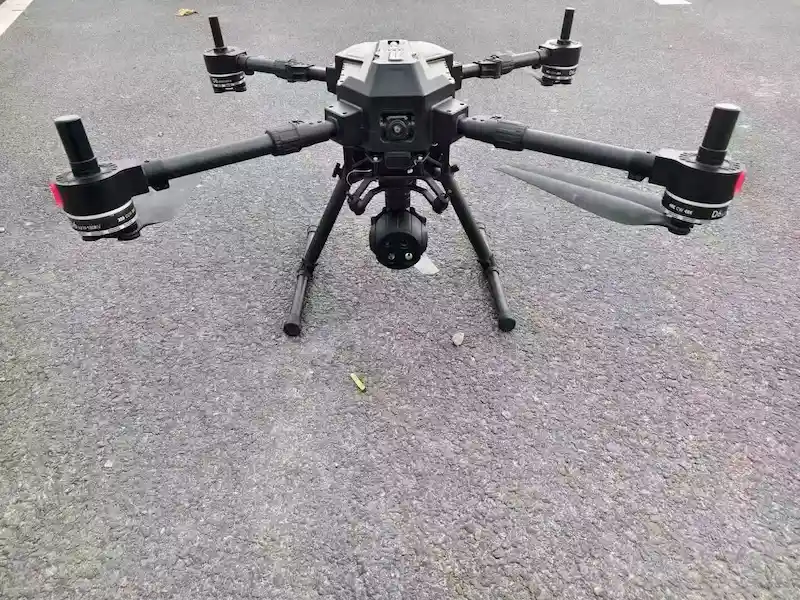
Turret, harness and operator station. The hard point is part of the aircraft, not an accessory bolted to it.
At this size the first document is a drawing rather than a protocol note: outline and pinout for the airframe review, then calibration record and test report with the hardware. All of it is export-reviewed.
Where the SQ-330Q is used
Three roles for a heavy platform that works at standoff.
- Maritime patrol and border watch
A 22 kg turret goes on a maritime aircraft because that aircraft has the hard point and the generator. The 300 mm fixed core returns 22.7 km on a vehicle-sized contact without waiting for a zoom to travel, the 330 mm end of the second core closes on it, and the laser fixes the position for an intercept already under way.
- Long-range identification from standoff
Twenty-five kilometres of daylight vehicle detection only makes sense if the aircraft never intends to come close. The 10 to 300 mm optic reads a vehicle at that range, both thermal channels cover the scene after dark, and the aircraft orbits outside anything it watches. The 15 km laser sets how far into it a position can be measured.
- Heavy unmanned helicopter ISR
A rotorcraft with 22 kg of margin and a generator behind it is the natural platform. Two cores and a 300 mm daylight end let an operator work a scene at distance from a hover, and the designator turns a contact into something a crew already airborne can act on without a coordinate read over the radio.
Full specifications
| Model | SQ-330Q |
| Series | Laser Designator Pods (SQ series) |
| Stabilisation | Two-axis gyro-stabilised, ≤ 100 μrad |
| Sensor configuration | EO + IR + LRF + laser designator |
| Visible channel | 1920 × 1080, 30x zoom 10 – 300 mm |
| Thermal channel | Dual 640 × 512, 300 mm + continuous zoom 15 – 330 mm |
| Laser rangefinder | ≥ 15 km |
| Weight | ≤22 kg |
| Dimensions | ≤Φ330 × 420 mm |
| Power consumption | 100 W / 600 W |
| Detection (EO) | 10.6 km person / 25 km vehicle |
| Detection (IR) | 6.7 km person / 22.7 km vehicle |
Detection distances follow the standard 1.7 m person / 2.3 m vehicle convention. Rows marked as shared are common across the SQ series.
Control software: Windows as standard. An Android version can be customised for OEM/ODM projects.
Shared across the SQ series
- Video output: Ethernet, H.264 / H.265
- Gimbal control: RS-422 / RS-232 / TTL, SBUS, MAVLink
- Input voltage: 11–28 VDC
- Operating temperature: −20 °C to +60 °C
- Sealing: Sealed housing for dust, wind and rotor wash
- Recording: On-board recording, imagery retained if the link drops
- AI module: Onboard detection, classification and multi-target tracking. How target tracking technology works.
- Mounting: Quick-release interface, adapters available for OEM (original equipment manufacturer) airframes
Three-view outline drawing with connector pinout, available on request.
Other laser designator pods
Designator pods from the SQ series, with the same control protocol, video path and mounting interface across the four models.
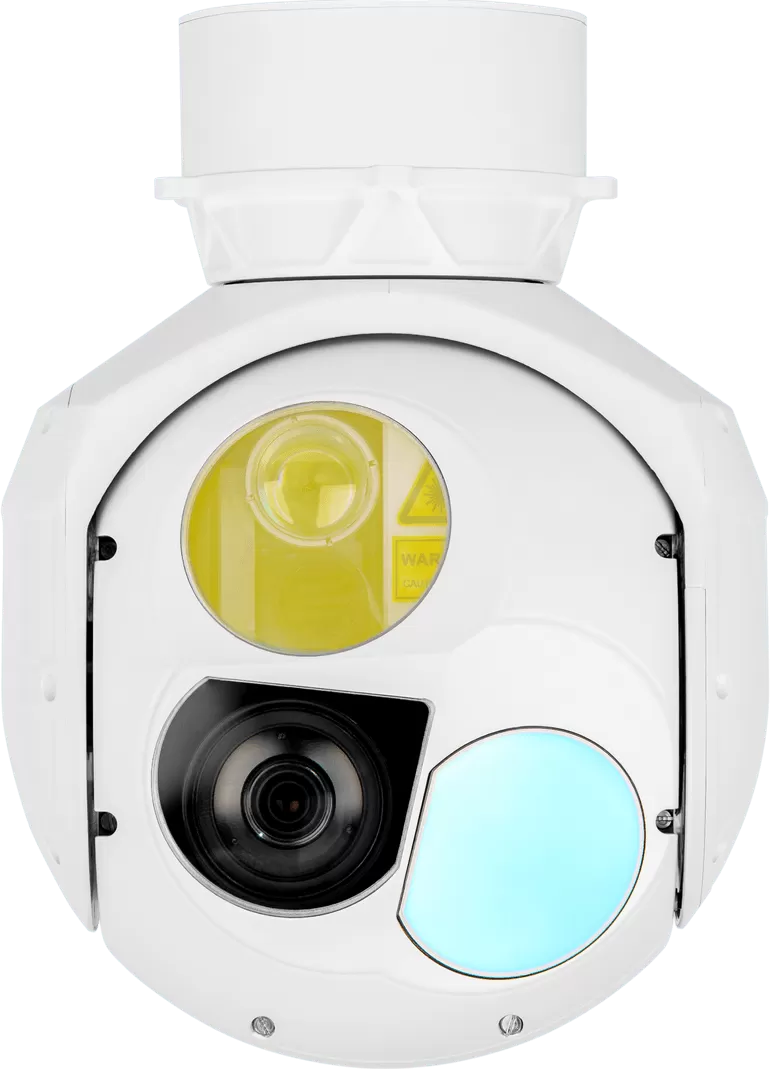
SQ series · 2-axis · EO + IR + LRF + designator
SQ-155T Laser Designator Pod OEM
A 2.5 kg targeting pod with 1064 nm designation and ranging from 120 m to 5 km.
- Weight
- ≤2.5 kg
- Visible
- 1920 × 1080, 30x zoom 4.3 – 129 mm
- Laser
- 120 m – 5 km (± 1 m)
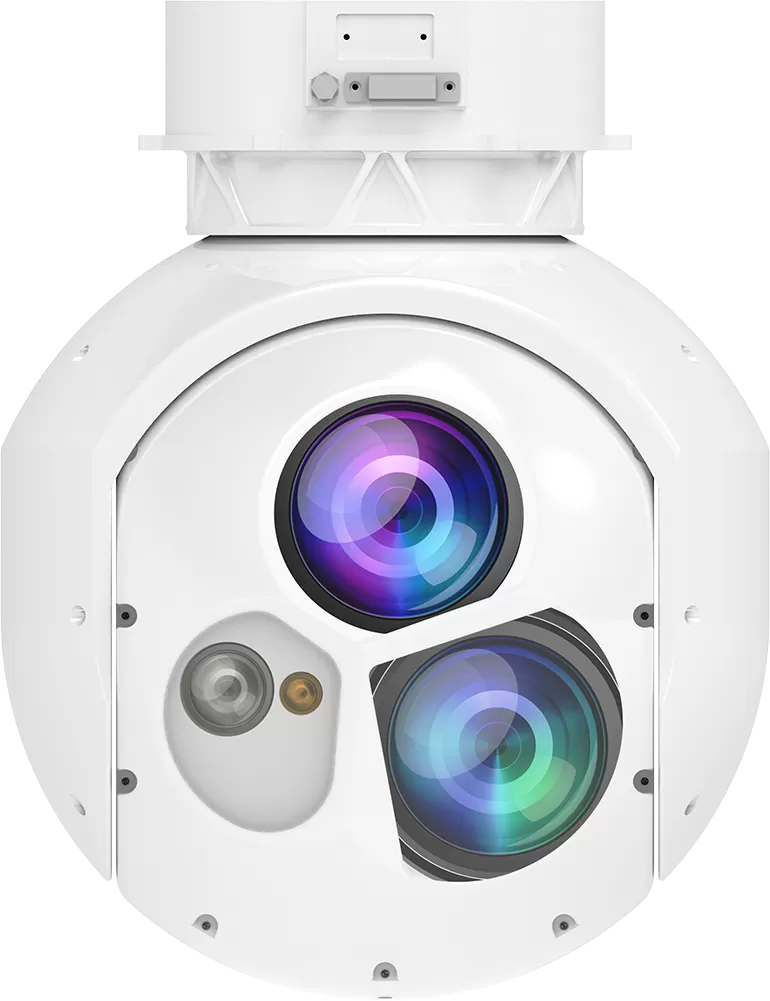
SQ series · 2-axis · EO + IR + LRF + designator
SQ-200T Laser Targeting Pod OEM
Laser designation plus 8 km ranging on a 5.5 kg two-axis pod.
- Weight
- ≤5.5 kg
- Visible
- 1920 × 1080, 30x zoom 4.3 – 129 mm
- Laser
- 300 m – 8 km (± 1 m)
SQ series · 2-axis · EO + IR + LRF + designator
SQ-290T customized Laser Designator Pod
The long-range designator: 10 km ranging, a 300 mm thermal zoom and a 290 mm turret.
- Weight
- ≤15 kg
- Visible
- 1920 × 1080, 13x zoom 15 – 200 mm
- Laser
- 300 m – 10 km (± 1 m)
Questions engineers ask about the SQ-330Q
How far does the SQ-330Q detect a person or a vehicle?
Daylight gives 10.6 km on a person and 25 km on a vehicle; either thermal channel gives 6.7 km and 22.7 km. Both assume 1.7 m and 2.3 m targets and both are detection only, so recognition and identification sit closer in.
What are the order terms and the delivery time?
Catalogue configuration from one unit, custom from 100. Shelf stock goes out as it stands, making the interval a transport question; bespoke and volume runs are dated in the quotation. T/T, twelve months of warranty.
Why carry two thermal cores instead of one zooming core?
To remove the travel. A single core zooming 15 to 330 mm spends time moving between the search frame and the recognition frame, and a moving contact does not wait for it. With a fixed 300 mm core alongside, the operator switches channels and the long view is already there. The cost is 22 kg and 600 W at peak.
The laser is listed as ≥ 15 km while the optics reach 25 km. What happens in between?
Detection runs past the ranging envelope. A vehicle can be picked up at 25 km in daylight or 22.7 km on thermal, but a position needs a return, and the sheet states the rangefinder as 15 km or better rather than as a range with a top end. Inside that band the laser gives a coordinate at ± 1 m; outside it, the aircraft has to close before a measurement exists.
Designed and manufactured by HITS
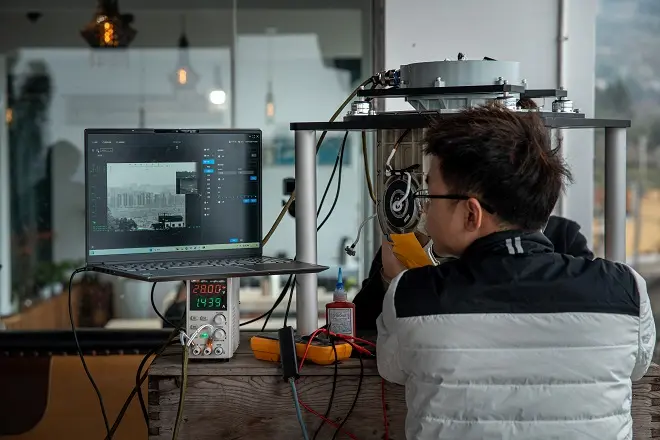
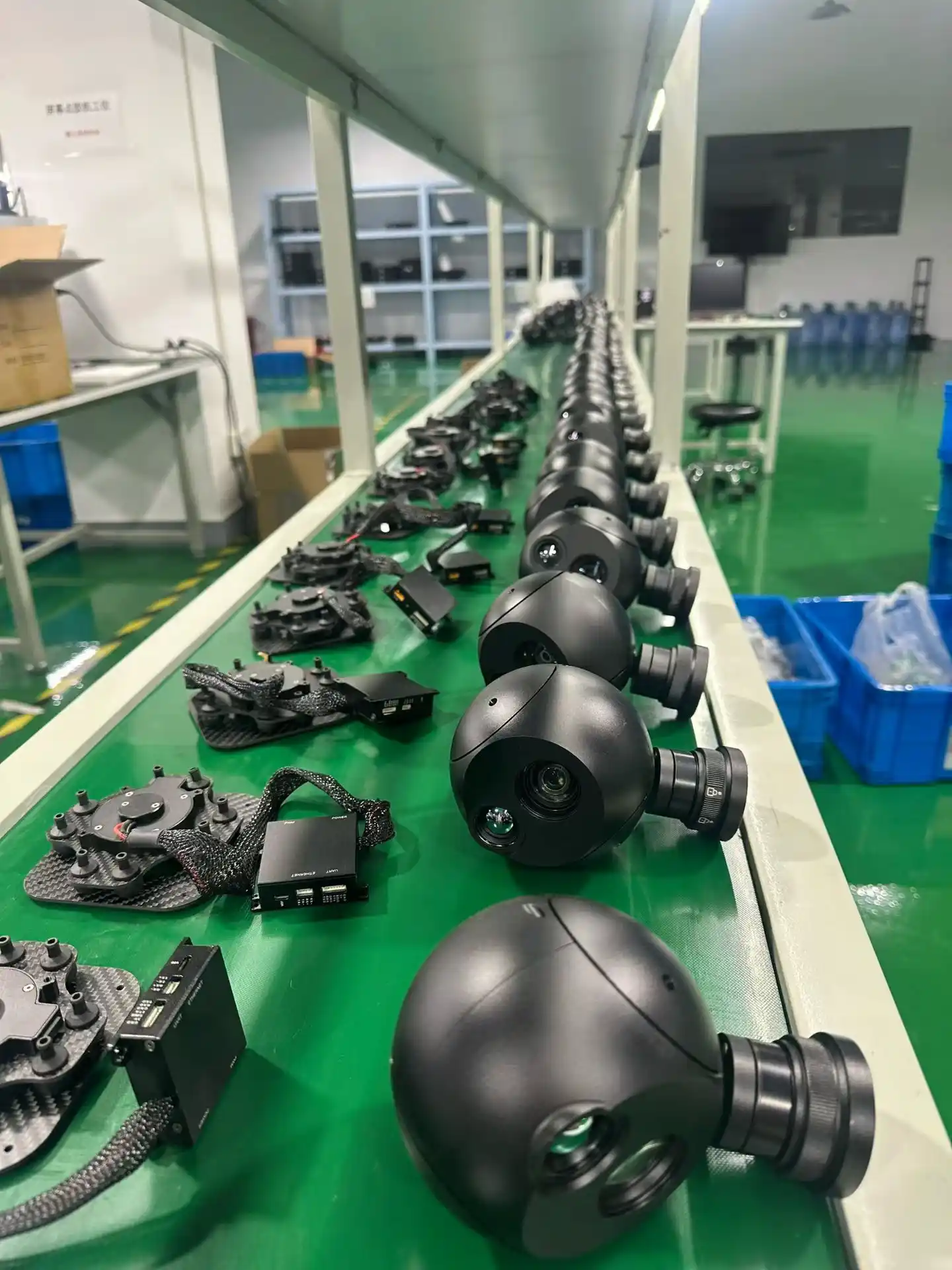
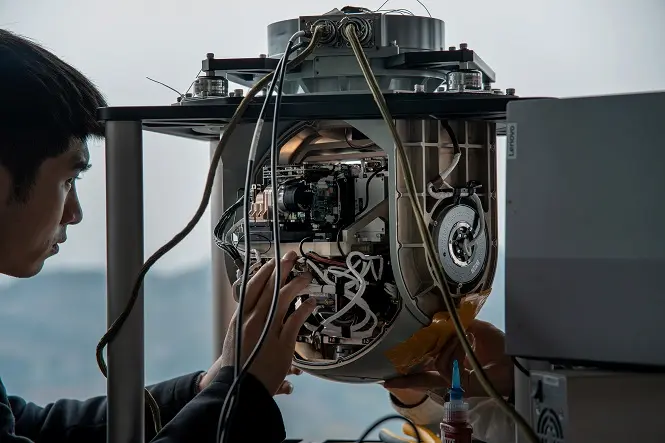
Optics, servo hardware, stabilisation firmware and the AI tracking module are developed in house, and every unit is assembled, calibrated and environmentally tested on our own line before it ships.
Request a quotation for the SQ-330Q
Tell us the platform, the range you need to identify and how many units you are planning. Every configuration is quoted individually, so you get a written price against your own requirement rather than a list figure that does not fit it. We answer within one working day.
Explore all product categories
Nine routes into the range: by stabilisation, by sensor set, or by payload class. Each category page compares the models and links to the full specification.
15 models · 240 g – 5 kg
Gimbal Cameras
Two- and three-axis stabilised heads with EO, thermal and laser options.
View category →
3 models · 240 – 500 g
2-Axis Gimbal Cameras
The lightest HQ heads: fixed or dual-FOV optics on a compact two-axis mount.
View category →
12 models · 400 g – 5 kg
3-Axis Gimbal Cameras
Roll-stabilised heads with longer zoom ranges and heavier payload capacity.
View category →
8 models · 1.6 – 10 kg
EO/IR Pod Systems
Larger multi-sensor pods with 30x–55x zoom, thermal imaging and laser ranging to 15 km.
View category →
4 models · 2.5 – 22 kg
Laser Designator Pods
Targeting pods that add 1064 nm designation to the same imaging and stabilisation architecture.
View category →
Sensor guide
Thermal Cameras
Detector, lens and range: how uncooled LWIR payloads are specified for UAVs.
View category →
Sensor guide
Infrared Cameras
How to match an IR detector, lens and interface before choosing a gimbal.
View category →
Sensor guide
EO Cameras
Visible-channel sensors, zoom lenses and the resolution needed at range.
View category →
Sensor guide
EO/IR Cameras
Boresight, sensor pairing and the trade-offs of a dual-sensor head.
View category →