
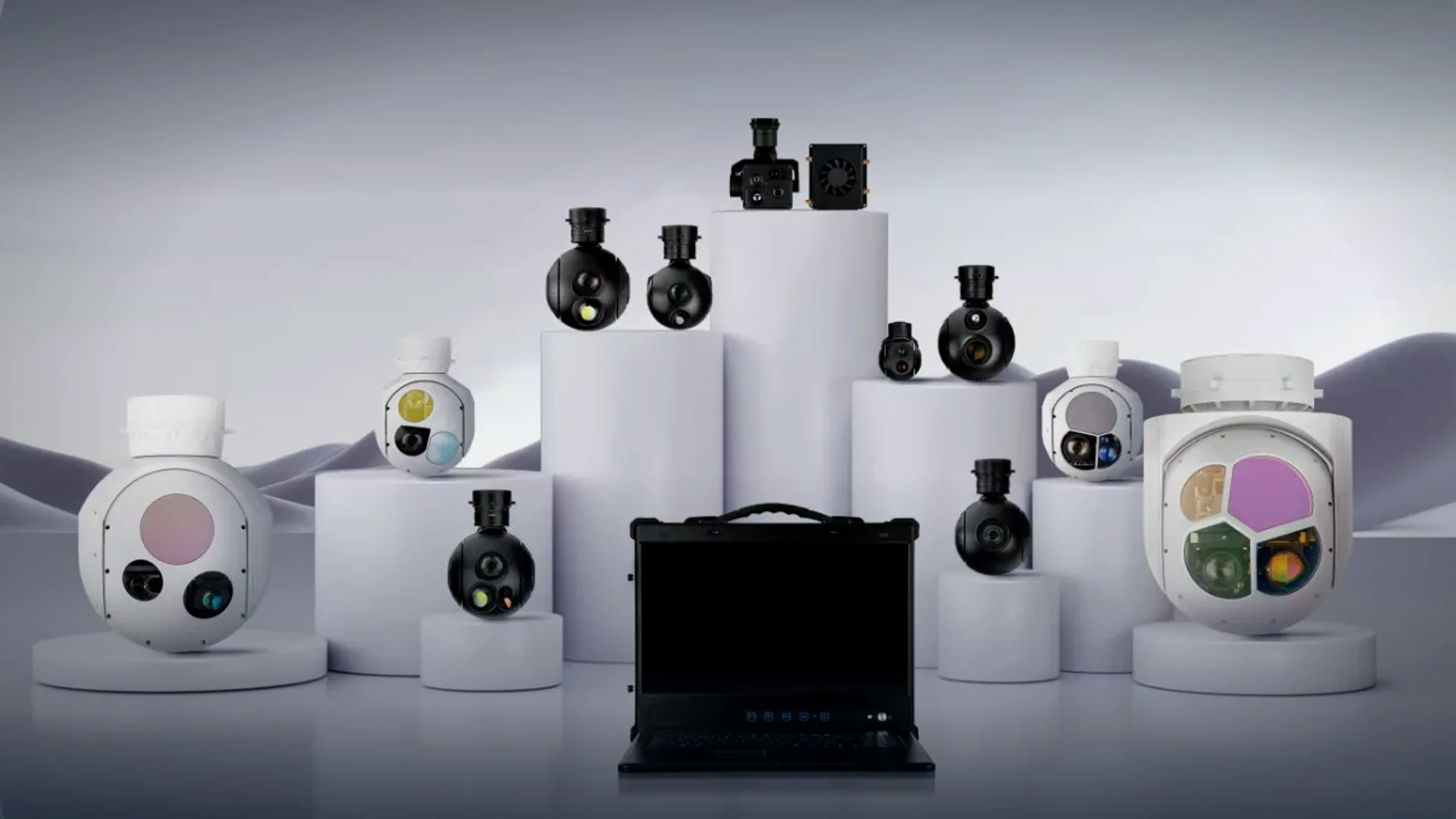
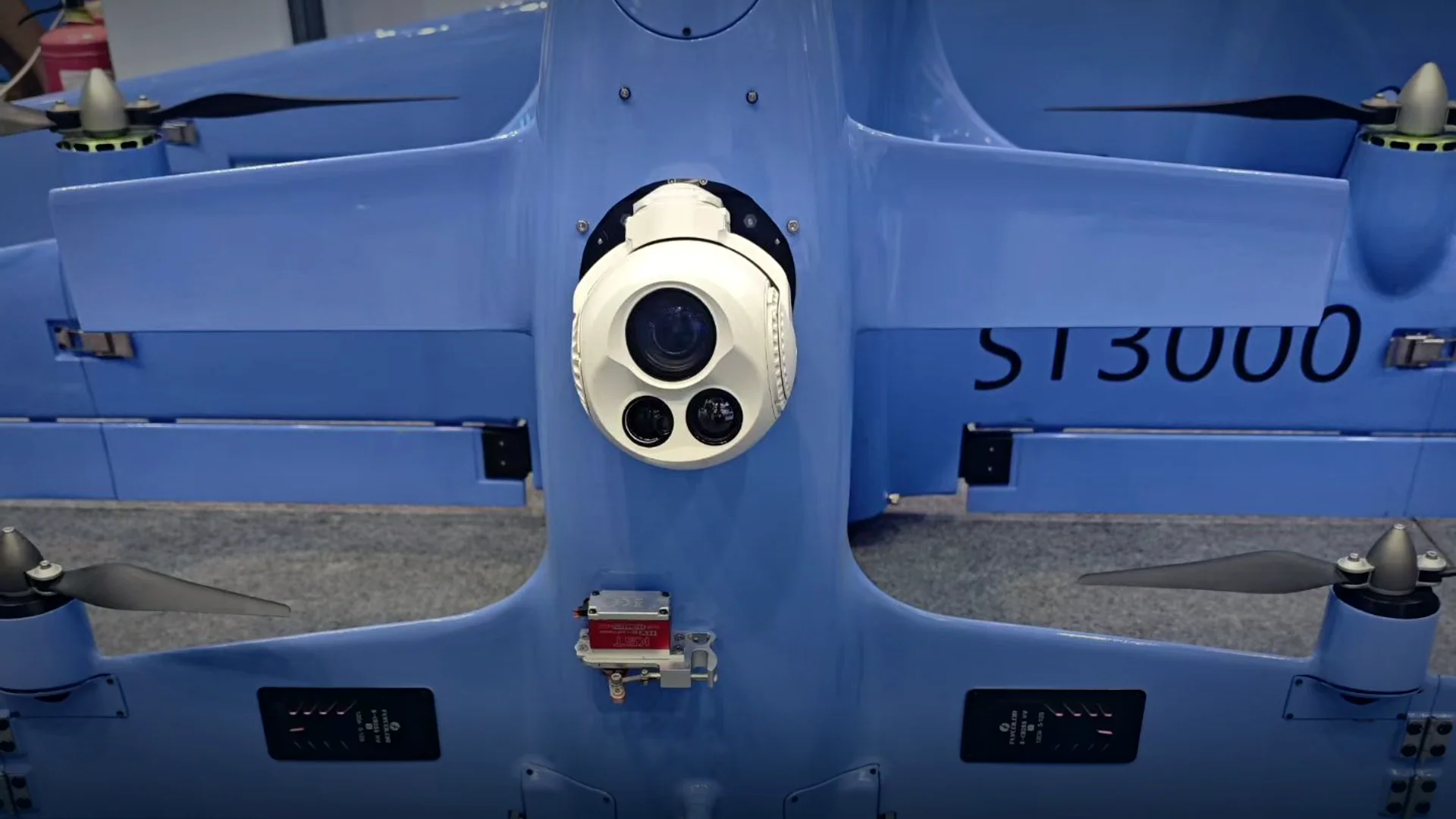
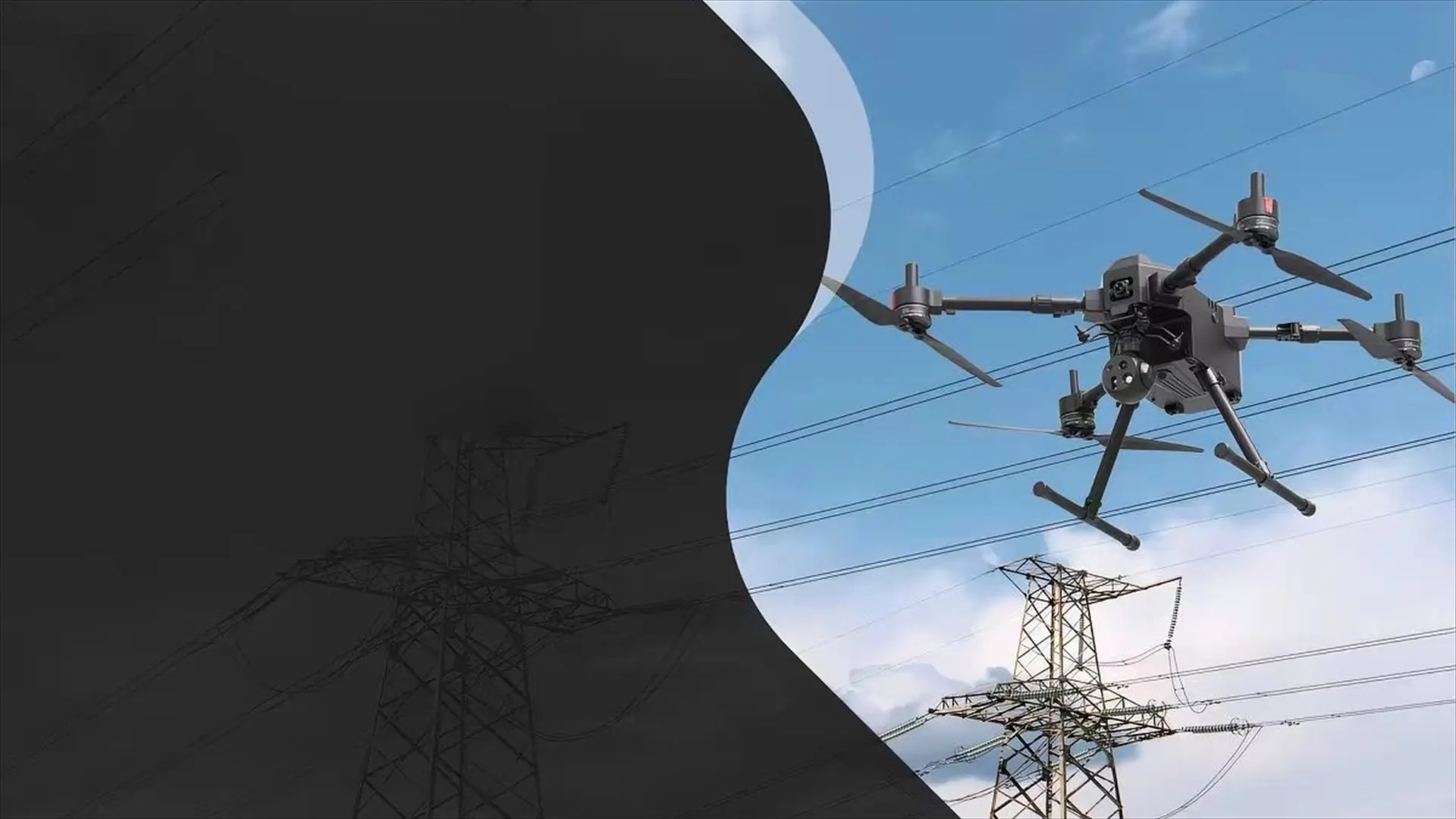
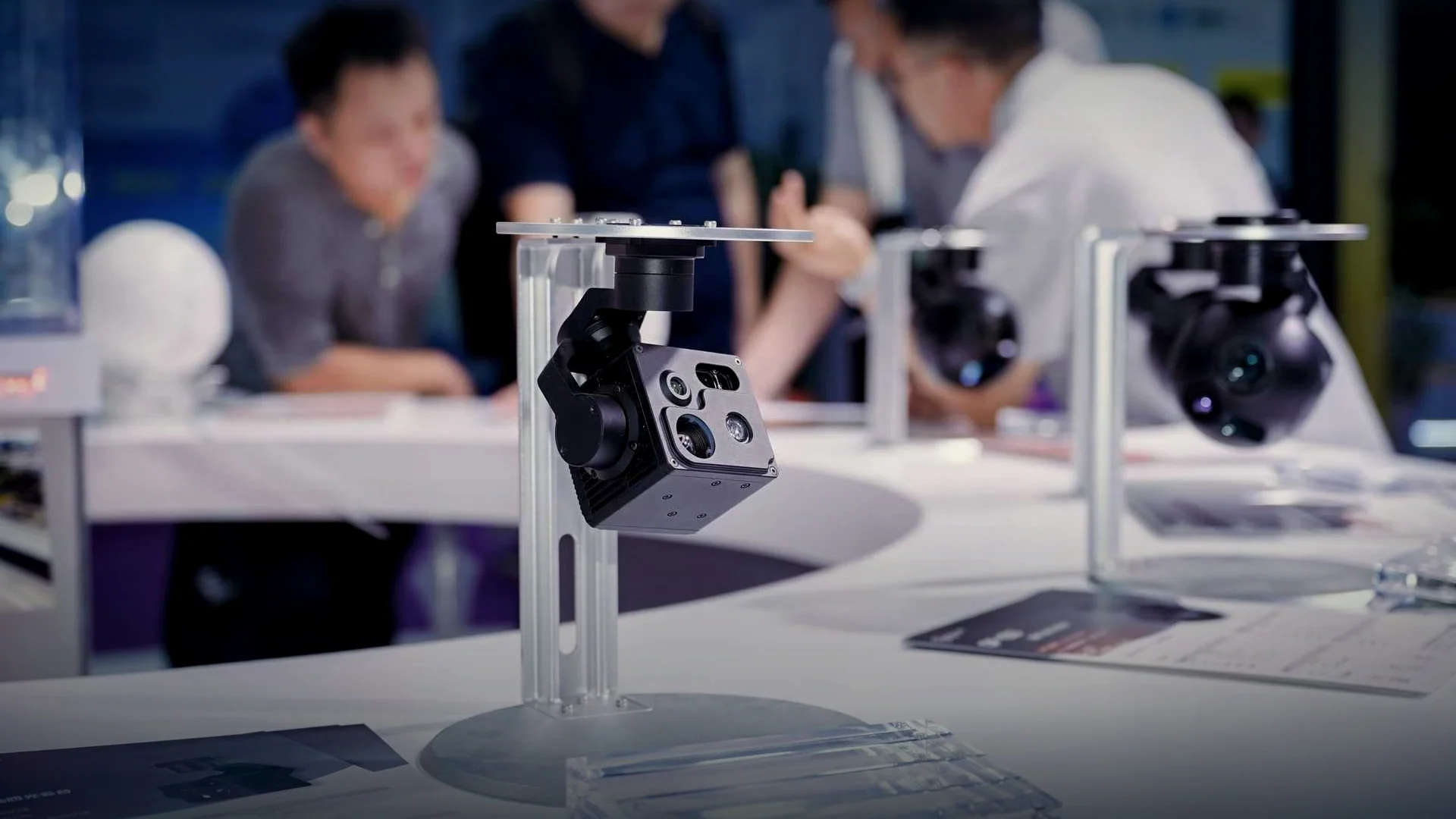
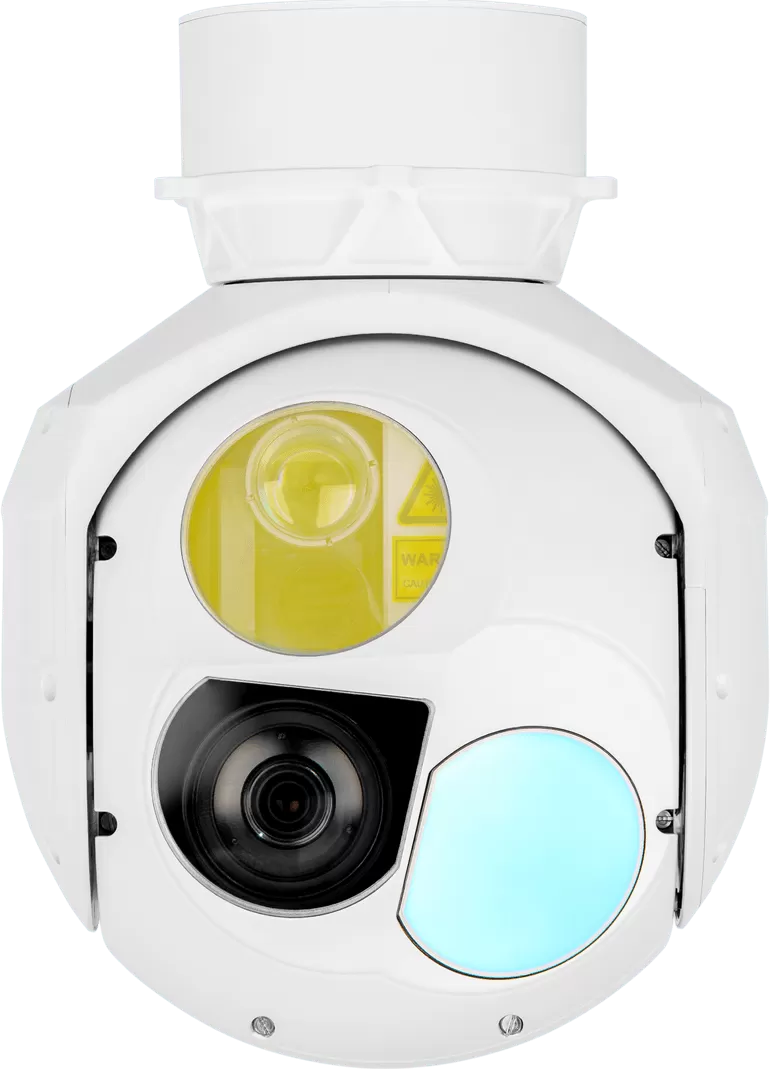
SQ-155T two-axis laser designator pod
Category: Laser Designator Pods
A two-axis laser designator pod for long-endurance fixed-wing aircraft, helicopters and heavy multirotors. A 2.5 kg targeting pod with 1064 nm designation and ranging from 120 m to 5 km.
- Weight 2.5 kg
- Two-axis stabilised
- EO 1920 × 1080
- Thermal 640 × 512
- LRF 120 m – 5 km (± 1 m)
- AI detection & tracking
- CE / RoHS documentation available on request
- Export compliance statement available on request
- Calibration and test report supplied with every unit
What the SQ-155T is
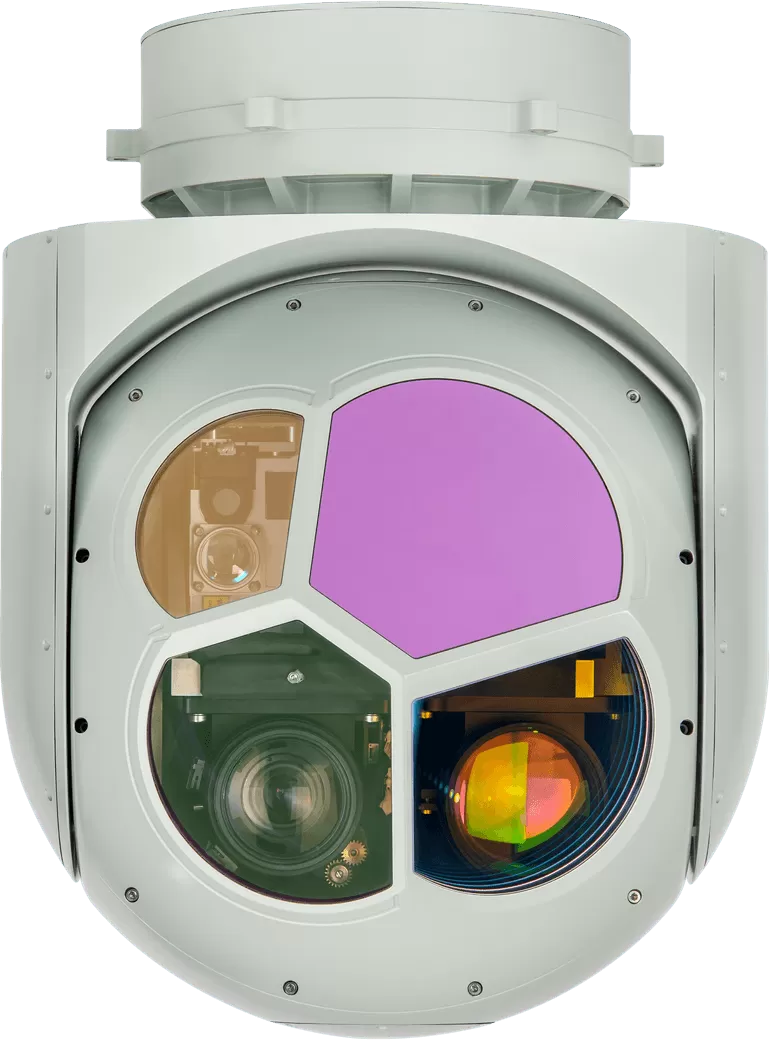
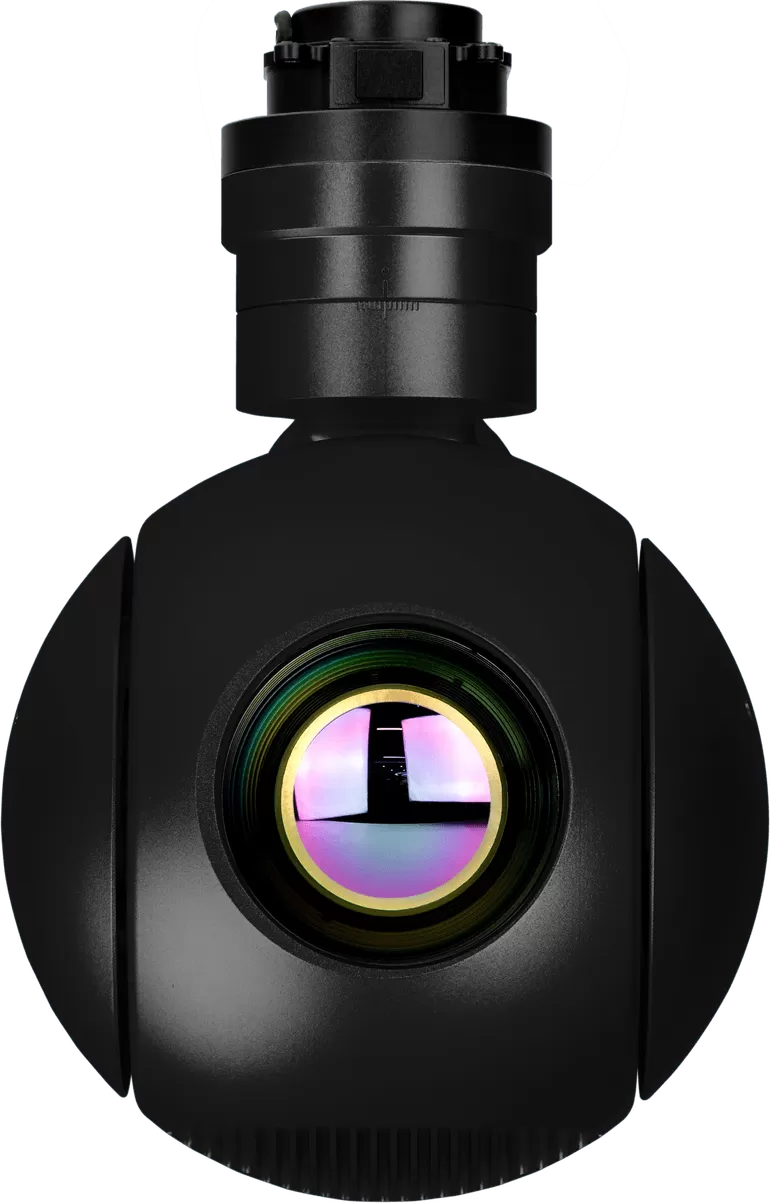
The SQ-155T is the smallest way into the designator range: 2.5 kg in Φ155 × 213 mm, two axes, a 30x daylight optic covering 4.3 to 129 mm, a 640 × 512 thermal core on 35 mm, a laser measuring 120 m to 5 km, and a 1064 nm designation channel. Imaging occupies the same 30x daylight optic and 35 mm thermal core the lighter pods carry, so the mass buys a designation channel rather than a longer lens. Draw is 30 W cruising and 150 W at peak, the peak being the price of a laser that marks rather than measures.
Imaging for the find, a designator for the hand-off
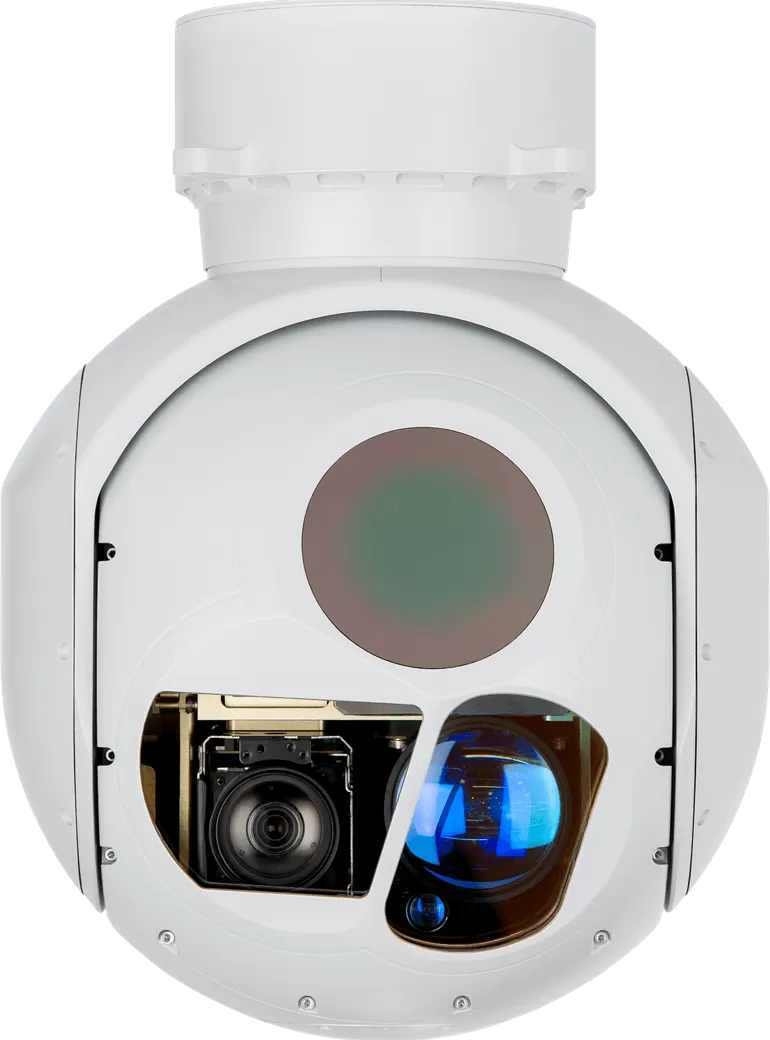
Four apertures. Three of them look; the fourth points at what the other three found.
EO / visible
1920 × 1080, 30x zoom 4.3 – 129 mm
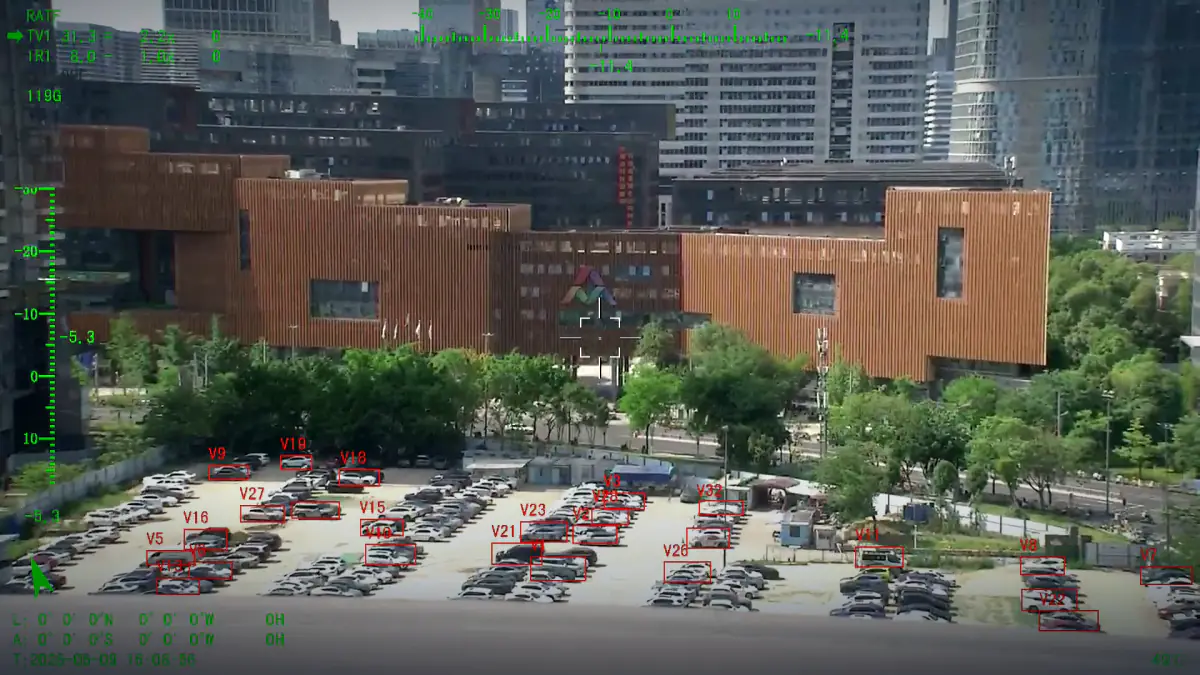
The search channel. Person 6 km, vehicle 15 km, and the frame a crew sweeps with.
Thermal / IR
640 × 512, 35 mm fixed
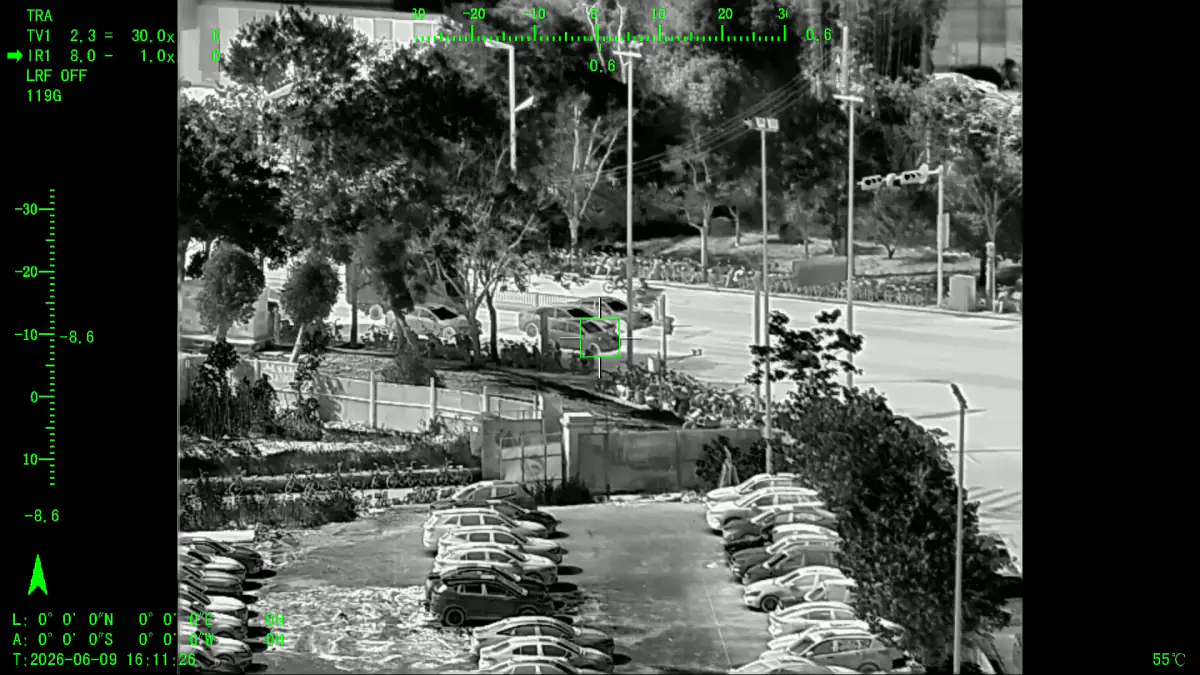
Uncooled, NETD ≤ 40 mK. 1 km on a body, 4.6 km on a hull or vehicle.
Laser rangefinder
120 m – 5 km (± 1 m)
1535 nm and eye-safe. The return enters the coordinate solution.
Laser designator
1064 nm
Marks the target the crew has already identified on either imaging channel.
The thermal core is short, and the weight bracket explains it
Thirty-five millimetres on a 640 × 512 array covers a compound or a stretch of shoreline, not a horizon. A longer barrel pushes mass past 2.5 kg and out of this pod’s class. Where a night requirement runs to 5 km, the thermal lens is the part to trade rather than the designator.
Ranging starts at 120 m, not at 15 m
The near limit deserves attention before the far figure of 5 km does. A marking pod usually points at something kilometres away, but the same aircraft is asked about a mast base or a gate on the way home, and inside 120 m this instrument returns nothing. Plan close work on the imaging channels and the aircraft’s navigation solution instead.
What 1064 nm commits the aircraft to
Designating at 1064 nm is a different job from the 1535 nm ranging beside it: one measures a distance, the other puts a spot on a target for someone else to see. The sheet gives wavelength and function, not beam figures. Pulse energy, divergence and designation envelope are configuration parameters, so ask for them with the quotation rather than inferring them from the imaging specification.
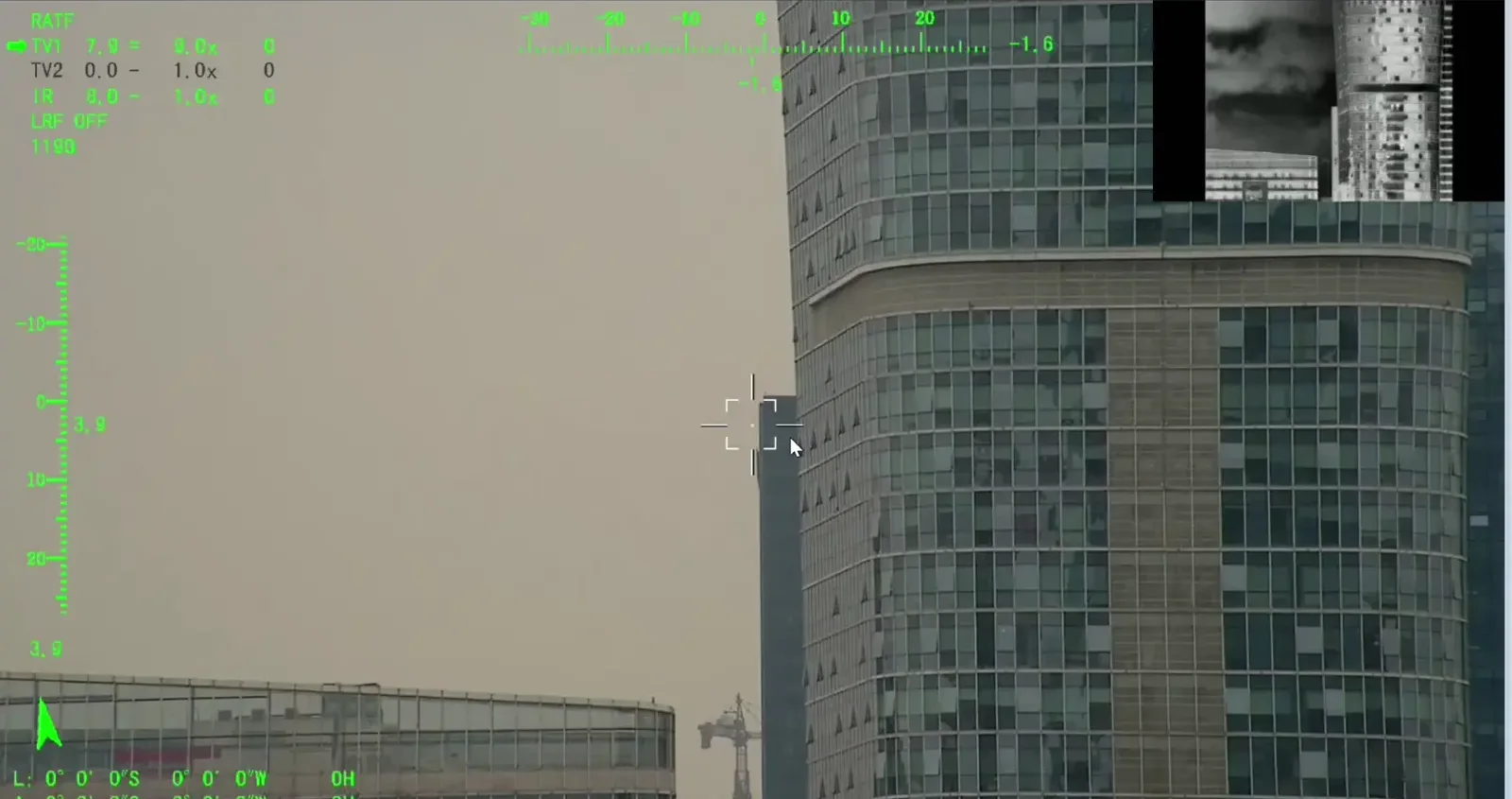
Find on the daylight optic, confirm on the thermal core, measure with the rangefinder, then mark. The order is the workflow, and the four apertures follow it.
Stabilisation and mechanical design
Two axes carry four apertures
Pitch and yaw are stabilised, each on a brushless motor mounted to its own frame with encoder feedback and no reduction stage. Roll is left to the airframe, which is how four apertures fit inside 2.5 kg: a third axis would add structure and a motor without adding an aperture. Boresight error sits within ≤ 100 μrad (1σ) and the controller keeps ≥ 60°/s of rate in hand.
2.5 kg in Φ155 × 213 mm, 150 W at peak
The pod is 2.5 kg inside a Φ155 × 213 mm envelope on 11–28 VDC. Cruise is 30 W and the peak 150 W: the emitters move that figure, not the imaging chain. Size the harness on the peak, and count 30 W against endurance.
Detection and tracking at the edge
Detection decided before the link
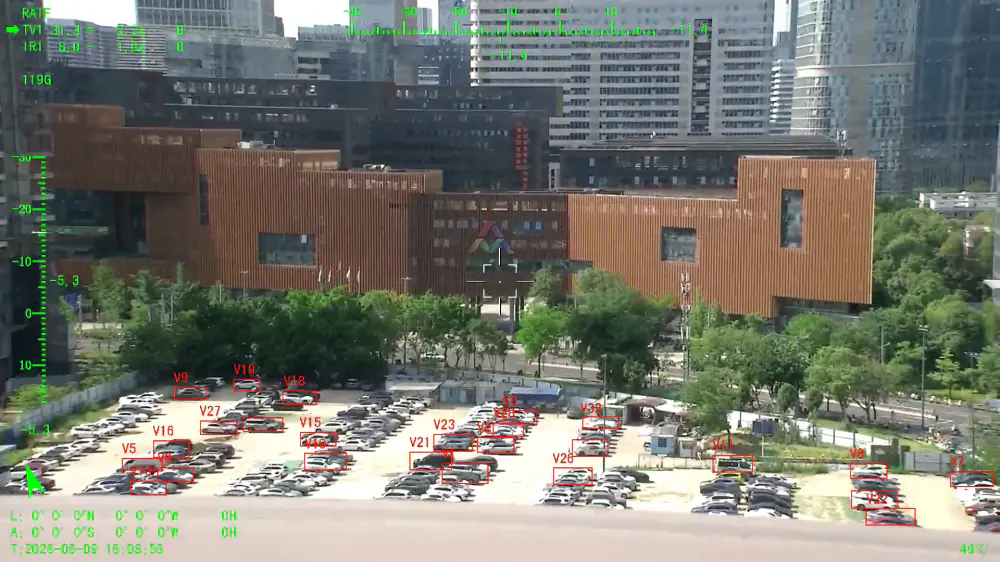
The module separating people, vehicles, vessels and aircraft rides on the pod, so a box appears whether or not the station is receiving clean video. For a designator that counts twice: the crew must be sure what it is marking before the laser is armed, and an on-board decision does not wait for a downlink a jamming environment may not provide.
Twenty tracks, and a lock that holds
Twenty targets can be carried with one under active lock. The tracker holds through rotation and scale change and re-acquires after a building takes the target away, which is what a designation pass depends on: the spot stays where the operator put it while the aircraft manoeuvres.
Fitting a designator pod to an airframe
Two figures govern the installation: 2.5 kg of mass and 150 W of peak draw.
Mount and envelope
An isolated base takes the quick-release face, with adapter plates where an airframe bolt circle differs from ours. Φ155 × 213 mm and 2.5 kg are what the bracket is drawn against, and at that mass a heavy multirotor or a fixed-wing aircraft carries the pod on a standard hard point.
Bus, video and environment
The rail accepts anything from 11 to 28 VDC. Command lines are RS-422, RS-232 and TTL, and where an autopilot prefers SBUS or MAVLink it can have them. Pictures exit as H.264 or H.265 over a 100 Mbps Ethernet link and are held in 128 GB on board. In service the enclosure holds −20 °C to +60 °C and in store −40 °C to +70 °C, sealed against dust and rotor wash. Every one of those is a family figure, not this pod’s own, and the technology pages are where they are described.
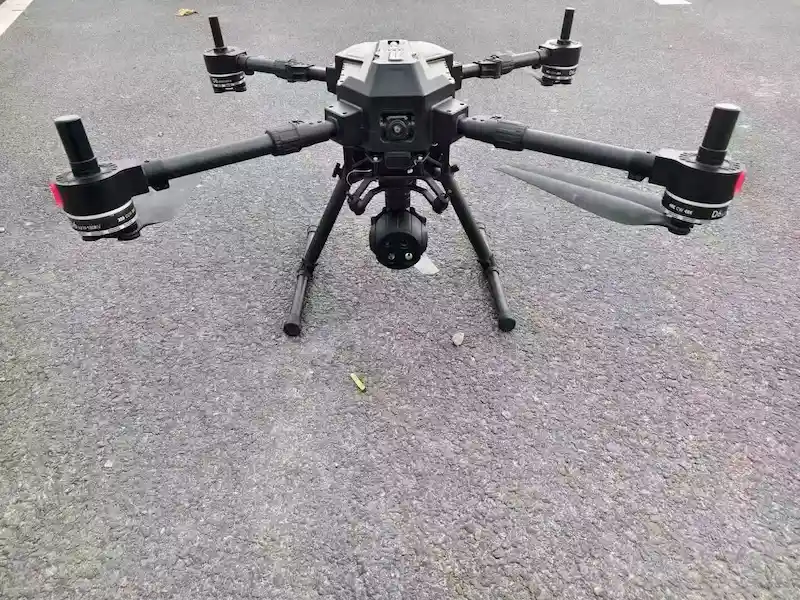
On the aircraft
Power, commands and video in one harness, the mount taking isolation and two axes taking what is left.
Two documents decide whether the pod goes on at all: the outline drawing, for the bolt circle and the swept envelope, and the pinout, for the harness. Ask for both before the airframe is drilled.
Paperwork for the maiden unit runs to five items: the control protocol, a note on the video pipeline, the outline with its connector pinout, the calibration record and the test report. Export scrutiny applies to the paperwork too.
Where the SQ-155T is used
Three roles where marking a target matters more than seeing one at extreme range.
- Forward observer support from a small aircraft
A team needing a target marked rather than photographed has usually found it already. The 30x optic confirms identity at 6 km on a person, the thermal core holds that confirmation after dark at 1 km, and the designator marks what the crew settled on. At 2.5 kg the aircraft is small enough to launch from the team’s own position instead of flying in from a base.
- Compound overwatch with a hand-off
A compound is a close scene. The thermal core detects a person at 1 km and the daylight optic reads detail inside that, which is the scale a cordon works at. The rangefinder fixes a position from 120 m outward, and the designator turns that contact into something another asset can act on without re-finding it.
- Coastal and riverine patrol
Inshore water is many small contacts inside a few kilometres, and 15 km of daylight with 4.6 km of thermal covers it from one orbit. A contact worth stopping is marked rather than described, which shortens the chain between seeing something and a boat being sent to it.
Full specifications
| Model | SQ-155T |
| Series | Laser Designator Pods (SQ series) |
| Stabilisation | Two-axis gyro-stabilised, ≤ 100 μrad |
| Sensor configuration | EO + IR + LRF + laser designator |
| Visible channel | 1920 × 1080, 30x zoom 4.3 – 129 mm |
| Thermal channel | 640 × 512, 35 mm fixed |
| Laser rangefinder | 120 m – 5 km (± 1 m) |
| Weight | ≤2.5 kg |
| Dimensions | ≤Φ155 × 213 mm |
| Power consumption | 30 W / 150 W |
| Detection (EO) | 6 km person / 15 km vehicle |
| Detection (IR) | 1 km person / 4.6 km vehicle |
Detection distances follow the standard 1.7 m person / 2.3 m vehicle convention. Rows marked as shared are common across the SQ series.
Control software: Windows as standard. An Android version can be customised for OEM/ODM projects.
Shared across the SQ series
- Video output: Ethernet, H.264 / H.265
- Gimbal control: RS-422 / RS-232 / TTL, SBUS, MAVLink
- Input voltage: 11–28 VDC
- Operating temperature: −20 °C to +60 °C
- Sealing: Sealed housing for dust, wind and rotor wash
- Recording: On-board recording, imagery retained if the link drops
- AI module: Onboard detection, classification and multi-target tracking
- Mounting: Quick-release interface, adapters available for OEM (original equipment manufacturer) airframes
Three-view outline drawing with connector pinout, available on request.
Other laser designator pods
Designator pods from the SQ series, with the same control protocol, video path and mounting interface across the four models.
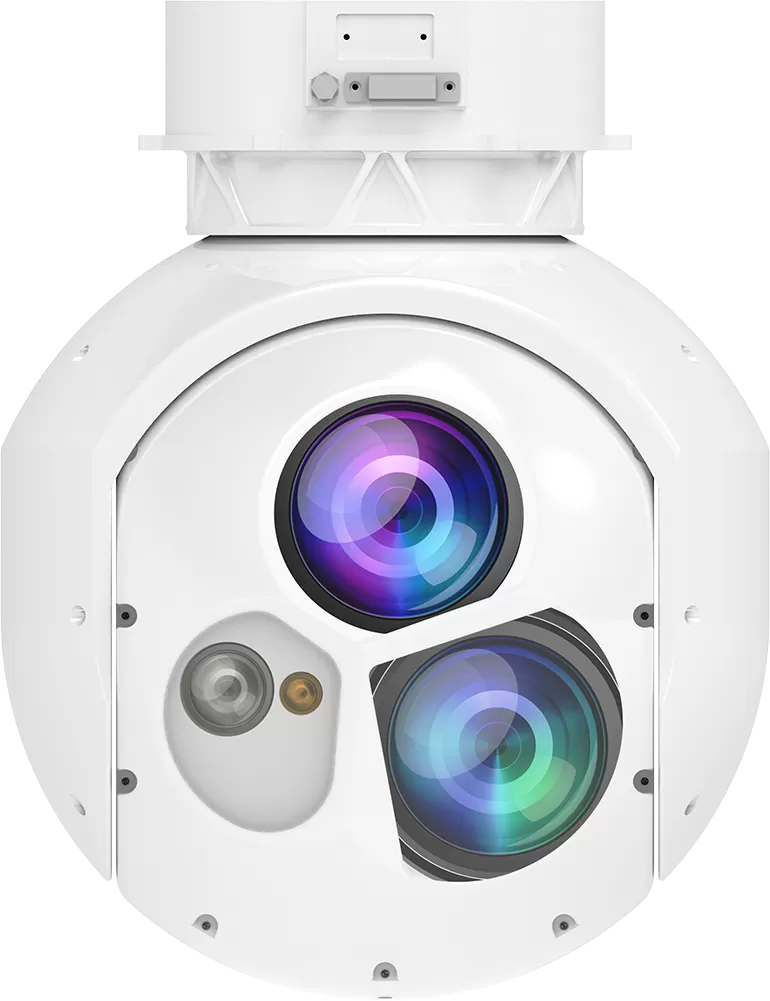
SQ series · 2-axis · EO + IR + LRF + designator
SQ-200T Laser Targeting Pod OEM
Laser designation plus 8 km ranging on a 5.5 kg two-axis pod.
- Weight
- ≤5.5 kg
- Visible
- 1920 × 1080, 30x zoom 4.3 – 129 mm
- Laser
- 300 m – 8 km (± 1 m)
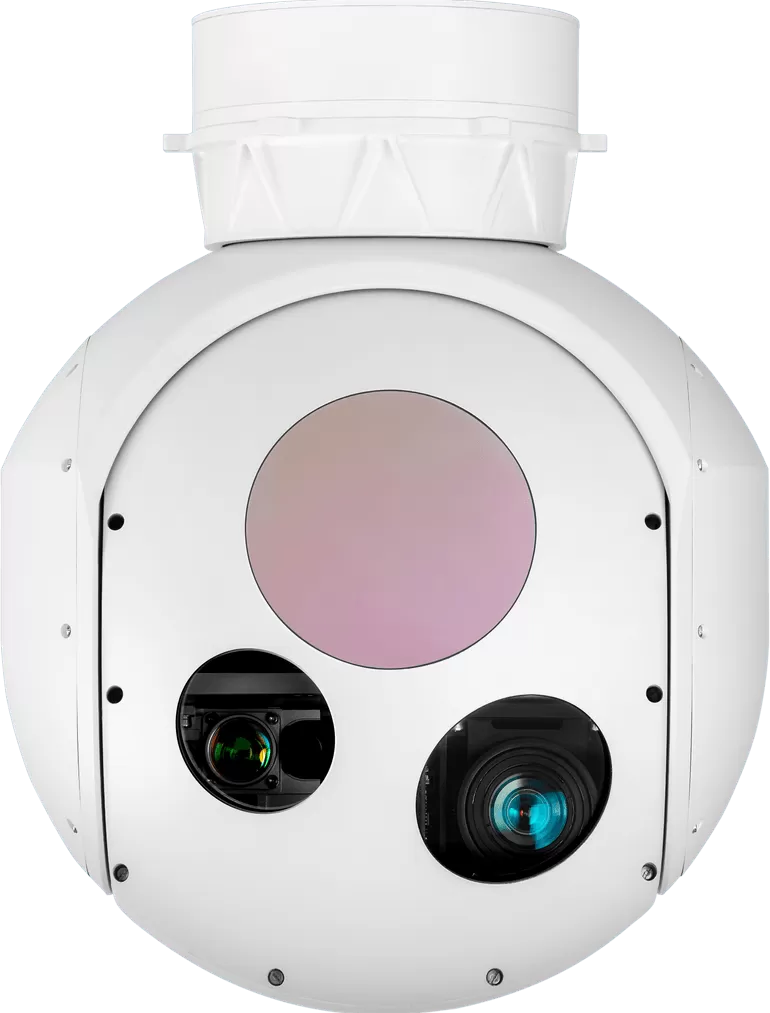
SQ series · 2-axis · EO + IR + LRF + designator
SQ-290T customized Laser Designator Pod
The long-range designator: 10 km ranging, a 300 mm thermal zoom and a 290 mm turret.
- Weight
- ≤15 kg
- Visible
- 1920 × 1080, 13x zoom 15 – 200 mm
- Laser
- 300 m – 10 km (± 1 m)
SQ series · 2-axis · EO + IR + LRF + designator
SQ-330Q Laser Designator Payload Supplier
The largest pod we build — a 330 mm turret and 22 kg of payload capacity for heavy platforms.
- Weight
- ≤22 kg
- Visible
- 1920 × 1080, 30x zoom 10 – 300 mm
- Laser
- ≥ 15 km
Questions engineers ask about the SQ-155T
How far can the SQ-155T detect a person or a vehicle?
Daylight: 6 km to a person, 15 km to a vehicle. Thermal: 1 km and 4.6 km on the same pair. Those are detection figures against 1.7 m and 2.3 m targets, with recognition and identification closer in.
What are the order terms and the delivery time?
Buy one pod from the catalogue, or a hundred for a custom build. Shelf stock moves immediately, so the clock is freight; anything bespoke or in volume gets its date in the quotation. T/T payment, twelve months of warranty.
Why does a 2.5 kg pod draw 150 W at peak?
The lasers do it. Cruise is 30 W with the imaging chain running, and the peak arrives when the designator and rangefinder fire. Size the aircraft supply and harness on 150 W, then use 30 W for endurance.
The rangefinder starts at 120 m. Does the designator share that near limit?
The sheet does not say. It gives 120 m to 5 km for the rangefinder at ± 1 m and names 1064 nm as the designation wavelength, without beam energy, divergence or a designation envelope. Those are configuration parameters, so ask for them with the quotation before a close-in task is planned around this pod.
Designed and manufactured by HITS
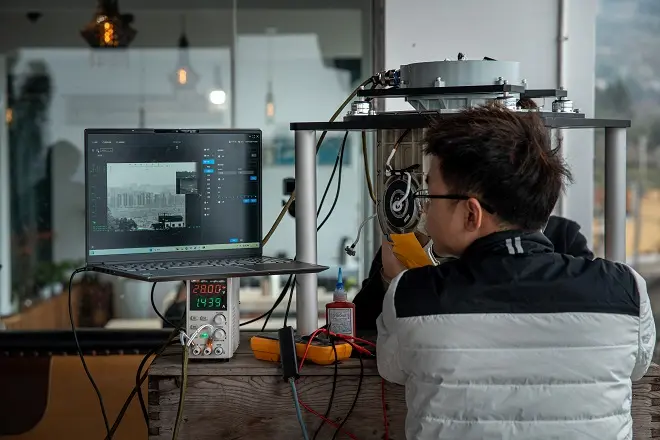
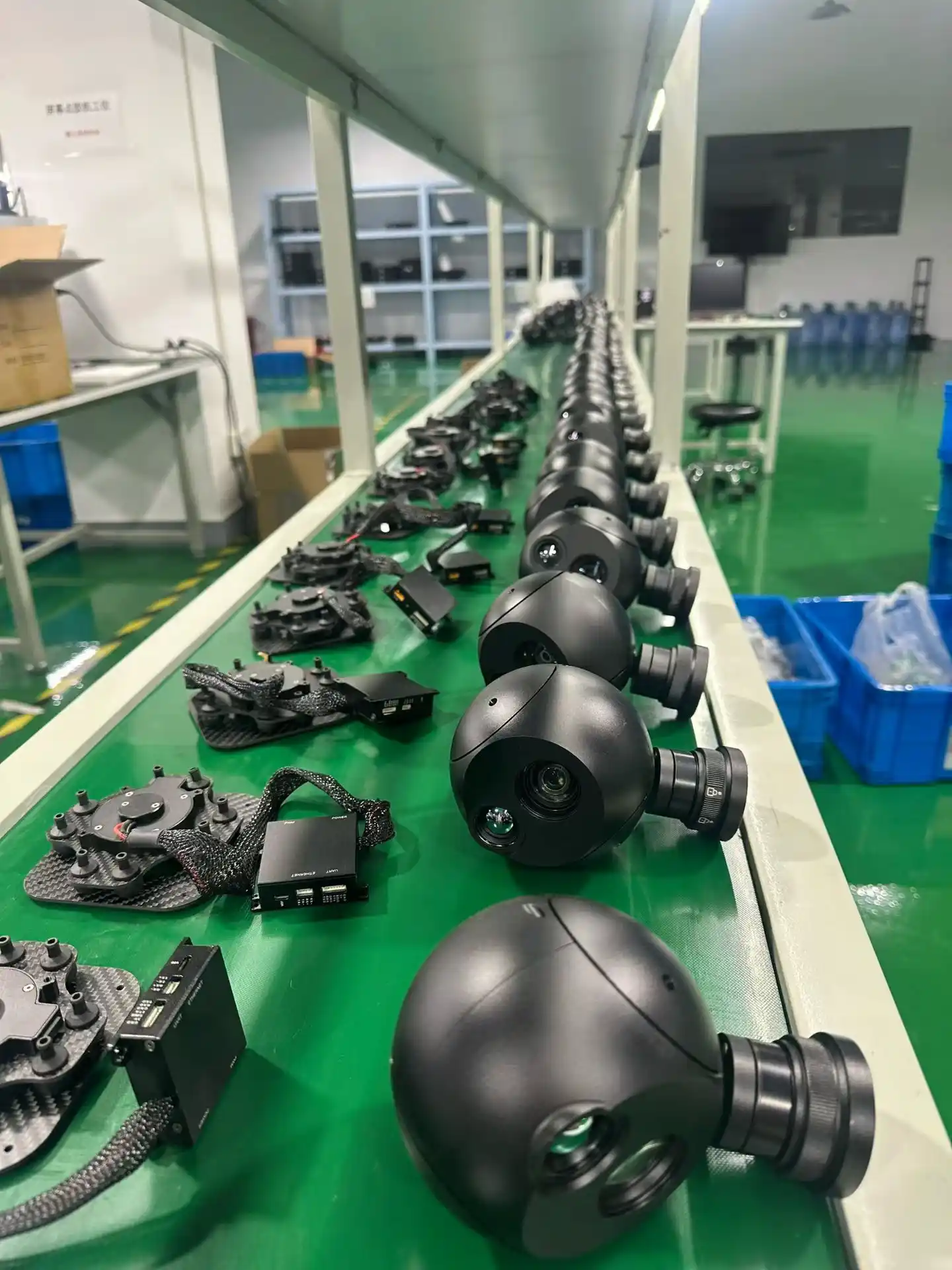
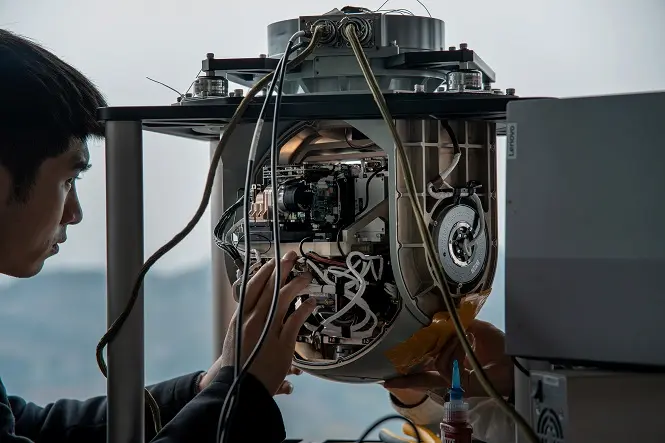
Optics, servo hardware, stabilisation firmware and the AI tracking module are developed in house, and every unit is assembled, calibrated and environmentally tested on our own line before it ships.
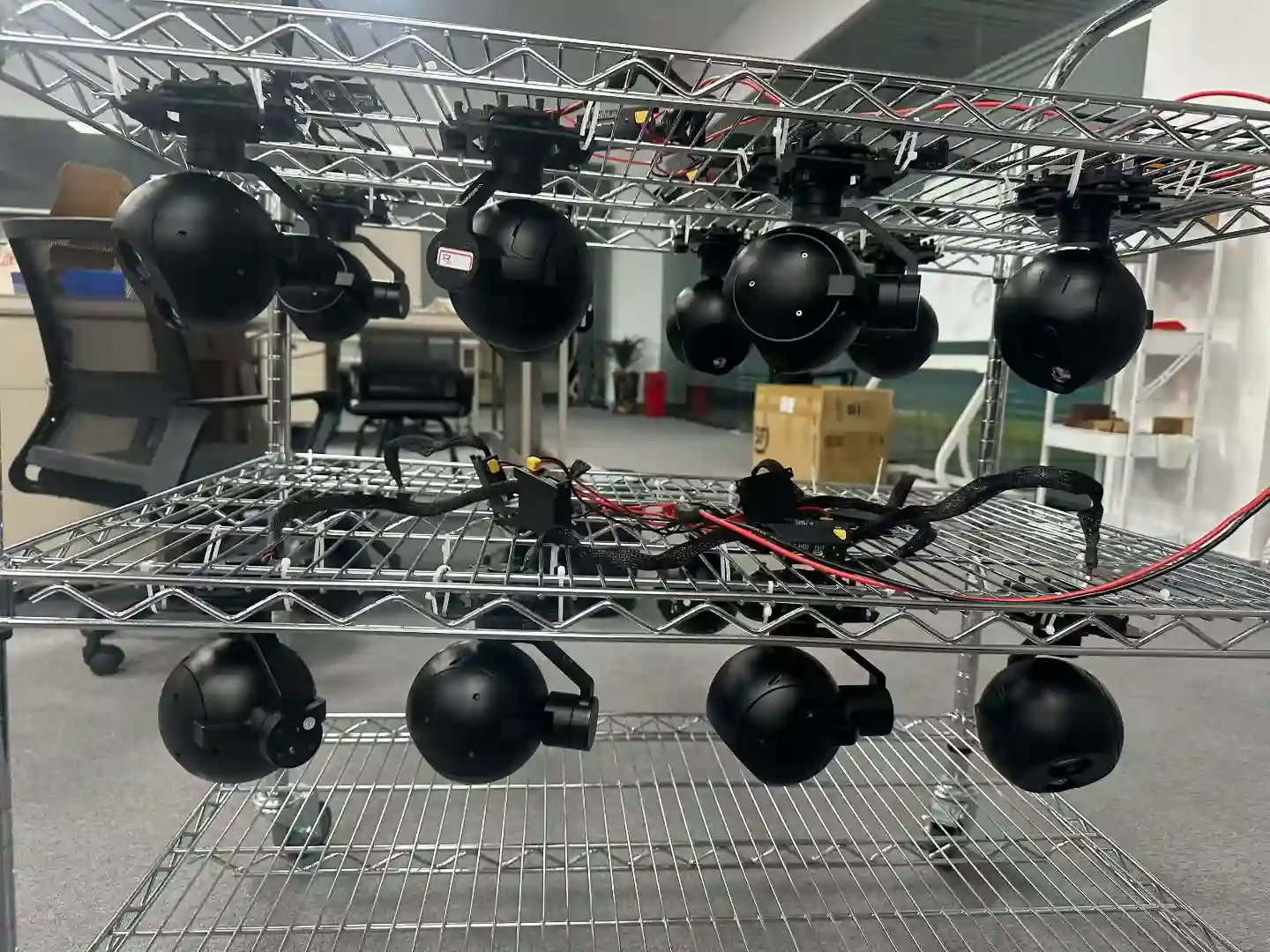
Request a quotation for the SQ-155T
Tell us the platform, the range you need to identify and how many units you are planning. Every configuration is quoted individually, so you get a written price against your own requirement rather than a list figure that does not fit it. We answer within one working day.
Explore all product categories
Nine routes into the range: by stabilisation, by sensor set, or by payload class. Each category page compares the models and links to the full specification.
15 models · 240 g – 5 kg
Gimbal Cameras
Two- and three-axis stabilised heads with EO, thermal and laser options.
View category →
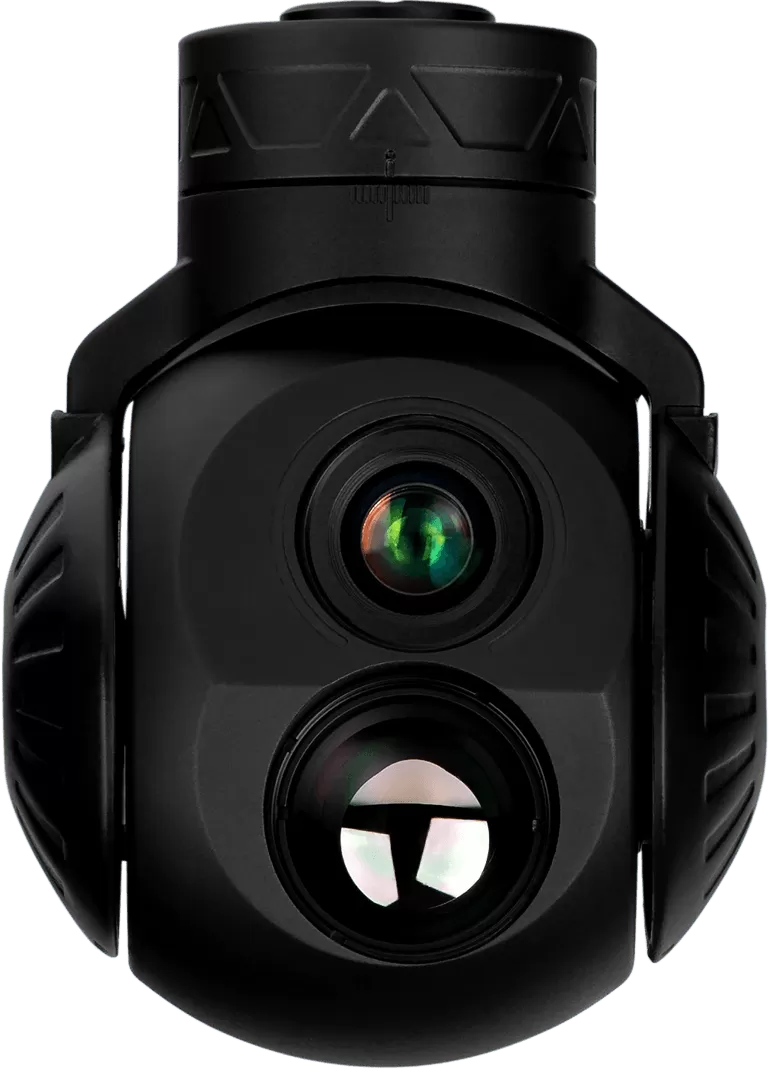
3 models · 240 – 500 g
2-Axis Gimbal Cameras
The lightest HQ heads: fixed or dual-FOV optics on a compact two-axis mount.
View category →
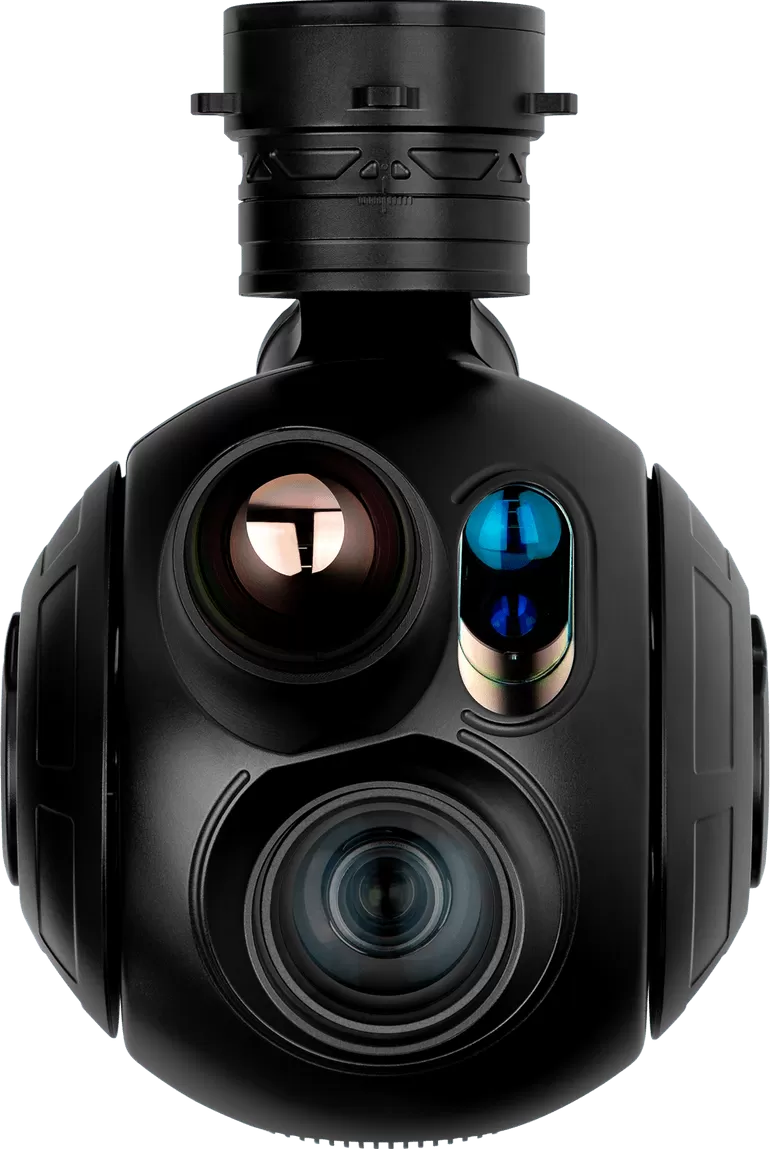
12 models · 400 g – 5 kg
3-Axis Gimbal Cameras
Roll-stabilised heads with longer zoom ranges and heavier payload capacity.
View category →
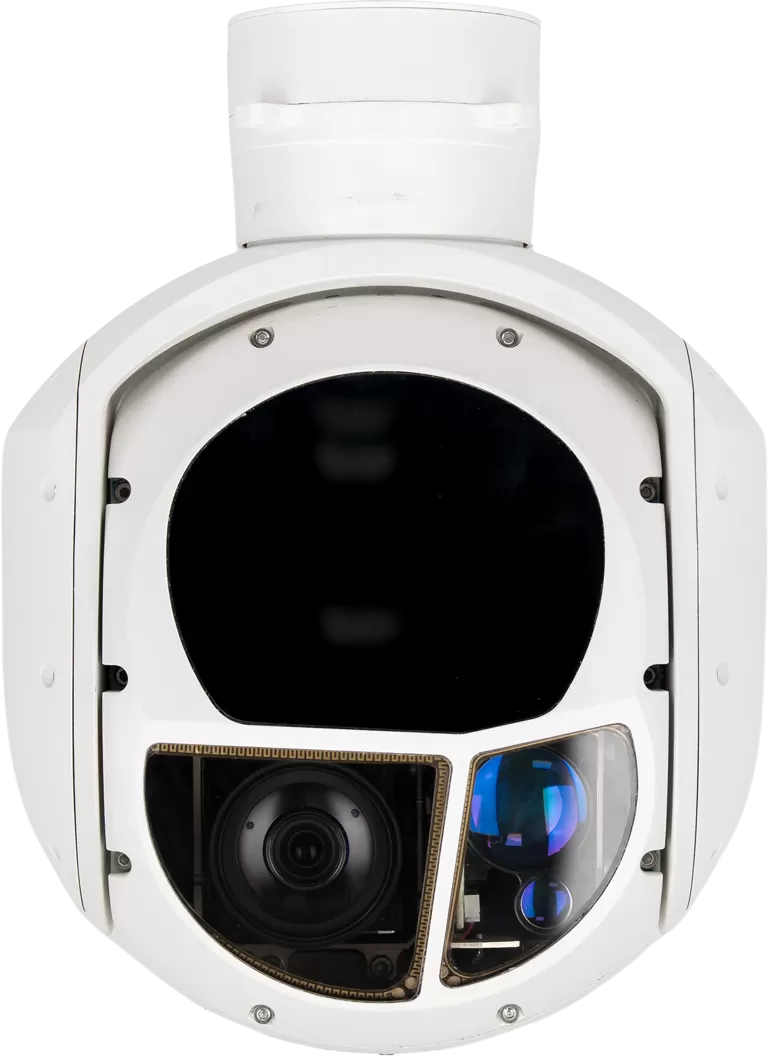
8 models · 1.6 – 10 kg
EO/IR Pod Systems
Larger multi-sensor pods with 30x–55x zoom, thermal imaging and laser ranging to 15 km.
View category →
4 models · 2.5 – 22 kg
Laser Designator Pods
Targeting pods that add 1064 nm designation to the same imaging and stabilisation architecture.
View category →
Sensor guide
Thermal Cameras
Detector, lens and range: how uncooled LWIR payloads are specified for UAVs.
View category →
Sensor guide
Infrared Cameras
How to match an IR detector, lens and interface before choosing a gimbal.
View category →
Sensor guide
EO Cameras
Visible-channel sensors, zoom lenses and the resolution needed at range.
View category →
Sensor guide
EO/IR Cameras
Boresight, sensor pairing and the trade-offs of a dual-sensor head.
View category →