
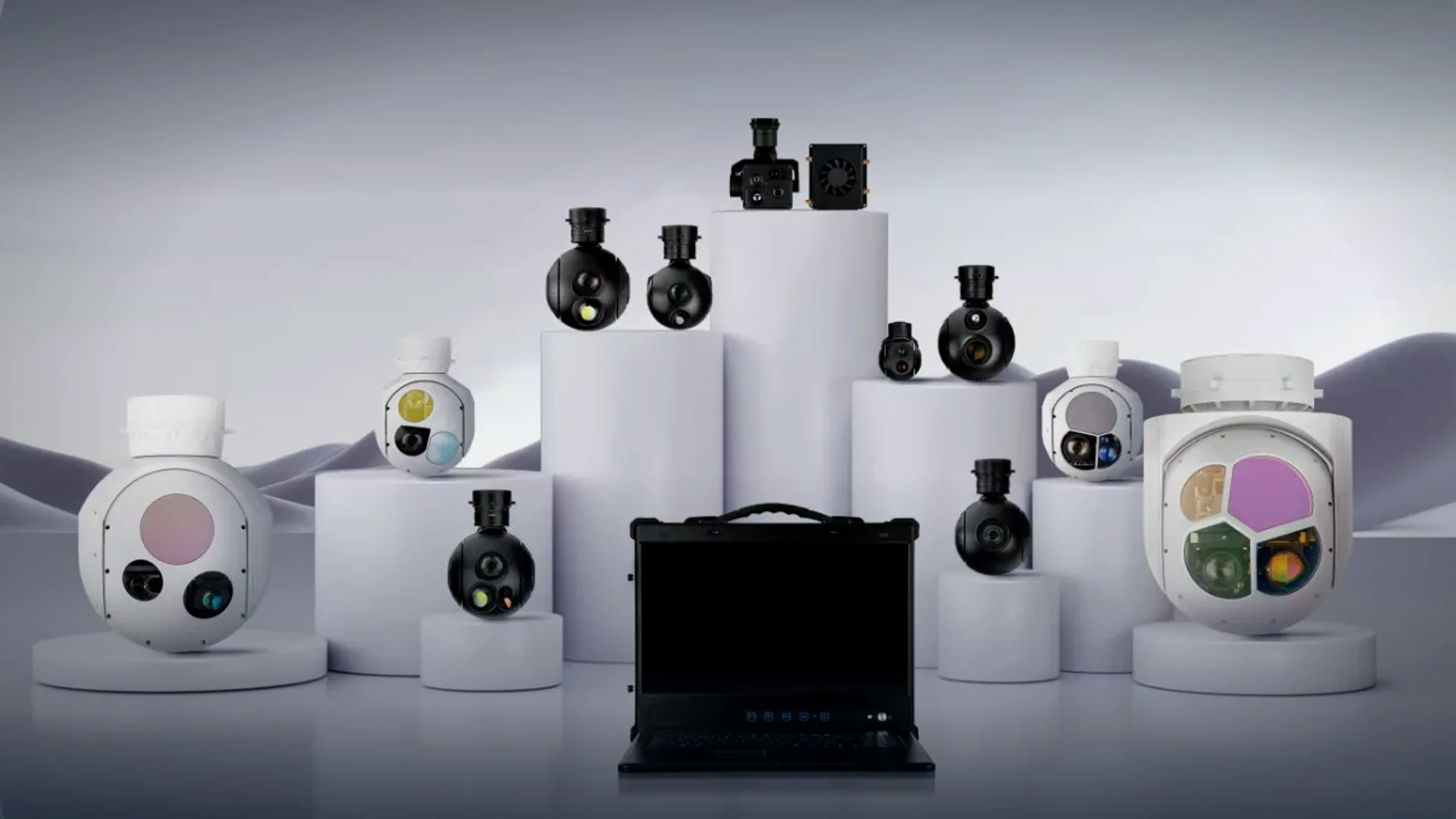
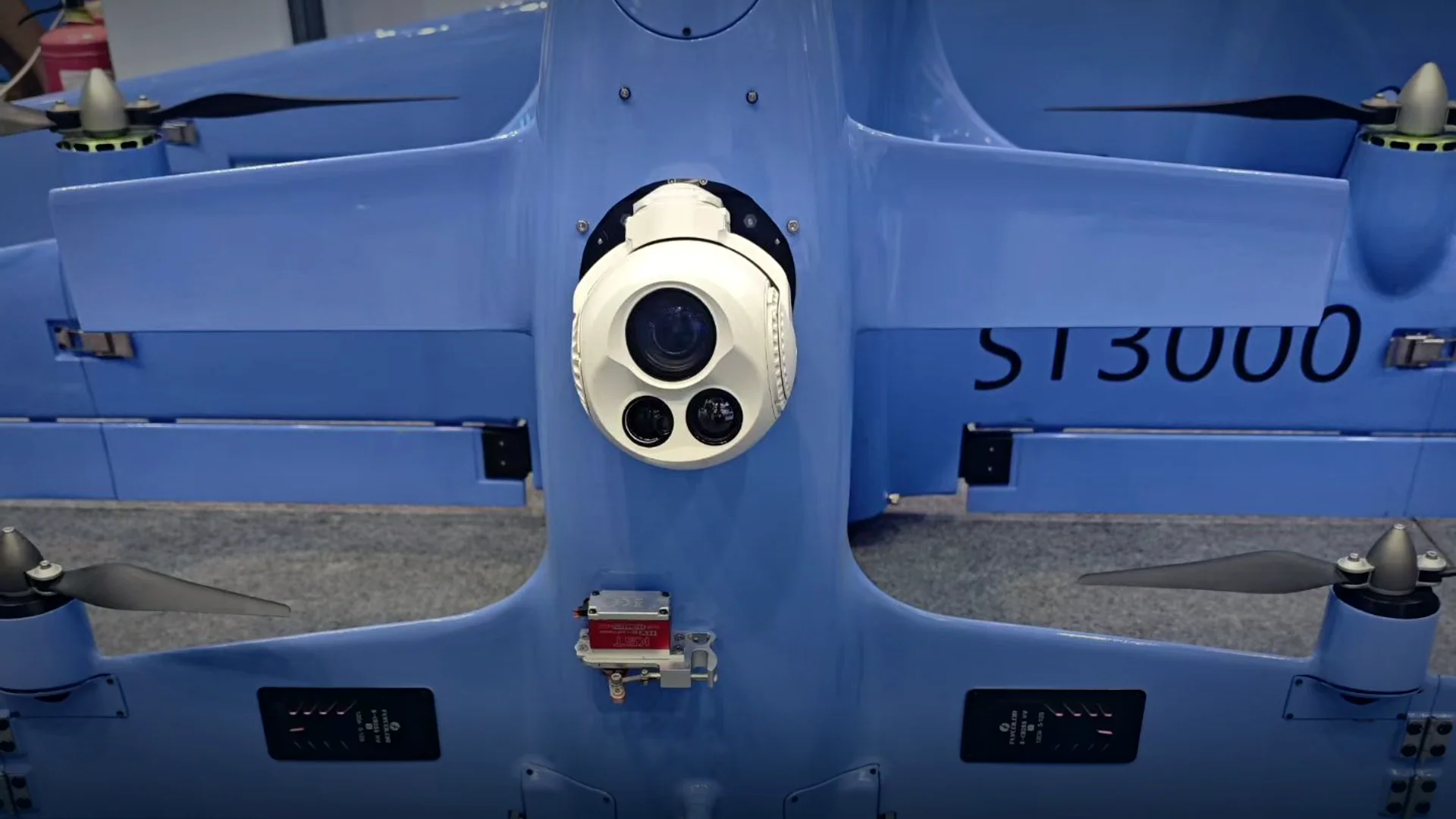
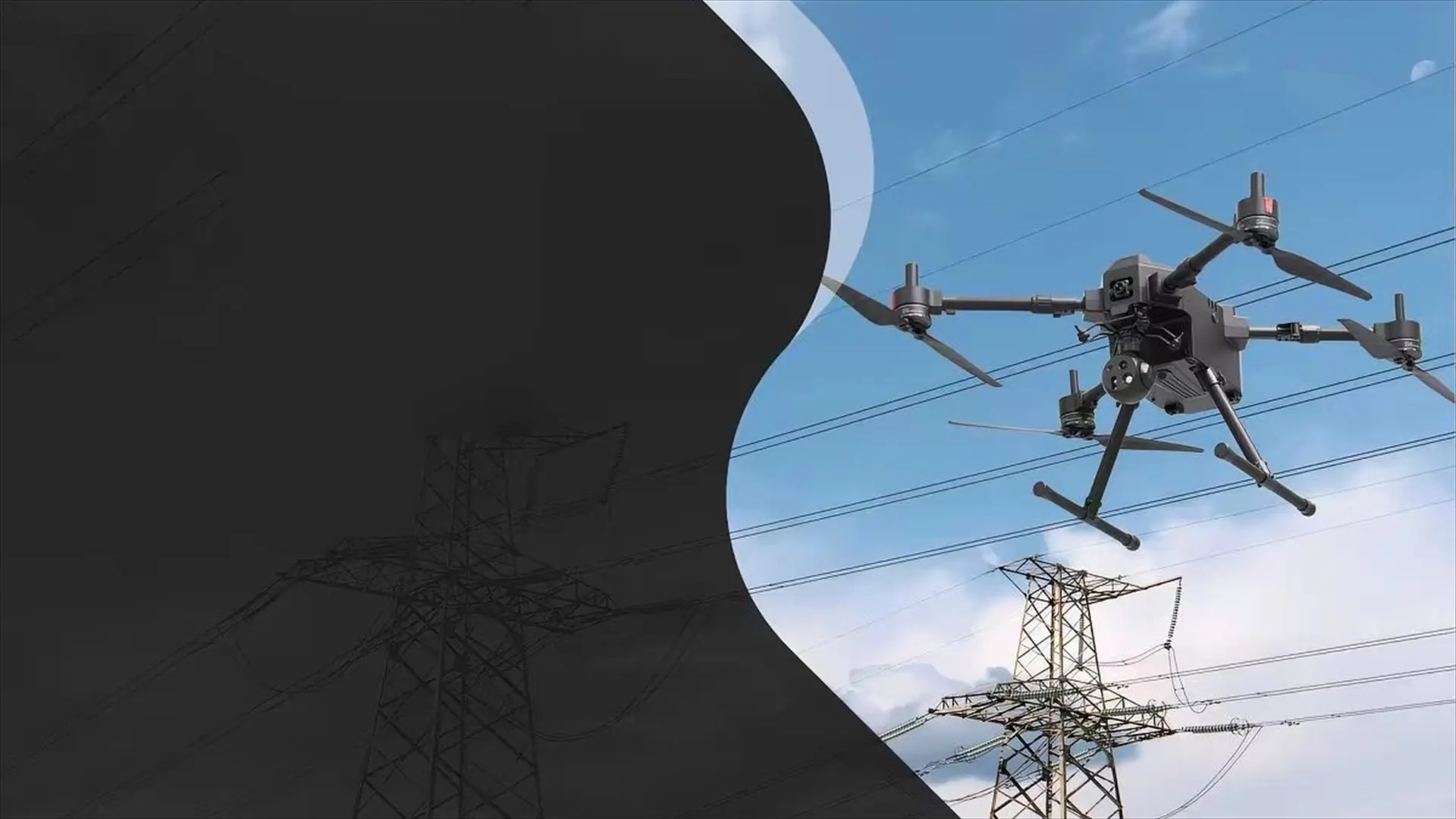
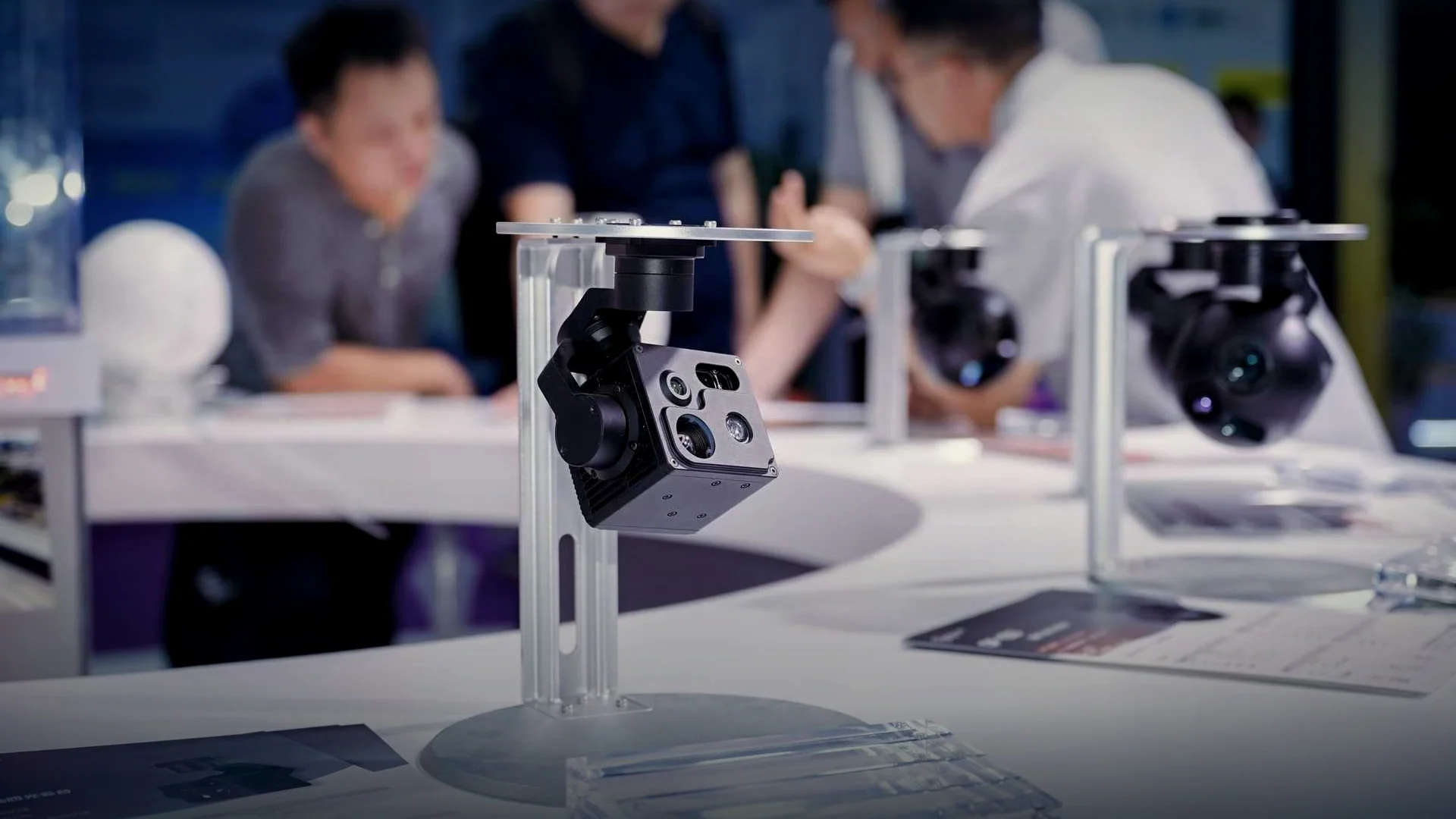
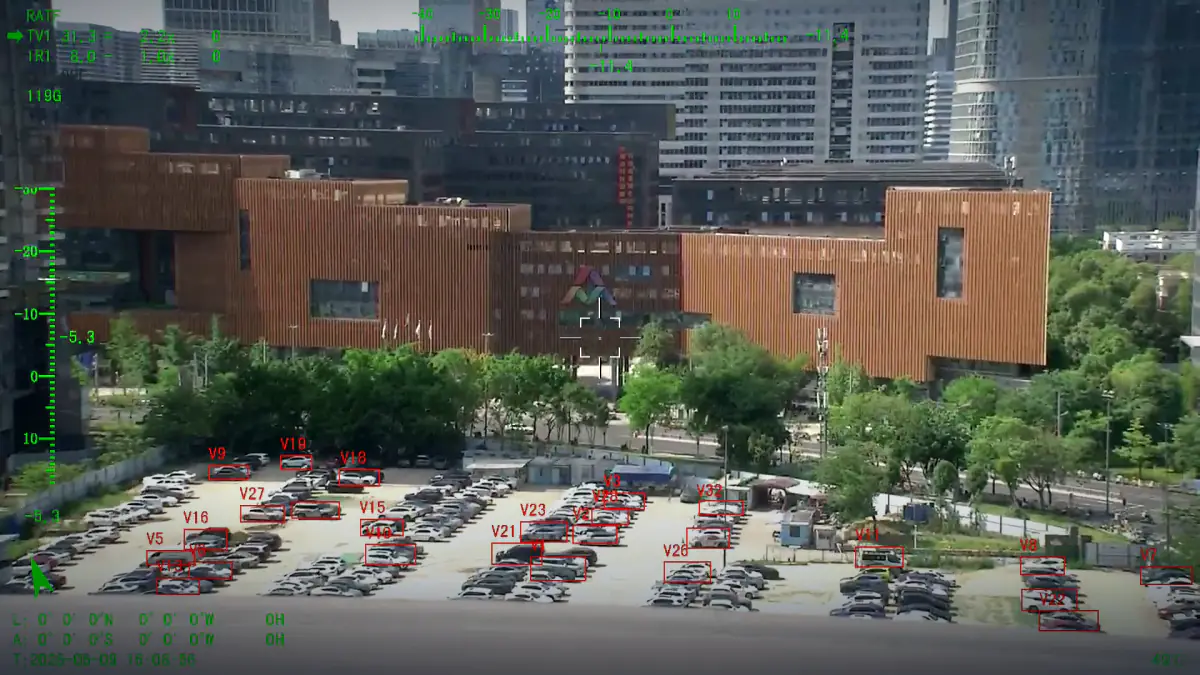
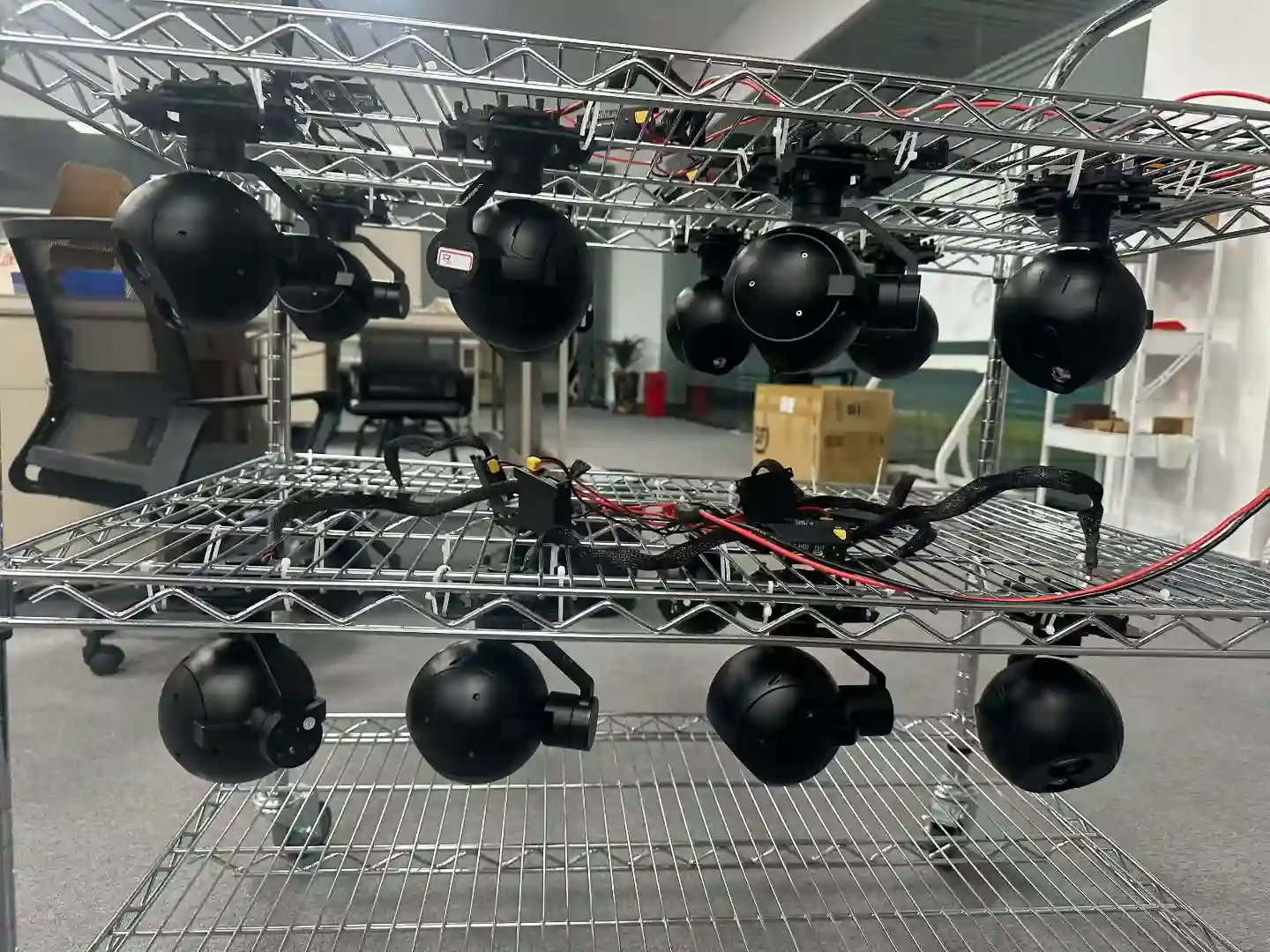
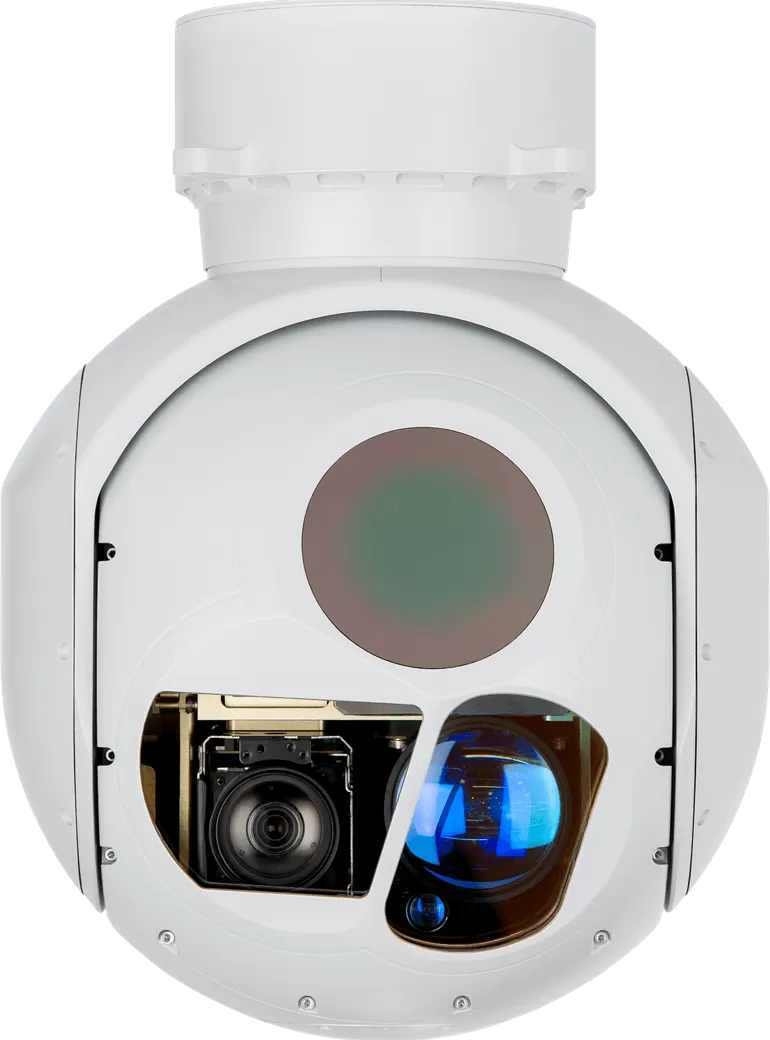
HQ-100T three-axis gimbal camera with 1.5 km LRF
Category: 3-Axis Gimbal Cameras
The same 800 g three-axis head as the 100D, with a 1.5 km laser rangefinder added. Because it uses the same stabilisation stack and control protocol as the rest of the HQ series, it can share a mount and a cable run with other heads in the range.
- Weight 800 g
- Three-axis stabilised
- EO 1920 × 1080
- Thermal 640 × 512
- LRF 5 m – 1.5 km (± 1 m)
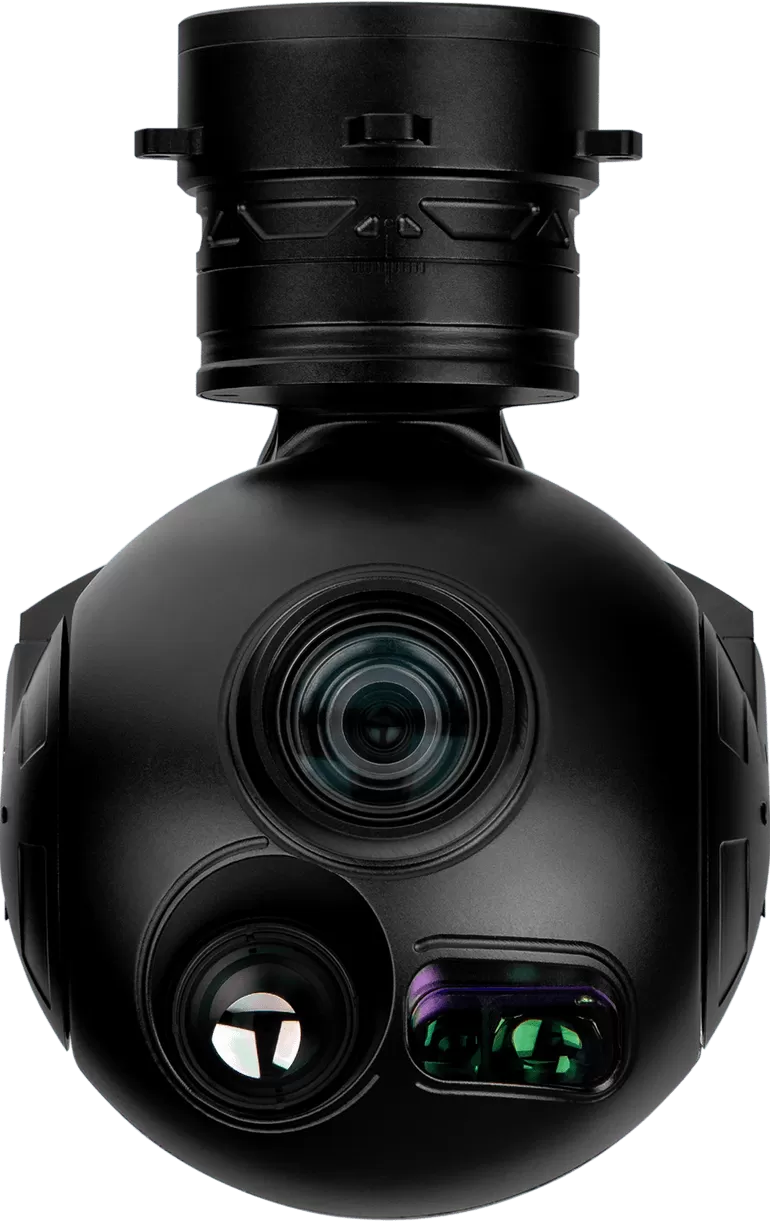
- AI detection & tracking
- CE / RoHS documentation available on request
- Export compliance statement available on request
- Calibration and test report supplied with every unit
What the HQ-100T is
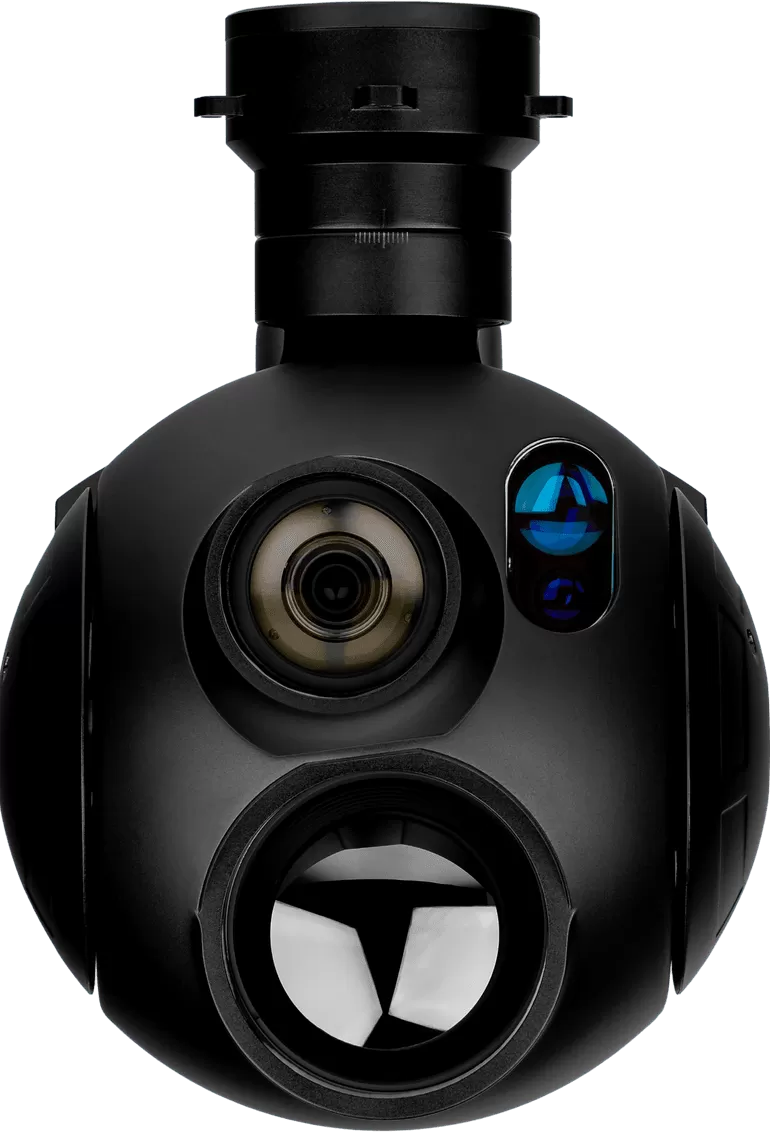
The HQ-100T is a three-axis head carrying a laser: 800 g in Φ100 × 156 mm, a 1920 × 1080 daylight optic zooming 10x across 4.7 – 47 mm, a 640 × 512 thermal core on 19 mm, and a rangefinder at 5 m – 1.5 km. It is the entry configuration in the 800 g class, and it has a ceiling: 10x is not a long lens. What it buys is a roll-stabilised head with all three channels on an airframe that cannot lift a kilogram: 1.8 km on a person, 10 km on a vehicle by day.
Three channels, and the ceiling on each
All three are here. None is the longest in the range, and this page says so.
EO / visible
1920 × 1080, 10x zoom 4.7 – 47 mm
1.8 km person, 10 km vehicle.
Thermal / IR
640 × 512, 19 mm fixed
0.53 km person, 2.5 km vehicle.
Laser rangefinder
5 m – 1.5 km (± 1 m)
1535 nm, eye-safe. A position rather than a bearing.
What 10x does, and what it does not
4.7 mm covers a compound or a span in one frame; 47 mm reads a vehicle and the ground around it. Between them the optic travels continuously, which is the useful part: one lever widens for the search and closes for the look. What 10x will not do is identify a person at the far end of the 1.8 km figure: 47 mm lacks the focal length and the aperture for that.
A thermal core for the hours the zoom cannot help
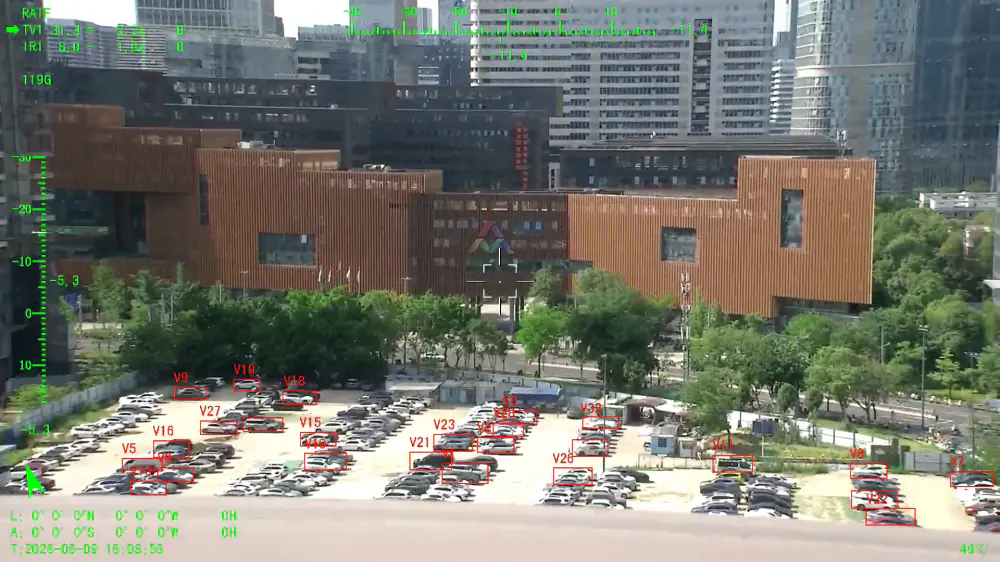
640 × 512 through 19 mm, uncooled, aligned to the daylight optic. Detection is 0.53 km on a person and 2.5 km on a vehicle, and neither figure moves when the sun goes down. The core is fixed, so the night field is settled on the ground: 19 mm covers a compound from working altitude, anything smaller means flying closer.
Ranging inside 1.5 km
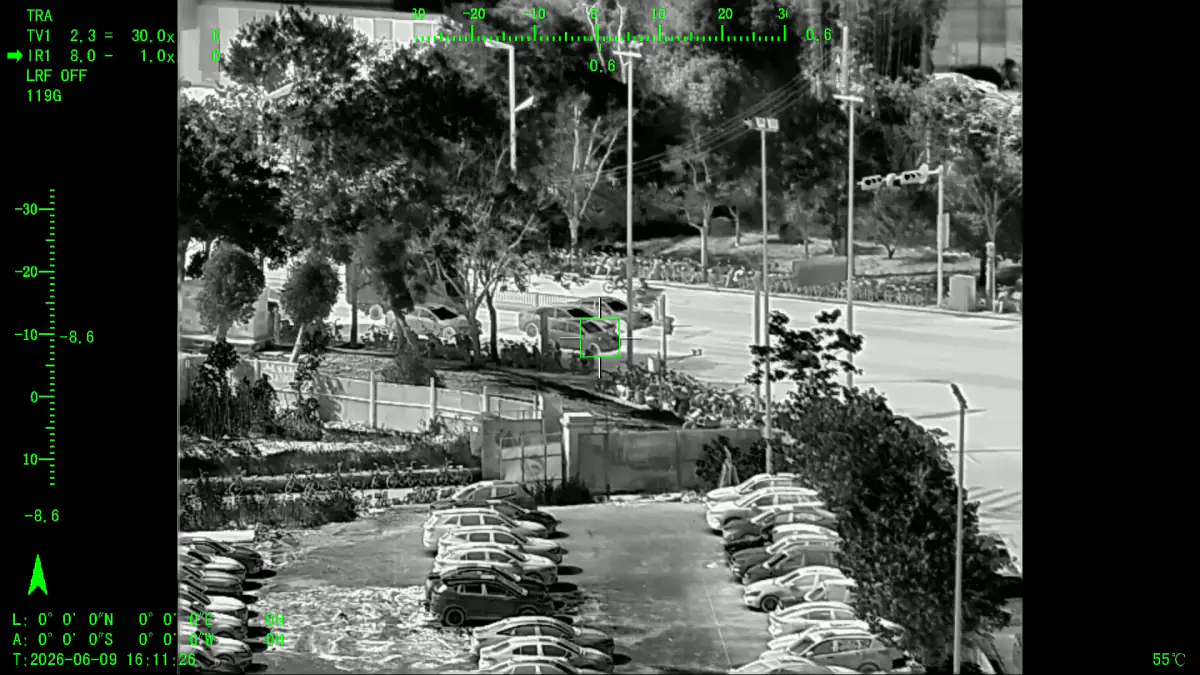
± 1 m across the span, from five metres out. The near end earns its place on an 800 g head: a mast base, a roof edge or a vehicle a few hundred metres away all fit, and the reading goes into the coordinate solution instead of stopping on screen. Past 1.5 km the geometry ends.
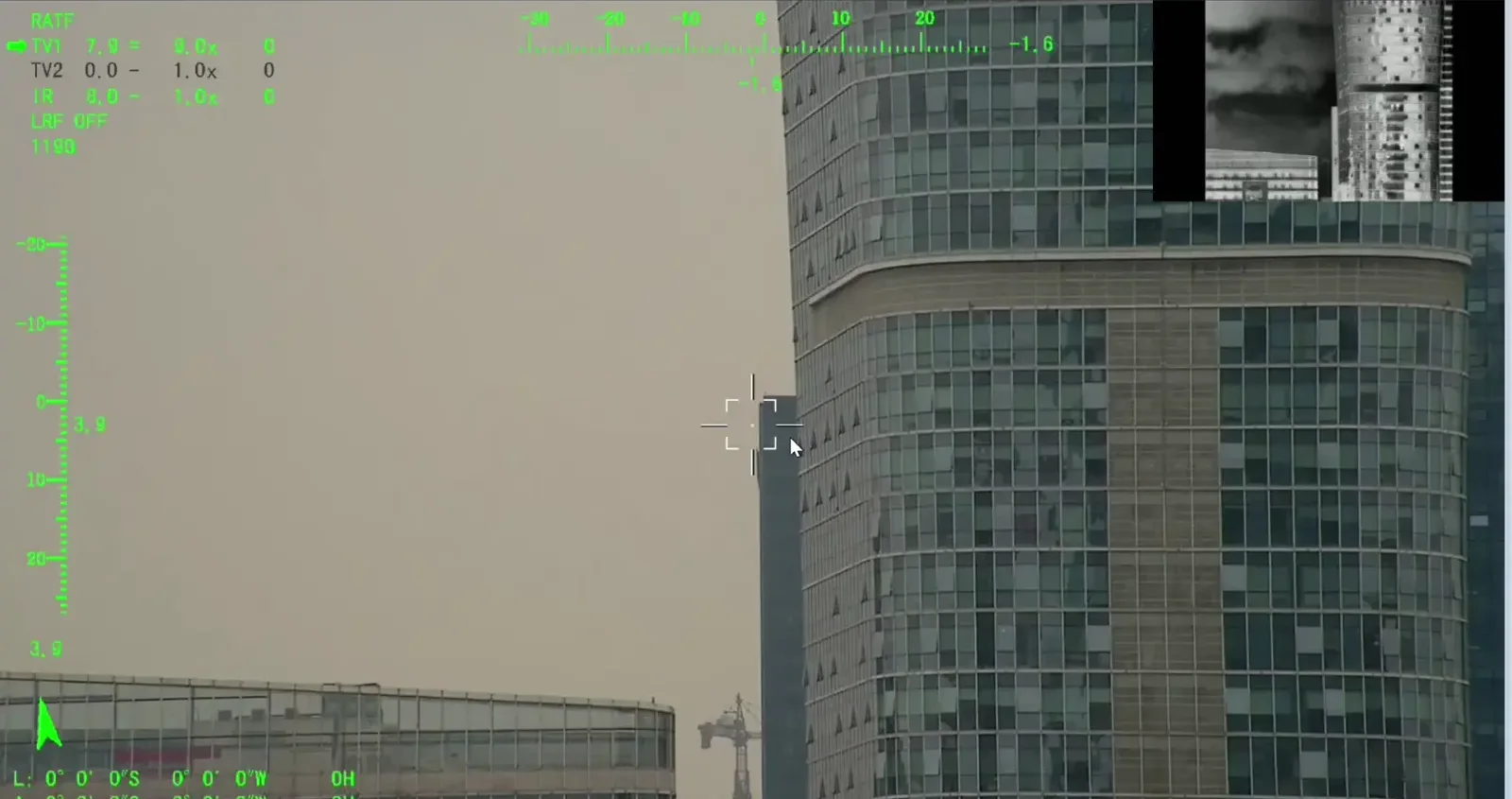
The summary: three channels on three axes at 800 g, with focal length on both imaging paths as the thing that had to give.
Stabilisation and mechanical design
Three axes on a sub-kilogram head
Every axis, yaw as well as pitch and roll, carries its own brushless motor, encoding feeding the loop, nothing geared between. The third axis separates this head from lighter two-axis models: roll is corrected here, so a multirotor in gusty air still returns usable video. Error stays within ≤ 100 μrad (1σ) on ≥ 60°/s.
800 g, Φ100 × 156 mm
800 g in a Φ100 × 156 mm cylinder, on 11–28 VDC and 15 W / 30 W. A small multirotor, a fixed-wing aircraft or a light helicopter has headroom; both catalogue limits, so mount and budget settle before hardware exists.
Detection and tracking at the edge
A classifier in the turret
People, vehicles, vessels and aircraft are detected on the payload, so boxes appear whether or not the downlink is healthy, and no image crosses the link for processing. Twenty tracks at once, one actively locked. Here the detector finds and the optic stays put.
What the operator is handed
A box that survives rotation and scale change, a lock re-acquired after a mast or a building takes the target, and a recording written on board. With the rangefinder, one pass yields a marked target and a measured distance.
Airframe integration
A sub-kilogram three-axis head: mount, bus, environment and the paperwork that ships with it.
Mount
A vibration-isolated base carries a quick-release face; adapter plates cover a bolt circle that does not match ours. The bracket is stress-cased against Φ100 × 156 mm and 800 g, which is a mass a small multirotor manages without a dedicated hard point.
Bus and sealing
Input spans 11 to 28 VDC. Serial control arrives on RS-422, RS-232 or TTL; SBUS and MAVLink are accepted where the autopilot speaks them. Imagery leaves on 100 Mbps Ethernet as H.264 or H.265 and is written to 128 GB internally. Sealing handles dust and rotor wash; the envelope is −20 °C to +60 °C working, −40 °C to +70 °C stored. Every model in the range shares this, as the technology pages explain.
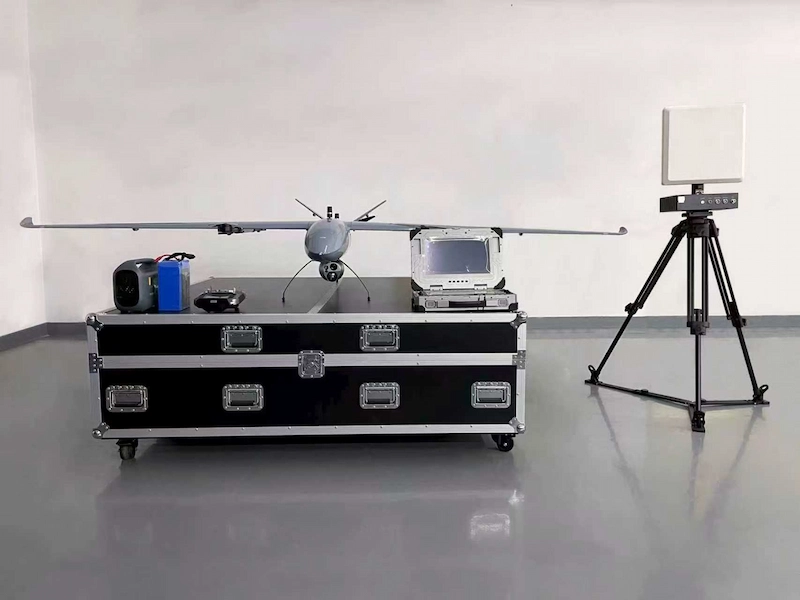
Bench and aircraft
Integration on the bench first: protocol, video path and gimbal limits checked before the first flight, then the same harness goes into the airframe.
With the first head: protocol, pipeline note, outline with pinout, calibration record, test report. Export screening covers paper too.
Where the HQ-100T is used
Three tasks that fit inside 1.5 km, 47 mm and 800 g.
- Site and compound watch
A site boundary is a few hundred metres across and a night shift needs thermal cover. The 640 × 512 core detects at 0.53 km, the 10x daylight optic identifies in the morning, and the rangefinder puts a distance on anything at a fence line. All three sit on one roll-stabilised 800 g head, so a small multirotor holds the pattern without a stabilised mount of its own.
- Substation and plant rounds
Close work on plant is a three-channel job: visible to read a fitting, thermal to see which one is running warm, laser to record how far it is. All three work inside 1.5 km and inside 47 mm, which is the scale of a substation bay, and 800 g keeps the aircraft small enough to work between structures.
- First response overwatch
A response call is a close event with a short decision cycle. The thermal channel finds people in smoke or dark at 0.53 km, the daylight zoom reads the scene once a light is on it, and a laser distance gives a command post something to place on a map. The three-axis mount is what keeps it readable while the aircraft manoeuvres low over the scene.
Full specifications
| Model | HQ-100T |
| Series | Gimbal Camera Series (HQ series) |
| Stabilisation | Three-axis gyro-stabilised, ≤ 100 μrad |
| Sensor configuration | EO + IR + LRF |
| Visible channel | 1920 × 1080, 10x zoom 4.7 – 47 mm |
| Thermal channel | 640 × 512, 19 mm fixed |
| Laser rangefinder | 5 m – 1.5 km (± 1 m) |
| Weight | ≤800 g |
| Dimensions | ≤Φ100 × 156 mm |
| Power consumption | 15 W / 30 W |
| Detection (EO) | 1.8 km person / 10 km vehicle |
| Detection (IR) | 0.53 km person / 2.5 km vehicle |
Detection distances follow the standard 1.7 m person / 2.3 m vehicle convention. Rows marked as shared are common across the HQ series.
Control software: Windows as standard. An Android version can be customised for OEM/ODM projects.
Shared across the HQ series
- Video output: Ethernet, H.264 / H.265
- Gimbal control: RS-422 / RS-232 / TTL, SBUS, MAVLink
- Input voltage: 11–28 VDC
- Operating temperature: −20 °C to +60 °C
- Sealing: Sealed housing for dust, wind and rotor wash
- Recording: On-board recording, imagery retained if the link drops
- AI module: Onboard detection, classification and multi-target tracking
- Mounting: Quick-release interface, adapters available for OEM airframes
Three-view outline drawing with connector pinout, available on request.
Other 3-axis gimbal cameras
Same three-axis platform, same control protocol and same mounting pattern, so moving between these models is a change of optics rather than a re-integration.
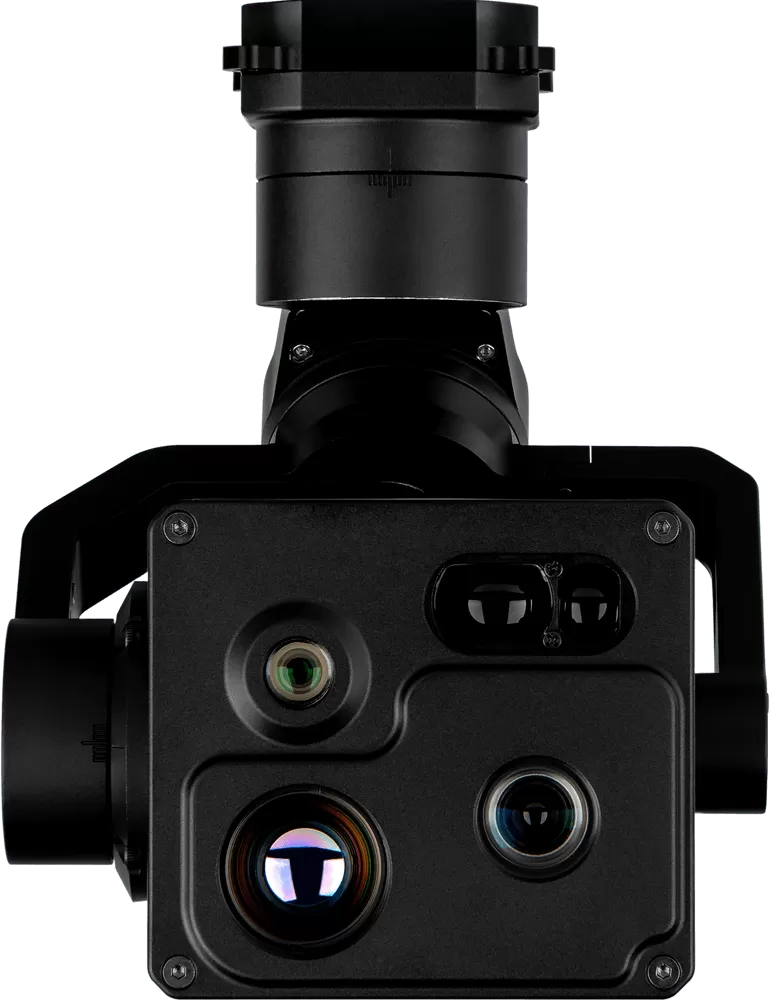
HQ series · 3-axis · EO + IR + LRF
HQ-95Q customized UAV Camera Gimbal
Four optical channels and a quick-release mount on the lightest three-axis head we build.
- Weight
- ≤400 g
- Visible
- Dual 8000 × 6000, 9.5 mm + continuous zoom 15.3 – 49.7 mm
- Laser
- 5 m – 1.5 km (± 1 m)
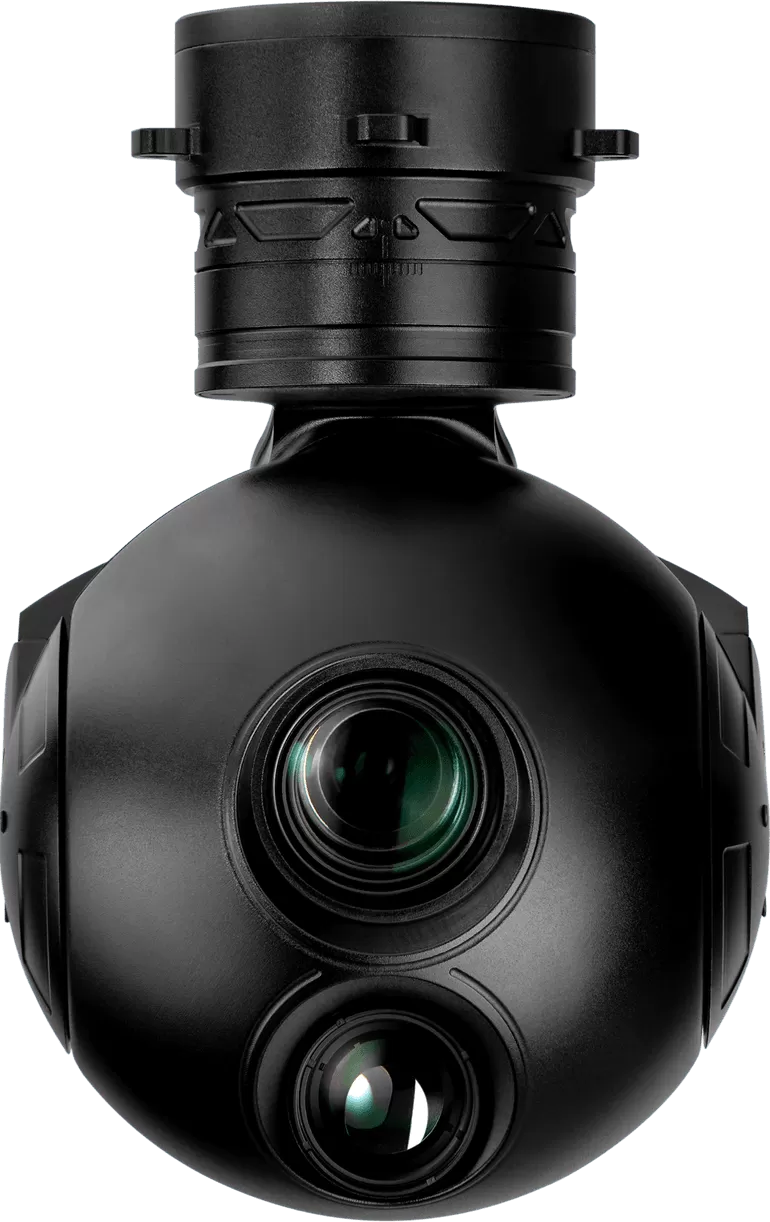
HQ series · 3-axis · EO + IR
HQ-100D Gimbal Camera OEM
The entry point to full roll-stabilised zoom and thermal imaging under a kilogram.
- Weight
- ≤800 g
- Visible
- 1920 × 1080, 10x zoom 4.7 – 47 mm
- Thermal
- 640 × 512, 19 mm fixed
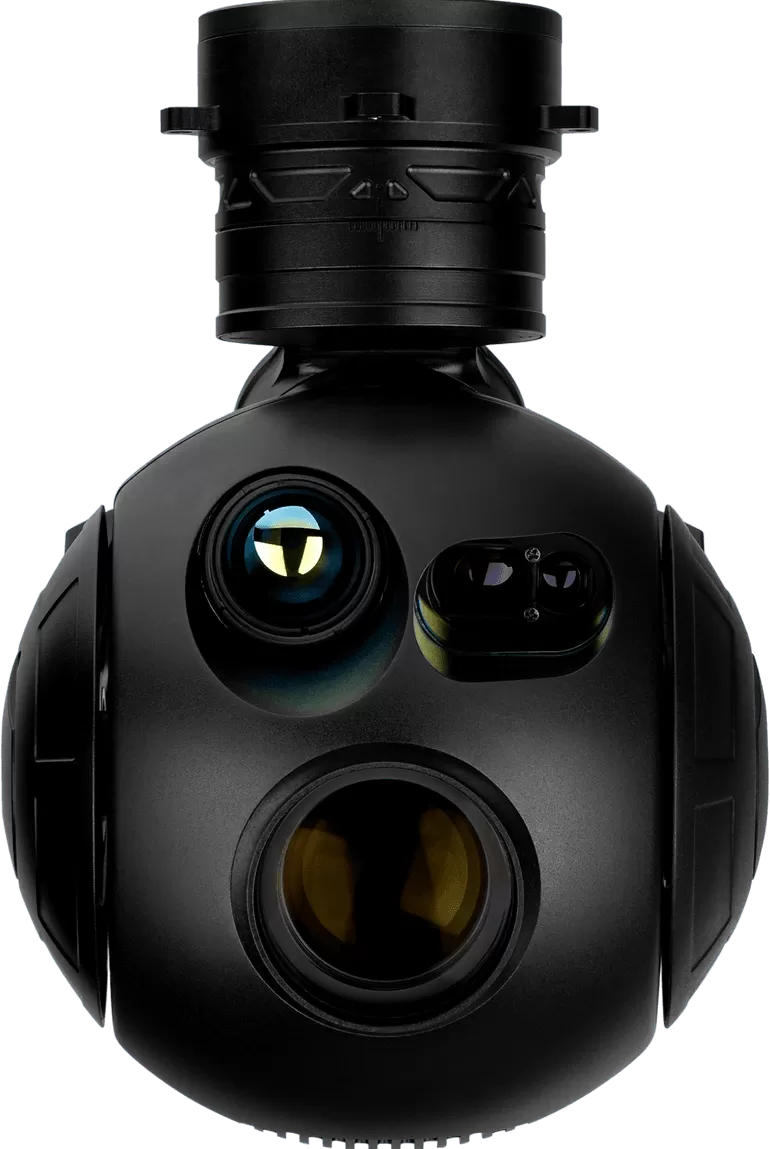
HQ series · 3-axis · EO + IR + LRF
HQ-115T Gimbal Camera Manufacturer
The one-kilogram workhorse: 30x zoom, thermal imaging and a 1.5 km rangefinder.
- Weight
- ≤1 kg
- Visible
- 1920 × 1080, 30x zoom 4.3 – 129 mm
- Laser
- 5 m – 1.5 km (± 1 m)
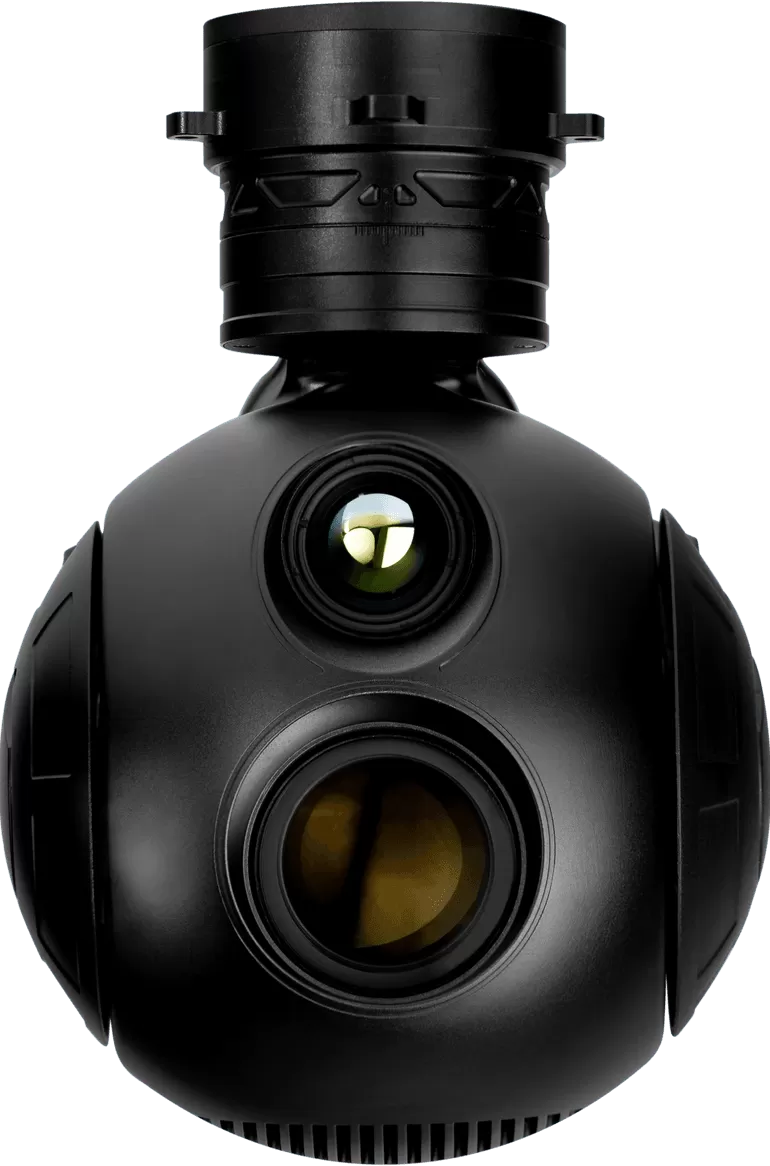
HQ series · 3-axis · EO + IR
HQ-115D UAV Gimbal Camera OEM
30x zoom and thermal imaging on a one-kilogram head with no ranging requirement.
- Weight
- ≤1 kg
- Visible
- 1920 × 1080, 30x zoom 4.3 – 129 mm
- Thermal
- 640 × 512, 25 mm fixed
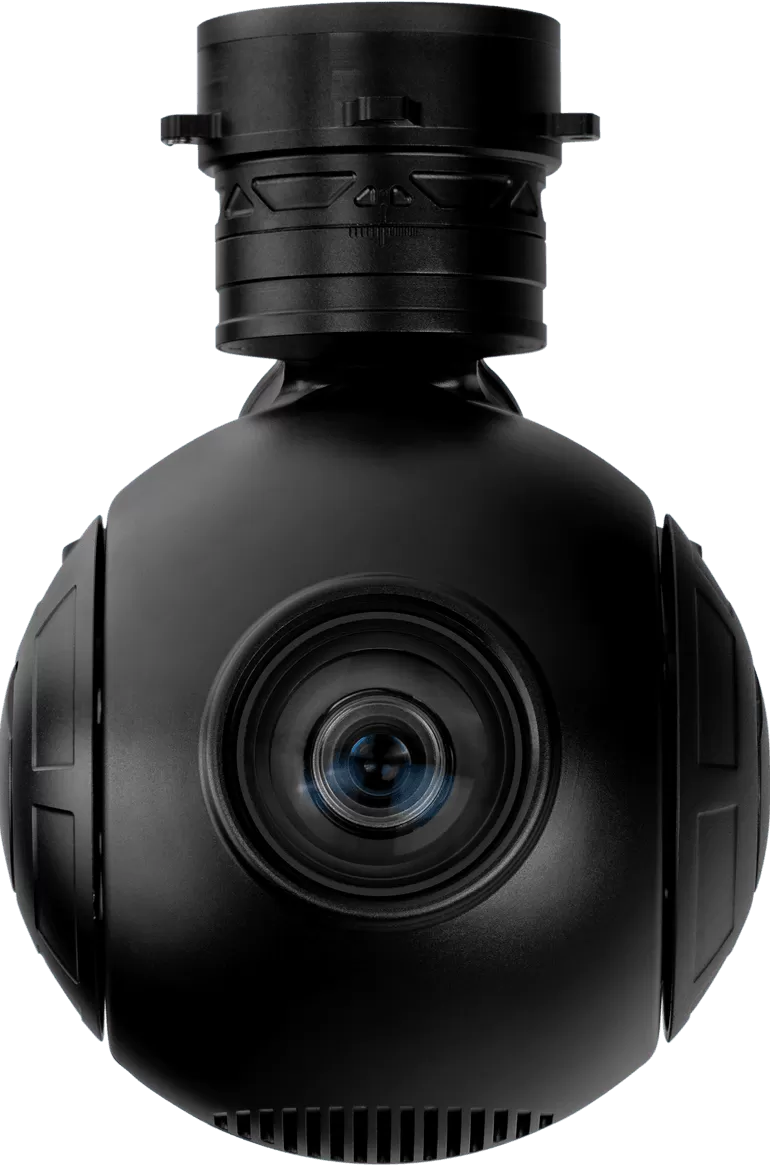
HQ series · 3-axis · EO
HQ-115S Drone Camera Gimbal Direct Factory
A 40x daylight optic alone, for daylight-only surveillance where the weight budget rules out a thermal channel.
- Weight
- ≤1 kg
- Visible
- 1920 × 1080, 40x zoom 4.25 – 170 mm
- Thermal
- —
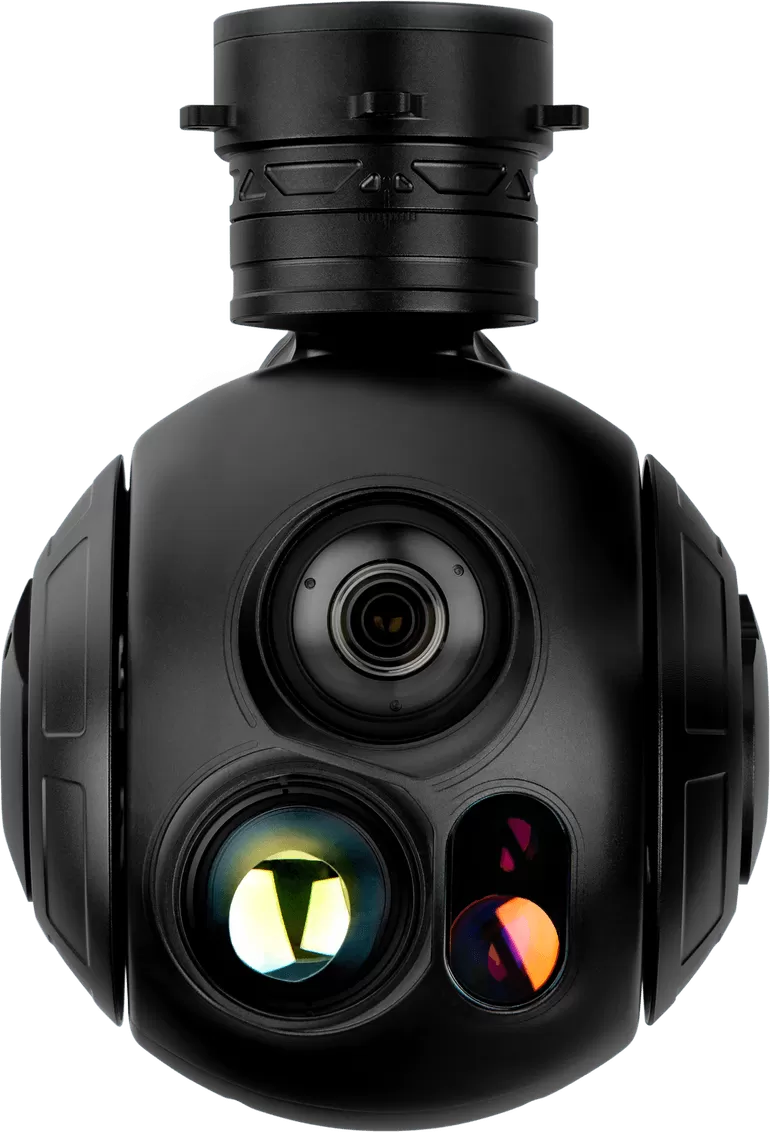
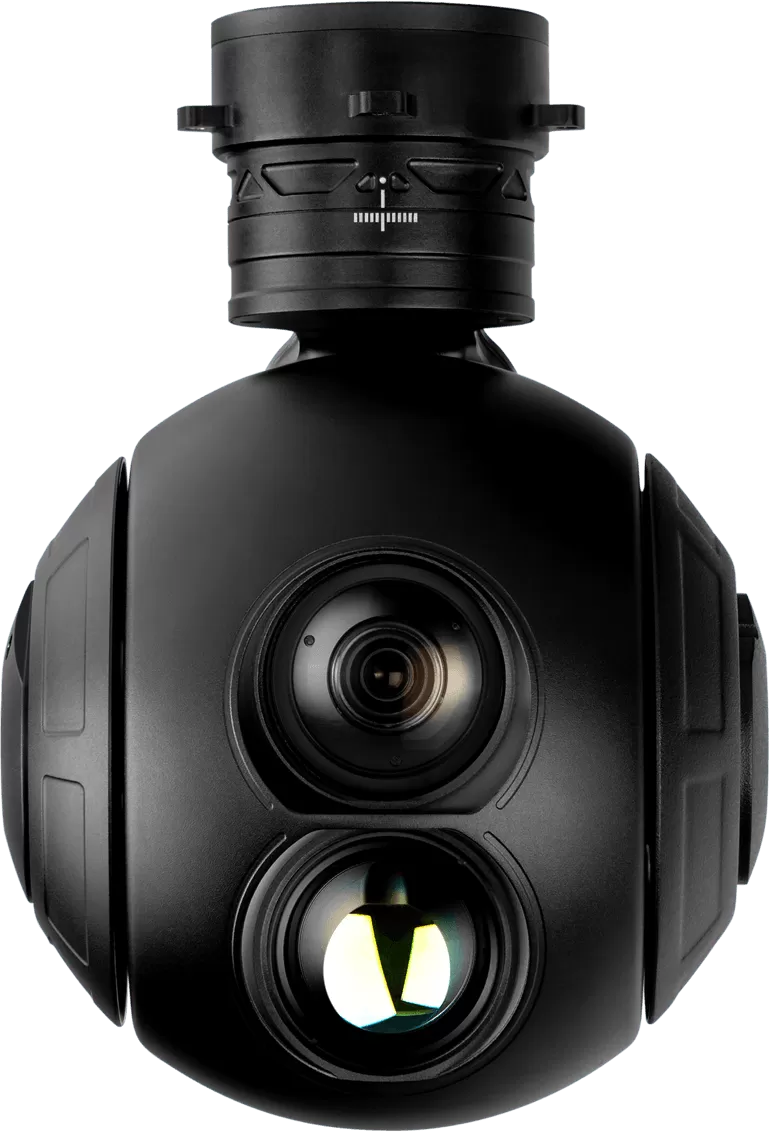
HQ series · 3-axis · EO + IR + LRF
HQ-125TB Gimbal Camera Supplier
Balanced mid-range turret: 30x zoom, a long thermal lens and 3 km ranging.
- Weight
- ≤1.2 kg
- Visible
- 1920 × 1080, 30x zoom 4.3 – 129 mm
- Laser
- 15 m – 3 km (± 1 m)
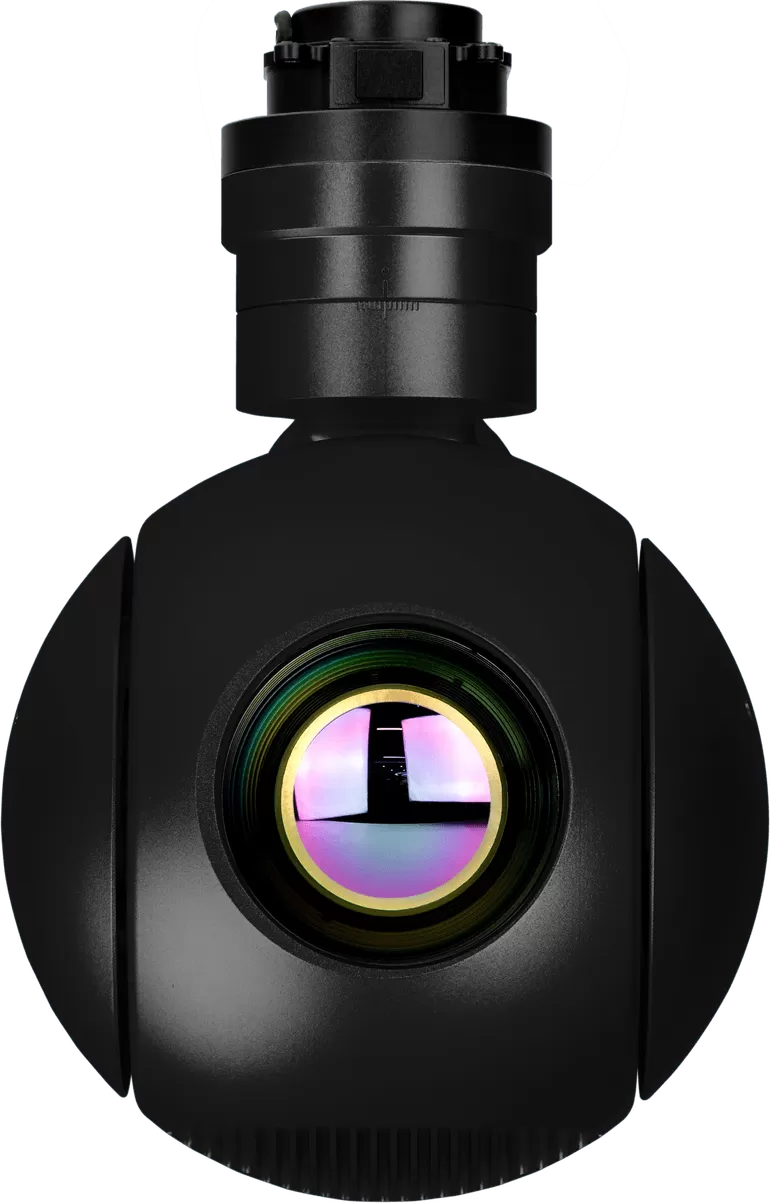
HQ series · 3-axis · EO + IR
HQ-125DB UAV Camera Gimbal ODM
The longer 35 mm thermal lens paired with 30x zoom, without the rangefinder.
- Weight
- ≤1.1 kg
- Visible
- 1920 × 1080, 30x zoom 4.3 – 129 mm
- Thermal
- 640 × 512, 35 mm fixed
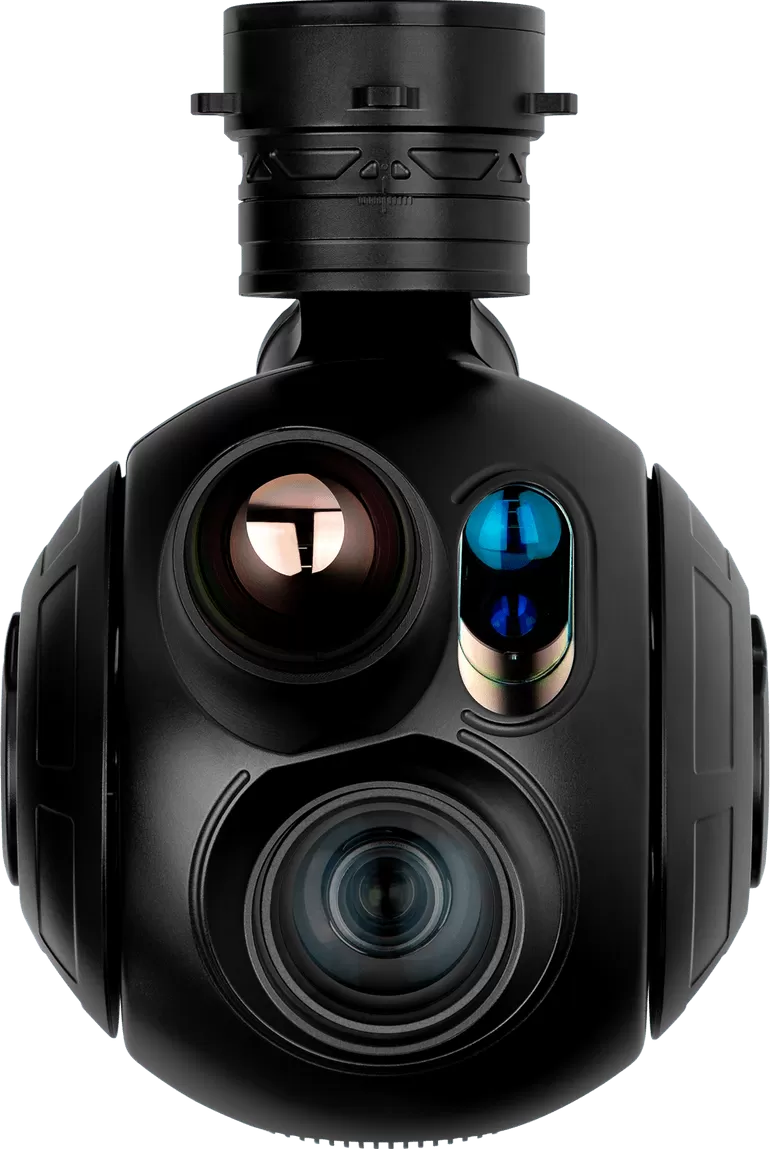
HQ series · 3-axis · IR
HQ-125S Thermal Gimbal Camera OEM
A thermal-only head with a 1280 × 1024 sensor — the highest thermal resolution in the series.
- Weight
- ≤1 kg
- Visible
- —
- Thermal
- 1280 × 1024, 50 mm fixed
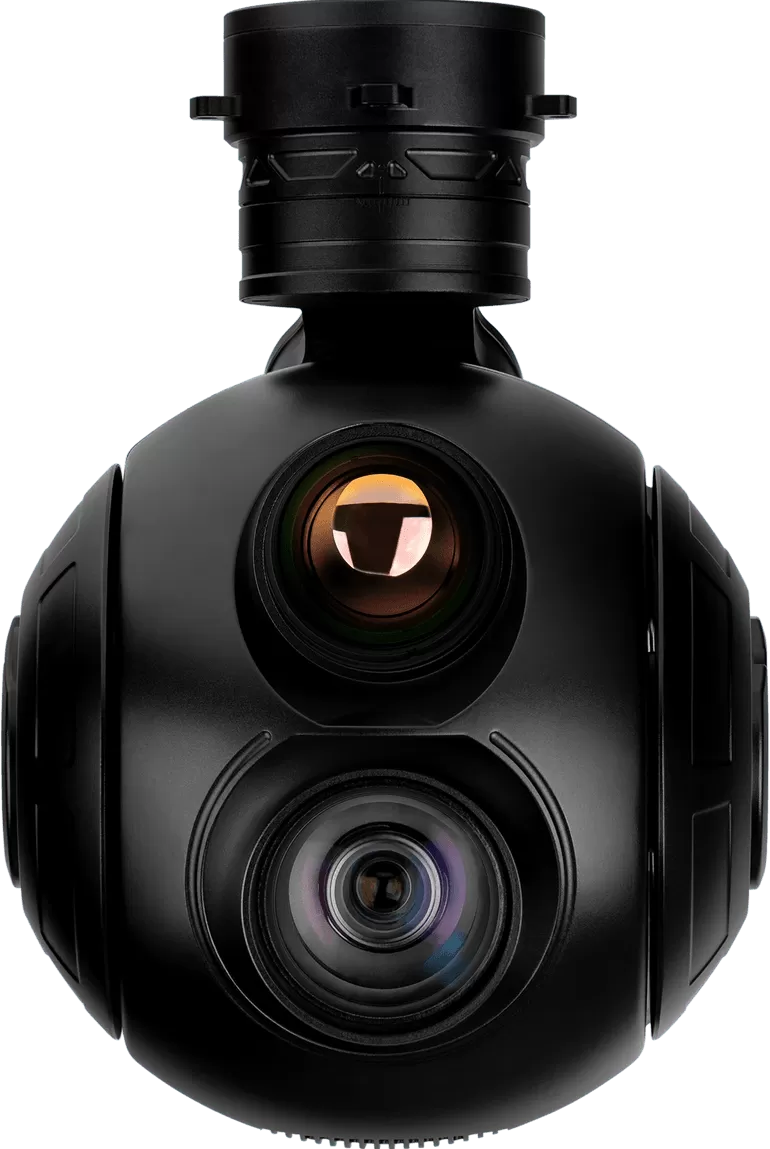
HQ series · 3-axis · EO + IR + LRF
HQ-135T UAV Gimbal Camera OEM
The flagship of the compact range: 40x zoom, thermal imaging and 3 km ranging on one stabilised cage.
- Weight
- ≤1.4 kg
- Visible
- 1920 × 1080, 40x zoom 4.25 – 170 mm
- Laser
- 15 m – 3 km (± 1 m)
HQ series · 3-axis · EO + IR
HQ-135D customized Drone Camera Payload
The 40x optic with thermal imaging, for daylight and night identification at long range.
- Weight
- ≤1.4 kg
- Visible
- 1920 × 1080, 40x zoom 4.25 – 170 mm
- Thermal
- 640 × 512, 35 mm fixed
HQ series · 3-axis · EO + IR + LRF
HQ-135TA Stabilised UAV Camera Manufacturer
A 50 mm thermal lens gives the longest thermal reach in the compact range.
- Weight
- ≤1.5 kg
- Visible
- 1920 × 1080, 30x zoom 4.3 – 129 mm
- Laser
- 15 m – 3 km (± 1 m)
Questions engineers ask about the HQ-100T
What does the HQ-100T detect, and at what distance?
By day, 1.8 km to a person and 10 km to a vehicle. On the thermal core, 0.53 km and 2.5 km. Both sets use the standard 1.7 m person and 2.3 m vehicle targets and both are detection only; identification comes at closer range, and 10x will not stretch that out to the detection figure.
How many units, and how soon?
Stock configuration: one unit is enough. Custom configuration: from 100 units. Anything already built is dispatched as it stands and the remaining wait is carriage; a custom or high-volume run has its schedule written into the quotation. Payment by T/T, warranty twelve months.
Is a 10x optic enough for the job?
For a compound, a substation bay or a vehicle a few hundred metres out, yes. For identifying a face or reading a plate at 1.8 km, no. That is beyond what 47 mm resolves, and the fix is a longer optic on a heavier head. Treat 1.8 km as the detection envelope and plan identification well inside it.
Why fit a third axis at this mass?
Roll is the axis a small airframe finds hardest to hold. Correcting it inside the head lets the aircraft bank and still return level video, which is the practical difference between this and a lighter two-axis model. With pitch and yaw only, every turn would tilt the horizon.
Designed and manufactured by HITS
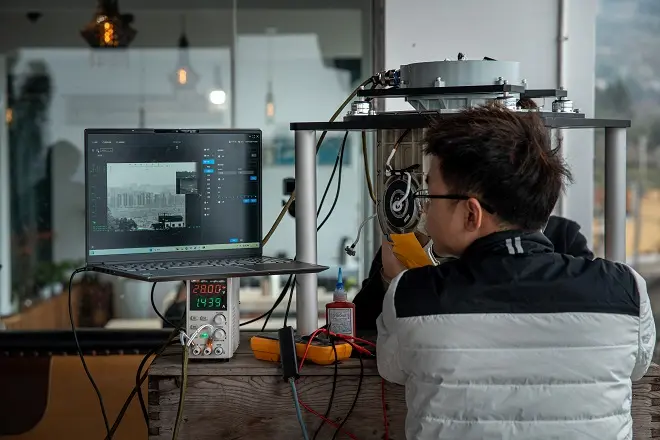
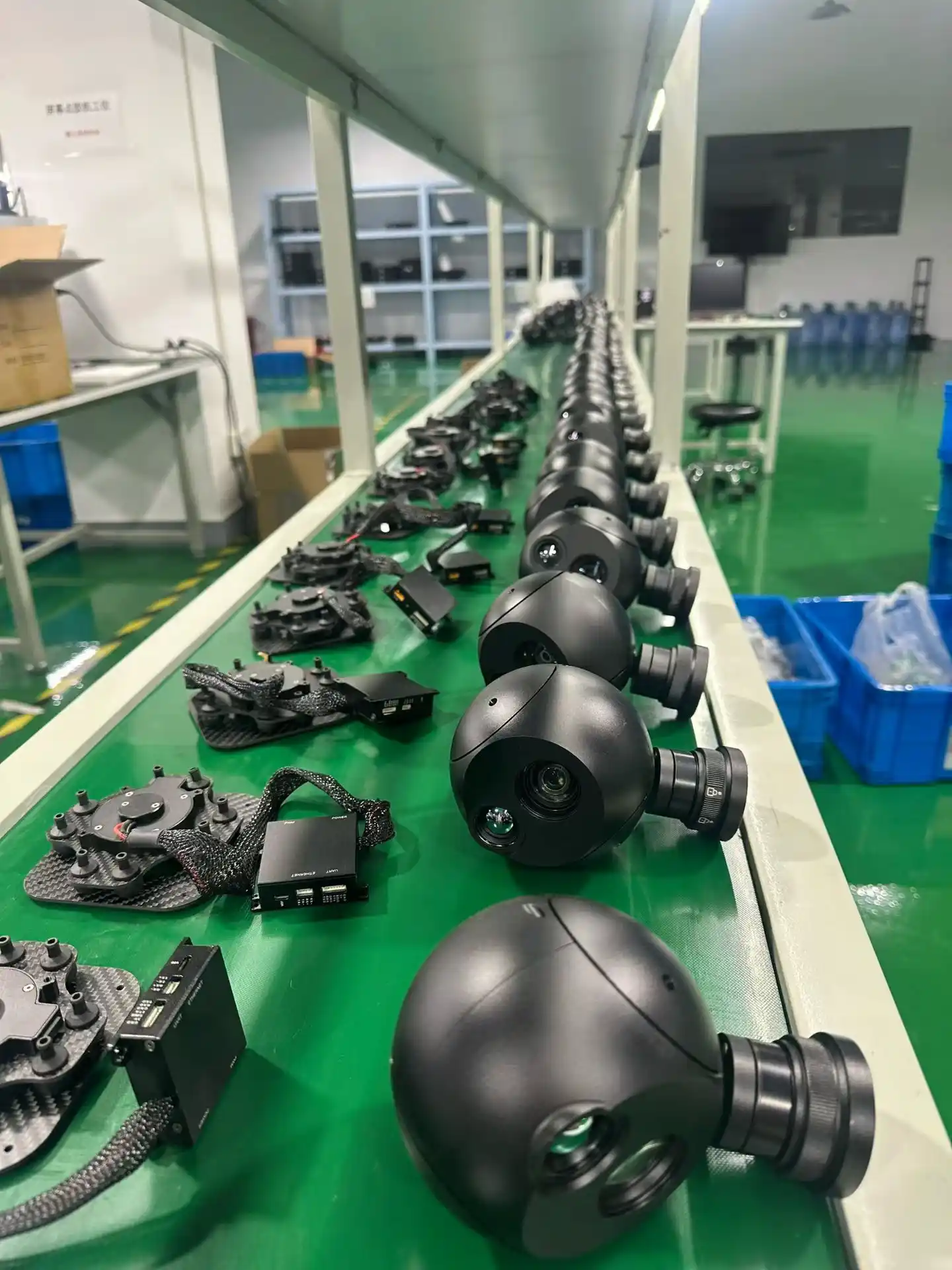
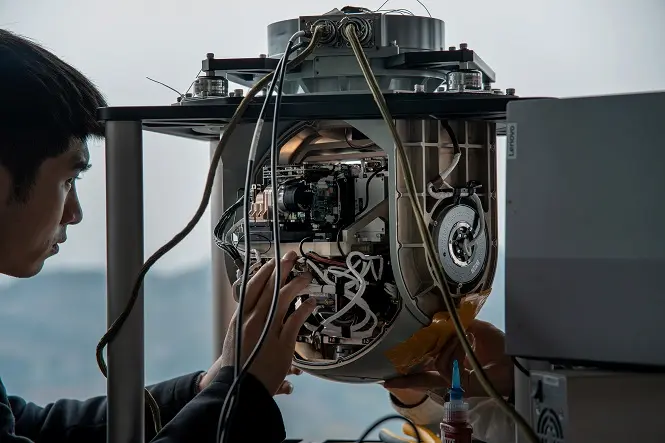
Optics, servo hardware, stabilisation firmware and the AI tracking module are developed in house, and every unit is assembled, calibrated and environmentally tested on our own line before it ships.
Request a quotation for the HQ-100T
Tell us the platform, the range you need to identify and how many units you are planning. Every configuration is quoted individually, so you get a written price against your own requirement rather than a list figure that does not fit it. We answer within one working day.
Explore all product categories
Nine routes into the range: by stabilisation, by sensor set, or by payload class. Each category page compares the models and links to the full specification.
15 models · 240 g – 5 kg
Gimbal Cameras
Two- and three-axis stabilised heads with EO, thermal and laser options.
View category →
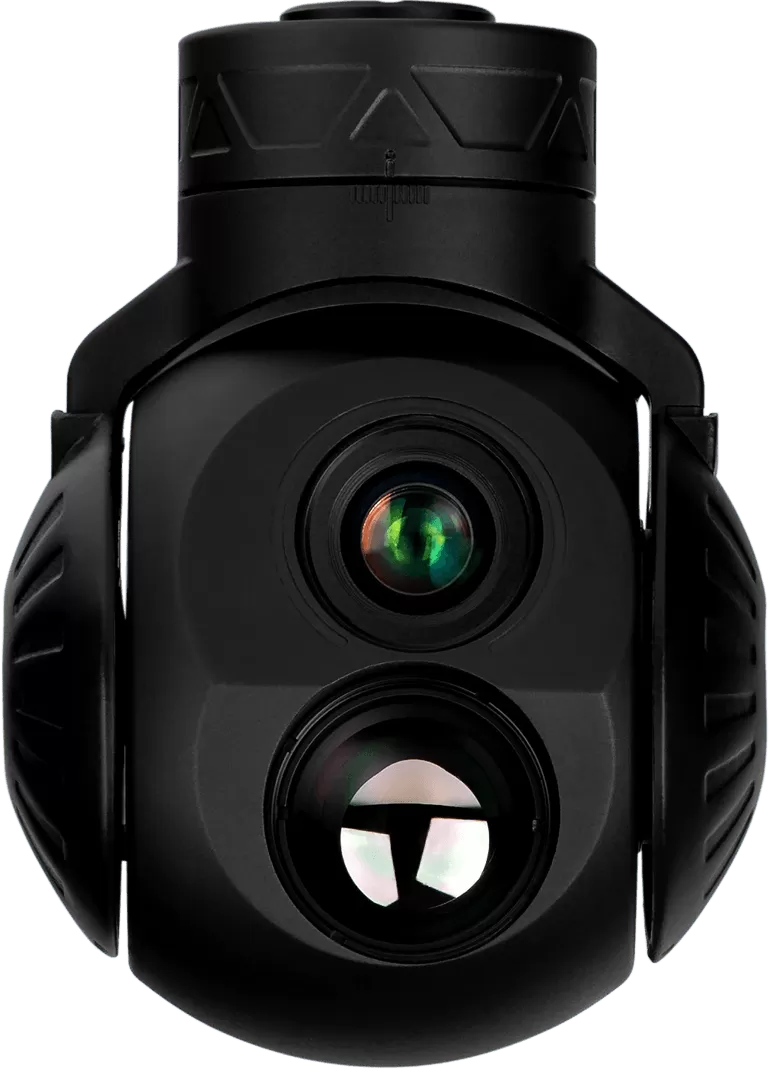
3 models · 240 – 500 g
2-Axis Gimbal Cameras
The lightest HQ heads: fixed or dual-FOV optics on a compact two-axis mount.
View category →
12 models · 400 g – 5 kg
3-Axis Gimbal Cameras
Roll-stabilised heads with longer zoom ranges and heavier payload capacity.
View category →
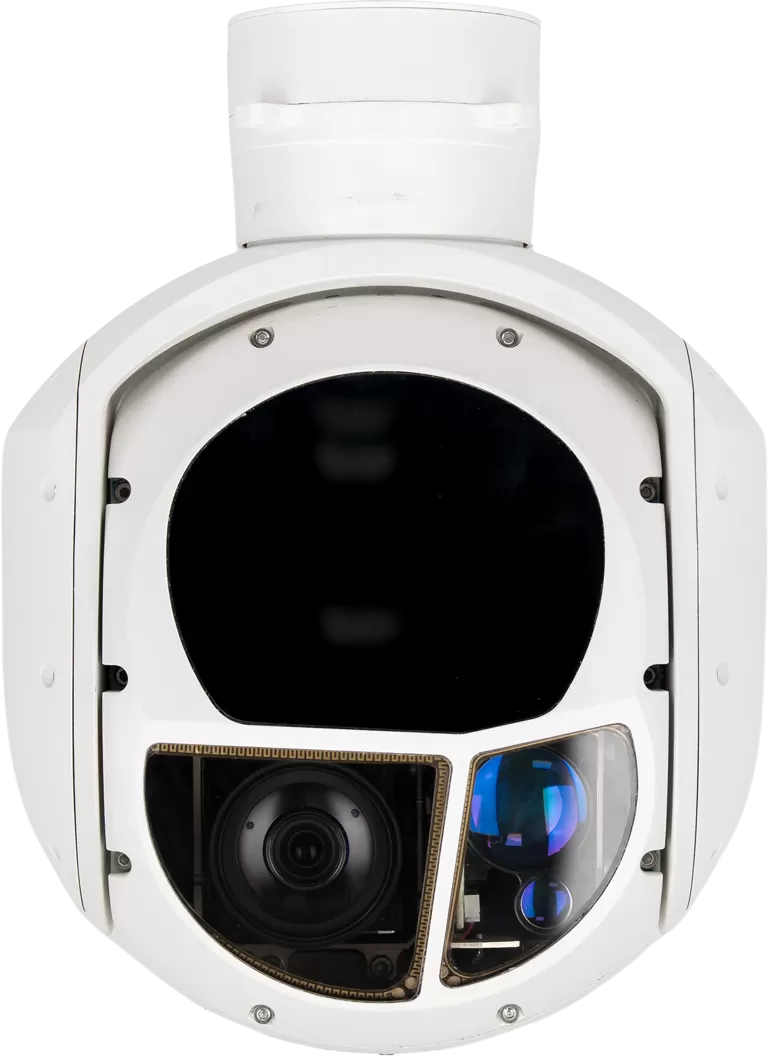
8 models · 1.6 – 10 kg
EO/IR Pod Systems
Larger multi-sensor pods with 30x–55x zoom, thermal imaging and laser ranging to 15 km.
View category →
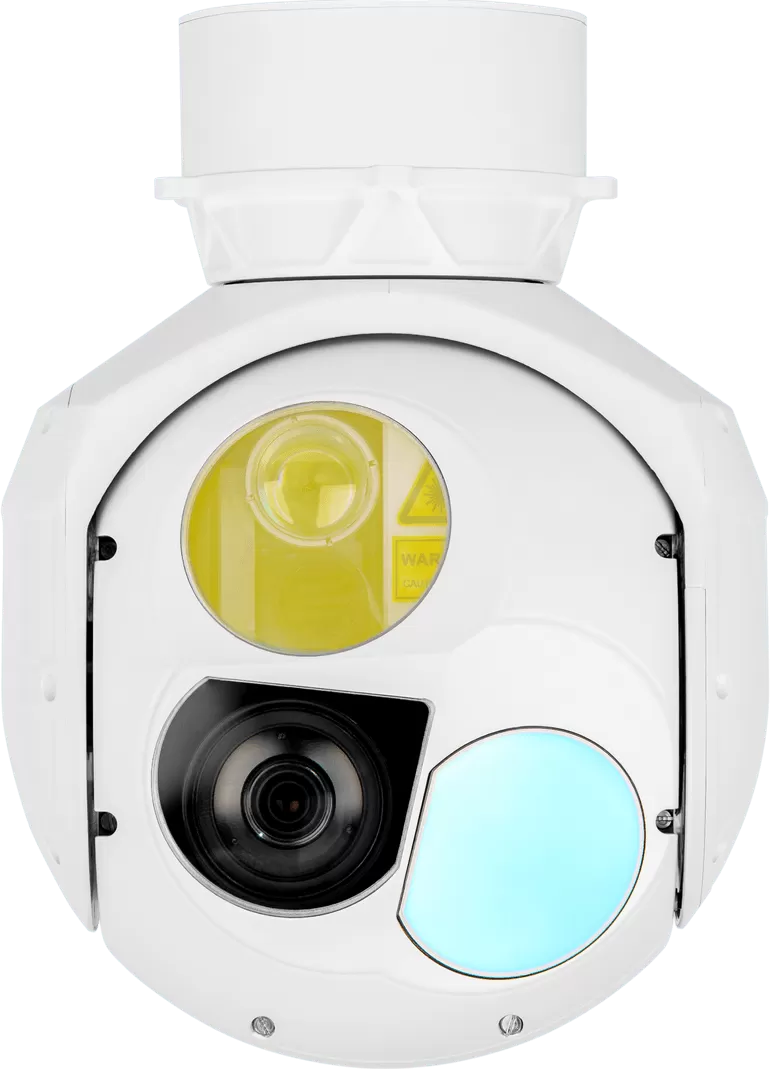
4 models · 2.5 – 22 kg
Laser Designator Pods
Targeting pods that add 1064 nm designation to the same imaging and stabilisation architecture.
View category →
Sensor guide
Thermal Cameras
Detector, lens and range: how uncooled LWIR payloads are specified for UAVs.
View category →
Sensor guide
Infrared Cameras
How to match an IR detector, lens and interface before choosing a gimbal.
View category →
Sensor guide
EO Cameras
Visible-channel sensors, zoom lenses and the resolution needed at range.
View category →
Sensor guide
EO/IR Cameras
Boresight, sensor pairing and the trade-offs of a dual-sensor head.
View category →