
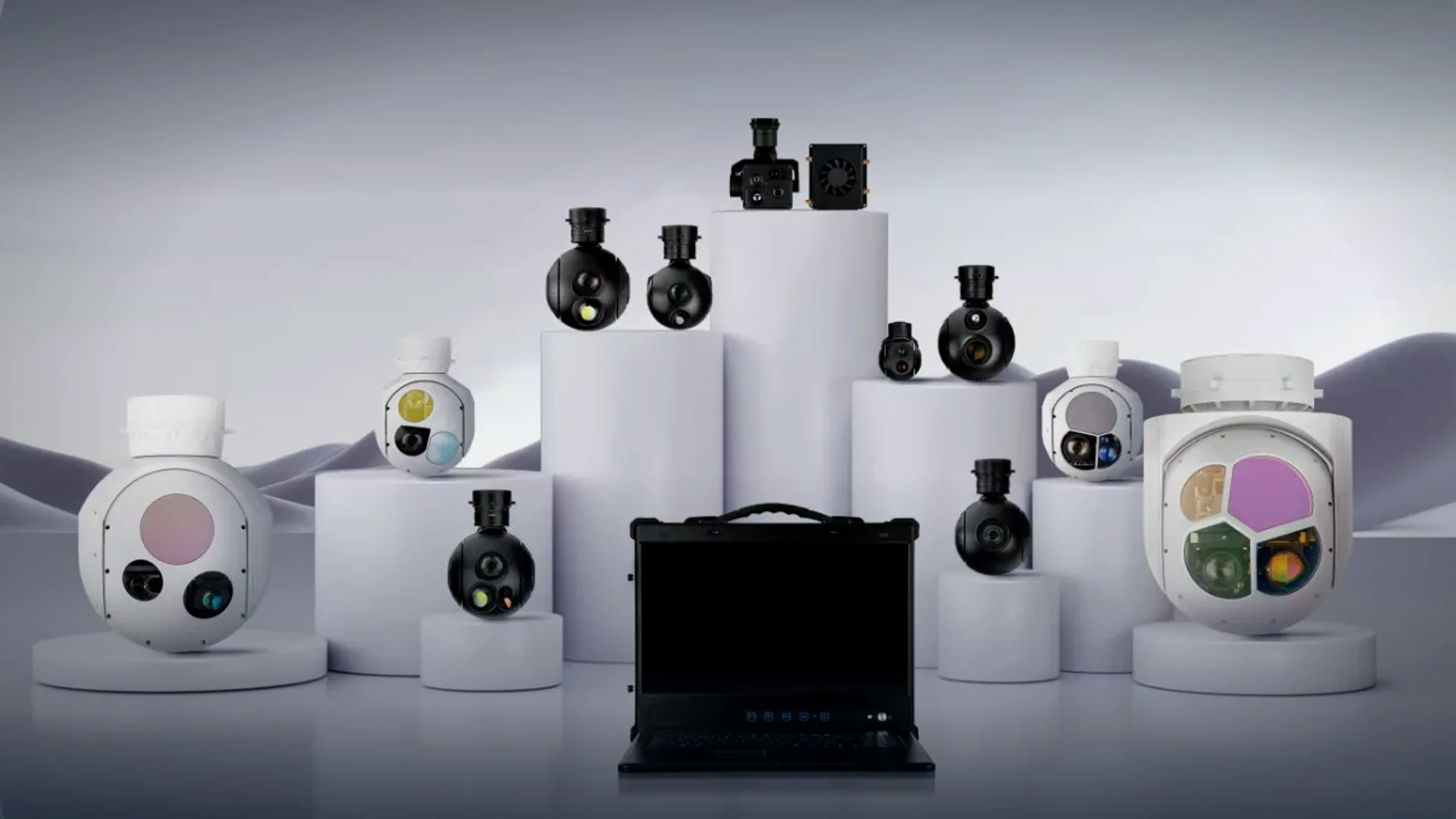
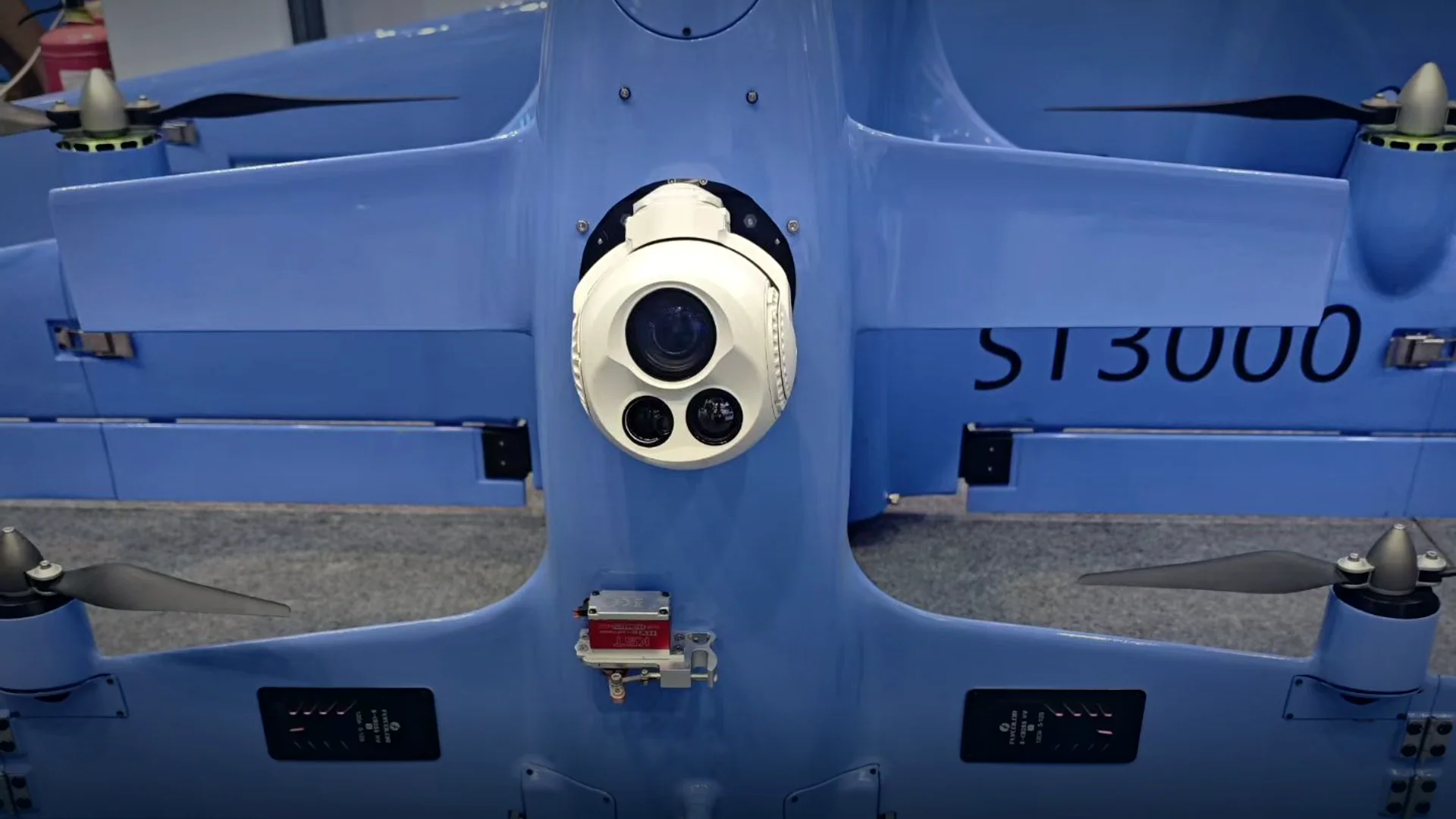
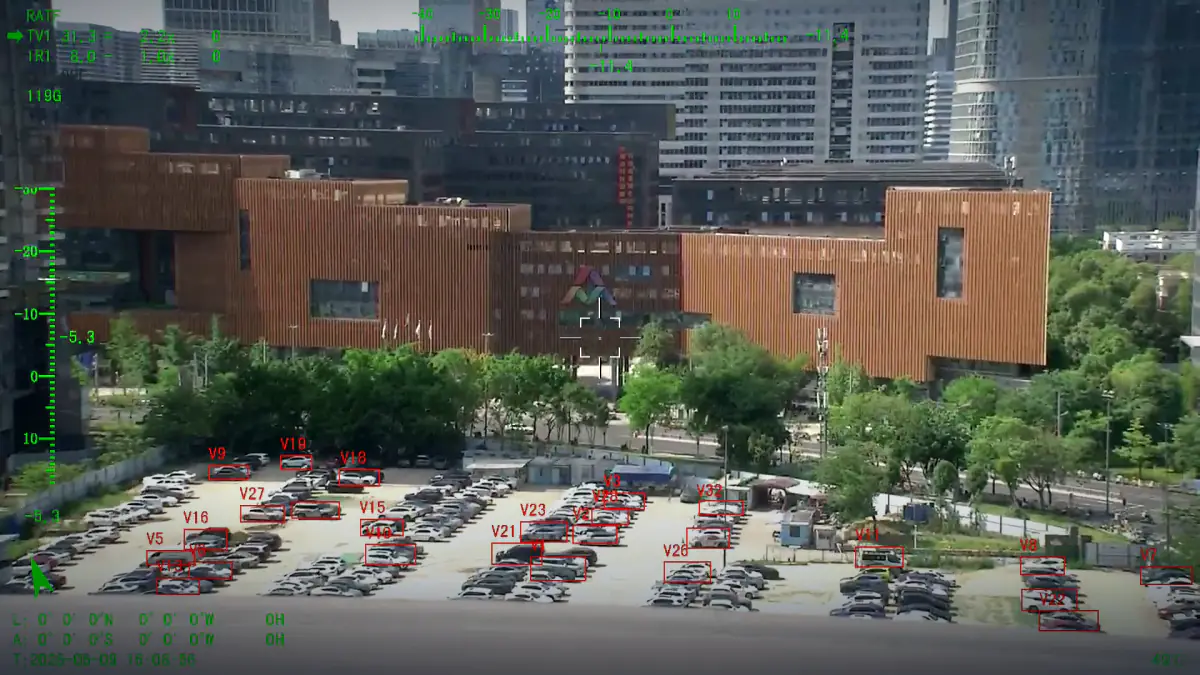
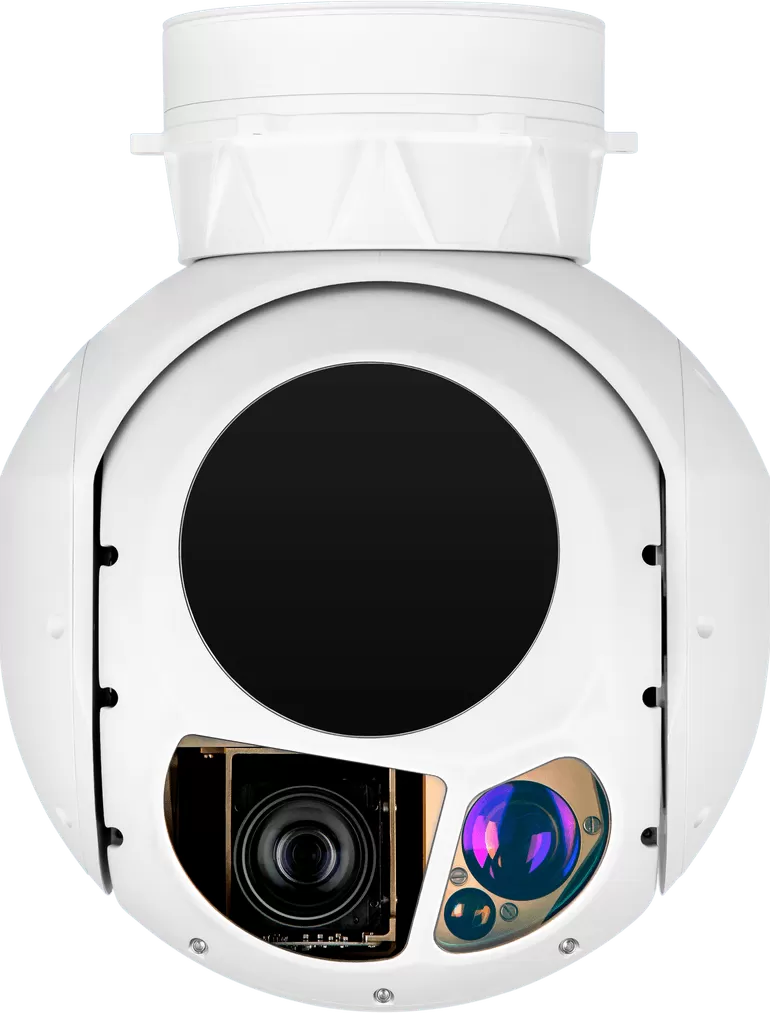
XQ-180T two-axis EO/IR pod with 6 km LRF
Category: EO/IR Pods
4K daylight imaging at 3840 × 2160 with 17.5x zoom and 6 km ranging. Because it uses the same stabilisation stack and control protocol as the rest of the XQ series, it can share a mount and a cable run with other heads in the range.
- Weight 4.1 kg
- Two-axis stabilised
- EO 3840 × 2160
- Thermal 1280 × 1024
- LRF 50 m – 6 km (± 1 m)
- AI detection & tracking
- CE / RoHS documentation available on request
- Export compliance statement available on request
- Calibration and test report supplied with every unit
What the XQ-180T is
The XQ-180T is the only head in this range with a 4K visible channel. Its detector is 3840 × 2160 behind a 17.5x zoom running 6.8 – 120 mm, paired with a 1280 × 1024 thermal core on a 75 mm lens and a laser reaching 6 km, all in a 4.1 kg pod. The case for it is not sharper video for its own sake: a 4K frame holds enough detail for a wide search to be re-examined later without flying the sortie again, which changes what the crew has to get right in the air.
A 4K daylight channel and the two costs that come with it
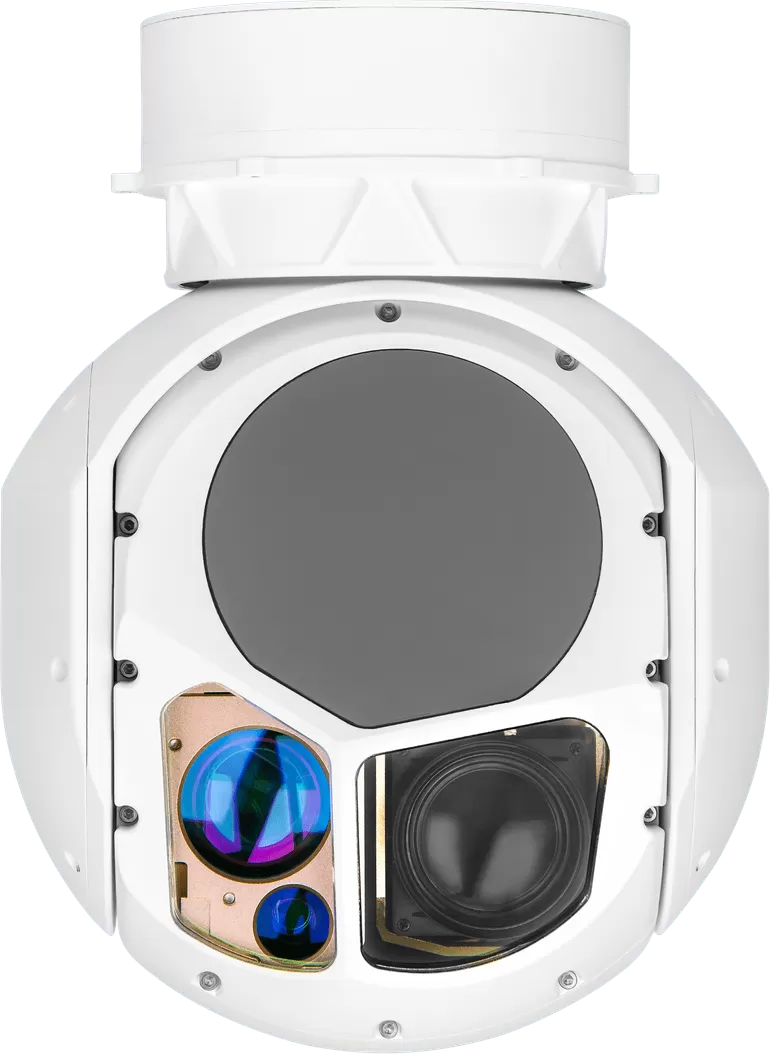
3840 × 2160 where the rest of the range runs 1920 × 1080, and a data path to match.
EO / visible
3840 × 2160, 17.5x zoom 6.8 – 120 mm
9 km on a person and 20 km on a vehicle, in a frame that survives a crop.
Thermal / IR
1280 × 1024, 75 mm fixed
Matching pixel count to the 4K channel: 2 km on a person, 7 km on a vehicle.
Laser rangefinder
50 m – 6 km (± 1 m)
± 1 m over the full span, eye-safe at 1535 nm, and a 6 km far end.
Where four thousand pixels across earns its keep
A sweep flown at 6.8 mm covers ground quickly and each frame still holds enough detail to re-read a section after landing. A crop out of a 3840 × 2160 frame survives enlargement where a 1920 × 1080 crop would not, and the detail exists at the instant of recording.
The bandwidth bill, and the storage bill
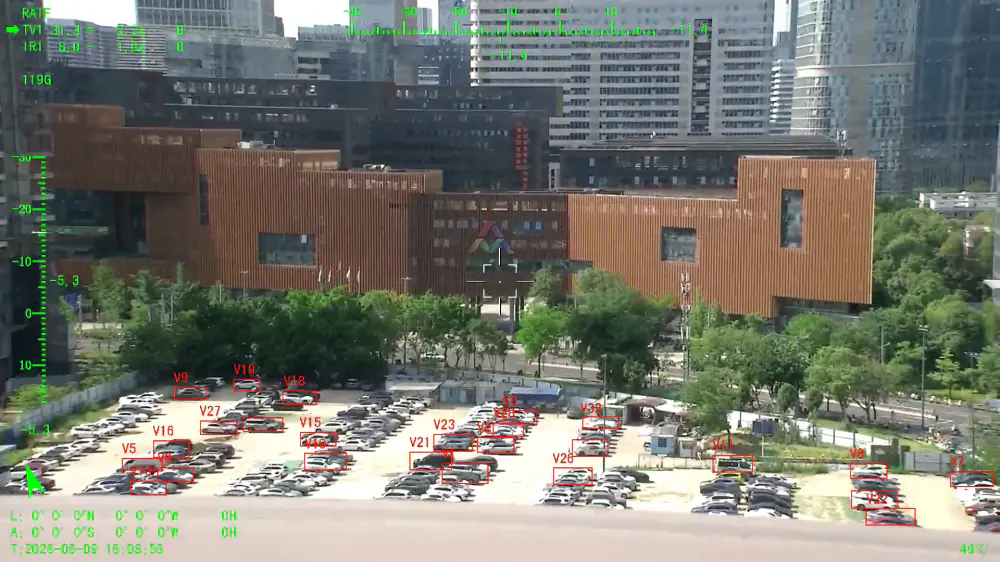
The link is Ethernet at 100 Mbps in H.264 or H.265, so the crew trades resolution against frame rate on the way down while the recorder keeps 128 GB of full-rate material: compressed for the operator, original frames for analysis.
A thermal channel that keeps up at night
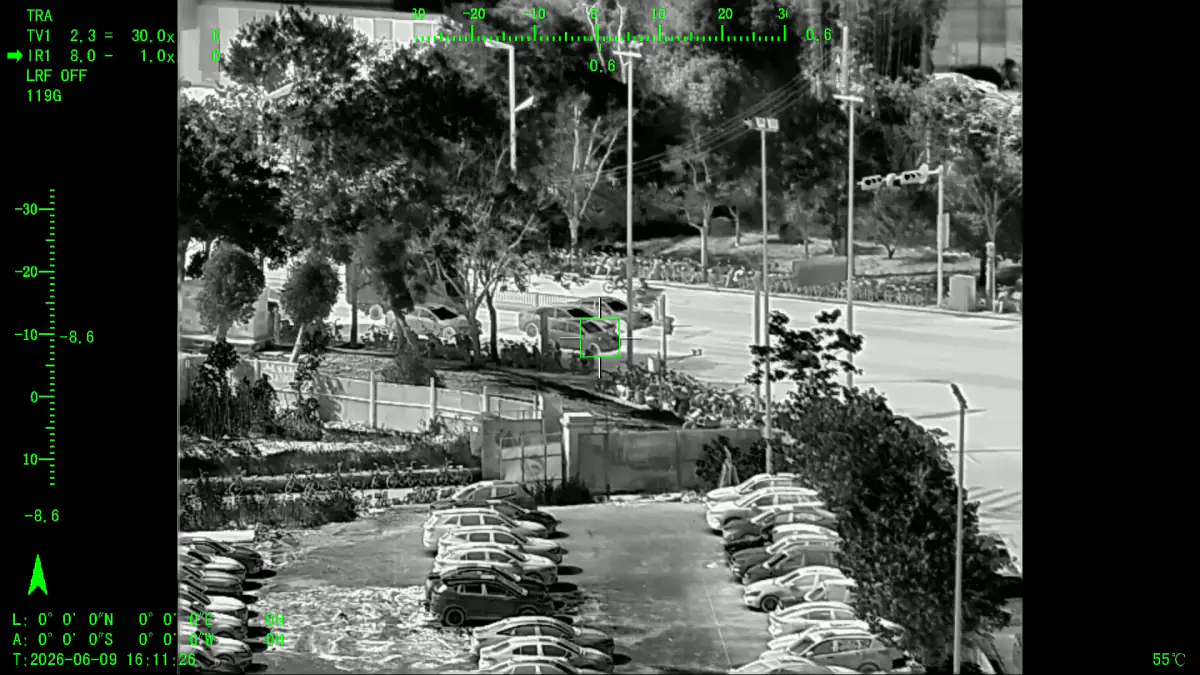
The night side is a 1280 × 1024 core on 75 mm, 2 km on a person and 7 km on a vehicle, boresighted to the 4K optic so both channels line up on one reference.
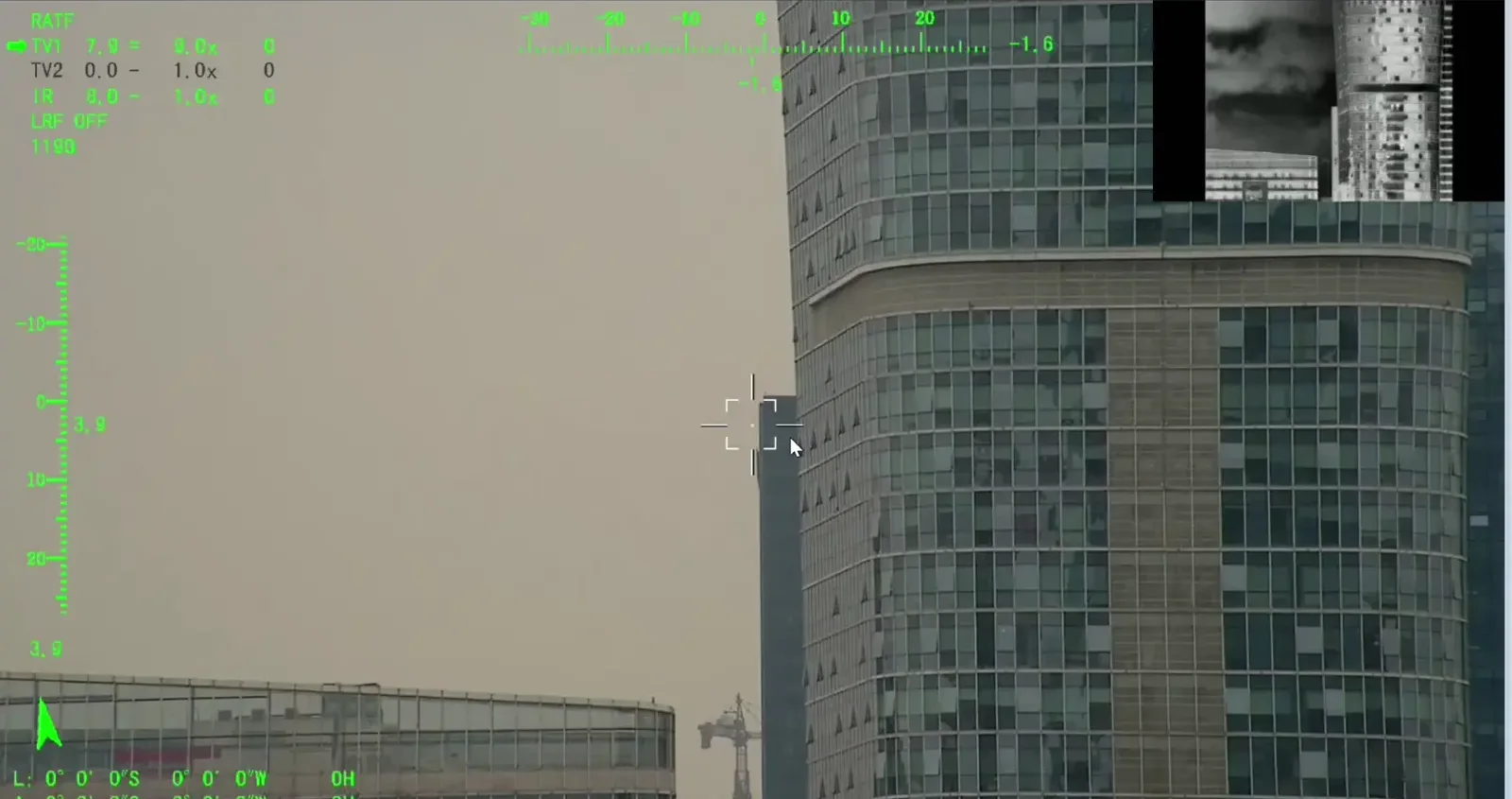
The 4K channel is a workflow decision more than an image-quality one. It lets a search be flown once and read several times, and it asks for a link and a storage plan that can carry the frames.
Stabilisation and mechanical design
Pitch and yaw, sized for a heavier optic group
Both axes are brushless and direct-drive, encoded at the joint, holding ≤ 100 μrad (1σ) at ≥ 60°/s. A 4K zoom group puts more glass ahead of the axis than a 1080p one, and a two-axis layout only works at 4.1 kg if the bearing and motor are chosen for that mass.
4.1 kg, Φ180 × 240.5 mm, 30 W cruising
Mass is 4.1 kg inside Φ180 × 240.5 mm, with 30 W in cruise and 100 W at peak from an 11–28 VDC supply. Budget the aircraft bus on the peak rather than the cruise figure, since the peak is what a load sheet has to survive.
Detection and tracking at the edge
Detection before compression
Person, vehicle, vessel and aircraft detection runs on the payload, ahead of the encoder. That ordering matters here: boxes are placed on the full-resolution frame, so the overlay is not limited by what survived the link.
Twenty marks, one lock, no hand steering
The module holds up to 20 targets and the crew works one. Because the tracker copes with rotation, scale change and occlusion, a long orbit does not need an operator on a joystick, which is what makes a single-operator 4K search practical.
Integrating a 4K pod
4.1 kg, a 100 W peak and a video path to plan rather than assume.
Mount, mass and the fairing question
A vibration-isolated base and a quick release, with adapter plates for other patterns. At 4.1 kg and Φ180 × 240.5 mm the head is a step above the light pods, so look at the hardpoint and the fairing before ordering rather than after. Mass is not the only item: the frontal area changes drag and the airflow over the tail, which is worth a word with whoever signs the flight envelope.
Video, control and power
The link carries H.264 or H.265 over Ethernet at 100 Mbps, which is the constraint a 4K channel is planned around; 128 GB of on-board recording adds headroom regardless. Control sits on serial with SBUS and MAVLink, supply is 11–28 VDC, and the sealed housing holds −20 °C to +60 °C in flight. Range-standard detail on the technology pages.
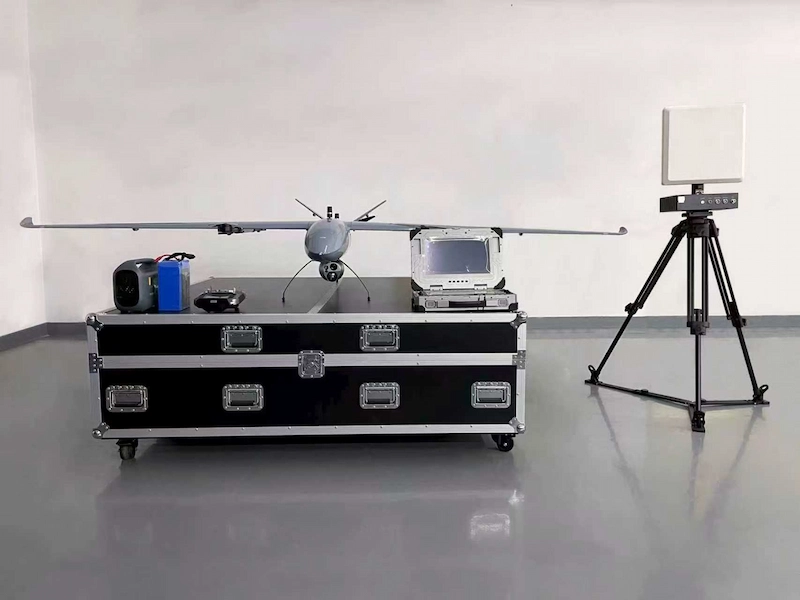
On the aircraft
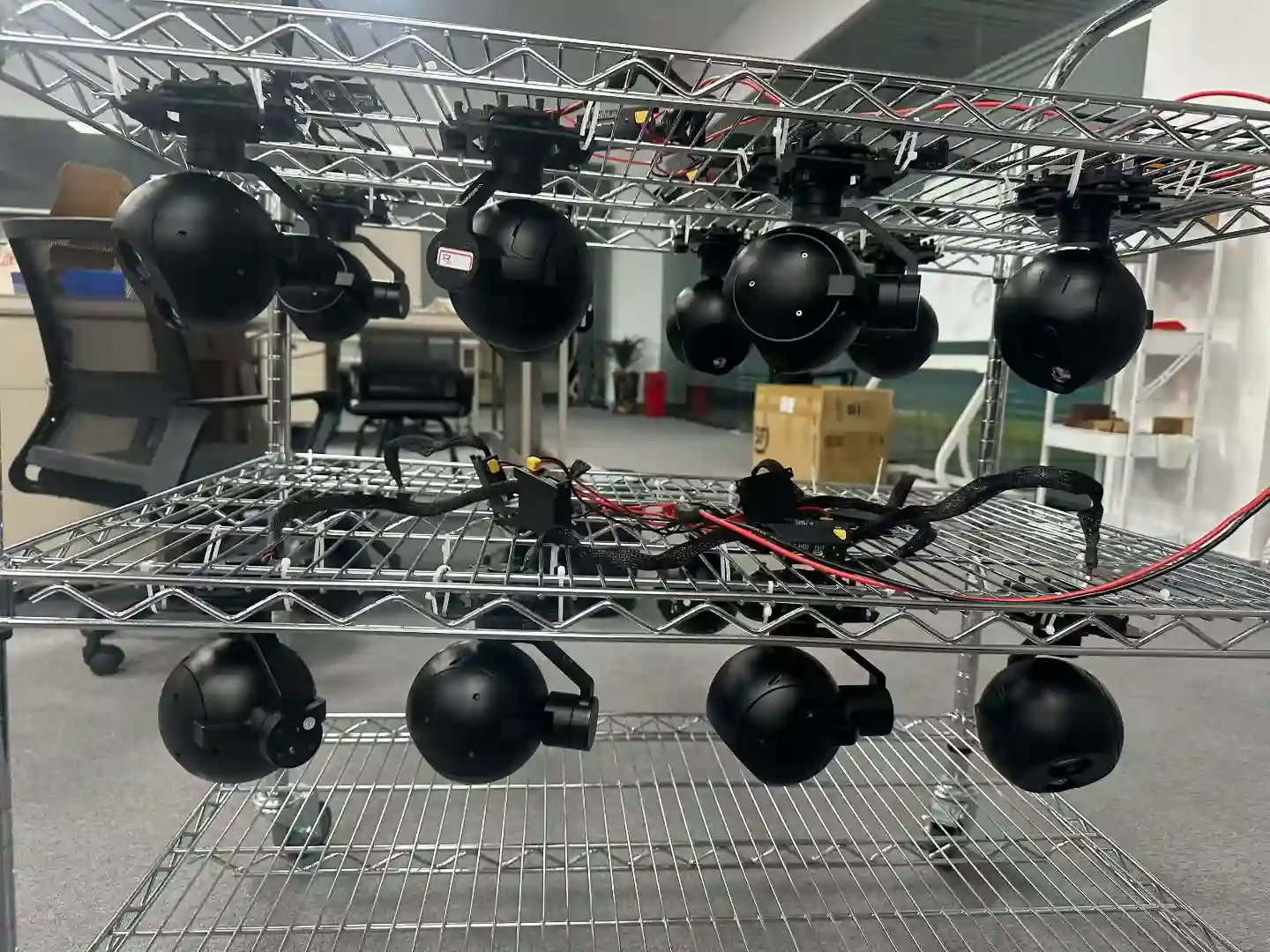
The airframe side in one picture: the pod on its hardpoint, one harness, one operator station.
Before the pod arrives you can have the three-view outline and its pinout from the datasheet pack. The protocol definition, the video pipeline note and the bench calibration and test report follow with the first unit, and the paperwork needs clearance just as the turret does.
Full specifications
| Model | XQ-180T |
| Series | EO/IR Pod Systems (XQ series) |
| Stabilisation | Two-axis gyro-stabilised, ≤ 100 μrad |
| Sensor configuration | EO + IR + LRF |
| Visible channel | 3840 × 2160, 17.5x zoom 6.8 – 120 mm |
| Thermal channel | 1280 × 1024, 75 mm fixed |
| Laser rangefinder | 50 m – 6 km (± 1 m) |
| Weight | ≤4.1 kg |
| Dimensions | ≤Φ180 × 240.5 mm |
| Power consumption | 30 W / 100 W |
| Detection (EO) | 9 km person / 20 km vehicle |
| Detection (IR) | 2 km person / 7 km vehicle |
Detection distances follow the standard 1.7 m person / 2.3 m vehicle convention. Rows marked as shared are common across the XQ series.
Control software: Windows as standard. An Android version can be customised for OEM/ODM projects.
Shared across the XQ series
- Video output: Ethernet, H.264 / H.265
- Gimbal control: RS-422 / RS-232 / TTL, SBUS, MAVLink
- Input voltage: 11–28 VDC
- Operating temperature: −20 °C to +60 °C
- Sealing: Sealed housing for dust, wind and rotor wash
- Recording: On-board recording, imagery retained if the link drops
- AI module: Onboard detection, classification and multi-target tracking
- Mounting: Quick-release interface, adapters available for OEM airframes
Three-view outline drawing with connector pinout, available on request.
Where the XQ-180T is used
Three taskings where recording detail at capture time is worth the mass of a 4.1 kg pod.
- Wide-area search, read again later
A search flown at the wide end of the 6.8 – 120 mm zoom covers ground fast, and a 3840 × 2160 frame means the crew can revisit a section of that sweep after landing instead of re-flying it. Person detection at 9 km and vehicle detection at 20 km mean the wide pass is no compromise on reach either, so one sortie produces both the overview and the evidence that a second pass would otherwise have been needed for.
- Evidence and incident recording
When somebody who was not on the sortie will examine the footage, the frame has to stand alone. Native 4K detail, a 6 km laser coordinate written onto the same frame, and storage independent of the downlink give an investigator material rather than a summary, and the record survives a link that dropped halfway through.
- Corridor survey with a thermal pass
A transmission corridor is surveyed in daylight for structure and at night for heat, and the 1280 × 1024 thermal core does the second half without a second aircraft or a second crew. Because both channels share a boresight, a joint or a fitting appears in the same place in either image, which is what makes the two passes comparable in a report.
Other EO/IR pods in the XQ series
Long-range EO/IR pods from the XQ series. One control protocol and one ground-station interface across the family, so a change of model does not change the aircraft side.
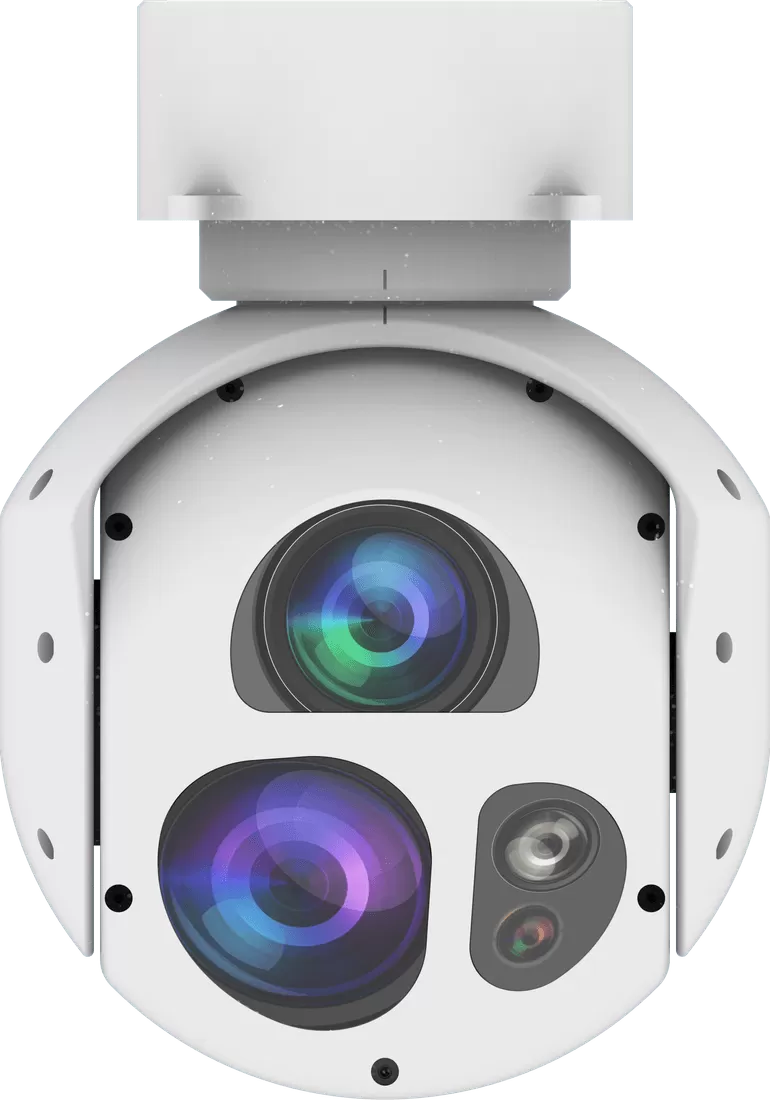
XQ series · 2-axis · EO + IR + LRF
XQ-125T EO/IR Camera Pod OEM
The smallest pod in the XQ range: 30x zoom, a 35 mm thermal channel and 3 km ranging at 1.6 kg.
- Weight
- ≤1.6 kg
- Visible
- 1920 × 1080, 30x zoom 4.3 – 129 mm
- Laser
- 30 m – 3 km (± 1 m)
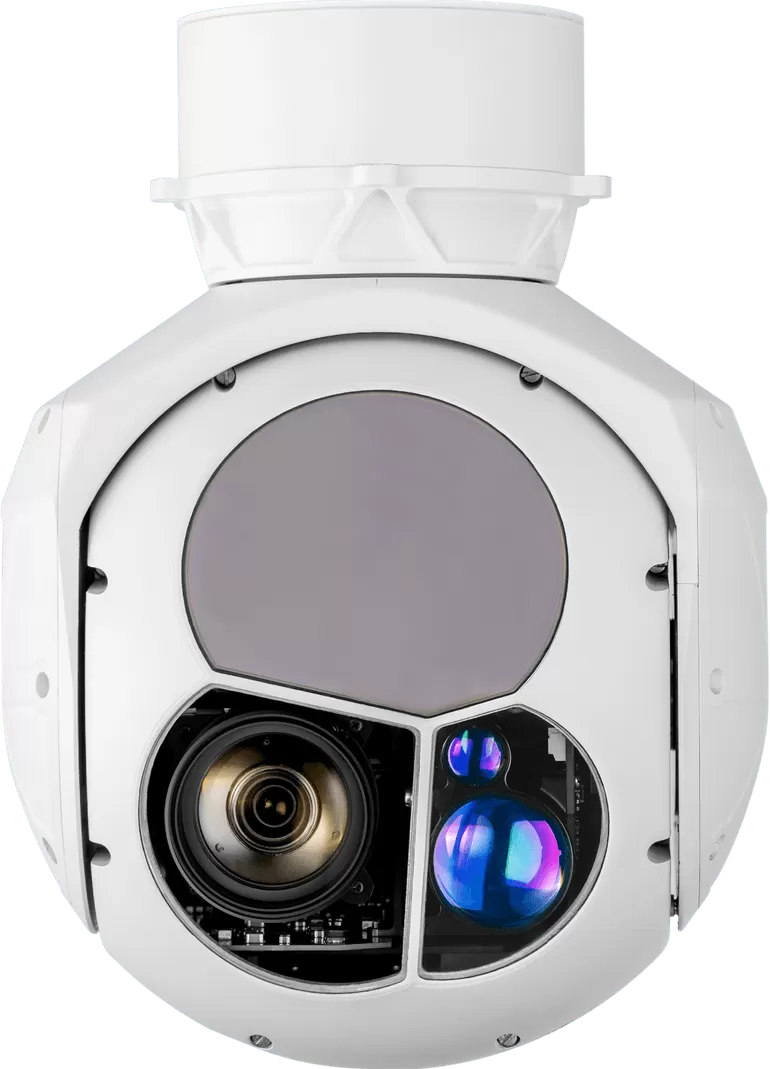
XQ series · 2-axis · EO + IR + LRF
XQ-155T EO/IR Payload OEM
A 55 mm thermal lens and 5 km ranging for platforms that can carry 2.2 kg on the hardpoint.
- Weight
- ≤2.2 kg
- Visible
- 1920 × 1080, 30x zoom 4.3 – 129 mm
- Laser
- 50 m – 5 km (± 1 m)
XQ series · 2-axis · EO + IR + LRF
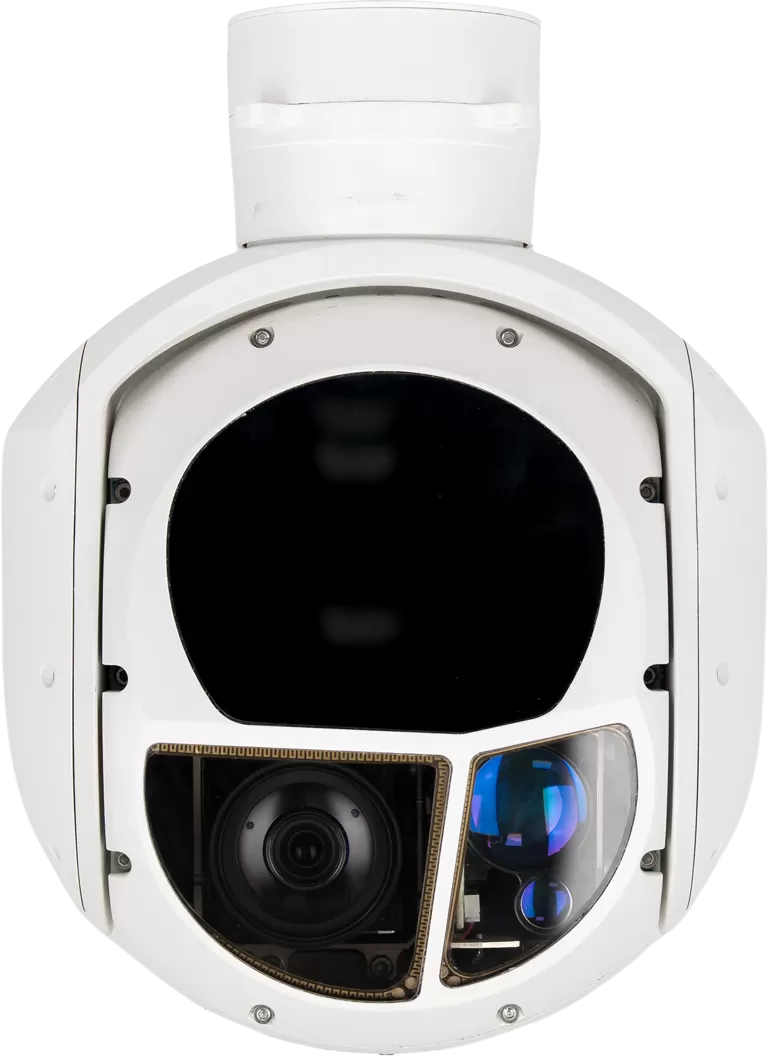
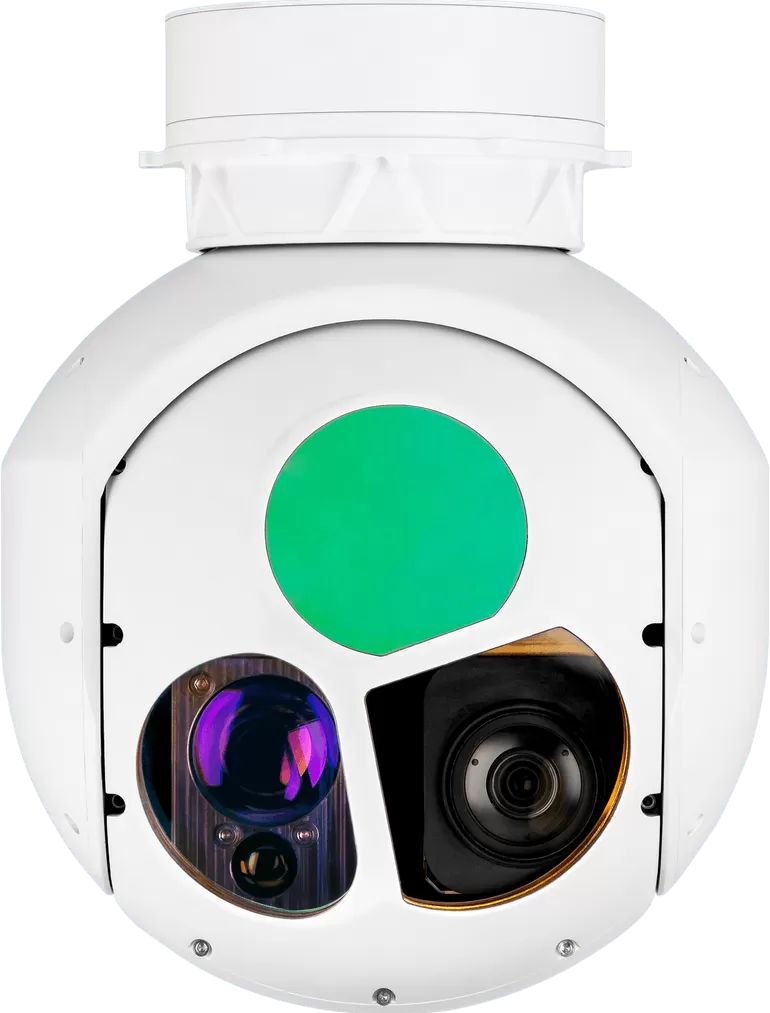
XQ-170TC EO/IR Camera Pod ODM
1280 × 1024 thermal on a 75 mm lens — the long-range imaging workhorse of the pod range.
- Weight
- ≤2.8 kg
- Visible
- 1920 × 1080, 30x zoom 4.3 – 129 mm
- Laser
- 50 m – 5 km (± 1 m)
XQ series · 2-axis · EO + IR + LRF
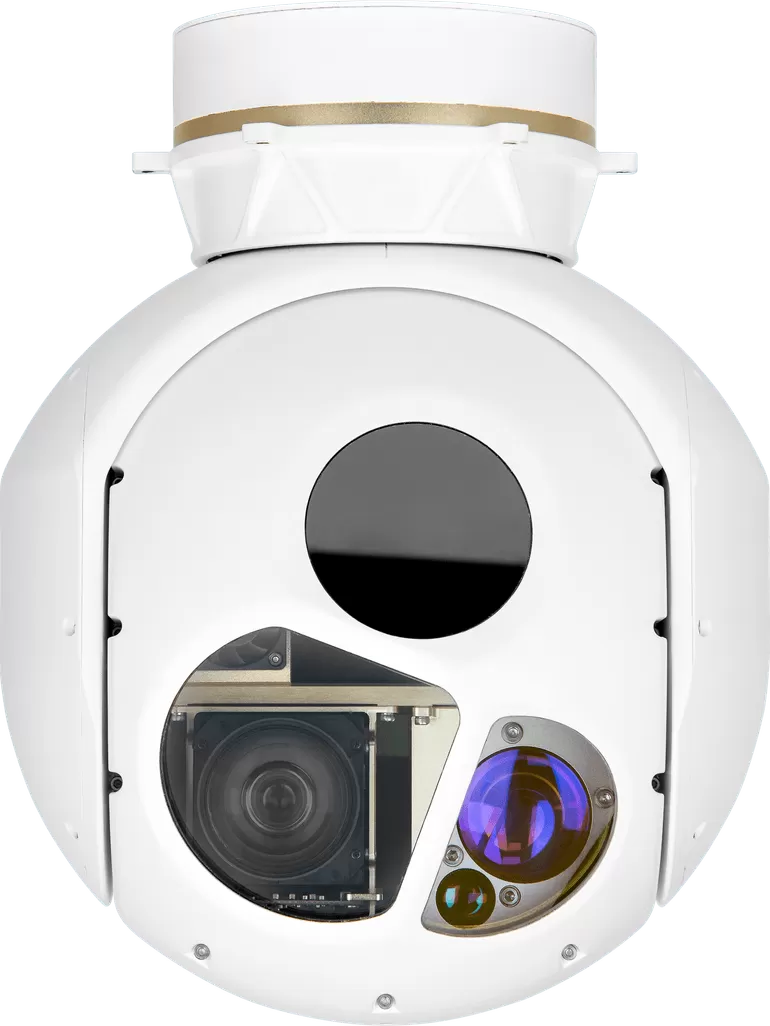
XQ-200T EO/IR Payload Direct Factory
A continuous-zoom thermal channel from 40 mm to 220 mm plus 9.5 km ranging on a 5 kg pod.
- Weight
- ≤5 kg
- Visible
- 1920 × 1080, 30x zoom 4.3 – 129 mm
- Laser
- 50 m – 9.5 km (± 1 m)
XQ series · 2-axis · EO + IR + LRF
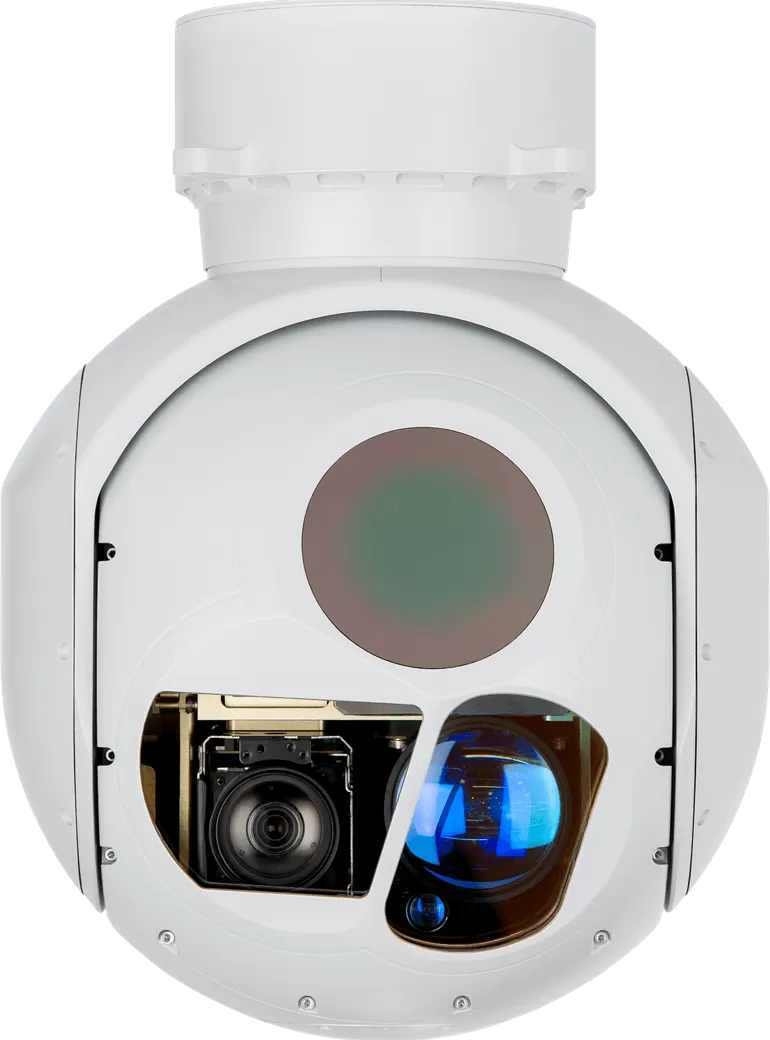
XQ-225T EO/IR Pod Manufacturer
55x daylight zoom and a 275 mm thermal reach for identification at the edge of the envelope.
- Weight
- ≤7 kg
- Visible
- 1920 × 1080, 55x zoom 4.25 – 234 mm
- Laser
- 80 m – 9 km (± 1 m)
XQ series · 2-axis · EO + IR + LRF
XQ-254T Thermal EO/IR Camera Pod Supplier
The long-range pod: 15 km ranging and a 254 mm turret for maritime and border patrol aircraft.
- Weight
- ≤10 kg
- Visible
- 1920 × 1080, 30x zoom 4.3 – 129 mm
- Laser
- 100 m – 15 km (± 1 m)
XQ series · 2-axis · EO + IR + LRF
XQ-255T EO/IR Payload ODM
55x daylight zoom with dual continuous-zoom optics for the largest airframes in the range.
- Weight
- ≤10 kg
- Visible
- 1920 × 1080, 55x zoom 4.25 – 234 mm
- Laser
- 80 m – 9.5 km (± 1 m)
Questions engineers ask about the XQ-180T
How far can the XQ-180T detect a person or a vehicle?
The 4K visible channel returns 9 km on a person and 20 km on a vehicle; the thermal channel 2 km and 7 km. Those are detection figures on the 1.7 m person and 2.3 m vehicle convention, and recognition or identification needs a closer look than that.
Do we need a faster link to use the 4K channel?
The video path is Ethernet at 100 Mbps in H.264 or H.265, so the encoder has to trade resolution against frame rate on a link of that size. The usual arrangement is a compressed stream for the operator and full-rate recording to the 128 GB on board, which keeps the detail without widening the link.
Is 3840 × 2160 useful, or just a bigger number?
Useful when the frame is read after the fact: a sweep re-examined on the ground, a crop enlarged for a report, footage somebody else will assess. For a crew watching live video of a target already framed, 1080p is enough and the bandwidth buys nothing.
What is the smallest order, and how does a build slot work?
Buy the catalogue version and one unit is enough; change the build and the order floor is 100. A head already on the shelf leaves as soon as it is released, while a custom run gets its dates in the quotation, on T/T terms, with twelve months of warranty from handover.
Designed and manufactured by HITS
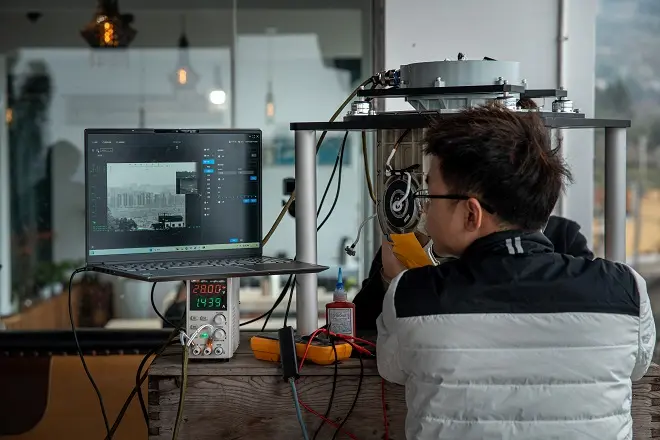
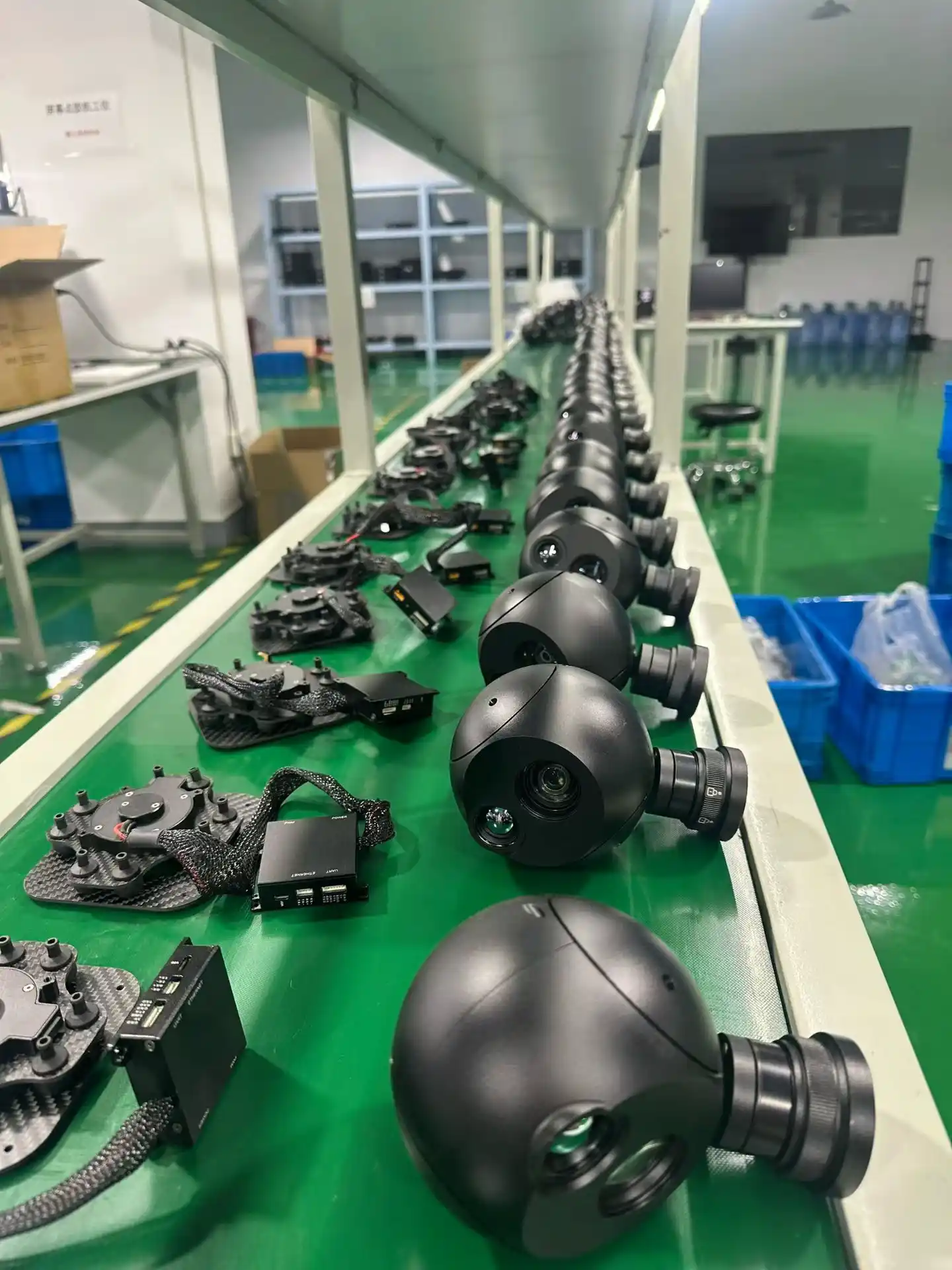
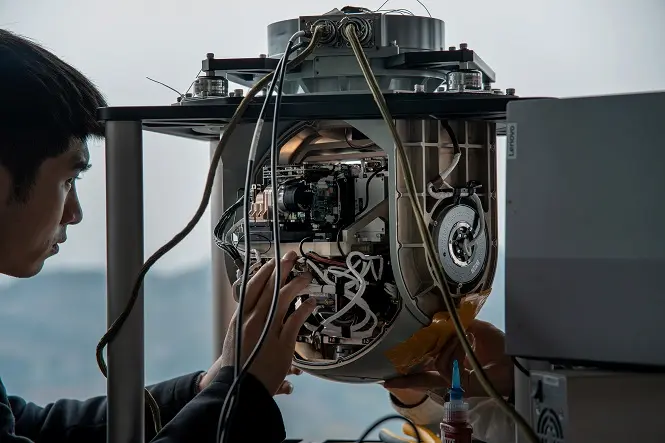
Optics, servo hardware, stabilisation firmware and the AI tracking module are developed in house, and every unit is assembled, calibrated and environmentally tested on our own line before it ships.
Request a quotation for the XQ-180T
Tell us the platform, the range you need to identify and how many units you are planning. Every configuration is quoted individually, so you get a written price against your own requirement rather than a list figure that does not fit it. We answer within one working day.
Explore all product categories
Nine routes into the range: by stabilisation, by sensor set, or by payload class. Each category page compares the models and links to the full specification.
15 models · 240 g – 5 kg
Gimbal Cameras
Two- and three-axis stabilised heads with EO, thermal and laser options.
View category →
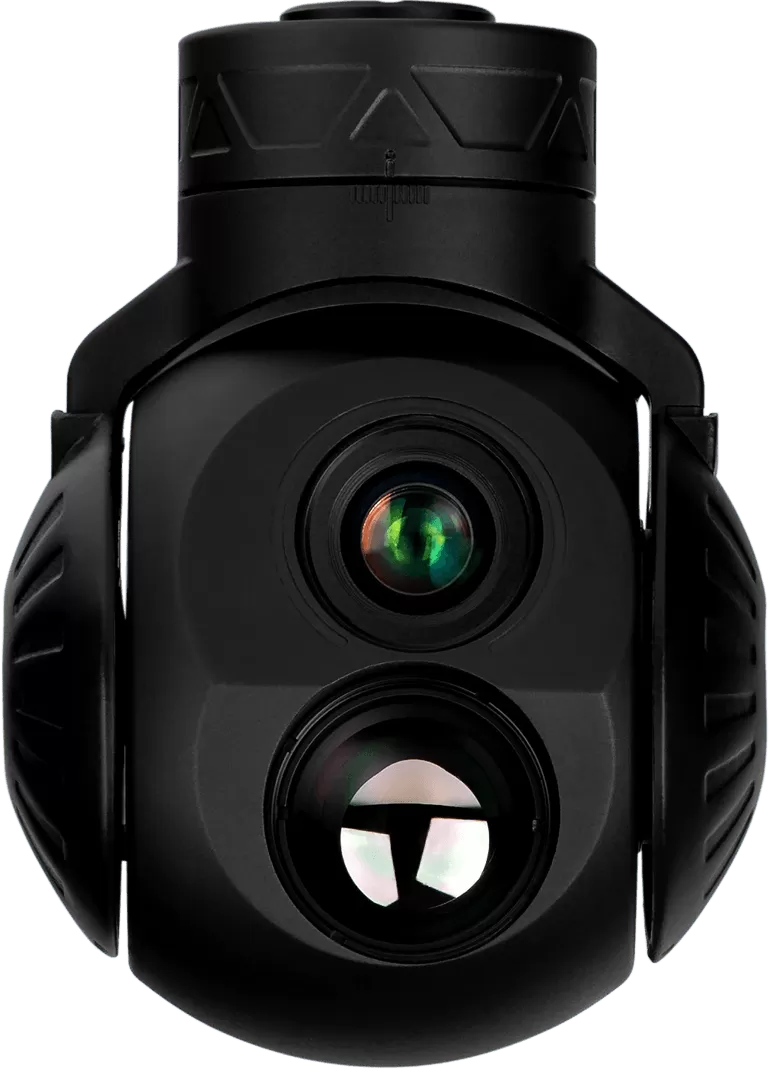
3 models · 240 – 500 g
2-Axis Gimbal Cameras
The lightest HQ heads: fixed or dual-FOV optics on a compact two-axis mount.
View category →
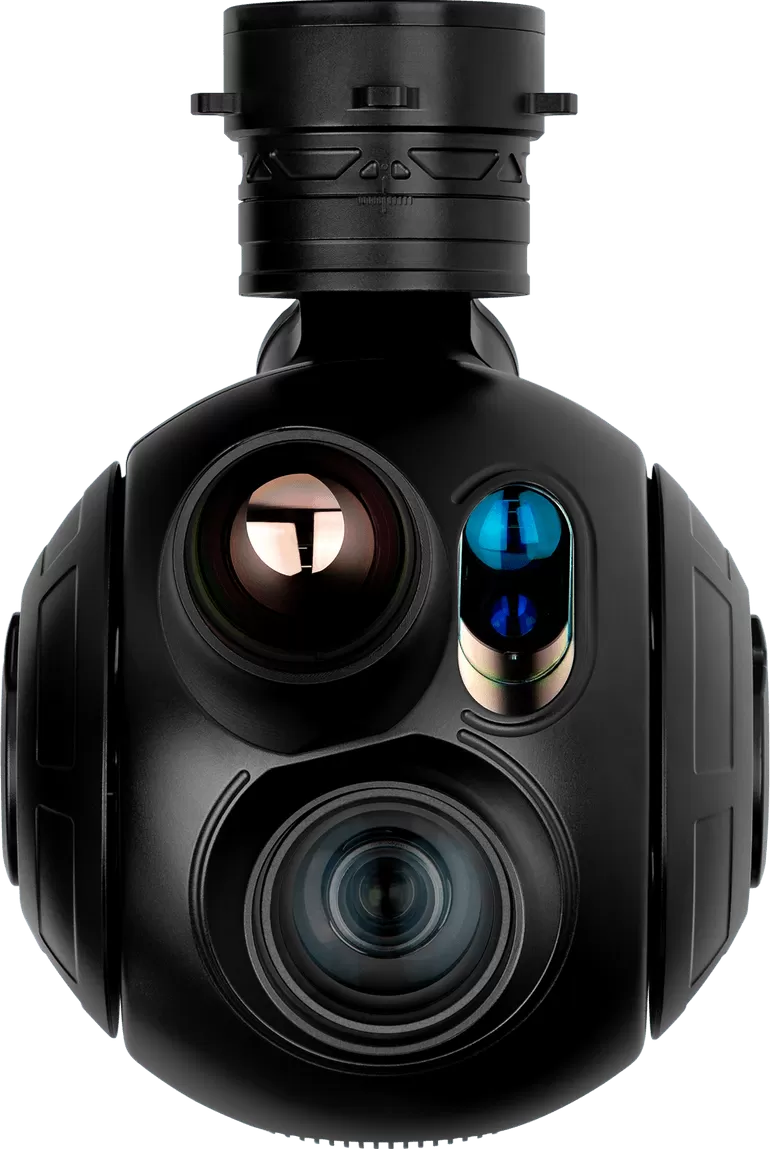
12 models · 400 g – 5 kg
3-Axis Gimbal Cameras
Roll-stabilised heads with longer zoom ranges and heavier payload capacity.
View category →
8 models · 1.6 – 10 kg
EO/IR Pod Systems
Larger multi-sensor pods with 30x–55x zoom, thermal imaging and laser ranging to 15 km.
View category →
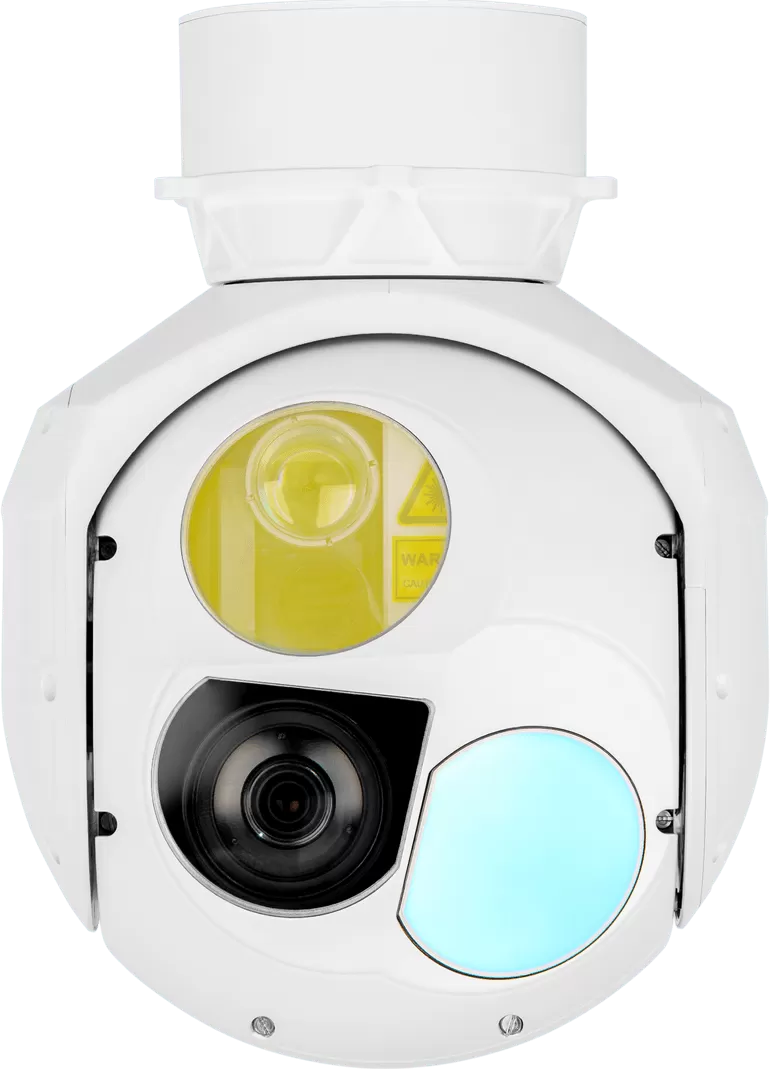
4 models · 2.5 – 22 kg
Laser Designator Pods
Targeting pods that add 1064 nm designation to the same imaging and stabilisation architecture.
View category →
Sensor guide
Thermal Cameras
Detector, lens and range: how uncooled LWIR payloads are specified for UAVs.
View category →
Sensor guide
Infrared Cameras
How to match an IR detector, lens and interface before choosing a gimbal.
View category →
Sensor guide
EO Cameras
Visible-channel sensors, zoom lenses and the resolution needed at range.
View category →
Sensor guide
EO/IR Cameras
Boresight, sensor pairing and the trade-offs of a dual-sensor head.
View category →