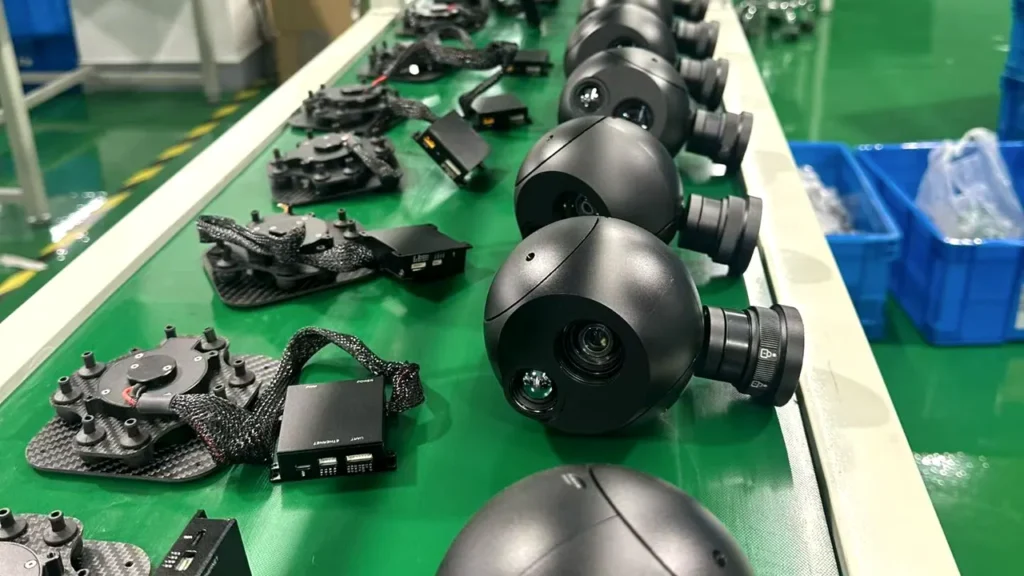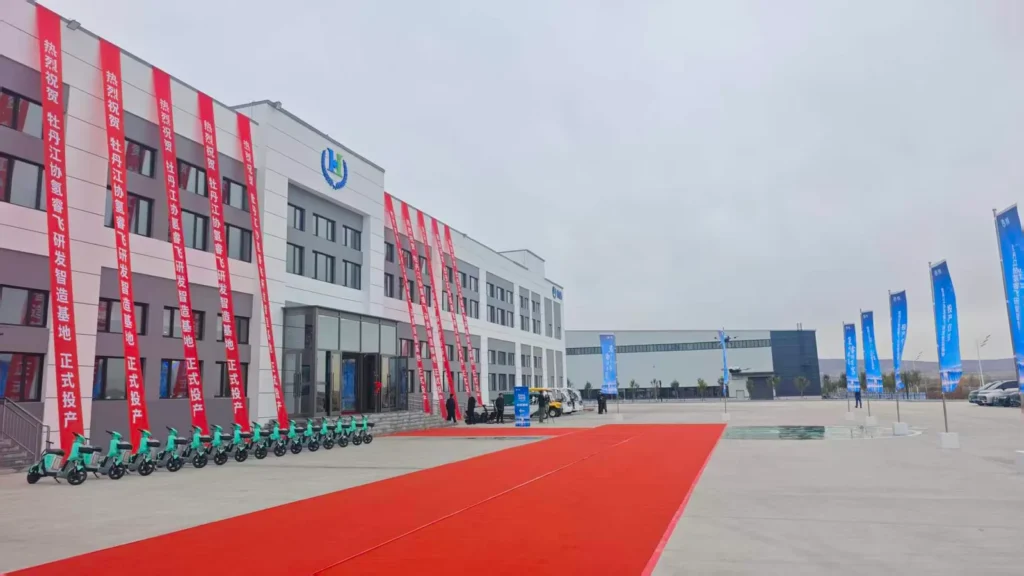
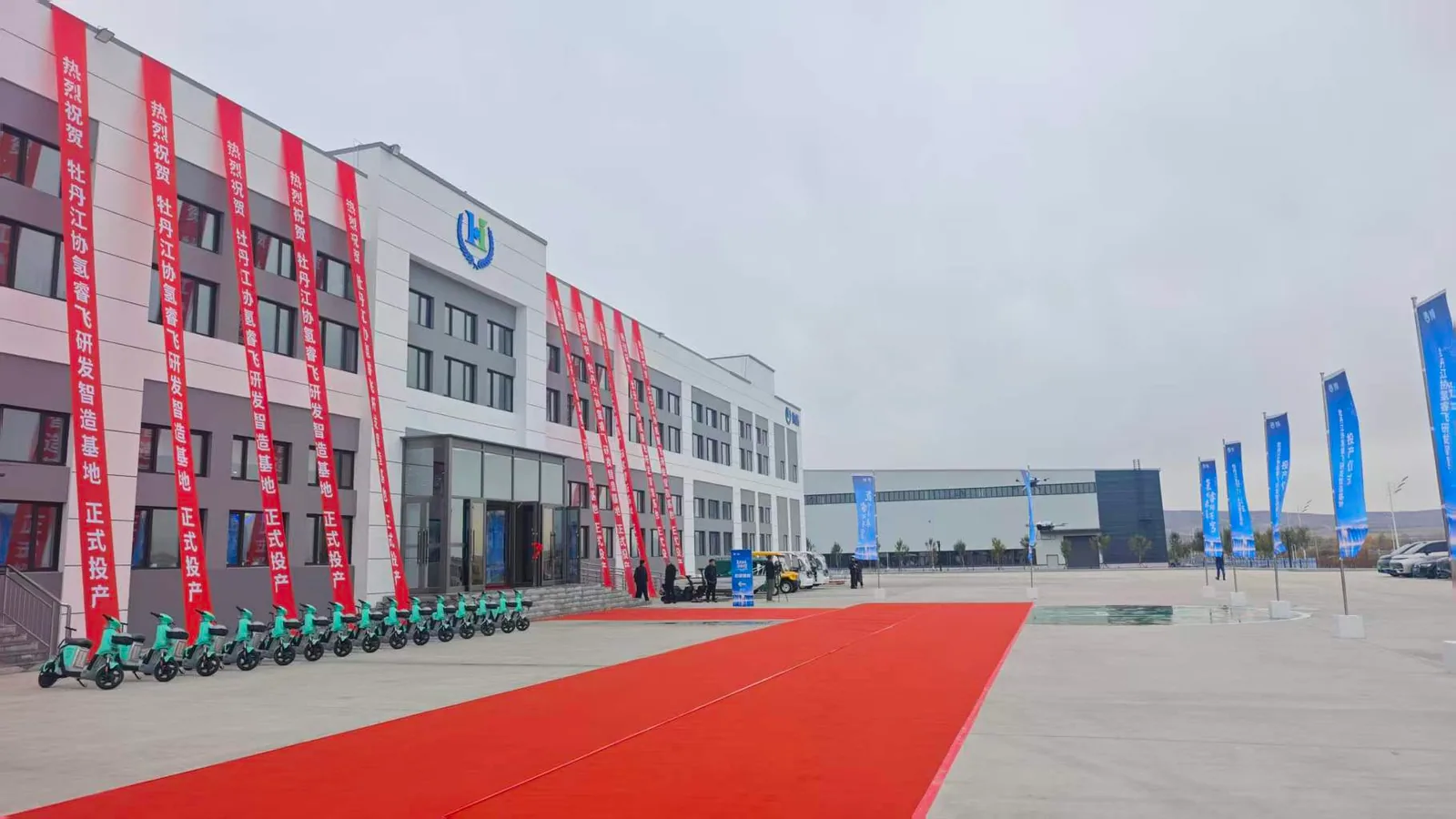
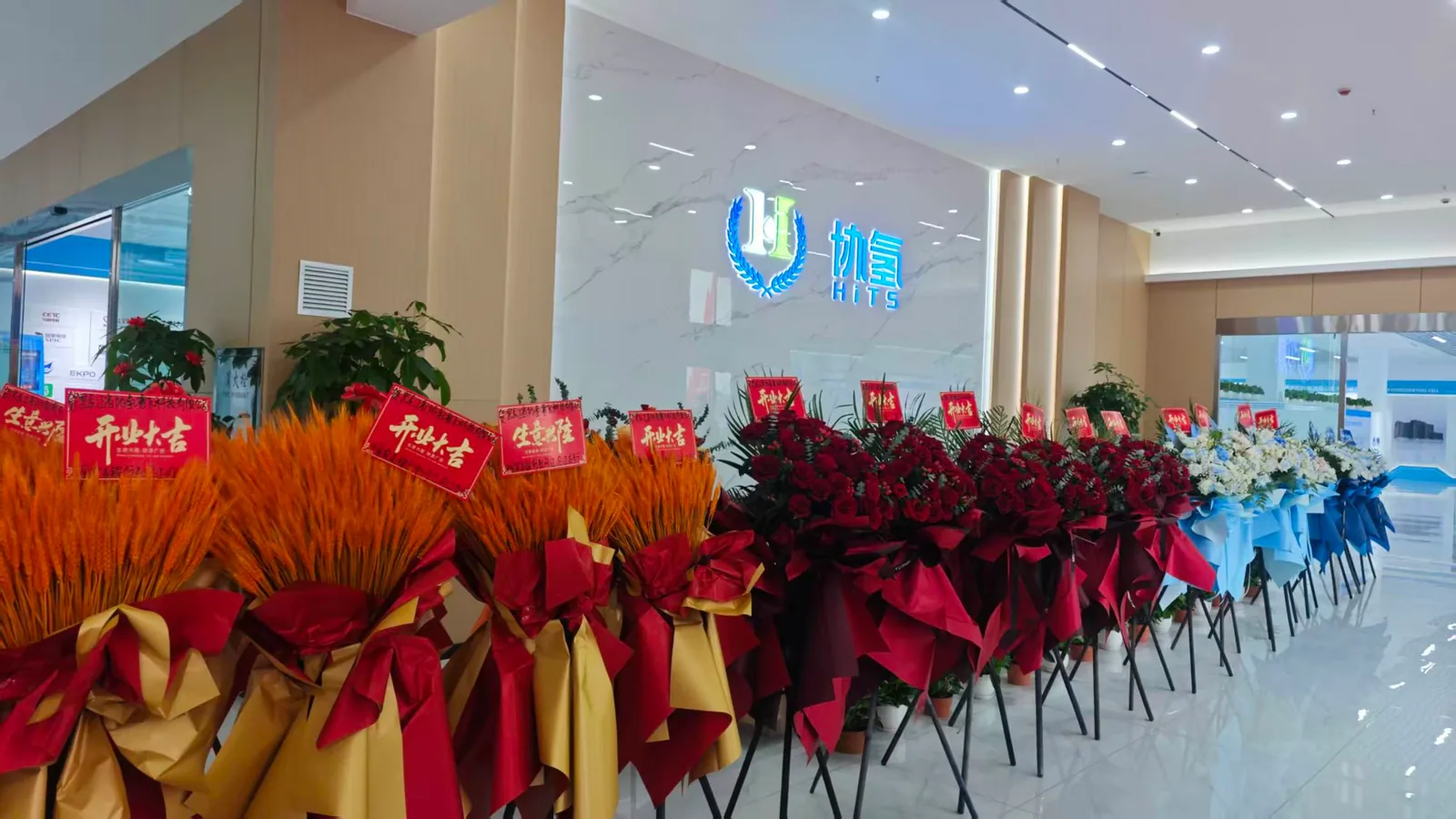
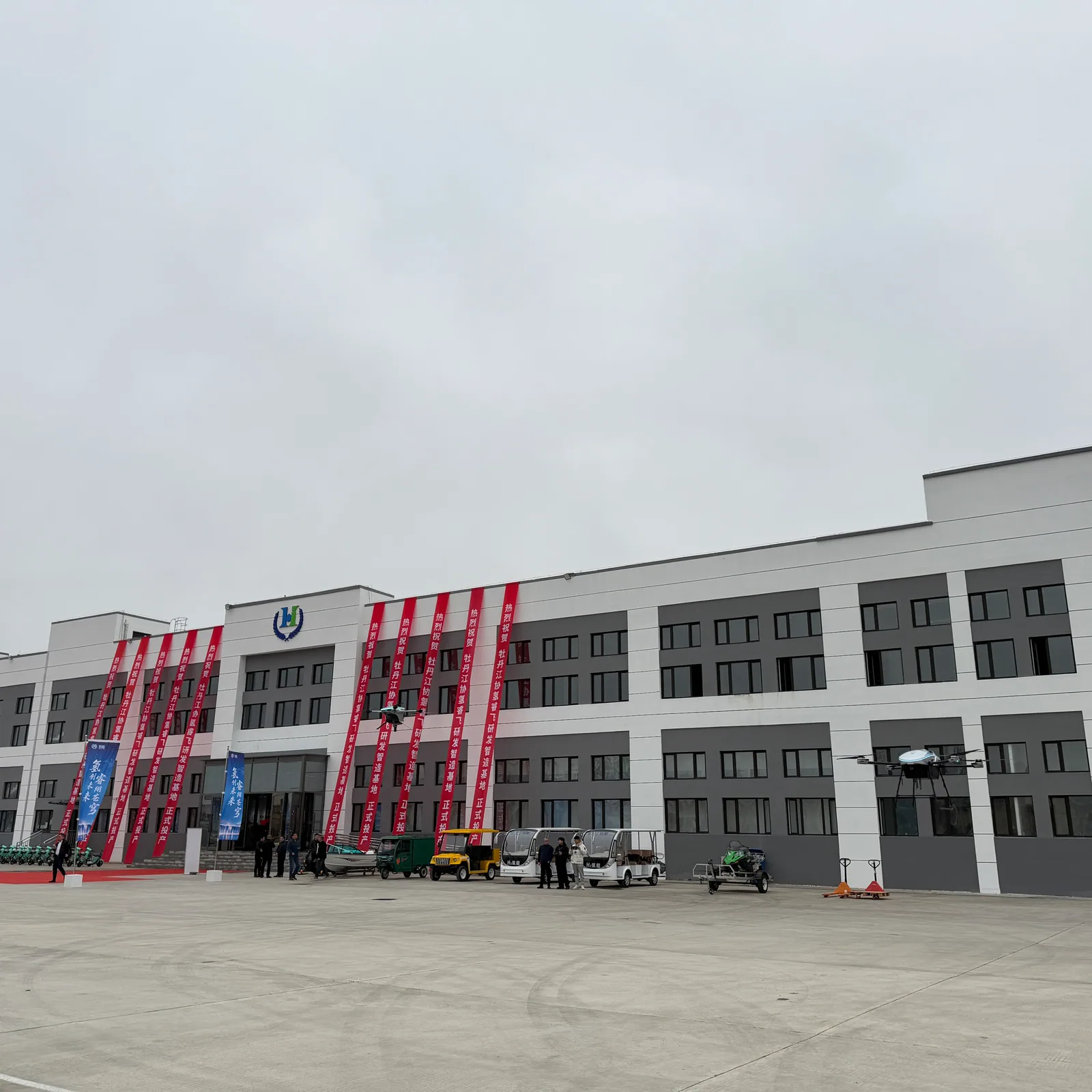
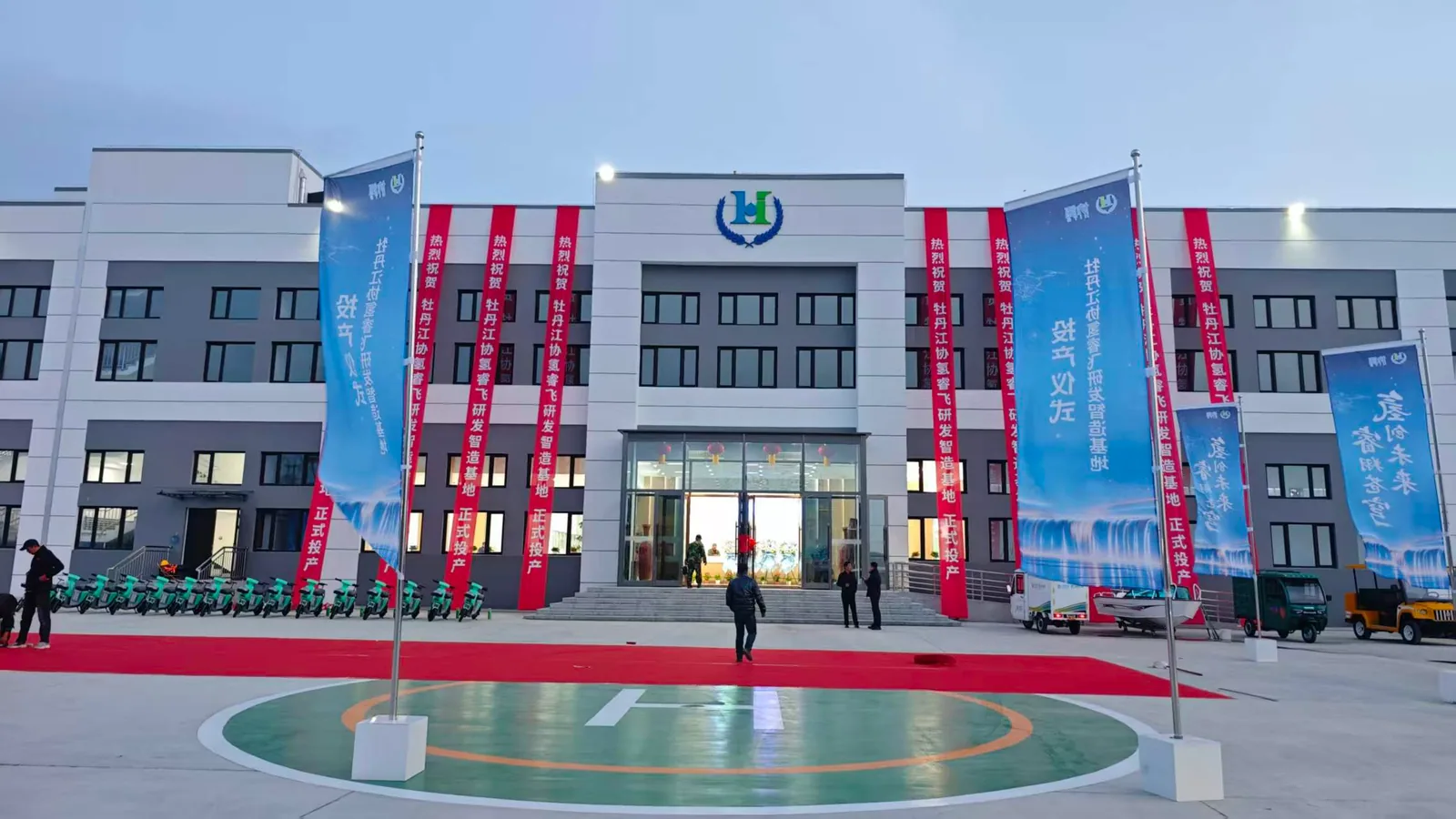
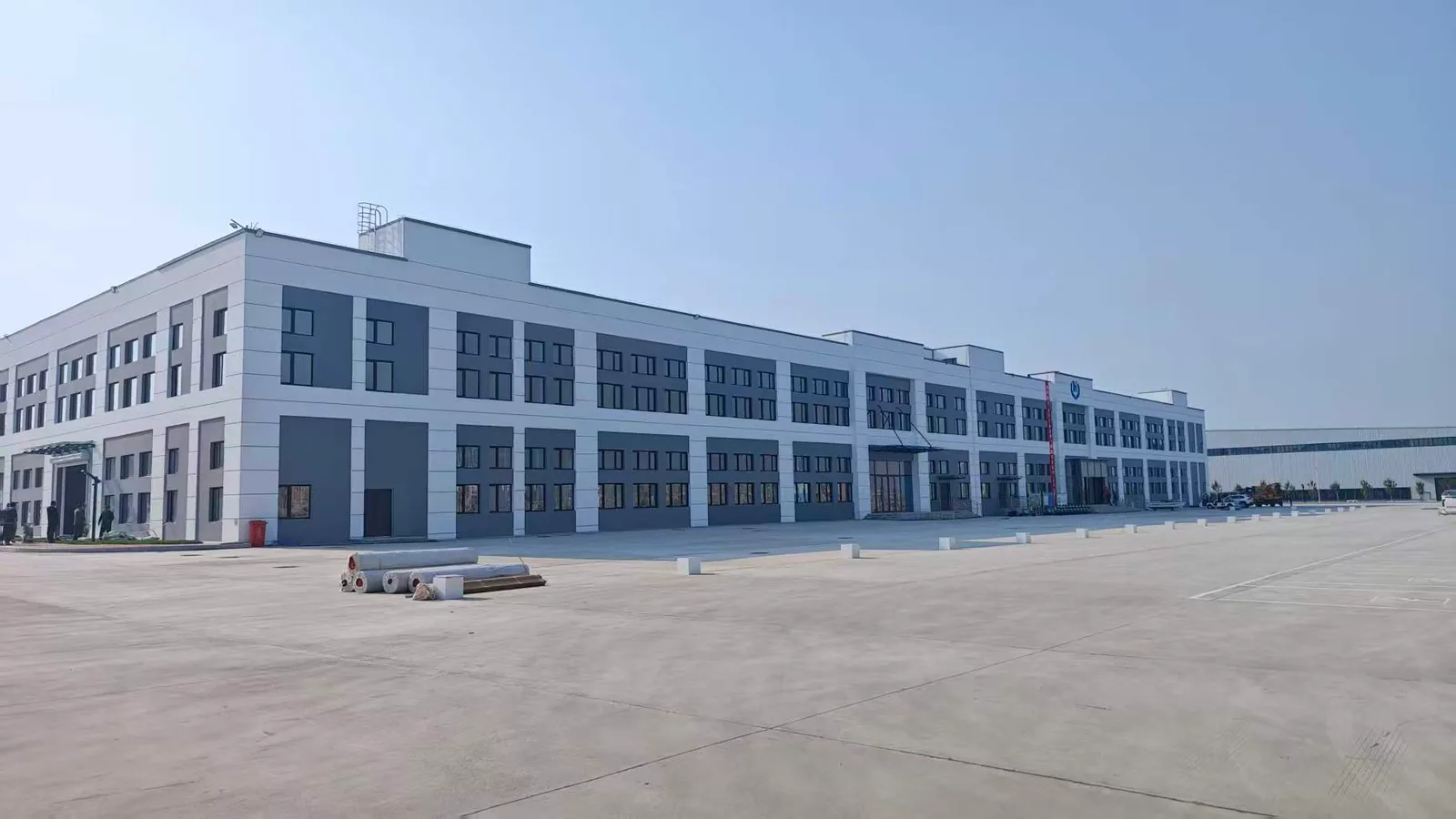
The new HITS manufacturing base in Mudanjiang, Heilongjiang, is in production. On opening day the frontage was dressed in red: celebration banners down the façade, a red carpet across the forecourt and flower baskets in the lobby. Behind it, the first production line had already started running. For the group this is more than another building. It’s a new manufacturing backbone, and it’s now the place where HITS payloads and platforms are built at scale.
A milestone worth celebrating
The banners said it plainly: congratulations on the official start of production at the Mudanjiang HITS hydrogen-energy research and intelligent manufacturing base. That’s what October 2026 marked. A site that had been a construction project became a working plant, and a working plant is now building and shipping product.
It’s worth saying out loud why that’s a celebration rather than a line in a schedule. A manufacturing base is not finished when the last wall goes up. It is finished when the first unit runs down the line, is aligned, is tested and is packed for dispatch. Mudanjiang reached that point this month, and everyone who pushed it there had earned the morning off.
Opening day at Mudanjiang
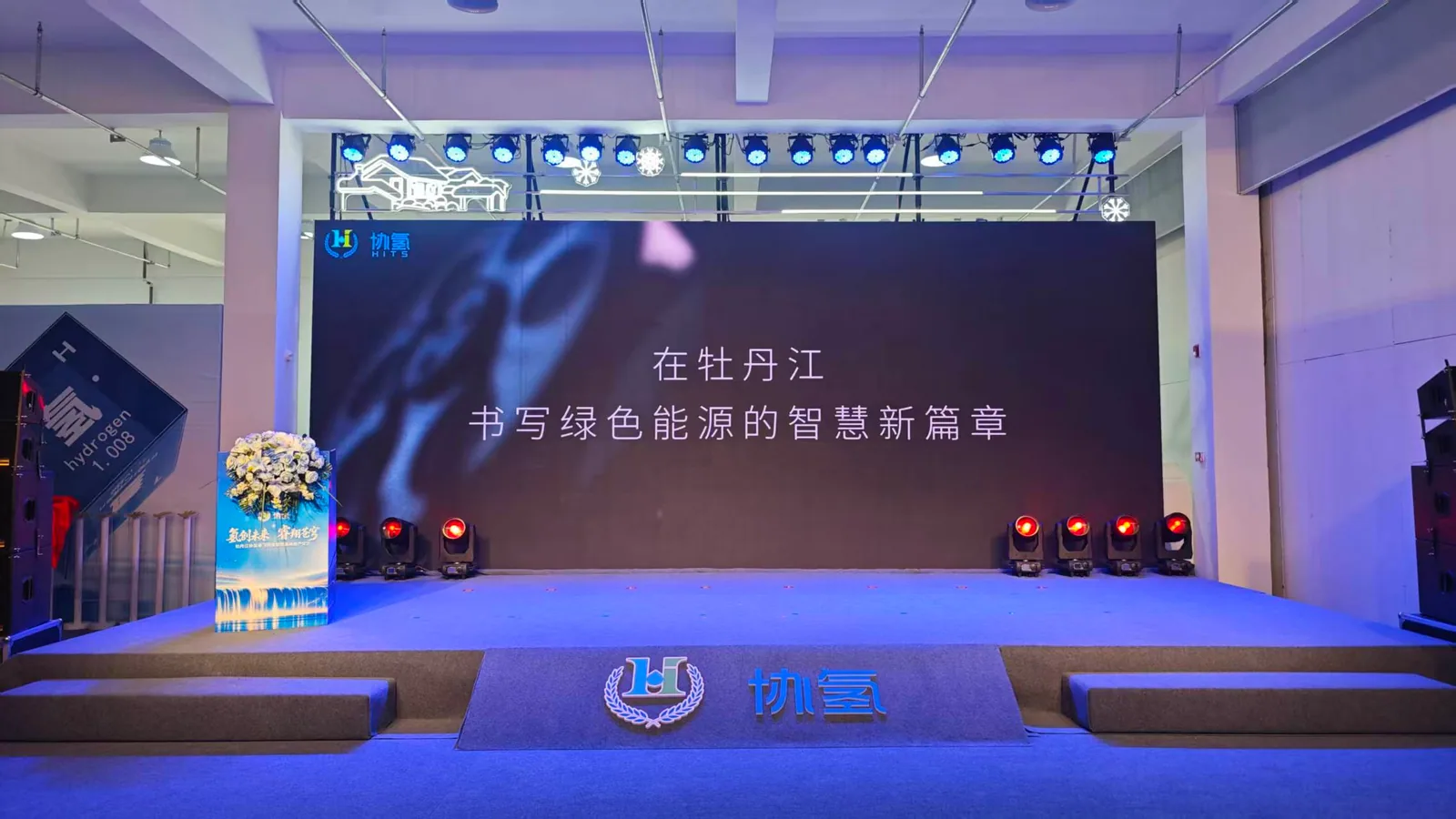
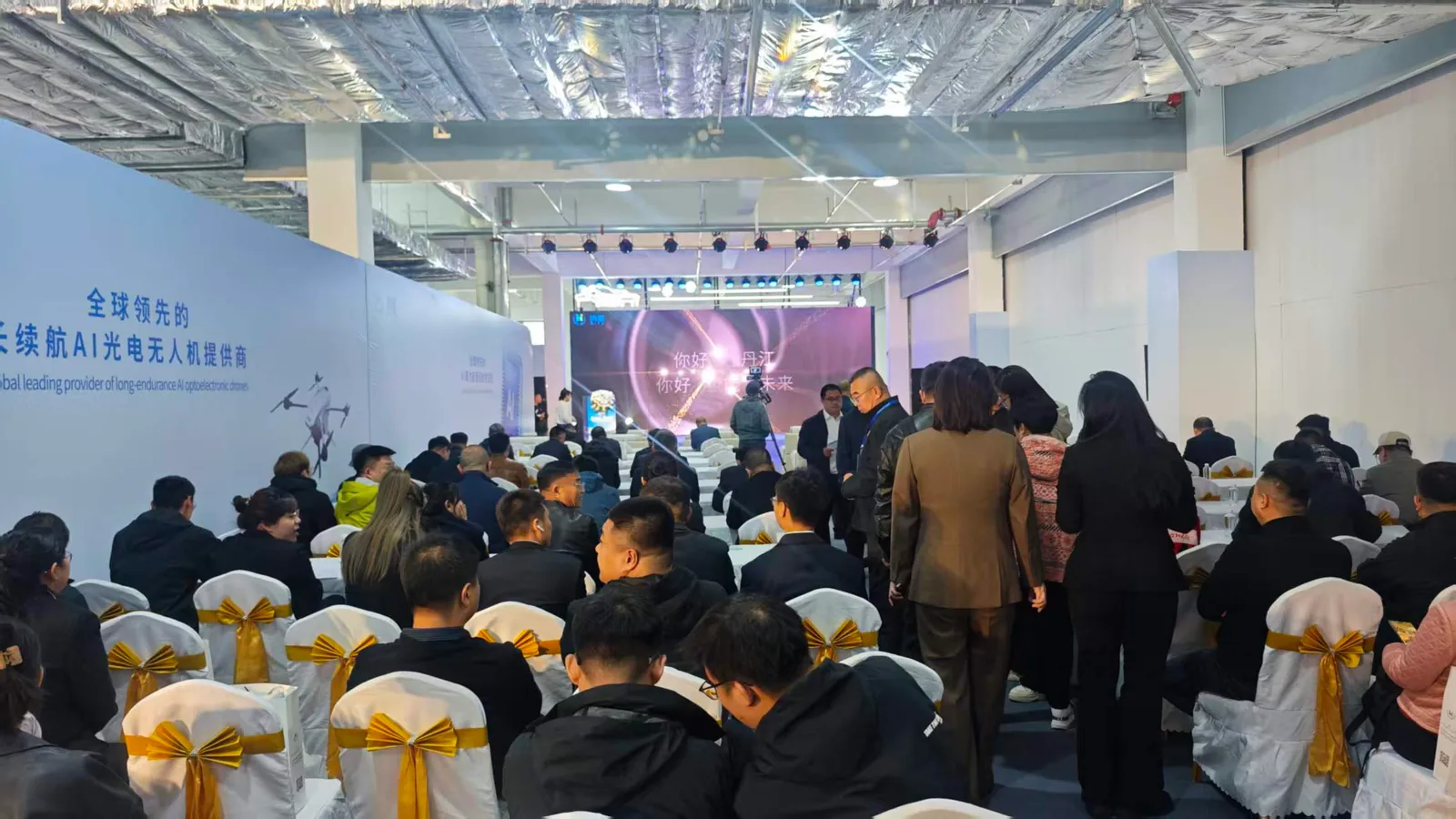
The morning opened outdoors, in front of the plant: a red carpet across the forecourt, rows of celebration banners down the façade, blue flags along the perimeter and a line of electric scooters parked ready for the team that moves around the site. Guests moved from the frontage to the event hall for the formal session, past flower baskets arranged beneath the HITS mark in the lobby.
More output, and a faster line
A celebration is the right way to mark the opening, but the reason a company builds a base rather than one more workshop is capacity and speed. Mudanjiang was laid out around both, and the first weeks of production are already showing what it changes.
Robotic sub-assembly
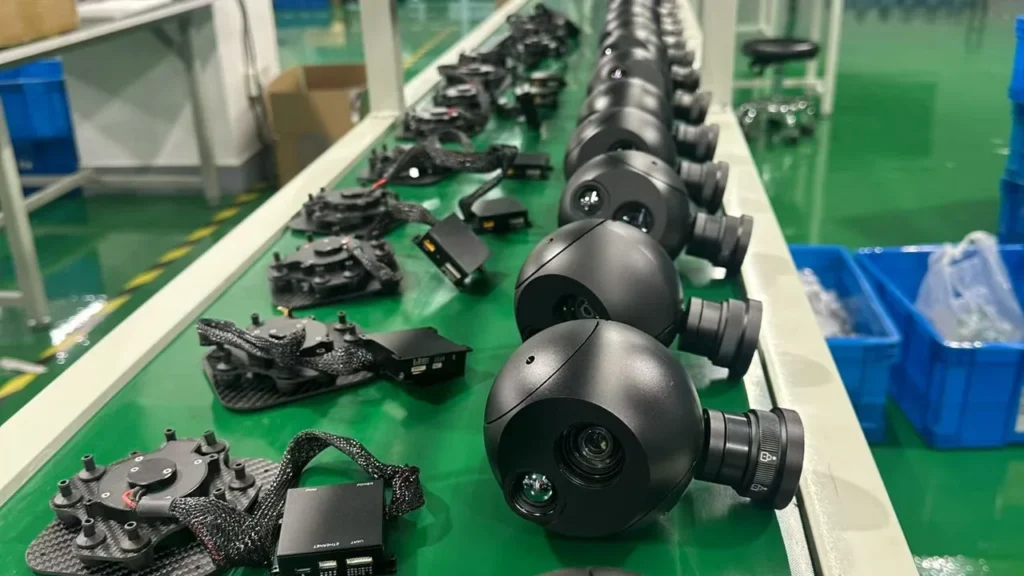
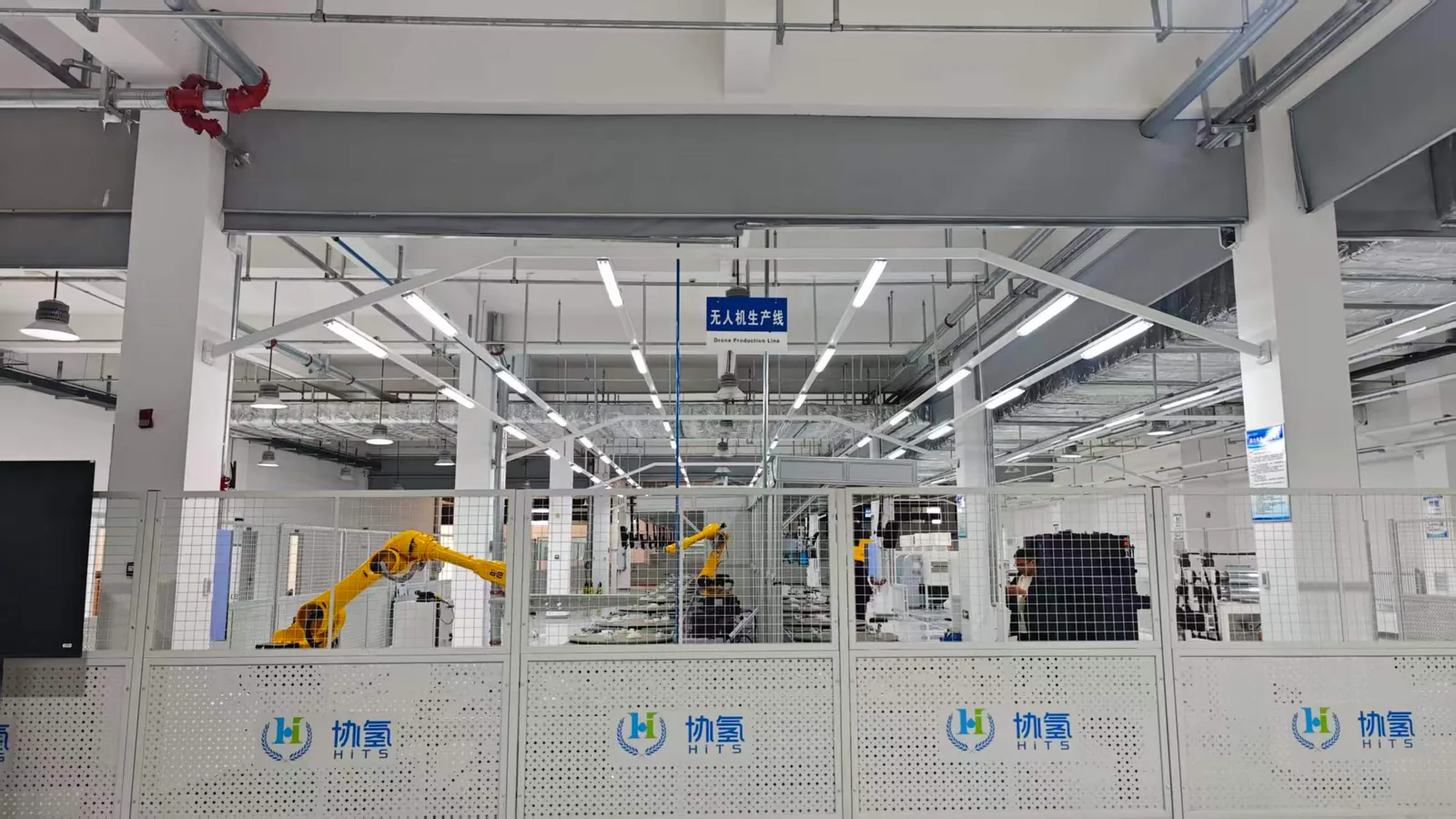
Repetitive sub-assembly now runs under robotic arms on a line marked, in the plainest language, drone production line. Automation is not only about pace. It’s about repeatability: the same torque, the same fit and the same inspection on unit one and unit five hundred. That’s what lets a quoted specification hold across a batch rather than across a sample.
Alignment, test and flight on site
Optical alignment and boresight benches sit next to the final test area, so a unit that fails a check goes back to the bench that caused it instead of into a queue. On a payload with more than one sensor, alignment between channels is the step that separates a working unit from a good one, and it’s the step hardest to repair once a unit has shipped. Then the site’s own landing pad means a finished payload can be flown, not just measured.
The group’s manufacturing backbone
Mudanjiang isn’t a standalone plant. It’s the newest manufacturing base of the HITS New Energy group, and it’s designed to carry the group’s build load rather than to serve one product line. Platforms and payloads are assembled on the same site, from the same supply chain, by one engineering group, so the mechanical, electrical and thermal interfaces are settled between teams rather than across a purchase order.
That’s what “backing” means in practice. When the group needs more units, the base adds them. When a customer changes a configuration late, the people who designed it are in the next room. When a delivery date matters, there’s one line, one test report and one party responsible for both the airframe and the sensor head.
What comes next
The opening is the start of the working phase, not the end of the project. Over the coming quarters the priority is volume and reliability:
- Ramp output. Move the line from first-article production to running at rate without losing the inspection discipline that was built into it.
- Shorten delivery. With assembly, alignment, test and flight in one place, the time between order confirmation and dispatch should fall for multi-unit orders.
- Widen custom work. The base is set up for OEM and ODM configurations, including payloads built around a customer’s own platform.
- Keep demonstrating. The landing pad was built for customers as much as for testing: visiting teams can see a payload flown before they commit to a fleet.
To everyone who built, fitted out and commissioned this base, and to our partners and sister companies who sent their congratulations. Thank you. Provinces and partners brought the base into production; the same people now have to make it perform. October 2026 is the day we started.
Key facts
- Location: Mudanjiang, Heilongjiang province.
- Status: in production from October 2026; the group’s newest manufacturing base.
- Scope: airframe and payload assembly, optical alignment, boresight, final test, flight test and demonstration.
- Production line: robotic sub-assembly cells with inline inspection.
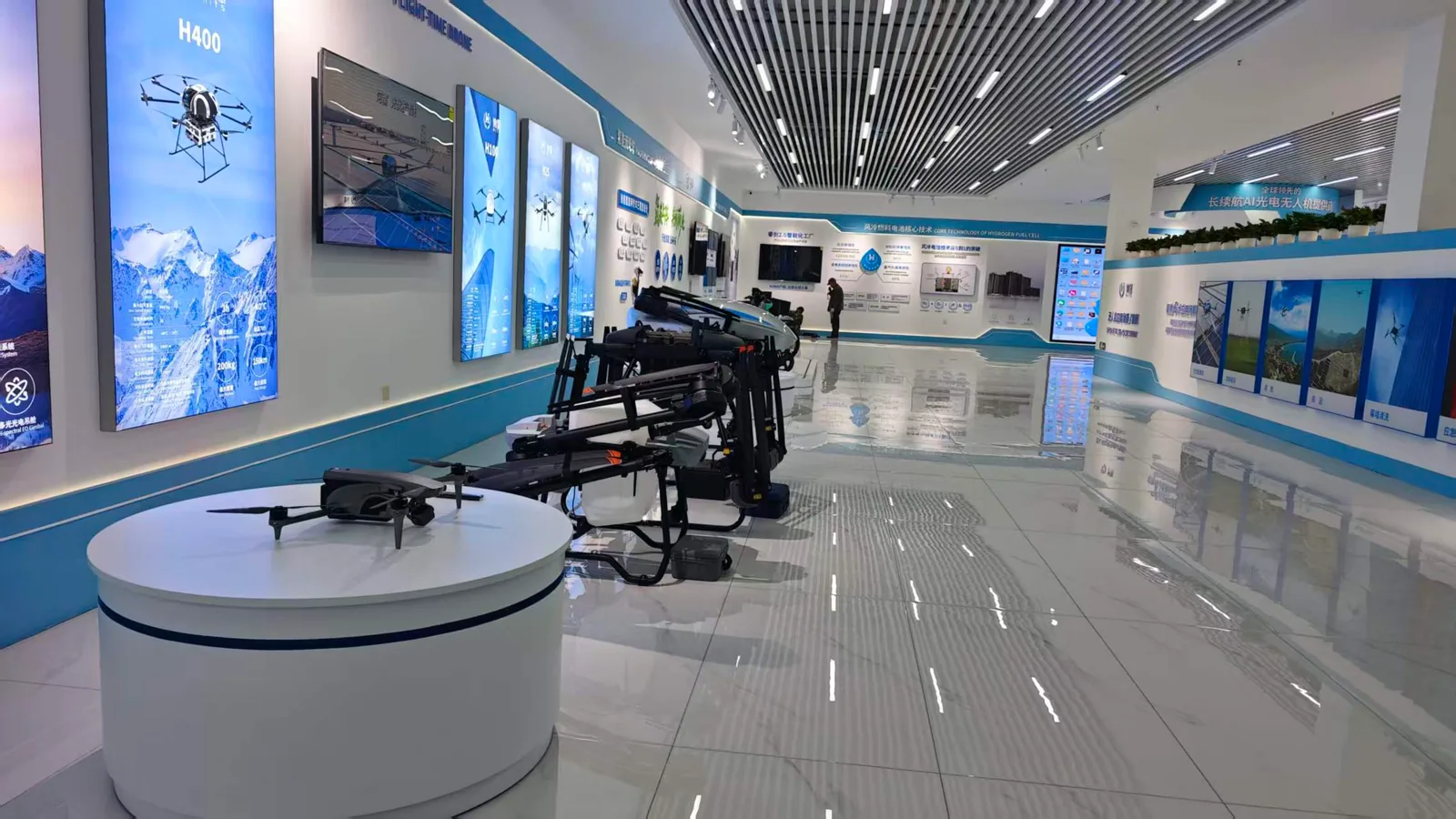
- On site: showroom, event hall and a landing pad for flight demonstrations.
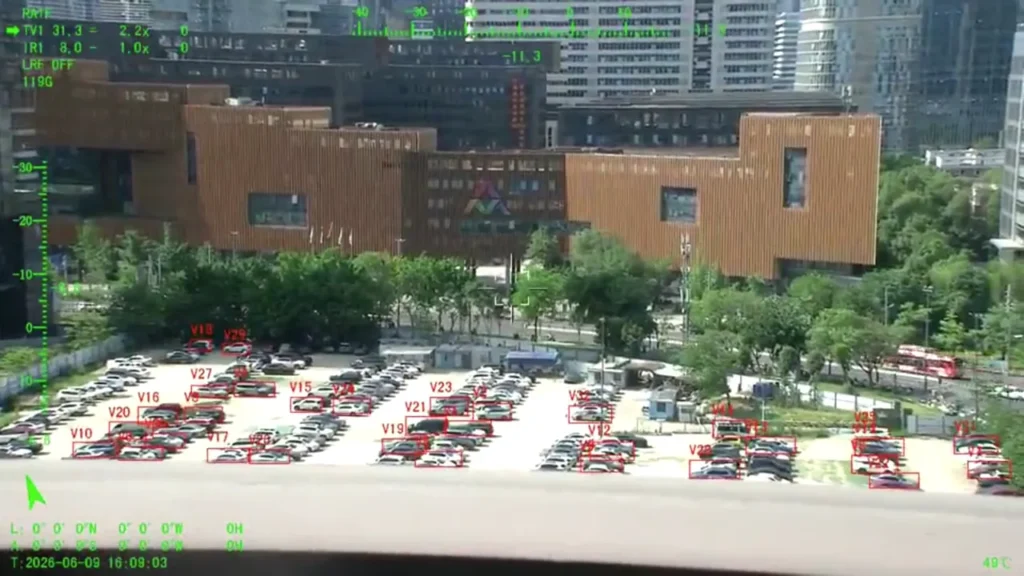
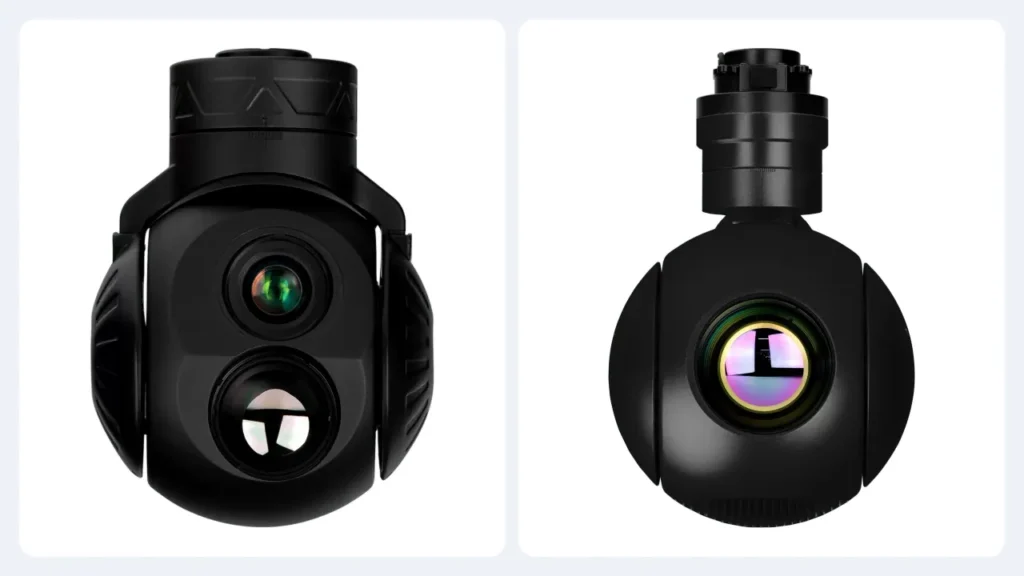
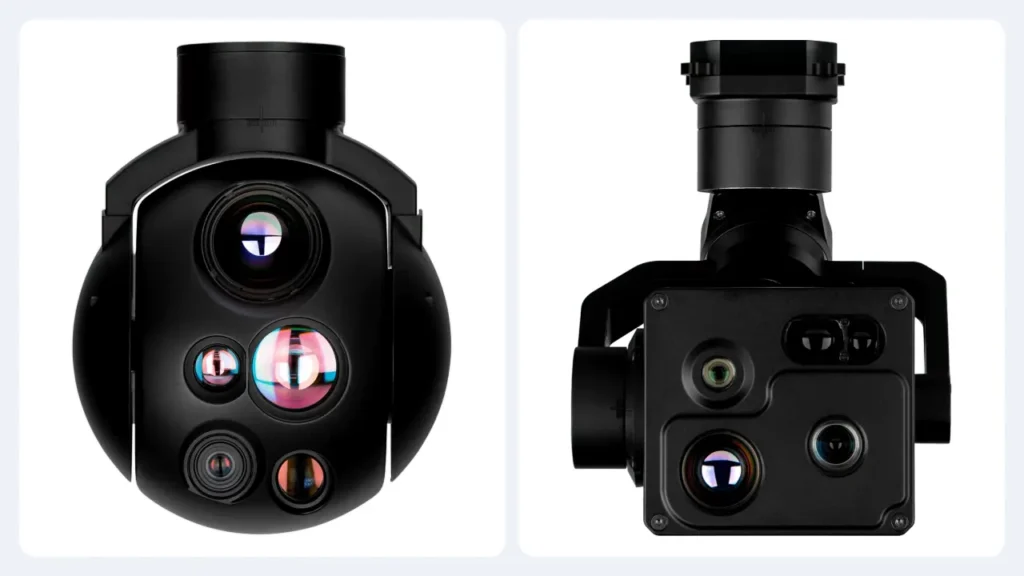
- Product: two-axis and three-axis stabilised EO/IR heads, including thermal and laser-designator variants.
The payloads built at the base are the stabilised heads listed across our product range: from the gimbal camera series to laser designator pods. For how the site is run day to day, see the factory page and the projects and deployments page; to have a unit flown on your platform, send us the airframe and the mission.