





Gimbal Camera Series: 2-Axis and 3-Axis Stabilised Heads
15 models · 240 g – 1.5 kg · 2-axis and 3-axis
HITS builds gyro-stabilised gimbal cameras for professional UAVs on one control architecture, so firmware, ground-station integration and video pipeline stay the same as your payload grows.
- 2-axis & 3-axis
- 240 g – 1.5 kg
- 10x – 40x optical zoom
- EO · IR · LRF
Choosing a gimbal camera starts with weight, stabilisation and the airframe it has to hang from — not with resolution. The HQ series covers two-axis and three-axis stabilised heads from 240 g to 1.5 kg, with the visible, infrared and laser channels already integrated into the head.
This page is the entry point to the whole series: what every head shares, how the models differ, and which one fits a given payload budget. If you already know which sensing channel matters most, start from the thermal imaging payloads, the daylight EO cameras or the dual-sensor EO/IR heads instead.
What every head in the HQ series shares
Fifteen models, three sensor layouts and one airframe-side integration. A platform qualified for one head accepts the rest without a new control protocol.
- One integration across the series
Every HQ head uses the same control protocol, the same power envelope and the same AI tracking module, so qualifying one model qualifies the series.
- Two-axis or three-axis
Two-axis heads stabilise pitch and yaw for light multirotors. Three-axis heads add roll isolation, which is what holds a long-lens image steady under manoeuvre.
- 240 g to 1.5 kg
From a 240 g fixed dual-camera head for micro multirotors to a 1.5 kg multi-sensor turret for helicopters and fixed-wing aircraft.
- Boresight set at the factory
The optical channels and the mount are aligned and calibrated as one assembly, so the aim point does not move when the operator changes channel.
- EO, IR, LRF or all three
Daylight, uncooled long-wave infrared and eye-safe laser ranging are built into the head rather than carried as separate boxes on the airframe.
- Onboard AI, no data link
Person, vehicle, vessel and aircraft detection runs on the payload itself, which keeps tracking alive when the link degrades.
15 models in the HQ series
Fifteen heads in one series. Ordered below from the lightest two-axis unit to the heaviest three-axis turret.
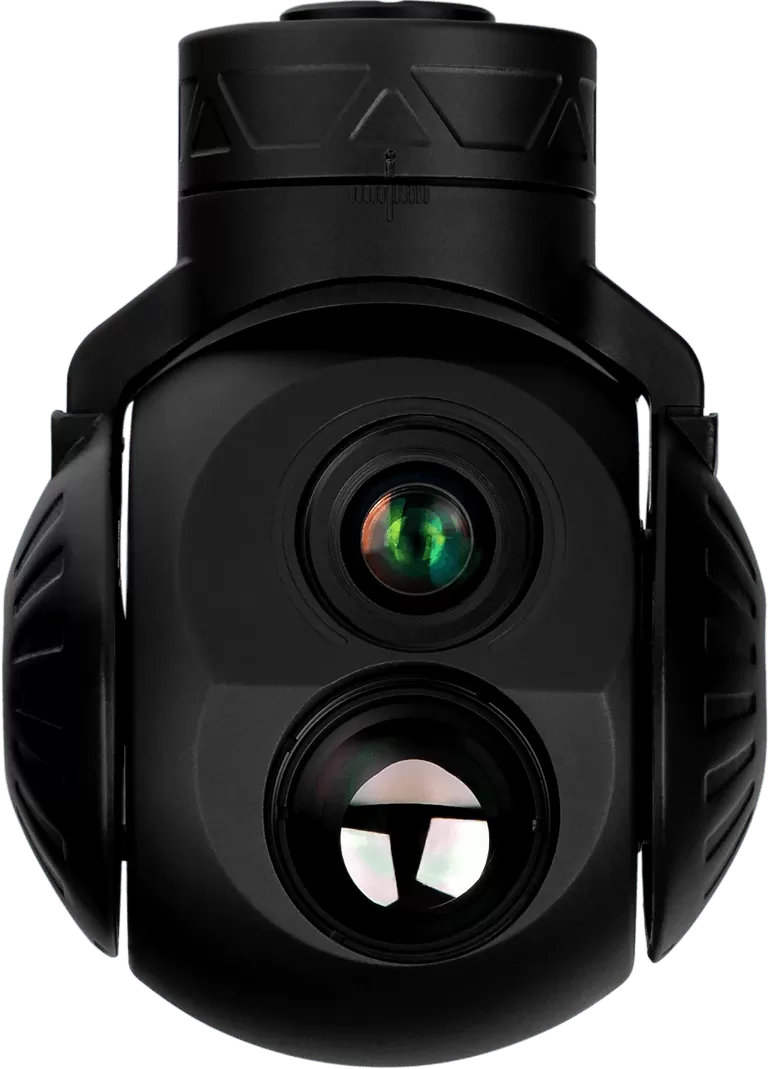
2-axis · EO + IR
HQ-64DA UAV Camera Gimbal OEM
The lightest dual-sensor head in the range — 2K daylight plus thermal on 260 g.
- Visible
- 2688 × 1520, 8.5 mm fixed
- Thermal
- 640 × 512, 19 mm fixed
- Laser
- —
- Weight
- ≤260 g
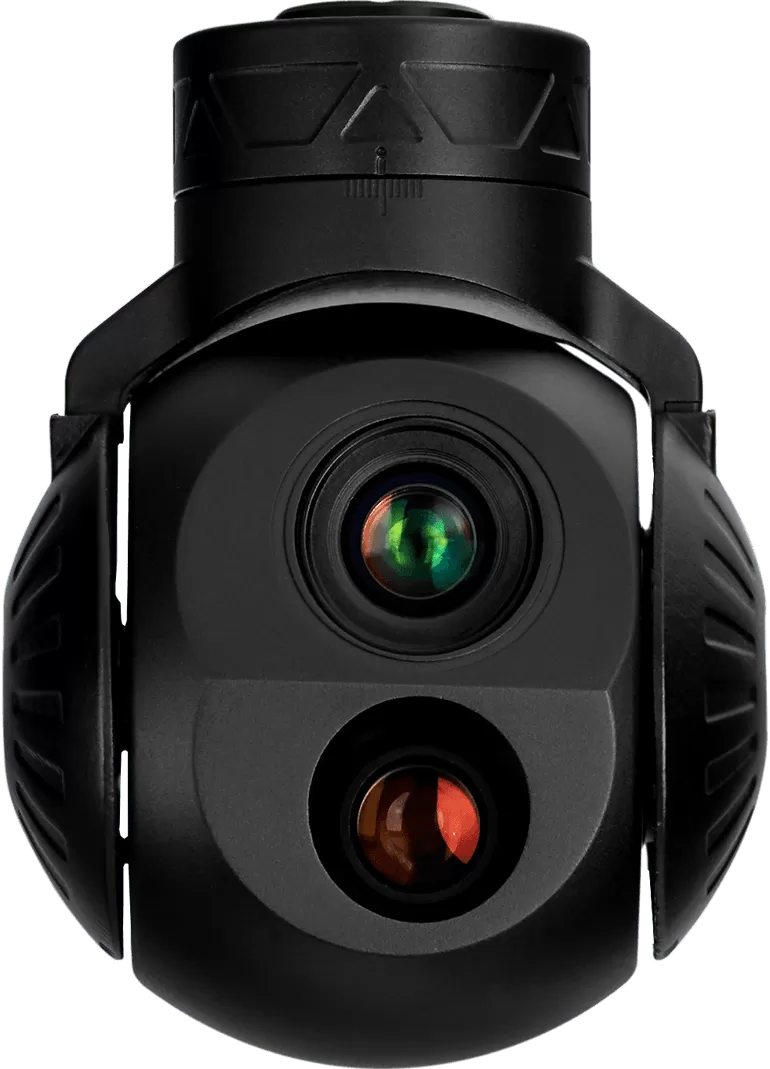
2-axis · EO
HQ-64DB Drone Camera Payload OEM
Two fixed visible cameras — a wide and a narrow channel — at the lowest weight in the series.
- Visible
- Dual 2688 × 1520, 8.5 mm + 25 mm
- Thermal
- —
- Laser
- —
- Weight
- ≤240 g
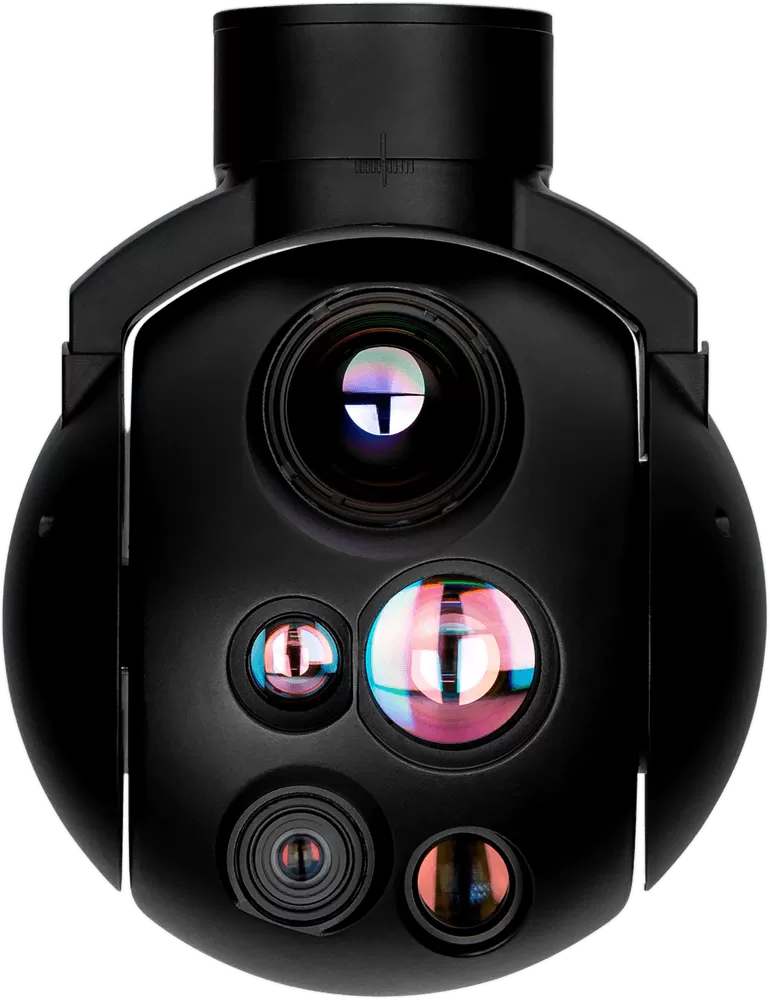
2-axis · EO + IR + LRF
HQ-85Q Stabilised Camera Payload ODM
Adds 3 km laser ranging to a two-axis platform for crews that need coordinates, not just imagery.
- Visible
- Dual 1920 × 1080, 8 mm + 25 mm
- Thermal
- 640 × 512, 25 mm fixed
- Laser
- 15 m – 3 km (± 1 m)
- Weight
- ≤500 g
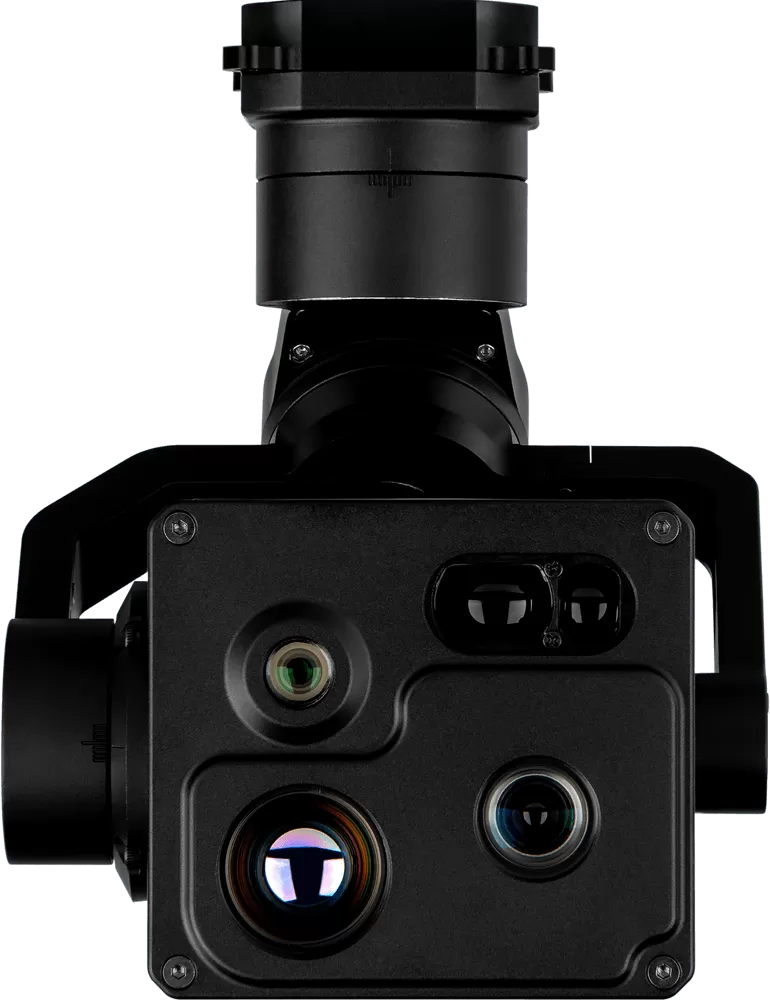
3-axis · EO + IR + LRF
HQ-95Q customized UAV Camera Gimbal
Four optical channels and a quick-release mount on the lightest three-axis head we build.
- Visible
- Dual 8000 × 6000, 9.5 mm + continuous zoom 15.3 – 49.7 mm
- Thermal
- 640 × 512, 19 mm fixed
- Laser
- 5 m – 1.5 km (± 1 m)
- Weight
- ≤400 g
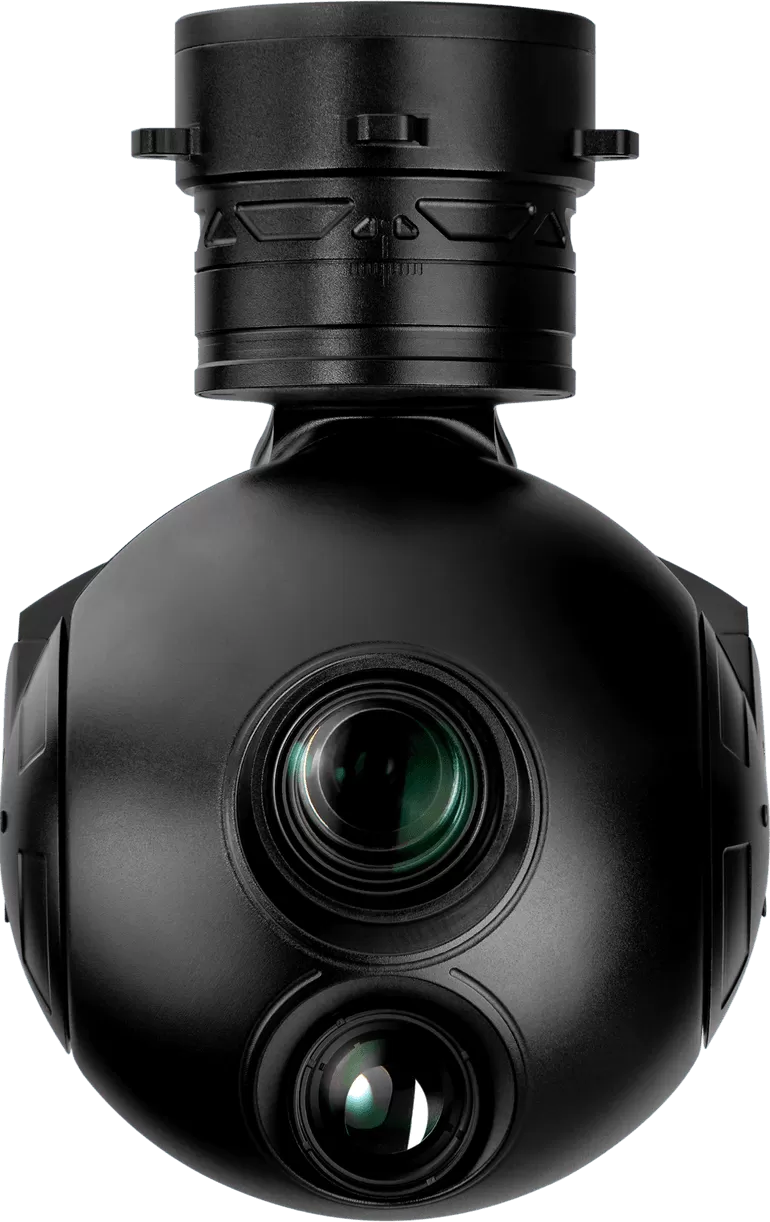
3-axis · EO + IR
HQ-100D Gimbal Camera OEM
The entry point to full roll-stabilised zoom and thermal imaging under a kilogram.
- Visible
- 1920 × 1080, 10x zoom 4.7 – 47 mm
- Thermal
- 640 × 512, 19 mm fixed
- Laser
- —
- Weight
- ≤800 g
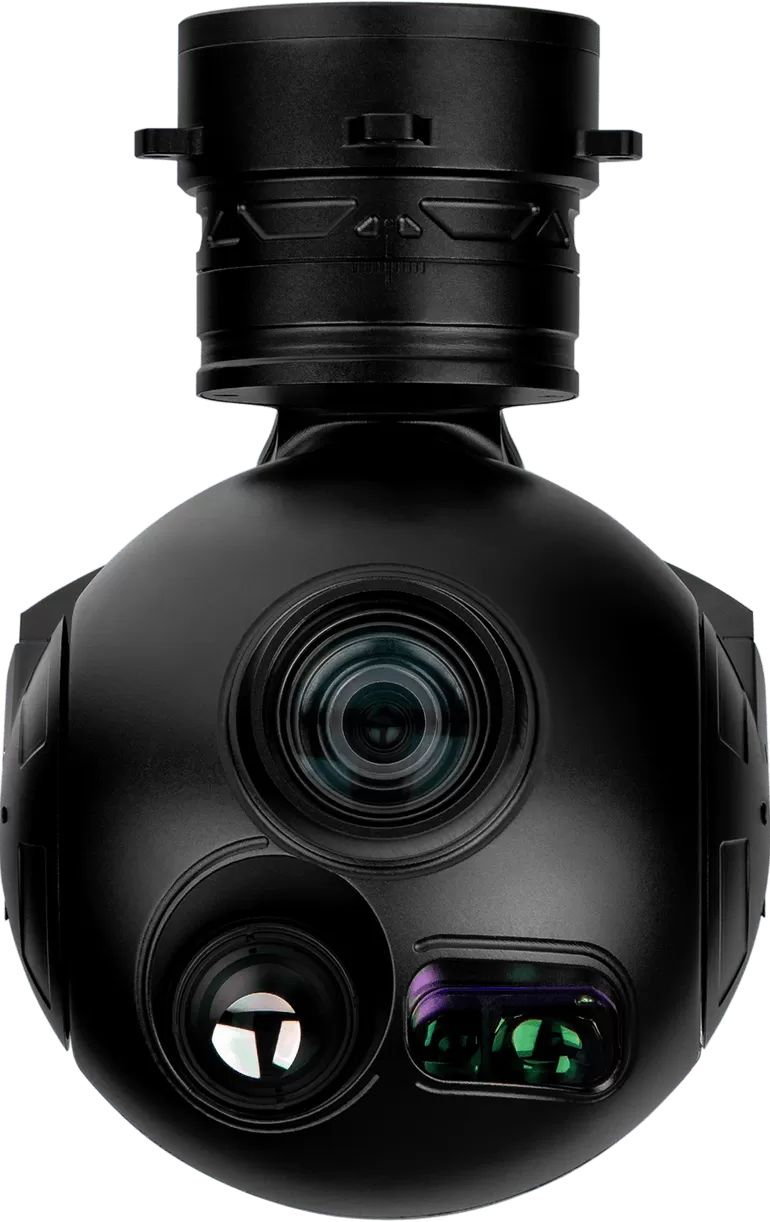
3-axis · EO + IR + LRF
HQ-100T Gimbal Camera Manufacturer
The same 800 g three-axis head as the 100D, with a 1.5 km laser rangefinder added.
- Visible
- 1920 × 1080, 10x zoom 4.7 – 47 mm
- Thermal
- 640 × 512, 19 mm fixed
- Laser
- 5 m – 1.5 km (± 1 m)
- Weight
- ≤800 g
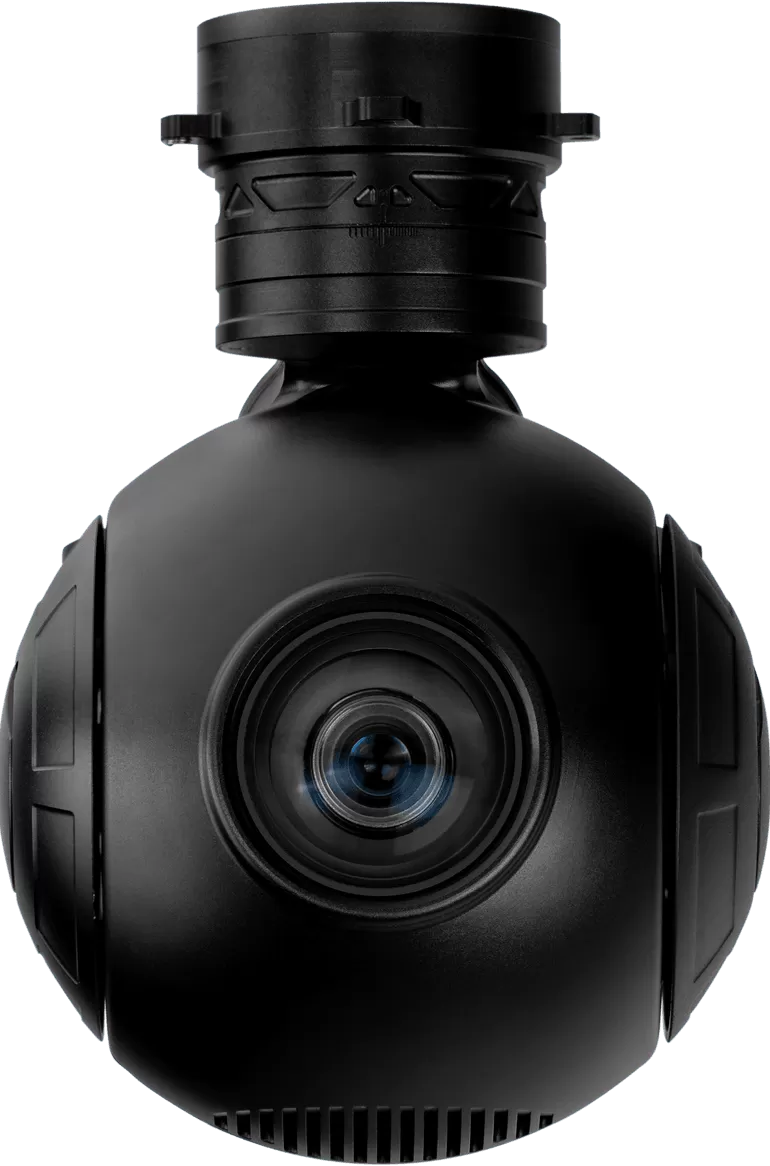
3-axis · EO
HQ-115S Drone Camera Gimbal Direct Factory
A 40x daylight optic alone, for daylight-only surveillance where the weight budget rules out a thermal channel.
- Visible
- 1920 × 1080, 40x zoom 4.25 – 170 mm
- Thermal
- —
- Laser
- —
- Weight
- ≤1 kg
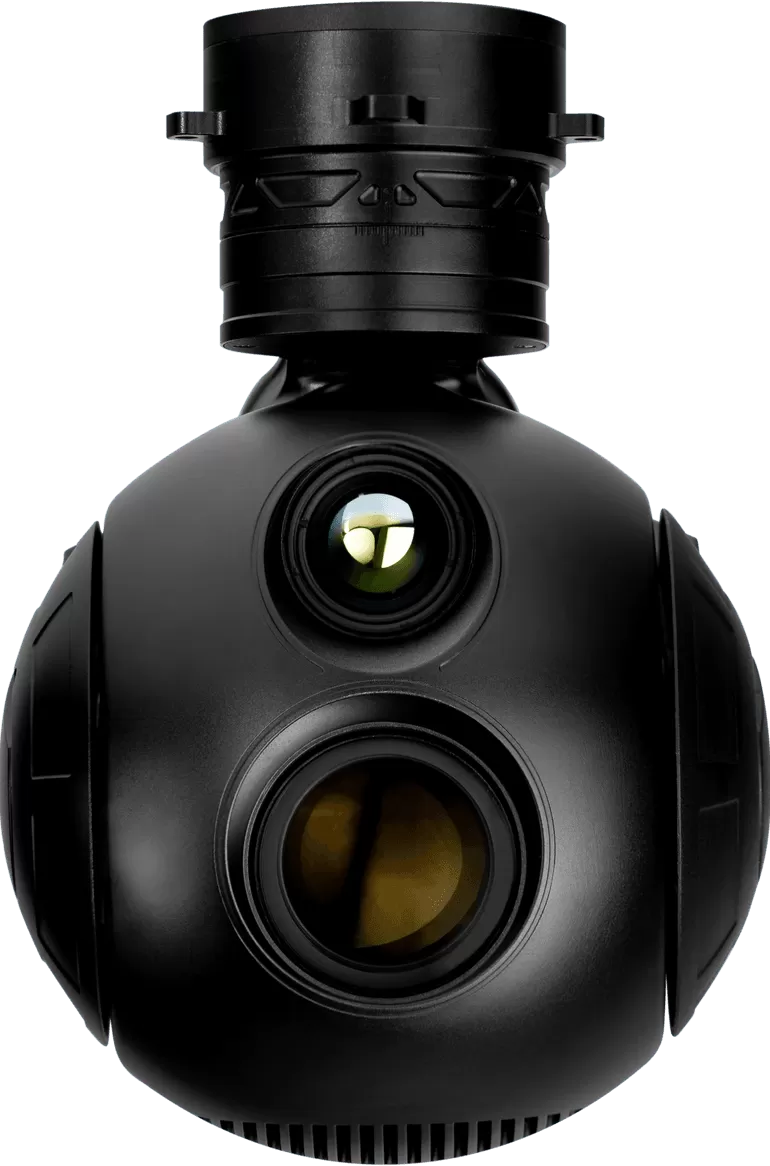
3-axis · EO + IR
HQ-115D UAV Gimbal Camera OEM
30x zoom and thermal imaging on a one-kilogram head with no ranging requirement.
- Visible
- 1920 × 1080, 30x zoom 4.3 – 129 mm
- Thermal
- 640 × 512, 25 mm fixed
- Laser
- —
- Weight
- ≤1 kg
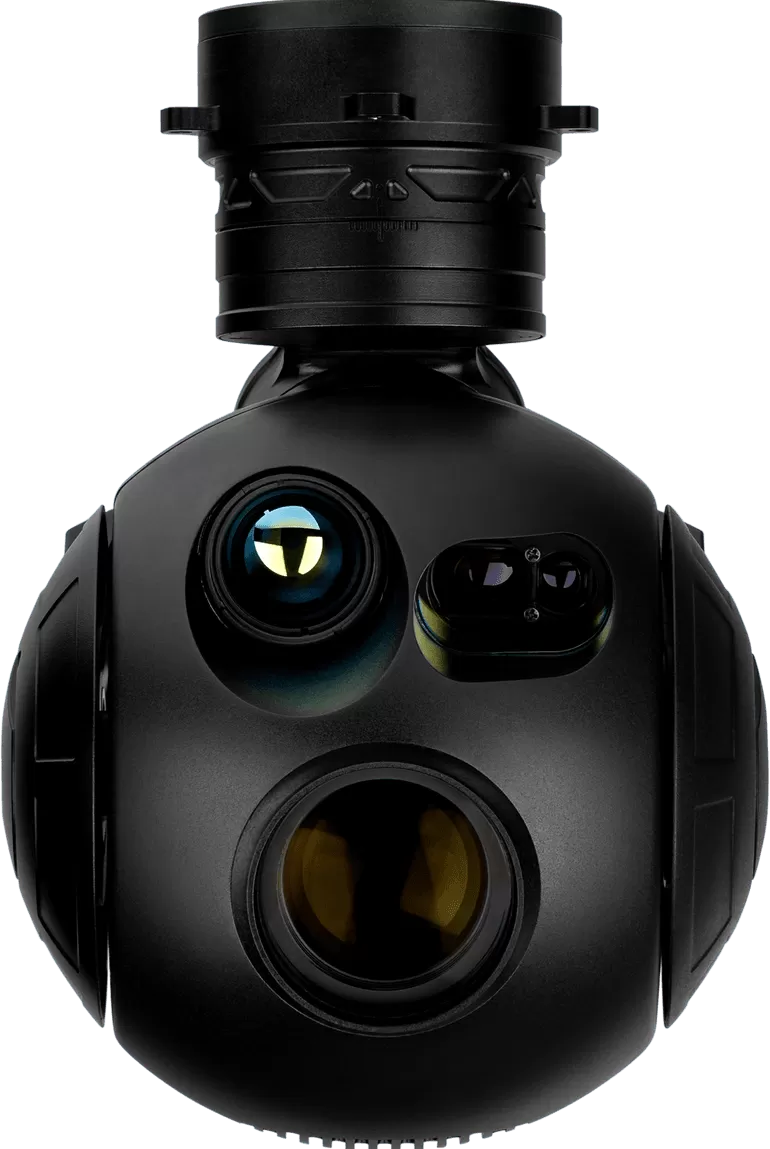
3-axis · EO + IR + LRF
HQ-115T Gimbal Camera Manufacturer
The one-kilogram workhorse: 30x zoom, thermal imaging and a 1.5 km rangefinder.
- Visible
- 1920 × 1080, 30x zoom 4.3 – 129 mm
- Thermal
- 640 × 512, 25 mm fixed
- Laser
- 5 m – 1.5 km (± 1 m)
- Weight
- ≤1 kg
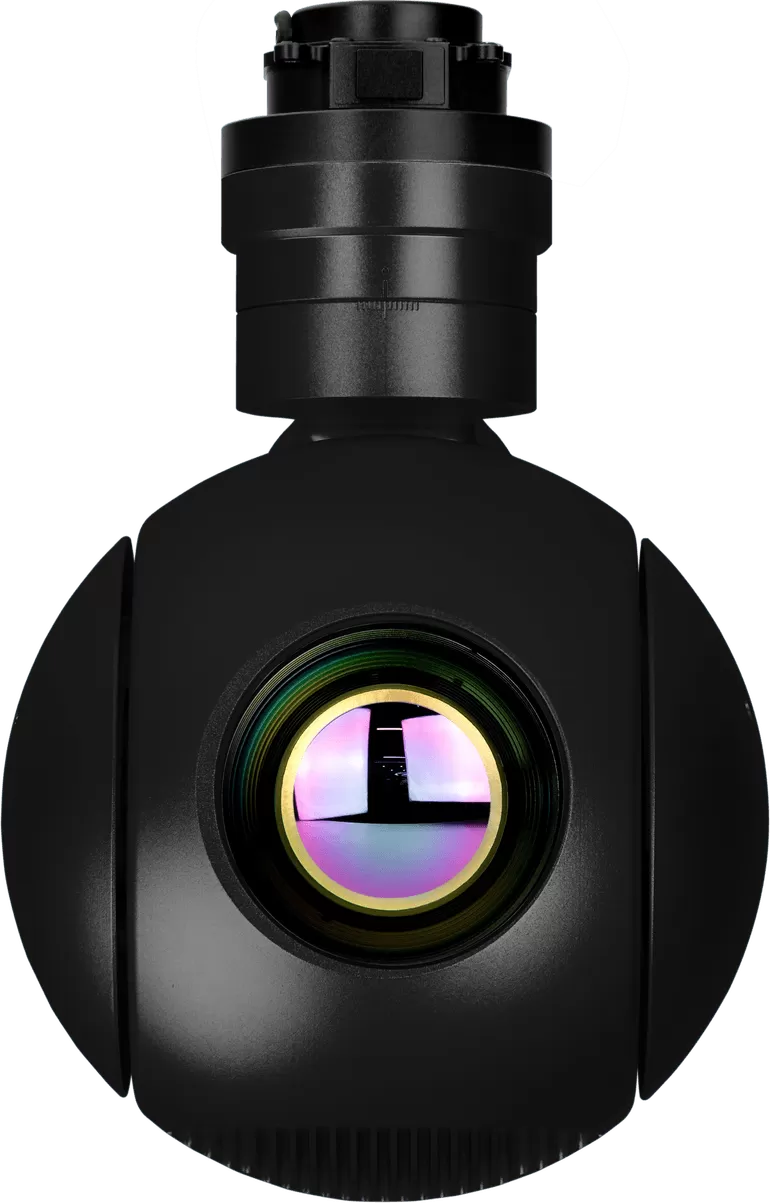
3-axis · IR
HQ-125S Thermal Gimbal Camera OEM
A thermal-only head with a 1280 × 1024 sensor — the highest thermal resolution in the series.
- Visible
- —
- Thermal
- 1280 × 1024, 50 mm fixed
- Laser
- —
- Weight
- ≤1 kg
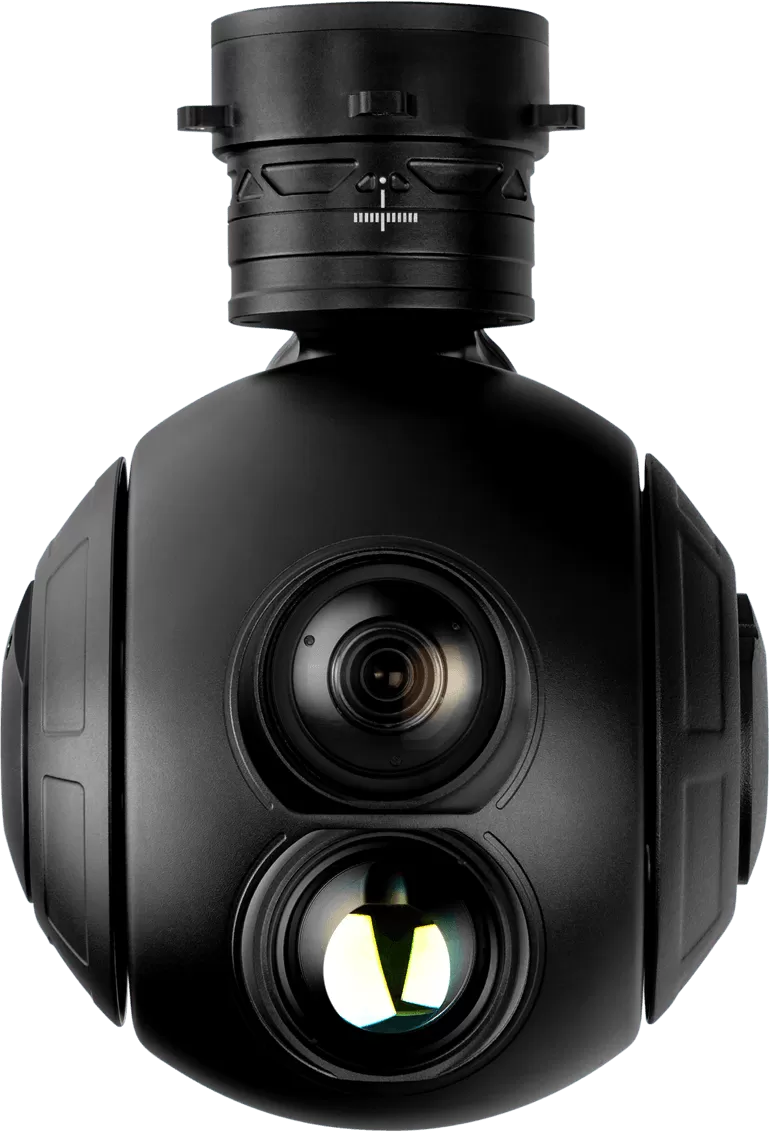
3-axis · EO + IR
HQ-125DB UAV Camera Gimbal ODM
The longer 35 mm thermal lens paired with 30x zoom, without the rangefinder.
- Visible
- 1920 × 1080, 30x zoom 4.3 – 129 mm
- Thermal
- 640 × 512, 35 mm fixed
- Laser
- —
- Weight
- ≤1.1 kg
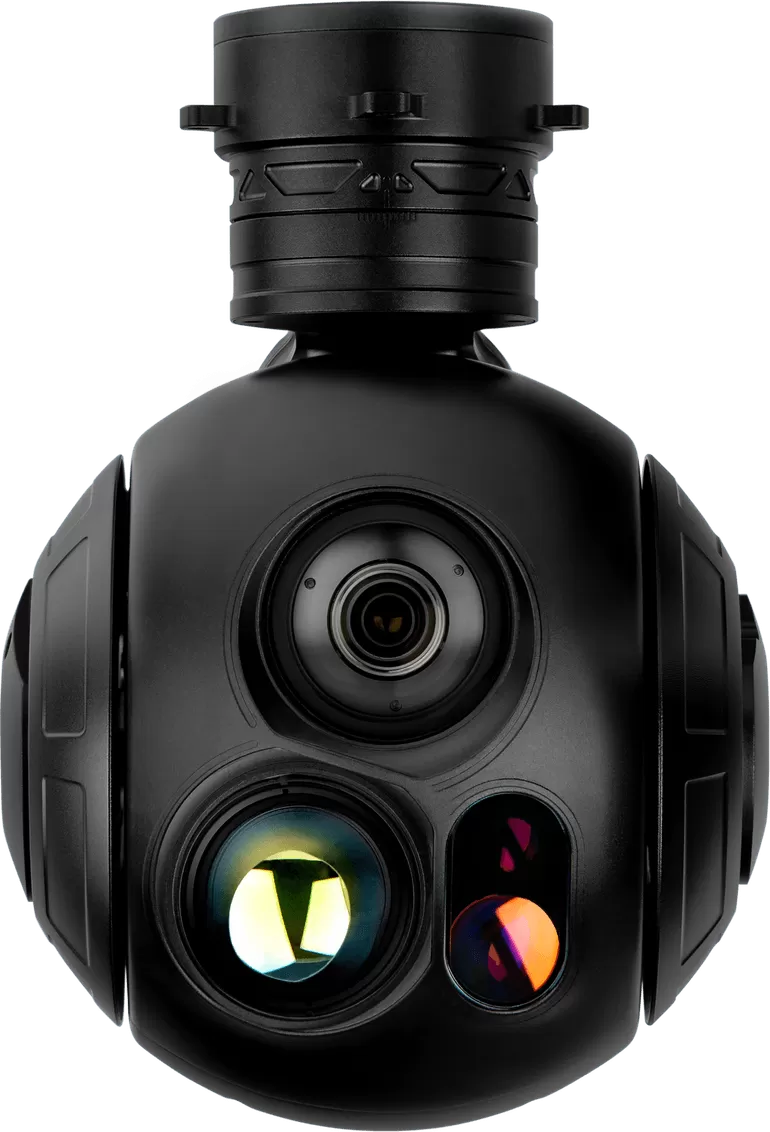
3-axis · EO + IR + LRF
HQ-125TB Gimbal Camera Supplier
Balanced mid-range turret: 30x zoom, a long thermal lens and 3 km ranging.
- Visible
- 1920 × 1080, 30x zoom 4.3 – 129 mm
- Thermal
- 640 × 512, 35 mm fixed
- Laser
- 15 m – 3 km (± 1 m)
- Weight
- ≤1.2 kg
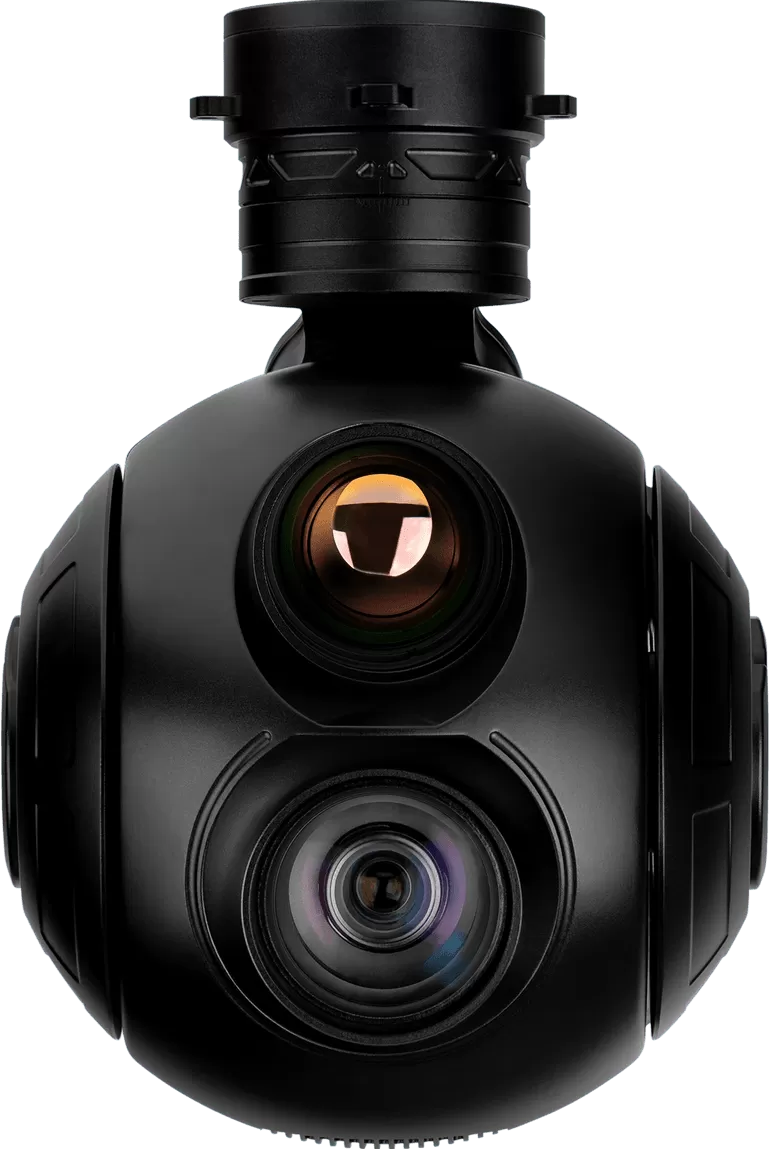
3-axis · EO + IR
HQ-135D customized Drone Camera Payload
The 40x optic with thermal imaging, for daylight and night identification at long range.
- Visible
- 1920 × 1080, 40x zoom 4.25 – 170 mm
- Thermal
- 640 × 512, 35 mm fixed
- Laser
- —
- Weight
- ≤1.4 kg
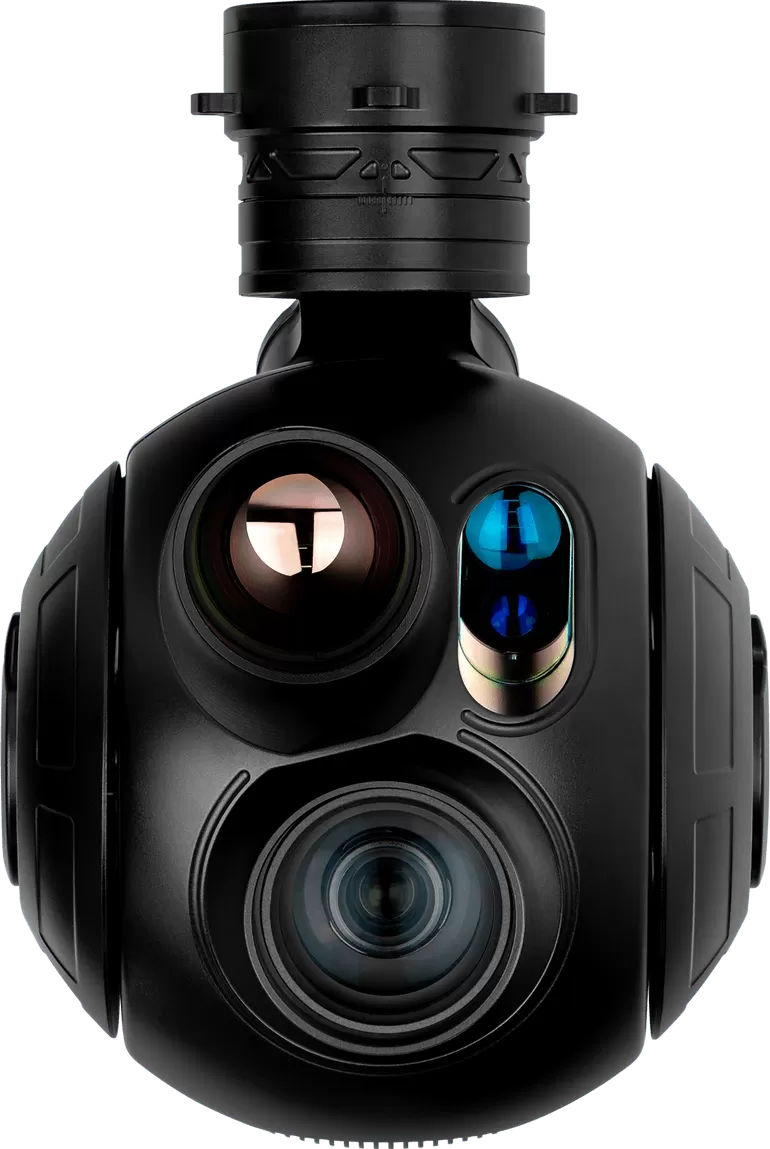
3-axis · EO + IR + LRF
HQ-135T UAV Gimbal Camera OEM
The flagship of the compact range: 40x zoom, thermal imaging and 3 km ranging on one stabilised cage.
- Visible
- 1920 × 1080, 40x zoom 4.25 – 170 mm
- Thermal
- 640 × 512, 35 mm fixed
- Laser
- 15 m – 3 km (± 1 m)
- Weight
- ≤1.4 kg
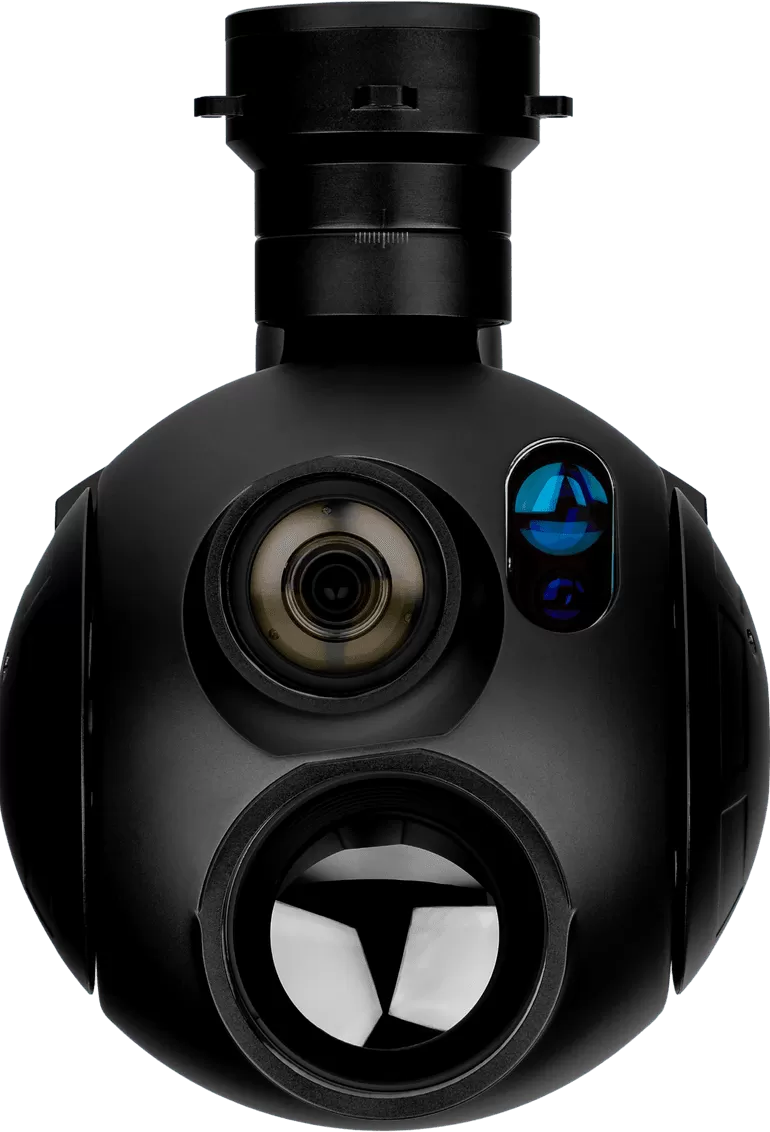
3-axis · EO + IR + LRF
HQ-135TA Stabilised UAV Camera Manufacturer
A 50 mm thermal lens gives the longest thermal reach in the compact range.
- Visible
- 1920 × 1080, 30x zoom 4.3 – 129 mm
- Thermal
- 640 × 512, 50 mm fixed
- Laser
- 15 m – 3 km (± 1 m)
- Weight
- ≤1.5 kg
Compare the range
| Model | Axes | Configuration | Visible camera | Thermal imager | Laser rangefinder | Weight |
|---|---|---|---|---|---|---|
| HQ-64DA | 2-axis | EO + IR | 2688 × 1520, 8.5 mm fixed | 640 × 512, 19 mm fixed | — | ≤260 g |
| HQ-64DB | 2-axis | EO | Dual 2688 × 1520, 8.5 mm + 25 mm | — | — | ≤240 g |
| HQ-85Q | 2-axis | EO + IR + LRF | Dual 1920 × 1080, 8 mm + 25 mm | 640 × 512, 25 mm fixed | 15 m – 3 km (± 1 m) | ≤500 g |
| HQ-95Q | 3-axis | EO + IR + LRF | Dual 8000 × 6000, 9.5 mm + continuous zoom 15.3 – 49.7 mm | 640 × 512, 19 mm fixed | 5 m – 1.5 km (± 1 m) | ≤400 g |
| HQ-100D | 3-axis | EO + IR | 1920 × 1080, 10x zoom 4.7 – 47 mm | 640 × 512, 19 mm fixed | — | ≤800 g |
| HQ-100T | 3-axis | EO + IR + LRF | 1920 × 1080, 10x zoom 4.7 – 47 mm | 640 × 512, 19 mm fixed | 5 m – 1.5 km (± 1 m) | ≤800 g |
| HQ-115S | 3-axis | EO | 1920 × 1080, 40x zoom 4.25 – 170 mm | — | — | ≤1 kg |
| HQ-115D | 3-axis | EO + IR | 1920 × 1080, 30x zoom 4.3 – 129 mm | 640 × 512, 25 mm fixed | — | ≤1 kg |
| HQ-115T | 3-axis | EO + IR + LRF | 1920 × 1080, 30x zoom 4.3 – 129 mm | 640 × 512, 25 mm fixed | 5 m – 1.5 km (± 1 m) | ≤1 kg |
| HQ-125S | 3-axis | IR | — | 1280 × 1024, 50 mm fixed | — | ≤1 kg |
| HQ-125DB | 3-axis | EO + IR | 1920 × 1080, 30x zoom 4.3 – 129 mm | 640 × 512, 35 mm fixed | — | ≤1.1 kg |
| HQ-125TB | 3-axis | EO + IR + LRF | 1920 × 1080, 30x zoom 4.3 – 129 mm | 640 × 512, 35 mm fixed | 15 m – 3 km (± 1 m) | ≤1.2 kg |
| HQ-135D | 3-axis | EO + IR | 1920 × 1080, 40x zoom 4.25 – 170 mm | 640 × 512, 35 mm fixed | — | ≤1.4 kg |
| HQ-135T | 3-axis | EO + IR + LRF | 1920 × 1080, 40x zoom 4.25 – 170 mm | 640 × 512, 35 mm fixed | 15 m – 3 km (± 1 m) | ≤1.4 kg |
| HQ-135TA | 3-axis | EO + IR + LRF | 1920 × 1080, 30x zoom 4.3 – 129 mm | 640 × 512, 50 mm fixed | 15 m – 3 km (± 1 m) | ≤1.5 kg |
How the series is engineered
Stabilisation: what the third axis buys
A direct-drive brushless motor on every axis, driven by an IMU-led control loop, holds the line of sight while the airframe pitches, rolls and vibrates around it. Two axes are enough under a wide lens on a calm day. Under a 40x lens in wind, roll isolation is the difference between a usable image and a drifting one.
One interface, three sensor layouts
The heads differ in optics, not in wiring. Visible zoom, uncooled long-wave infrared and laser rangefinding sit on the same boresighted cage, and the aircraft sees the same video output, the same control protocol and the same recording interface on a 260 g head and a 1.5 kg one.
Designed and manufactured by HITS
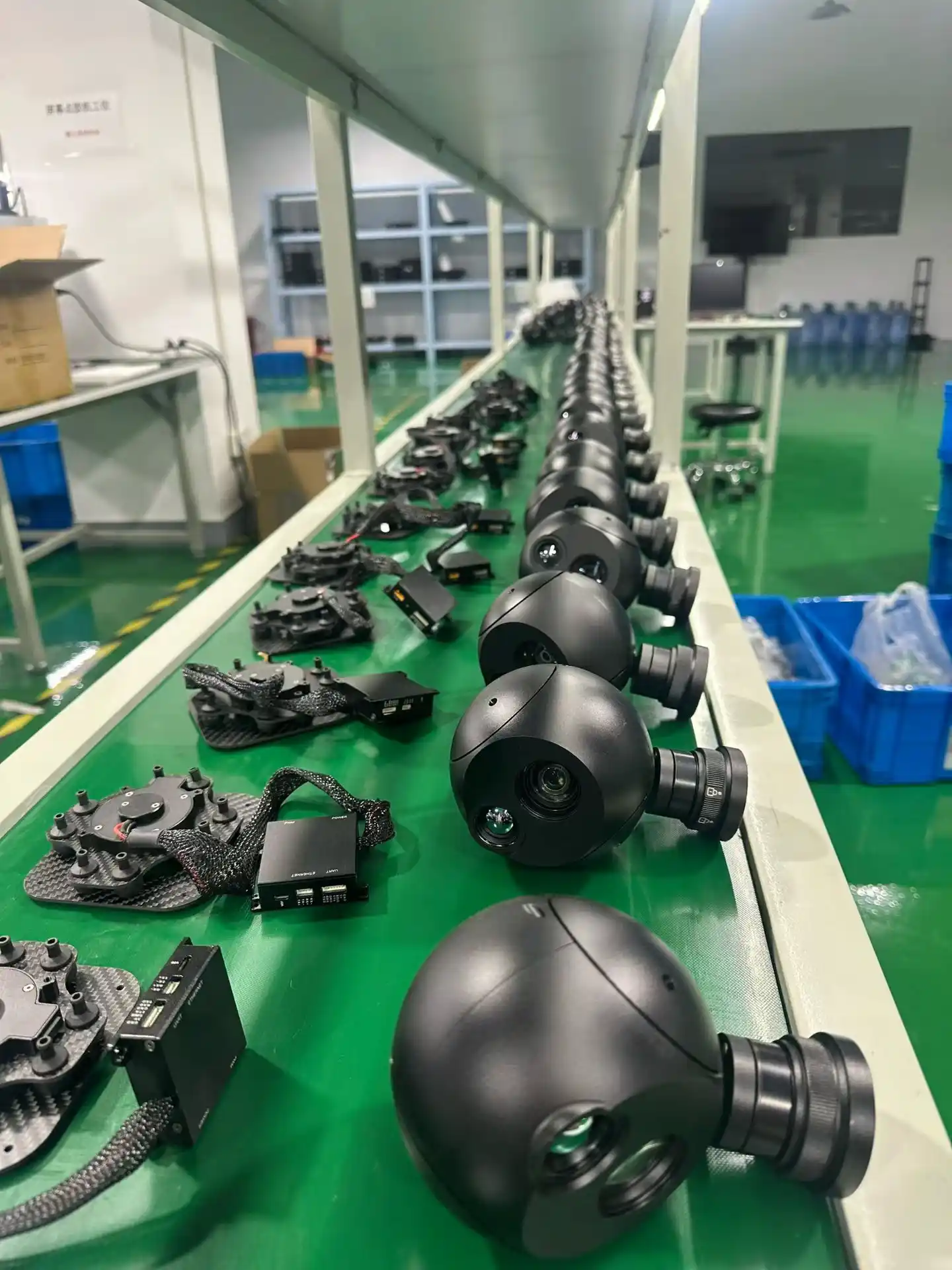
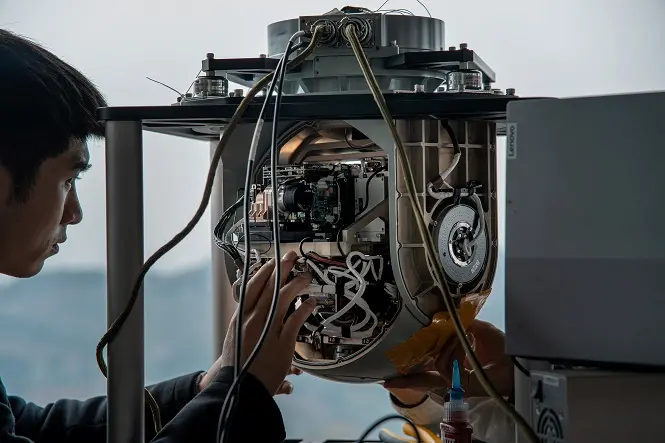
The HQ series is not a catalogue of rebadged heads. Optics, servo hardware, stabilisation firmware and the AI tracking module are developed in house, and because every model shares one integration, a platform qualified for one head accepts the rest without a change on the airframe side.

Related reading
Adjacent pages, so you can compare the channel you need against the wider range.
- Two-axis gimbal cameras
Light heads for multirotors, where weight and cost matter more than roll isolation.
- Three-axis gimbal cameras
Roll-isolated heads for long lenses, fixed-wing aircraft and helicopters.
- Thermal imaging payloads
How detector resolution, NETD and lens focal length set night-time detection distance.
- Dual-sensor EO/IR heads
Daylight and thermal on one boresighted cage, with fusion and picture-in-picture.
Frequently asked questions
Do I need two axes or three?
Two axes hold pitch and yaw, which is enough for a wide lens on a light multirotor in calm air. Three axes add roll isolation. Once the lens goes past roughly 20x, or the aircraft banks hard in a turn, roll is the axis that ruins the image, so a three-axis head is the practical choice.
Can I swap heads on the same aircraft later?
Yes. Every HQ model uses the same control protocol, power envelope and mounting interface, so an aircraft wired for one head can be re-fitted with another. Moving from a 260 g head to a 1.5 kg one is a payload-budget question for the airframe, not a new integration project.
Which head is the lightest in the series?
The HQ-64DB at 240 g or less, a two-axis head with two fixed visible cameras at 8.5 mm and 25 mm. The lightest dual-sensor head is the HQ-64DA at 260 g or less, which adds a 640 × 512 thermal channel to the same mount.
Guides for integrators and buyers
Nine long-form guides that sit behind this range: the engineering side of a payload decision, the commercial side of choosing a supplier, a selection guide for matching a head to a mission, a stabilisation guide for two-axis versus three-axis heads, a thermal resolution guide, a long-range optics guide, an evaluation guide for AI payloads, and a procurement checklist running from the RFQ to the purchase order.
- UAV gimbal camera integrationMounting, power, serial and Ethernet interfaces, MAVLink control, the video path to the ground station, SDKs, and a bench-to-flight test sequence.Read the integration guide →
- Choosing a gimbal camera manufacturer in ChinaHow to check a factory remotely, which documents to request, how to compare quotations, and what to test before a production order.Read the buyer’s guide →
- How to choose the right gimbal camera for an industrial UAVMission first, then payload family and specifications: field of view, stabilisation axes, weight and power budgets, interfaces, and a checklist to run before you request a quotation.Read the selection guide →
- EO vs IR vs EO/IR: which sensor configurationWhat visible, thermal and dual-sensor channels each see, where they stop, how to read NETD and focal length, and which configuration suits which mission.Read the sensor guide →
- 2-axis vs 3-axis: which stabilisation you needWhat each design actually holds, why three axes is not automatically heavier, how to compare a stabilisation claim, and how to match the head to the airframe.Read the stabilisation guide →
- 640 x 512 vs 1280 x 1024 thermal camerasWhat the element count buys you, why the lens decides more than the detector, and how to tell a native resolution from a digitally upscaled one.Read the thermal resolution guide →
- Long-range gimbal cameras: zoom, FOV and LRFWhy a 40x ratio is not a reach, how focal length and field of view decide what you resolve at distance, and why a 3 km rangefinder says nothing about imaging range.Read the long-range guide →
- AI tracking: specifying, testing and integrating itDetection, classification, recognition and tracking are four capabilities with four different tests – plus the demonstration pack to request before you order.Read the AI evaluation guide →
- Gimbal camera procurement checklistTen steps from mission brief to purchase order: the RFQ template, the supplier scorecard, sample acceptance criteria, and the checks to run before the order goes out.Read the procurement checklist →
Request information or a quotation
Send the airframe, the payload budget and the target you have to see, and we will confirm which of the fifteen heads fits. Contact us with your requirements.