





2 Axis Drone Gimbal: Lightweight Stabilised Payloads
3 two-axis models · 240 g – 500 g
Two-axis heads stabilise pitch and yaw, which is all a gentle multirotor platform needs. They are the lightest and least power-hungry option in the range, and they stay within the weight budget of micro and small airframes where every gram decides flight time.
- 240 g – 500 g
- Pitch & yaw stabilised
- 2K visible imaging
- Thermal imaging
A 2 axis gimbal for drone platforms stabilises pitch and yaw, which is all a gentle multirotor needs. It is the lightest and least power-hungry option in the range, and the one that leaves the most flight time for the mission.
A 2 axis drone gimbal is the right choice when the airframe does not roll continuously and the payload budget is under a kilogram. A 2 axis gimbal from this group still carries a 2K visible camera, a thermal imager and, on the 85Q, a 3 km laser rangefinder.
Core capabilities
- Three-axis stabilisation
≤ 100 μrad stabilisation accuracy with ≥ 60°/s angular velocity isolates the line of sight from airframe motion.
- SWaP-C discipline
260 g to 1.5 kg across the range, so one airframe can carry different sensing payloads.
- Uncooled thermal imaging
640 × 512 (up to 1280 × 1024) long-wave infrared with NETD ≤ 40 mK, boresighted to the visible channel.
- Laser rangefinding
1535 nm or 905 nm rangefinders from 5 m to 3 km turn video into georeferenced target coordinates.
- Onboard AI detection
Person, vehicle, vessel and aircraft recognition runs locally, with no dependency on a data link.
- Open integration
Ethernet video, RS-422 / RS-232 / TTL control, SBUS and MAVLink, with on-board 128 GB recording.
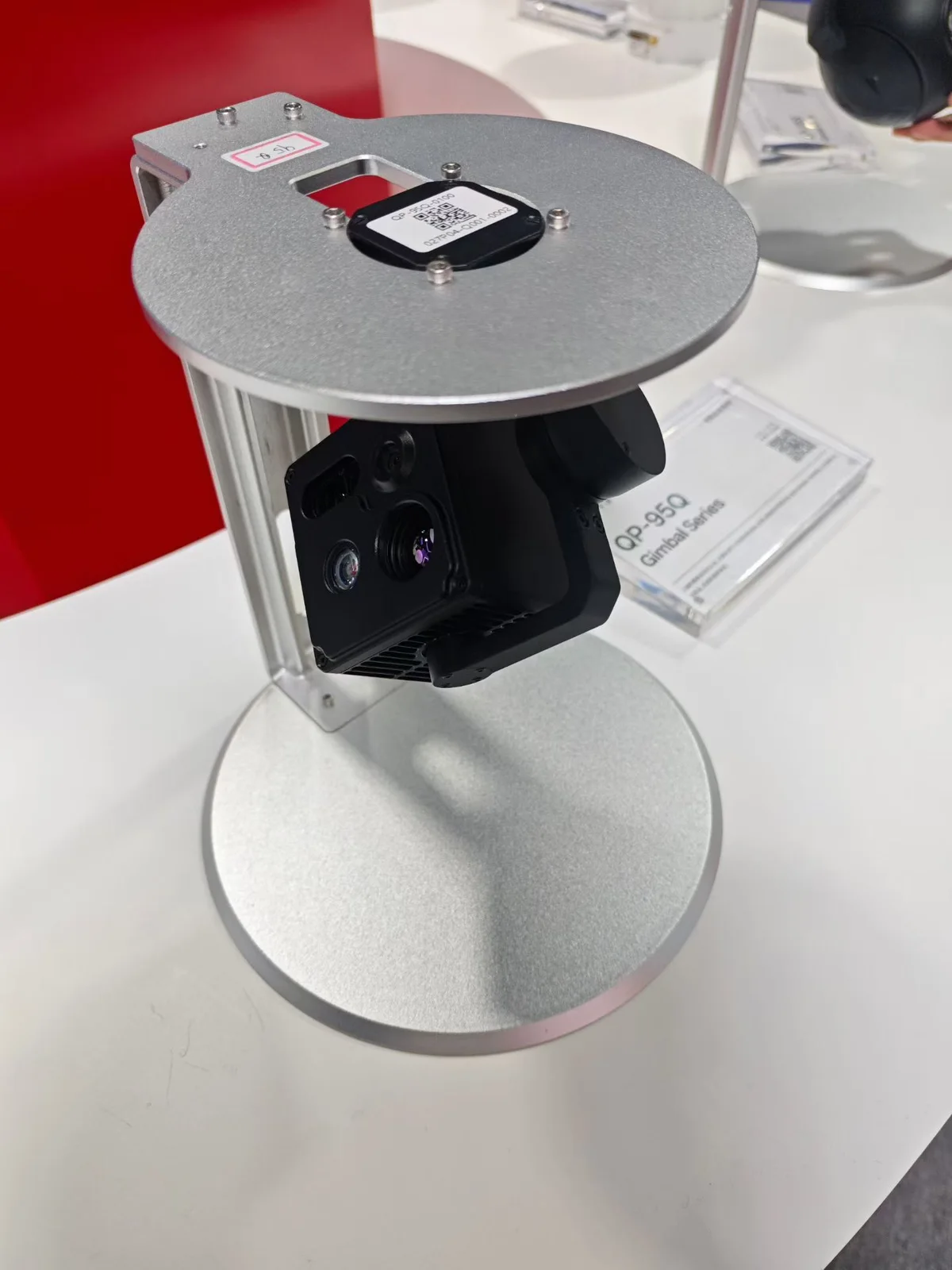
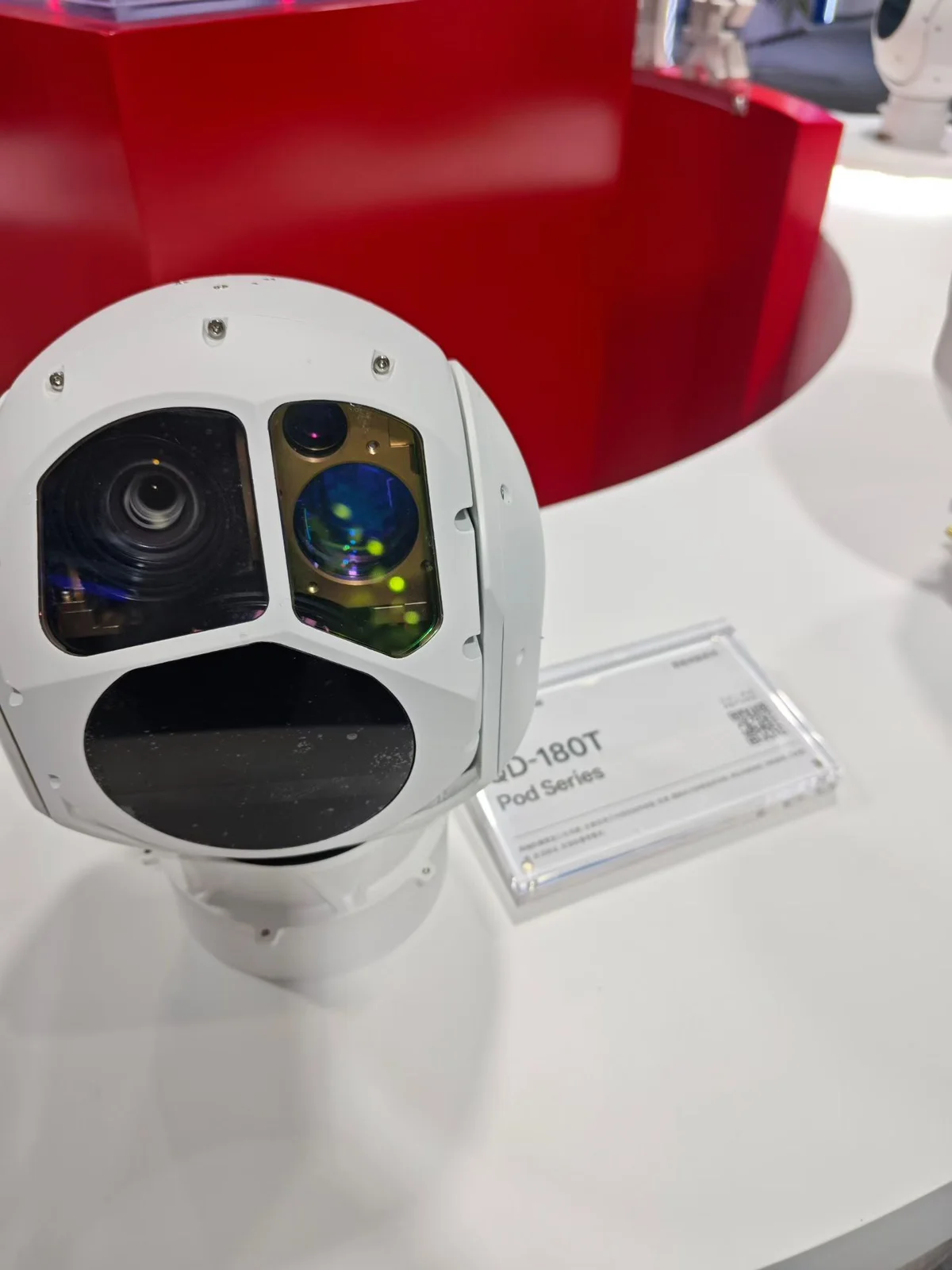
3 two-axis models
The compact end of the HQ series: two-axis stabilisation with fixed or dual-field-of-view optics.
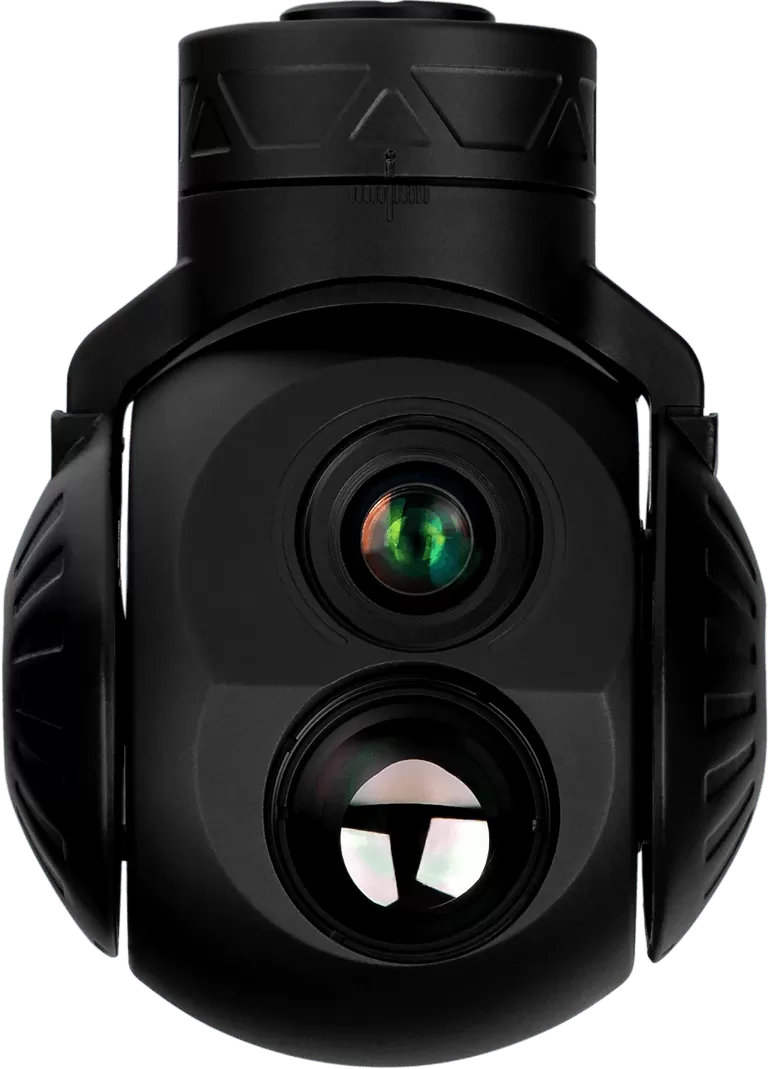
2-axis · EO + IR
HQ-64DA UAV Camera Gimbal OEM
The lightest dual-sensor head in the range — 2K daylight plus thermal on 260 g.
- Visible
- 2688 × 1520, 8.5 mm fixed
- Thermal
- 640 × 512, 19 mm fixed
- Laser
- —
- Weight
- ≤260 g
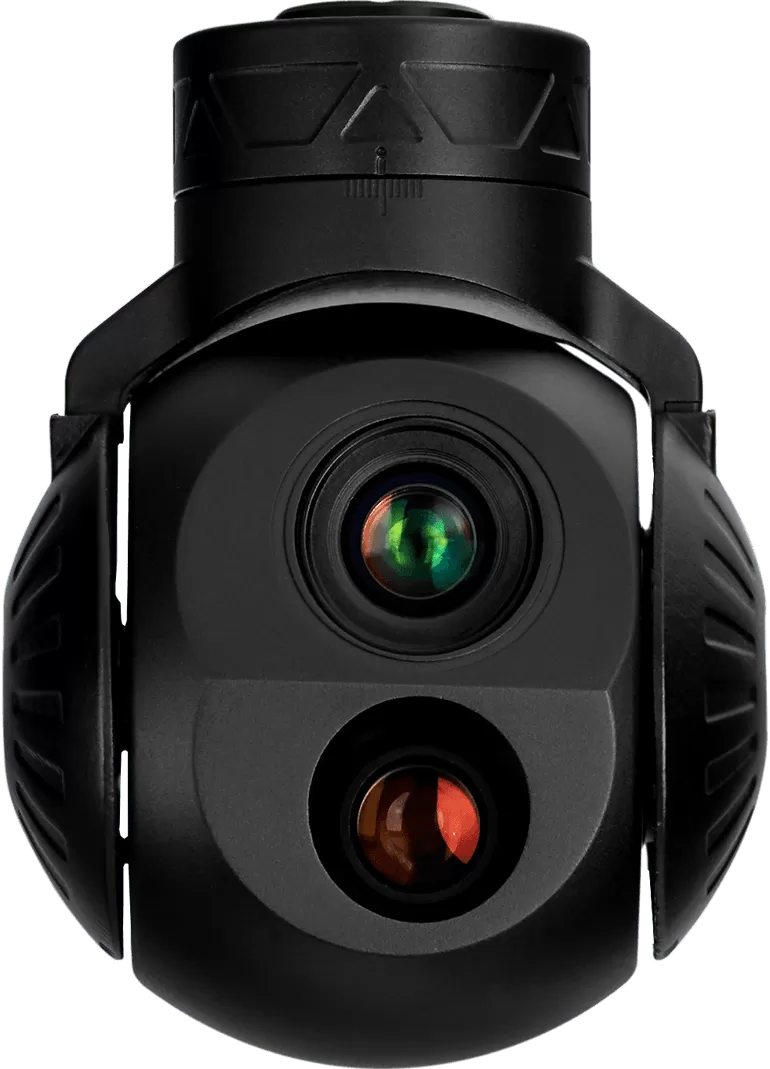
2-axis · EO
HQ-64DB Drone Camera Payload OEM
Two fixed visible cameras — a wide and a narrow channel — at the lowest weight in the series.
- Visible
- Dual 2688 × 1520, 8.5 mm + 25 mm
- Thermal
- —
- Laser
- —
- Weight
- ≤240 g
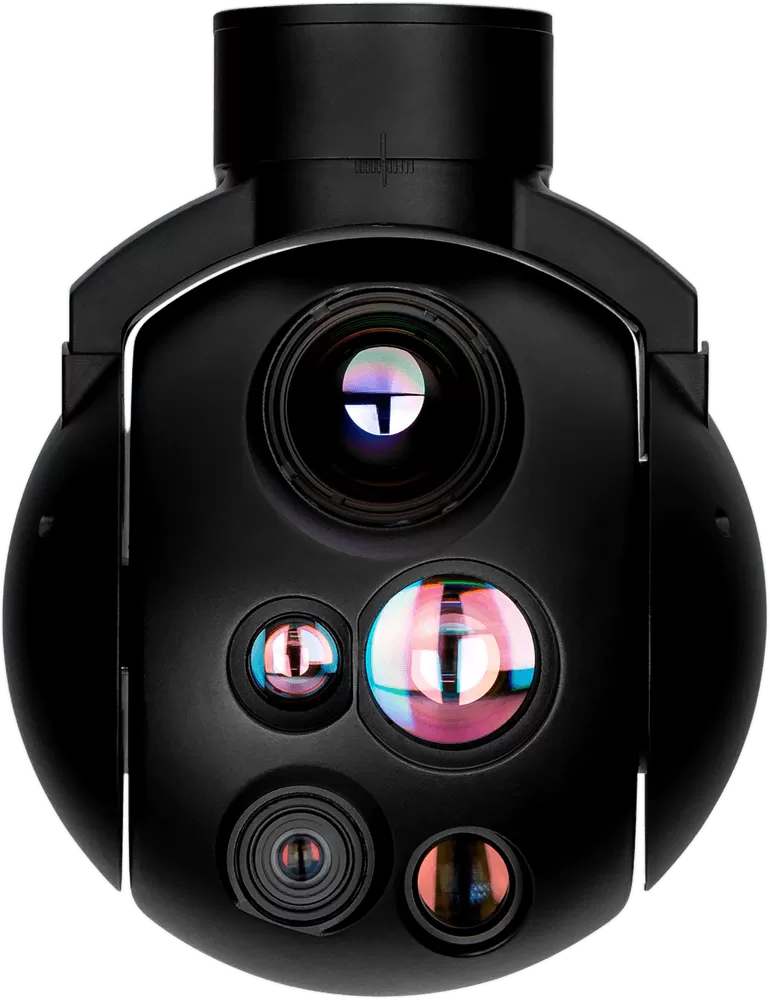
2-axis · EO + IR + LRF
HQ-85Q Stabilised Camera Payload ODM
Adds 3 km laser ranging to a two-axis platform for crews that need coordinates, not just imagery.
- Visible
- Dual 1920 × 1080, 8 mm + 25 mm
- Thermal
- 640 × 512, 25 mm fixed
- Laser
- 15 m – 3 km (± 1 m)
- Weight
- ≤500 g
Compare the range
| Model | Axes | Configuration | Visible camera | Thermal imager | Laser rangefinder | Weight |
|---|---|---|---|---|---|---|
| HQ-64DA | 2-axis | EO + IR | 2688 × 1520, 8.5 mm fixed | 640 × 512, 19 mm fixed | — | ≤260 g |
| HQ-64DB | 2-axis | EO | Dual 2688 × 1520, 8.5 mm + 25 mm | — | — | ≤240 g |
| HQ-85Q | 2-axis | EO + IR + LRF | Dual 1920 × 1080, 8 mm + 25 mm | 640 × 512, 25 mm fixed | 15 m – 3 km (± 1 m) | ≤500 g |
Engineering detail
Built for micro and small airframes
Between 10 W and 20 W of average draw and 240 g to 500 g of payload mass, these heads leave flight time for the mission instead of spending it on stabilisation.
Dual and quad sensing
The 64DA pairs a 2K visible camera with a thermal imager; the 85Q adds a second visible field of view and a 3 km laser rangefinder for crews that need target coordinates.
Designed and manufactured by HITS
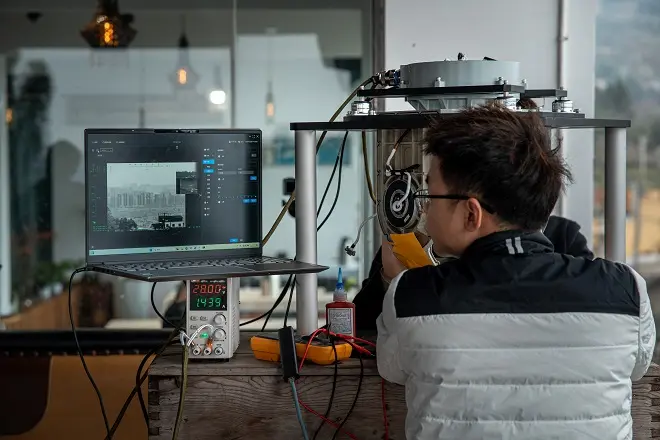
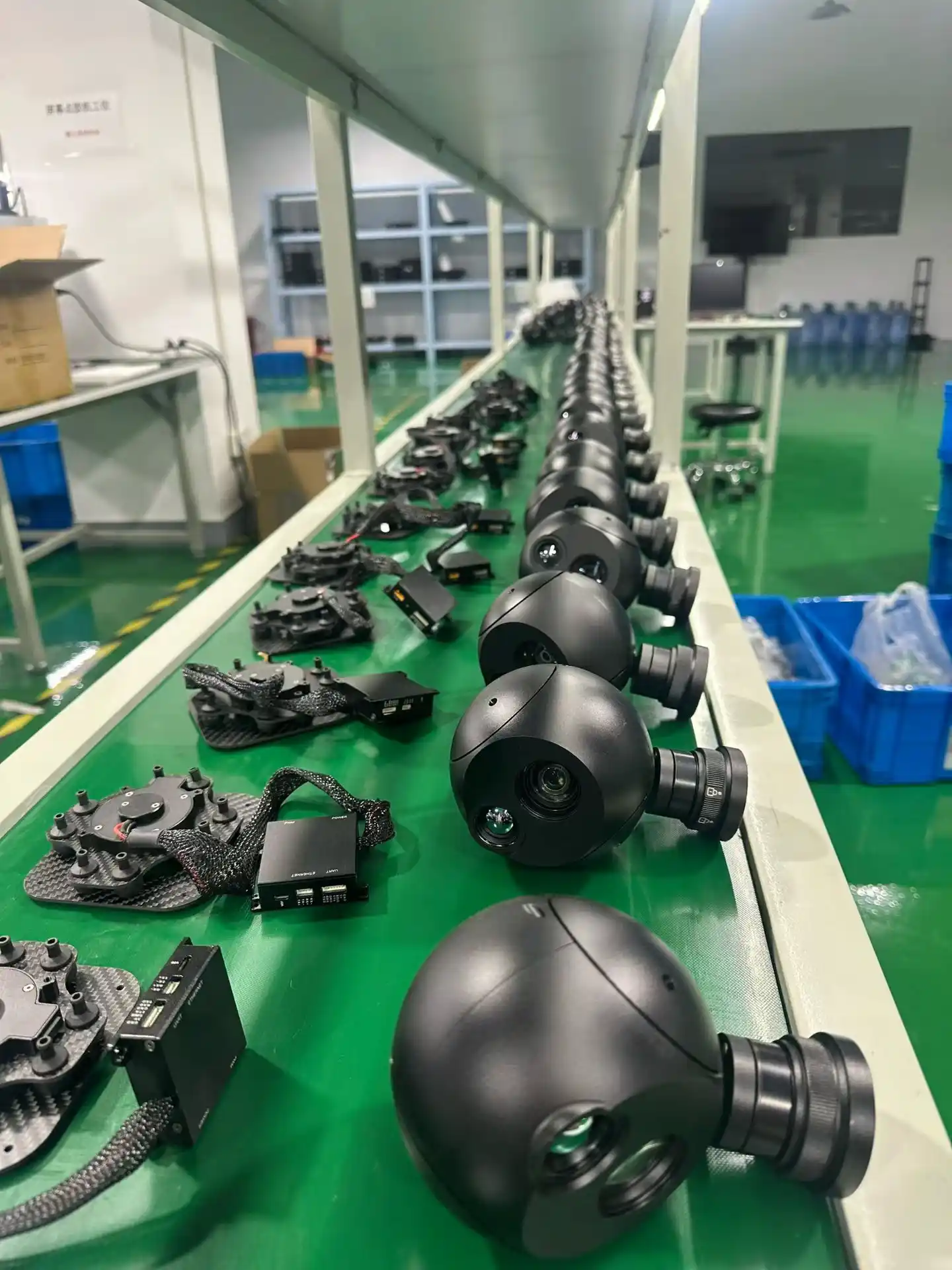
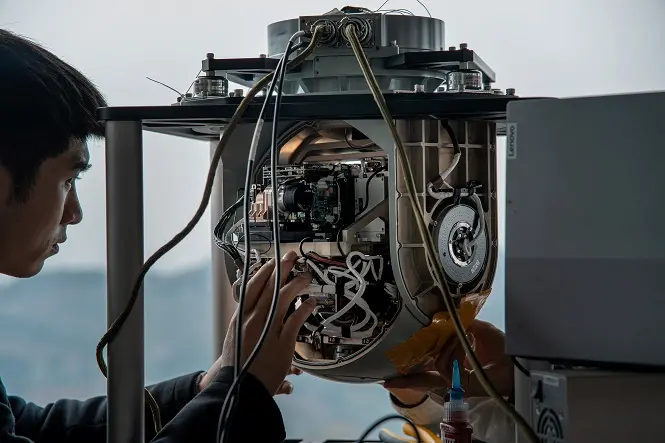
Optics, servo hardware, stabilisation firmware and the AI tracking module are developed in house, and every unit is assembled, calibrated and environmentally tested on our own line before it ships.

Two axes or three? Read the guide
This page is the two-axis half of the decision. The stabilisation guide covers both designs side by side: which axes each one holds, where a two-axis head is the right answer, and when the extra roll axis earns its place.
- 2-axis vs 3-axis: which stabilisation you needWhat each design actually holds, why three axes is not automatically heavier, how to compare a stabilisation claim, and how to match the head to the airframe.Read the stabilisation guide →
- How to choose an industrial UAV gimbal cameraMission first, then payload family and specifications: field of view, weight and power budgets, interfaces, and a checklist to run before you request a quotation.Read the selection guide →
- Buying one? Start with the checklistTen steps from mission brief to purchase order, with an RFQ template and a supplier scorecard you can reuse.Read the procurement checklist →
Request information or a quotation
Tell us the airframe and we will confirm whether a two-axis head covers your mission. Contact us with your requirements.