
Choosing, integrating and buying a UAV imaging payload.
The questions that come up most often from UAV manufacturers, system integrators, distributors and project teams — answered in the order a project usually meets them.
Cannot find your question? Write to info@hitsuav.com and the reply comes from the engineering team.
Choose a head, then a configuration.
Every model shares one aircraft-side integration, so changing sensor mix does not mean a new payload interface. Browse all 27 models →
Which payload, and why.
What kinds of imaging payload do you make?
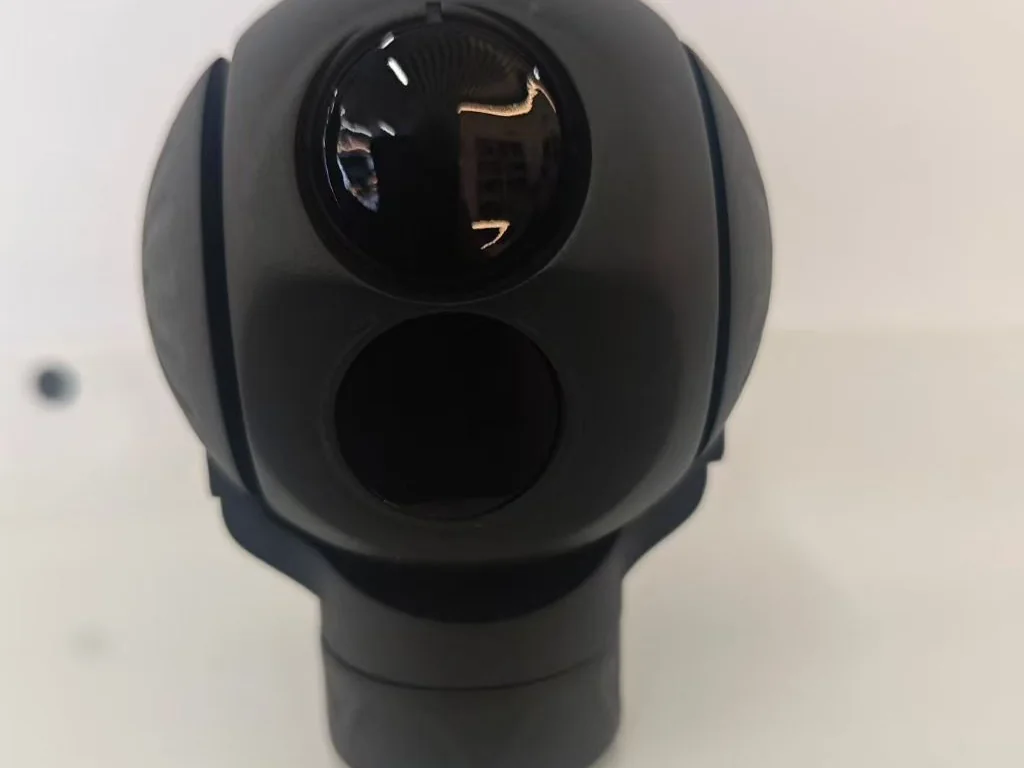
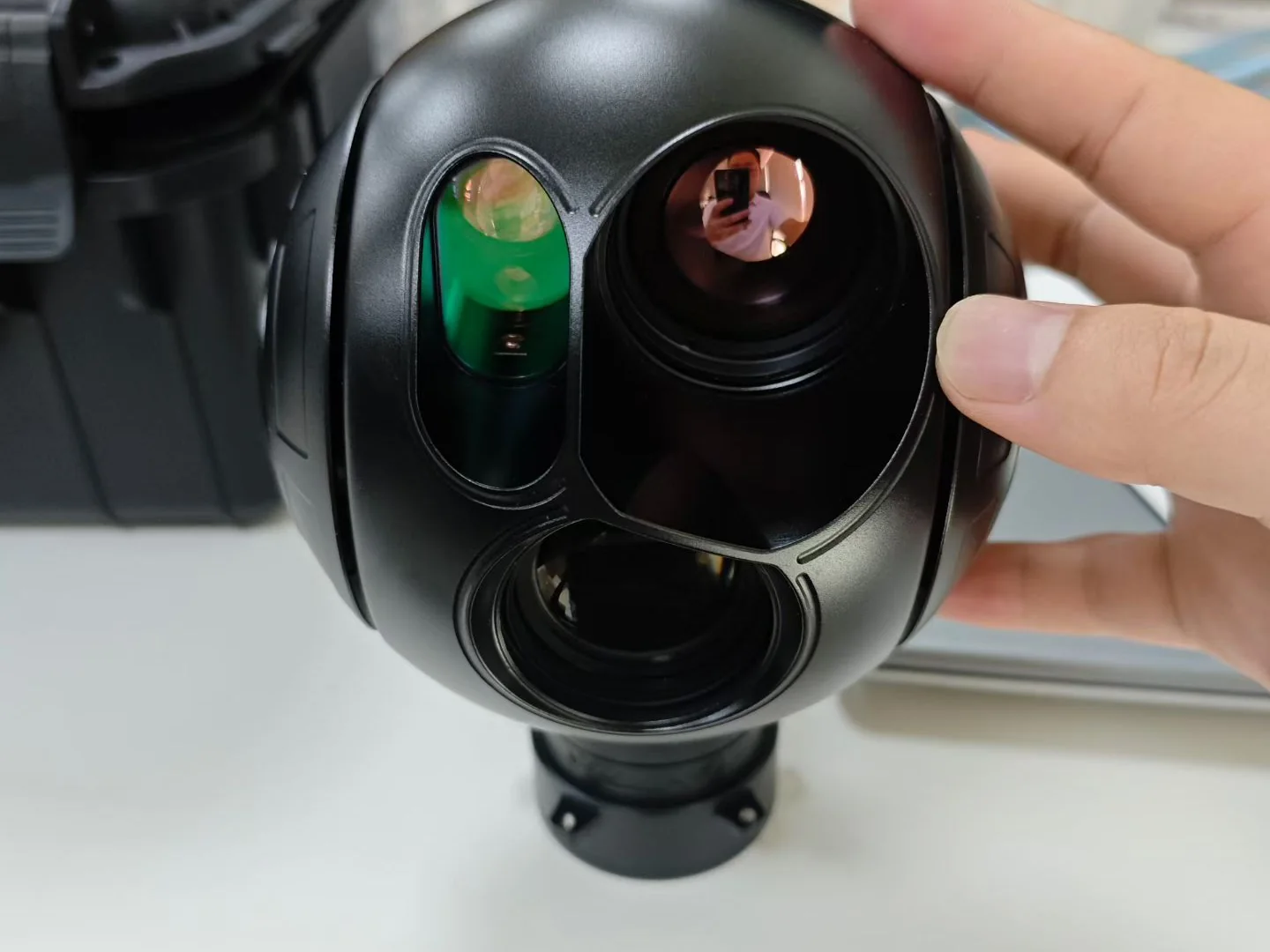
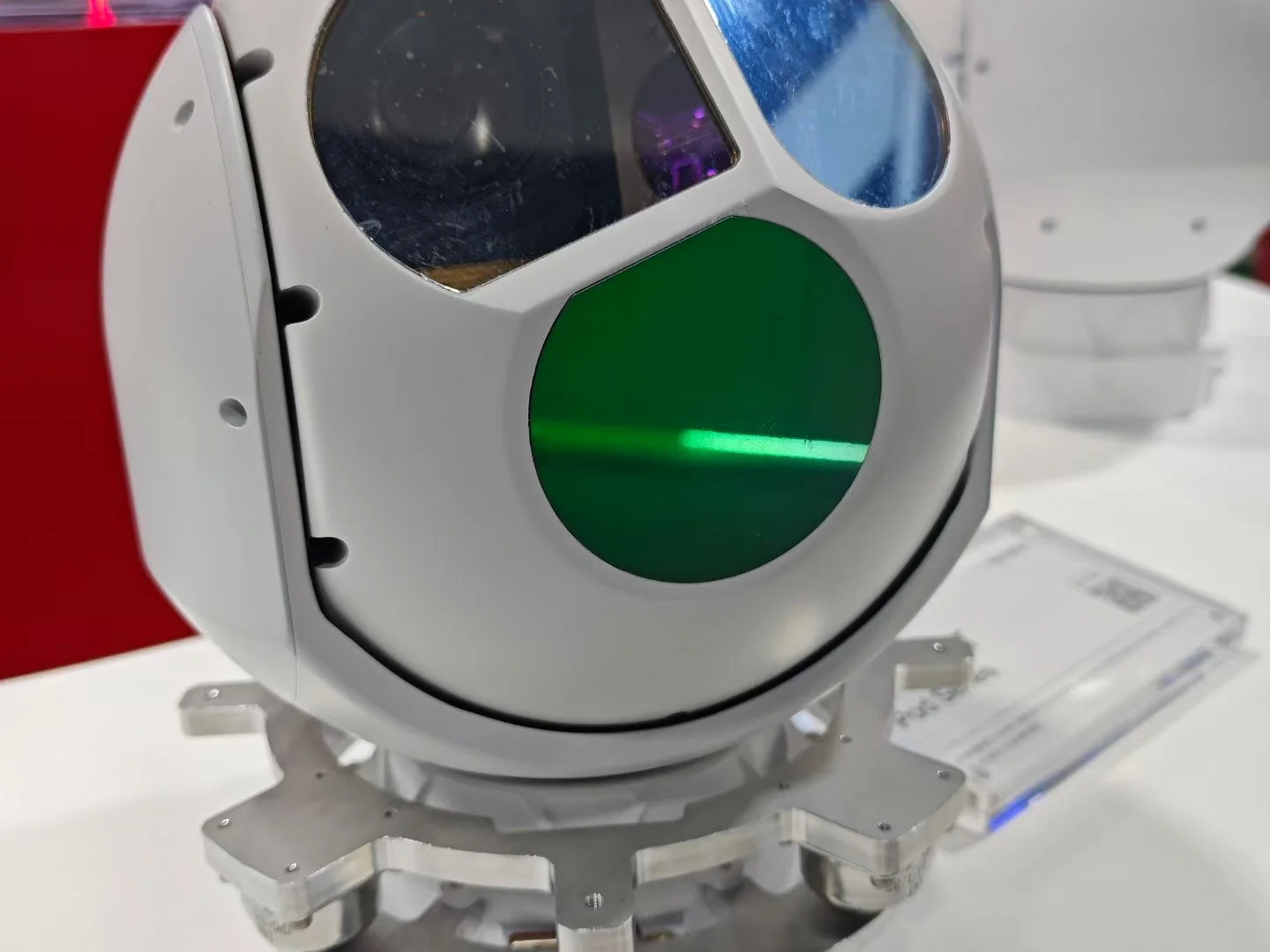
Three families. The HQ gimbal camera series covers two- and three-axis stabilised heads from 240 g to 1.5 kg, in visible-light, thermal and EO/IR configurations, some with a laser rangefinder. The XQ EO/IR camera pod series covers 1.6 kg to 10 kg long-range pods with continuous-zoom thermal channels and rangefinders up to 15 km. The SQ laser designator pod series adds a laser designator for target marking on heads from 2.5 kg to 22 kg.
How do I choose between a visible-light, thermal and EO/IR payload?
Start from the information the operator needs and the conditions they work in. Visible light gives recognition and detail in daylight. Thermal gives detection at night and through smoke, haze and light camouflage. EO/IR gives both, boresighted to each other, so one target sits in the same place in either channel. A laser rangefinder adds a distance measurement that turns video into targeting data. If you describe the task, the lighting conditions and the viewing distance, we will compare the options that fit.
When do I need two-axis rather than three-axis stabilisation?
Two-axis heads hold azimuth and elevation and suit lighter platforms with limited payload capacity. Three-axis heads add roll compensation, which matters when the aircraft yaws or banks while the operator is holding a target at long range. The heavier the sensor package and the longer the focal length, the more that third axis earns its weight.
How large a payload can my aircraft carry?
That is a platform question as much as a payload question — it depends on the payload capacity, the mounting space and the available power. The weight of each configuration is published on its model page, and the mounting, cable routing and vibration isolation are agreed with the platform integrator so the unit drops into an existing interface.
What detection and identification distances can I expect?
Every model page lists detection ranges for a person and a vehicle, per channel, measured under defined conditions. Detection, recognition and identification are three different distances, and the published figures are the detection ranges. Tell us the distance at which you need to identify, not just detect, and we will point you at the configuration that reaches it.
The numbers, and what they mean in the air.
How accurate is the stabilisation?
Line-of-sight error is held to 100 µrad or better on the stabilised heads, measured at the 2.3° field of view by logging the azimuth and elevation error reported by the host computer. The figure is recorded on the inspection sheet for each unit rather than copied from a generic datasheet.
What is the difference between an uncooled and a cooled thermal detector?
Uncooled detectors are smaller, lighter and need less power, which suits heads where weight is the binding constraint. Cooled detectors deliver a better signal-to-noise ratio and longer detection ranges for the same aperture, at the cost of mass, power and a cool-down time. The 640 × 512 and 1280 × 1024 configurations on these pages are matched to the size of the head they are fitted to.
How far does the laser rangefinder reach?
The range covers 1.5 km to 15 km depending on the model, at eye-safe 1535 nm, with an accuracy of about ± 1 m. The rangefinder is boresighted to the visible and thermal channels so the distance applies to the target the operator is looking at.
What video and control interfaces are used?
Video is Ethernet in H.264 or H.265. Gimbal control runs over RS-422, RS-232 or TTL, and SBUS and MAVLink are supported on the aircraft side on the models we confirm. Power input is 11–28 VDC. The shared interface across the range means one aircraft-side integration covers a small two-axis head and a larger turret alike – confirm the interface set for the exact model against its datasheet and pinout drawing.
Does the payload need a data link to detect and track?
No. Detection and tracking run on the payload itself, so target lock and follow continue even if the link degrades or the operator stops controlling the gimbal. Lock and follow works on up to 20 targets at once, with re-acquisition logic that recovers a target after it passes behind an obstruction.
What environmental conditions can the payload work in?
Ask us for the specification sheet for the configuration you are considering: temperature range, sealing and vibration are stated per model rather than as a family-wide claim, and the figures are confirmed against the configuration you order.
Getting it onto the aircraft.
How long does integration take?
Integrators usually start on the bench while the first unit is in transit, because the control protocol document is supplied with the first unit. Because the payloads share one control protocol, video format, recording behaviour, input voltage, temperature range and sealing across the families, an integration done once carries over to the next size of head.
Is the mechanical interface fixed, or can it be adapted?
It can be adapted. Mounting, cable routing and vibration isolation are agreed with the platform integrator, and where a standard interface does not fit, the mechanical interface can be modified as part of an OEM configuration.
Can you change the focal length, sensor or video output?
Yes. Because optics, servo hardware and firmware are developed in house, focal length, video output, control protocol and coating can be adjusted to the aircraft. Custom work starts with a feasibility review against your platform constraints.
Do you provide a simulator or bench-test equipment?
The gimbal can be driven and the video verified on the bench without flying, which is how the integration is tested before the first flight. Show us your test-bench setup and we will tell you exactly what is needed to reproduce our own bench checks on your side.
Can the payload be controlled from our existing ground station?
Yes. The control protocol is documented and uses standard serial interfaces, so it can be built into your ground station rather than requiring ours. Tell us which ground station you use and we will confirm the interface details.
What arrives in the box.
Is every unit tested before it ships?
Yes. Each finished payload is inspected against a written record covering appearance and identity, firmware version, communications, video, every operating mode, both imaging channels, recording, detection and tracking, search envelope, stabilisation accuracy, rangefinder alignment, boresight and power consumption. The full inspection criteria are published here.
What documentation is supplied with a unit?
A calibration and test report and the completed inspection record travel with the unit. The control protocol document is supplied with the first unit. CE and RoHS documentation and an export compliance statement are available on request.
Can we see a sample inspection record before ordering?
Yes. A redacted sample of the finished-unit inspection record can be shared during the evaluation stage so your engineering team can see which values are measured before you commit to a configuration.
Who manufactures the payload?
We do. Optics alignment, gimbal mechanics, servo hardware, stabilisation firmware and the AI tracking module are developed in house, and assembly, calibration and environmental test happen on our own line. See the manufacturing route here.
Samples, quantities and shipping.
How do I ask for a quotation?
Send the configuration or the requirement, together with the platform, the intended evaluation, the expected quantity and the schedule, to info@hitsuav.com or through the contact page. A finished specification is not required; a description of the mission and the platform is enough to start. Contact HITS here.
What is the lead time?
Stock configurations ship from inventory, so the lead time is transit to your destination rather than a production slot. Custom and built-to-order heads are scheduled once the configuration is fixed: the evaluation unit goes ahead of the production batch, and the date is agreed at the point of order.
Which payment and trade terms do you work with?
Payment is by T/T (bank transfer), with the schedule stated on the quotation. Trade terms, the shipping method and the documentation required for the destination market are set out for your order. If your procurement process requires different terms, tell us up front so they can be reflected in the offer.
What warranty comes with a payload?
One year from delivery, with support from our own engineers online for the whole period. Alignment, calibration and inspection records are filed against the unit serial number, so a support case starts from the record rather than from a description of the fault, and it runs through the engineers who built and calibrated the head.
Can you ship to my country, and what documents are needed?
This depends on the export control rules that apply to the item and to the destination. We confirm what is required for your market before the order is placed and provide an export compliance statement on request. Imaging payloads of this class are civil and dual-use items, and the applicable documentation is prepared as part of the shipment.
Do you work with distributors and system integrators?
Yes. HITS supplies UAV manufacturers, system integrators, distributors and professional project teams. Distributors usually start from model differences and available configurations; integrators usually start from the control interface and the mounting. Tell us which you are, and we will start in the right place.
Still deciding which payload fits?
Send the platform, the mission and the viewing distance. We will come back with the configurations that fit and the details that need confirming.