





Electro Optical Sensor Guide: Formats, Pixels and Lenses
Format, pixel pitch, shutter and lens, in the order they matter
An eo sensor is usually described by its resolution, which is the least useful single number about it. Format, pixel pitch, shutter behaviour and quantum efficiency decide what the sensor can do; the lens decides which of those properties the aircraft can actually use.
- 1/2.3 to 4/3 formats
- 2 to 5 µm pitch
- Global or rolling shutter
- Lens matching
An eo sensor turns light into charge and then into numbers. How many pixels, how large each one is and how the charge is read out determine everything downstream: sensitivity in low light, dynamic range in a scene with deep shadows, and whether a fast-moving object at 30x zoom will smear. An electro optical sensor with a smaller pixel count but a larger pitch often outperforms a denser one on a dark night.
The vocabulary is inconsistent across datasheets, which is why an eo sensor for a uav payload is best compared on first principles: pixel pitch in micrometres, quantum efficiency, read noise, shutter type and the lens that will sit in front of it. Written with spaces, as e o sensor, or hyphenated as electro-optical sensors, it is the same device, and the same four numbers decide the result.
The four properties that decide performance
- Format and pixel count
From 1920 x 1080 through 4K to 8000 x 6000. More pixels mean more detail, but only if the lens can resolve them and the stand-off distance puts them on the object.
- Pixel pitch
Typically 2 to 5 micrometres. Larger pixels collect more light and produce less noise; smaller pixels allow more resolution in the same optical format.
- Shutter behaviour
Global shutter reads every pixel at the same instant, so a fast-moving object does not skew. Rolling shutter is cheaper and lower noise but distorts motion at high zoom.
- Sensitivity and noise
Quantum efficiency and read noise set low-light behaviour more than megapixels do. A sensor with larger pixels at 2 megapixels can outperform a 12 megapixel sensor after dark.
- Lens matching
Instantaneous field of view is pixel pitch divided by focal length. Match the sensor to the lens so the optics, not the detector, is the limit at the stand-off distance the mission uses.
- Dynamic range
Scenes over water, snow or hot ground exceed the range of a small sensor. Wide dynamic range keeps detail in both the bright and dark parts of the frame.
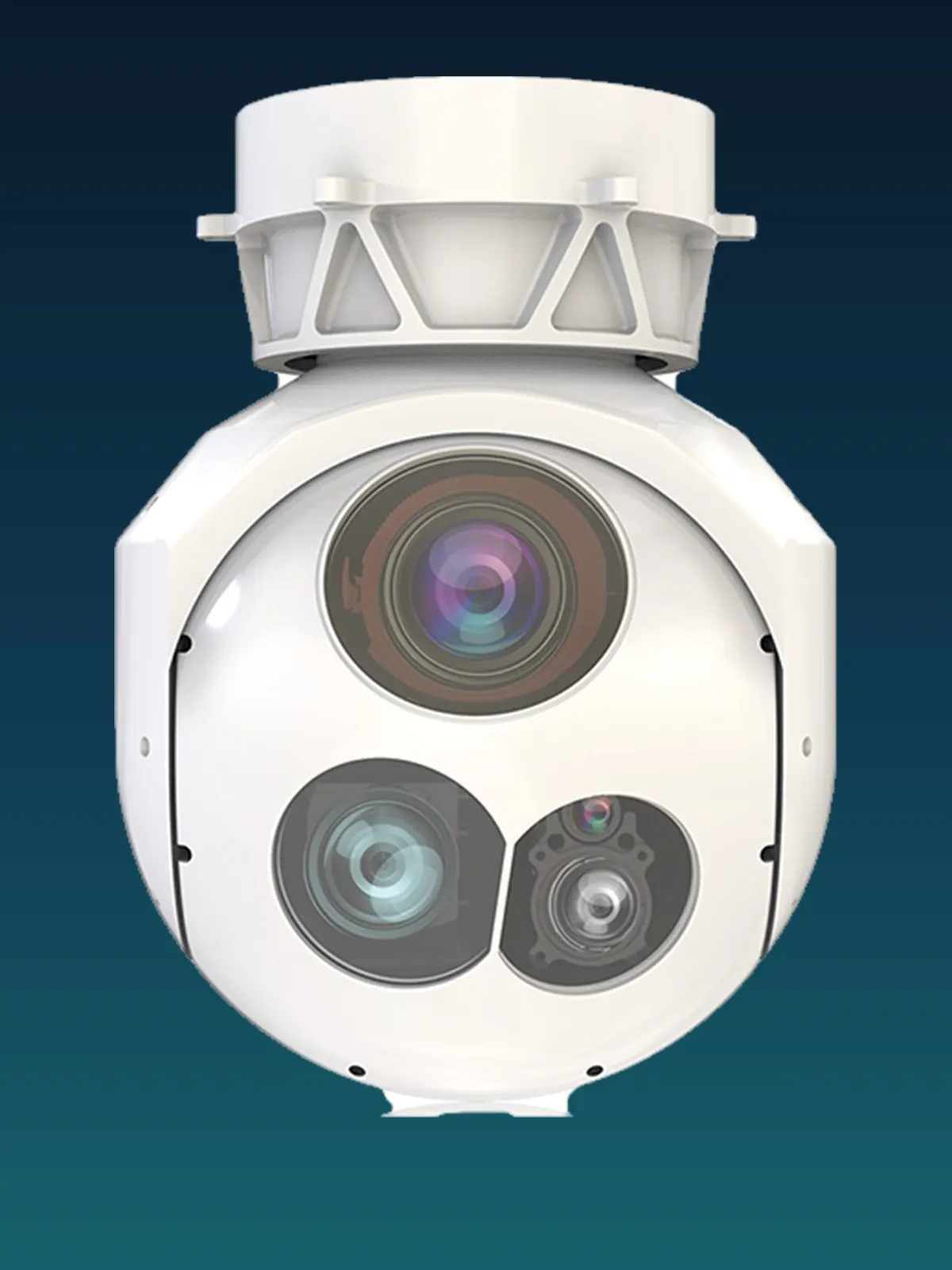
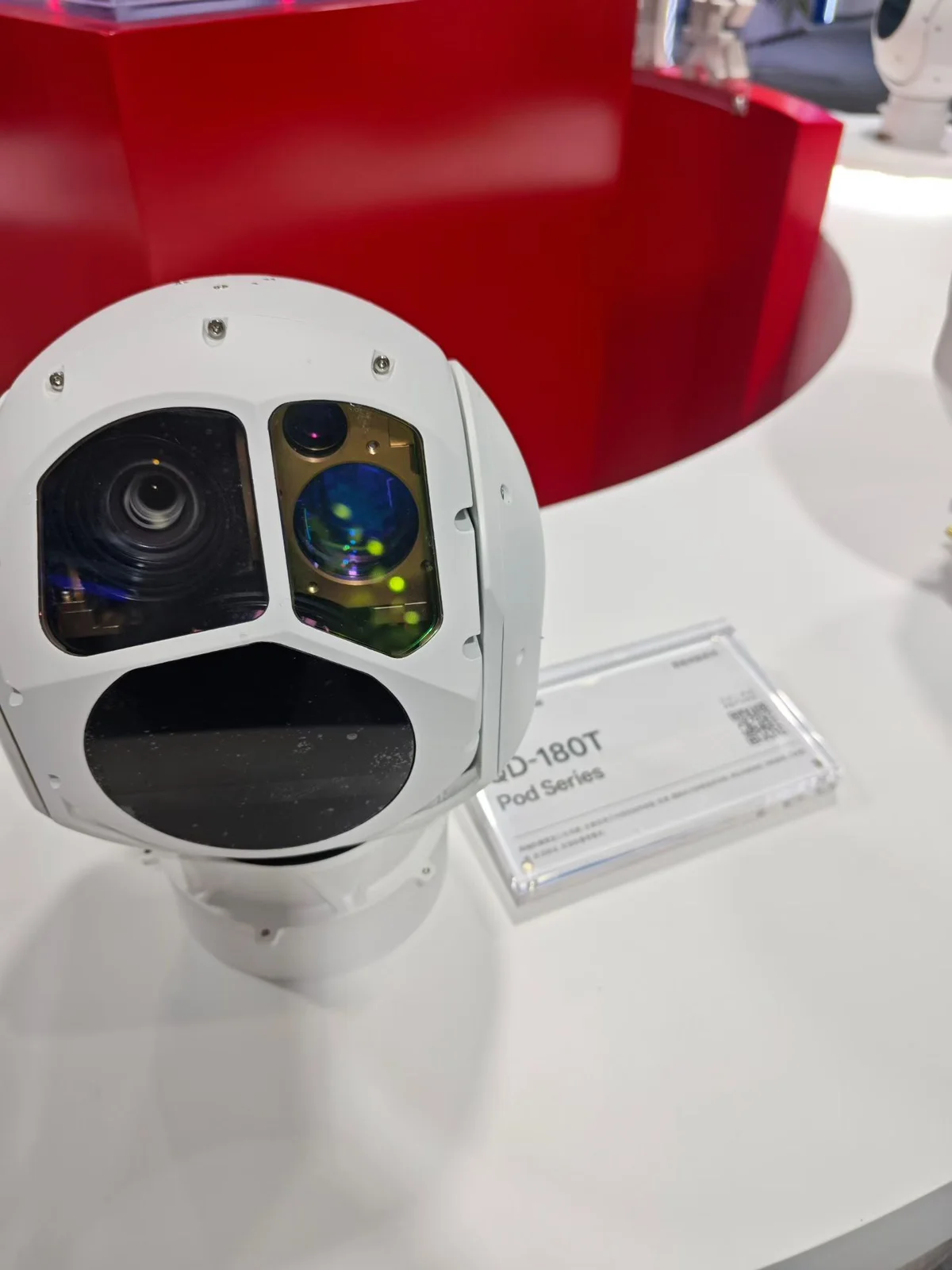
Common formats for airborne EO channels
Indicative properties; the exact figures depend on the sensor family.
| Format | Typical resolution | Pixel pitch | Strength | Used for |
|---|---|---|---|---|
| 1/2.3 in | 1920 x 1080 to 4K | 1.4 – 2 µm | Small, light, cheap | Short-focal-length fixed channels |
| 1/1.8 in | 1920 x 1080 | 2 – 3 µm | Better low light than 1/2.3 in | Zoom channels on 1 kg class heads |
| 4/3 in | 8000 x 6000 class | 3.3 – 4 µm | High resolution with good light gathering | Inspection stills and imaging priority |
| APS-C class | Up to 48 MP | 3.7 – 4.3 µm | Maximum detail in one exposure | Survey and inspection work with a large mount |
Three visible channels in production
An 8000 x 6000 inspection channel and two 1920 x 1080 zoom channels.
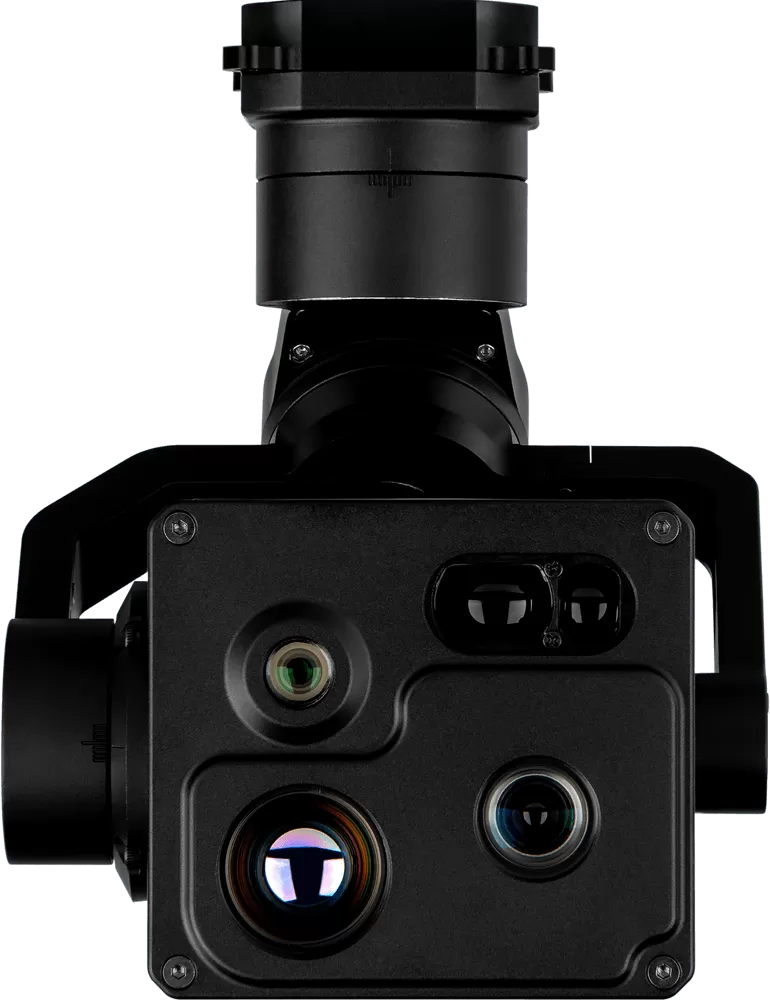
3-axis · EO + IR + LRF
HQ-95Q
Four optical channels and a quick-release mount on the lightest three-axis head we build.
- Visible
- Dual 8000 × 6000, 9.5 mm + continuous zoom 15.3 – 49.7 mm
- Thermal
- 640 × 512, 19 mm fixed
- Laser
- 5 m – 1.5 km (± 1 m)
- Weight
- ≤400 g
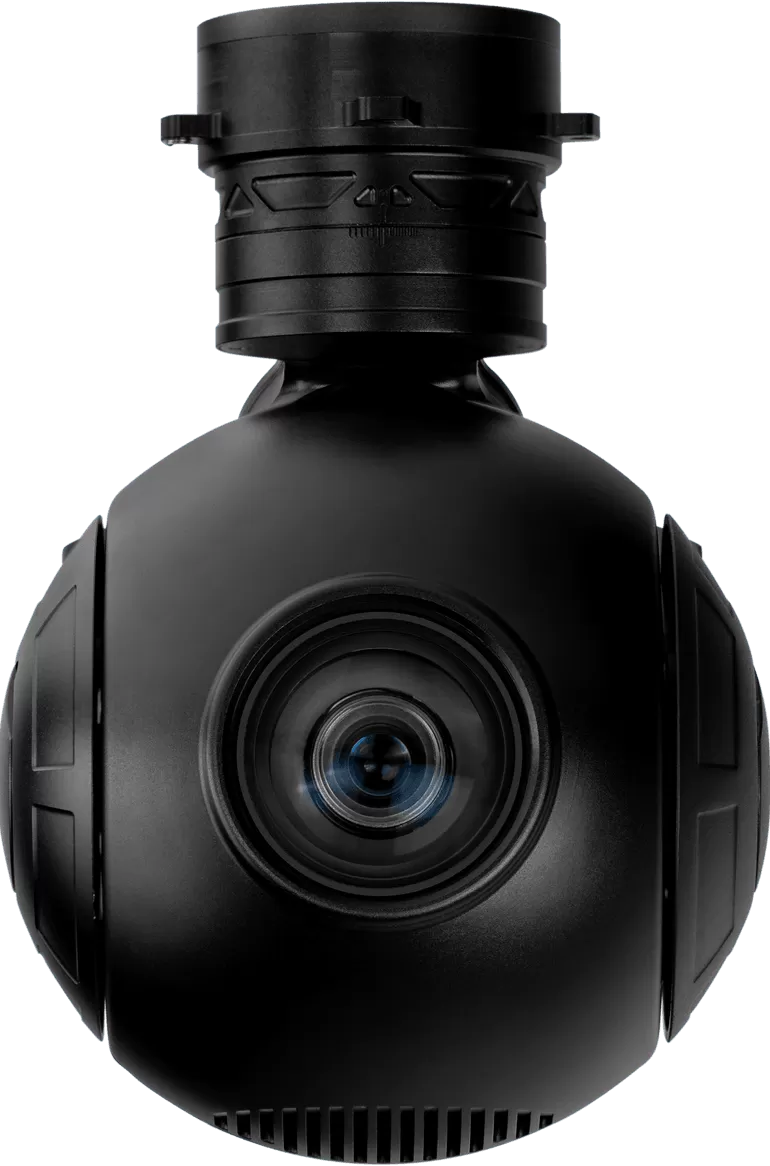
3-axis · EO
HQ-115S
A 40x daylight optic alone, for daylight-only surveillance where the weight budget rules out a thermal channel.
- Visible
- 1920 × 1080, 40x zoom 4.25 – 170 mm
- Thermal
- —
- Laser
- —
- Weight
- ≤1 kg
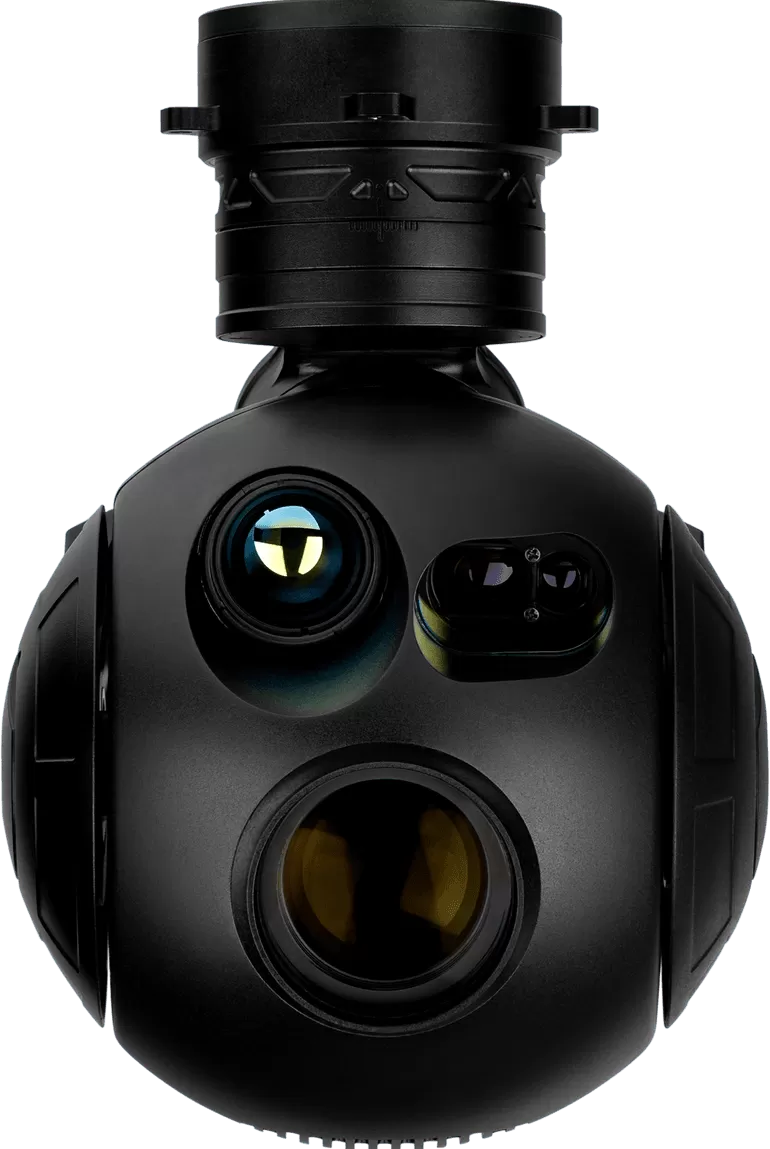
3-axis · EO + IR + LRF
HQ-115T
The one-kilogram workhorse: 30x zoom, thermal imaging and a 1.5 km rangefinder.
- Visible
- 1920 × 1080, 30x zoom 4.3 – 129 mm
- Thermal
- 640 × 512, 25 mm fixed
- Laser
- 5 m – 1.5 km (± 1 m)
- Weight
- ≤1 kg
Compare the range
| Model | Axes | Configuration | Visible camera | Thermal imager | Laser rangefinder | Weight |
|---|---|---|---|---|---|---|
| HQ-95Q | 3-axis | EO + IR + LRF | Dual 8000 × 6000, 9.5 mm + continuous zoom 15.3 – 49.7 mm | 640 × 512, 19 mm fixed | 5 m – 1.5 km (± 1 m) | ≤400 g |
| HQ-115S | 3-axis | EO | 1920 × 1080, 40x zoom 4.25 – 170 mm | — | — | ≤1 kg |
| HQ-115T | 3-axis | EO + IR + LRF | 1920 × 1080, 30x zoom 4.3 – 129 mm | 640 × 512, 25 mm fixed | 5 m – 1.5 km (± 1 m) | ≤1 kg |
Choosing a sensor for a payload
Work backwards from the pixel count on target
Decide how many pixels the object needs, then how wide it is, then the stand-off distance determines the instantaneous field of view, and that determines the focal length and the sensor combination. Resolution in isolation does not enter the calculation.
Questions a datasheet should answer
- Pixel pitch, not just pixel count.
- Shutter type, especially for zoom channels on a moving aircraft.
- Quantum efficiency at the wavelength the mission uses, not the peak figure.
- Read noise and dynamic range, which decide the low-light end of the envelope.
- Whether the sensor is available in a version without an infrared cut filter, should the payload also need the near-infrared band.
Where sensors are not the problem
On most airborne payloads the eo sensors are not the limiting factor. Optics, stabilisation and atmospheric transmission usually degrade the image first, which is why a modest sensor on a good mount and a matched lens produces better results than a dense sensor on a mediocre one.
Related pages
Sensors are one level in the system chain.
- Electro-optical systemsHow the sensor becomes a payload.Read more →
- EO/IR sensorsPairing the visible channel with thermal.Read more →
- EO camerasVisible channels from 2K to 48 MP.Read more →
Engineering detail
Global shutter at long focal length
At 30x zoom a moving object crosses the frame quickly, and a rolling shutter reads the top and bottom of the frame at different times. The result is a leaning, smeared object that tracking algorithms handle poorly. Global shutter costs a little noise performance and removes the problem.
Why the lens usually limits first
A lens has to resolve detail onto a pixel of a given size. If the optics are not diffraction limited and the pixel is small, the extra megapixels record blur rather than detail. Matching instantaneous field of view across the zoom range is the discipline that prevents this.
Low light is a pitch problem
Two sensors with the same optical format, one at 2 megapixels and one at 12, differ in pixel pitch by more than a factor of two in each direction. The larger pitch collects more light per pixel, which is why low-light channels are often lower resolution by choice.
Designed and manufactured by HITS
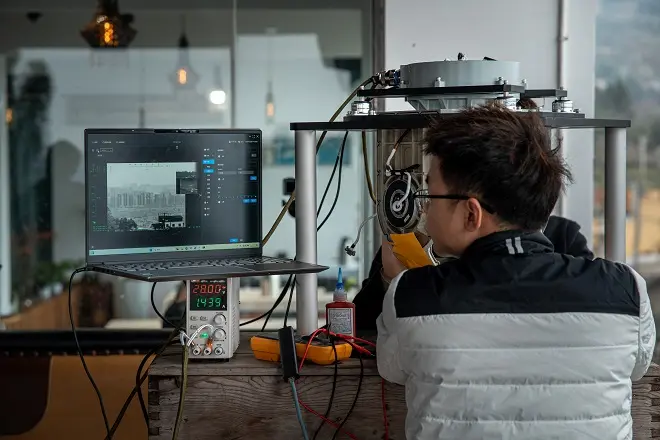
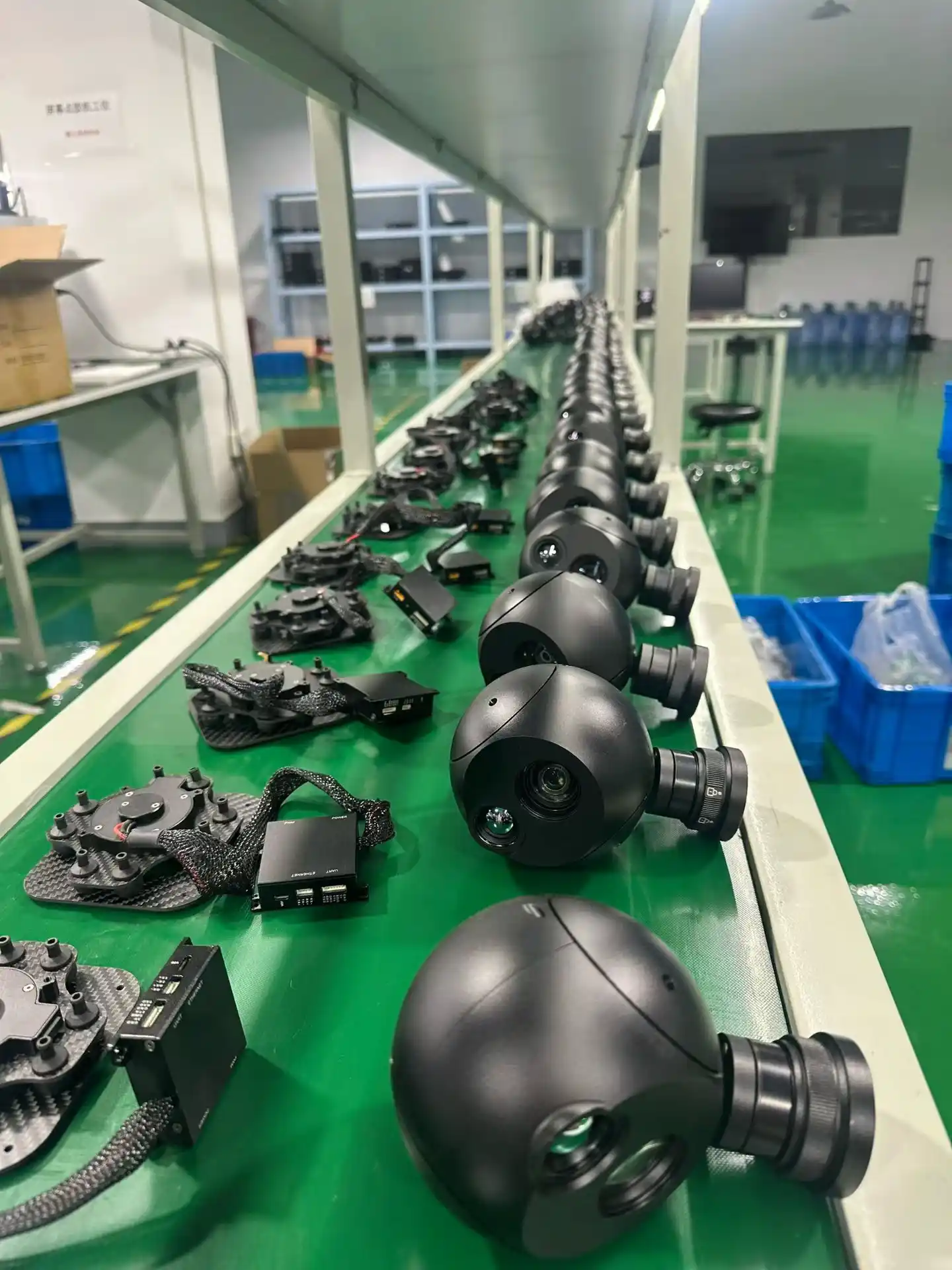
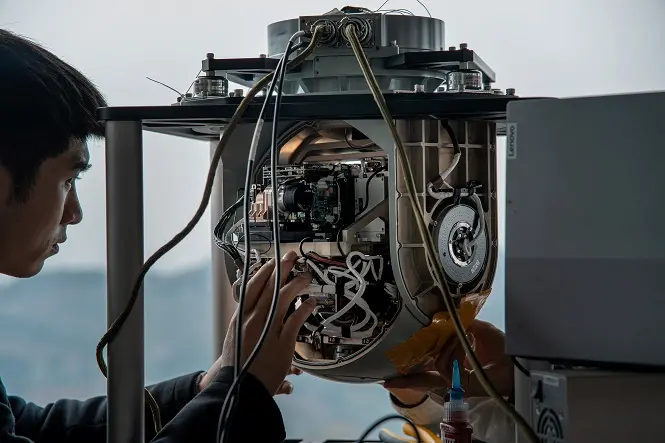
Optics, servo hardware, stabilisation firmware and the AI tracking module are developed in house, and every unit is assembled, calibrated and environmentally tested on our own line before it ships.

Request information or a quotation
Tell us the stand-off distance and the object size and we will work back to the optics. Contact us with your requirements.