





Camera on Helicopter: Stabilised Imaging for Rotary Wing
Stabilised imaging for patrol, utility and hoist operations
A helicopter gives a payload hours of endurance, a 28 VDC bus and space for a turret that a multirotor could never lift.
- 28 VDC
- Vibration tolerant
- 30x – 55x zoom
- Thermal imaging
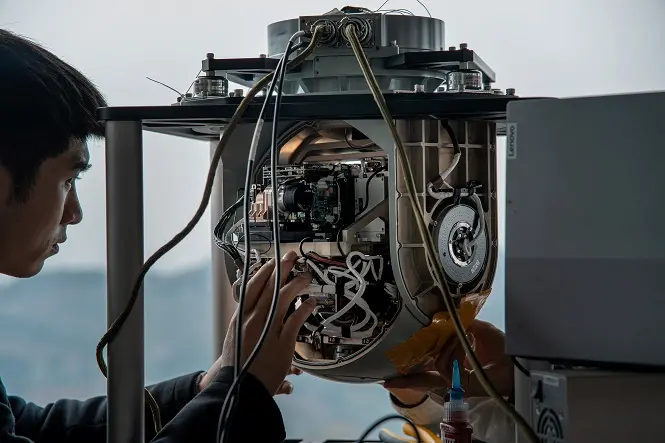
A helicopter camera is chosen on three practical grounds: what the aircraft can carry, what the mission needs to see, and what the airframe does to the line of sight. The pod class range from 2.5 kg to 22 kg covers from a light patrol machine to a large utility helicopter, and all of it runs on the helicopter 28 VDC bus with the same control and video interfaces used across the range.
A camera in helicopter operations is usually part of a crewed task rather than a solo one, which changes the requirement. The payload feeds an operator in the cabin, the imagery is often recorded for later, and a camera on helicopter patrol or utility work frequently has to hold a point on the ground while the aircraft orbits, hovers or manoeuvres at low speed over a confined area.
What rotary wing changes
- Vibration and rotor harmonics
Rotor vibration arrives at frequencies and amplitudes a multirotor does not produce. Direct-drive axes with high-resolution encoding hold the line of sight without the backlash a geared mount would introduce.
- 28 VDC and aircraft power
Every model in the range runs on 11 – 28 VDC, which matches the helicopter bus without an additional converter.
- Two-axis turrets that carry weight
The XQ and SQ series run from 1.6 kg to 22 kg with continuous thermal zoom and rangefinders from 5 km to 15 km.
- Cabin and crew interfaces
Ethernet video with RS-422, RS-232, TTL, SBUS and MAVLink control, plus onboard recording for the sortie record.
- Holding a point while hovering
Low-speed hovering over a confined area is the hardest regime for a stabilised mount, because the airframe is moving slowly in several axes at once.
- Hoist and lift operations
A camera on a hoist or lift task has to watch the load and the ground simultaneously, which is a framing problem rather than a reach problem.
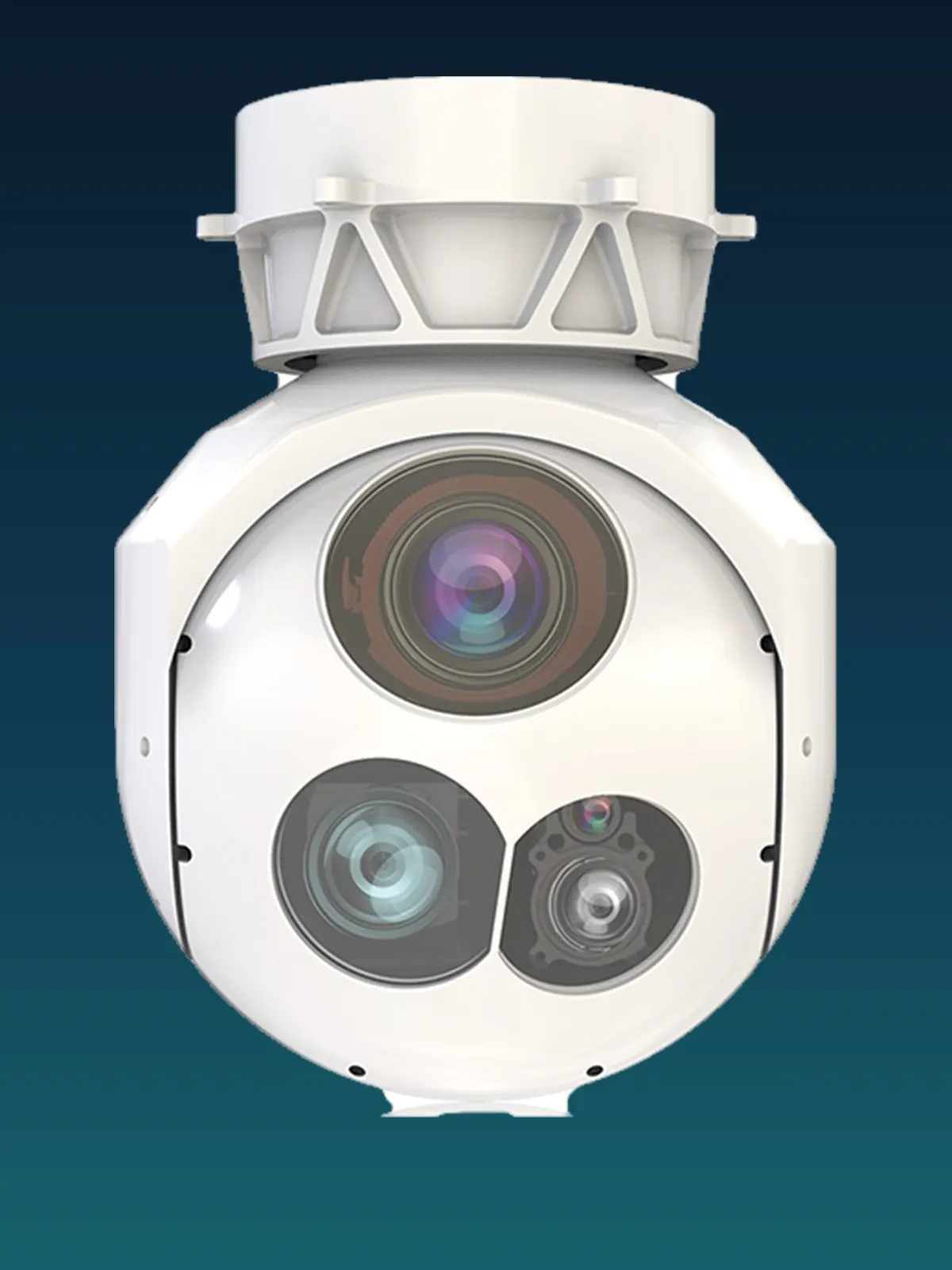
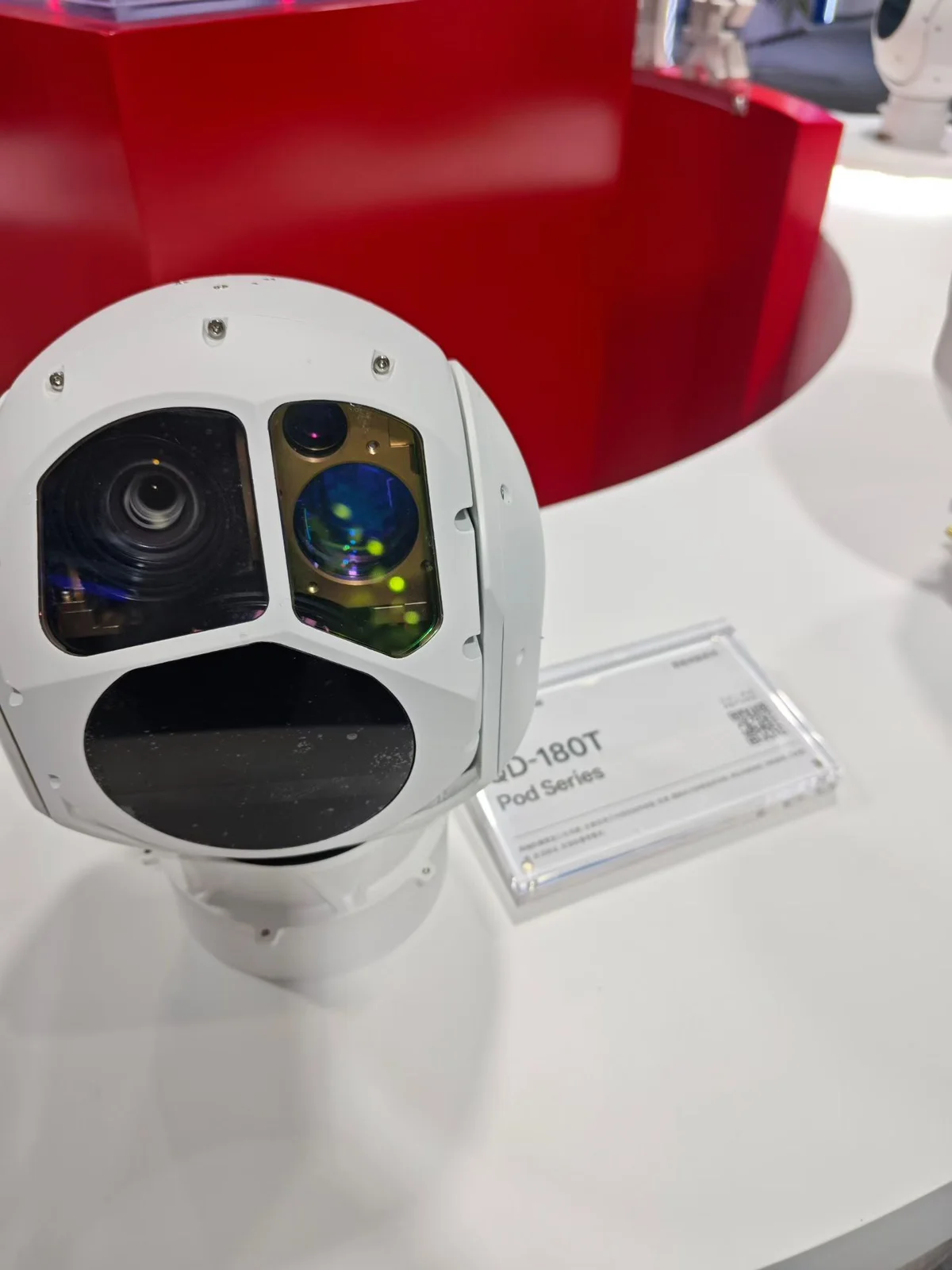
Rotary wing payloads by role
From a light patrol machine to a large utility helicopter.
| Role | Suggested model | Visible | Thermal | Ranging | Weight |
|---|---|---|---|---|---|
| Light patrol | XQ-125T | 1920 x 1080, 30x zoom | 640 x 512, 35 mm | 3 km | ≤ 1.6 kg |
| General patrol and response | XQ-155T | 1920 x 1080, 30x zoom | 640 x 512, 55 mm | 5 km | ≤ 2.2 kg |
| Patrol with high-resolution imaging | XQ-180T | 3840 x 2160, 17.5x zoom | 1280 x 1024, 75 mm | 6 km | ≤ 4.1 kg |
| Long-endurance ISR | XQ-254T | 1920 x 1080, 30x zoom | 640 x 512, 40 – 220 mm | 15 km | ≤ 10 kg |
| Targeting and designation | SQ-290T | 1920 x 1080, 13x zoom | 640 x 512, 15 – 300 mm | 10 km | ≤ 15 kg |
| Heavy utility and long range | SQ-330Q | 1920 x 1080, 30x zoom | Dual 640 x 512, 300 mm + 15 – 330 mm | ≥ 15 km | ≤ 22 kg |
Four helicopter payloads
Two-axis turrets from 1.6 kg to 10 kg, all on 28 VDC with continuous thermal zoom on the larger units.
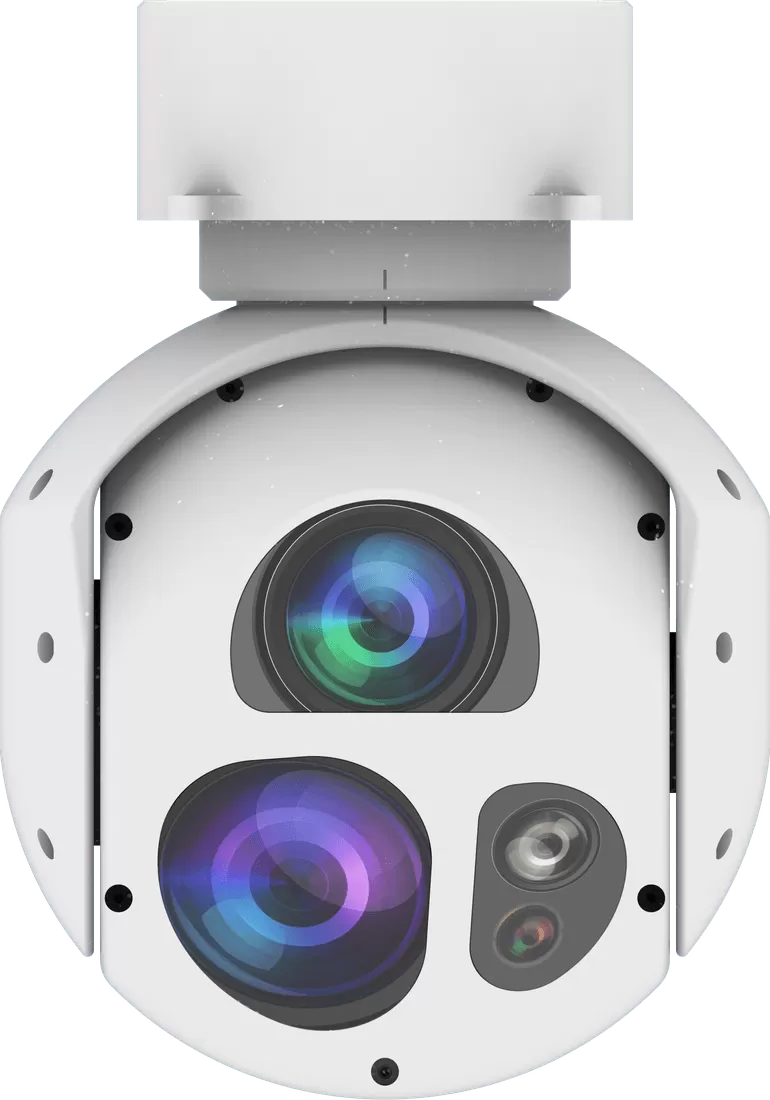
XQ · 2-axis · EO + IR + LRF
XQ-125T
The smallest pod in the XQ range: 30x zoom, a 35 mm thermal channel and 3 km ranging at 1.6 kg.
- Visible
- 1920 × 1080, 30x zoom 4.3 – 129 mm
- Thermal
- 640 × 512, 35 mm fixed
- Laser
- 30 m – 3 km (± 1 m)
- Weight
- ≤1.6 kg
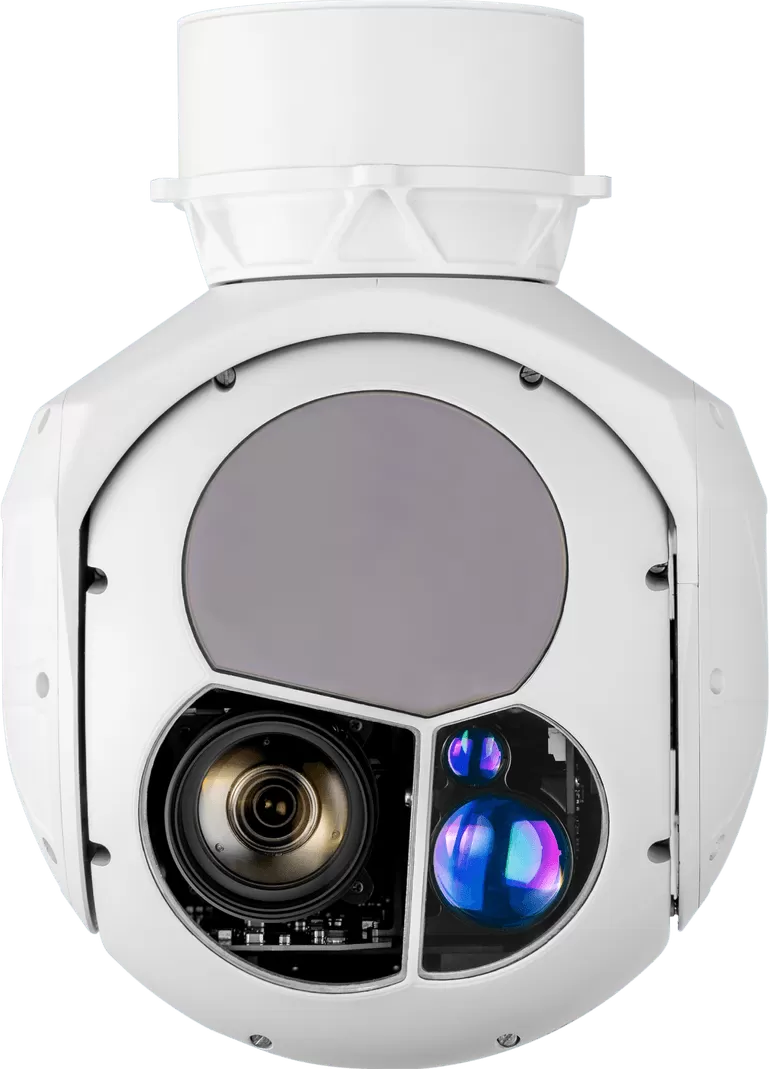
XQ · 2-axis · EO + IR + LRF
XQ-155T
A 55 mm thermal lens and 5 km ranging for platforms that can carry 2.2 kg on the hardpoint.
- Visible
- 1920 × 1080, 30x zoom 4.3 – 129 mm
- Thermal
- 640 × 512, 55 mm fixed
- Laser
- 50 m – 5 km (± 1 m)
- Weight
- ≤2.2 kg
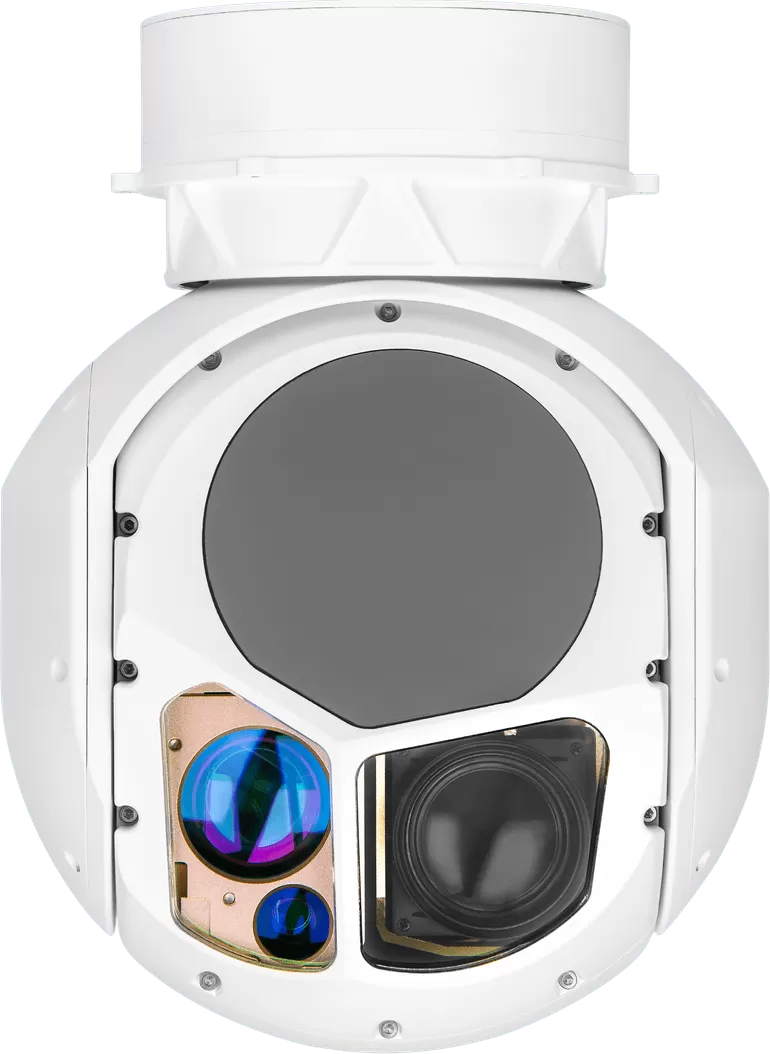
XQ · 2-axis · EO + IR + LRF
XQ-180T
4K daylight imaging at 3840 × 2160 with 17.5x zoom and 6 km ranging.
- Visible
- 3840 × 2160, 17.5x zoom 6.8 – 120 mm
- Thermal
- 1280 × 1024, 75 mm fixed
- Laser
- 50 m – 6 km (± 1 m)
- Weight
- ≤4.1 kg
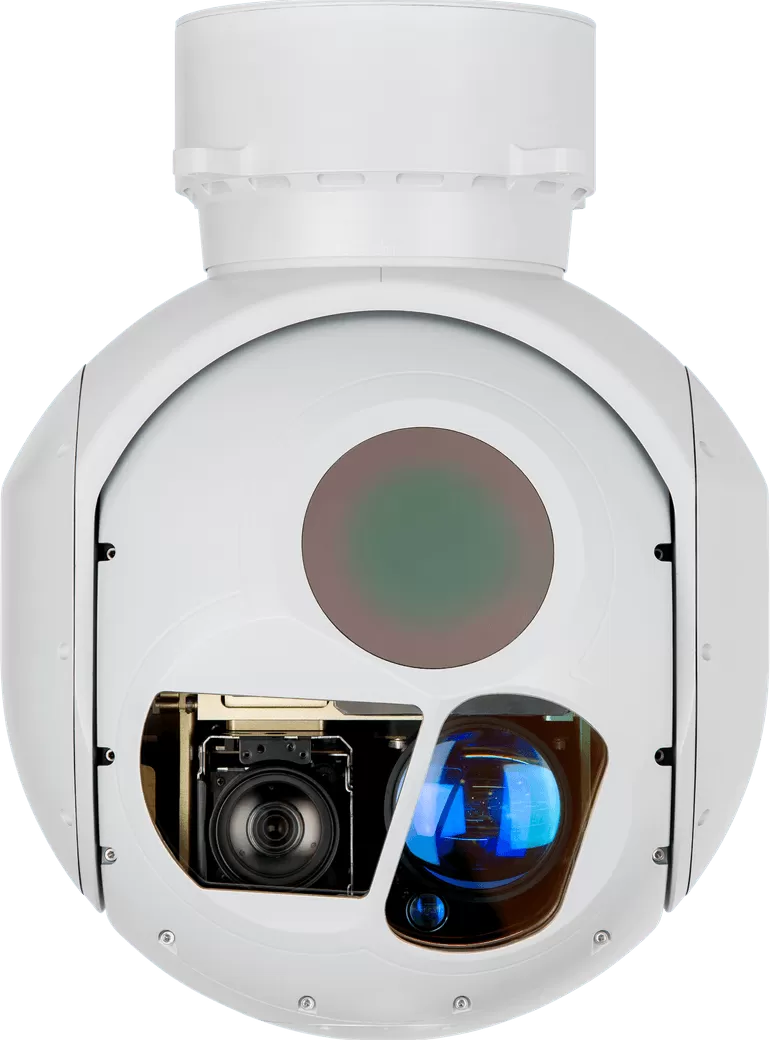
XQ · 2-axis · EO + IR + LRF
XQ-254T
The long-range pod: 15 km ranging and a 254 mm turret for maritime and border patrol aircraft.
- Visible
- 1920 × 1080, 30x zoom 4.3 – 129 mm
- Thermal
- 640 × 512, continuous zoom 40 – 220 mm
- Laser
- 100 m – 15 km (± 1 m)
- Weight
- ≤10 kg
Compare the range
| Model | Series | Axes | Configuration | Visible camera | Thermal imager | Laser rangefinder | Weight |
|---|---|---|---|---|---|---|---|
| XQ-125T | XQ series | 2-axis | EO + IR + LRF | 1920 × 1080, 30x zoom 4.3 – 129 mm | 640 × 512, 35 mm fixed | 30 m – 3 km (± 1 m) | ≤1.6 kg |
| XQ-155T | XQ series | 2-axis | EO + IR + LRF | 1920 × 1080, 30x zoom 4.3 – 129 mm | 640 × 512, 55 mm fixed | 50 m – 5 km (± 1 m) | ≤2.2 kg |
| XQ-180T | XQ series | 2-axis | EO + IR + LRF | 3840 × 2160, 17.5x zoom 6.8 – 120 mm | 1280 × 1024, 75 mm fixed | 50 m – 6 km (± 1 m) | ≤4.1 kg |
| XQ-254T | XQ series | 2-axis | EO + IR + LRF | 1920 × 1080, 30x zoom 4.3 – 129 mm | 640 × 512, continuous zoom 40 – 220 mm | 100 m – 15 km (± 1 m) | ≤10 kg |
Camera on helicopter: hoist, lift and patrol
Hoist and lift work is a framing problem
During a hoist or lift the crew needs the load, the ground crew and the surrounding structure in one picture. A helicopter hoist camera is chosen for wide field and a stable horizon rather than for reach, and a helicopter lift camera is judged on the same terms. That calls for a wide field and a stable horizon rather than long reach, and it is one of the few roles where a 13x zoom with a wide thermal channel suits better than a 55x lens.
Patrol is a reach problem
- 30x or better on the visible channel, with a boresighted thermal channel for the night half of the shift.
- A rangefinder that geolocates what the crew is looking at, for reporting rather than for imagery.
- Onboard recording, because a patrol flight that produces no record has produced no evidence.
- Tracking, so the crew can watch an object while the pilot flies the aircraft.
Sharing the picture
Helicopter missions usually involve more than the crew: command posts, ground teams and sometimes a second aircraft. Ethernet video and an open control protocol make that sharing straightforward rather than bespoke.
Related pages
Rotary wing payloads come from the pod and designation classes.
- Drone helicopter camerasThe same architecture on unmanned rotary aircraft.Read more →
- EO/IR pod systemsEight turrets from 1.6 kg to 10 kg.Read more →
- Laser designator pods1064 nm designation for targeting roles.Read more →
- Long range imagingWhat decides identification range.Read more →
Engineering detail
Why helicopters use the pod class
A helicopter can lift a turret that a UAV cannot, and the larger apertures and longer baselines in the pod class are what deliver 55x zoom, 1280 x 1024 thermal imaging and 15 km ranging. The same turrets also appear on large fixed-wing aircraft and, at the light end, on unmanned rotary platforms.
Keeping the horizon steady
In a helicopter, slow translation over a confined area stresses the mount differently from a UAV in forward flight. Two-axis turrets with direct-drive axes and accurate encoding hold the horizon through hover, and the difference shows up immediately in the cabin display.
One interface across the range
Because the control protocol and video pipeline do not change between a 1.6 kg turret and a 22 kg turret, a fleet can carry different payloads on different aircraft and the crew interface stays the same.
Designed and manufactured by HITS
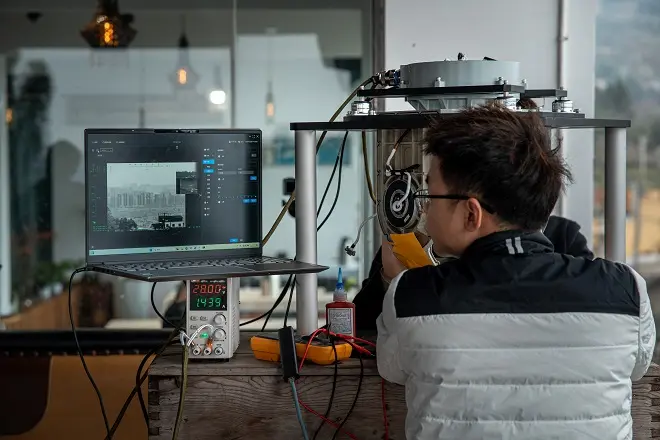
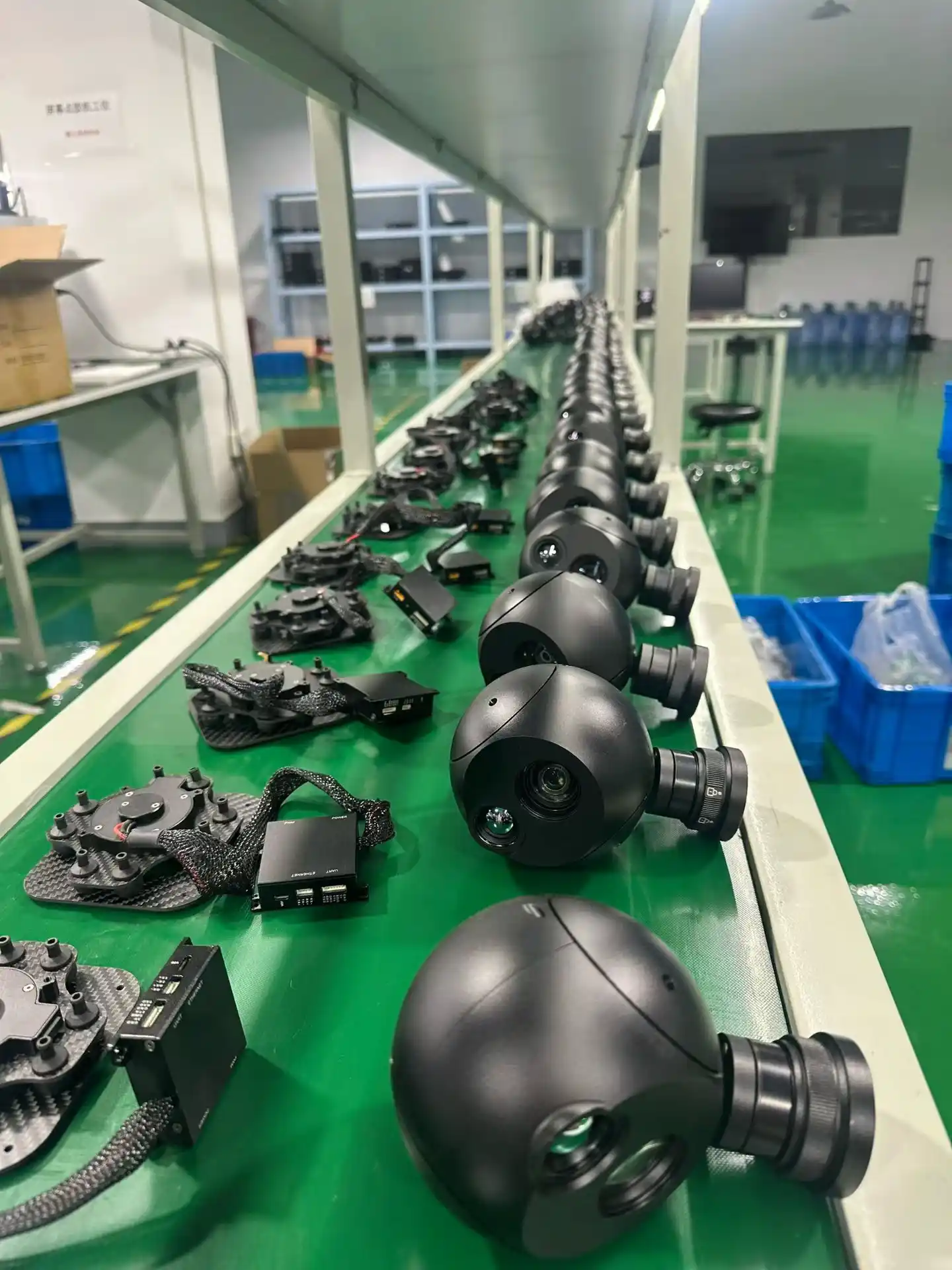
Optics, servo hardware, stabilisation firmware and the AI tracking module are developed in house, and every unit is assembled, calibrated and environmentally tested on our own line before it ships.

Request information or a quotation
Tell us the aircraft, the role and the mounting point and we will confirm the payload. Contact us with your requirements.