





Military UAV Camera: ISR Payloads for Defence Platforms
ISR and targeting from one stabilised turret
Defence missions add two requirements to the surveillance problem: the imagery has to support a decision, and the payload may have to mark a target for someone else.
- EO / IR / LRF
- 30x – 55x zoom
- 1064 nm designation
- Tracking to 20+ targets
A military uav camera is judged on what it can establish, not on what it can display. Identifying a vehicle type, confirming whether a structure is occupied, or holding a target while another platform acts are all decisions, and each of them sets a different bar for resolution, thermal sensitivity and stability. A payload that detects at ten kilometres and identifies at two is honest about both numbers.
Where the role includes designation, the payload carries a laser in the 1064 nm band alongside the imaging channels, in the same stabilised turret. A drone camera military integrator will want the designator, the rangefinder and the thermal channel boresighted so that what the operator designates is what the operator sees, and so that a third party receiving the designation sees the same object.
What defence roles require
- Boresighted EO and IR
A 1280 x 1024 or 640 x 512 thermal channel against a 1920 x 1080 or 4K visible channel, aligned on one cage, so a target identified thermally is the same object seen in daylight.
- Zoom for stand-off
30x to 55x continuous zoom on the visible channel and continuous thermal zoom on the pod class, which keeps the aircraft outside the range at which it can be heard or seen.
- 1064 nm designation
The SQ series adds a designator to the same turret, so target marking does not require a second aircraft or a different payload.
- Rangefinding to 15 km
One metre accuracy at distance converts the tracked object into a coordinate that can be passed to a shooter, a second aircraft or a command post.
- Tracking and handover
Multi-target tracking with georeferenced locks supports passing a track to another platform rather than describing it over voice.
- Platform tolerance
11 – 28 VDC, -20 C to +60 C operation, IP54 sealing and two-axis turrets from 2.5 kg to 22 kg for helicopters and large fixed-wing aircraft.
Defence payloads in the range
Imaging and ISR turrets first, then the designation class.
| Model | Series | Visible | Thermal | Ranging | Designation | Weight |
|---|---|---|---|---|---|---|
| XQ-200T | XQ | 1920 x 1080, 30x zoom | 640 x 512, 40 – 220 mm | 9.5 km | – | ≤ 5 kg |
| XQ-225T | XQ | 1920 x 1080, 55x zoom | 640 x 512, 20 – 275 mm | 9 km | – | ≤ 7 kg |
| XQ-254T | XQ | 1920 x 1080, 30x zoom | 640 x 512, 40 – 220 mm | 15 km | – | ≤ 10 kg |
| SQ-155T | SQ | 1920 x 1080, 30x zoom | 640 x 512, 35 mm | 5 km | 1064 nm | ≤ 2.5 kg |
| SQ-200T | SQ | 1920 x 1080, 30x zoom | 640 x 512, 40 – 220 mm | 8 km | 1064 nm | ≤ 5.5 kg |
| SQ-290T | SQ | 1920 x 1080, 13x zoom | 640 x 512, 15 – 300 mm | 10 km | 1064 nm | ≤ 15 kg |
| SQ-330Q | SQ | 1920 x 1080, 30x zoom | Dual 640 x 512, 300 mm + 15 – 330 mm | ≥ 15 km | 1064 nm | ≤ 22 kg |
Four ISR and targeting turrets
Two imaging turrets with ranging to 15 km and two designation turrets that add a 1064 nm laser to the same architecture.
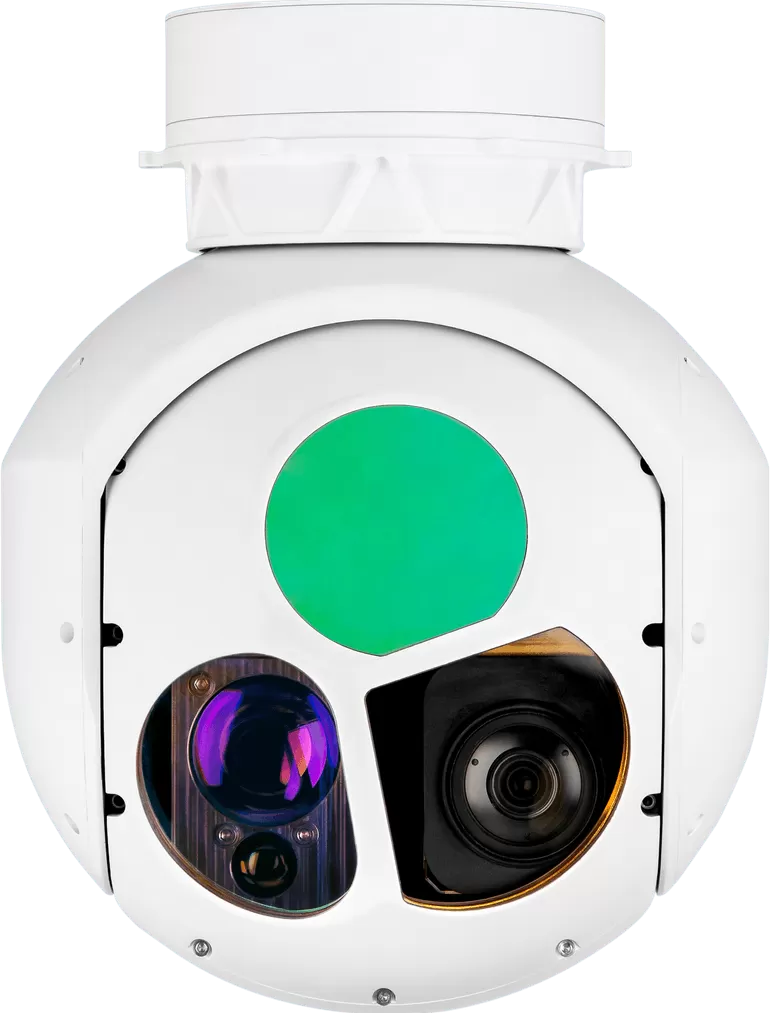
XQ · 2-axis · EO + IR + LRF
XQ-200T
A continuous-zoom thermal channel from 40 mm to 220 mm plus 9.5 km ranging on a 5 kg pod.
- Visible
- 1920 × 1080, 30x zoom 4.3 – 129 mm
- Thermal
- 640 × 512, continuous zoom 40 – 220 mm
- Laser
- 50 m – 9.5 km (± 1 m)
- Weight
- ≤5 kg
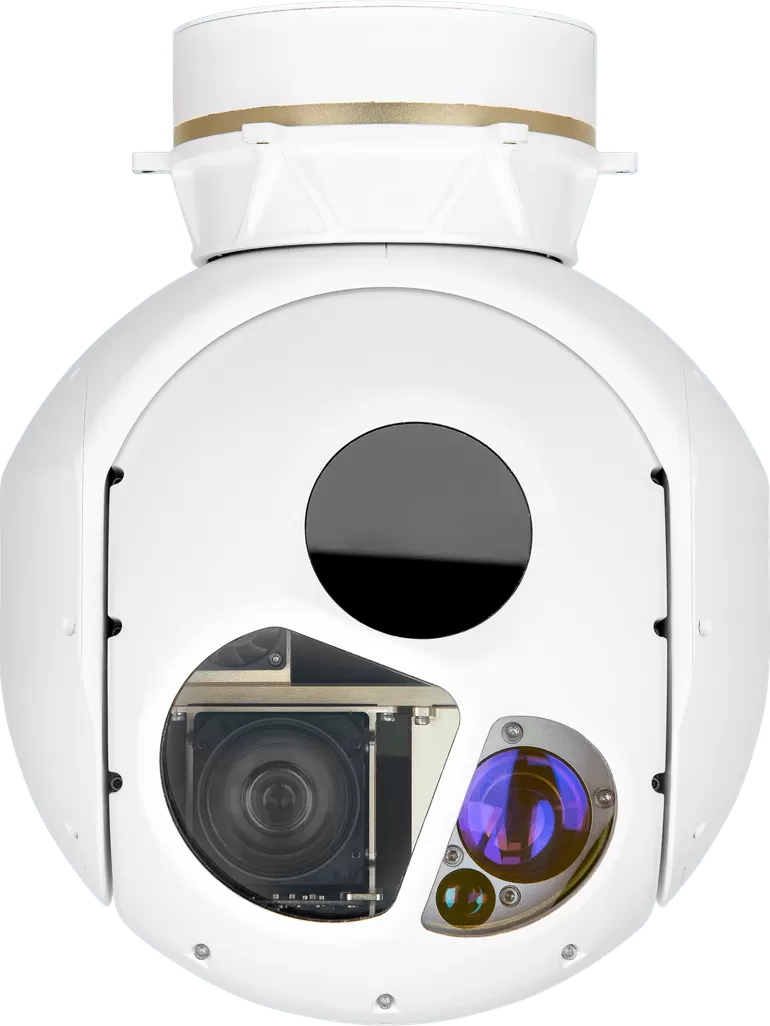
XQ · 2-axis · EO + IR + LRF
XQ-225T
55x daylight zoom and a 275 mm thermal reach for identification at the edge of the envelope.
- Visible
- 1920 × 1080, 55x zoom 4.25 – 234 mm
- Thermal
- 640 × 512, continuous zoom 20 – 275 mm
- Laser
- 80 m – 9 km (± 1 m)
- Weight
- ≤7 kg
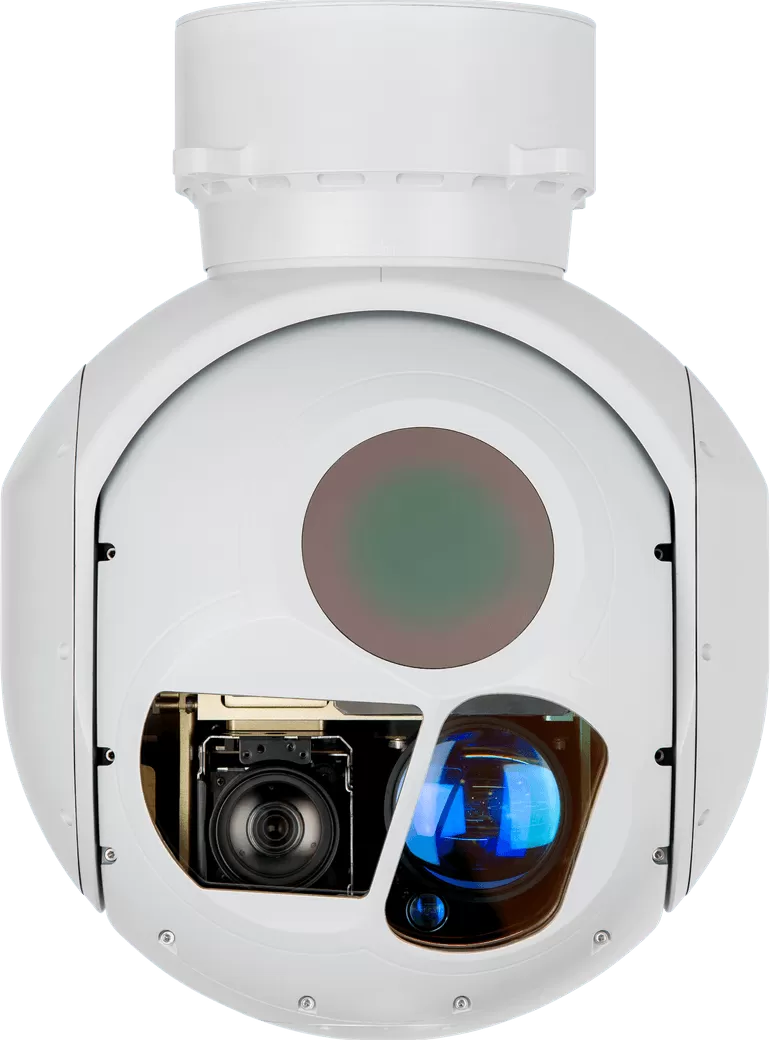
XQ · 2-axis · EO + IR + LRF
XQ-254T
The long-range pod: 15 km ranging and a 254 mm turret for maritime and border patrol aircraft.
- Visible
- 1920 × 1080, 30x zoom 4.3 – 129 mm
- Thermal
- 640 × 512, continuous zoom 40 – 220 mm
- Laser
- 100 m – 15 km (± 1 m)
- Weight
- ≤10 kg
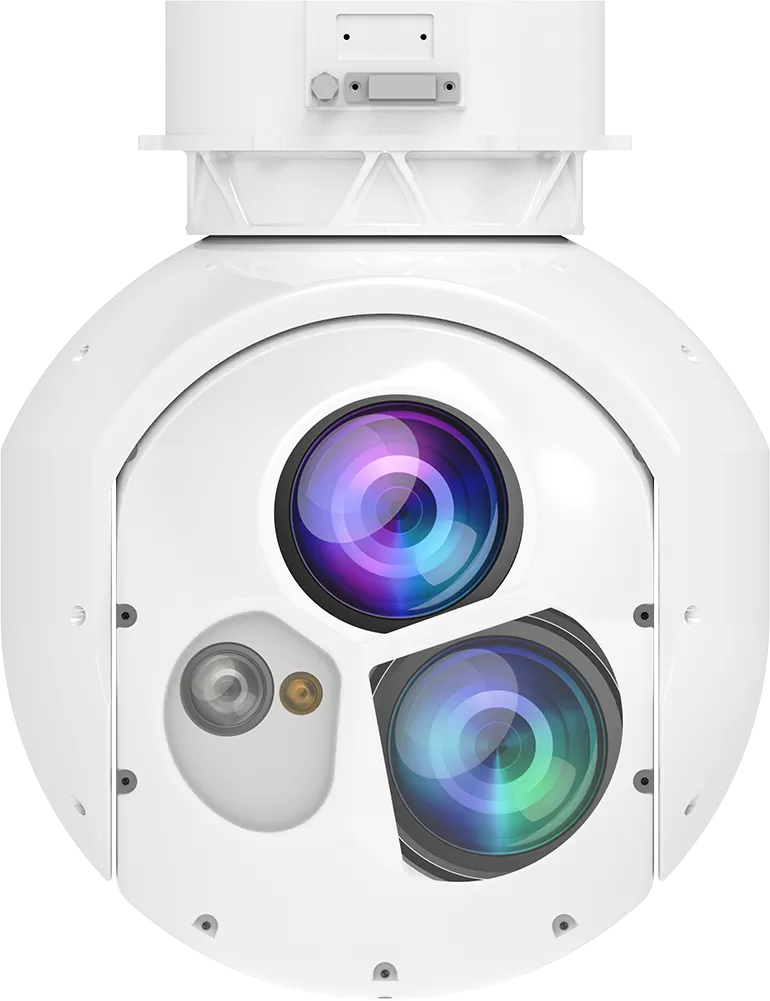
SQ · 2-axis · EO + IR + LRF + designator
SQ-200T
Laser designation plus 8 km ranging on a 5.5 kg two-axis pod.
- Visible
- 1920 × 1080, 30x zoom 4.3 – 129 mm
- Thermal
- 640 × 512, continuous zoom 40 – 220 mm
- Laser
- 300 m – 8 km (± 1 m)
- Weight
- ≤5.5 kg
Compare the range
| Model | Series | Axes | Configuration | Visible camera | Thermal imager | Laser rangefinder | Weight |
|---|---|---|---|---|---|---|---|
| XQ-200T | XQ series | 2-axis | EO + IR + LRF | 1920 × 1080, 30x zoom 4.3 – 129 mm | 640 × 512, continuous zoom 40 – 220 mm | 50 m – 9.5 km (± 1 m) | ≤5 kg |
| XQ-225T | XQ series | 2-axis | EO + IR + LRF | 1920 × 1080, 55x zoom 4.25 – 234 mm | 640 × 512, continuous zoom 20 – 275 mm | 80 m – 9 km (± 1 m) | ≤7 kg |
| XQ-254T | XQ series | 2-axis | EO + IR + LRF | 1920 × 1080, 30x zoom 4.3 – 129 mm | 640 × 512, continuous zoom 40 – 220 mm | 100 m – 15 km (± 1 m) | ≤10 kg |
| SQ-200T | SQ series | 2-axis | EO + IR + LRF + designator | 1920 × 1080, 30x zoom 4.3 – 129 mm | 640 × 512, continuous zoom 40 – 220 mm | 300 m – 8 km (± 1 m) | ≤5.5 kg |
Specifying a defence payload
State the decision, not the sensor
Identify a vehicle type at eight kilometres, confirm occupancy of a building, hold a moving target through a turn, mark a point for a third party. Each of those converts into different optics, detector and stabilisation numbers, and a supplier who cannot map the requirement onto them is guessing.
Questions worth asking
- Which band carries the identification: visible or thermal, and at what range?
- Is the designator in the same turret as the imaging channels, and are they boresighted?
- What is the rangefinder accuracy at maximum range, not at a bench?
- How does the tracker behave through occlusion and at full zoom?
- What does the payload do when the data link drops mid-track?
Integration and support
The control protocol and video pipeline are published, and MAVLink, SBUS, RS-422, RS-232 and Ethernet are all supported, which is what allows the payload to be evaluated on an existing airframe rather than in a supplier demonstration.
Related pages
Defence roles use the pod and designation classes.
- Laser designator podsThe SQ series with 1064 nm designation.Read more →
- EO/IR pod systemsImaging turrets with ranging to 15 km.Read more →
- Long range imagingHow range claims should be read.Read more →
- AI trackingOnboard detection, tracking and handover.Read more →
Engineering detail
Why designation belongs in the same turret
Marking a target from a second payload means aligning two systems in flight and holding both steady. Putting the designator in the turret that is already tracking the object removes that problem: what the operator tracks is what the laser marks, with no second boresight to maintain.
Thermal sensor resolution at range
A 1280 x 1024 detector on a 75 mm lens puts roughly four times the pixels on a target that a 640 x 512 detector on the same lens does, which is the difference between classifying a vehicle and identifying it. That is the reason the larger turrets carry the bigger detector.
Weight is a mission parameter
A 22 kg turret is a helicopter or large fixed-wing payload. Choosing it for an aircraft that cannot lift it produces a grounded aircraft rather than a better sensor, which is why the same architecture is offered from 2.5 kg upwards.
Designed and manufactured by HITS
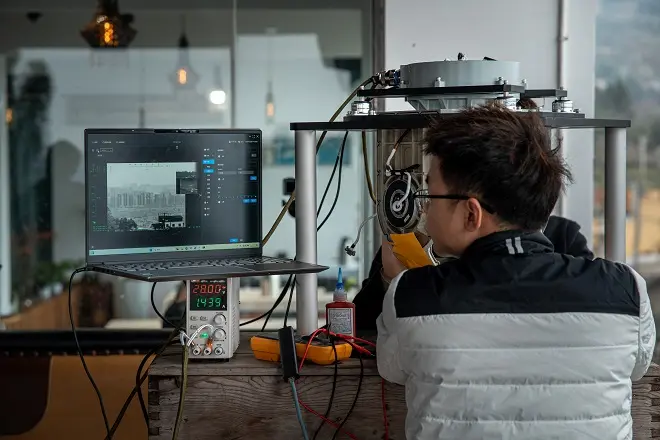
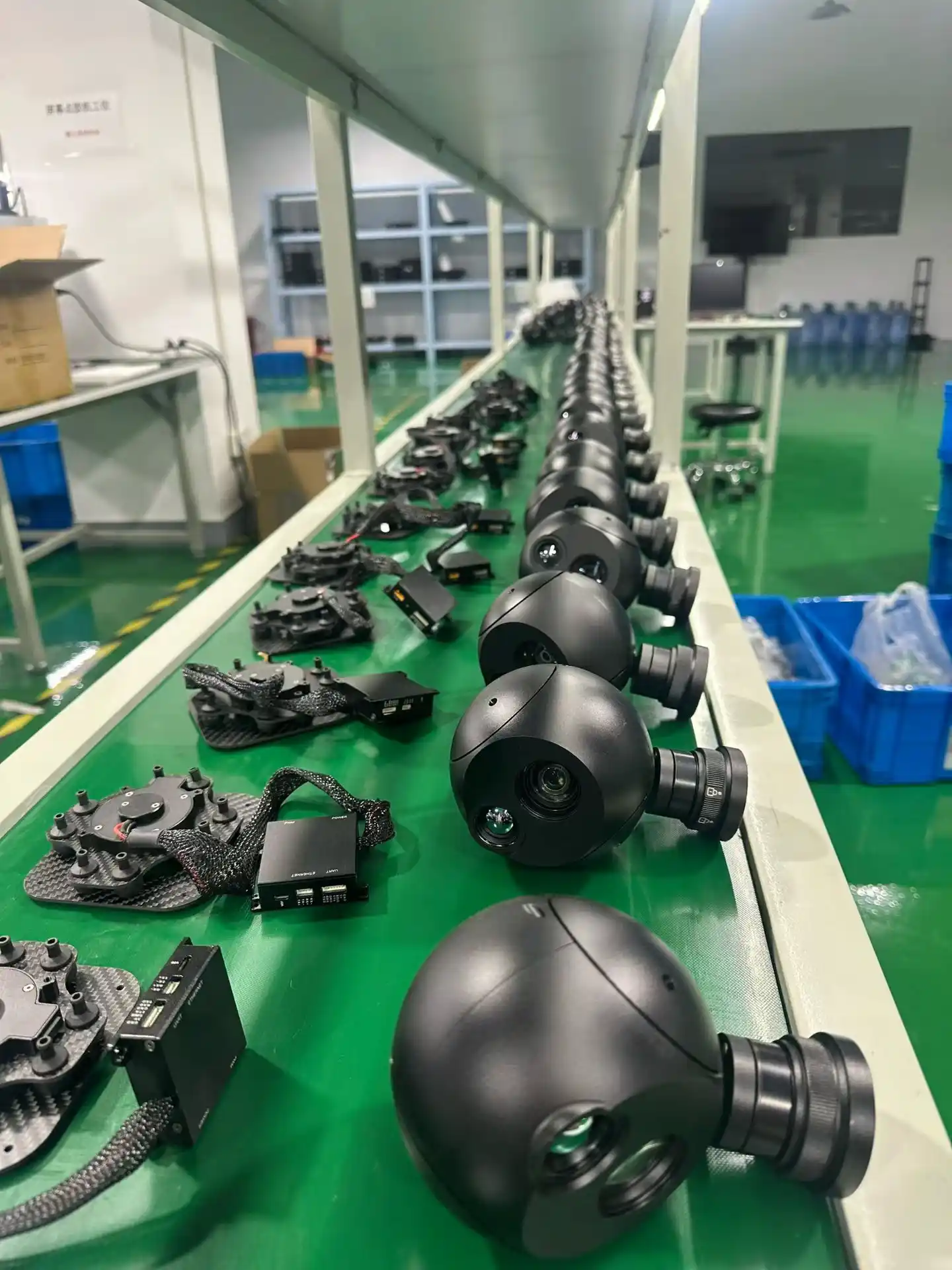
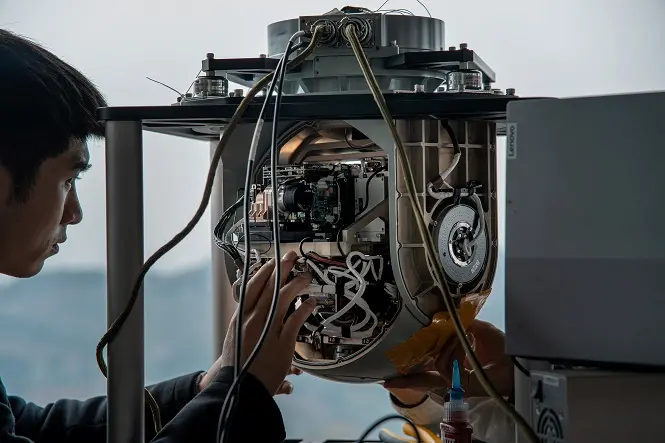
Optics, servo hardware, stabilisation firmware and the AI tracking module are developed in house, and every unit is assembled, calibrated and environmentally tested on our own line before it ships.

Request information or a quotation
Tell us the role, the platform and the stand-off distance and we will confirm the configuration. Contact us with your requirements.