





UAV Surveillance Camera: Persistent Aerial Monitoring
Monitoring an area, a route or a boundary over long periods
Surveillance is an endurance problem before it is an imaging problem. The payload has to be light enough to keep the aircraft airborne, sharp enough to identify what it finds, and steady enough that the operator can stay on an object while the aircra.
- 30x – 55x zoom
- Thermal imaging
- Target tracking
- 3 – 15 km ranging
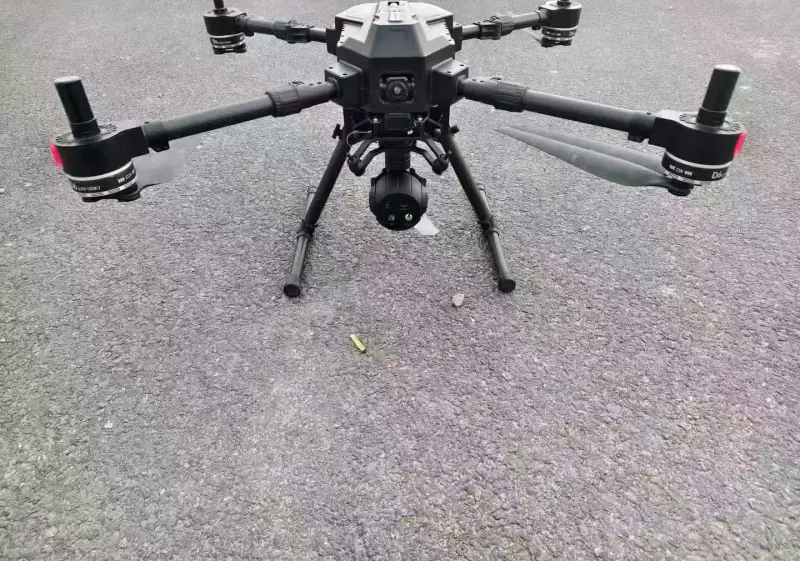
A drone surveillance camera has to do three things in one sortie: find something worth looking at, decide what it is, and keep looking at it while somebody acts on the information. Finding is a wide-field problem, deciding is a zoom and resolution problem, and keeping it in frame is a stabilisation and tracking problem. Payloads fail on the third one far more often than on the first two.
For a uav surveillance camera, the practical specification is therefore a 30x zoom or better on the visible channel, a boresighted thermal channel for the hours after dark, a rangefinder that geolocates what the operator is looking at, and enough onboard recording that the sortie survives a dropped link. Everything else is detail.
What surveillance missions need from a payload
- Wide to narrow without a break
Continuous zoom lets the operator sweep a wide field and then close on a single object. A stepped lens loses the object at the moment of switching, which is usually the moment it matters.
- Thermal for the night half of the mission
An uncooled 640 x 512 channel at 40 mK or better finds people and vehicles against cold ground, and does not need the aircraft to carry a visible illuminator.
- Tracking that survives occlusion
Targets pass behind masts, trees and buildings. A tracker with a motion model re-acquires the object instead of leaving the operator to find it again.
- Geolocation from the payload
A laser rangefinder converts the tracked pixel into a coordinate the ground station can map, hand over or archive.
- Endurance discipline
A 240 g head buys flight time; a 5 kg turret buys reach. Surveillance missions usually sit in the 1 kg to 5 kg band because that is where the two balance.
- Recording and playback
Dual-channel recording with timestamps means the sortie produces a usable record rather than a live impression.
Payloads for surveillance work
Four classes of mission, with the models that fit each one.
| Mission pattern | Model | Visible | Thermal | Ranging | Weight |
|---|---|---|---|---|---|
| Urban patrol, short endurance | HQ-115T | 1920 x 1080, 30x zoom | 640 x 512, 25 mm | 1.5 km | ≤ 1 kg |
| Long watch from a multirotor | HQ-135T | 1920 x 1080, 40x zoom | 640 x 512, 35 mm | 3 km | ≤ 1.4 kg |
| Route and boundary coverage | XQ-155T | 1920 x 1080, 30x zoom | 640 x 512, 55 mm | 5 km | ≤ 2.2 kg |
| Continuous thermal zoom | XQ-200T | 1920 x 1080, 30x zoom | 640 x 512, 40 – 220 mm | 9.5 km | ≤ 5 kg |
| Wide-area, long endurance | XQ-254T | 1920 x 1080, 30x zoom | 640 x 512, 40 – 220 mm | 15 km | ≤ 10 kg |
Five surveillance payloads
From a 1 kg three-axis head to a 10 kg turret with a 15 km rangefinder.
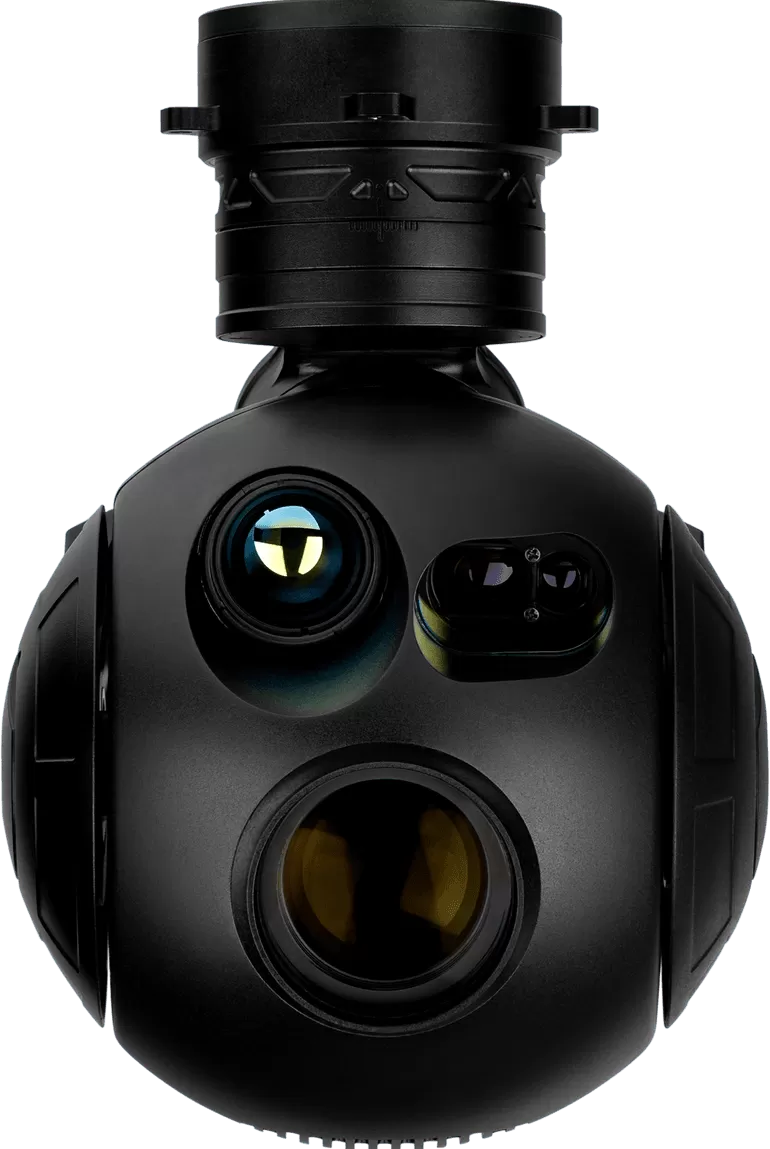
HQ · 3-axis · EO + IR + LRF
HQ-115T
The one-kilogram workhorse: 30x zoom, thermal imaging and a 1.5 km rangefinder.
- Visible
- 1920 × 1080, 30x zoom 4.3 – 129 mm
- Thermal
- 640 × 512, 25 mm fixed
- Laser
- 5 m – 1.5 km (± 1 m)
- Weight
- ≤1 kg
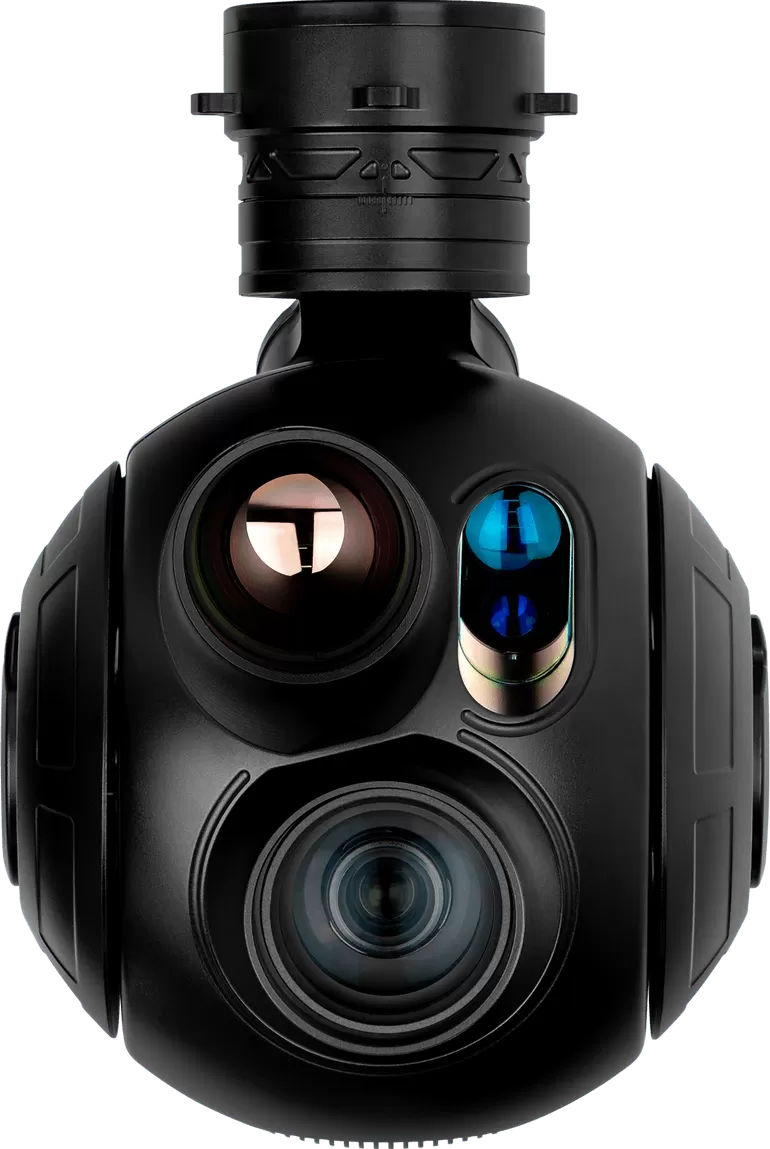
HQ · 3-axis · EO + IR + LRF
HQ-135T
The flagship of the compact range: 40x zoom, thermal imaging and 3 km ranging on one stabilised cage.
- Visible
- 1920 × 1080, 40x zoom 4.25 – 170 mm
- Thermal
- 640 × 512, 35 mm fixed
- Laser
- 15 m – 3 km (± 1 m)
- Weight
- ≤1.4 kg
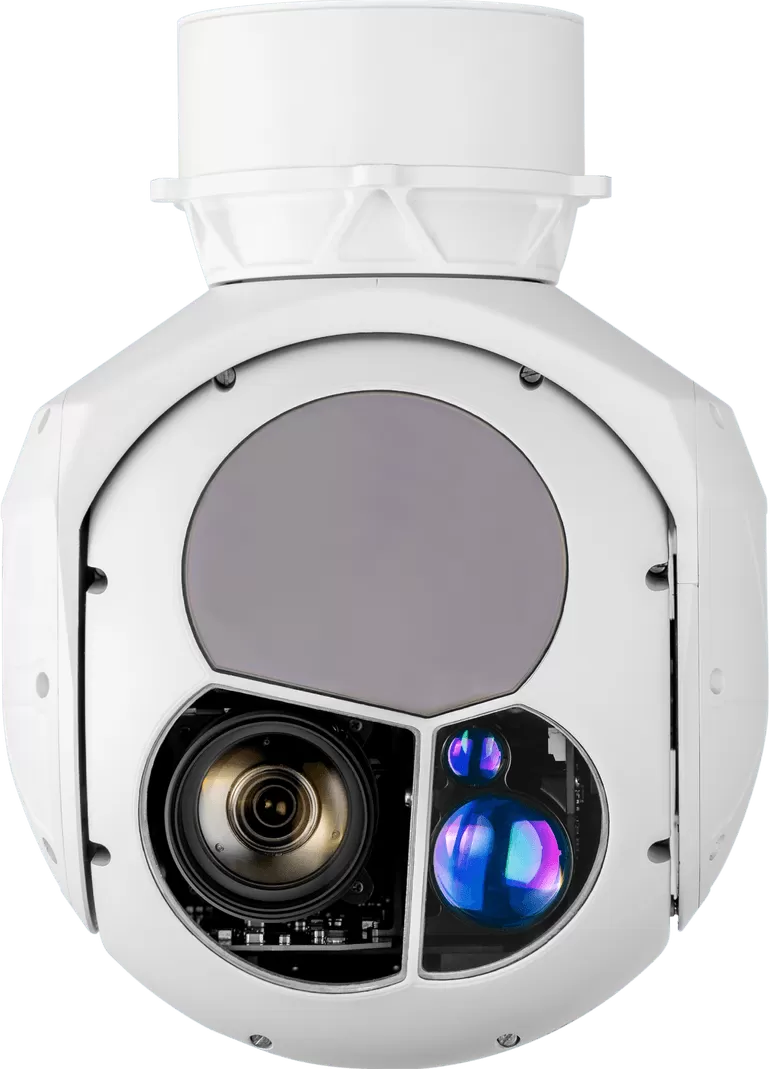
XQ · 2-axis · EO + IR + LRF
XQ-155T
A 55 mm thermal lens and 5 km ranging for platforms that can carry 2.2 kg on the hardpoint.
- Visible
- 1920 × 1080, 30x zoom 4.3 – 129 mm
- Thermal
- 640 × 512, 55 mm fixed
- Laser
- 50 m – 5 km (± 1 m)
- Weight
- ≤2.2 kg
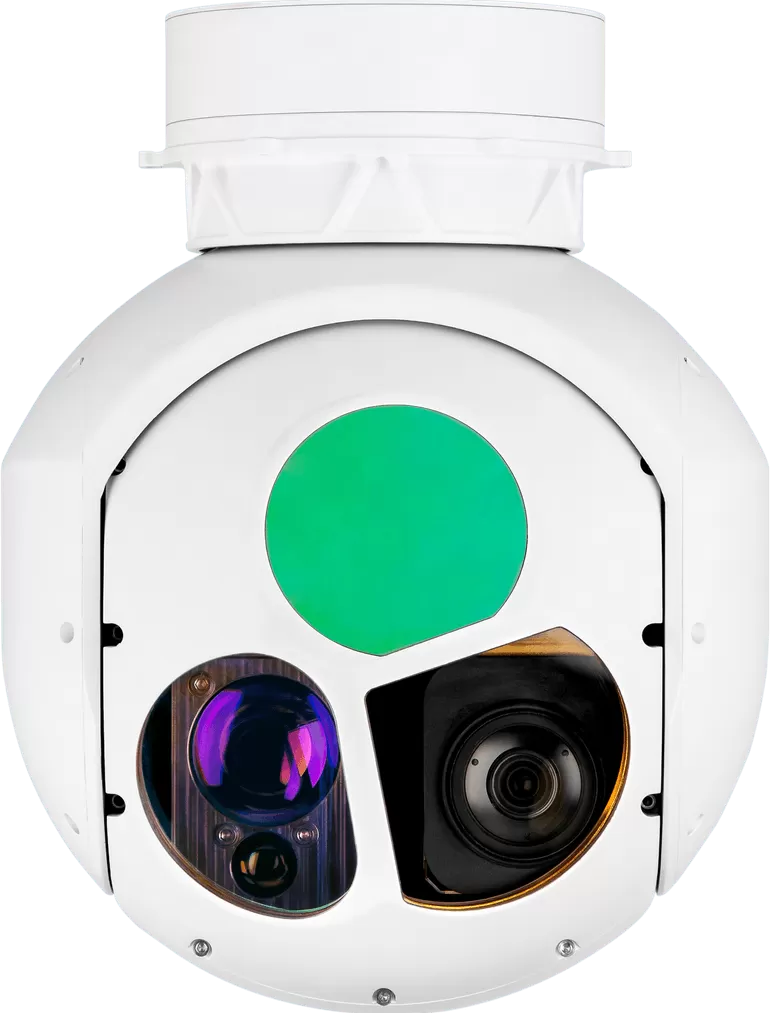
XQ · 2-axis · EO + IR + LRF
XQ-200T
A continuous-zoom thermal channel from 40 mm to 220 mm plus 9.5 km ranging on a 5 kg pod.
- Visible
- 1920 × 1080, 30x zoom 4.3 – 129 mm
- Thermal
- 640 × 512, continuous zoom 40 – 220 mm
- Laser
- 50 m – 9.5 km (± 1 m)
- Weight
- ≤5 kg
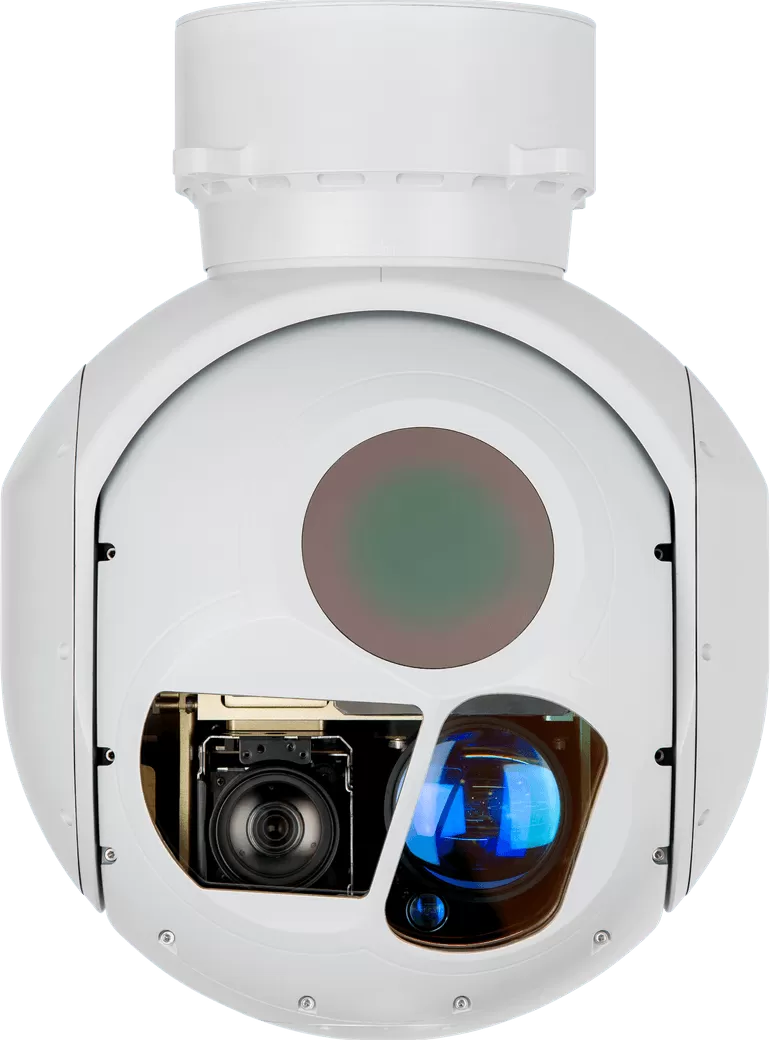
XQ · 2-axis · EO + IR + LRF
XQ-254T
The long-range pod: 15 km ranging and a 254 mm turret for maritime and border patrol aircraft.
- Visible
- 1920 × 1080, 30x zoom 4.3 – 129 mm
- Thermal
- 640 × 512, continuous zoom 40 – 220 mm
- Laser
- 100 m – 15 km (± 1 m)
- Weight
- ≤10 kg
Compare the range
| Model | Series | Axes | Configuration | Visible camera | Thermal imager | Laser rangefinder | Weight |
|---|---|---|---|---|---|---|---|
| HQ-115T | HQ series | 3-axis | EO + IR + LRF | 1920 × 1080, 30x zoom 4.3 – 129 mm | 640 × 512, 25 mm fixed | 5 m – 1.5 km (± 1 m) | ≤1 kg |
| HQ-135T | HQ series | 3-axis | EO + IR + LRF | 1920 × 1080, 40x zoom 4.25 – 170 mm | 640 × 512, 35 mm fixed | 15 m – 3 km (± 1 m) | ≤1.4 kg |
| XQ-155T | XQ series | 2-axis | EO + IR + LRF | 1920 × 1080, 30x zoom 4.3 – 129 mm | 640 × 512, 55 mm fixed | 50 m – 5 km (± 1 m) | ≤2.2 kg |
| XQ-200T | XQ series | 2-axis | EO + IR + LRF | 1920 × 1080, 30x zoom 4.3 – 129 mm | 640 × 512, continuous zoom 40 – 220 mm | 50 m – 9.5 km (± 1 m) | ≤5 kg |
| XQ-254T | XQ series | 2-axis | EO + IR + LRF | 1920 × 1080, 30x zoom 4.3 – 129 mm | 640 × 512, continuous zoom 40 – 220 mm | 100 m – 15 km (± 1 m) | ≤10 kg |
Planning a surveillance sortie
Altitude is a trade, not a setting
Flying higher widens the field and reduces the visual signature of the aircraft, but it costs pixels on target and puts more atmosphere between the sensor and the object. Most surveillance missions resolve into a low-and-close pattern for identification and a higher pattern for coverage.
What to log, and why
- Timestamp every frame: a surveillance record without a time is an anecdote.
- Record both channels even when only one is displayed, because the thermal frame often shows what the visible one missed.
- Write the geolocation of each tracked object, not just its screen position.
- Keep the recording on the payload as well as the ground station, so a link failure does not end the record.
Working with the operator
Tracking changes the operator role from flying the camera to judging what the camera sees. That is the point: it is the difference between one aircraft watching an area and one aircraft watching a specific person.
Related pages
Surveillance payloads are usually selected from the mid and pod classes.
- UAV securityPatrol and incident response on fixed sites.Read more →
- EO/IR pod systemsTurrets with continuous thermal zoom and long ranging.Read more →
- Night visionThermal, low-light and illumination explained.Read more →
- AI trackingHow lock and follow works on the payload.Read more →
Engineering detail
Why tracking matters more than zoom
A 30x image of an object that drifts out of frame every few seconds is worth less than a 10x image that stays locked. Surveillance customers judge the payload by how long it can hold an object, which is why tracking and stabilisation sit ahead of resolution on this page.
Thermal reach sets the night radius
A 25 mm thermal lens covers a wide area but resolves few pixels on a person; a 50 mm or a continuous 40 – 220 mm thermal channel reaches much further at the cost of weight. The night radius of the mission comes directly out of that choice.
Ranging turns video into data
With a rangefinder in the loop, every tracked object carries a coordinate. For border, critical infrastructure and maritime surveillance that is the difference between a picture and a report.
Recorded payload footage
Two clips taken from the payload video feed on maritime patrol work: several surface contacts tracked at once, and a single small craft held at long range.
Designed and manufactured by HITS
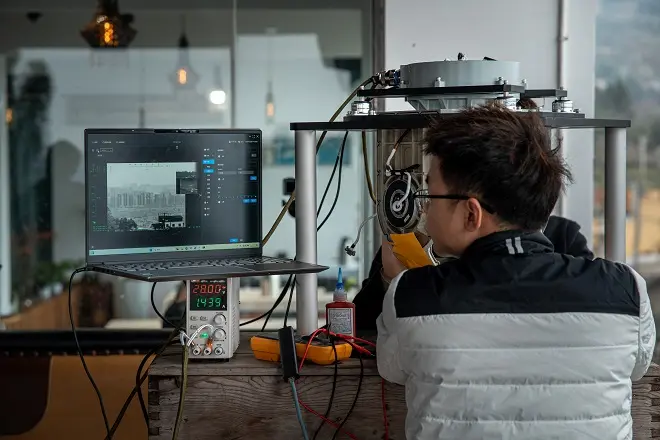
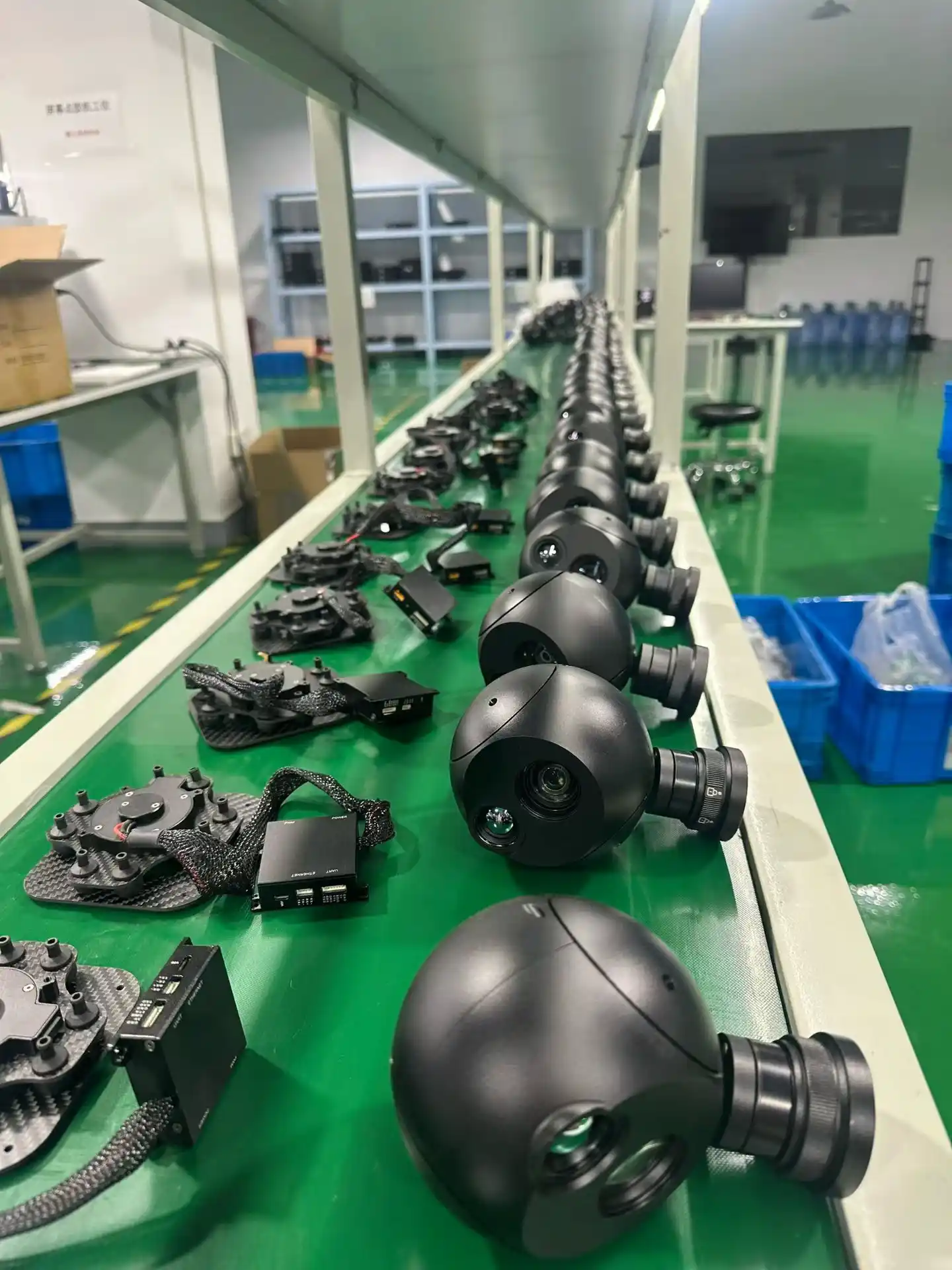
Optics, servo hardware, stabilisation firmware and the AI tracking module are developed in house, and every unit is assembled, calibrated and environmentally tested on our own line before it ships.

Request information or a quotation
Tell us the area, the endurance and the night requirement and we will shortlist the payload. Contact us with your requirements.