





Night Vision Drone Camera: Thermal and Low-Light Imaging
Thermal, low-light visible and infrared illumination on one stabilised head
After dark the visible channel stops being the primary sensor. A night-capable payload pairs an uncooled long-wave infrared detector with a low-light visible channel and, where the mission allows it, an infrared illuminator that the naked eye cannot see.
- 640 x 512 thermal
- 1280 x 1024 option
- NETD ≤ 40 mK
- 8 – 14 µm band
A night vision drone camera works on contrast rather than illumination. An uncooled microbolometer in the 8 – 14 micrometre band sees the heat a person, a vehicle engine or a running generator emits, so the image does not depend on moonlight, street lighting or an illuminator. That is why a drone night vision camera is usually specified by detector resolution, lens focal length and noise-equivalent temperature difference rather than by lux ratings. The same three numbers describe a uav night vision camera, whatever the badge on the housing says.
Low-light visible imaging still earns its place, because a night vision camera for drone work has to deliver an image an operator and a customer can both read: registration plates, livery, colour and context. The practical answer is a boresighted pair, and for a night vision camera for uav integration the pair should be driven by one control protocol so the operator can switch or fuse channels without relearning the ground station.
What makes a payload night capable
- Uncooled LWIR detector
640 x 512 microbolometer as standard, 1280 x 1024 on the 125S and on the larger pods, with NETD at or below 40 mK so small temperature differences survive the display.
- Low-light visible channel
A 1920 x 1080 CMOS channel with a fast lens keeps colour and detail in twilight and in lit urban areas, and gives the daytime image the same payload needs.
- Infrared illumination
850 nm and 940 nm illuminators widen the usable band without a visible glow. They extend low-light range, but they also announce the aircraft, so the choice is mission dependent.
- Palettes and polarity
White-hot, black-hot, iron and rainbow palettes with adjustable level and gain let an operator pull a person out of a cold background or a vehicle out of hot terrain.
- Boresight and fusion
Both channels are aligned on one cage at the factory. Operators can run either channel full screen, overlay thermal on visible as picture-in-picture, or record both streams at once.
- Stabilisation at long focal length
At night the operator pushes the zoom further, so the mount has to hold a narrower field. Three-axis heads keep the image still when the airframe yaws, pitches or rolls.
Night-capable models in the range
Every model below carries a thermal channel; the difference is lens, detector and the sensor it is paired with.
| Model | Thermal channel | Visible channel | Laser | Weight | Night-time role |
|---|---|---|---|---|---|
| HQ-64DA | 640 x 512, 19 mm | 2688 x 1520, 8.5 mm fixed | – | ≤ 260 g | Smallest night-capable head for micro multirotors |
| HQ-85Q | 640 x 512, 25 mm | Dual 1920 x 1080, 8 mm + 25 mm | 15 m – 3 km | ≤ 500 g | Two-axis night patrol on small VTOL |
| HQ-95Q | 640 x 512, 19 mm | 8000 x 6000, 15.3 – 49.7 mm zoom | 5 m – 1.5 km | ≤ 400 g | High-resolution stills and thermal in one head |
| HQ-100T | 640 x 512, 19 mm | 1920 x 1080, 4.7 – 47 mm zoom | 5 m – 1.5 km | ≤ 800 g | Night observation with 10x visible zoom |
| HQ-115T | 640 x 512, 25 mm | 1920 x 1080, 4.3 – 129 mm zoom | 5 m – 1.5 km | ≤ 1 kg | Night identification at 30x visible zoom |
| HQ-125S | 1280 x 1024, 50 mm | – | – | ≤ 1 kg | Thermal-only channel for detail at distance |
| HQ-135T | 640 x 512, 35 mm | 1920 x 1080, 4.25 – 170 mm zoom | 15 m – 3 km | ≤ 1.4 kg | Long night watch with 40x zoom |
| HQ-135TA | 640 x 512, 50 mm | 1920 x 1080, 4.3 – 129 mm zoom | 15 m – 3 km | ≤ 1.5 kg | Longest thermal lens in the HQ series |
Six night-capable heads
From a 260 g two-axis unit to a 1.5 kg head with a 50 mm thermal lens and a 3 km rangefinder.
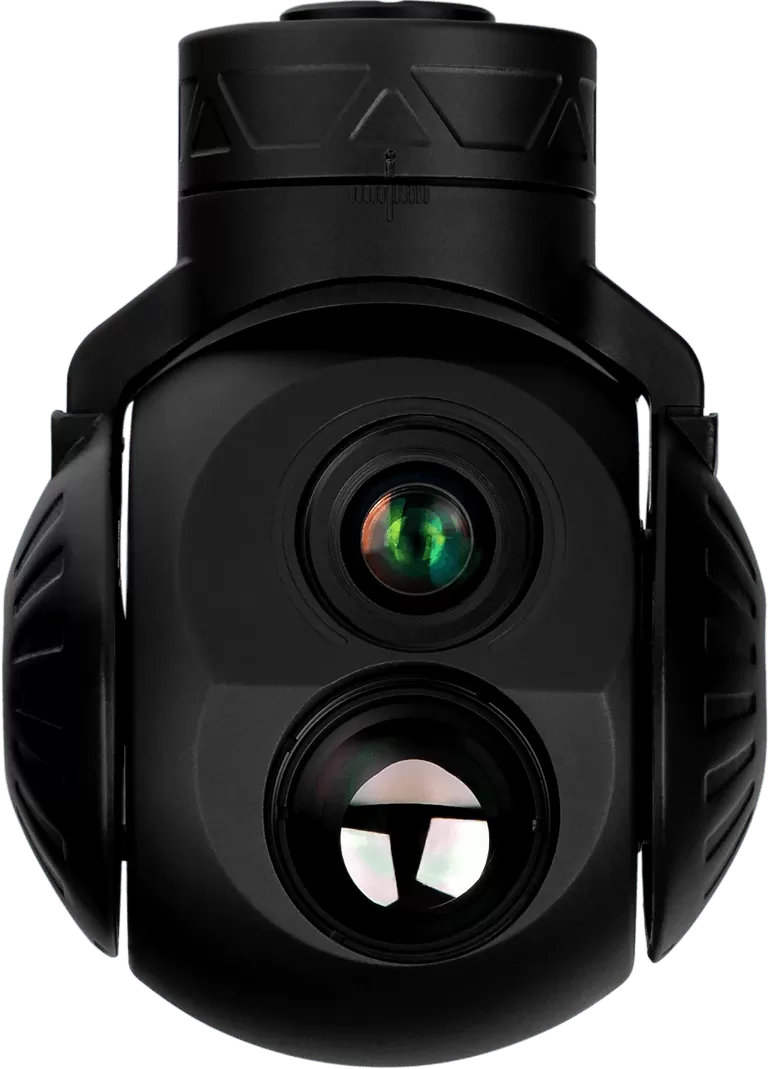
2-axis · EO + IR
HQ-64DA
The lightest dual-sensor head in the range — 2K daylight plus thermal on 260 g.
- Visible
- 2688 × 1520, 8.5 mm fixed
- Thermal
- 640 × 512, 19 mm fixed
- Laser
- —
- Weight
- ≤260 g
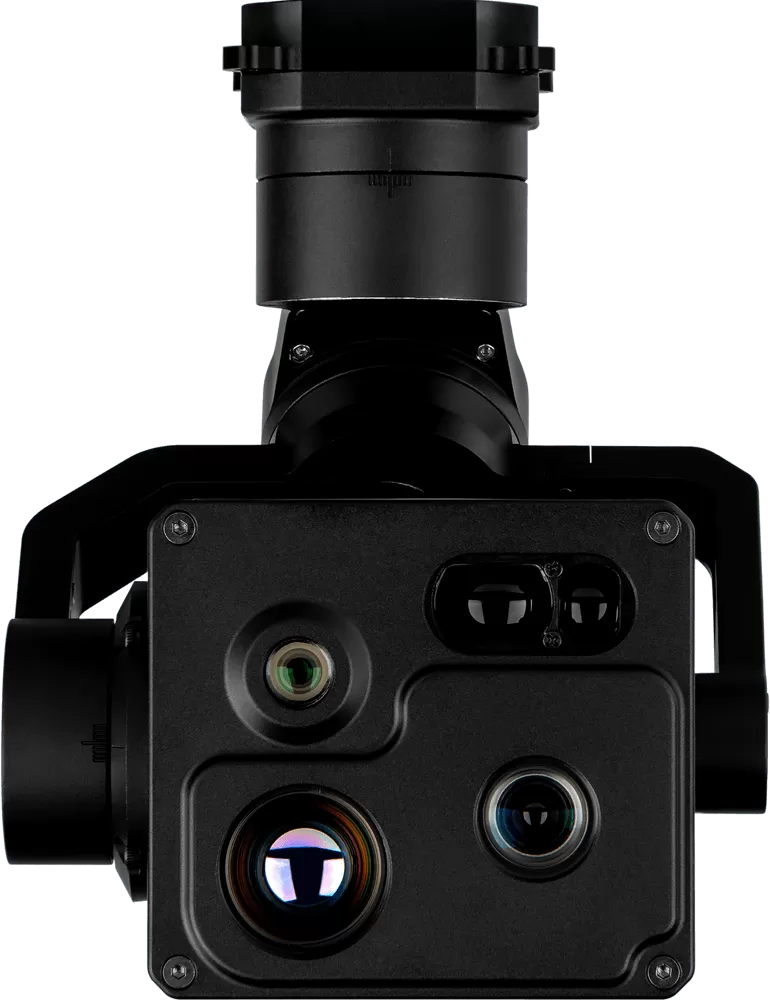
3-axis · EO + IR + LRF
HQ-95Q
Four optical channels and a quick-release mount on the lightest three-axis head we build.
- Visible
- Dual 8000 × 6000, 9.5 mm + continuous zoom 15.3 – 49.7 mm
- Thermal
- 640 × 512, 19 mm fixed
- Laser
- 5 m – 1.5 km (± 1 m)
- Weight
- ≤400 g
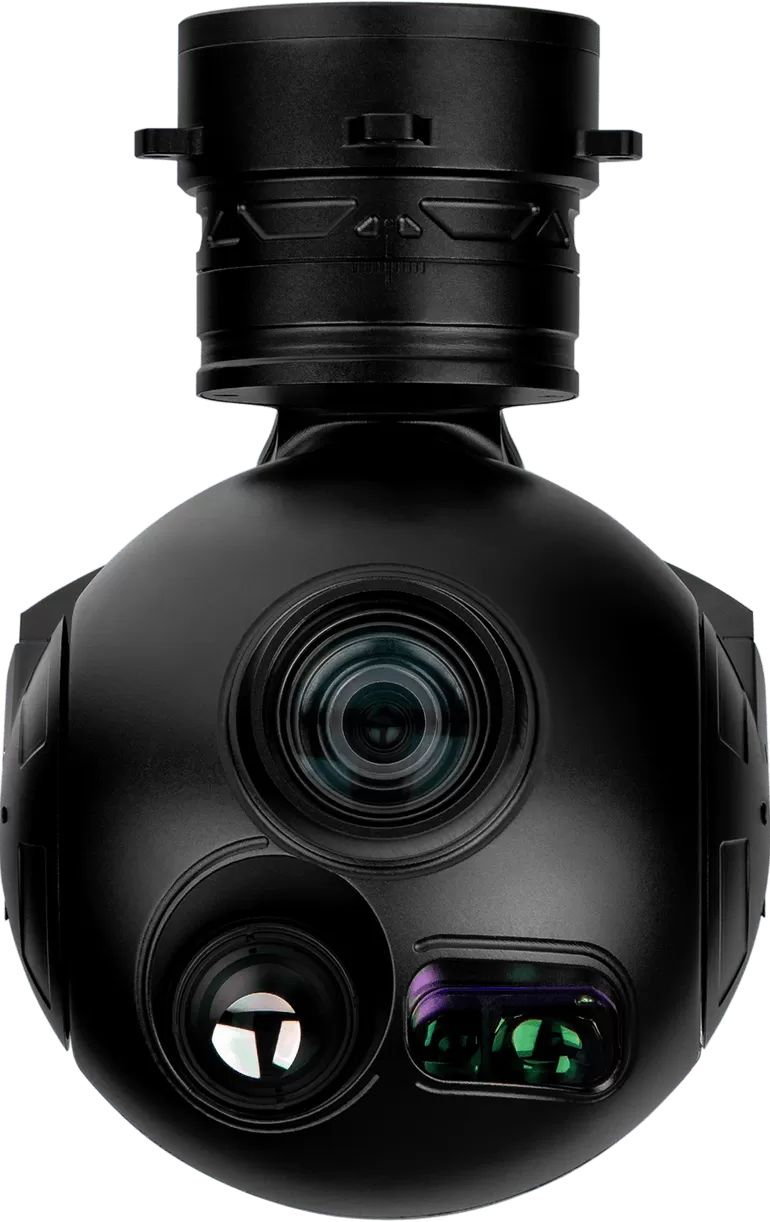
3-axis · EO + IR + LRF
HQ-100T
The same 800 g three-axis head as the 100D, with a 1.5 km laser rangefinder added.
- Visible
- 1920 × 1080, 10x zoom 4.7 – 47 mm
- Thermal
- 640 × 512, 19 mm fixed
- Laser
- 5 m – 1.5 km (± 1 m)
- Weight
- ≤800 g
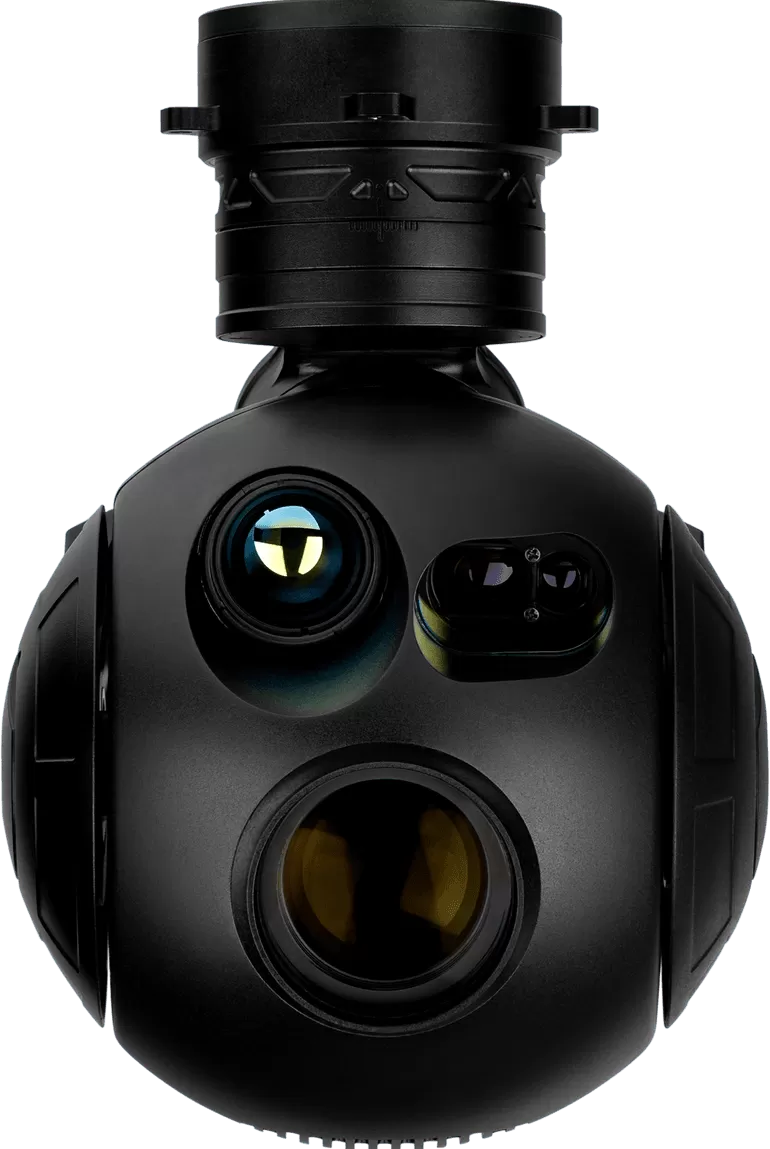
3-axis · EO + IR + LRF
HQ-115T
The one-kilogram workhorse: 30x zoom, thermal imaging and a 1.5 km rangefinder.
- Visible
- 1920 × 1080, 30x zoom 4.3 – 129 mm
- Thermal
- 640 × 512, 25 mm fixed
- Laser
- 5 m – 1.5 km (± 1 m)
- Weight
- ≤1 kg
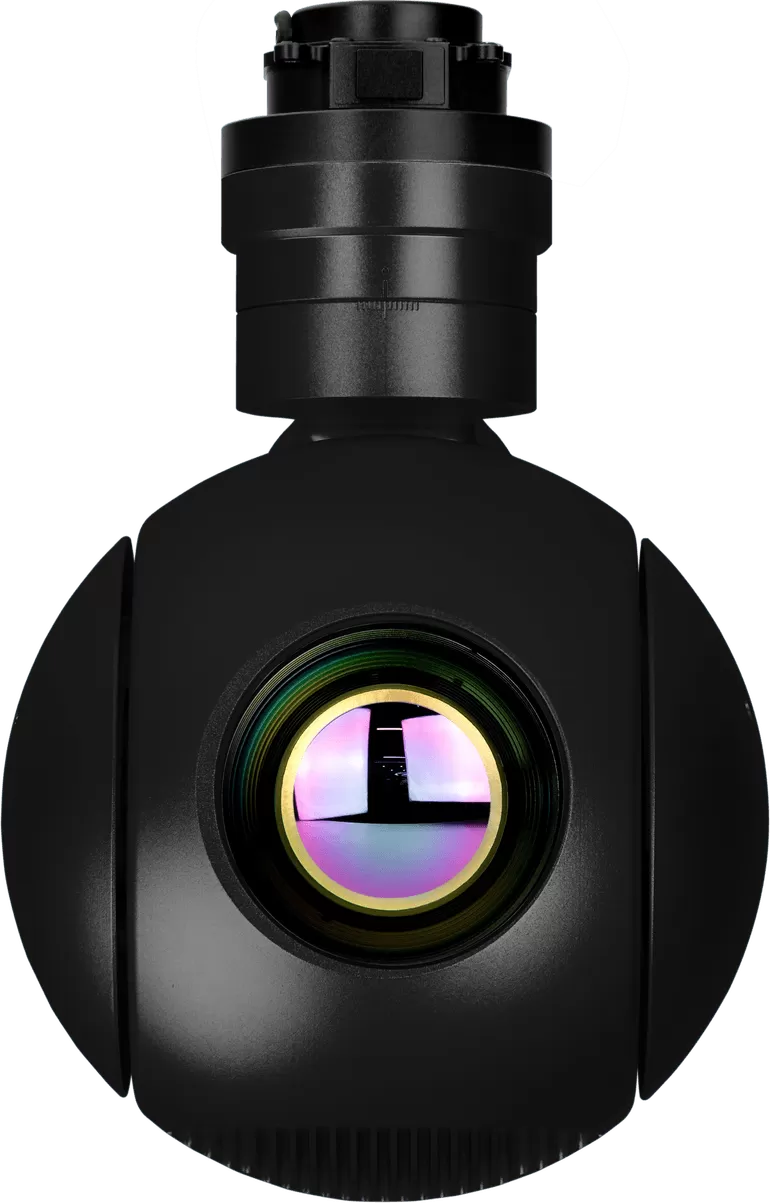
3-axis · IR
HQ-125S
A thermal-only head with a 1280 × 1024 sensor — the highest thermal resolution in the series.
- Visible
- —
- Thermal
- 1280 × 1024, 50 mm fixed
- Laser
- —
- Weight
- ≤1 kg
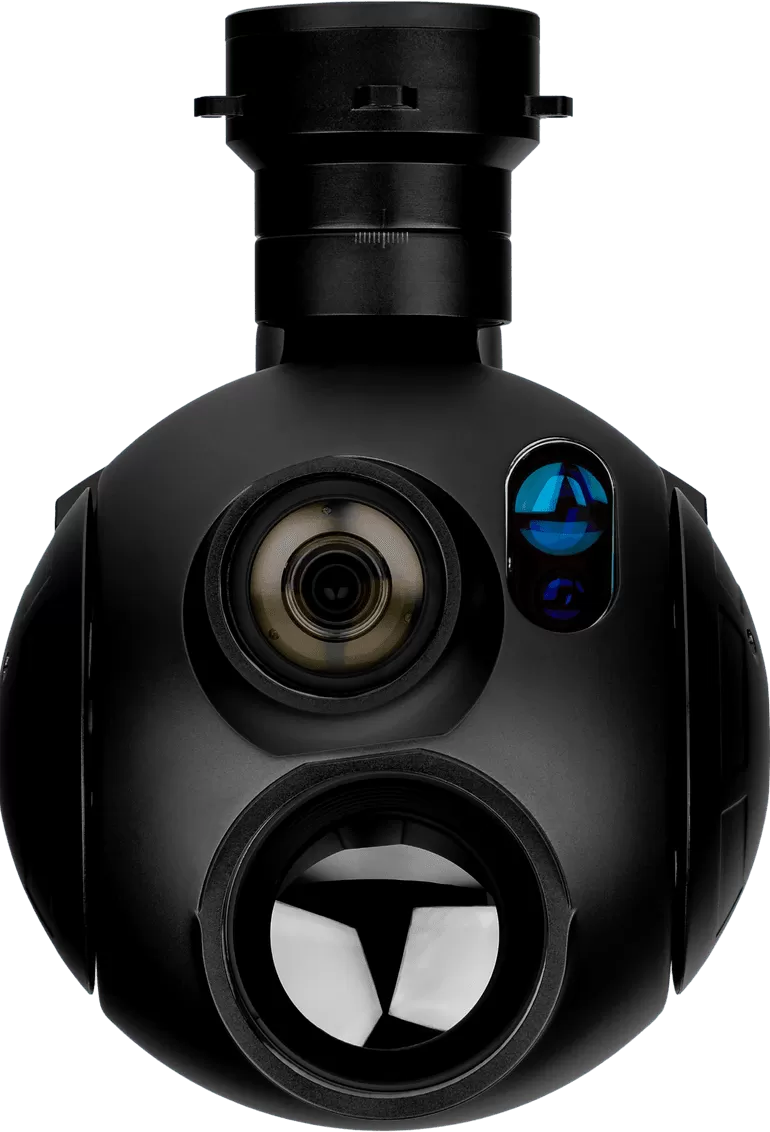
3-axis · EO + IR + LRF
HQ-135TA
A 50 mm thermal lens gives the longest thermal reach in the compact range.
- Visible
- 1920 × 1080, 30x zoom 4.3 – 129 mm
- Thermal
- 640 × 512, 50 mm fixed
- Laser
- 15 m – 3 km (± 1 m)
- Weight
- ≤1.5 kg
Compare the range
| Model | Axes | Configuration | Visible camera | Thermal imager | Laser rangefinder | Weight |
|---|---|---|---|---|---|---|
| HQ-64DA | 2-axis | EO + IR | 2688 × 1520, 8.5 mm fixed | 640 × 512, 19 mm fixed | — | ≤260 g |
| HQ-95Q | 3-axis | EO + IR + LRF | Dual 8000 × 6000, 9.5 mm + continuous zoom 15.3 – 49.7 mm | 640 × 512, 19 mm fixed | 5 m – 1.5 km (± 1 m) | ≤400 g |
| HQ-100T | 3-axis | EO + IR + LRF | 1920 × 1080, 10x zoom 4.7 – 47 mm | 640 × 512, 19 mm fixed | 5 m – 1.5 km (± 1 m) | ≤800 g |
| HQ-115T | 3-axis | EO + IR + LRF | 1920 × 1080, 30x zoom 4.3 – 129 mm | 640 × 512, 25 mm fixed | 5 m – 1.5 km (± 1 m) | ≤1 kg |
| HQ-125S | 3-axis | IR | — | 1280 × 1024, 50 mm fixed | — | ≤1 kg |
| HQ-135TA | 3-axis | EO + IR + LRF | 1920 × 1080, 30x zoom 4.3 – 129 mm | 640 × 512, 50 mm fixed | 15 m – 3 km (± 1 m) | ≤1.5 kg |
Thermal or low light: choosing the primary channel
Thermal wins on detection
An uncooled LWIR channel finds a person against cold ground, a vehicle against cold asphalt and a hot exhaust plume that a visible camera cannot see at all. For detection and for anything the customer will judge as a heat signature, thermal is the primary channel.
Low light wins on recognition
Colour, livery, signage and registration plates live in the visible band. A low-light CMOS channel with a fast lens and electronic image stabilisation gives the operator the image that ends up in the report, which is why pairing it with thermal is worth the weight.
Illumination is a decision, not a default
- 850 nm illuminators are cheaper and brighter but emit a faint red glow that a near-infrared viewer can detect.
- 940 nm illuminators are effectively invisible to the naked eye but give less range for the same power.
- Where the mission requires the aircraft to stay unobserved, the payload should be able to run thermal only, with the illuminator disabled in firmware.
- Where the mission is search and rescue, an illuminator can be the difference between locating a subject and passing over them.
Related pages
Night capability sits inside the wider thermal and infrared ranges.
- Thermal camerasThirteen thermal configurations from 640 x 512 to 1280 x 1024.Read more →
- UAV infrared camerasDetector and lens selection for the infrared channel.Read more →
- EO/IR sensorsHow dual-sensor payloads are boresighted and specified.Read more →
- Long range imagingFocal length and jitter budgets at distance.Read more →
Engineering detail
NETD and why 40 mK matters
Noise-equivalent temperature difference is the smallest temperature step the detector can resolve against its own noise. At 40 mK a payload separates a person from a wall that has been in the sun all day; at 60 – 80 mK the same scene collapses into a single blob and the operator loses the shape they were looking for.
Boresight drift over temperature
Two channels on one cage stay aligned only if the structure holding them does not move. Materials are matched and the assembly is aligned at temperature, then checked across the -20 C to +60 C operating band, because a boresight error that appears at altitude is indistinguishable from a tracking error.
Why thermal-only models still exist
The 125S carries no visible channel at all. Removing it saves weight, power and a video stream, which matters on a small airframe that needs maximum thermal reach and nothing else.
Designed and manufactured by HITS
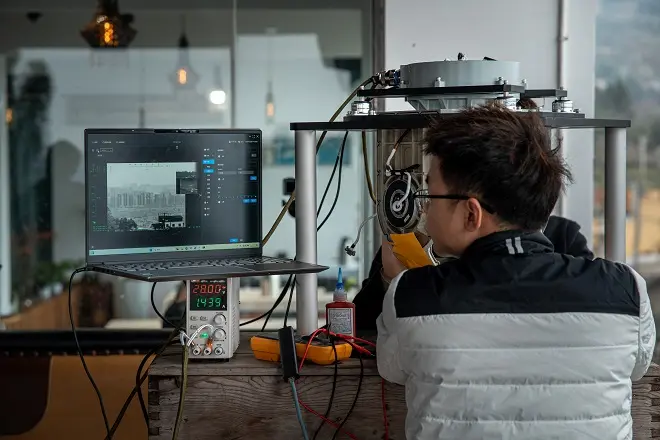
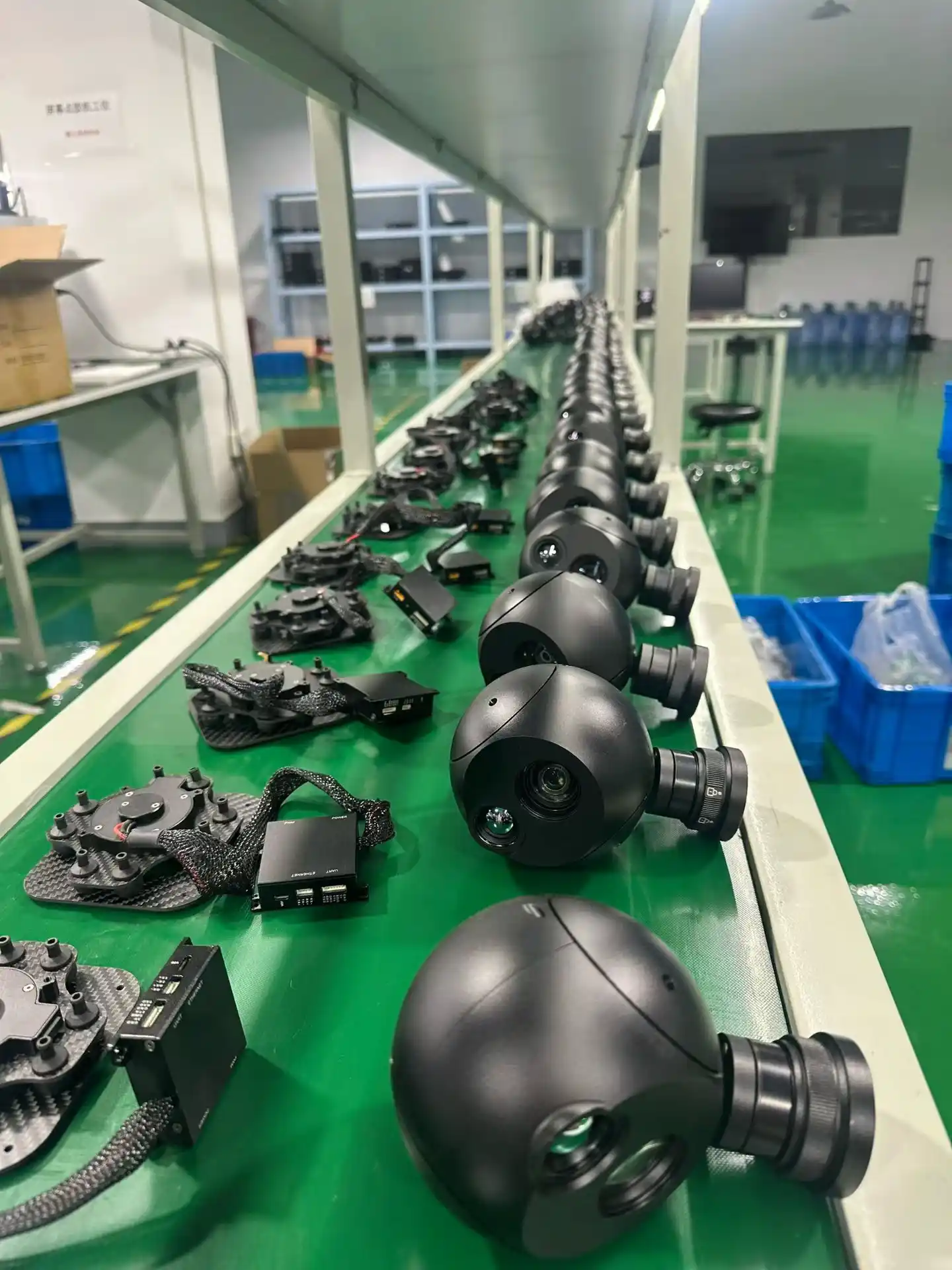
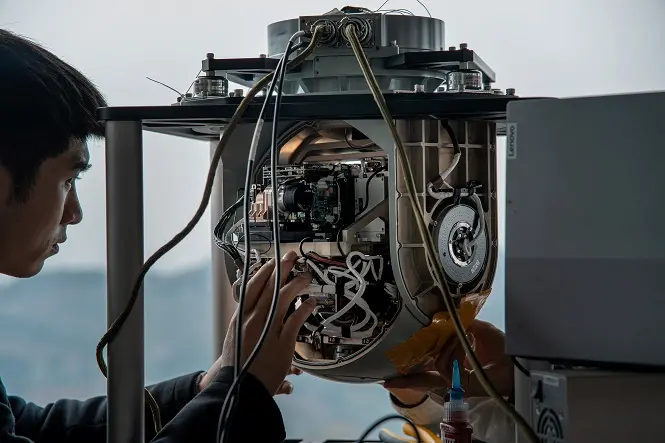
Optics, servo hardware, stabilisation firmware and the AI tracking module are developed in house, and every unit is assembled, calibrated and environmentally tested on our own line before it ships.

Request information or a quotation
Tell us the night mission and the platform, and we will confirm detector, lens and illumination. Contact us with your requirements.