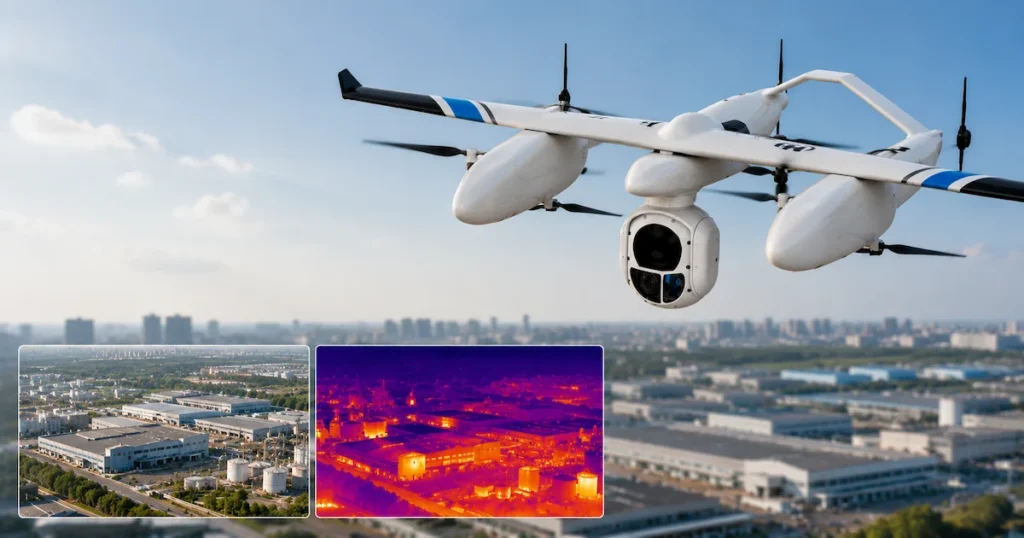
EO IR payload systems have become a core sensing technology for professional drones operating in inspection, public safety, surveillance, emergency response, and industrial monitoring missions. By combining electro-optical (EO) imaging with infrared (IR) thermal imaging in a stabilized gimbal, an EO IR payload allows UAV operators to observe both visible details and thermal information from the same airborne platform.
For professional UAV applications, however, choosing an EO IR payload involves much more than comparing camera resolution. Sensor configuration, thermal performance, optical zoom, stabilization, laser ranging, AI capabilities, payload weight, communication interfaces, and UAV integration can all affect mission performance.
This guide explains how EO IR payload systems work, which specifications matter most, and how to select the right payload configuration for professional drone applications.
What Is an EO IR Payload?
An EO IR payload is a stabilized airborne sensor system that combines electro-optical and infrared imaging technologies within a single gimbal. The EO camera captures high-resolution visible-light imagery, while the IR sensor detects thermal radiation emitted by objects and surfaces. Together, these sensors allow drone operators to observe targets across changing lighting, weather, and operational conditions.
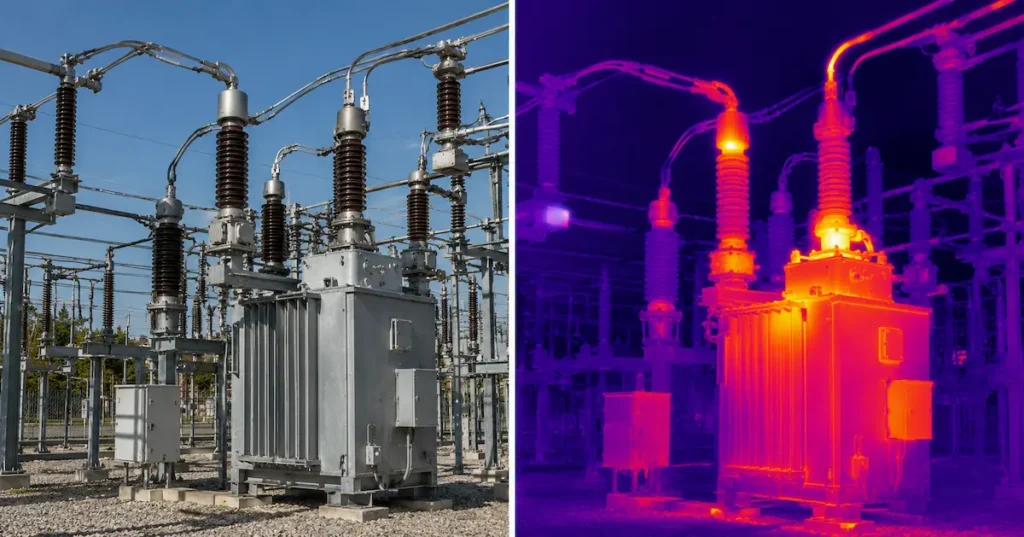
In professional UAV missions, EO and IR sensors complement each other. EO imaging is particularly useful for identifying structural details, equipment conditions, objects, and visual anomalies during daylight operations. Thermal imaging adds another layer of information by revealing temperature differences that may indicate overheating components, electrical faults, insulation problems, fires, or other conditions that are difficult to detect with visible imagery alone.
Many professional EO IR payloads can also integrate additional capabilities such as optical zoom, laser range finding, target tracking, AI-based object recognition, and multi-sensor data processing. When combined with a stabilized gimbal, these functions turn the payload into a versatile sensing platform for inspection, surveillance, emergency response, and industrial monitoring missions.
How EO and IR Sensors Work Together
EO and IR sensors provide two different but complementary types of information. The EO camera captures high-resolution visible-light imagery, allowing operators to identify structures, equipment, vehicles, and other visual details. The infrared sensor detects thermal radiation, making it possible to observe temperature differences that may not be visible to the human eye.
When integrated into the same stabilized EO IR payload, operators can switch between visible and thermal views or use both sensor channels to evaluate the same target. This combination is particularly useful when lighting conditions change or when thermal information is required to identify abnormal heat patterns.
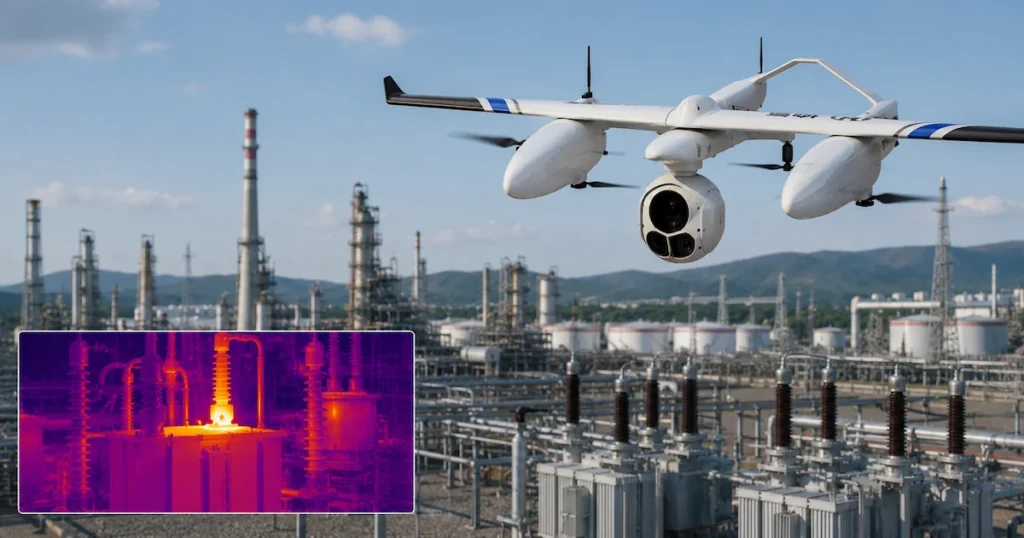
For example, during industrial inspection, an EO camera may reveal physical damage or surface conditions, while the IR sensor can help identify overheating components or unusual thermal signatures. In public safety and emergency response missions, thermal imaging can also support observation in darkness, smoke, or visually complex environments.
Key Components of an EO IR Payload
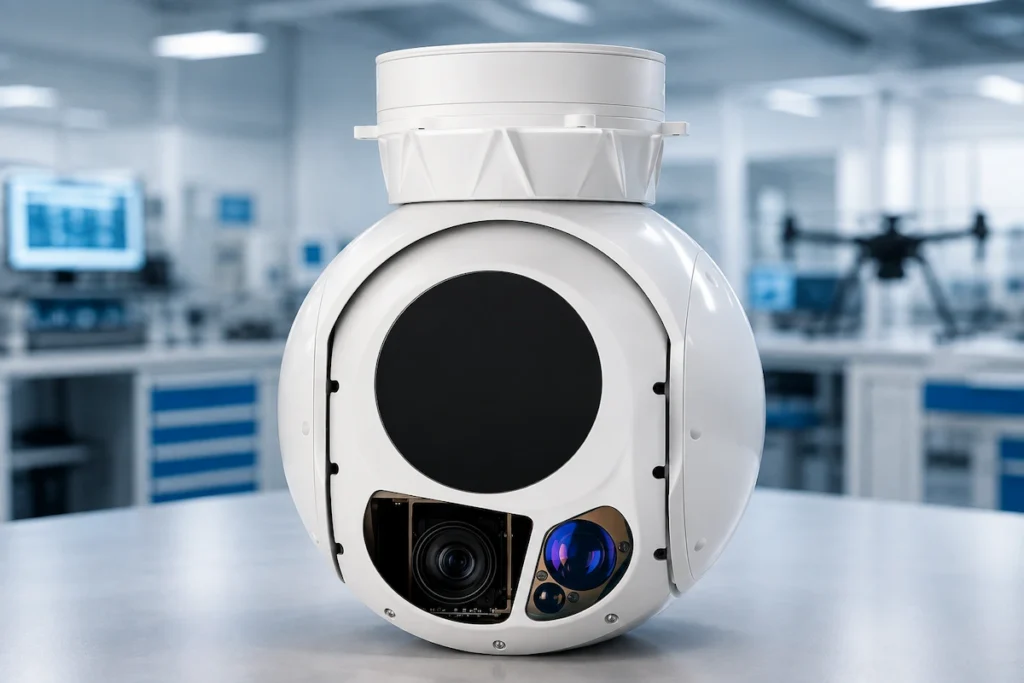
A professional EO IR payload typically combines several sensing and stabilization technologies within a single airborne gimbal. The exact configuration depends on the mission, operating distance, environmental conditions, and UAV platform.
The EO camera provides high-resolution visible-light imagery for target observation, inspection, and identification. Optical zoom is particularly important for missions where the UAV must observe equipment or objects from a safe operating distance.
The IR thermal camera detects infrared radiation and converts temperature differences into thermal imagery. Depending on the application, thermal resolution, lens configuration, sensitivity, and detection range can significantly affect mission performance.
Many professional payloads can also integrate a laser range finder (LRF) to measure the distance between the UAV and an observed target. For long-range inspection, surveillance, and situational awareness missions, this adds valuable distance information to the EO and IR imagery.
All of these sensors depend on a stabilized gimbal platform. Two-axis or three-axis stabilization helps maintain a steady line of sight despite UAV vibration, aircraft movement, and changing flight conditions, improving image quality and target observation.
Key Specifications to Consider When Choosing an EO IR Payload
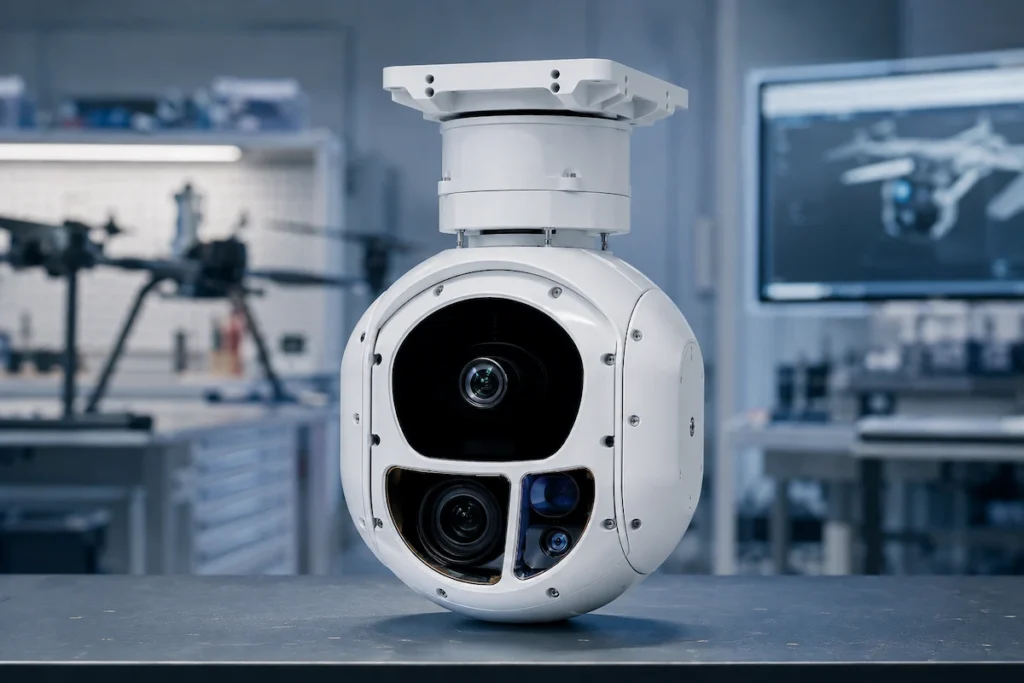
Selecting the right EO IR payload requires more than comparing camera resolution. The most suitable configuration depends on the mission distance, target size, operating environment, UAV platform, and the level of information operators need to collect.
EO resolution and optical zoom determine how much visible detail can be captured from the air. For long-range inspection and observation missions, optical zoom is especially important because it allows operators to examine distant targets without requiring the UAV to fly unnecessarily close.
Thermal resolution and sensitivity influence the amount of temperature detail available from the IR sensor. Higher thermal performance can help operators distinguish smaller temperature differences and identify abnormal thermal patterns during infrastructure and industrial inspection.
Detection, recognition, and identification distance should also be evaluated according to the actual target and mission. A payload that performs well for short-range equipment inspection may require a very different optical configuration from one designed for long-range surveillance or wide-area monitoring.
Payload weight and dimensions directly affect UAV integration, endurance, and flight performance. The payload must be matched to the aircraft’s payload capacity, mounting structure, power supply, communication interfaces, and overall mission configuration.
Finally, gimbal stabilization and control performance are essential for obtaining usable imagery from a moving airborne platform. Stable line-of-sight control becomes increasingly important as optical magnification and observation distance increase.
Common Applications for EO IR Payload Systems
EO IR payload systems are widely used in professional UAV missions where operators need both visual and thermal information from the air. The combination of stabilized imaging, long-range observation, and multi-sensor capability makes these payloads suitable for a wide range of industrial and public-sector applications.
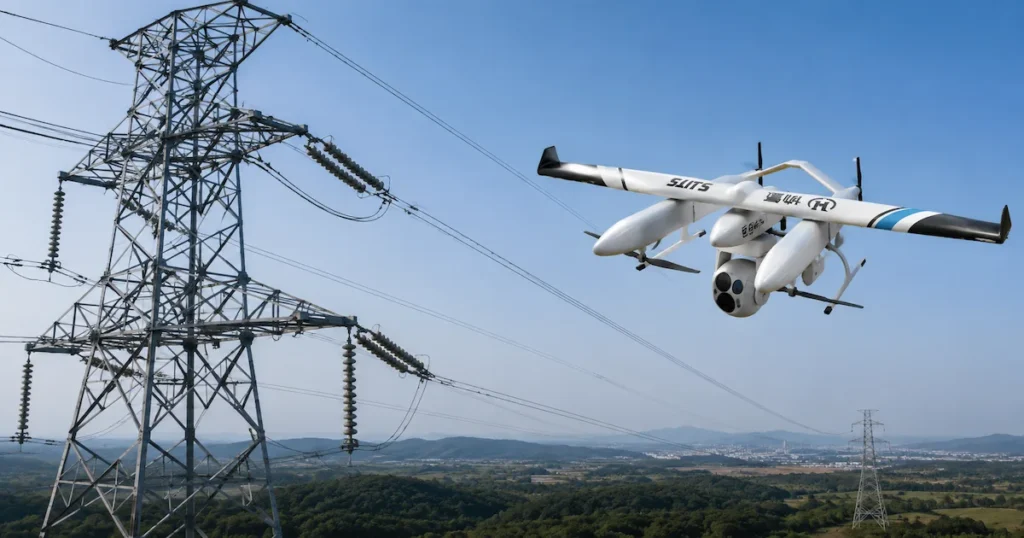
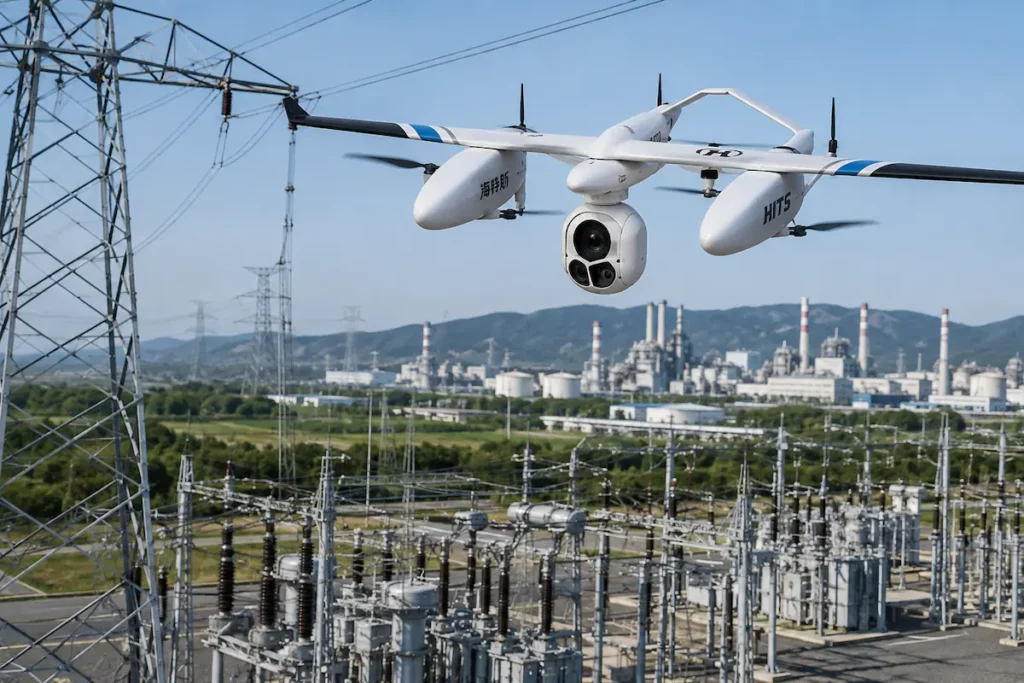
Power grid and infrastructure inspection: EO cameras can capture detailed images of transmission lines, towers, substations, and other infrastructure, while thermal imaging can help identify abnormal heat patterns in electrical components.
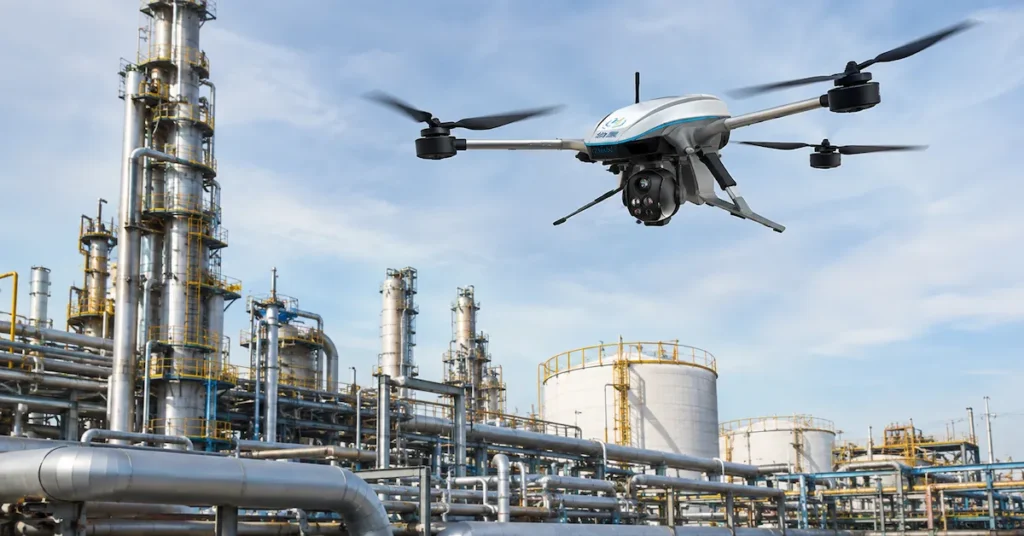
Industrial inspection: Refineries, pipelines, industrial facilities, and energy infrastructure can be observed using visible and thermal imaging to support routine inspection and condition assessment.
Emergency response: Thermal imaging can support aerial observation during nighttime operations, low-visibility conditions, fire response, and search missions where visible-light imagery alone may provide limited information.
Border and perimeter surveillance: Long-range EO and IR sensors can support day-and-night observation of large areas, particularly when combined with stabilized UAV platforms and optical zoom.
Public safety and situational awareness: Multi-sensor payloads can provide aerial teams with complementary visual and thermal information, improving situational understanding across changing environmental and lighting conditions.
AI Capabilities in EO IR Payload Systems
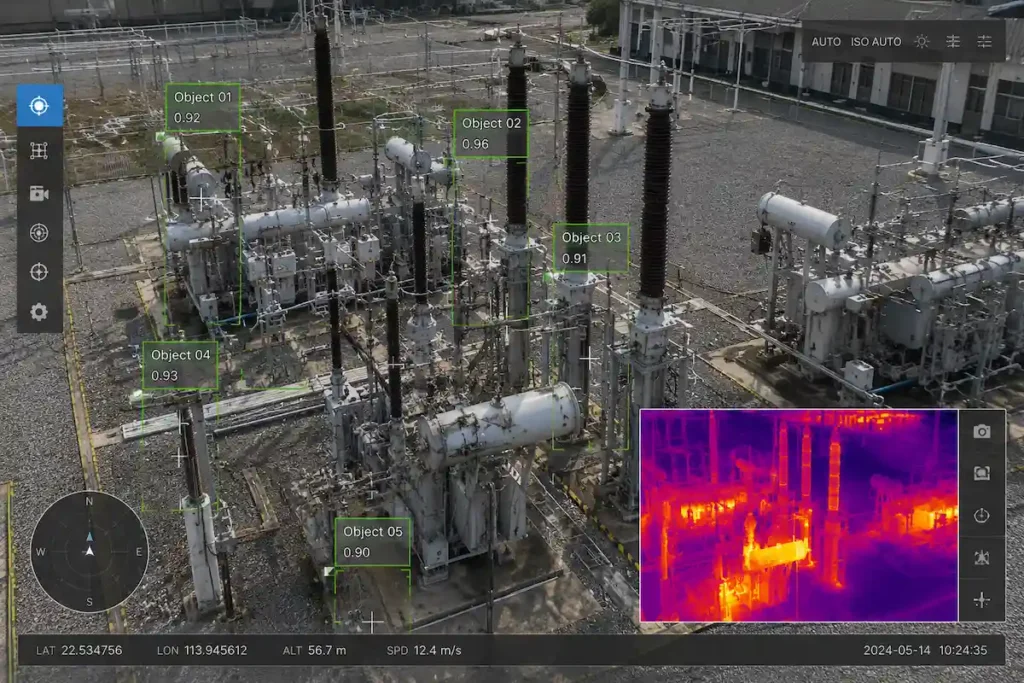
Modern EO IR payload systems are increasingly integrating onboard AI capabilities to help operators process visual and thermal information more efficiently. Instead of relying entirely on manual observation, AI-assisted payloads can support target detection, recognition, tracking, and automated inspection workflows.
AI target recognition can help identify predefined objects or features within EO or thermal imagery. Depending on the mission and trained algorithms, this capability can support applications such as infrastructure inspection, industrial monitoring, perimeter observation, and emergency response.
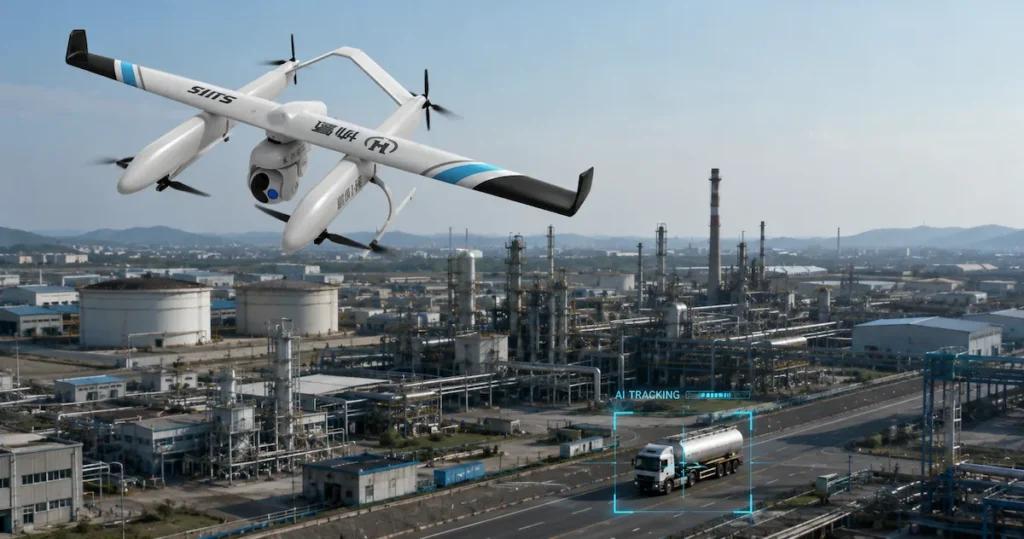
Automatic AI target tracking allows the payload to maintain observation of a selected target while the UAV or target is moving. Combined with stabilized gimbal control, this can reduce operator workload and improve continuous observation during dynamic missions.
Multi-target tracking can further support missions involving several objects within the same scene, while edge computing enables selected AI processing tasks to be performed directly onboard the UAV system rather than relying entirely on remote processing.
For industrial applications, AI can also support automated inspection and alert workflows. Visual or thermal data collected by the payload can be analyzed for predefined anomalies, helping operators review large amounts of aerial inspection data more efficiently.
The value of AI ultimately depends on the mission. Rather than treating AI as a standalone feature, professional UAV systems should combine the appropriate sensors, algorithms, computing resources, and gimbal control into an integrated payload solution.
UAV Integration Considerations for EO IR Payloads
Selecting an EO IR payload is only part of building a professional aerial sensing system. The payload must also be properly integrated with the UAV platform to ensure reliable operation, stable imaging, and efficient mission performance.
Payload weight and dimensions should be matched to the UAV’s available payload capacity. A heavier sensor configuration may provide additional capabilities, but it can also affect flight endurance, aircraft balance, and overall mission efficiency.
Mechanical integration determines how the gimbal is mounted to the aircraft and whether it has sufficient clearance for stabilization and sensor movement. The mounting structure should provide secure installation while minimizing the transmission of aircraft vibration to the imaging system.
Power requirements must also be considered. The UAV needs to provide a stable power supply that is compatible with the payload while maintaining sufficient energy for the required flight duration.
Communication and control interfaces allow the payload to exchange video, sensor data, commands, and status information with the UAV and ground control system. Compatibility with the aircraft’s communication architecture is therefore essential for functions such as gimbal control, sensor switching, zoom, laser ranging, and AI tracking.
For UAV manufacturers and system integrators, these factors should be evaluated early in the platform design process. Matching the aircraft, payload, communication system, and mission requirements as an integrated system can significantly improve operational performance.
HITS UAV provides AI Payload Systems designed for integration with professional multirotor, VTOL, and customized UAV platforms.
How to Choose the Right EO IR Payload for Your Drone
1. Define the Mission
Start by identifying the primary mission: infrastructure inspection, industrial monitoring, emergency response, surveillance, or another specialized application. Mission requirements determine which sensor combination and performance characteristics are most important.
2. Determine the Operating Distance
Consider how far the UAV needs to remain from the target and what level of detail operators must capture. Close-range inspection and long-range observation can require very different optical configurations.
3. Define EO and Thermal Imaging Requirements
Evaluate visible-light resolution, optical zoom, low-light performance, thermal resolution, sensitivity, and lens configuration according to the environment and information the mission needs to collect.
4. Evaluate Laser Ranging and AI Requirements
Determine whether the mission requires laser ranging, AI recognition, automatic tracking, multi-target tracking, or specialized inspection algorithms. These capabilities should address specific operational requirements rather than simply increase the feature list.
5. Check UAV Compatibility
Confirm payload weight, dimensions, mounting interface, power requirements, communication protocols, and data transmission requirements before selecting a payload configuration.
6. Consider Future Mission Requirements
A flexible payload architecture can make it easier to adapt the UAV system to new sensors, algorithms, platforms, or mission requirements as operational needs evolve.
Choosing an EO IR Payload Partner
Choosing an EO IR payload supplier involves more than comparing individual sensor specifications. Professional UAV projects often require the payload, aircraft platform, communication system, software, and mission requirements to work together as an integrated system.
A capable payload partner should be able to evaluate the required observation distance, EO and thermal imaging performance, stabilization, laser ranging, AI capabilities, payload weight, interfaces, and UAV compatibility before recommending a configuration.
HITS UAV provides configurable AI Payload Systems for professional UAV applications, integrating EO imaging, IR thermal imaging, laser ranging, stabilization, AI recognition, and tracking capabilities according to mission requirements.
Rather than relying on a single fixed payload configuration, the appropriate sensor and integration solution can be selected according to the UAV platform, operating environment, target characteristics, and mission objectives.
Frequently Asked Questions About EO IR Payloads
01 — What is an EO IR payload?
An EO IR payload is a UAV-mounted sensor system that combines electro-optical visible-light imaging with infrared thermal imaging. Professional systems may also integrate stabilized gimbals, optical zoom, laser rangefinders, AI recognition, and automatic tracking.
02 — What is the difference between EO and IR imaging?
EO imaging uses visible light to capture detailed visual information, while IR imaging detects infrared radiation and temperature differences. Combining both sensors allows UAV operators to collect complementary visual and thermal information during the same mission.
03 — Can an EO IR payload operate at night?
Yes. Infrared thermal imaging does not depend on visible daylight in the same way as a conventional optical camera, making it useful for many night and low-light missions. Some EO systems can also include dedicated low-light imaging capabilities.
04 — How do I choose an EO IR payload for a drone?
Start with the mission requirements. Consider operating distance, EO resolution and optical zoom, thermal imaging requirements, stabilization, laser ranging, AI functions, payload weight, power requirements, mounting, and communication interfaces. The appropriate configuration should be selected according to the mission and UAV platform.