Introduction
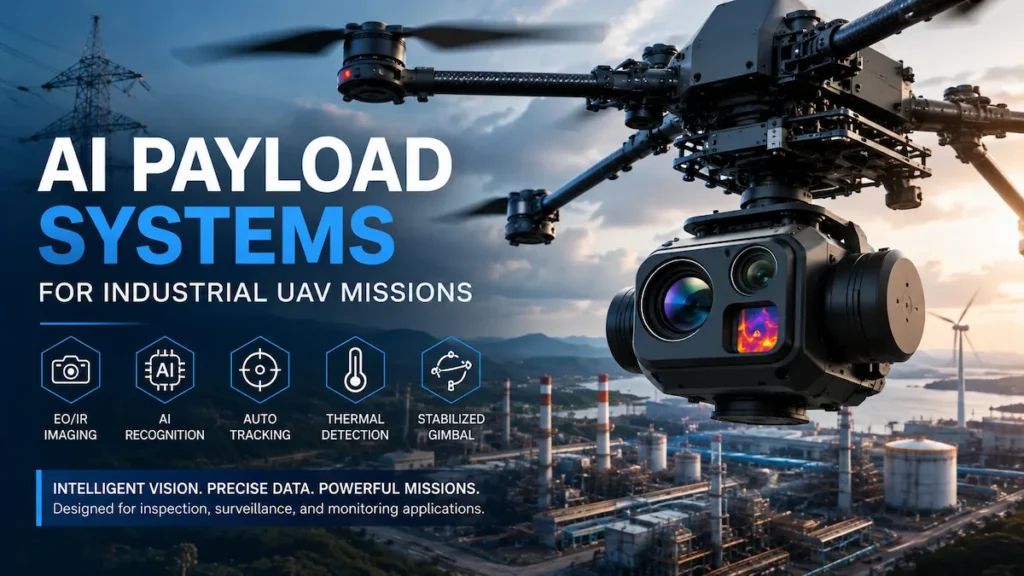
Industrial UAV missions increasingly require more than a conventional drone camera. Operators need stabilized imaging, thermal detection, AI target recognition, automatic tracking, and reliable data collection in demanding environments.
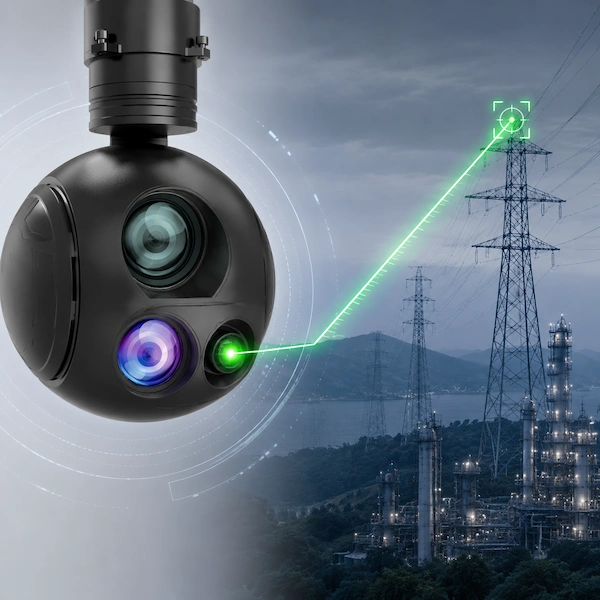
AI payload systems combine these capabilities into an integrated aerial sensing solution. By combining EO/IR sensors, precision stabilization, AI processing, and intelligent tracking, professional UAV platforms can support inspection, surveillance, monitoring, and emergency response across large and difficult-to-access areas.
For power infrastructure, wind energy, oil and gas, mining, border surveillance, and emergency response, selecting the right payload configuration can have a direct impact on mission efficiency and data quality.
What Is an AI Payload System?
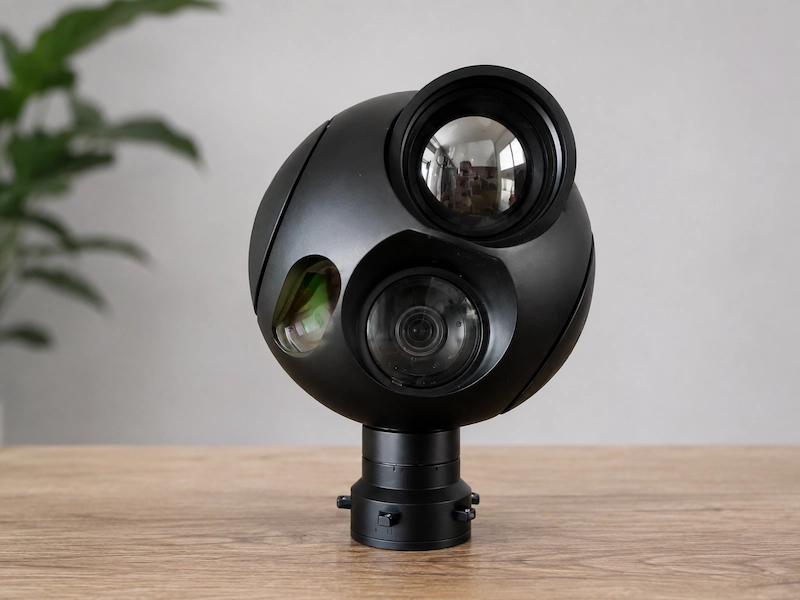
An AI payload system is an advanced UAV sensor platform that combines cameras, stabilized gimbal technology, onboard processing, and artificial intelligence capabilities.
Unlike a basic drone camera that primarily captures images or video, an AI payload can help a UAV detect, recognize, track, and analyze targets during flight.
A professional system may include:
- EO optical camera
- IR thermal camera
- Multi-sensor imaging
- 2-axis or 3-axis stabilization
- AI target recognition
- Automatic target tracking
- Multi-target tracking
- Laser range finding
- Edge AI processing
This combination allows the UAV to move from simple aerial imaging toward intelligent aerial missions.
For industrial operators, the objective is not simply to collect more video. The objective is to obtain useful information that can support inspection, surveillance, decision-making, and operational response.
EO/IR Integration for UAV Missions
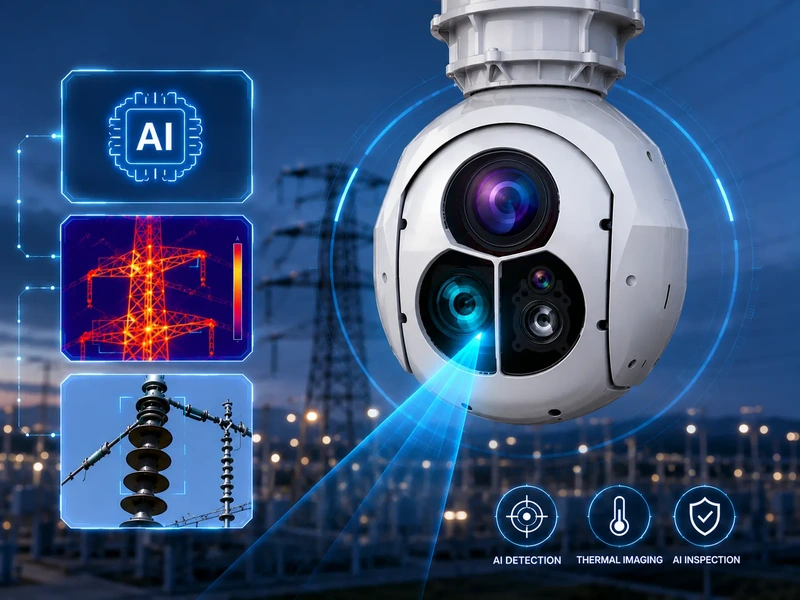
EO/IR payload technology is widely used for professional UAV inspection and surveillance because visible and infrared sensors provide complementary information.
Electro-Optical Imaging
Electro-optical cameras provide high-resolution visible-light imagery for identifying infrastructure, vehicles, equipment, terrain, and other objects.
EO cameras are particularly useful for:
- Infrastructure inspection
- Power grid monitoring
- Pipeline inspection
- Industrial facility monitoring
- Security surveillance
- Mapping and situational awareness
High-resolution optical imaging provides operators with detailed visual information during daytime missions.
Infrared Thermal Imaging
Thermal imaging adds another layer of information by detecting differences in surface temperature.
For industrial inspection, thermal cameras can help identify potential abnormal temperature patterns in electrical equipment, industrial assets, and other infrastructure.
Thermal imaging can also improve UAV operations in:
- Low-light environments
- Night surveillance
- Search and rescue
- Industrial monitoring
- Infrastructure inspection
Combining EO and IR sensors allows operators to switch between visual and thermal information according to mission requirements.
Stabilized EO/IR Gimbal
A stabilized gimbal helps maintain a steady view while the UAV is moving.
This is particularly important for long-endurance UAV missions where vibration, wind, aircraft movement, and changes in flight direction can affect image quality.
A professional EO/IR payload therefore needs more than high-resolution sensors. Sensor stabilization, payload integration, communication, power management, and UAV compatibility all contribute to overall mission performance.
For more information about integrated payload configurations, see the AI Payload Systems solution.
AI Tracking and Target Recognition
The integration of artificial intelligence allows UAV payload systems to perform functions beyond traditional imaging.
AI Target Recognition
AI recognition algorithms can analyze video streams and identify predefined objects or targets.
Depending on the application, recognition may be used for:
- Vehicles
- People
- Infrastructure
- Industrial assets
- Potential anomalies
- Other mission-specific targets
This can reduce the amount of video that operators need to review manually.
Automatic Target Tracking
AI tracking allows the payload to maintain observation of a moving target while the UAV or camera changes position.
For example, during a surveillance mission, an operator may identify a moving vehicle. The AI tracking system can assist in keeping the target within the camera’s field of view.
This capability can support:
- Border surveillance
- Maritime monitoring
- Industrial security
- Traffic observation
- Emergency response
- Large-area monitoring
Multi-target tracking can further expand the mission capability when several objects need to be monitored simultaneously.
AI-Powered Mission Intelligence
AI payload systems can also become part of a broader UAV mission system.
Instead of treating the payload as an isolated camera, the UAV platform, payload, AI processing, communication system, and mission software can work together as an integrated architecture.
This approach is particularly valuable for professional operators that require repeatable and mission-specific aerial intelligence.
Applications of AI Payload Systems
AI payload systems can support a wide range of industrial and government UAV missions.
Power Grid Inspection
UAVs equipped with EO/IR and AI capabilities can inspect transmission lines, substations, towers, and other electrical infrastructure.
Optical imaging can provide detailed visual information, while thermal imaging can help identify potential temperature anomalies.
AI-assisted analysis can further support operators by highlighting objects or areas that require closer inspection.
For broader infrastructure applications, explore our Power Grid Monitoring solutions.
Wind Turbine Inspection
Wind turbines are often located in remote or difficult-to-access environments.
A UAV equipped with a stabilized EO/IR payload can inspect turbine structures, blades, and surrounding equipment from the air.
Thermal imaging and high-resolution optical cameras can provide complementary information while reducing the need for personnel to perform every inspection at close range.
This approach can help improve inspection efficiency and reduce operational exposure.
Oil and Gas Inspection
Oil and gas facilities often extend across large geographic areas, including pipelines, processing facilities, storage areas, and remote infrastructure.
Long-endurance UAVs equipped with professional payload systems can support aerial monitoring over these assets.
EO/IR sensors can provide visual and thermal information, while AI capabilities can assist with target detection and monitoring.
For large industrial sites, this combination can help operators cover more areas with fewer manual inspection activities.
Border Surveillance
Large border regions can be difficult to monitor continuously using ground-based systems alone.
Long-range UAV platforms equipped with EO/IR payloads can provide aerial observation across large areas.
AI tracking and target recognition can assist operators in monitoring moving objects and prioritizing potential targets for further observation.
This makes AI payload systems particularly relevant for professional aerial surveillance missions.
Emergency Response
During natural disasters and other emergency situations, rapid aerial information can help response teams understand changing conditions.
Thermal imaging can assist with locating people or identifying areas of interest, while optical cameras can provide detailed information about damaged infrastructure.
AI-assisted recognition and tracking can further support rapid assessment of large areas.
UAVs can therefore provide a flexible aerial information platform when conventional infrastructure is damaged or inaccessible.
How to Choose an AI Payload System
Selecting an AI payload should start with the mission rather than the camera specification alone.
Sensor Configuration
Consider whether the mission requires:
- EO imaging
- IR thermal imaging
- EO/IR integration
- Multi-sensor capability
- Laser range finding
Different missions require different combinations of sensors.
Stabilization Performance
A stabilized gimbal is important for maintaining image quality during flight.
The required stabilization configuration depends on:
- UAV platform
- Flight speed
- Wind conditions
- Mission altitude
- Required image quality
- Target movement
AI Processing Capability
When evaluating an AI payload, consider whether the system supports:
- AI target recognition
- Automatic tracking
- Multi-target tracking
- Edge AI processing
- Mission-specific algorithms
- Real-time analysis
These capabilities determine how effectively the payload can support intelligent aerial missions.
Detection and Identification Range
Detection and identification performance depends on several factors, including sensor resolution, lens configuration, atmospheric conditions, target size, and operating altitude.
For this reason, payload selection should be based on actual mission requirements rather than relying on a single range specification.
UAV Integration
A payload must be compatible with the UAV platform on which it will operate.
Important integration factors include:
- Payload weight
- Mounting interface
- Power requirements
- Communication interface
- Mechanical integration
- Flight controller compatibility
- Data transmission
- Ground control integration
A professionally integrated UAV and payload system can provide more reliable mission performance than treating the aircraft and payload as separate components.
AI Payload Systems for Professional UAV Integration
For demanding industrial missions, payload technology should be considered as part of the complete UAV architecture.
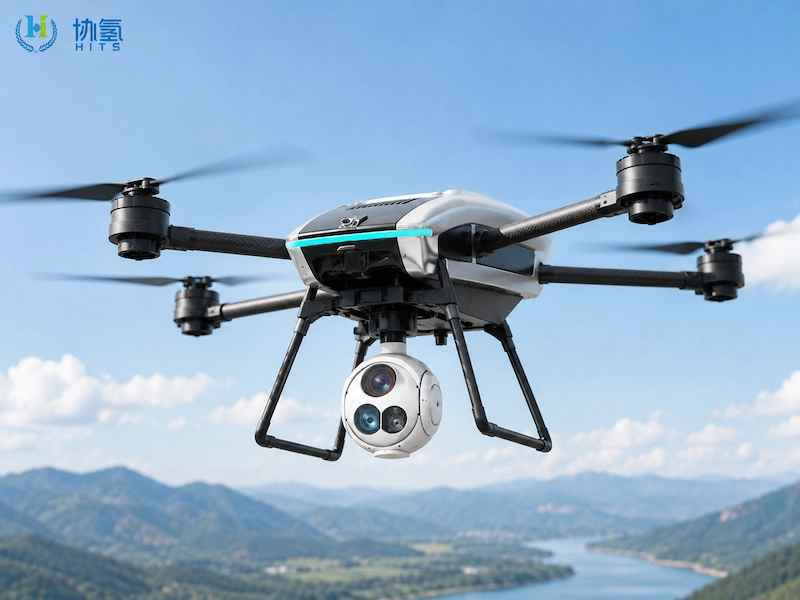
The aircraft provides flight capability. The payload provides sensing capability. AI provides recognition and tracking. Communication systems transfer mission data to operators.
Together, these technologies create an integrated aerial mission system.
HITS focuses on combining UAV platforms, AI payload technologies, hydrogen energy systems, and engineering integration to support professional industrial and government applications.
Our AI-Powered Payload Systems are designed for applications requiring EO/IR sensing, AI recognition, tracking, and intelligent aerial monitoring.
Why Choose HITS AI Payload Solutions?
Integrated EO/IR Payload Technology
HITS payload solutions can combine optical imaging, infrared thermal sensing, stabilization, and other mission-specific sensors within a professional UAV payload architecture.
AI Recognition and Tracking
AI capabilities can support target recognition, automatic tracking, and intelligent aerial monitoring.
UAV Integration
Payload systems can be integrated with UAV platforms according to aircraft configuration, payload capacity, power requirements, and mission objectives.
Mission Customization
Different industries have different requirements. HITS can support payload configurations and UAV integration according to specific inspection, surveillance, monitoring, and emergency response applications.
Conclusion
AI payload systems are becoming an important part of professional UAV missions.
By combining EO/IR imaging, thermal sensing, stabilization, AI recognition, and automatic tracking, UAV platforms can provide more intelligent aerial monitoring for industrial and government applications.
The right payload should be selected according to the complete mission requirement, including sensor performance, AI capability, UAV integration, operating environment, and required detection range.
For organizations evaluating AI payload technology for industrial inspection, surveillance, or long-endurance UAV missions, an integrated approach can provide a more practical path from aerial data collection to actionable mission intelligence.
Frequently Asked Questions
Q1. What is an AI payload system?
An AI payload system combines UAV cameras, stabilized gimbal technology, AI processing, and intelligent sensing capabilities to support automated recognition, tracking, inspection, and surveillance missions.
Q2. What is an EO/IR payload used for?
An EO/IR payload combines electro-optical and infrared thermal sensors to provide visible and thermal imagery for UAV inspection, surveillance, monitoring, and emergency response.
Q3. How does AI tracking work on drones?
AI tracking uses computer vision algorithms to identify and follow selected targets in real time while the UAV or gimbal changes position.
Q4. Can AI payload systems be customized?
Yes. AI payload configurations can be adapted according to UAV platform, sensor requirements, payload capacity, AI functions, communication interfaces, and specific mission objectives.