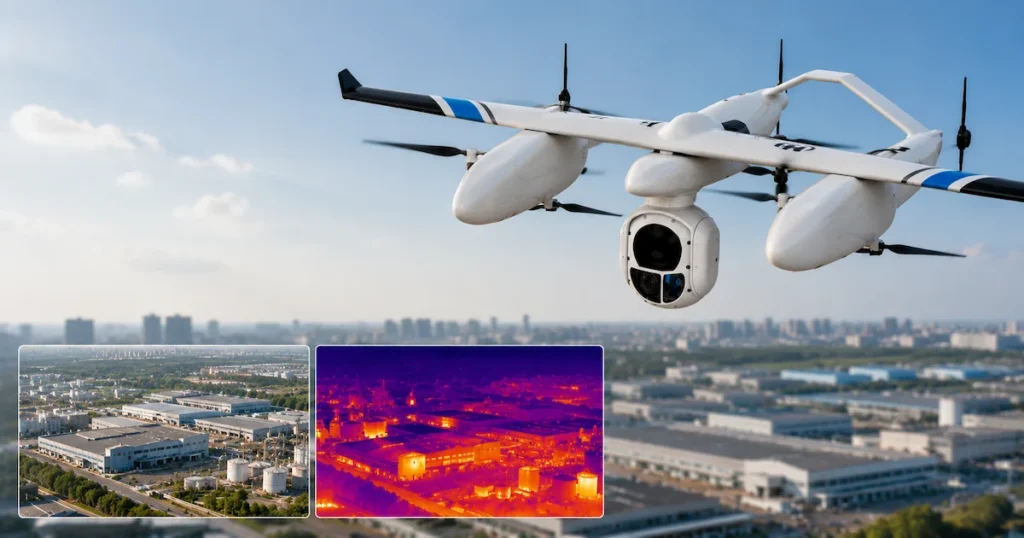
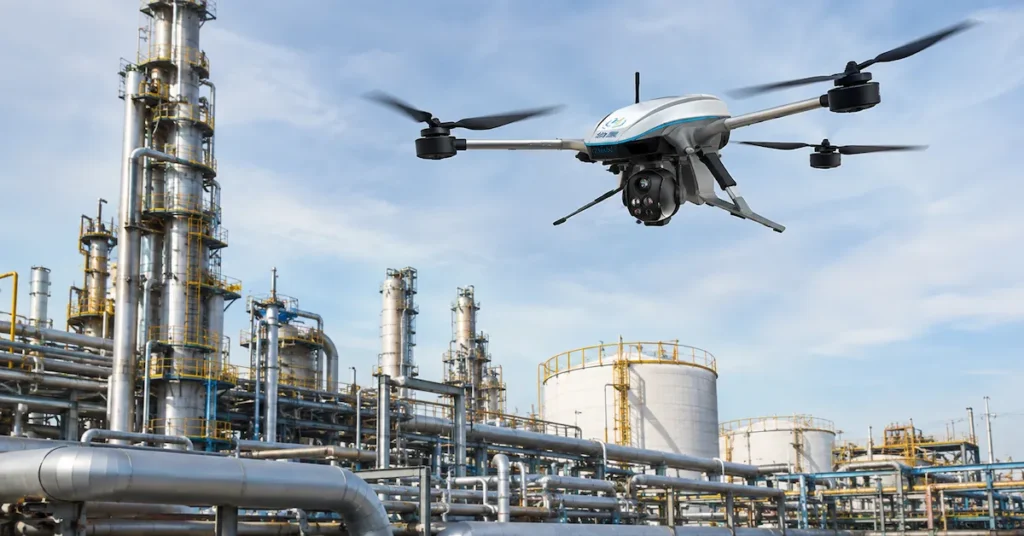
Industrial drone missions depend heavily on what the aircraft can see, measure, and analyze. While the UAV provides mobility and access, the camera system determines what information operators can collect from equipment, structures, and surrounding environments.
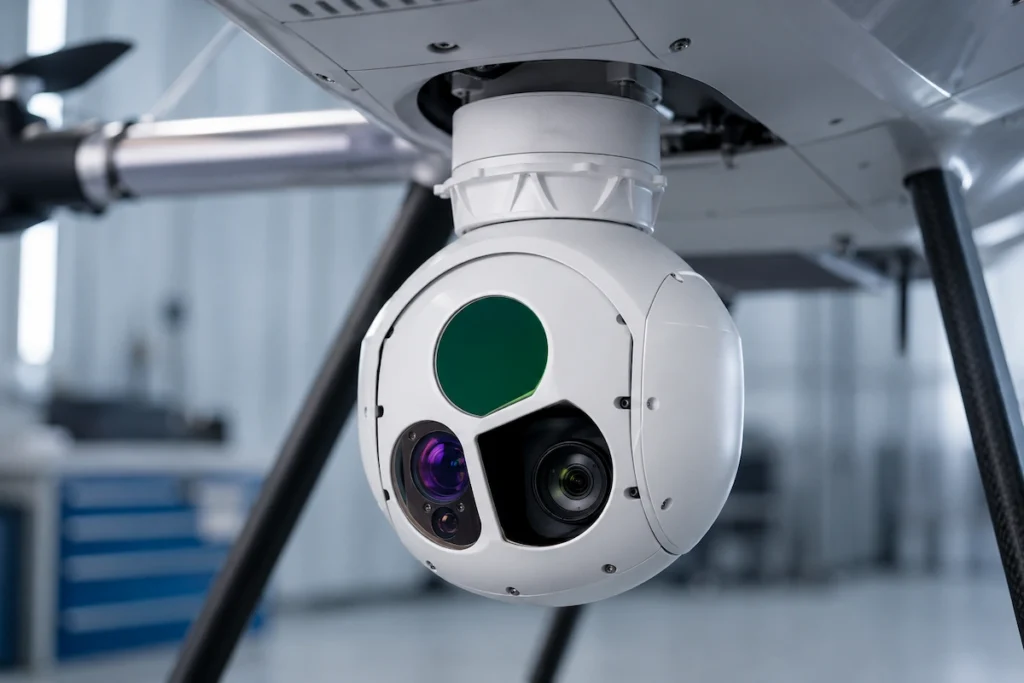
For professional applications, a drone camera system is more than a standard camera mounted beneath an aircraft. Industrial missions may require high-resolution EO imaging, optical zoom, infrared thermal sensing, gimbal stabilization, AI processing, and reliable communication with the UAV and ground station.
The correct configuration depends on the mission. Inspecting a small electrical connector from a safe distance requires different optical capabilities than monitoring thermal conditions across industrial equipment. Likewise, long-range observation may require different stabilization and sensor performance than close-range structural inspection.
A professional drone camera system should therefore be selected as an integrated sensing payload rather than as an isolated camera.
This guide explains the main technologies used in professional UAV camera systems, how EO, IR, stabilization, and AI work together, and what to consider when selecting a camera payload for industrial monitoring.
What Is a Drone Camera System?
A drone camera system is an airborne imaging system designed to collect visual or sensor data from a UAV platform.
In simple applications, this may consist of a single visible-light camera. Professional systems can be considerably more advanced, combining multiple sensors and processing functions within a stabilized payload.
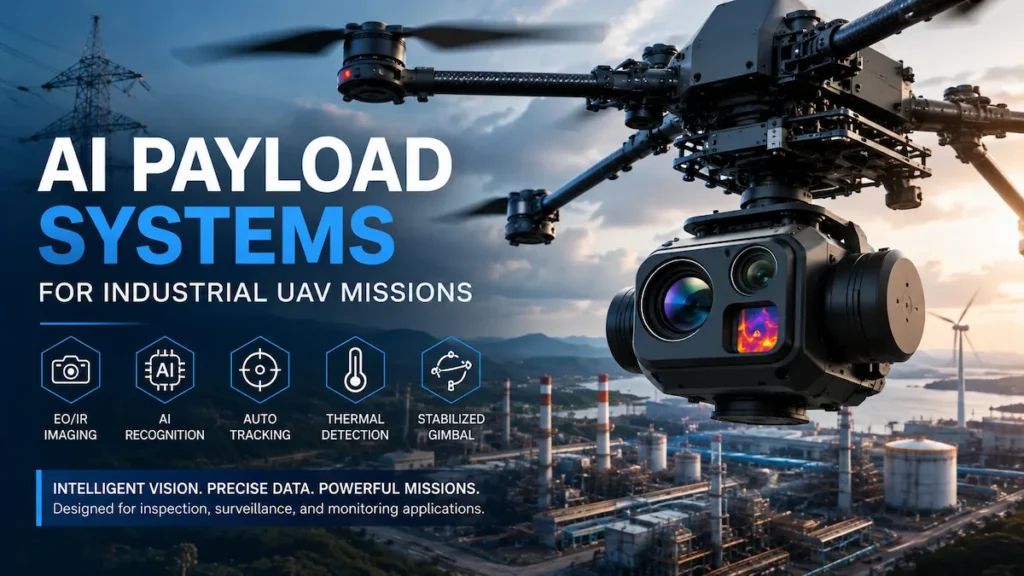
A typical professional UAV camera system may include:
- EO visible-light imaging
- Optical zoom
- IR thermal imaging
- Stabilized gimbal control
- Image and video processing
- AI recognition or tracking
- Communication interfaces
- Optional laser ranging
These components must work together while meeting the aircraft’s limitations for weight, power, mounting, communication, and flight performance.
For this reason, comparing only camera resolution does not provide a complete picture of system capability. Lens selection, sensor type, stabilization, processing performance, and UAV integration can be equally important.
Why Industrial Monitoring Requires Professional Camera Systems
Industrial environments create observation challenges that are different from ordinary aerial photography.
Observation Distance
Operators may not always be able to position a UAV close to the inspection target.
Electrical infrastructure, tall structures, restricted areas, heat sources, or operating machinery may require the aircraft to maintain an appropriate distance. In these situations, optical zoom and image resolution become important factors in obtaining useful detail.
Small Inspection Targets
Many industrial inspection targets are relatively small compared with the overall facility.
Connectors, insulators, valves, fasteners, pipeline components, and structural details may occupy only a small portion of the camera image.
The camera system must provide sufficient detail at the actual working distance, not simply high resolution under ideal laboratory conditions.
Difficult Operating Environments
Industrial monitoring may take place around complex structures, remote infrastructure, elevated equipment, or environments with changing light and weather conditions.
Wind and aircraft vibration can affect image stability, while low-light conditions can reduce the usefulness of standard visible-light imaging.
Different missions may therefore require different combinations of EO, IR, optical, and stabilization capabilities.
Stable Image Requirements
Image stability becomes increasingly important when using long focal lengths.
Small aircraft movements that are barely noticeable in a wide-angle image can produce significant movement when the camera is zoomed in on a distant component.
A stabilized gimbal helps maintain the sensor’s line of sight and allows operators to observe targets more consistently.
EO Cameras for High-Resolution Visual Monitoring
Electro-optical cameras capture visible-light imagery and are one of the most widely used sensors in professional drone inspection.
For industrial monitoring, EO cameras can help operators observe surface condition, structural details, equipment components, corrosion, visible damage, and other physical characteristics.
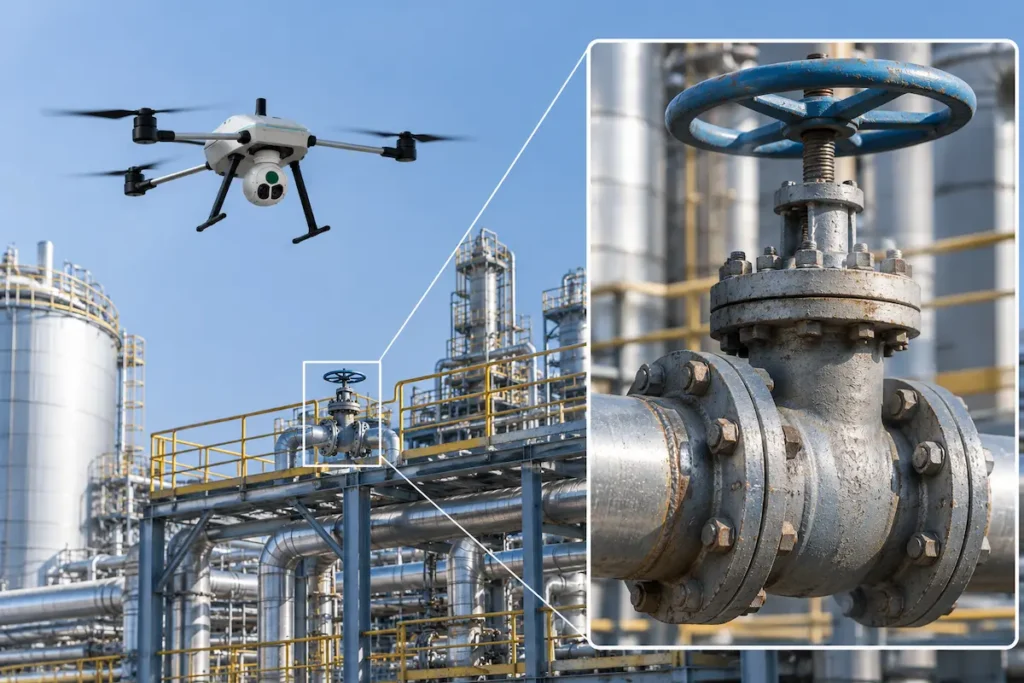
Optical zoom is particularly important when inspection targets are small or when the UAV needs to maintain distance from equipment.
Unlike digital enlargement, optical zoom changes the optical field of view and allows the sensor to capture more detail from a distant target, subject to the capabilities of the lens and imaging system.
When combined with effective stabilization, a zoom EO camera can provide detailed observation of industrial components while the UAV remains in a suitable operating position.
For missions requiring both visible and thermal information, EO imaging can also be integrated with an EO IR payload rather than operating as a standalone sensor.
Thermal Imaging for Industrial Inspection
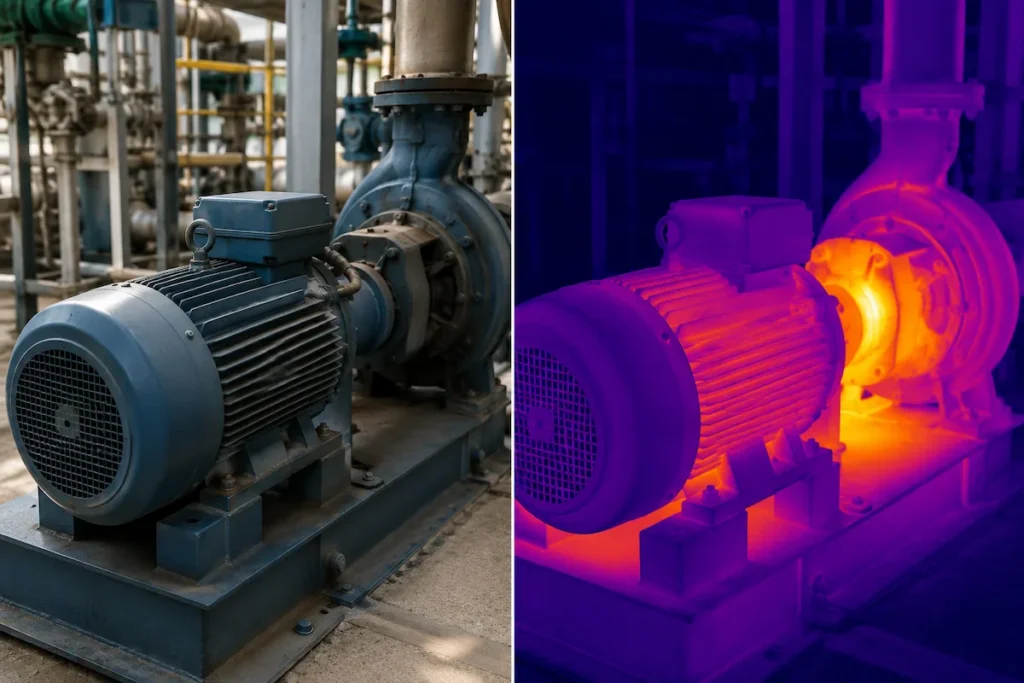
Visible-light cameras show the physical appearance of equipment, but they cannot directly show how heat is distributed across a component.
Infrared thermal cameras provide a different type of information by detecting thermal radiation.
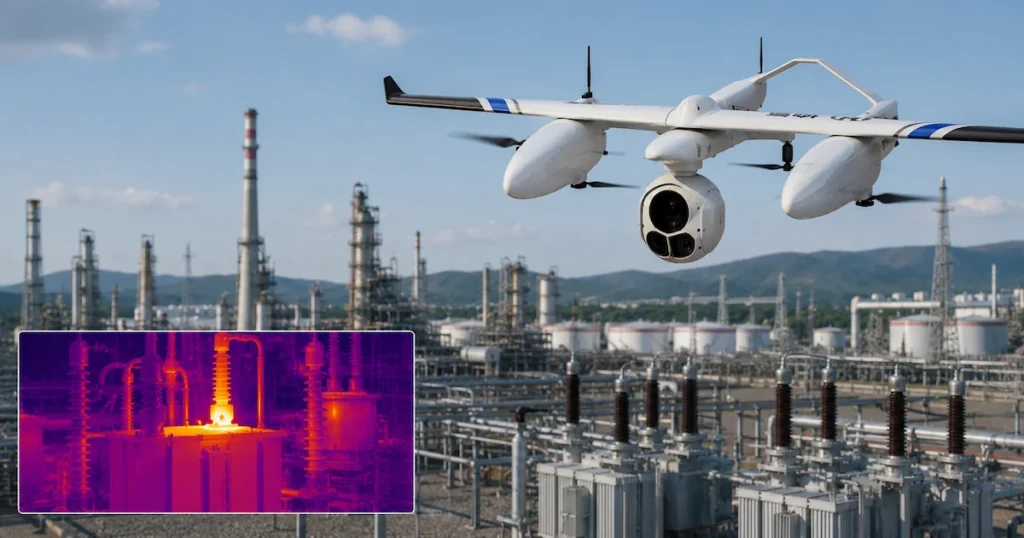
In industrial inspection, thermal imaging can help reveal unusual temperature patterns associated with electrical equipment, mechanical components, energy infrastructure, and other assets.
Potential observations may include localized hotspots, uneven temperature distribution, or components operating differently from comparable equipment.
Thermal imaging complements visible inspection by revealing information that may not be apparent in an EO image.
However, thermal data should always be interpreted in the context of equipment operation, environmental conditions, viewing distance, sensor capability, and inspection procedures. An unusual thermal pattern does not automatically establish the cause of a fault.
For missions where temperature-related information is important, the thermal sensor should be selected according to the required target size, observation distance, image detail, and measurement requirements.
Why Multi-Sensor EO/IR Camera Systems Matter
Industrial inspection rarely depends on only one type of information.
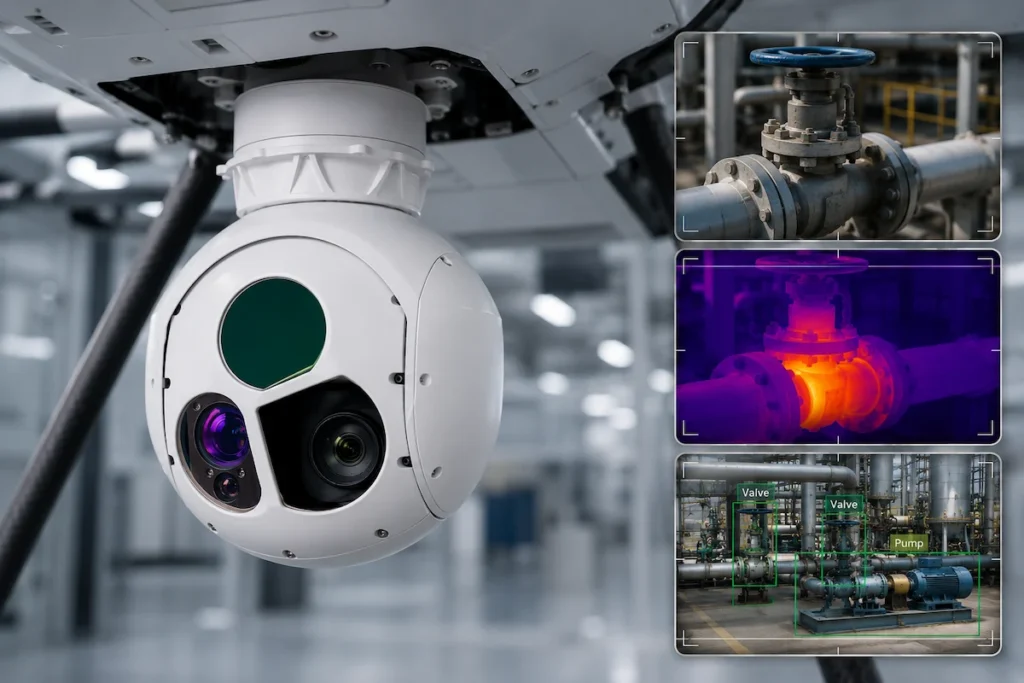
An EO camera can reveal physical details, while an IR sensor provides information about thermal behavior. Combining both sensors allows operators to compare visible and thermal information during the same inspection mission.
For example, an operator may use the EO channel to identify a specific connector or equipment component and then switch to the thermal channel to examine its temperature pattern.
Some multi-sensor systems can also incorporate optical zoom, laser ranging, AI processing, or other functions according to mission requirements.
The key advantage is not simply having more sensors.
Different sensors answer different inspection questions, and their value depends on how effectively they work together within the payload system.
This makes sensor selection and integration particularly important for professional industrial UAV applications.
The Role of Gimbal Stabilization
A high-performance sensor is only useful if it can maintain a stable view of the target.
UAVs are constantly affected by aircraft movement, vibration, wind, and changes in attitude. These effects can make detailed inspection difficult, particularly when operators use high optical zoom.
A stabilized gimbal helps isolate the camera’s line of sight from aircraft motion and allows the sensor to remain directed toward the inspection area.
Depending on the payload and UAV configuration, professional systems may use two-axis or three-axis stabilization.
Neither configuration should be evaluated independently of the mission. Payload size, aircraft structure, required viewing angles, stabilization performance, and integration requirements all influence the appropriate design.
For long-range observation and detailed industrial inspection, stabilization should therefore be considered together with sensor resolution and optical performance rather than treated as a secondary feature.
AI Capabilities in Drone Camera Systems
Modern drone camera systems can also incorporate onboard or connected AI processing.
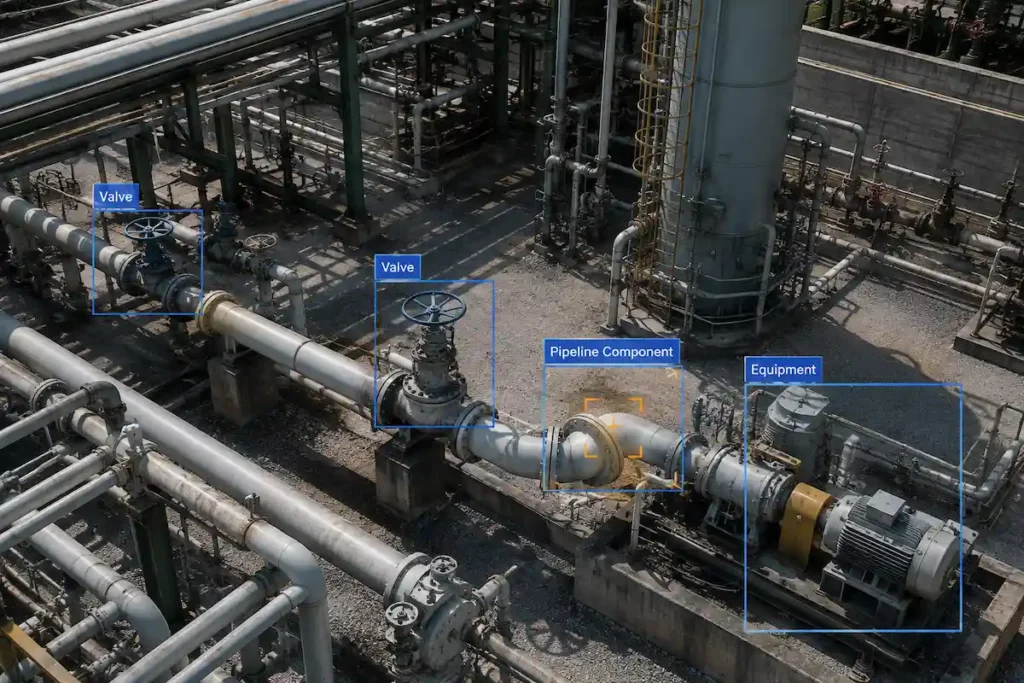
Computer vision algorithms can analyze incoming imagery and assist operators with tasks such as object detection, component recognition, image classification, defect identification, and automatic tracking.
For industrial monitoring, AI may help identify predefined assets or organize large amounts of inspection imagery for further review.
For example, an algorithm could be trained to locate particular components within images and highlight areas that meet predefined recognition criteria.
Automatic tracking can also help maintain observation of selected objects when either the UAV or target is moving.
AI capability depends on the algorithm, training data, sensor imagery, computing platform, and operating environment. It should therefore be evaluated according to the actual mission rather than treated as a universal function.
In many professional systems, AI processing works most effectively when it is integrated with the camera, stabilized gimbal, UAV control system, and data workflow.
Industrial Applications of Drone Camera Systems
Professional UAV camera systems can support a wide range of monitoring and inspection missions.
Power Grid Monitoring
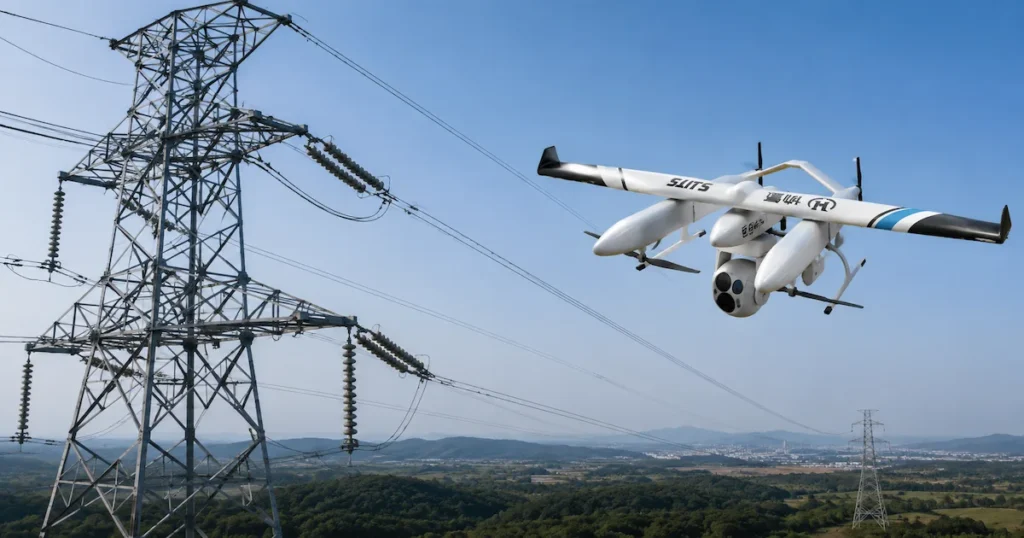
Power grid inspection can require detailed observation of transmission towers, insulators, conductors, connectors, and surrounding vegetation.
EO cameras can provide high-resolution visual information, while thermal sensors can help identify unusual temperature patterns around electrical components. AI processing may also assist with component recognition and inspection data analysis.
The appropriate payload depends on inspection distance, target size, thermal requirements, and UAV platform.
Oil and Gas Monitoring
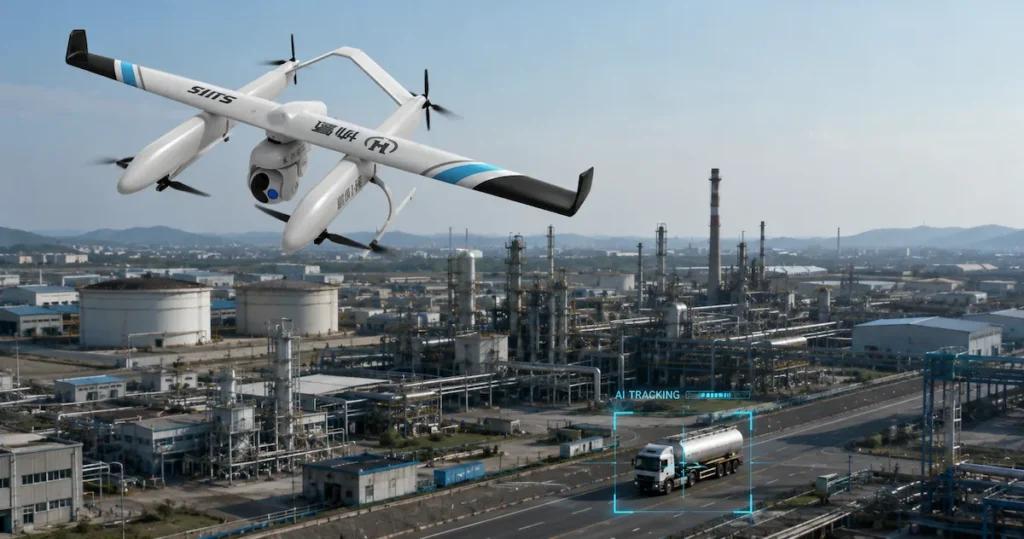
Oil and gas facilities contain pipelines, storage equipment, processing infrastructure, valves, and other assets distributed across large or difficult-to-access areas.
Drone camera systems can support visual observation of equipment and structures while thermal sensing can provide additional information where temperature differences are relevant to the inspection objective.
Long-range optical capability may also be useful when the UAV must maintain distance from operating equipment.
Wind Turbine Inspection
Wind turbines present a combination of elevated structures, large components, and difficult viewing angles.
EO cameras can support visual inspection of blades, nacelles, towers, and external components, while thermal imaging may provide additional information for selected electrical or mechanical inspection tasks.
Stable gimbal control is particularly valuable when detailed observation is performed at longer focal lengths.
Industrial Facility Monitoring
Factories, energy facilities, mining sites, processing plants, and other industrial environments may require regular observation of equipment and infrastructure.
Professional drone camera systems can support industrial inspection by collecting visual and thermal information from elevated, remote, or difficult-to-access locations without relying exclusively on ground-level observation.
How to Choose a Drone Camera System
Choosing the right camera payload begins with defining the mission.
A long list of specifications is less useful if the system cannot collect the information required by the operator.
Define the Inspection Target
Start by identifying what the camera needs to observe.
A structural component, electrical connector, thermal anomaly, vehicle, person, pipeline, or other target can require different sensors, lenses, and AI capabilities.
Determine the Observation Distance
Working distance affects how much detail the sensor can capture.
Target size, optical zoom, sensor resolution, atmospheric conditions, and stabilization should be evaluated together rather than independently.
Select EO or EO/IR
Some missions require only high-resolution visible imagery.
Others benefit from a combination of visible and thermal sensing. If both types of information are required during the same mission, a multi-sensor EO/IR system may be more appropriate than separate payloads.
Evaluate Stabilization Requirements
Consider aircraft vibration, wind, target size, viewing angle, and expected focal length.
The greater the observation distance and optical zoom, the more important stable line-of-sight control becomes.
Consider AI Requirements
Determine whether the mission requires object detection, recognition, defect analysis, automatic tracking, multi-target tracking, or customized algorithms.
Not every industrial inspection requires AI, and the required processing capability should be selected according to the operational workflow.
Confirm UAV Integration
Camera payload weight, mounting interface, power supply, communication protocols, video output, gimbal control, and ground station compatibility must all be considered.
A technically capable camera system may still be unsuitable if it cannot be integrated effectively with the intended UAV platform.
Camera System Integration with Professional UAVs
Selecting the camera is only part of a professional UAV project.
The payload must operate as part of the aircraft system.
Mechanical interfaces determine how the payload is mounted. Power architecture determines whether the UAV can support the sensor and onboard processor. Communication protocols allow commands and data to move between the payload, aircraft, and ground station.
Video transmission capability affects how operators receive EO and IR imagery, while gimbal control determines how the camera is directed during the mission.
Payload weight also influences aircraft endurance and flight performance.
Multirotor UAVs may be suitable for missions requiring stable hovering and precise positioning around individual assets. VTOL fixed-wing platforms can provide advantages when monitoring infrastructure across larger geographic areas.
The UAV platform and camera payload should therefore be evaluated as one integrated system.
Why Payload Integration Matters for Industrial Monitoring
The effectiveness of an industrial drone camera system depends not only on individual sensor specifications but also on how well the complete payload works with the aircraft and mission workflow.
EO cameras, IR sensors, stabilization, AI processing, communication interfaces, and UAV control systems must operate together reliably.
Poor integration can limit sensor control, video transmission, stabilization, endurance, or access to AI functions even when the individual camera specifications appear strong.
For UAV manufacturers, system integrators, utilities, industrial operators, and inspection providers, payload integration should therefore be considered early in system design.
Configurable AI Payload Systems can combine EO imaging, IR thermal imaging, optical zoom, stabilized gimbals, AI recognition and tracking, optional laser ranging, and different integration interfaces according to the requirements of professional UAV platforms and industrial missions.
Frequently Asked Questions About Drone Camera Systems
What camera systems are used on industrial drones?
Industrial drones may use high-resolution EO cameras, optical zoom cameras, infrared thermal sensors, or multi-sensor EO/IR payloads. More advanced systems can also include stabilized gimbals, AI processing, tracking, and laser ranging depending on mission requirements.
What is the difference between EO and IR drone cameras?
EO cameras capture visible-light imagery and are useful for observing physical details, surface conditions, and structural components. IR cameras detect thermal radiation and show temperature patterns that are not visible in standard imagery.
Why do drone cameras need gimbal stabilization?
A UAV moves and vibrates during flight. Gimbal stabilization helps maintain the camera’s line of sight and improves image stability, particularly when using optical zoom or observing small targets from longer distances.
Can drone camera systems use AI for inspection?
Yes. AI-enabled systems can support functions such as object detection, component recognition, image classification, defect identification, and automatic tracking. Actual performance depends on the algorithm, sensor data, computing platform, and operating environment.
How do I choose a camera payload for an industrial UAV?
Start with the inspection target, working distance, required image detail, thermal requirements, stabilization needs, AI functions, and UAV platform. Payload weight, power, mounting, communication, and control interfaces should also be evaluated before selecting a system.
Conclusion
Industrial drone monitoring depends on more than installing a high-resolution camera on an aircraft.
EO imaging, thermal sensing, optical zoom, stabilization, AI processing, and UAV integration each contribute different capabilities to the overall inspection system.
The correct combination depends on the target, observation distance, operating environment, required data, and aircraft platform.
For professional industrial applications, the objective should be to select a camera and payload system that matches the actual mission requirements, rather than comparing sensors based on a single specification.
When the sensors, stabilization, processing, communication, and UAV platform are designed to work together, a professional drone camera system can provide a flexible foundation for industrial monitoring and inspection.