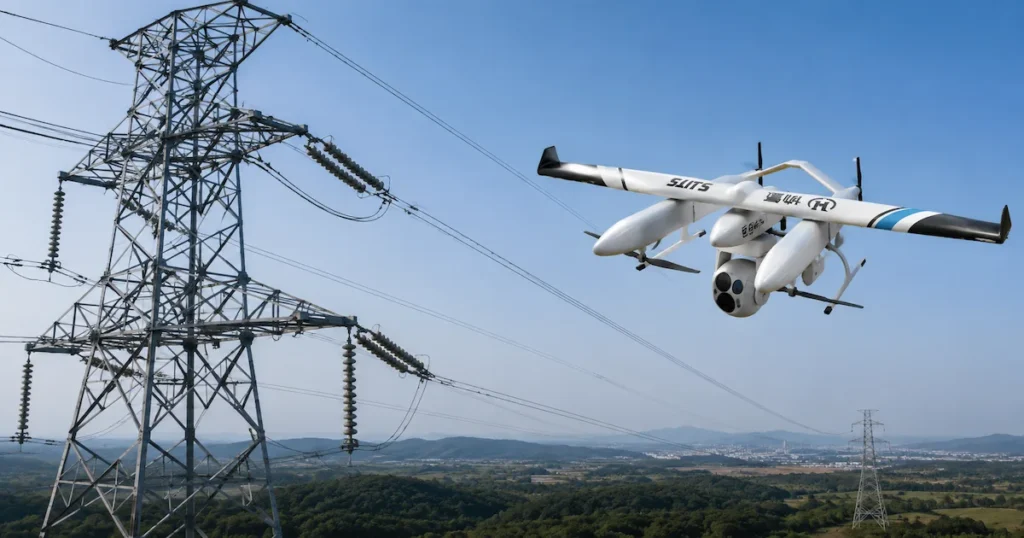
Power grids extend across large geographic areas and include thousands of transmission towers, conductors, insulators, connectors, substations, and other critical assets. Maintaining this infrastructure requires regular inspection to identify damage, abnormal conditions, vegetation risks, and potential faults before they affect system reliability.
Traditional inspection methods often depend on ground crews, tower climbing, or helicopter operations. While these methods remain important for certain tasks, they can be time-consuming, expensive, and difficult to deploy across remote or hard-to-access locations.
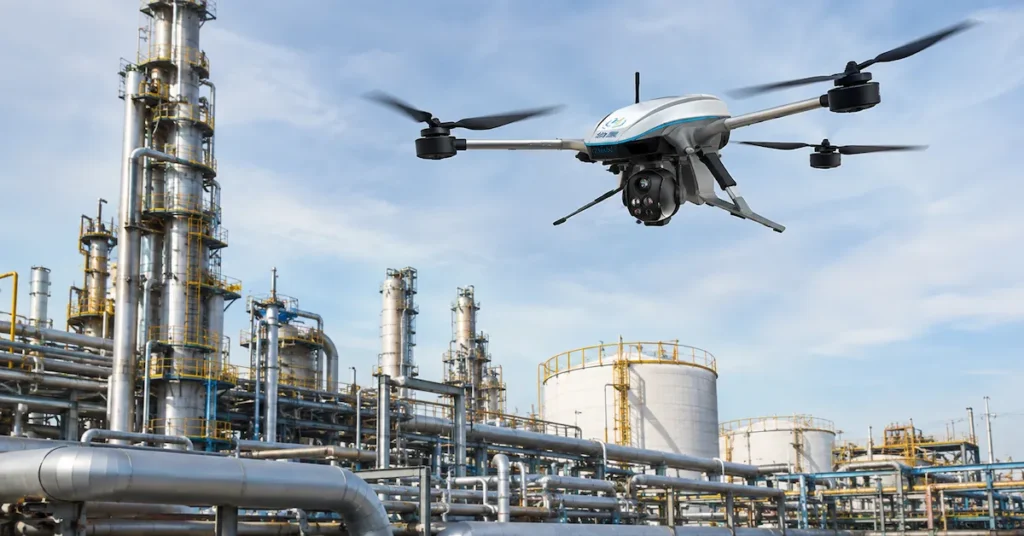
Drone inspection provides utility operators and inspection teams with a flexible way to collect high-resolution visual, thermal, and other sensor data from power infrastructure. Equipped with professional imaging payloads, UAVs can observe transmission components from multiple angles while reducing the need for personnel to work directly around elevated or energized infrastructure.
However, an effective power grid monitoring solution requires more than simply flying a camera-equipped drone near a transmission line. UAV platform performance, sensor configuration, optical zoom, thermal imaging, gimbal stabilization, AI processing, and system integration can all influence the quality and usefulness of inspection data.
This guide explains how drone inspection solutions support professional power grid monitoring and how to select the right UAV and payload configuration for different inspection missions.
Why Power Grid Inspection Is Challenging
Power infrastructure presents several operational challenges that make regular inspection difficult.
Large and Distributed Infrastructure
Transmission networks can extend across hundreds or even thousands of kilometers. Towers and conductors may pass through urban areas, mountains, forests, agricultural land, and remote regions.
Inspecting such distributed infrastructure with ground teams alone can require significant time and logistical resources. UAV inspection allows operators to deploy sensing equipment closer to assets while covering locations that may otherwise require difficult ground access.
Difficult-to-Access Assets
Many important components are installed high above the ground or in locations that are difficult to reach safely.
Insulators, conductor connections, tower hardware, and other components often require close visual observation to identify small defects. A drone equipped with a stabilized high-resolution imaging payload can collect detailed images without requiring inspectors to physically access every component during the initial inspection.
Safety Risks
Electrical infrastructure introduces significant operational risks. High voltage, elevated structures, difficult terrain, and adverse weather conditions can increase the hazards faced by inspection personnel.
Drones can reduce direct exposure during routine inspection by allowing operators to observe infrastructure remotely while maintaining appropriate operating distances.
Detecting Early-Stage Faults
Not every developing problem is immediately visible from the ground.
Small cracks, loose components, corrosion, abnormal heating, contamination, or vegetation encroachment may require different sensing technologies to detect effectively. This is one reason professional power line inspection increasingly relies on multiple sensors rather than a single standard camera.
How Drone Inspection Supports Power Grid Monitoring
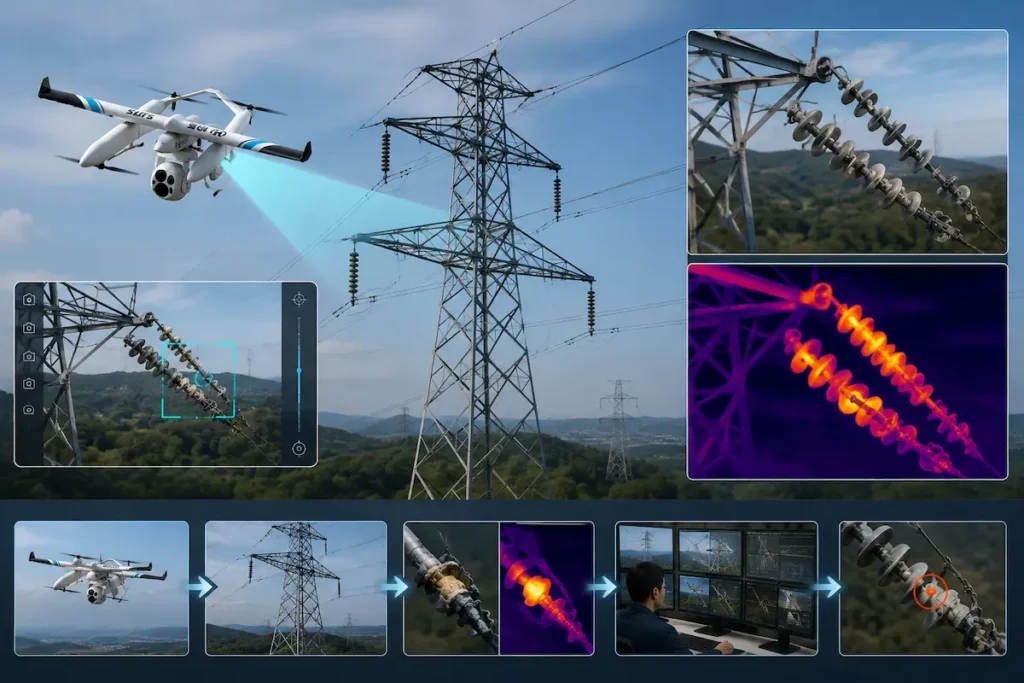
A professional drone inspection mission combines the UAV platform, imaging payload, flight operation, and data analysis into a coordinated workflow.
The process typically begins with mission planning and identification of the assets that need to be inspected. The UAV then carries the appropriate sensor payload along the inspection route or positions itself near individual towers and components.
During flight, electro-optical cameras can capture detailed visible imagery, while infrared sensors collect thermal information that is not visible to the human eye. Depending on the system, AI algorithms may also assist with asset recognition, image analysis, tracking, or abnormal-condition detection.
The collected information can then be reviewed by inspection teams and incorporated into maintenance decisions.
A typical workflow can be summarized as:
Mission Planning → UAV Data Collection → EO/IR Sensing → Data Analysis → Fault Identification → Maintenance Decision
The effectiveness of this workflow depends heavily on selecting the correct payload and UAV platform for the inspection objective.
What Can Drones Inspect on Power Grid Infrastructure?
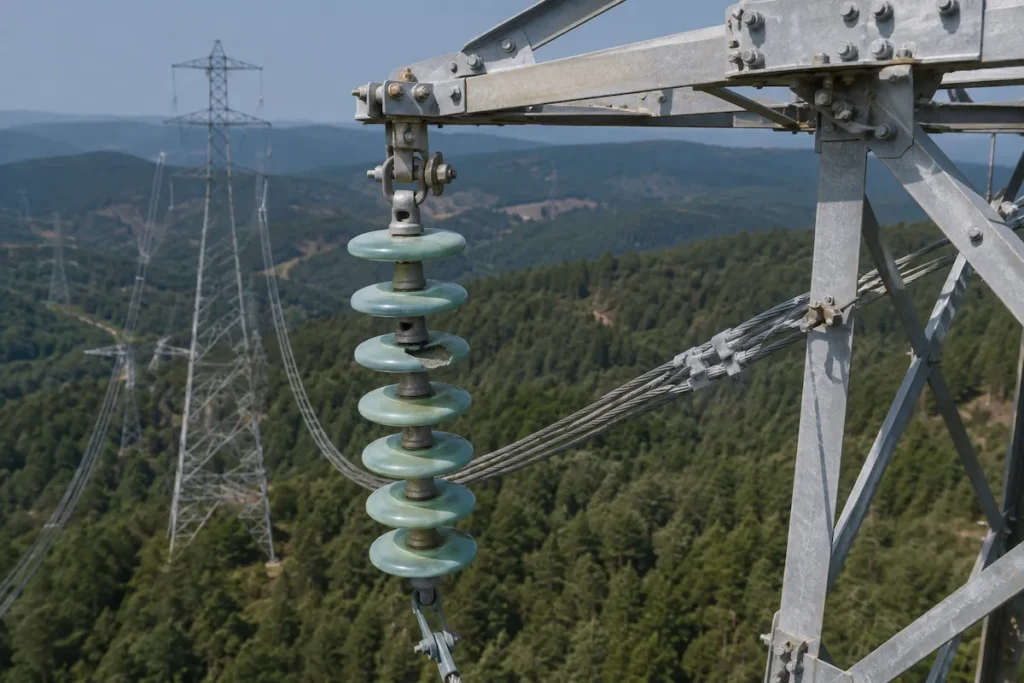
Drone inspection solutions can support observation of many different components across transmission and distribution infrastructure.
Transmission Towers
High-resolution cameras can be used to inspect tower structures and associated hardware for visible signs of corrosion, deformation, missing components, loose hardware, or other physical abnormalities.
Because UAVs can observe towers from different angles and altitudes, operators can collect imagery of areas that may be difficult to evaluate from ground level.
Insulators
Insulators are an important inspection target because their condition can affect the reliability of transmission infrastructure.
Zoom imaging can help operators examine insulator strings for visible damage, contamination, cracks, or abnormal components while maintaining an appropriate distance from the structure.
Conductors and Connections
Conductors, clamps, connectors, and related components can be inspected for physical abnormalities and, when thermal imaging is available, unusual temperature patterns.
Combining visible and thermal information can provide a more complete view of component condition than either sensing method alone.
Vegetation Around Power Lines
Trees and other vegetation growing too close to conductors can create operational risks.
UAV inspection can support observation of vegetation around transmission corridors and help inspection teams identify areas where vegetation clearance may require further assessment or maintenance.
EO Cameras for Detailed Visual Inspection
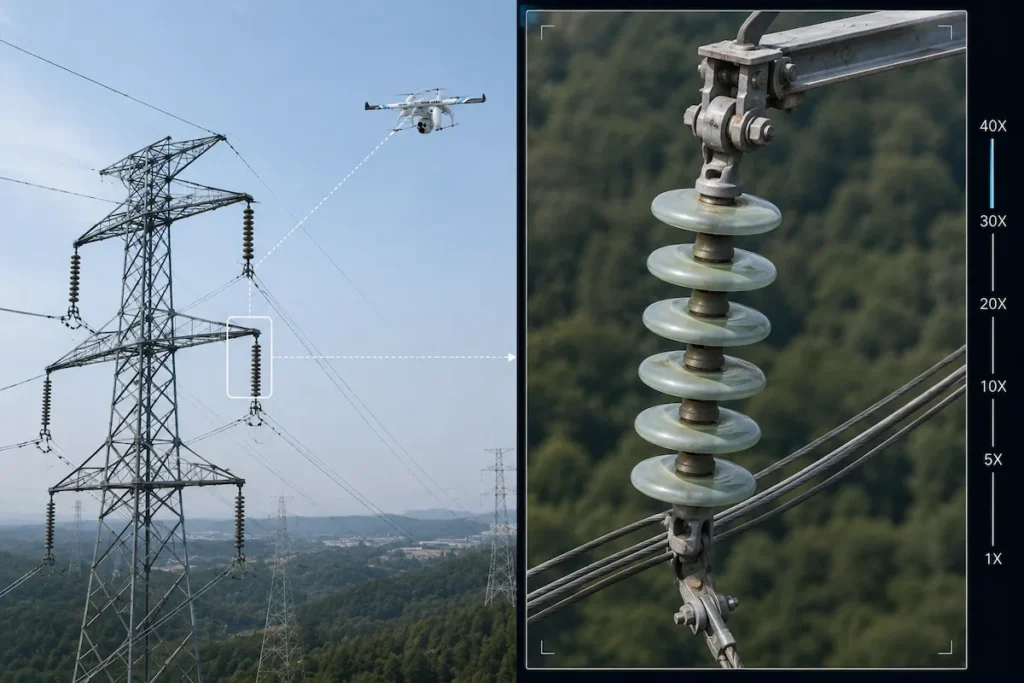
Electro-optical imaging is one of the fundamental sensing technologies used in drone inspection.
A professional EO camera captures high-resolution visible imagery that allows operators to examine the physical condition of towers, insulators, connectors, and other grid components.
For power grid applications, resolution alone is not the only important specification. Optical zoom can be particularly valuable because many inspection targets are relatively small and located on elevated structures.
A zoom-capable EO payload allows the operator to obtain detailed imagery while keeping the UAV at an appropriate operating distance from electrical infrastructure.
Image stabilization is also important. UAV movement, vibration, wind, and long focal lengths can make it difficult to maintain a clear image of a small component.
A stabilized gimbal helps keep the sensor pointed toward the inspection target and improves the consistency of captured imagery.
For missions requiring both visible and thermal sensing, these capabilities can be integrated into an EO IR payload designed for professional UAV inspection applications.
Thermal Imaging for Detecting Electrical Anomalies
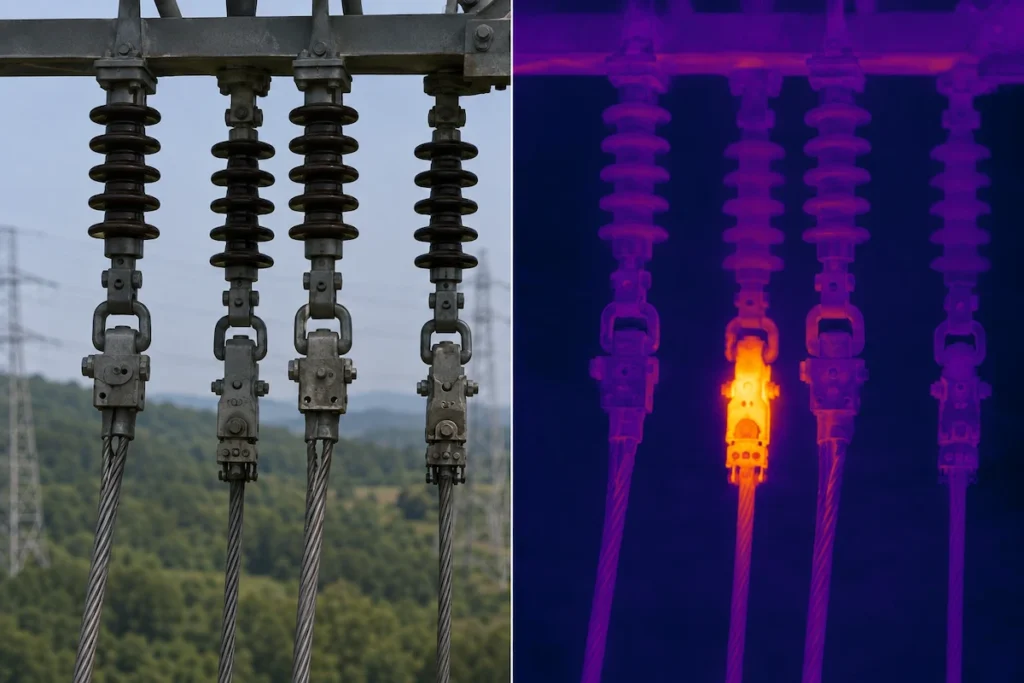
Visible imagery can reveal physical damage, but some electrical abnormalities may produce temperature changes before obvious visual signs appear.
This is where thermal imaging becomes valuable.
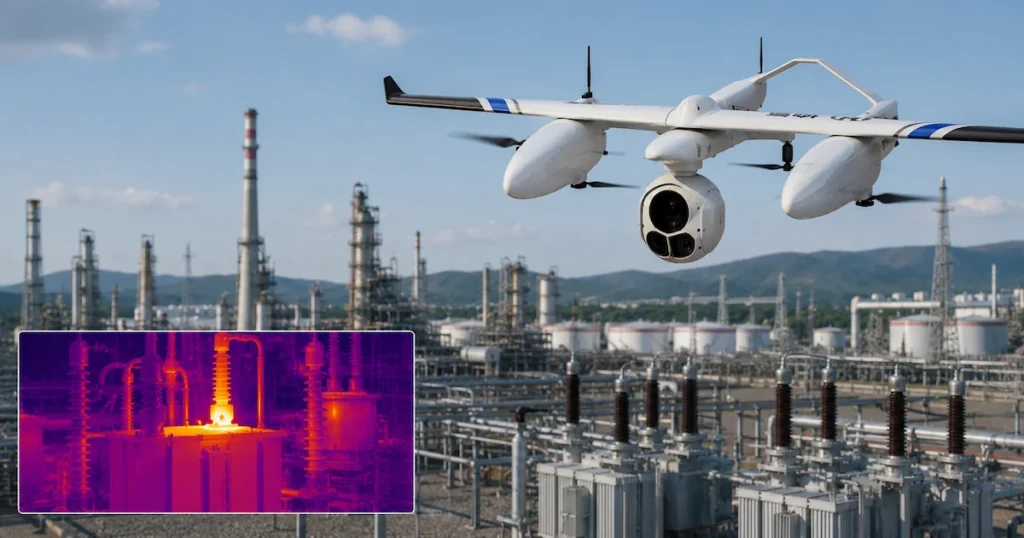
An infrared sensor detects thermal radiation and converts temperature differences into an image. During power line inspection, thermal imagery can help inspection teams identify unusual heating patterns associated with connectors, electrical contacts, and other components.
Potential observations may include:
- Localized hotspots
- Abnormal heating around connections
- Temperature differences between similar components
- Unusual thermal patterns requiring further investigation
Thermal data should always be interpreted within the context of operating conditions, environmental factors, equipment type, and the inspection procedure. A thermal image is not automatically a diagnosis of a fault.
When used correctly, however, thermal imaging provides an additional layer of information that conventional visible-light imagery cannot provide.
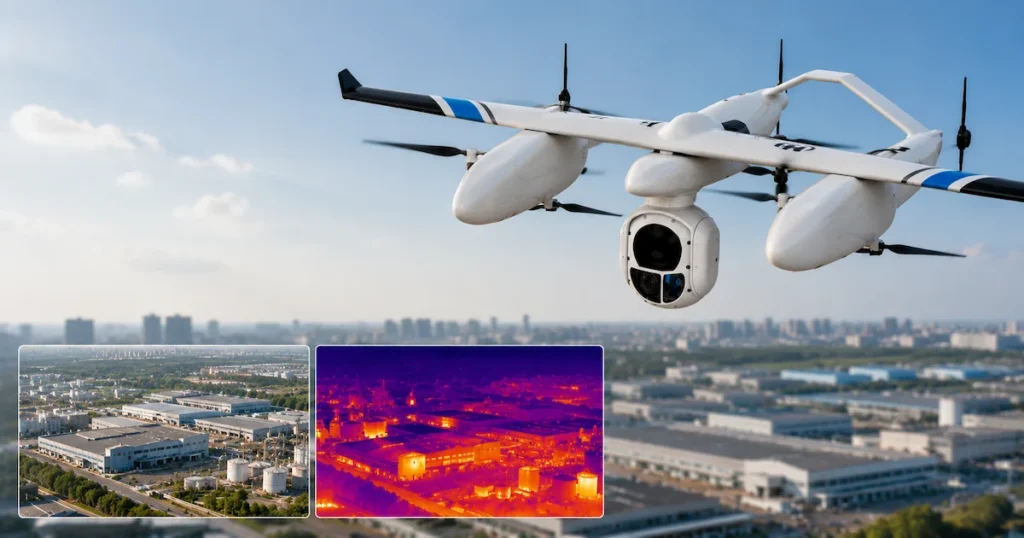
For professional inspection missions, combining thermal and visible imagery can improve situational understanding and help teams prioritize components for further investigation.
Why EO and IR Sensors Work Better Together
EO and IR sensors provide different but complementary information.
An EO camera shows what an asset looks like. It can reveal structural details, surface damage, component condition, and other visible characteristics.
An IR thermal sensor shows how temperature is distributed across the observed equipment. It can reveal thermal patterns that may have no obvious visual indication.
Integrating both sensors into a stabilized UAV payload allows operators to observe the same infrastructure using two sensing modes during a single mission.
For example, an inspection team may first identify and examine a component using a high-resolution EO camera and then compare its thermal behavior using the infrared channel.
This multi-sensor approach provides more comprehensive inspection data without requiring separate UAV payloads for every sensing task.
Depending on mission requirements, additional sensors such as laser rangefinders can also be integrated into multi-sensor payload systems.
AI-Assisted Defect Detection in Drone Inspection
Large-scale power grid inspection can generate substantial amounts of imagery and video.
Reviewing every image manually can require significant time, particularly when UAVs are used to inspect long transmission corridors or large numbers of similar components.
AI-assisted image analysis can help process this data.
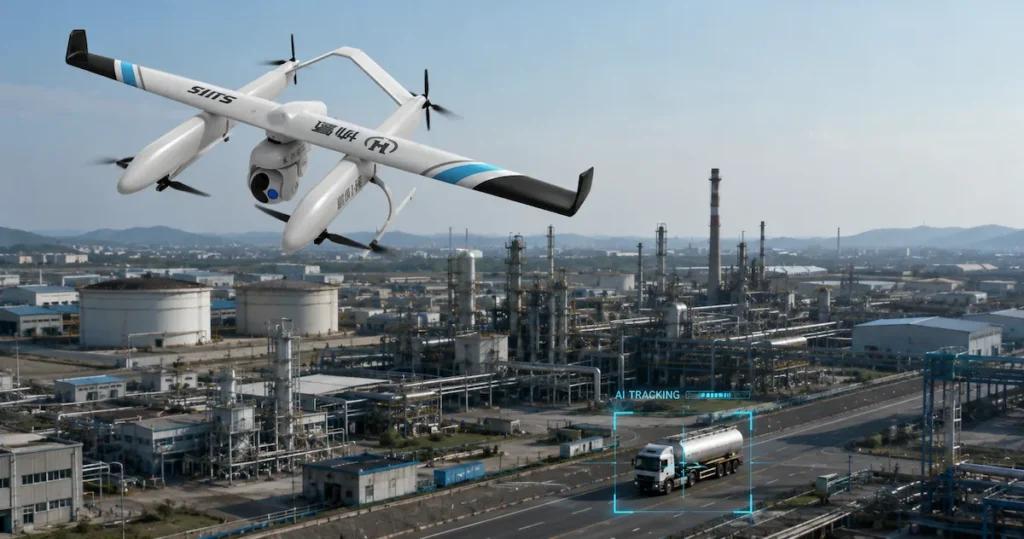
Depending on the algorithm and application, AI systems may support tasks such as identifying specific power grid components, locating objects within images, recognizing predefined abnormal conditions, AI tracking targets, or organizing inspection data for further review.
For example, computer vision algorithms may be trained to assist with identifying insulators, tower components, vegetation, or certain visible defects.
AI does not eliminate the need for professional inspection judgment. Instead, it can function as an additional analysis layer that helps operators process large datasets and prioritize imagery that may require closer review.
The effectiveness of AI inspection depends on image quality, training data, sensor performance, operating conditions, and the type of defect being detected.
Choosing the Right Drone Inspection Payload
There is no single payload configuration that is ideal for every power grid inspection mission.
The correct payload should be selected according to the inspection target and mission requirements, rather than simply choosing the highest available specification.
Sensor Configuration
Some missions may require only high-resolution EO imaging, while others benefit from integrated EO and IR sensors.
More advanced configurations can also include laser ranging, AI processing, or other sensing capabilities according to operational requirements.
Optical Zoom
Long-range optical zoom can help operators inspect relatively small components without positioning the UAV unnecessarily close to infrastructure.
The required zoom capability should therefore be considered together with target size, image detail requirements, and expected operating distance.
Thermal Performance
For thermal inspection, detector resolution, thermal sensitivity, lens configuration, and measurement requirements can influence the usefulness of the resulting imagery.
Higher specifications are not automatically necessary for every mission. The sensor should be selected according to the size of the target and the thermal information required.
Gimbal Stabilization
A professional inspection payload should maintain stable imagery despite aircraft movement and environmental disturbance.
Two-axis or three-axis stabilized gimbals may be selected according to aircraft configuration and mission requirements.
Stabilization becomes particularly important when operators use high optical zoom because small aircraft movements can create significant changes in the image at longer focal lengths.
Payload Weight
Sensor capability must always be balanced against aircraft payload capacity.
A heavier payload can affect endurance, flight performance, and overall mission efficiency. Payload selection should therefore be considered as part of the complete UAV system rather than as an isolated camera specification.
UAV Compatibility
Mechanical mounting, power supply, communication interfaces, video transmission, control protocols, and ground station integration all need to be evaluated before a payload can be deployed effectively.
This is particularly important when a payload needs to be integrated with different multirotor, VTOL, or custom UAV platforms.
UAV Platform Requirements for Power Line Inspection
The payload determines what the system can observe, but the UAV platform determines how the sensor reaches and maintains the required observation position.
Different power grid missions may therefore require different aircraft configurations.
Multirotor UAVs for Detailed Inspection
Multirotor UAVs are well suited to close-range inspection tasks that require stable hovering and precise positioning around towers, insulators, connectors, and other individual components.
Their ability to maintain position allows operators to examine specific areas from multiple viewing angles.
For localized inspection missions where detailed observation is more important than long-distance coverage, multirotor platforms can provide an effective solution.
VTOL UAVs for Extended Power Line Monitoring
VTOL fixed-wing UAVs can be more suitable for missions that require greater range or coverage along extended transmission corridors.
They combine vertical takeoff and landing with efficient forward flight, allowing operation from locations where conventional runways are unavailable.
For long-distance power grid monitoring, platform endurance, communication range, payload capacity, terrain, and mission deployment requirements become especially important.
The UAV platform and payload should therefore be selected as one integrated inspection system.
Building a Complete Drone Inspection Solution
A professional power grid monitoring solution is not defined by the aircraft alone.
The UAV, payload, sensing technologies, communication system, data processing, and operational workflow must function together.
A complete system can be viewed as:
UAV Platform + EO/IR Payload + AI Processing + Mission Integration + Data Workflow
The UAV provides mobility and positioning.
The payload provides sensing.
EO and IR cameras provide complementary inspection information.
AI can assist with recognition and analysis tasks.
The integration architecture connects the airborne system with operator controls, communications, and ground-based workflows.
For utilities, system integrators, and professional inspection providers, evaluating the complete system is therefore more useful than comparing individual camera specifications in isolation.
Why Payload Integration Matters
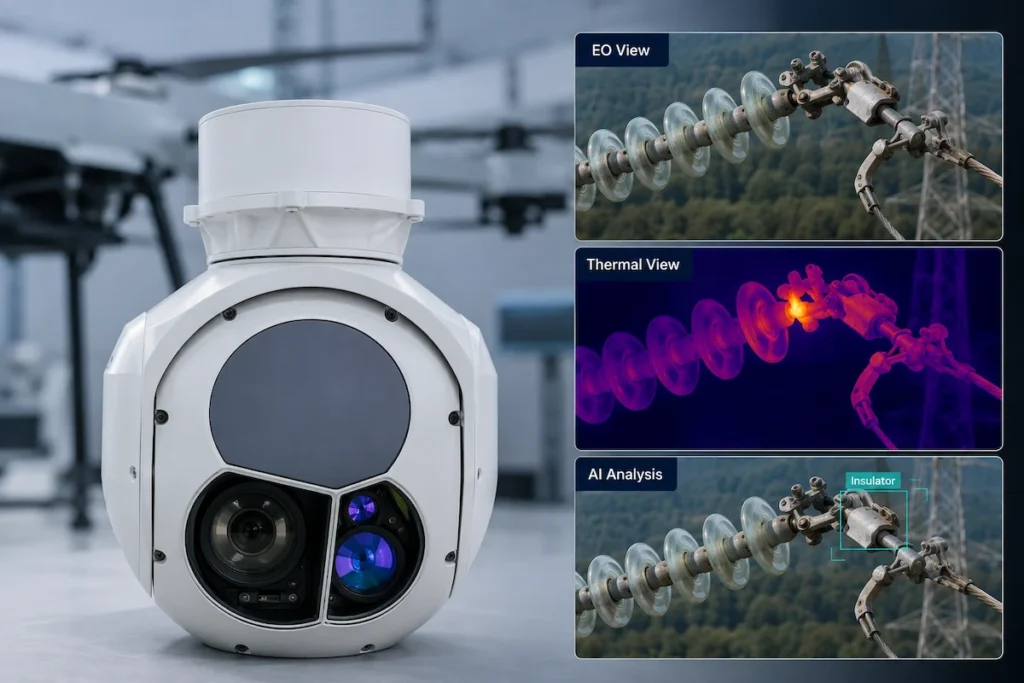
Even a high-performance sensor cannot deliver its full capability if it is poorly integrated with the aircraft.
Professional UAV integration may involve mechanical mounting, power supply, communication protocols, video transmission, gimbal control, data interfaces, AI processing hardware, and ground control software.
These requirements can vary significantly between UAV platforms.
Payload weight and center of gravity can affect aircraft performance. Communication interfaces determine how commands and video are transmitted. Gimbal control affects how accurately operators can position the sensor. AI processing requirements may influence onboard computing and data transmission architecture.
For this reason, professional drone inspection systems should be developed around the mission rather than around a single camera or aircraft model.
Configurable AI payload systems can combine EO imaging, IR thermal imaging, stabilized gimbals, AI recognition and tracking, optional laser ranging, and different integration interfaces to support a range of UAV platforms and industrial inspection requirements.
Frequently Asked Questions About Drone Power Grid Inspection
How are drones used for power line inspection?
Drones carry imaging sensors close to transmission towers, conductors, insulators, and other infrastructure to collect visual, thermal, and other inspection data.
UAVs can support both detailed component inspection and broader transmission corridor monitoring depending on the aircraft and payload configuration.
What can drones detect during power grid inspection?
Depending on the sensor system, drone inspection can help identify visible structural damage, corrosion, abnormal components, insulator condition, vegetation risks, and unusual thermal patterns.
The exact detection capability depends on sensor performance, operating distance, environmental conditions, and analysis methods.
Why is thermal imaging useful for power line inspection?
Thermal imaging reveals temperature differences that are invisible to standard EO cameras.
This can help inspection teams identify abnormal heating patterns around electrical components and determine which areas may require further investigation.
What payload is best for power grid inspection?
There is no universal best payload.
The correct configuration depends on the inspection target, required operating distance, image detail, thermal requirements, UAV payload capacity, and mission environment.
Professional applications often benefit from stabilized EO/IR multi-sensor payloads when both visible and thermal information are required.
Can AI be used for automated power line inspection?
AI computer vision can assist with component recognition, image classification, defect detection, tracking, and analysis of large inspection datasets.
However, AI performance depends on training data, image quality, sensor configuration, and the specific inspection task. Professional review and appropriate inspection procedures remain important.
Conclusion
Drone inspection gives power grid operators and inspection teams a flexible way to collect detailed information from transmission infrastructure while reducing dependence on manual access for routine observation.
The most effective systems combine the appropriate UAV platform with high-resolution EO imaging, thermal sensing, stable gimbal control, and AI-assisted analysis where appropriate.
More importantly, the correct solution should be configured around the mission. Inspection distance, target size, thermal requirements, flight endurance, payload capacity, communication architecture, and UAV integration all influence system performance.
For professional power grid monitoring, the objective is not simply to select a drone or camera with the highest specification. It is to build an integrated UAV inspection system in which the aircraft, payload, sensors, and data workflow work together around the actual mission requirements.