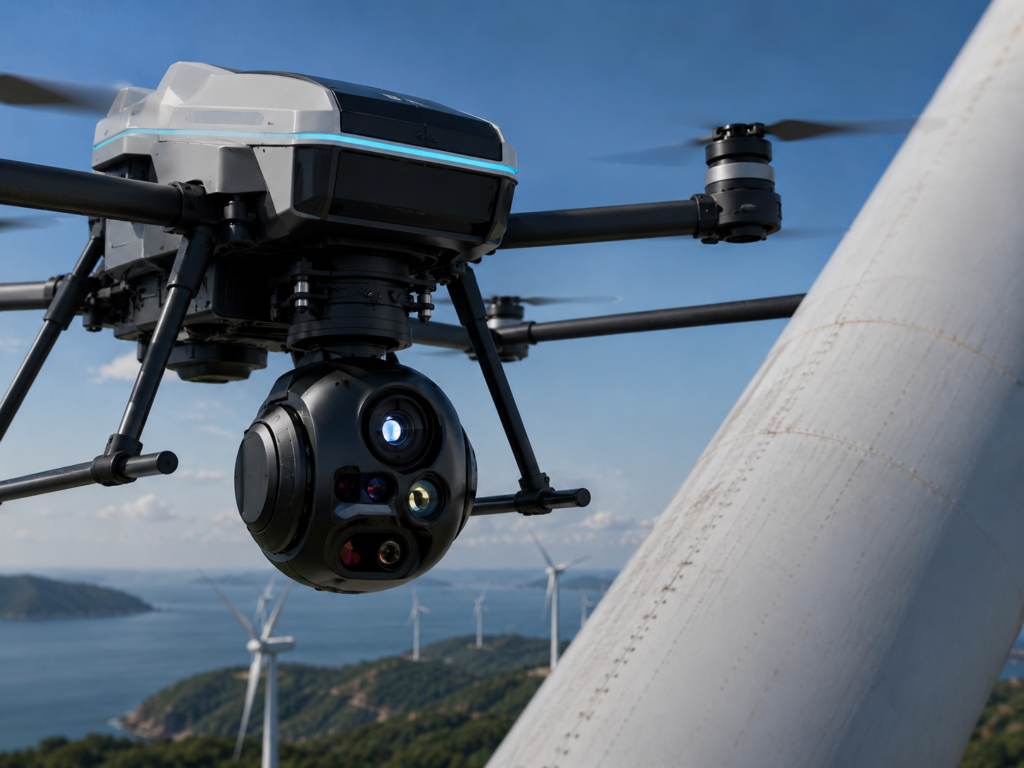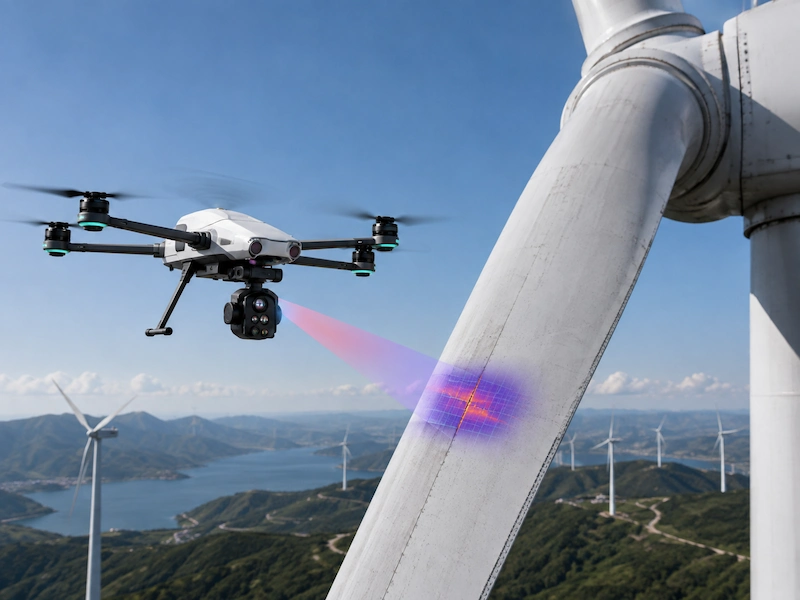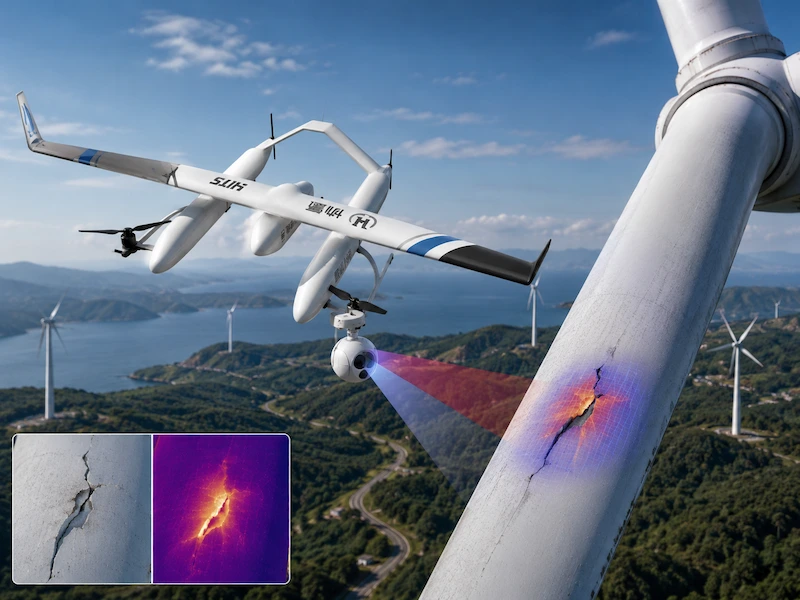
Improve wind turbine inspection with long-endurance UAV platforms, EO/IR payloads, thermal imaging, and AI-assisted defect detection. HITS UAV provides flexible aerial inspection solutions for wind turbine blades and critical components.
Inspecting wind turbine blades and critical components can require significant time, specialized access equipment, and exposure to difficult working conditions. UAV-based inspection provides a safer and more flexible way to collect detailed visual and thermal data.
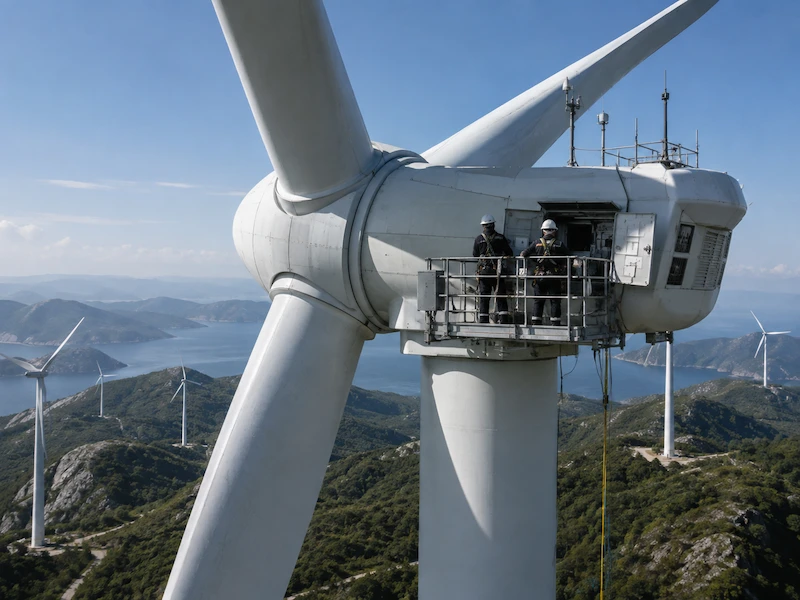
Wind turbine blades, nacelles, and other elevated components can be difficult to access using conventional inspection methods.
Traditional inspection methods may require personnel to work at height or operate specialized access equipment around large turbine structures.
Manual inspection processes can require significant preparation and access time, especially across large wind farms.
Surface damage, erosion, cracks, and thermal anomalies may require high-resolution visual and infrared inspection to identify effectively.
Combine high-resolution EO imaging, thermal infrared sensing, stabilized payload technology, and AI-assisted analysis to identify visible and thermal anomalies during wind turbine inspections.
High-resolution optical imaging helps inspect blade surfaces, structural components, and visible defects in detail.
Infrared thermal imaging can reveal abnormal temperature patterns and thermal anomalies that may not be visible in standard optical imagery.
AI-assisted analysis helps identify potential defects and inspection targets from collected visual and thermal data.
Stabilized EO/IR payload systems provide steady imaging during aerial inspection missions, supporting accurate data collection from different viewing angles.
A UAV-based inspection workflow combines aerial data collection, EO/IR sensing, defect identification, and inspection assessment to support efficient wind turbine condition monitoring.
Collect high-resolution visual and thermal imagery of turbine blades and critical components from multiple viewing angles.
EO and infrared sensors provide complementary visual and thermal information for detailed turbine condition inspection.
AI-assisted analysis helps identify potential cracks, erosion, surface damage, and thermal anomalies in inspection data.
Inspection data can support maintenance teams in evaluating turbine conditions and prioritizing potential inspection findings.
HITS UAV combines long-endurance UAV platforms with stabilized EO/IR payloads to support efficient aerial inspection of wind turbine blades, nacelles, and other critical components.
UAVs can approach difficult-to-reach turbine components without requiring extensive access equipment, enabling flexible inspection across large wind farms.
EO cameras capture detailed imagery of turbine blades and structures to support visual inspection and condition assessment.
Long-endurance UAV platforms can support extended inspection missions and efficient coverage of multiple turbines.
HITS UAV integrates UAV platforms, EO/IR payload systems, and AI capabilities to provide flexible aerial inspection solutions for renewable energy infrastructure.
Combine UAV platforms with stabilized EO/IR payloads to build inspection configurations around specific mission requirements.
Capture both high-resolution optical imagery and thermal data to support more comprehensive turbine inspection.
AI capabilities can assist with target recognition, defect identification, and inspection data analysis.
Configure UAV platforms, payloads, sensors, and mission capabilities according to inspection range, endurance, and operational requirements.
Find answers to common questions about UAV-based wind turbine inspection, drone blade inspection, thermal imaging, EO/IR payloads, and AI-assisted inspection.
Wind turbine inspection with drones uses UAVs equipped with high-resolution cameras, EO/IR payloads, and other sensors to collect visual and thermal data from turbine blades and critical components. This approach can provide flexible aerial access while reducing the need for conventional access methods.
UAVs can inspect turbine blades, nacelles, towers, and other accessible components. High-resolution EO cameras can capture visible surface conditions, while thermal sensors can help identify abnormal temperature patterns.
Yes. UAV-mounted thermal infrared sensors can collect thermal data from wind turbine components and help identify abnormal temperature patterns that may require further inspection.
AI-assisted inspection can help analyze collected imagery, identify potential defects, recognize inspection targets, and support more efficient review of large volumes of visual and thermal data.
HITS UAV can provide UAV platforms and stabilized EO/IR payload systems that can be configured according to mission requirements such as inspection range, flight endurance, sensor capability, and payload integration.
Explore additional UAV solutions for power grids, energy infrastructure, and industrial assets.

UAV-based monitoring and inspection for power transmission infrastructure, supporting visual inspection and condition monitoring.
Aerial inspection solutions for critical energy infrastructure and industrial assets using UAV and EO/IR technologies.
UAV-based aerial surveillance for oil and gas infrastructure, pipelines, storage facilities, and other critical industrial assets.
Tell us about your wind turbine inspection requirements, UAV platform, payload, and inspection objectives. Our team can help evaluate an appropriate UAV and EO/IR inspection configuration for your mission.
WhatsApp us